/ɔɪ/as in boy
You likely start from a higher, tenser rounded vowel than the English target and finish with a firmer, more consonant-like j, since Hungarian has no native diphthong exactly like this one.

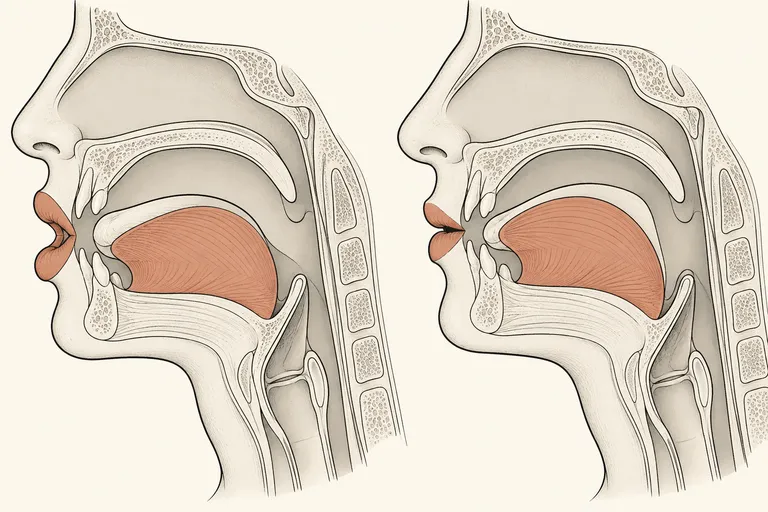
What you probably do
You likely start from a higher, tenser rounded vowel than the English target and finish with a firmer, more consonant-like j, since Hungarian has no native diphthong exactly like this one.
How natives do it
Americans begin with rounded lips and the tongue in a mid-back position, similar to the vowel in 'law', then let the lips relax and spread slightly while the tongue glides up and forward, ending near a short 'ih' sound. This is the vowel in 'boy' and 'coin'.
Why it matters
A tenser start and harder ending are usually still understood but add a subtle foreign edge to a small but common set of words. Starting lower and finishing with a soft vowel glide, rather than a firm consonant, smooths out words like 'voice' and 'join'.
Hear the difference
Words this touches
Hungarian speakers often substitute /oj, ɒj/.
How the mouth differs
Hungarian has no native diphthong of this exact shape; borrowed or foreign words with 'oj' sequences are typically produced with a higher, tenser starting vowel and a firmer consonantal j offglide. English ɔɪ starts from a lower, more open mid-back rounded vowel and glides into a genuinely vowel-like ɪ, with the lips unrounding gradually rather than the tongue simply reaching a consonant target.
Listen for the pattern
A tenser, higher-starting substitute with a hard j-offglide is usually understood but can sound slightly clipped or foreign, since the target diphthong depends on a distinctly lower starting point and a softer, vowel-like finish.
Reader ratings and feedback are coming soon.
Sources (2)
- Wells, J.C. (1982). Accents of English.
- Kenesei, I., Vago, R.M., & Fenyvesi, A. (1998). Hungarian: Descriptive Grammar.