/aʊ/as in how
You likely treat this as two separate vowel sounds in a row, the way Hungarian handles similar sequences, rather than one continuous glide within a single syllable.
What you probably do
You likely treat this as two separate vowel sounds in a row, the way Hungarian handles similar sequences, rather than one continuous glide within a single syllable.
How natives do it
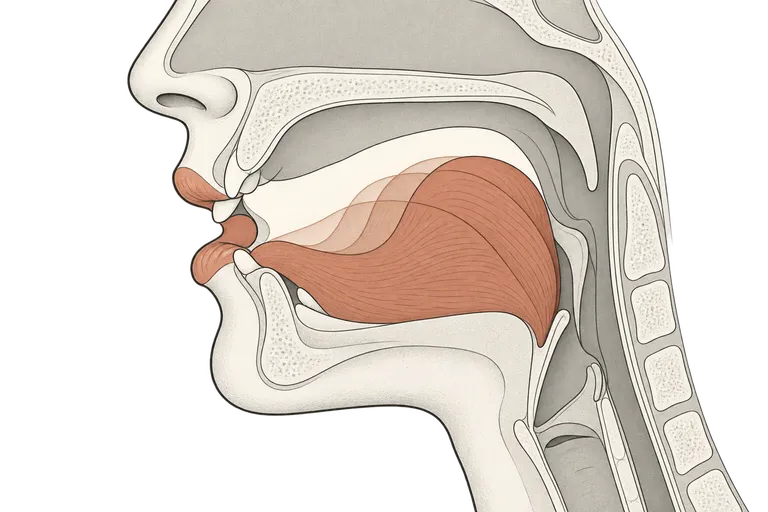
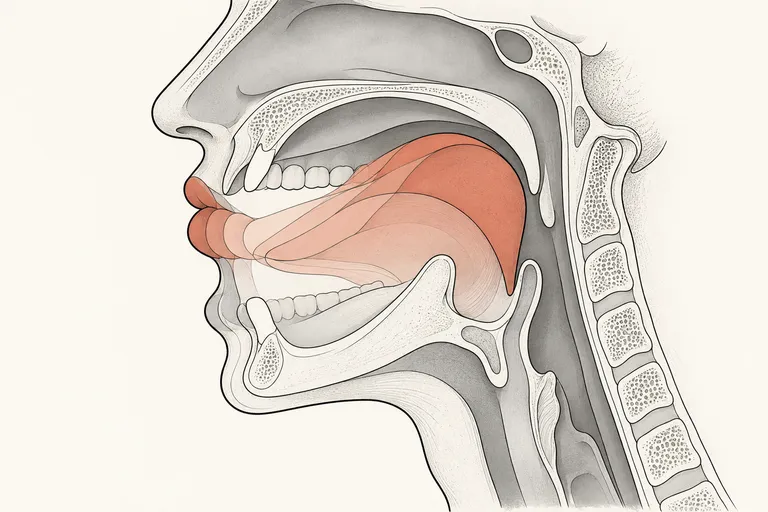
Americans start with the jaw wide open, tongue low, lips relaxed, as if saying 'ah', then glide the tongue upward and backward while the lips round, finishing near an 'oo' shape — all in one unbroken motion, spending most of the time on the open starting position.
Why it matters
Breaking this diphthong into two syllables adds an extra rhythmic beat that isn't there in English, making very common words like 'house' and 'now' sound choppier than intended. Practicing it as one smooth glide keeps these everyday words compact and natural.
Hear the difference
Words this touches
Hungarian speakers often substitute /ɒu, ɒ, u/.
How the mouth differs
Hungarian has no native diphthong of this shape; sequences like 'au' in loanwords are typically pronounced as two separate syllables (a vowel followed by a distinct u vowel) rather than a single gliding nucleus. English aʊ requires one continuous syllable that starts wide-open and low, then smoothly rises, retracts, and rounds toward a high-back position without any syllable break.
Listen for the pattern
Splitting this diphthong into two syllables, or shortening the glide into a quick tap, is usually still understood but adds an extra syllable-like beat that disrupts English rhythm and can make words like 'house' sound like they have two vowel peaks instead of one.
Reader ratings and feedback are coming soon.
Sources (2)
- Wells, J.C. (1982). Accents of English.
- Kenesei, I., Vago, R.M., & Fenyvesi, A. (1998). Hungarian: Descriptive Grammar.