/ŋ/as in sing
At the end of words like 'sing' or 'thing', you may unconsciously add a small g or k sound after the ŋ, since in Hungarian this nasal only ever shows up automatically right before a following stop like k or g.
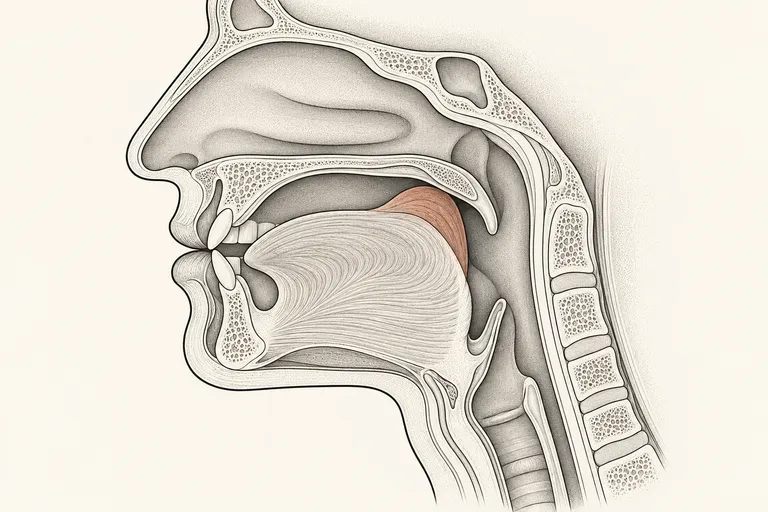
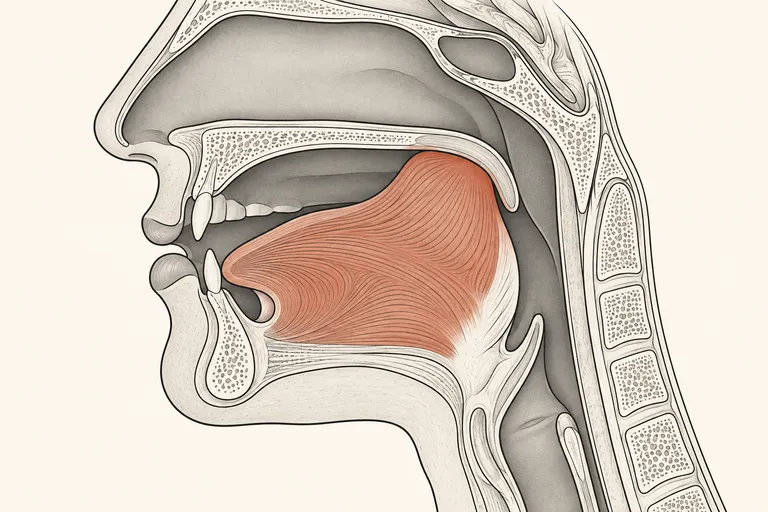
What you probably do
At the end of words like 'sing' or 'thing', you may unconsciously add a small g or k sound after the ŋ, since in Hungarian this nasal only ever shows up automatically right before a following stop like k or g.
How natives do it
Americans let the back of the tongue rise to the soft palate for ŋ and simply stop there — no stop consonant is released afterward, even though the spelling 'ng' might suggest one.
Why it matters
This ending appears constantly in English through the -ing verb form, so an extra stop after it is a frequent and noticeable accent marker; practicing 'sing' without any trailing g or k sound cleans this up quickly.
Hear the difference
Words this touches
Hungarian speakers often substitute /ŋg, ŋk/.
How the mouth differs
Hungarian has no standalone ŋ phoneme; the velar nasal only ever appears automatically as an allophone of n right before a k or g within a word (as in 'bank'). English ŋ, by contrast, regularly appears word-finally with no following stop, especially in -ing forms like 'sing' and 'thing'. Hungarian speakers, expecting ŋ to always precede a stop, often insert a spurious g or k after it.
Listen for the pattern
Adding an extra stop after final ŋ, so that 'sing' comes out closer to 'singg' or 'sink', is a recognizable non-native pattern, especially noticeable in the very frequent -ing verb ending.
Reader ratings and feedback are coming soon.
Sources (1)
- Kenesei, I., Vago, R.M., & Fenyvesi, A. (1998). Hungarian: Descriptive Grammar.