/h/as in house
You may produce h with more audible scraping friction than English uses, since Hungarian h can be stronger and even appear in places English never allows it, like before a consonant or at the end of a word.
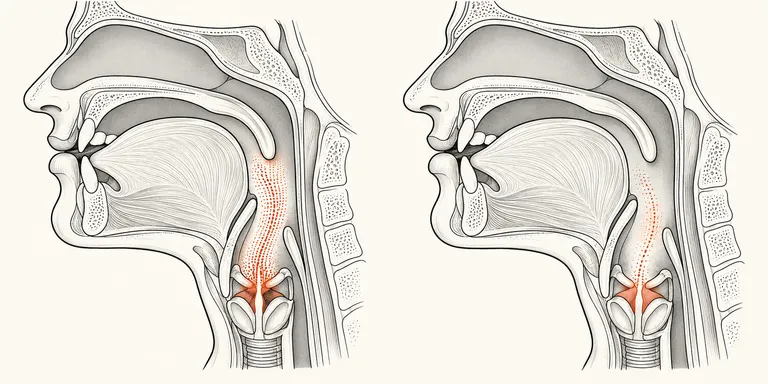
What you probably do
You may produce h with more audible scraping friction than English uses, since Hungarian h can be stronger and even appear in places English never allows it, like before a consonant or at the end of a word.
How natives do it
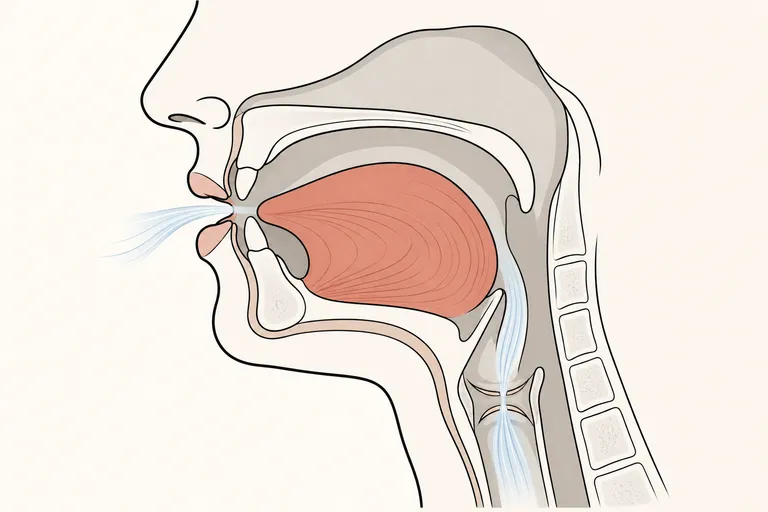
Americans shape the mouth for the vowel that's about to come and simply release a light, quick breath before voicing starts — there's no mouth movement belonging to h itself, and it only ever appears right before a vowel.
Why it matters
A heavier or misplaced h can sound like extra effort or a slight rasp to American ears, even though it rarely blocks understanding; lightening it up and keeping it strictly pre-vocalic makes speech sound smoother and more natural.
Hear the difference
Words this touches
Hungarian speakers often substitute /h/.
How the mouth differs
Both languages use a glottal fricative with no oral obstruction. Hungarian h can be pronounced with stronger, audible friction and can even occur word-finally or before a consonant (as in 'juh'); English h occurs only before a vowel and is a light, breath-like onset with the mouth already shaped for the upcoming vowel.
Listen for the pattern
A more forcefully scraped h, or one carried into a position where English never has it, can sound noticeably foreign even though the underlying sound is essentially the same.
Reader ratings and feedback are coming soon.
Sources (1)
- Wells, J.C. (1982). Accents of English.