Word stress
You likely put automatic emphasis on the first syllable of every English word, the way Hungarian always does, because that's the only stress rule your first language has ever needed.
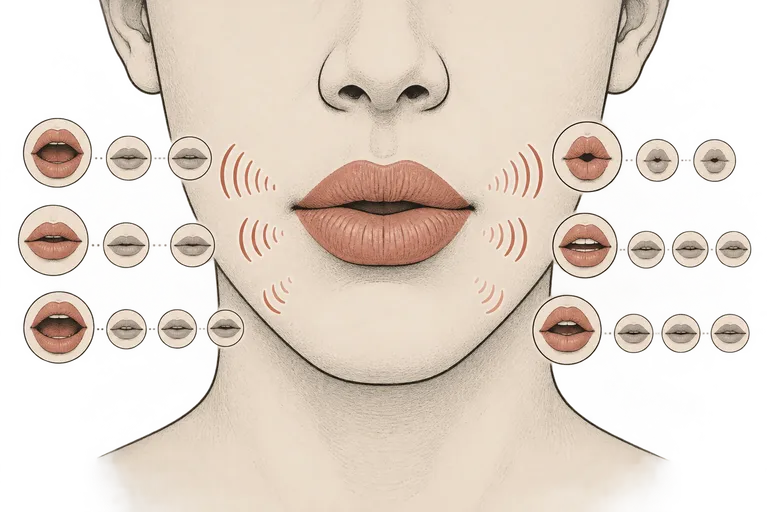
What you probably do
You likely put automatic emphasis on the first syllable of every English word, the way Hungarian always does, because that's the only stress rule your first language has ever needed.
How natives do it
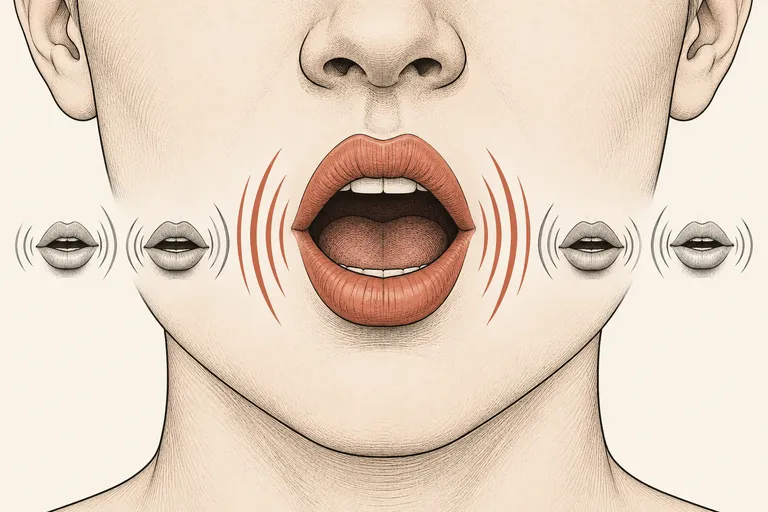
Americans learn stress word-by-word — it can land on any syllable — and mark it with real force: louder volume, a pitch jump, and extra length, while every other syllable in the word gets quietly compressed.
Why it matters
Since English uses stress placement to distinguish words (record vs. record) and relies on it heavily for intelligibility, misplaced stress can make otherwise correct words hard to recognize, even when every individual sound is pronounced accurately.
How the mouth differs
Hungarian stress is 100% predictable: always the first syllable, with modest, even prominence. English stress is lexical and must be memorized per word, and stressed syllables get much stronger dynamic marking — extra loudness, pitch movement, and length — while unstressed syllables are actively weakened.
Listen for the pattern
Hungarian speakers often default to stressing the first syllable of every English word, which can make multi-syllable words like 'ba-NA-na' or 'com-PUT-er' sound oddly flattened or misplaced to American ears, even when every sound is otherwise correct.
Try these sentences
- She's a photographer, not a photograph collector.Stress shifts unpredictably with suffixes: pho-TO-grapher vs PHO-to-graph — impossible to guess from a fixed first-syllable rule.
- Can you record the meeting so we can play the record later?Noun/verb stress pairs: re-CORD (verb) vs REC-ord (noun) — the same spelling, two different stress patterns.
- I really enjoy this job.Stress falls on the second syllable of 'enjoy', not the first, unlike Hungarian's automatic initial stress.
Reader ratings and feedback are coming soon.
Sources (1)
- Kenesei, I., Vago, R.M., & Fenyvesi, A. (1998). Hungarian: Descriptive Grammar.