Sentence rhythm
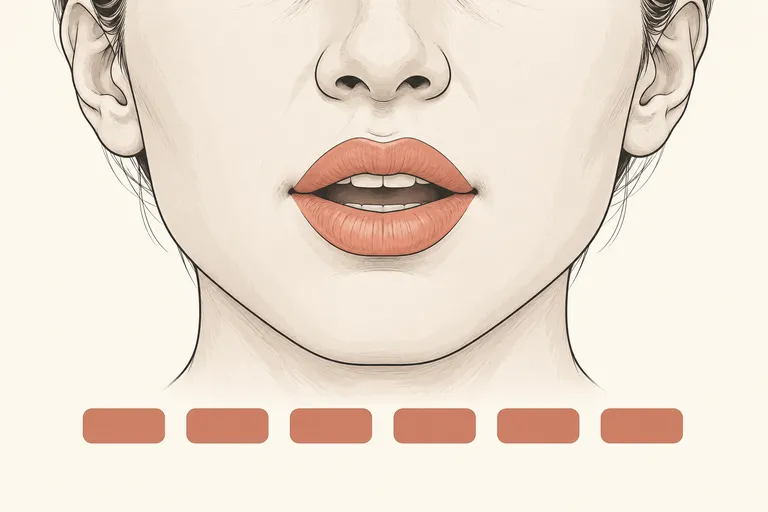
You likely give each syllable of an English sentence roughly equal time and clarity, the way Hungarian's fixed-stress, full-vowel system trains you to, rather than compressing unstressed words together.
What you probably do
You likely give each syllable of an English sentence roughly equal time and clarity, the way Hungarian's fixed-stress, full-vowel system trains you to, rather than compressing unstressed words together.
How natives do it
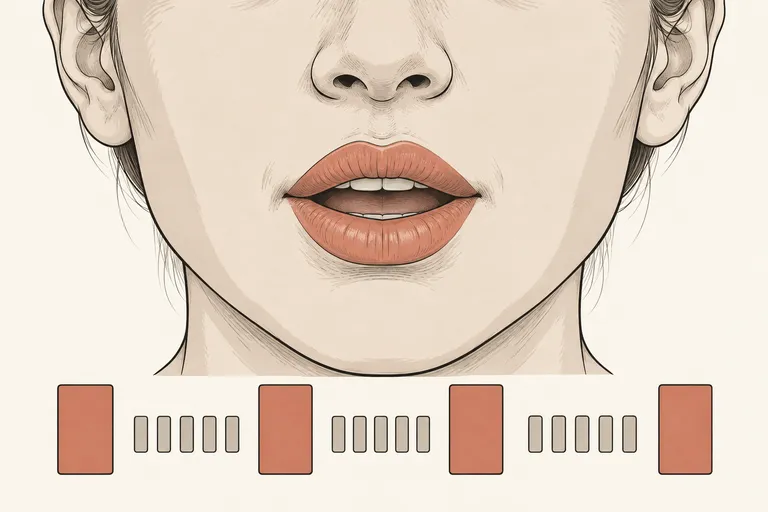
Native speakers let stressed syllables land at a steady beat and cram all the unstressed little words (the, to, a, of) into the gaps between those beats, speeding up or slowing down those gaps as needed to keep the overall rhythm even.
Why it matters
This rhythm difference is a major reason Hungarian-accented English can sound choppy or overly deliberate to Americans — matching English's stretchy, beat-driven rhythm makes speech sound more natural and easier for native listeners to parse in real time.
How the mouth differs
Both languages are technically stress-timed, but Hungarian stress is fixed to word-initial position with vowels kept full throughout, giving a more even, syllable-by-syllable feel. English stress is unpredictable and pairs with heavy reduction of unstressed syllables, so the timing gaps between stressed beats vary a lot depending on how many small words get compressed in between.
Listen for the pattern
Because Hungarian keeps every vowel full-length, Hungarian-accented English often sounds more evenly paced and 'staccato' than the rolling, uneven rhythm of natural American speech, where whole strings of little words rush by between the stressed beats.
Try these sentences
- The BOY put the CAKE on the TABLE.Content words (BOY, CAKE, TABLE) carry the beat; little words (the, put, on) are squeezed between them at roughly even time intervals.
- I WENT to the STORE to buy some MILK.Stressed syllables land at a steady pace no matter how many unstressed syllables are packed in between.
Practise it
Drill the Stress Beats
sourced- Mark the stressed words with a dot above them in these two sentences: 'I want to GO to the STORE to BUY some BREAD' and 'She CAN'T beLIEVE he ACtually DID it.'
- Say each sentence slowly, tapping a pencil on the table only on the marked, stressed words.
- Speed up gradually over five repetitions, keeping the taps evenly spaced even as you speak faster.
- Deliberately rush through the unmarked, unstressed words so they take noticeably less time than the stressed ones.
- Record yourself at a natural conversational speed and check whether the taps still land evenly.
- Repeat the whole drill with two new sentences of your own, marking the stresses first.
Success check: Your taps on the stressed words land at roughly even time intervals, while the words in between visibly speed up and shrink, even at natural conversational speed.
Why this works. Repeated drilling of fixed sentences with marked stress targets builds a durable motor routine for compressing unstressed syllables between beats, converting an abstract rule (stress-timing) into an automatized timing pattern that resists reverting to syllable-by-syllable delivery under communicative pressure.
Sources (1)
- Targeted Pronunciation Instruction in Multilingual Classrooms... — 2025
- Vowel contrast accuracy improved significantly from 62.5% to 78.3% in the targeted group, compared to only a 2.3% gain in the control group.
- Stress accuracy rose from 60.8% to 76.4% for learners receiving targeted instruction, with large effect sizes (d=1.48 for vowels, d=0.92 for stress).
- Qualitative data revealed that learners adopted durable strategies such as minimal pair drills and shadowing, leading to fewer real-world misunderstandings.
Over-Stretch the Rhythm, Then Relax It
sourced- Say 'I waaaant to go to the staaaawr to buy some breeeead,' stretching only the stressed words absurdly long and mashing the small words together almost unintelligibly fast.
- Record this exaggerated version and notice how extreme the gap in length between stressed and unstressed words feels.
- Repeat with 'She caaaan't beLIEVE he aaaactually diiiid it,' using the same extreme stretch-and-squeeze pattern.
- Now say both sentences again, cutting the stretch on stressed words down to about half as long, still clearly longer than the small words.
- Say them a third time at a natural, comfortable pace, keeping a mild but clear length difference between stressed and unstressed words.
- Compare all three recordings and confirm the natural version still has noticeably longer stressed words than unstressed ones.
Success check: In your natural-paced recording, you can still hear a clear length and loudness difference between stressed words and the compressed words around them, even though the stretch is far less extreme than your first exaggerated take.
Why this works. Exaggerating the stress-timed pattern — stretching stressed syllables and compressing unstressed ones far beyond natural proportions — makes the rhythmic contrast with syllable-timed Spanish unmistakably salient to the learner's own ear and motor system before the exaggeration is faded back to a natural, less extreme ratio, paralleling exaggeration-based training shown to sharpen L2 category learning.
Sources (2)
- The Role of Temporal Acoustic Exaggeration in High Variability Phonetic Training: A Behavioral and ERP Study — Bing Cheng, Xiaojuan Zhang, Siying Fan et al., 2019
- The HVPT-E group showed greater improvement in natural word identification performance compared to the standard HVPT group.
- Training with temporal acoustic exaggeration induced native-like categorical perception based on spectral cues.
- MMN responses demonstrated training-induced changes at pre-attentive neural levels, suggesting enhanced brain plasticity.
- Effects of prosody awareness training on the intelligibility of Iranian interpreter trainees in English — Mahmood Yenkimaleki, Vincent J. van Heuven, 2019
- Prosody awareness training led to a significant improvement in the speech intelligibility of Iranian interpreter trainees.
- The experimental group, which received explicit instruction on English prosodic features, outperformed the control group that only consumed authentic media.
- Intelligibility ratings increased after the intervention period for participants receiving prosody-focused training.
Shadow the Beat of English Sentences
sourced- Listen to the model sentence once all the way through: 'I want to go to the store to buy some bread.'
- Listen again while tapping your finger on each stressed word: WANT, GO, STORE, BUY, BREAD.
- Play the recording a third time and speak along at the exact same time, trying to match the speaker word for word.
- Focus on rushing through 'to the', 'to buy', and 'some' so your stressed words land at the same moments as the recording's.
- Record your own shadowed attempt without the model playing, then compare timing side by side.
- Repeat with the second sentence: 'She can't believe he actually did it,' tapping CAN'T, BeLIEVE, ACtually, DID.
- Do three full shadowing passes of each sentence, aiming to disappear into the recording's rhythm each time.
Success check: When you shadow without thinking about it, your stressed beats land at the same moments as the recording's, and the small words in between come out noticeably faster and lighter.
Why this works. Shadowing — speaking in close synchrony with a native recording — trains the motor timing of stress-based compression directly, bypassing conscious rule-application; the learner's articulators are entrained to speed up through unstressed syllables and linger on stressed ones because the external model enforces the correct relative timing in real time, which is more effective for rhythm acquisition than isolated rule study.
Sources (1)
- Effects of prosody awareness training on the intelligibility of Iranian interpreter trainees in English — Mahmood Yenkimaleki, Vincent J. van Heuven, 2019
- Prosody awareness training led to a significant improvement in the speech intelligibility of Iranian interpreter trainees.
- The experimental group, which received explicit instruction on English prosodic features, outperformed the control group that only consumed authentic media.
- Intelligibility ratings increased after the intervention period for participants receiving prosody-focused training.
Reader ratings and feedback are coming soon.
Sources (1)
- Kenesei, I., Vago, R.M., & Fenyvesi, A. (1998). Hungarian: Descriptive Grammar.