/k/, /kʰ/as in cat
You release k cleanly with no extra puff of air, exactly as you would in Hungarian words like 'kor'.
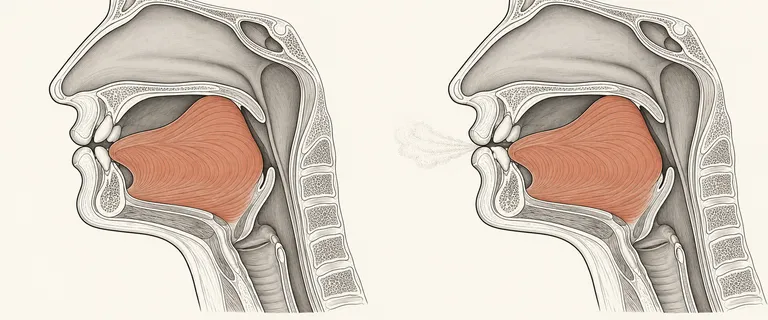
What you probably do
You release k cleanly with no extra puff of air, exactly as you would in Hungarian words like 'kor'. Since aspiration doesn't function as a meaningful cue in Hungarian, it's natural to skip it in English too.
How natives do it
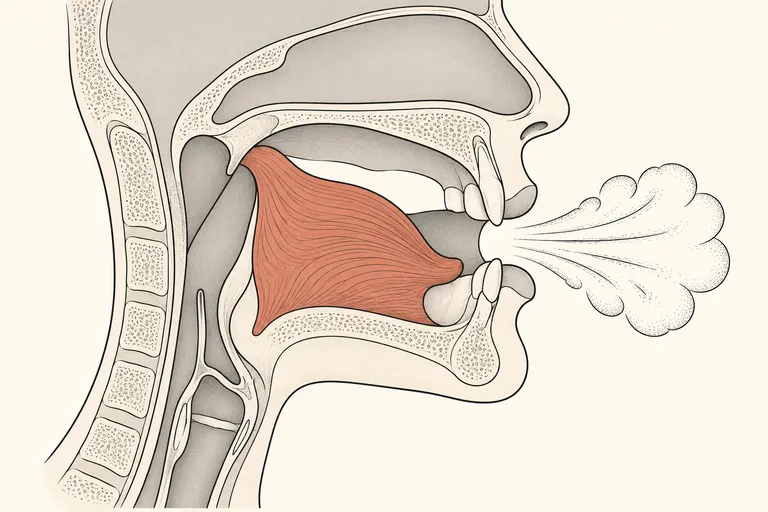
Americans add a noticeable burst of breath right after releasing k at the start of a stressed syllable, as in 'cat' or 'key'. You can feel this if you hold a hand in front of your mouth — a puff of air should hit it clearly on 'cat' but not on 'scat'.
Why it matters
Because English relies partly on aspiration, not just voicing, to separate k from g, an unaspirated 'cap' can be misheard as 'gap'. Adding that puff of air at stressed word beginnings makes your k sound crisply, unmistakably American.
Hear the difference
Words this touches
Hungarian speakers often substitute /k/.
How the mouth differs
Both languages form k with the back of the tongue against the soft palate. Hungarian k is released with no aspiration in any position, while English k is strongly aspirated — released with an audible puff of air — at the start of a stressed syllable, and only unaspirated after s or in unstressed positions.
Listen for the pattern
An unaspirated k at the start of a stressed English word can sound closer to g to American ears, since aspiration (not voicing) is the main cue distinguishing k from g at the beginning of words like 'cap' versus 'gap'.
Reader ratings and feedback are coming soon.
Sources (1)
- Wells, J.C. (1982). Accents of English.