/j/as in yes
You can make the /j/ sound fine on its own (as in the Hungarian word 'jó'), but when it appears squeezed between a consonant and a vowel, as in 'cute' or 'music', you may skip it or blend it into the consonant, since…
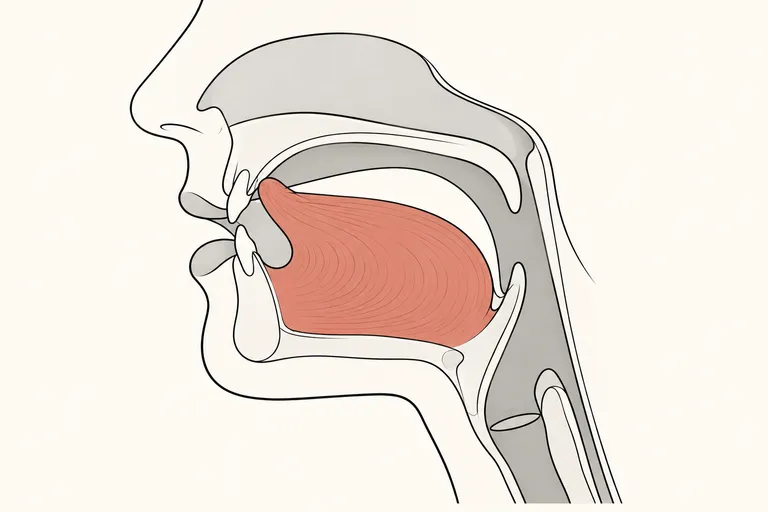
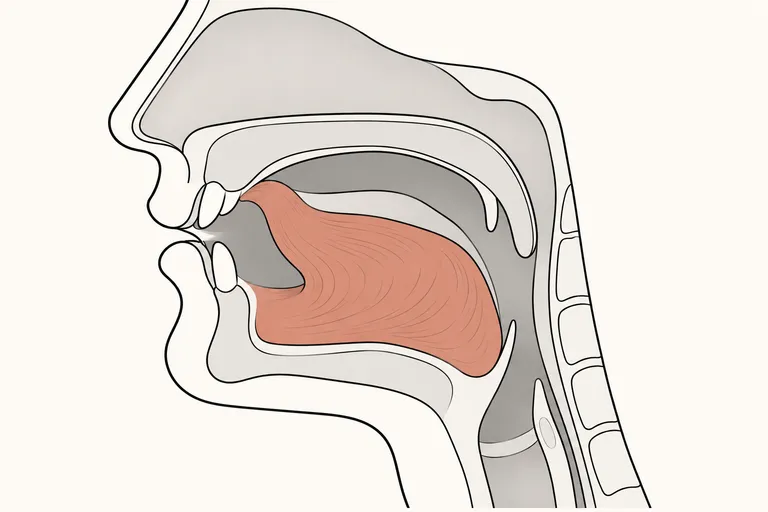
What you probably do
You can make the /j/ sound fine on its own (as in the Hungarian word 'jó'), but when it appears squeezed between a consonant and a vowel, as in 'cute' or 'music', you may skip it or blend it into the consonant, since Hungarian doesn't build words this way.
How natives do it
Americans keep all three pieces distinct: release the consonant, quickly flick the tongue up near the roof of the mouth for /j/, then glide into the vowel — all in one smooth but three-part motion, as in 'k-y-oot' for 'cute'.
Why it matters
Skipping the glide turns 'cute' into 'coot' and 'beauty' into 'booty' — real, different English words. Since your /j/ itself is already correct, practicing just the sequencing (not the sound) will fix this quickly and prevent accidental word confusions.
Hear the difference
Words this touches
How the mouth differs
Hungarian /j/ itself is articulated almost identically to English /j/ — both are palatal approximants. The real difference is distributional: Hungarian never combines a consonant plus /j/ plus vowel in a single onset the way English does in 'cute' or 'music', so learners often drop the glide entirely or fold it into one of Hungarian's native palatalized consonants (ty, gy, ny) instead of keeping a separate glide plus vowel.
Listen for the pattern
Dropping the yod turns 'cute' into 'coot' and 'beauty' into 'booty' — genuinely different English words — which can momentarily confuse a listener even though the individual /j/ sound itself is not hard for Hungarian speakers to produce.
Reader ratings and feedback are coming soon.
Sources (1)
- Kenesei, I., Vago, R.M., & Fenyvesi, A. (1998). Hungarian: Descriptive Grammar.