/b/as in bed
At the end of a word you likely release b with no voicing left at all, and keep the vowel before it short, which is exactly how you'd produce p.
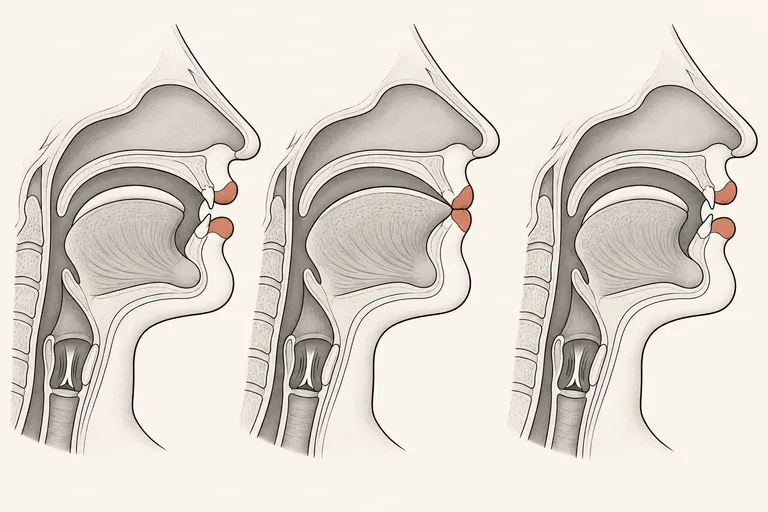
What you probably do
At the end of a word you likely release b with no voicing left at all, and keep the vowel before it short, which is exactly how you'd produce p. This happens because Hungarian doesn't use vowel length as a voicing cue the way English does.
How natives do it
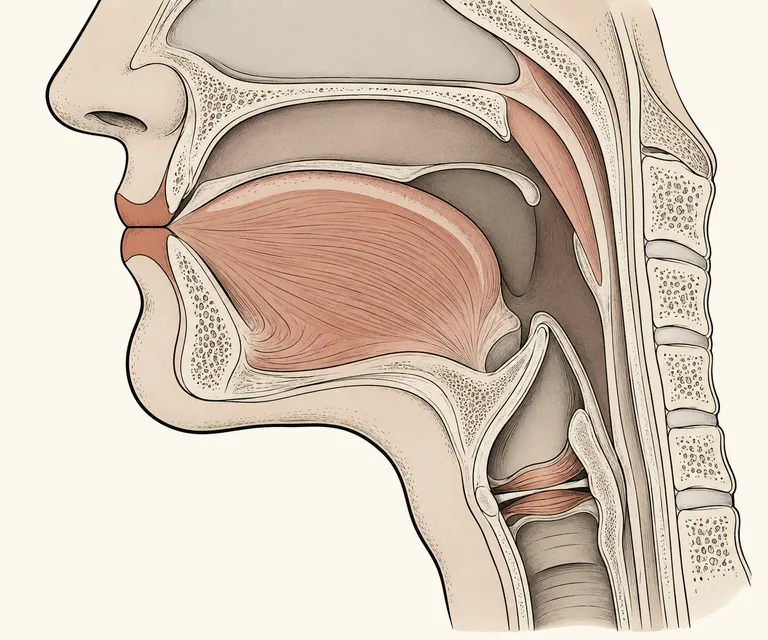
Americans keep a faint hum of voicing into the final closure and, more importantly, stretch the vowel just before a voiced 'b' noticeably longer than before a voiceless 'p'. The lip movement is identical either way — the cue lives mostly in timing.
Why it matters
Without that lengthened vowel and trace of voicing, 'cab' can sound exactly like 'cap' to an American ear, creating real confusion in words that are common in everyday speech, from job titles to simple nouns like web or crib.
Hear the difference
Words this touches
Hungarian speakers often substitute /p/.
How the mouth differs
Both languages produce b as a voiced bilabial stop with an identical lip closure and release. The difference emerges word-finally: English keeps at least partial voicing and lengthens the preceding vowel to signal 'b' versus 'p', while many Hungarian speakers, unused to relying on vowel length for consonant voicing, fully devoice the final stop, collapsing it with p.
Listen for the pattern
Listeners may hear 'cab' and 'cap' as the same word, since the devoiced final consonant removes the main acoustic cue (partial voicing plus vowel lengthening) that English speakers use to tell them apart.
Reader ratings and feedback are coming soon.
Sources (1)
- Wells, J.C. (1982). Accents of English.