/ɔɪ/as in boy
Since Mandarin has no ready-made version of this exact glide, you may combine your separate o and i sounds into something that feels like two small beats rather than one smooth motion, or you might substitute the more…
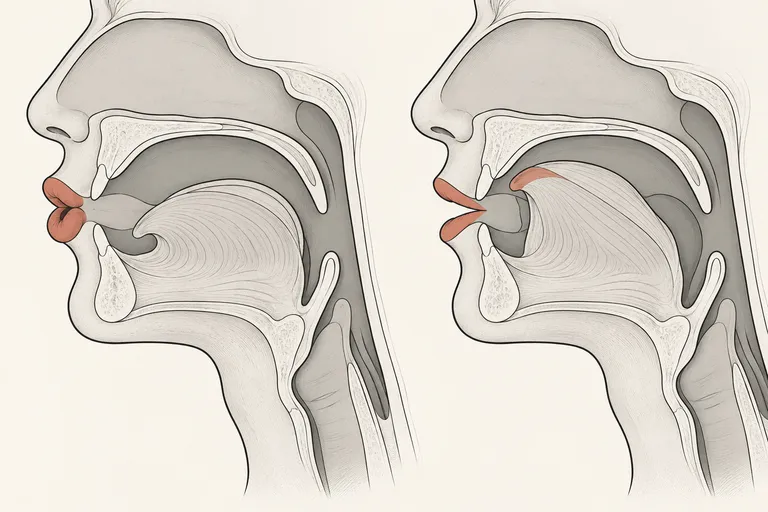
What you probably do
Since Mandarin has no ready-made version of this exact glide, you may combine your separate o and i sounds into something that feels like two small beats rather than one smooth motion, or you might substitute the more familiar low-to-high glide you already use in words like 'my', turning 'boy' into something closer to 'buy'.
How natives do it
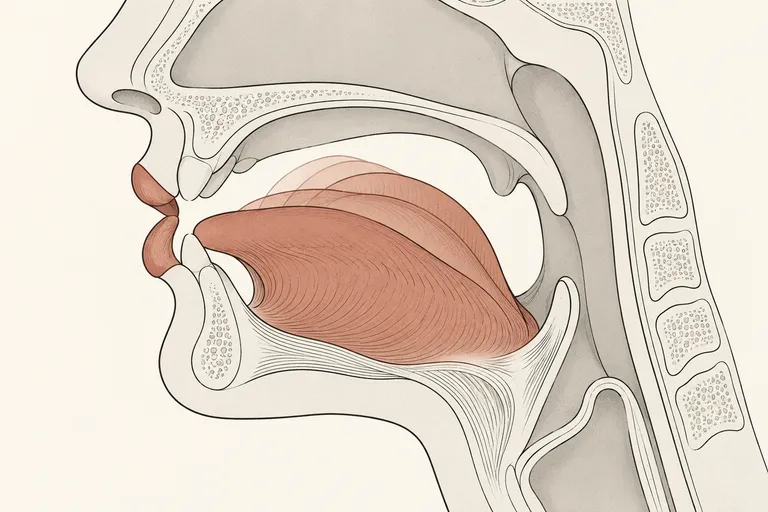
Americans start with the lips rounded in a mid-back position, similar to the vowel in 'law', then let the lips relax and spread slightly while the tongue glides up and forward in one smooth, continuous motion, ending near a short 'ih' sound, as in 'boy' and 'coin'.
Why it matters
Splitting this glide into two separate beats, or substituting a different, more familiar glide, can make 'boy' sound like 'buy' or 'toy' like 'tie' to native listeners, creating real word confusion. Practicing this exact rounded-to-front glide as one smooth motion is a worthwhile, targeted fix.
Hear the difference
Words this touches
Mandarin Chinese speakers often substitute /oi/.
How the mouth differs
Mandarin phonotactics do not include a true single-syllable diphthong gliding from a rounded mid-back vowel to a high front vowel; learners typically approximate this English diphthong by combining their separate o and i sounds, often producing a looser, two-beat sequence rather than one smooth, continuous glide, or by substituting the more familiar aɪ glide instead.
Listen for the pattern
An imprecise or substituted glide can make 'boy' sound closer to 'buy', or 'toy' closer to 'tie', since Mandarin lacks ready-made practice with this exact rounded-to-front glide shape.
Reader ratings and feedback are coming soon.
Sources (1)
- Duanmu, S. (2007). The Phonology of Standard Chinese. Oxford University Press.