/dʒ/as in jump
You likely substitute an unvoiced affricate — either your native unaspirated retroflex 'zh' sound or a plain 'ch' — because Mandarin has no voiced affricate anywhere in its system, only a contrast between aspirated and…
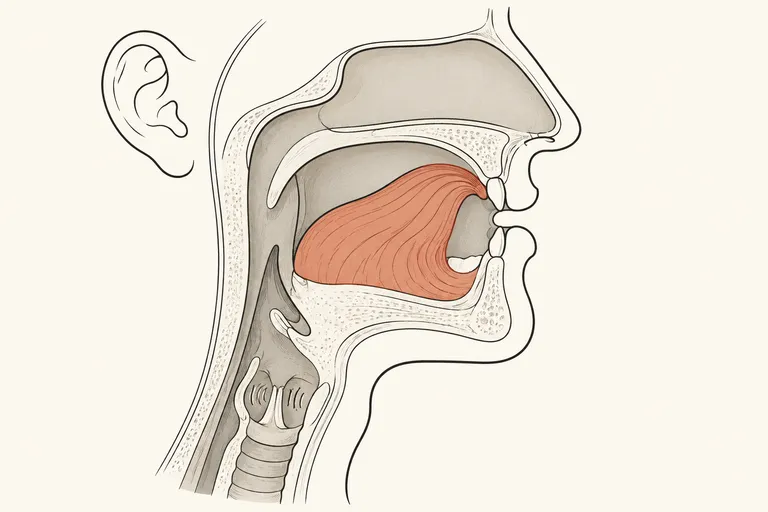
What you probably do
You likely substitute an unvoiced affricate — either your native unaspirated retroflex 'zh' sound or a plain 'ch' — because Mandarin has no voiced affricate anywhere in its system, only a contrast between aspirated and unaspirated voiceless sounds.
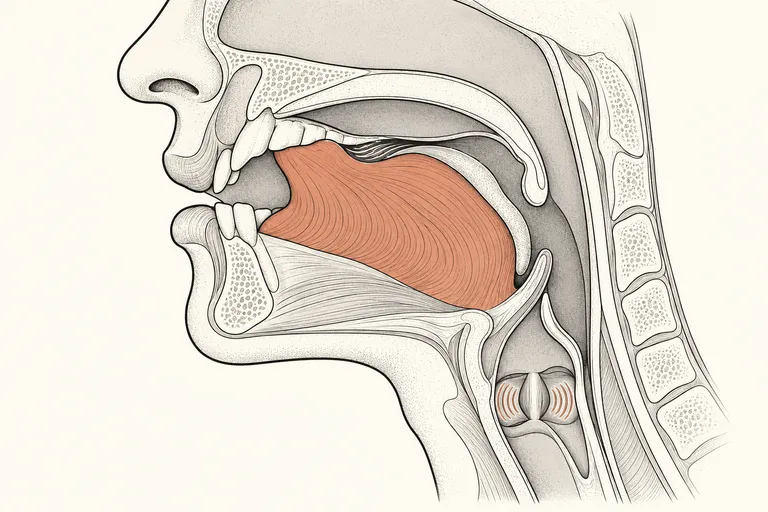
How natives do it
Native speakers make the exact same tongue motion as for 'ch' — a full stop releasing into a brief fricative — but keep the vocal folds vibrating continuously through both the closure and the release, producing a steady buzz the whole time rather than silence.
Why it matters
Because voicing is the main thing separating /dʒ/ from /tʃ/ in English, leaving it out can genuinely merge words like 'edge' and 'etch' or 'jump' and 'chump'. Adding continuous voicing through the whole affricate will make this contrast reliably clear.
Hear the difference
Words this touches
Mandarin Chinese speakers often substitute /ʈʂ, tʃ/.
How the mouth differs
Mandarin has no voiced affricate at all; even its 'unaspirated' stops and affricates are voiceless, just lacking the puff of air that marks their aspirated counterparts. Learners transfer this system, substituting the unaspirated retroflex affricate ʈʂ (pinyin 'zh') or the plain tʃ, both of which match the place and manner of articulation but lack the vocal fold vibration that defines English /dʒ/.
Listen for the pattern
Because voicing is the main cue separating /dʒ/ from /tʃ/ in English, an unvoiced substitute can genuinely merge pairs like 'edge' and 'etch' or 'jump' and 'chump', which context does not always rescue.
Reader ratings and feedback are coming soon.
Sources (2)
- Exploring Phonetic Differences and Cross-Linguistic Influences: A Comparative Study of English and Mandarin Chinese Pronunciation Patterns — 2024
- Mandarin speakers frequently substitute non-existent English sounds like /θ/ and /ð/ with /s/ or /z/, and struggle with voiced consonants due to lack of corresponding phonemes in their native system.
- English speakers often confuse Mandarin tones (particularly 2nd and 3rd) and mispronounce back vowels because English lacks a tonal structure and specific vowel inventory.
- Approximately 70% of surveyed learners identified phoneme differences as the main barrier to effective pronunciation in their target language.
- Wells, J.C. (1982). Accents of English.