/ɔ/as in law
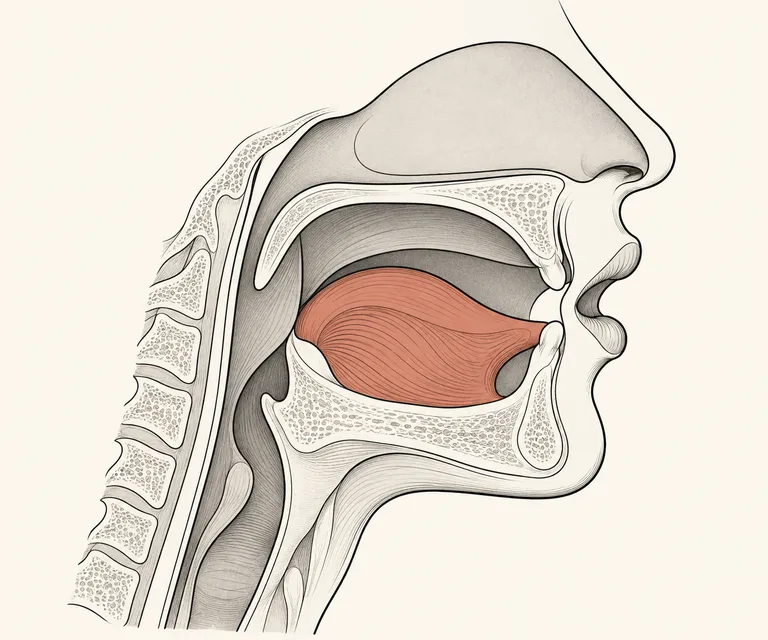
You likely reach for your Hungarian o, which is close but noticeably higher and more closed, or occasionally your rounded short a, which is lower but pulled forward — neither lands exactly on the English target.
What you probably do
You likely reach for your Hungarian o, which is close but noticeably higher and more closed, or occasionally your rounded short a, which is lower but pulled forward — neither lands exactly on the English target.
How natives do it
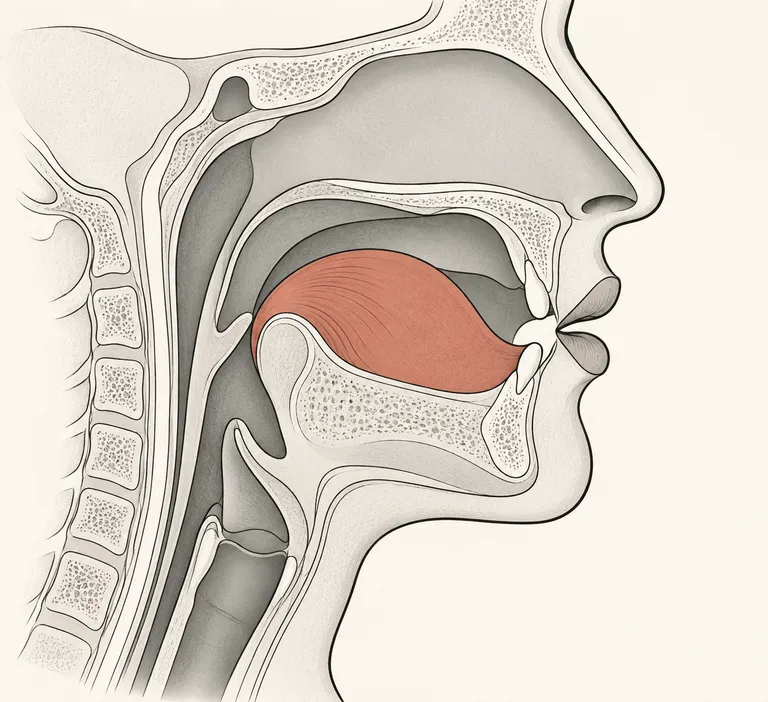
Americans round the lips gently, open the jaw moderately, and pull the tongue back and slightly lower than for o. This is the vowel many speakers use in 'law' and 'caught' — note that in much of the US this vowel has merged with ɑ, so hearing 'caught' and 'cot' pronounced identically is also acceptable.
Why it matters
Using Hungarian o instead can make 'caught' drift toward 'coat', and using ɒ can drift it toward 'cot' in an unintended way. Aiming for a moderately open jaw with light rounding keeps common words like 'talk' and 'all' clearly distinct from their neighbors.
Hear the difference
Words this touches
Hungarian speakers often substitute /o, ɒ/.
How the mouth differs
Hungarian o is a mid-back rounded vowel notably higher than English ɔ, while Hungarian's short a (ɒ) is lower but also more rounded and less retracted. English ɔ sits in between in height, with a jaw more open than Hungarian o but lips only gently, not strongly, rounded.
Listen for the pattern
Substituting Hungarian o tends to make words like 'caught' sound closer to 'coat', while substituting ɒ can push them toward the ɑ region; both substitutions are usually understood in context but add a noticeable accent marker.
Reader ratings and feedback are coming soon.
Sources (2)
- “Transylvanian Hunglish” Phonological Properties of Hungarian Accented English in Transylvania — Bálint Huszthy, 2022
- Transylvanian informants replace English open back vowels [ʌ, ɒ, ɑ] with the native vowel [ɒ], while Hungarian speakers use [a].
- Transylvanian speakers retain a higher frequency of English schwas and diphthongs compared to their Hungarian counterparts.
- The phonological differences stem from Transylvanians' heterogeneous linguistic environment involving substandard L1, local dialects, Romanian L2, and multilingualism.
- Wells, J.C. (1982). Accents of English.