/p/, /pʰ/as in pen
You probably pronounce English 'p' exactly the way you pronounce Spanish 'p' — pressing your lips together and releasing them cleanly with no extra air, since that is the only kind of 'p' that exists in Spanish, in…
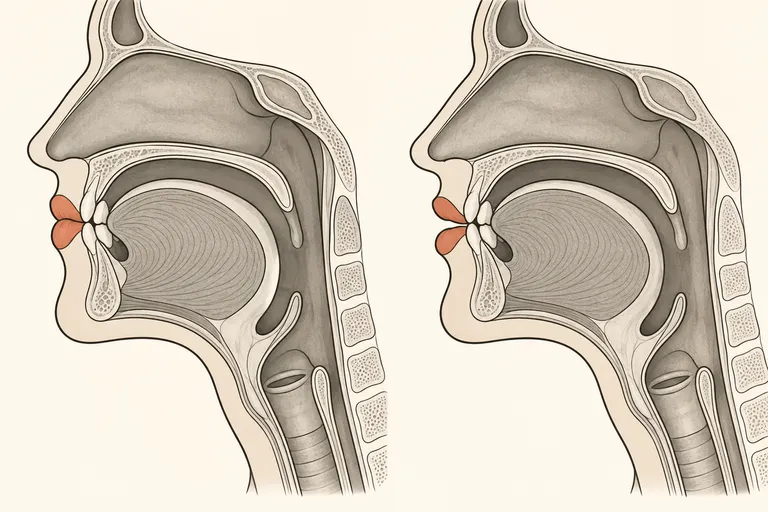
What you probably do
You probably pronounce English 'p' exactly the way you pronounce Spanish 'p' — pressing your lips together and releasing them cleanly with no extra air, since that is the only kind of 'p' that exists in Spanish, in words like 'papa' or 'perro'.
How natives do it
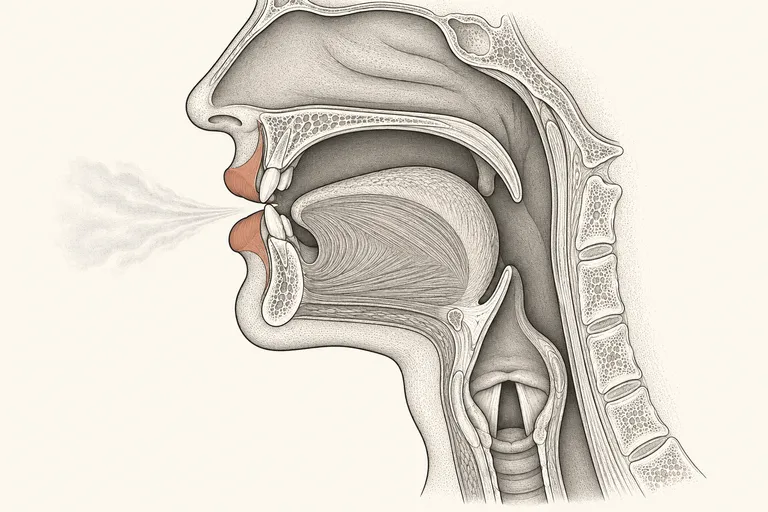
At the beginning of a stressed syllable, Americans release the lips with a strong, audible burst of air before the vowel starts — you can test this by holding a tissue near your mouth; it should flutter noticeably on words like 'pie' or 'pen', but not on 'spy' or the final p in 'cup'.
Why it matters
Because English relies heavily on aspiration, not just voicing, to separate p from b, skipping this puff of air can make your 'pie' sound confusingly close to 'buy' to American listeners, especially in background noise, making this one of the more consequential consonant habits to correct.
Hear the difference
Words this touches
Spanish speakers often substitute /p/.
How the mouth differs
Spanish p is always unaspirated, with no burst of air on release in any position; American English p is strongly aspirated at the start of a stressed syllable, releasing a clear puff of air before the following vowel begins, though it may be unaspirated after s or unreleased in coda position.
Listen for the pattern
An unaspirated p at the start of a stressed syllable can cause American listeners to perceive the sound as closer to b, since aspiration (not just voicing) is a primary cue distinguishing p from b in English; this can make words like 'pie' sound ambiguous with 'buy' in noisy conditions.
Reader ratings and feedback are coming soon.
Sources (1)
- Wells, J.C. (1982). Accents of English.