AccentMatch.US
About

This is an AI-generated research project, still being refined. It may contain errors. Reader ratings and feedback are coming soon. How this is made

For Spanish speakers

Resting mouth

Where the jaw, lips, tongue and throat sit between sounds. Changing this one habit shifts every sound a little.

Spanish

sourced
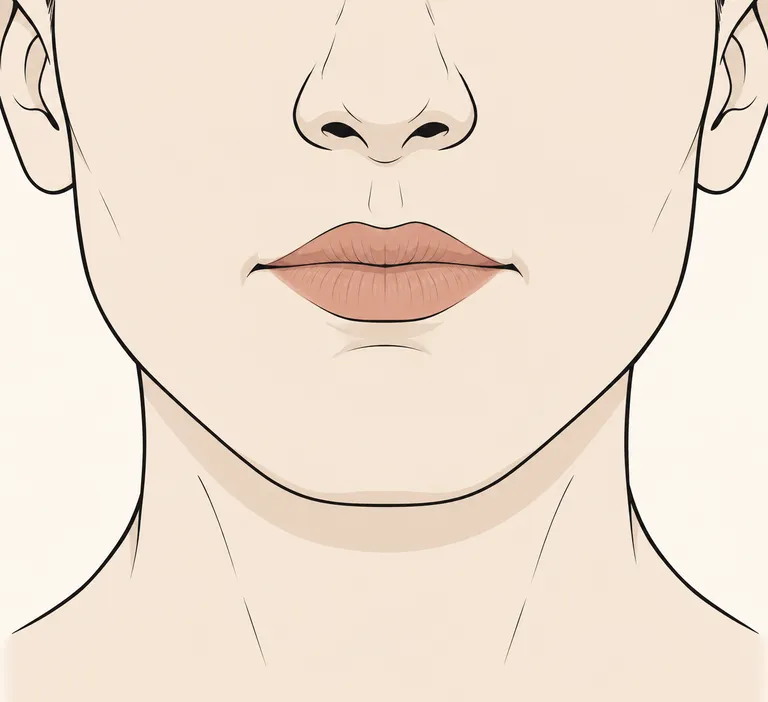
Lips gently closed and relaxed, jaw only slightly open, tongue tip resting near the upper gum ridge, cheeks loose.
Neutral rest positionLips gently closed and relaxed, jaw only slightly open, tongue tip resting near the upper gum ridge, cheeks loose.
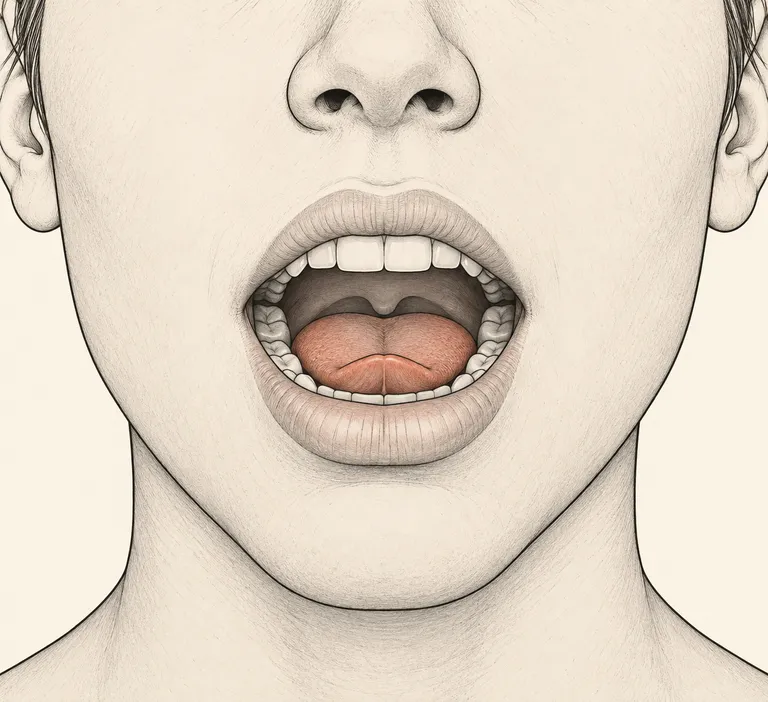
Jaw opens evenly, tongue stays low and central without bunching, lips stay neutral rather than spreading.
Producing a stressed vowel (e.g., the 'a' in casa)Jaw opens evenly, tongue stays low and central without bunching, lips stay neutral rather than spreading.
Spanish keeps a compact, evenly tensioned mouth shape at rest, with the tongue tip held forward and ready for quick taps and trills.

When you speak Spanish, your mouth stays fairly compact and relaxed compared to English. The jaw doesn't drop as far, and the lips don't spread widely the way they do for English smiling-type vowels — everything stays close to neutral. The tongue rests a little forward, near the ridge behind your top teeth, because Spanish uses quick taps and trills of the tongue tip very often, as in the difference between 'pero' and 'perro'. Every vowel keeps its full, clear sound no matter where the stress falls — there's no lazy 'uh' sound the way English reduces unstressed vowels. Overall muscle tension stays even and moderate through each word, which is why Spanish feels smooth and rhythmically regular, almost like a string of evenly-sized beads, rather than the stretchier, uneven rhythm of English.

American English

consensus
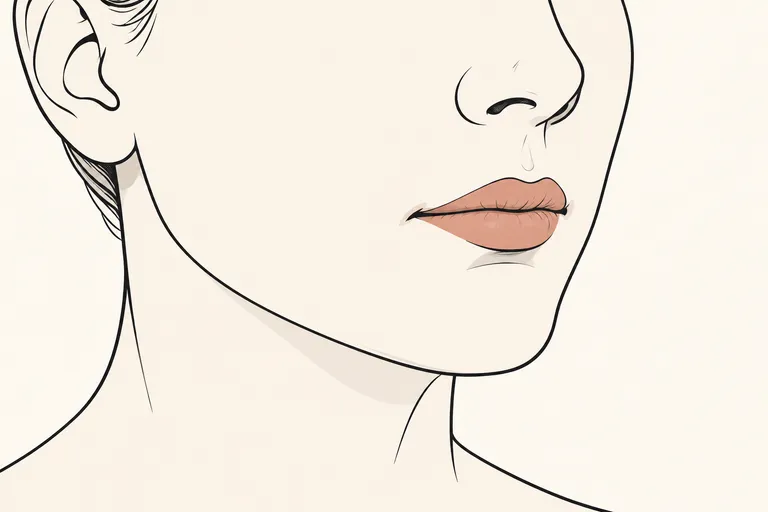
Mouth gently closed, jaw relaxed and slightly dropped, tongue tip curled slightly back near the lower gum ridge in readiness for the rhotic sound.
Rest positionMouth gently closed, jaw relaxed and slightly dropped, tongue tip curled slightly back near the lower gum ridge in readiness for the rhotic sound.
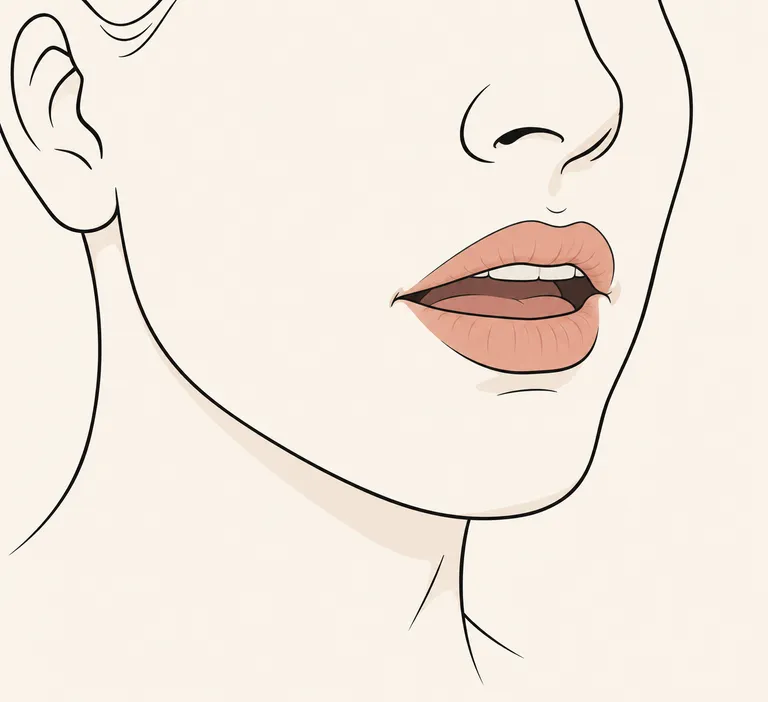
Jaw slightly lowered, lips loosely spread, tongue tip bunched and curled upward and backward without touching the roof of the mouth, as in producing 'r'.
Mid-speech, rhotic vowelJaw slightly lowered, lips loosely spread, tongue tip bunched and curled upward and backward without touching the roof of the mouth, as in producing 'r'.
General American at rest keeps the jaw loose and lips neutral; the signature feature is the tongue curling back for the ever-present 'r' sound.

General American speakers hold their mouths in a fairly relaxed, low-effort position. The jaw hangs loosely and opens moderately for vowels, without tensing. Lips stay mostly neutral or loosely spread, with only slight rounding for sounds like 'oh' or 'oo' — nothing like the pursed lips of French. The most distinctive habit is the tongue: its tip curls slightly upward and back throughout speech, ready to produce the classic American 'r' sound that appears after nearly every vowel. Cheeks stay soft, and the throat feels open rather than tight. Overall, English speech feels loose and economical — sounds glide into each other with minimal extra muscular effort, and stressed syllables get noticeably more energy than the many quickly mumbled, reduced unstressed ones in between.

Side by side

SpanishAmerican English
Jaw Slightly more closed and relaxed at rest than in English, with smaller vertical movements during speech. Moderately open with flexible movement; not habitually clenched or held rigid.
Lips Mostly neutral, with light rounding for rounded vowels; much less habitual spreading than English uses for front vowels. Neutral to loosely spread most of the time; only slight rounding for sounds like 'oh' or 'oo'.
Tongue at rest Rests in a mid, slightly forward position, staying close to the ridge behind the upper front teeth so it is ready for frequent tongue-tip taps and trills. Body rests fairly low and slightly retracted; tip stays relaxed near the lower ridge, ready to curl back for the pervasive rhotic sound.
Cheeks Relatively relaxed, with little visible cheek tension. Relaxed, not tensed or hollowed.
Pharynx and larynx Neutral pharyngeal space; no habitual constriction or bracing. Larynx neutral to slightly lowered; pharyngeal space open, supporting the characteristic rhotic quality.
Velum Standard oral–nasal switching for m, n, ñ; vowels are not nasalized as a rule (unlike French). Lowers readily for nasal consonants and nasalized vowels before them; otherwise raised.
Overall tension Moderate and evenly spread across each syllable, which helps keep syllables similarly timed and clearly articulated. Low to moderate; articulation favors economy of movement over precision.
Voice quality Modal, clear voice quality; not breathy or creaky. Modal voice, sometimes slightly breathy in casual speech; creaky voice ('vocal fry') can appear phrase-finally.
resting mouth · marks your accent strongly

Resting mouth

You likely keep your jaw more closed and your facial muscles evenly, moderately tensed through each syllable, the way Spanish requires for its quick taps and trills and its five pure vowel sounds.
consensus
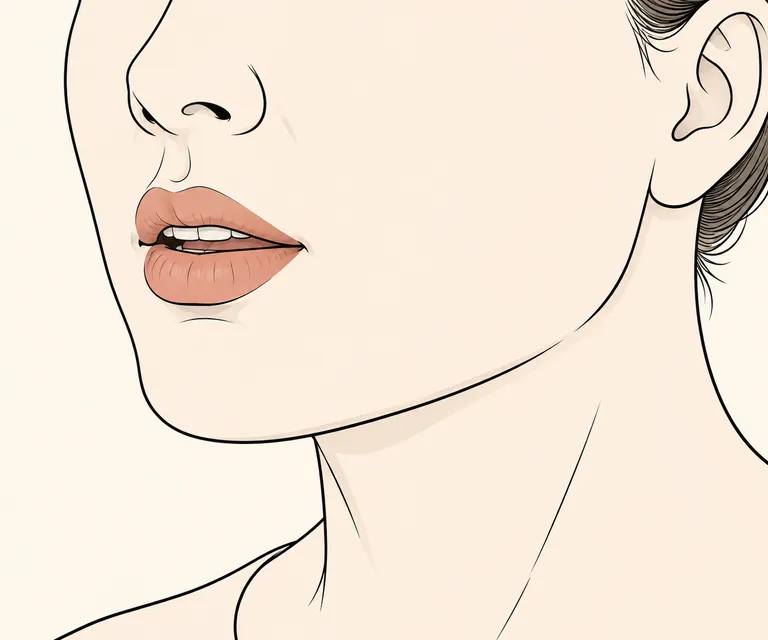
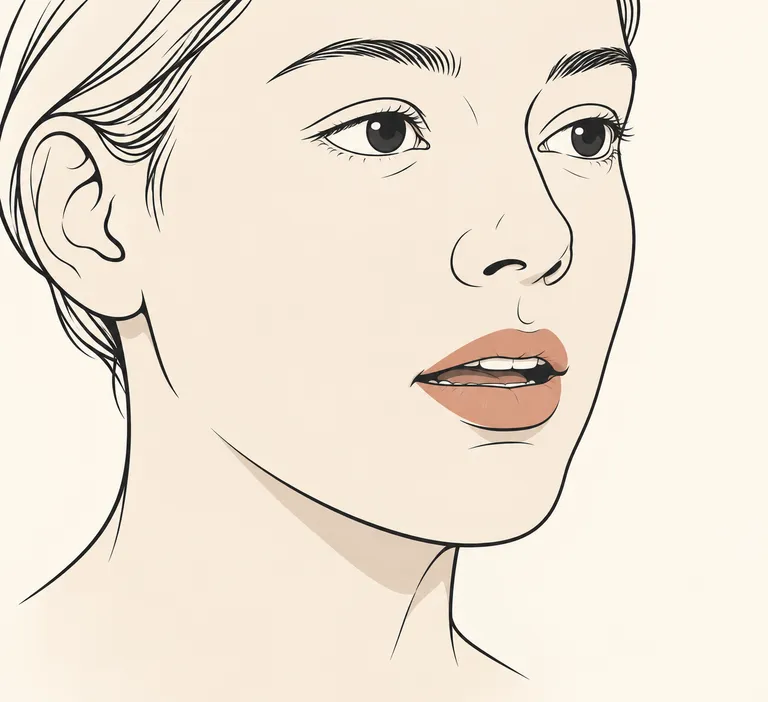
Jaw only slightly open, lips neutral and relaxed, tongue tip resting forward near the upper gum ridge, muscles evenly and moderately tensed.
Spanish resting postureJaw only slightly open, lips neutral and relaxed, tongue tip resting forward near the upper gum ridge, muscles evenly and moderately tensed.
Jaw loosely dropped, lips neutral to slightly spread, tongue body low and retracted with the tip curled back in readiness for r, overall muscles looser.
American resting postureJaw loosely dropped, lips neutral to slightly spread, tongue body low and retracted with the tip curled back in readiness for r, overall muscles looser.
Spanish keeps a compact, evenly tensed mouth with the tongue tip forward; American English relaxes the jaw more and curls the tongue tip back, ready for its ever-present r.

What you probably do

You likely keep your jaw more closed and your facial muscles evenly, moderately tensed through each syllable, the way Spanish requires for its quick taps and trills and its five pure vowel sounds. Your tongue tip naturally rests forward, close to your upper gum ridge, ready for sounds like the tapped r in 'pero' — a position that doesn't leave much room for English's curled-back tongue shape.

How natives do it

General American speakers let the jaw hang looser and open more freely, keep the lips mostly neutral with only slight rounding for 'oh' and 'oo' sounds, and rest the tongue body lower and further back in the mouth. Crucially, the tongue tip stays curled slightly upward and backward almost constantly, ready to produce the r coloring that appears after most English vowels. Overall muscular effort is lower, favoring smooth, economical movement over crisp precision.

Why it matters

This whole-mouth posture shapes every sound you produce, not just individual vowels or consonants, which is part of why even grammatically perfect English can still sound foreign. Holding onto Spanish's more closed, evenly tensed, forward-tongue setting makes rhotic sounds, vowel reduction, and English's loose rhythm all harder to achieve. Practicing the looser jaw and backward tongue-curl as a baseline posture, rather than switching it on only for individual r sounds, pays off across your whole accent.

How the mouth differs

Spanish keeps the jaw more closed with smaller movements, lips mostly neutral with little habitual spreading, the tongue resting forward near the upper gum ridge ready for frequent taps and trills, and moderate, evenly spread muscular tension across each syllable; English keeps the jaw moderately open and flexible, lips neutral to loosely spread, the tongue body resting lower and slightly retracted with the tip curled back in constant readiness for the pervasive rhotic sound, and overall tension that is low to moderate, favoring economy of movement over precision.

Listen for the pattern

The curled-back tongue posture for English's pervasive rhotic sound, combined with looser overall muscle tension, is one of the first things that marks fluent versus foreign-sounding English for Spanish speakers, independent of any single vowel or consonant error.

Reader ratings and feedback are coming soon.

Sources (2)
  • Wells, J.C. (1982). Accents of English.
  • Hualde, J.I. (2005). The Sounds of Spanish. Cambridge University Press.