/aʊ/as in how
Because Spanish already has a similar glide in words like 'causa', you likely produce English aʊ with the right overall shape but too quickly, with less jaw opening at the start and only light, brief lip rounding at the…
What you probably do
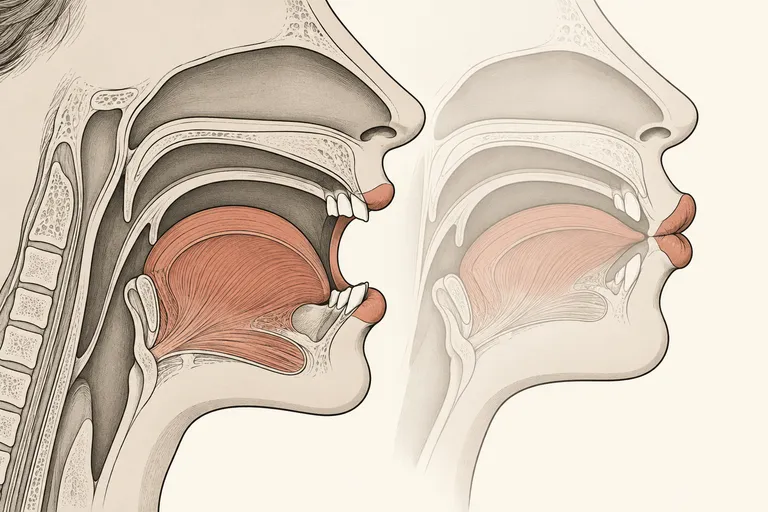
Because Spanish already has a similar glide in words like 'causa', you likely produce English aʊ with the right overall shape but too quickly, with less jaw opening at the start and only light, brief lip rounding at the end, matching the tighter Spanish pattern.
How natives do it
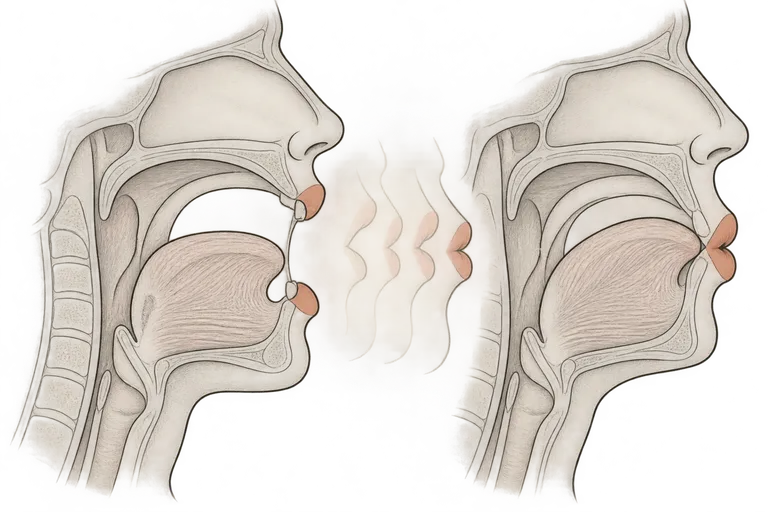
Americans drop the jaw wider at the beginning and hold that open position a little longer, then round the lips more deliberately as the tongue rises and pulls back toward a near-'oo' quality at the finish, giving the whole vowel a longer, more relaxed glide.
Why it matters
This difference is usually minor since Spanish speakers already produce a recognizable version of this glide, but rushing it or under-rounding the ending can make stressed words like 'house' or 'now' sound clipped, so slowing down and rounding more fully at the end will sound more natural.
Hear the difference
Words this touches
Spanish speakers often substitute /au/.
How the mouth differs
Spanish has a similar glide in words like 'causa' or 'autor', but it is quick and only lightly rounded at the end; American English aʊ opens the jaw wider at the onset, holds the low starting position longer, and finishes with stronger, more deliberate lip rounding as the tongue rises and retracts toward a near-'oo' quality.
Listen for the pattern
An under-lengthened, weakly-rounded aʊ can sound rushed or clipped to American listeners, and if the glide is cut short it may drift toward a plain open vowel, occasionally reducing the perceived difference between words like 'how' and a shortened 'ha'.
Reader ratings and feedback are coming soon.
Sources (1)
- Wells, J.C. (1982). Accents of English.