Final consonant release
You likely give every final consonant in an English word a full, clear, audible release, the same crisp way Hungarian handles word-final sounds, especially before a pause.
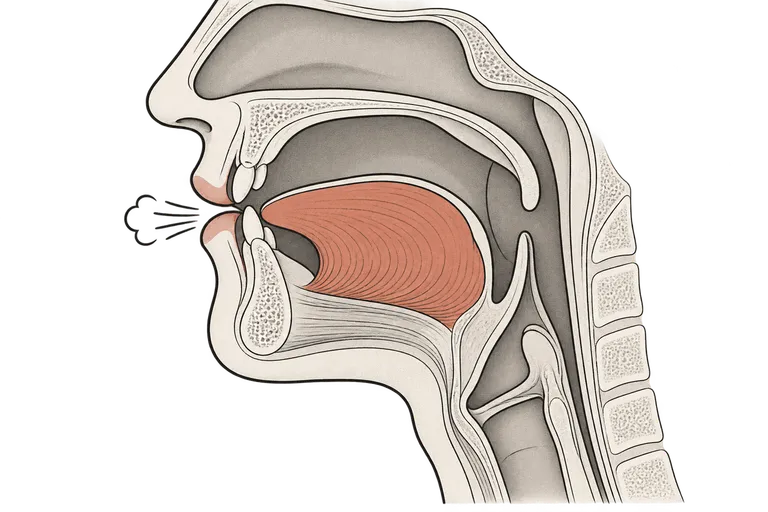
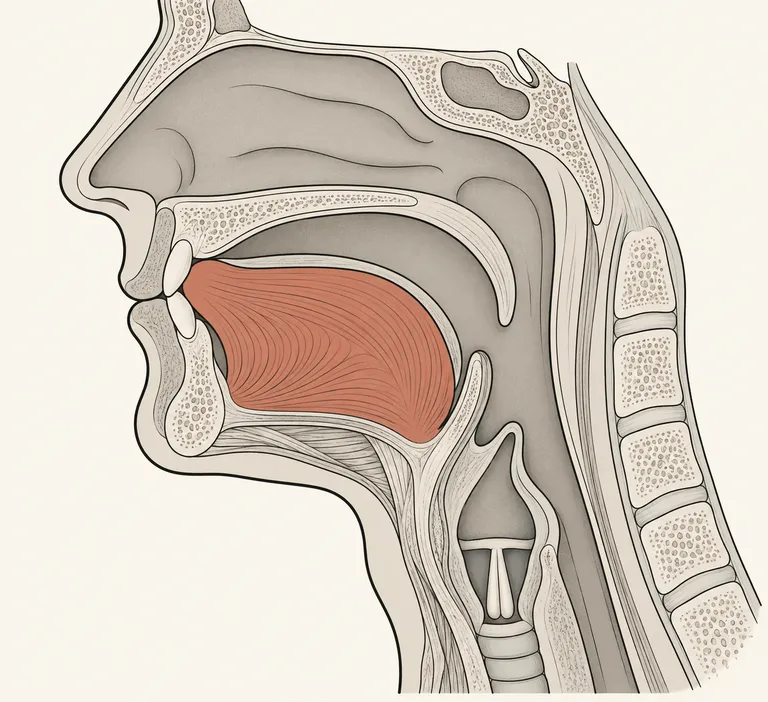
What you probably do
You likely give every final consonant in an English word a full, clear, audible release, the same crisp way Hungarian handles word-final sounds, especially before a pause.
How natives do it
Americans frequently leave final stops like the t in 'that' or the k in 'black' unreleased, or replace them with a soft glottal catch, letting the sound trail off quietly rather than popping it audibly.
Why it matters
Over-releasing final consonants isn't unintelligible, but it can make speech sound unusually emphatic, clipped, or foreign; softening final releases, especially before pauses, helps English sound more relaxed and natural.
How the mouth differs
Hungarian releases word-final consonants clearly and audibly as a matter of habit, reflecting its generally crisp, consonant-precise articulation. General American frequently leaves final stops unreleased or replaces them with a glottal stop, especially before a pause or another consonant, giving final consonants a clipped, understated quality.
Listen for the pattern
Fully releasing every final consonant, as Hungarian habits encourage, can make English speech sound overly emphatic or staccato to American ears, which expect final stops to trail off quietly or even disappear into a glottal catch before a pause.
Try these sentences
- Stop! I can't do that.General American often leaves the final stops in 'stop', 'can't', and 'that' unreleased or lightly glottalized before a pause.
- He has a big black cat.Final stops in 'big', 'black', and 'cat' are clipped short rather than being fully, audibly released.
Reader ratings and feedback are coming soon.
Sources (1)
- Prof John C. Wells_Workshop: Questions and Answers onEnglish...
- The content identifies core phonetic features relevant to accent analysis, including tonal patterns (High Fall, Fall-Rise) and articulatory phenomena (aspiration, clipping, glottal stop).
- It references John C. Wells' 'Accents of English' as the primary theoretical source for understanding English accent variation.
- The material targets early English teaching and learning contexts by highlighting specific tonicity and syllabification rules.