/ŋ/as in sing
You may add an extra hard 'g' after this sound, or replace it with your familiar tongue-tip 'n', since in Spanish this back-of-mouth nasal never appears alone at the end of a word without a following k or g.
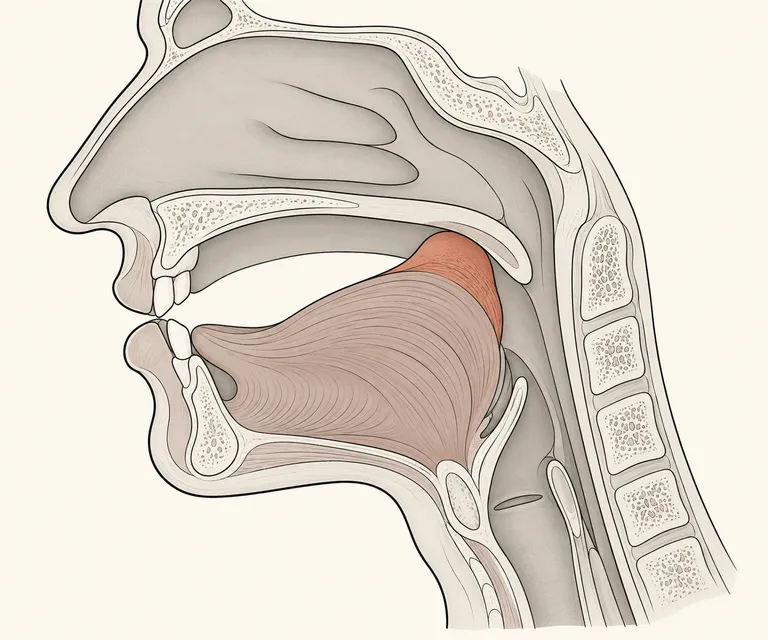
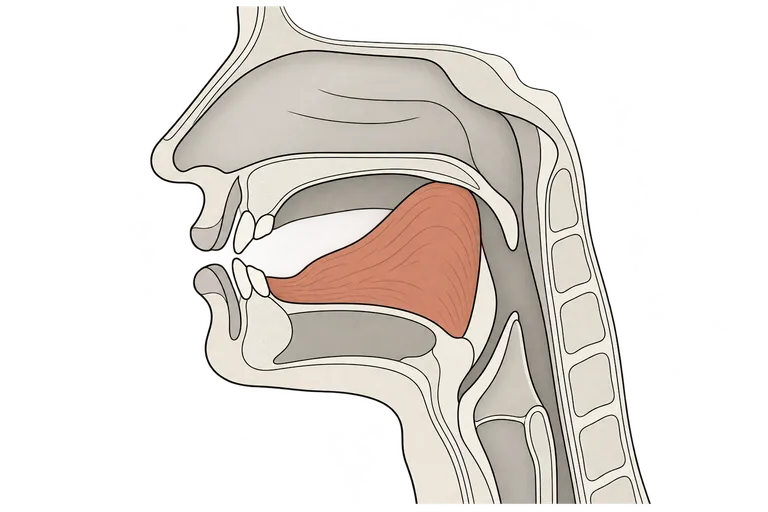
What you probably do
You may add an extra hard 'g' after this sound, or replace it with your familiar tongue-tip 'n', since in Spanish this back-of-mouth nasal never appears alone at the end of a word without a following k or g.
How natives do it
Let the back of your tongue rise and stay touching the soft palate as the very last sound of the word, keeping your tongue tip down and never releasing a stop or a 'g' sound afterward.
Why it matters
This exact sound ends the extremely common -ing verb form in English, so mispronouncing it affects an enormous number of everyday words like 'walking' and 'morning', and can blur pairs like 'sin' versus 'sing'.
Hear the difference
Words this touches
Spanish speakers often substitute /ŋg, n/.
How the mouth differs
In Spanish, the velar nasal only ever appears automatically before a following k or g sound (as in 'tengo'); it never stands alone word-finally. English uses it as an independent word-final sound with no following stop, so learners either add an unwanted g afterward or substitute the more familiar n.
Listen for the pattern
Listeners often hear either an extra 'g' tacked onto -ing words ('singing' sounding like 'singging') or a plain 'n' instead ('sing' sounding like 'sin'), both of which are frequent and noticeable in this very common verb ending.
Reader ratings and feedback are coming soon.
Sources (2)
- Wells, J.C. (1982). Accents of English.
- Hualde, J.I. (2005). The Sounds of Spanish. Cambridge University Press.