/l/, /ɫ/as in light
You likely use the same bright, forward l in every position, including at the ends of words like 'feel' or 'milk', because Spanish never asks you to change the back of your tongue for this sound.
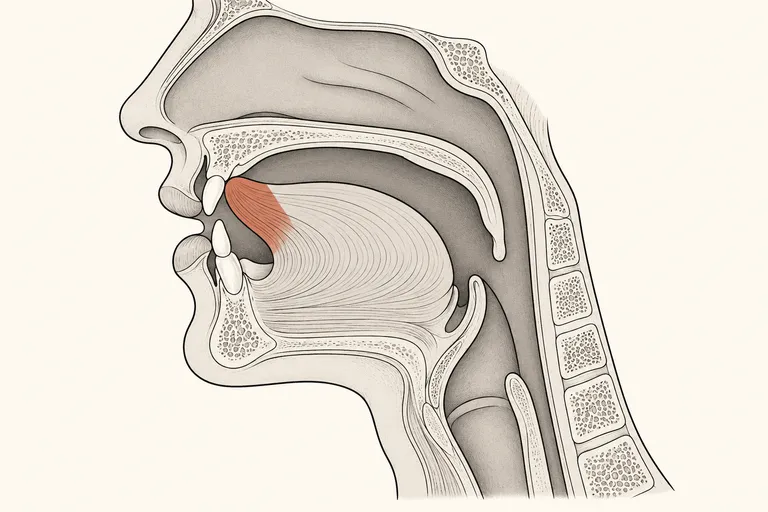
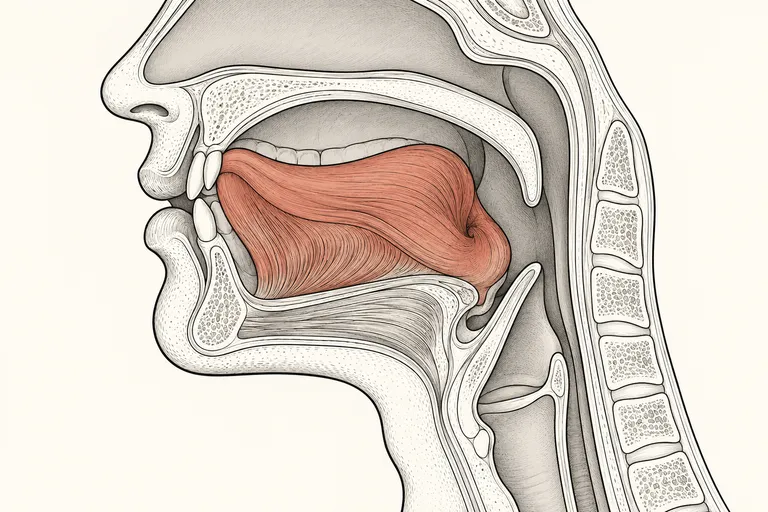
What you probably do
You likely use the same bright, forward l in every position, including at the ends of words like 'feel' or 'milk', because Spanish never asks you to change the back of your tongue for this sound.
How natives do it
Keep the tongue tip touching the ridge as always, but at the end of a syllable, pull the back of your tongue up and toward your throat at the same time, giving the sound a deeper, hollow quality.
Why it matters
This difference rarely causes real confusion, but a consistently bright l in coda position is one of the small, persistent cues that mark a Spanish accent, even in learners with otherwise strong pronunciation.
Hear the difference
Words this touches
Spanish speakers often substitute /l/.
How the mouth differs
Spanish has only one clear, front-articulated l used in every position; English requires a darker, velarized l in syllable codas, where the back of the tongue pulls up and back toward the throat while the tip still touches the ridge.
Listen for the pattern
Using the same bright, clear l everywhere makes coda l's in words like 'feel' or 'milk' sound thinner and more forward than natives expect, contributing to a subtle but persistent accent quality without usually blocking understanding.
Reader ratings and feedback are coming soon.
Sources (2)
- Wells, J.C. (1982). Accents of English.
- Hualde, J.I. (2005). The Sounds of Spanish. Cambridge University Press.