Flap t
You likely pronounce every t with a crisp, fully released dental stop no matter where it falls in the word, exactly as you would in 'tomate'.
What you probably do
You likely pronounce every t with a crisp, fully released dental stop no matter where it falls in the word, exactly as you would in 'tomate'. Between vowels, in words like 'water' or 'butter', you keep that same sharp t, because Spanish never softens single t sounds this way — your tapped sound is reserved for a completely different letter, r.
How natives do it
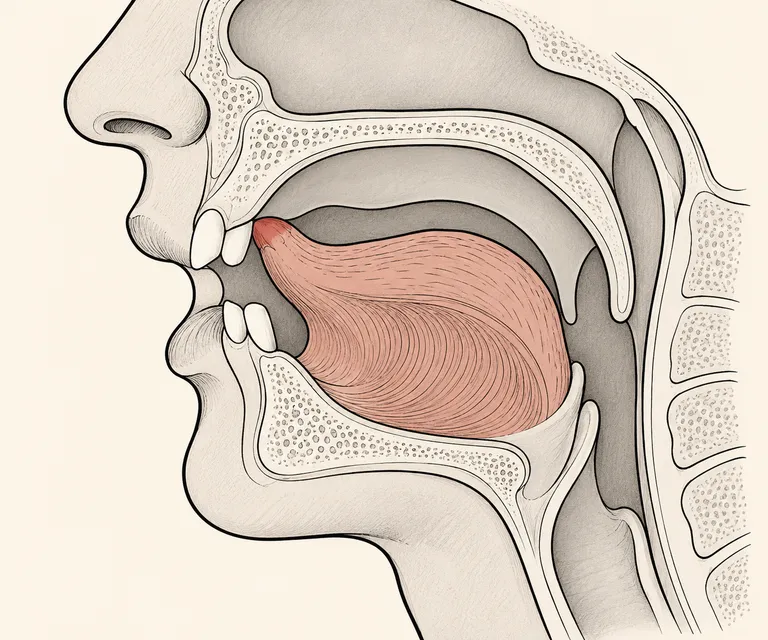
In relaxed American speech, a t or d between two vowels (or before certain syllabic sounds) almost always turns into a quick, light tap of the tongue against the gum ridge — the same gesture you already make for the Spanish tapped r in 'pero'. 'Butter' becomes closer to 'budder', and 'writer' and 'rider' can sound nearly identical. This tap is faster and softer than either a full t or d.
Why it matters
Keeping your t's crisp and fully pronounced everywhere makes your English sound clipped, overly formal, or foreign, even when every word is technically correct. Native listeners rely on the flap to recognize casual, natural rhythm; its absence is one of the most reliable markers of a foreign accent. Borrowing your existing Spanish tapped-r gesture for intervocalic t and d will make your speech sound dramatically more fluent with very little extra effort.
How the mouth differs
English intervocalic t and d reduce to a brief alveolar tap with minimal closure duration and no release burst, essentially the same gesture as the Spanish tapped r; Spanish speakers keep /t/ and /ɾ/ as separate phonemes and so apply a full, crisply released dental or alveolar stop for t in every position, including between vowels.
Listen for the pattern
Fully released, unflapped t's sound stiff, overly careful, or foreign to American ears, since flapping is one of the most frequent, expected features of casual connected American speech.
Try these sentences
- Can you pass the butter?intervocalic t flaps to a quick tap, close to 'budder'
- I'm getting a little better.both t's flap between vowels, close to 'gedding', 'bedder'
- She's a writer, not a rider.flapping can make 'writer' and 'rider' sound nearly identical
Reader ratings and feedback are coming soon.
Sources (1)
- Wells, J.C. (1982). Accents of English.