/ʌ/as in cup
You likely use your single Mandarin low vowel 'a' for the vowel in 'cup' and 'love', the same vowel you may also be using for 'cat' and 'cot', since Mandarin has only one open vowel covering all of these positions.
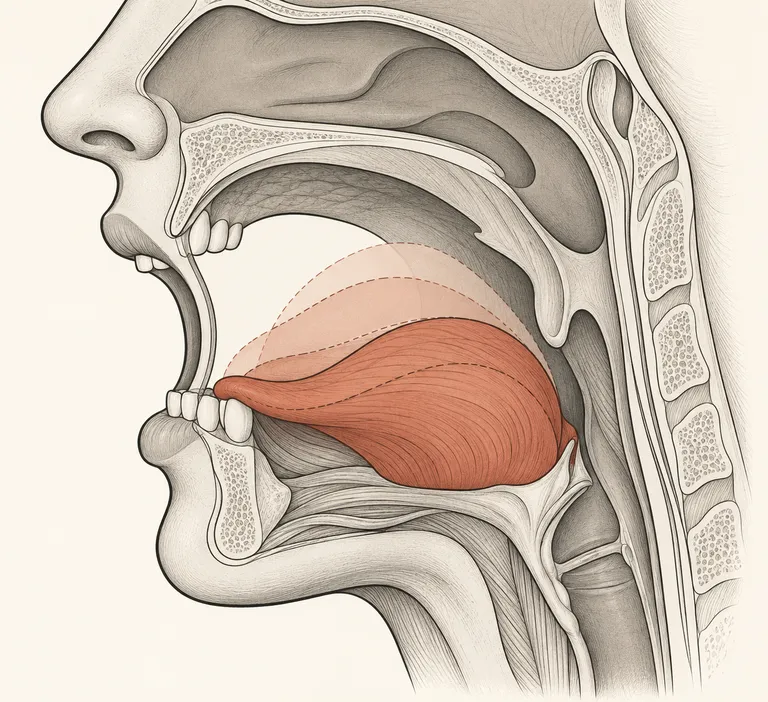

What you probably do
You likely use your single Mandarin low vowel 'a' for the vowel in 'cup' and 'love', the same vowel you may also be using for 'cat' and 'cot', since Mandarin has only one open vowel covering all of these positions.
How natives do it
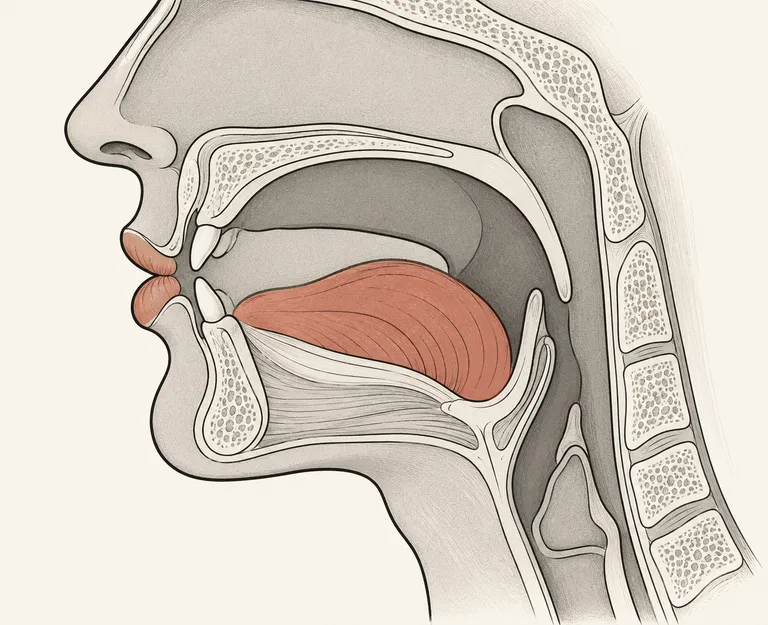
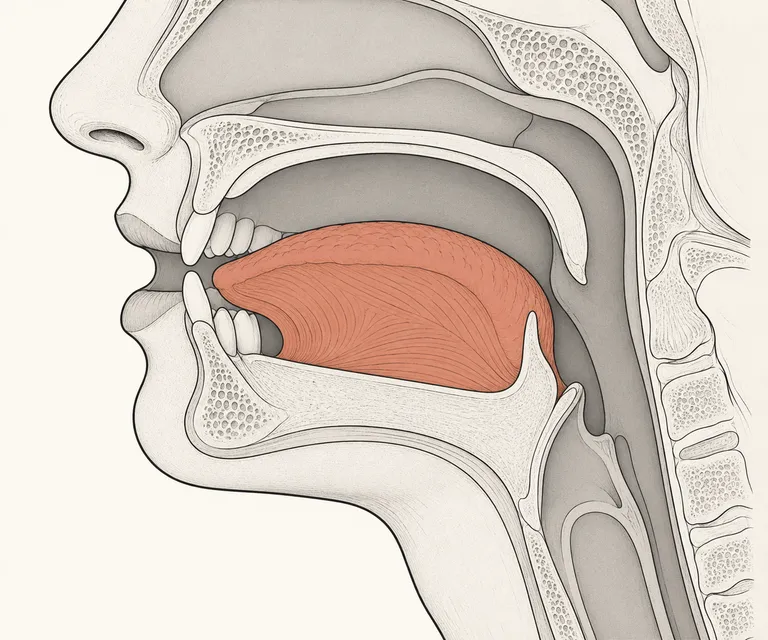
Americans keep the jaw only moderately open, less wide than for the vowel in 'cat', and let the tongue rest in a relaxed, fairly central position, neither pushed to the front nor pulled fully back, producing the short, punchy 'uh' in 'cup' and 'love'.
Why it matters
Collapsing this vowel together with æ and ɑ means common pairs like 'cut' and 'cot', or 'luck' and 'lock', can sound identical to native listeners, creating real misunderstandings. Pulling the tongue slightly higher and more central than your Mandarin 'a', with a smaller jaw opening, is a high-value fix.
Hear the difference
Words this touches
Mandarin Chinese speakers often substitute /a/.
How the mouth differs
Mandarin's single low vowel 'a' is more open and flexible in backness than English ʌ, which is a shorter, mid-low, central-to-back vowel produced with a more relaxed, less wide-open jaw; learners typically use the same Mandarin 'a' for this sound that they also use for English æ and ɑ, collapsing three categories into one.
Listen for the pattern
Using one vowel for ʌ, ɑ, and æ means listeners often cannot tell 'cut' from 'cot' or 'luck' from 'lock', which is one of the more disruptive vowel mergers for Mandarin-speaking learners.
Practise it
Hear the Difference: Cup vs. Cop
sourced- Put on headphones in a quiet room.
- Listen to each pair — 'cup/cop', 'luck/lock' — one at a time without seeing the spelling.
- Decide which word you heard: the brighter, more central vowel (cup, luck) or the darker, rounder one (cop, lock).
- Check your answer, then replay any pair you missed, listening especially for lip rounding in the back vowel.
- Repeat the full set of pairs three times, tracking your accuracy each round.
- Stop once you can tell them apart correctly at least 9 times out of 10.
Success check: You can correctly distinguish 'cup' from 'cop' and 'luck' from 'lock' at least 9 times out of 10 by ear alone.
Why this works. Forced-choice identification of 'cup/cop'-type pairs targets the specific acoustic cues (vowel backness and rounding, reflected in F2/F3 frequency) that separate central unrounded /ʌ/ from Hungarian's back rounded /ɒ/ substitute; repeated feedback-driven listening reshapes the perceptual boundary before production is attempted, following the standard perception-before-production sequence in L2 vowel training.
Sources (2)
- Using multiple measures to document change in English vowels produced by Japanese, Korean, and Spanish speakers: the case for goodness and intelligibility. — Amber D Franklin, Carol Stoel-Gammon, 2014
- Both goodness ratings and intelligibility scores effectively captured improvements in vowel accuracy following pronunciation training.
- The relationship between goodness and intelligibility varies by vowel; vowels like /æ/ and /ʌ/ depend more on goodness for listener identification than /i/ and /e/.
- Some vowels received better mean intelligibility scores but poorer mean goodness ratings after training, indicating that high intelligibility does not always require high perceived quality.
- Wells, J.C. (1982). Accents of English.
Drill Sentences for ʌ
sourced- Read this sentence slowly, underlining every 'uh' vowel: 'The young monkey loves to run and jump for fun in the sun.'
- Before each underlined word, briefly check your lips are flat and your tongue is centered, not rounded or pulled back.
- Record yourself reading the sentence at a natural pace.
- Play it back and listen to each underlined vowel — does it sound bright and central, or does it drift toward 'ah' or 'o'?
- Mark any words that drifted and repeat just those words five times, exaggerating the flat lips.
- Read the full sentence again at normal speed, keeping every 'uh' vowel unrounded and central.
Success check: On playback, every underlined vowel in the sentence sounds short, bright, and central, with no rounding creeping in on any of them.
Why this works. Drilling the target vowel inside full sentences, rather than isolated words, trains the learner to maintain the unrounded, centralized tongue posture under the coarticulatory pressure of surrounding consonants and vowels, where the risk of reverting to the rounded, backed L1 substitute is highest.
Sources (1)
- Training the pronunciation of L2 vowels under different conditions: the use of non-lexical materials and masking noise. — Joan C Mora, Mireia Ortega, Ingrid Mora-Plaza et al., 2022
- Non-lexical training materials produced greater pronunciation improvements for L2 learners compared to lexical (word-based) materials.
- Masking noise during training hindered performance specifically for participants using non-lexical stimuli, but did not negatively affect those using words.
- Training-induced gains in vowel production were more pronounced when vowels appeared in sentences than when elicited in isolated words.
Exaggerate ʌ, Then Dial It Back
sourced- Say 'cuhhhhp' with your lips pulled as flat and wide as possible and the vowel held far too long, exaggerating the lack of rounding.
- Record this exaggerated version and confirm it sounds nothing like the rounded Hungarian 'a'.
- Repeat with 'luhhhhck' and 'luhhhhve', again holding the exaggerated flat vowel.
- Now say the same words with only half that exaggeration, keeping the vowel shorter and the lip-flattening less extreme.
- Finally, say the words at a natural conversational pace, keeping the lips unrounded but the vowel brief and natural.
- Compare your natural-pace recording to the exaggerated one and confirm the vowel still sounds bright and central, not rounded.
Success check: Your natural-speed 'cup' still sounds clearly unrounded and central, and you can recall the exaggerated flat-lip version as a reference anytime the vowel starts drifting back toward the rounded Hungarian 'a'.
Why this works. Deliberately over-centralizing and over-flattening the vowel — pushing the tongue further forward and the lips flatter than natural English requires — creates a large, unmistakable perceptual and motor distance from the rounded, backed Hungarian substitute, making the category boundary vivid before the gesture is dialed back to a natural articulation; this overshoot-then-fade approach mirrors exaggeration-based training shown to sharpen categorical vowel perception in adult L2 learners.
Sources (2)
- The Role of Temporal Acoustic Exaggeration in High Variability Phonetic Training: A Behavioral and ERP Study — Bing Cheng, Xiaojuan Zhang, Siying Fan et al., 2019
- The HVPT-E group showed greater improvement in natural word identification performance compared to the standard HVPT group.
- Training with temporal acoustic exaggeration induced native-like categorical perception based on spectral cues.
- MMN responses demonstrated training-induced changes at pre-attentive neural levels, suggesting enhanced brain plasticity.
- Using multiple measures to document change in English vowels produced by Japanese, Korean, and Spanish speakers: the case for goodness and intelligibility. — Amber D Franklin, Carol Stoel-Gammon, 2014
- Both goodness ratings and intelligibility scores effectively captured improvements in vowel accuracy following pronunciation training.
- The relationship between goodness and intelligibility varies by vowel; vowels like /æ/ and /ʌ/ depend more on goodness for listener identification than /i/ and /e/.
- Some vowels received better mean intelligibility scores but poorer mean goodness ratings after training, indicating that high intelligibility does not always require high perceived quality.
Say It Right: Producing English ʌ
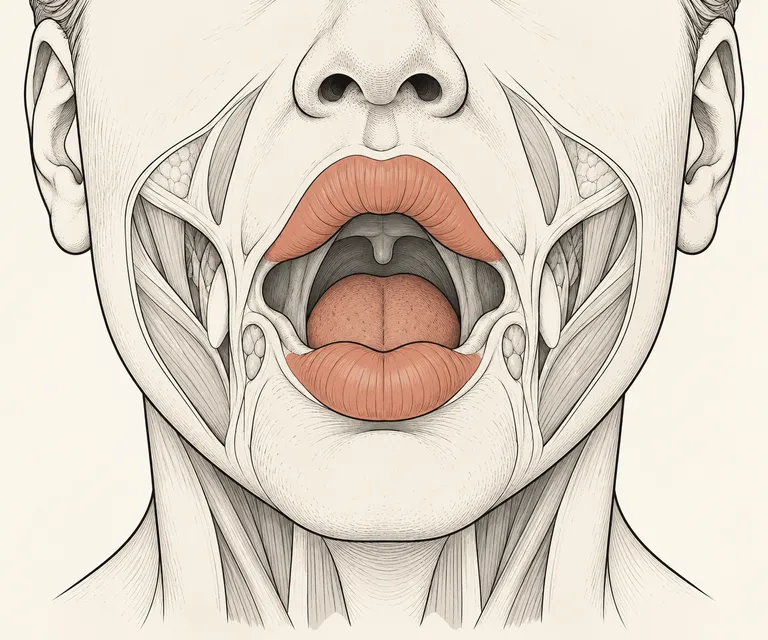
sourced- Look in a mirror and say the Hungarian word 'kor', noticing your rounded lips.
- Now relax your lips completely flat, as if about to say 'ah', and keep your tongue from pulling backward.
- Say 'cup' slowly, checking in the mirror that your lips never round at any point during the vowel.
- Say the pair 'cup' then 'cop' back to back, exaggerating the lip difference between them at first.
- Record yourself saying 'cup, luck, love, done' and check each vowel sounds short, central, and unrounded.
- Repeat until your lips stay visibly flat and relaxed on every single word.
Success check: In the mirror, your lips show zero rounding during the vowel in 'cup', and your recording sounds noticeably brighter and more central than your old 'cop'-like version.
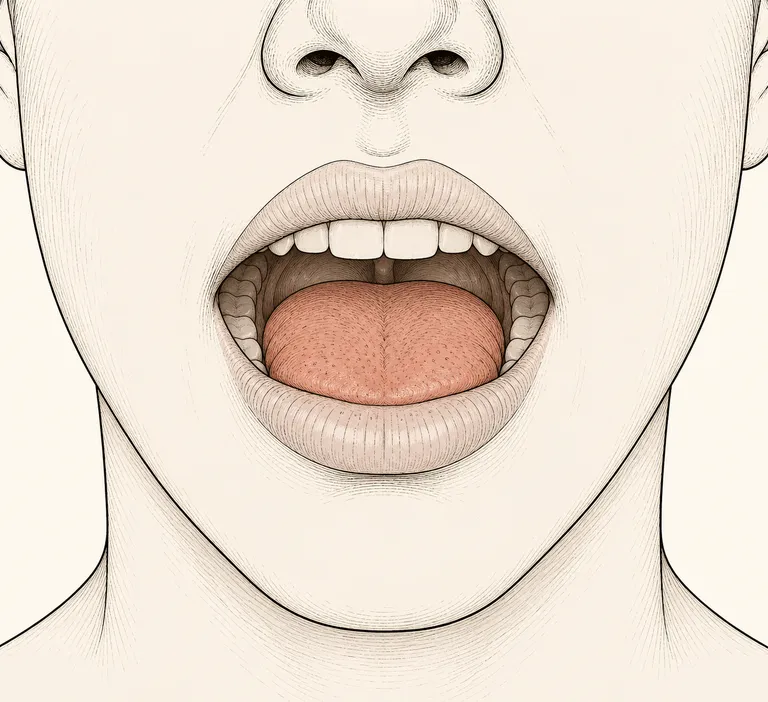
Why this works. Producing true minimal pairs forces an either/or commitment between the central unrounded target and the back rounded L1 substitute; visual mirror feedback on lip shape combined with recorded playback gives the two feedback channels most useful for correcting a vowel-quality error, consistent with research showing vowel training benefits from feedback across both isolated and connected-speech contexts.
Sources (2)
- Using multiple measures to document change in English vowels produced by Japanese, Korean, and Spanish speakers: the case for goodness and intelligibility. — Amber D Franklin, Carol Stoel-Gammon, 2014
- Both goodness ratings and intelligibility scores effectively captured improvements in vowel accuracy following pronunciation training.
- The relationship between goodness and intelligibility varies by vowel; vowels like /æ/ and /ʌ/ depend more on goodness for listener identification than /i/ and /e/.
- Some vowels received better mean intelligibility scores but poorer mean goodness ratings after training, indicating that high intelligibility does not always require high perceived quality.
- Training the pronunciation of L2 vowels under different conditions: the use of non-lexical materials and masking noise. — Joan C Mora, Mireia Ortega, Ingrid Mora-Plaza et al., 2022
- Non-lexical training materials produced greater pronunciation improvements for L2 learners compared to lexical (word-based) materials.
- Masking noise during training hindered performance specifically for participants using non-lexical stimuli, but did not negatively affect those using words.
- Training-induced gains in vowel production were more pronounced when vowels appeared in sentences than when elicited in isolated words.
Use Your 'E' to Find 'ʌ'
consensus- Say the Hungarian vowel 'e' (as in 'kert') and notice your jaw height and relaxed lips.
- Keeping your jaw at that exact same height, let your tongue ease back just slightly, away from the front of your mouth.
- Keep your lips completely relaxed and unrounded the whole time — do not let them move.
- Say 'cup' using this adjusted tongue position and jaw height.
- Alternate between your Hungarian 'e' and this new sound several times, feeling only the small backward tongue shift.
- Check in the mirror that your jaw doesn't drop lower or your lips don't round during the shift.
Success check: You can feel your jaw stay at the same height as for Hungarian 'e', with only a small, controlled backward tongue movement, and your lips remain completely flat throughout.
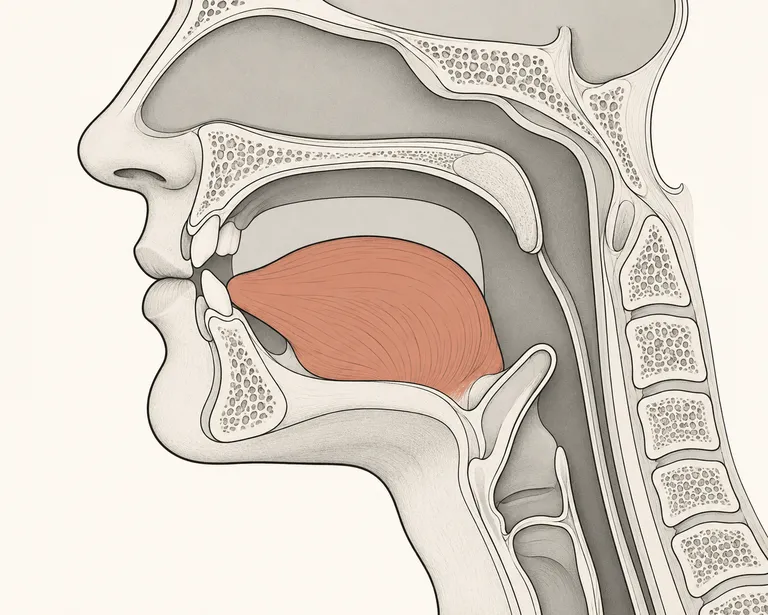
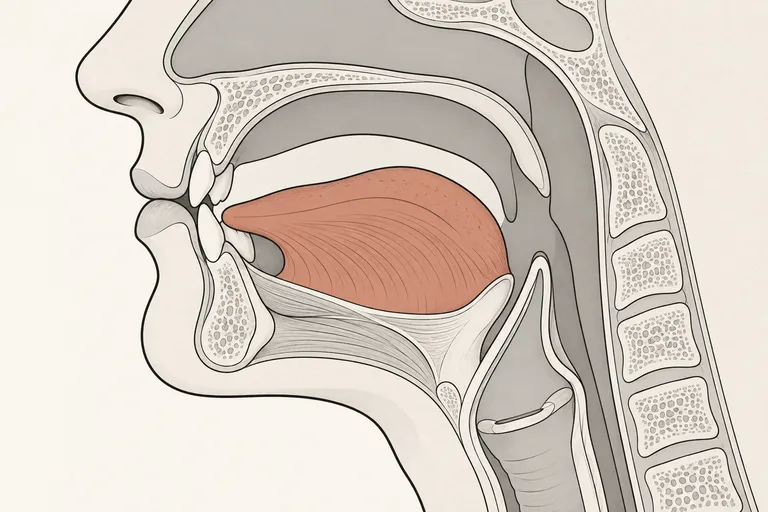
Why this works. English /ʌ/ shares its mid-low jaw-opening and tongue-height target with Hungarian /ɛ/ (as in 'e'); by starting from the already-automatized /ɛ/ tongue-height gesture and easing the tongue very slightly back toward center while keeping the lips neutral (removing any fronting bias), the learner reuses an existing jaw/tongue-height routine from the same muscle group and only needs to adjust the front-back parameter, rather than learning an entirely new tongue height.
Sources (1)
- Wells, J.C. (1982). Accents of English.
Slow-Motion ʌ: Step by Step
consensus- Start by saying your Hungarian 'a' sound and freeze, noticing your rounded lips and backed tongue.
- Keeping the tongue still, slowly relax and flatten your lips until they are completely neutral.
- Now, without rounding again, slide your tongue slowly from the back of your mouth toward the center.
- Hold this new central, unrounded position for two seconds and notice how different it feels from the start.
- Add a short burst of voice to turn the position into the vowel sound of 'cup'.
- Repeat the three-step sequence five times, then try saying 'cup' at normal speed.
Success check: At slow speed, you can clearly feel two separate movements — lips unrounding, then tongue moving forward to center — and the final sound matches the short, bright vowel in 'cup', not the darker Hungarian 'a'.
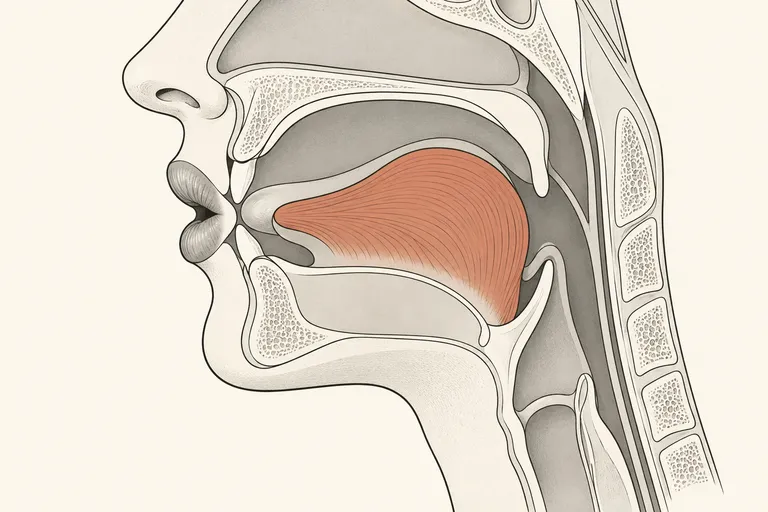
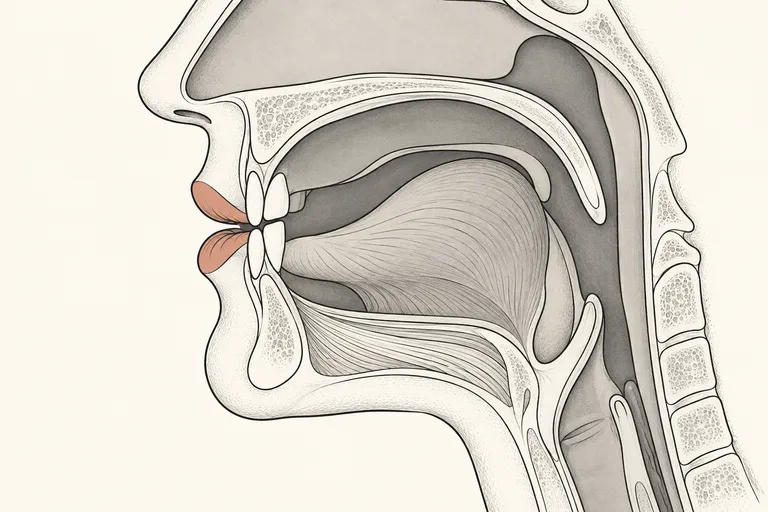
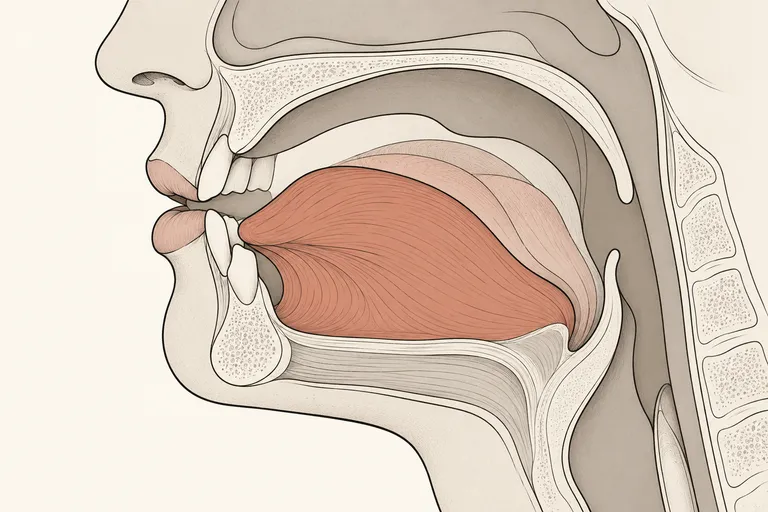
Why this works. Slowing the vowel gesture into discrete stages lets the learner consciously decouple two L1-linked parameters — tongue backing and lip rounding — that are bundled together in Hungarian /ɒ/ but must both be independently neutralized to reach central, unrounded English /ʌ/, a decoupling that is difficult to achieve at normal speaking speed.
Sources (1)
- Wells, J.C. (1982). Accents of English.
Reader ratings and feedback are coming soon.
Sources (1)
- Duanmu, S. (2007). The Phonology of Standard Chinese. Oxford University Press.