/h/as in house
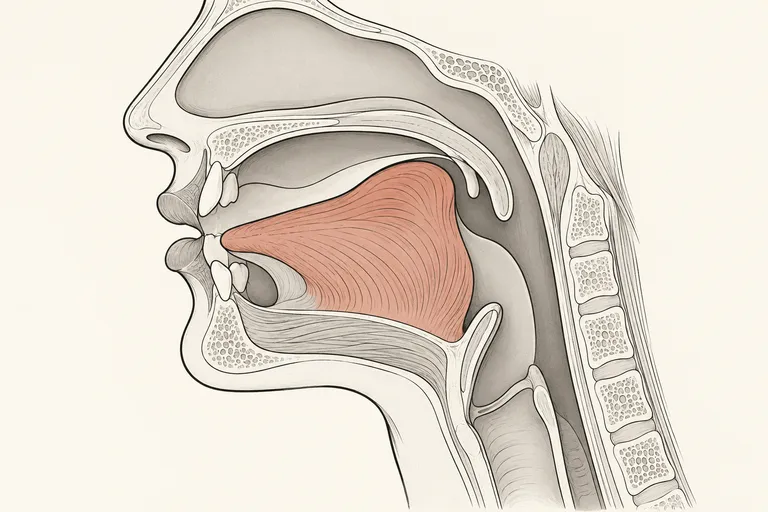
You likely substitute your native 'h' sound, which is actually produced with the back of the tongue raised close to the soft palate, creating real friction there — closer to the 'ch' in Scottish 'loch' than to a simple…
What you probably do
You likely substitute your native 'h' sound, which is actually produced with the back of the tongue raised close to the soft palate, creating real friction there — closer to the 'ch' in Scottish 'loch' than to a simple breath, since that is how the closest Mandarin sound is made.
How natives do it
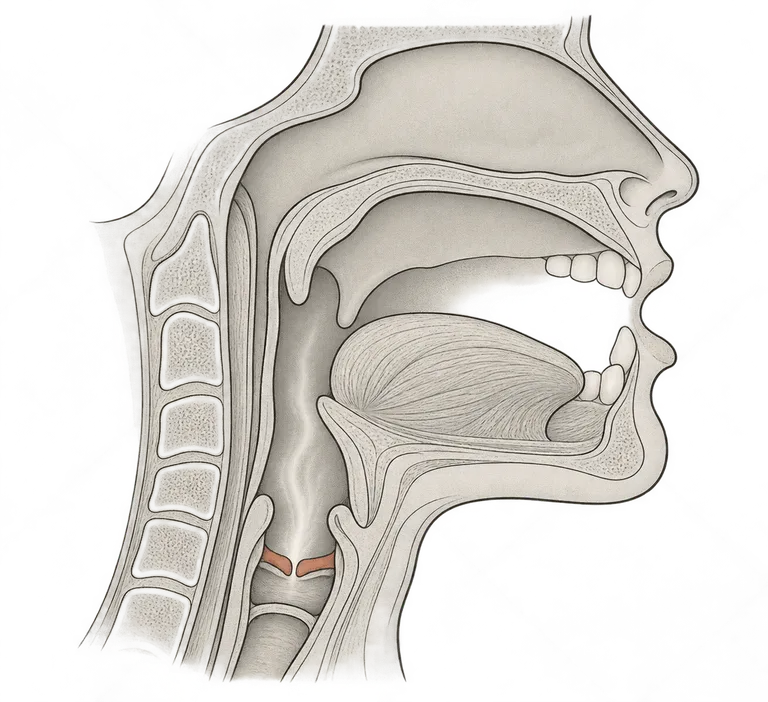
Americans don't use the tongue or throat for this sound at all; the mouth is already shaped for the vowel that follows, and /h/ is simply an audible puff of breath originating at the vocal folds, with no constriction anywhere in the mouth.
Why it matters
Using the harsher, frictional Mandarin version rarely causes real confusion, but it can make your English sound more effortful or raspy than necessary. Relaxing the back of the tongue and letting /h/ be pure breath will make words like 'house' and 'hello' sound noticeably lighter and more natural.
Hear the difference
Words this touches
Mandarin Chinese speakers often substitute /x/.
How the mouth differs
Mandarin's closest sound, pinyin 'h', is actually a voiceless velar fricative [x], produced with audible friction at the back of the tongue against the soft palate, similar to the 'ch' in Scottish 'loch'. English /h/ is a true glottal fricative, made entirely at the vocal folds with no oral constriction at all, so the mouth is already shaped for the following vowel. Learners often transfer the harsher, more frictional velar articulation.
Listen for the pattern
A velar-fricative substitute for /h/ sounds noticeably harsher or raspier than the light, breathy English /h/, and can make words like 'house' or 'hello' sound more effortful or foreign than they should, even though meaning is almost never lost.
Reader ratings and feedback are coming soon.
Sources (1)
- Duanmu, S. (2007). The Phonology of Standard Chinese. Oxford University Press.