This is an AI-generated research project, still being refined. It may contain errors. Reader ratings and feedback are coming soon. How this is made
For Russian speakers
Your English has a Russian shape. Here is
where.
Russian speech rests on one big habit: constantly switching the tongue between two shapes. For 'hard' consonants, the back of the tongue pulls back and lifts slightly, almost squeezing the throat space a little.
The Russian comparison is being researched. Daily tips are available.
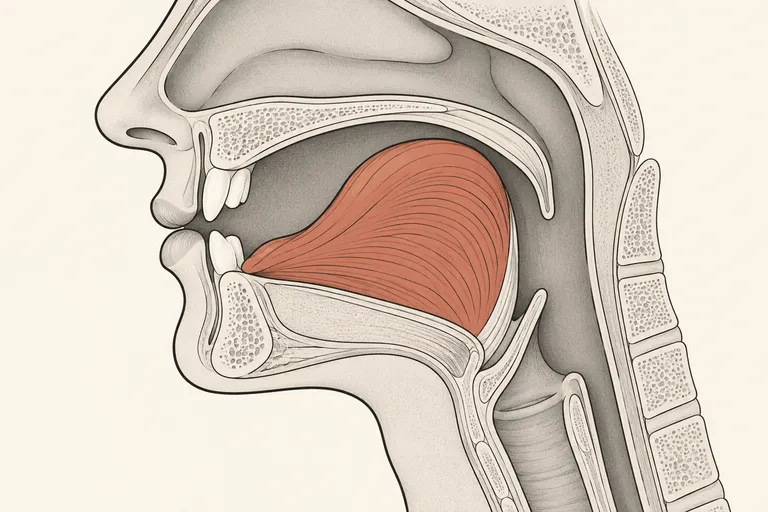
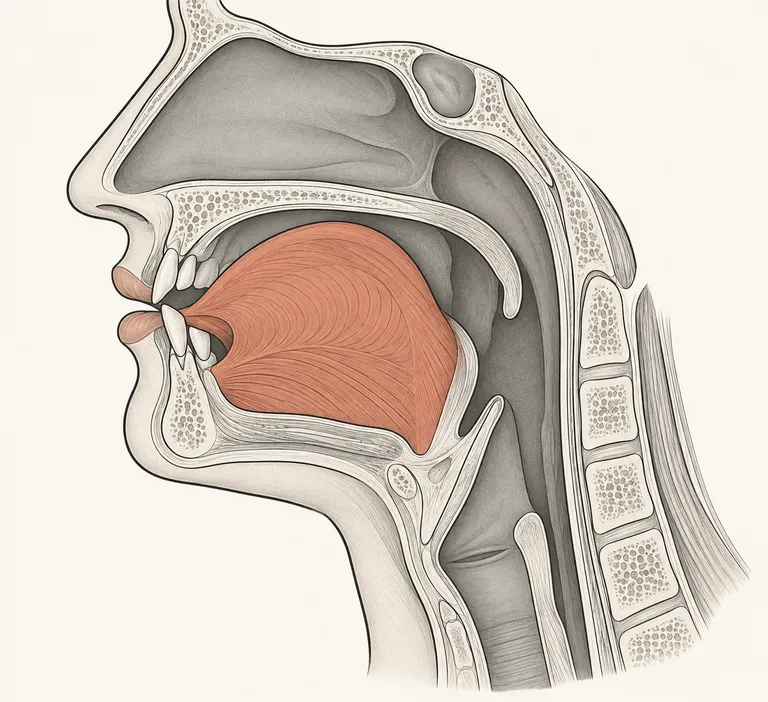
Hard (velarized) consonant settingTongue body pulled back and slightly raised toward the soft palate, tongue tip low, lips neutral and unrounded.
Soft (palatalized) consonant settingTongue body arches forward and high toward the hard palate, tongue tip may touch the lower teeth, lips slightly spread.
Side-by-side sagittal views showing how the tongue body shifts between a retracted 'hard' posture and a fronted, palate-hugging 'soft' posture - the constant alternation that defines Russian articulatory setting.
How Russian moves
sourced
Russian gives full strength to one stressed syllable per word and squashes the rest, so unstressed vowels shrink and blur toward a neutral sound - much more aggressively than in English. This makes stressed syllables stand out sharply, and getting stress in the wrong place (or failing to reduce unstressed vowels) is one of the most common giveaways of a Russian accent in English, and vice versa when Russian speakers under-reduce English unstressed vowels.
Where Russian rests
sourced
Russian speech rests on one big habit: constantly switching the tongue between two shapes. For 'hard' consonants, the back of the tongue pulls back and lifts slightly, almost squeezing the throat space a little. For 'soft' (palatalized) consonants, the tongue arches forward and up, closer to the roof of the mouth. This switch happens over and over, often within a single word, and it's the muscular engine behind the Russian accent. The jaw doesn't open very wide, the lips stay mostly relaxed and unrounded except on rounded vowels, and there's a slightly firm, energetic voice quality overall - the muscles stay a bit more engaged than in relaxed English speech.
Standard (Moscow-based) Russian; notes apply broadly across Central and Northern Russian dialect regions, with minor allowance for Southern Russian fricative /g/ variation not covered here.