Maintainer page: not indexed, publicly reachable, contains no secrets or personal data.
Illustration review
820 images: 820 accepted by the vision
reviewer, 0 awaiting review, 0 rejected
(hidden on the site until regenerated). To override, run
npm run illustrate:reject -- <key> or npm run illustrate:approve -- <key>
with the key shown under each image.
Pair es-en-US (96)
accepted
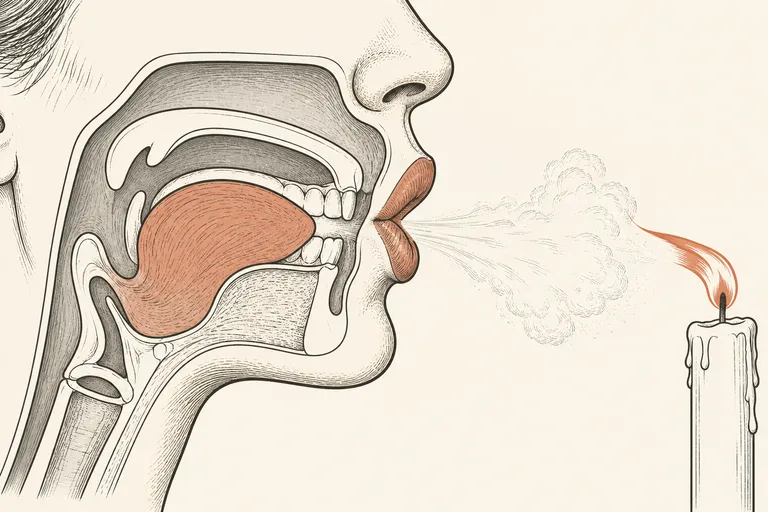
Lips or tongue release the stop closure cleanly with no extra breath; voicing starts almost immediately after release.
Anatomically plausible sagittal vocal tract with a normally shaped tongue and coherent teeth and lips.
attempt 0 · 2026-10-03
accepted
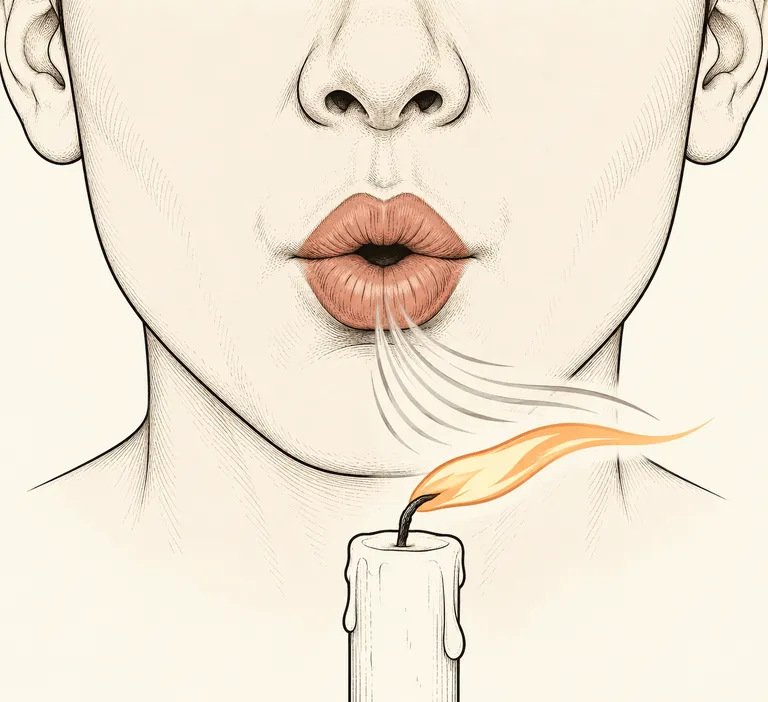
Lips or tongue release the stop with a strong, audible puff of air before voicing begins, as if blowing out a candle.
Front-facing mouth and lips are anatomically coherent; no abnormal tongue or facial features appear.
attempt 0 · 2026-10-03
accepted
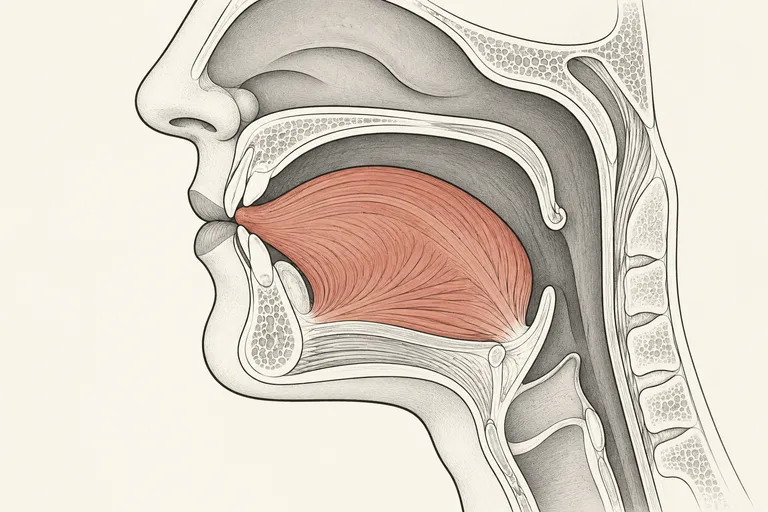
Lips or tongue fully release the final consonant with an audible burst, sometimes followed by a brief neutral vowel, as if the syllable needs to end in a vowel.
Plausible sagittal anatomy with a broad, continuous tongue contacting the front of the mouth.
attempt 0 · 2026-10-03
accepted
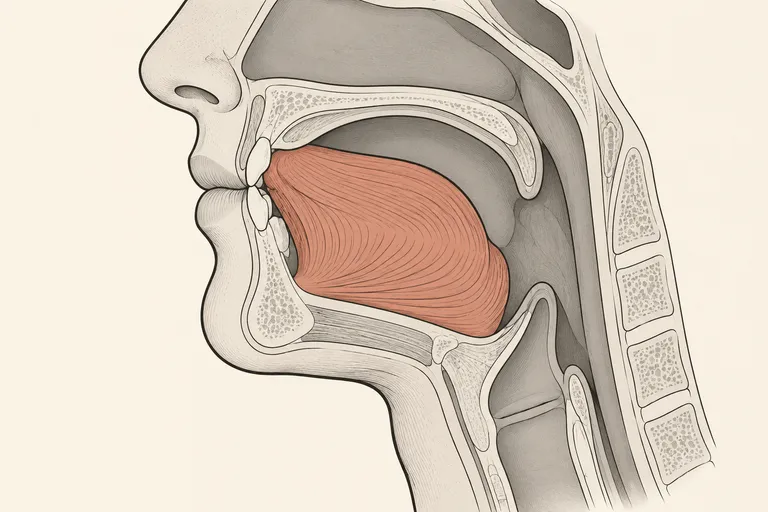
Articulators reach the closure position for the final consonant but the release is held back or barely audible, letting the word trail off silently.
Tongue, jaw, teeth, palate, and airway are coherently positioned without impossible deformation.
attempt 0 · 2026-10-03
accepted
Tongue tip presses firmly against the back of the upper teeth, holding a complete stop with a crisp, audible release, the same for every t regardless of position.
Anatomically plausible profile with normal lips, jaw, and facial proportions.
attempt 1 · 2026-10-03
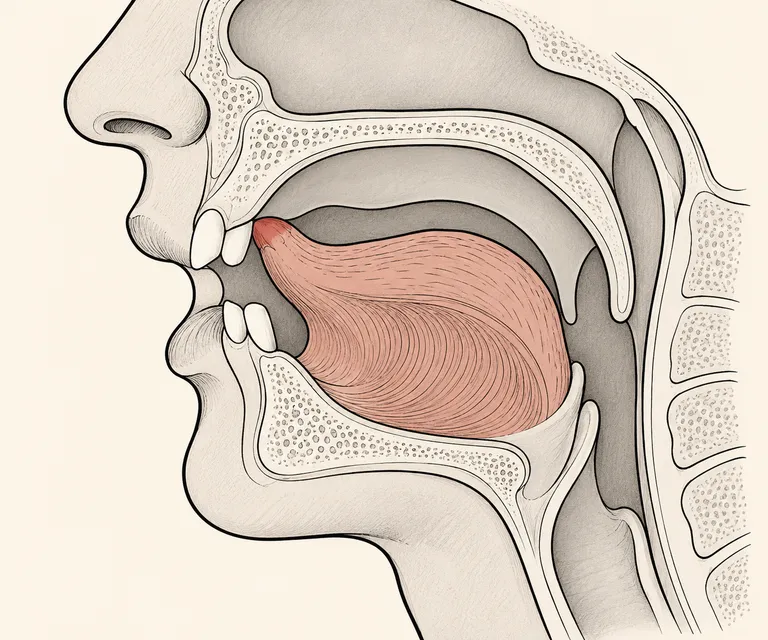
accepted
Tongue tip makes one quick, light tap against the gum ridge with almost no release burst, borrowing the same motion already used for the Spanish tapped r.
Sagittal anatomy is coherent, and the tongue tip makes a plausible slight contact near the gum ridge.
attempt 0 · 2026-10-03
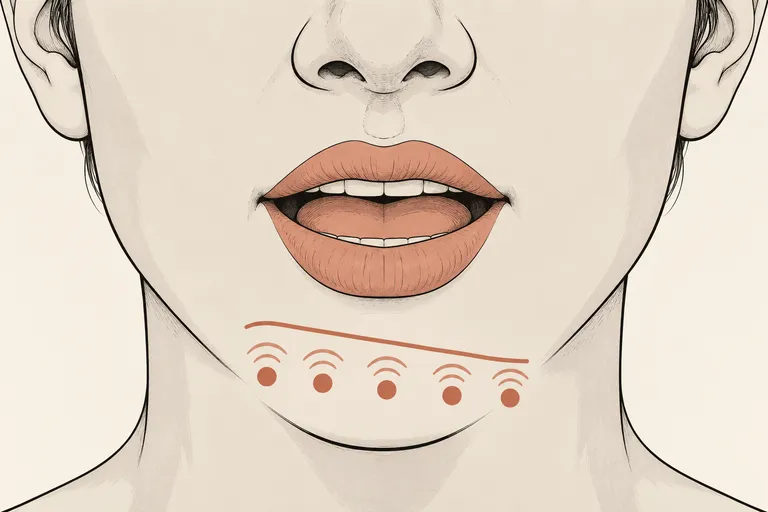
accepted
Pitch moves within a narrow range and falls gradually and evenly across the sentence, with syllables staying close in prominence to one another.
Front-facing mouth and tongue appear anatomically normal; schematic pitch marks do not compromise realism.
attempt 0 · 2026-10-03
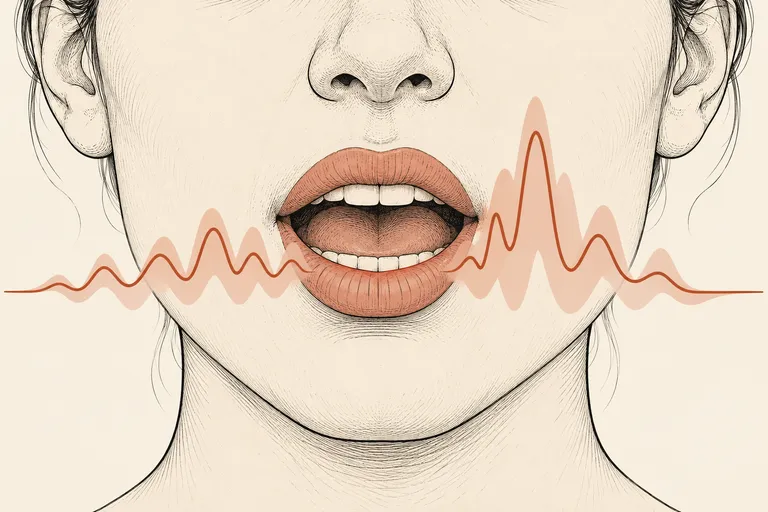
accepted
Pitch rises and falls across a wider range, with one clear, sharp peak on the most important stressed word before dropping to a low final pitch.
The open mouth, teeth, lips, and visible tongue are anatomically plausible and visually coherent.
attempt 0 · 2026-10-03
accepted
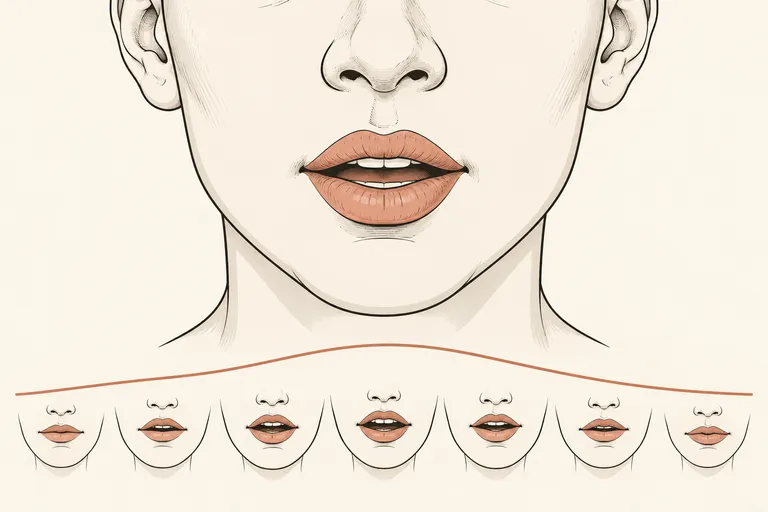
Pitch rises and falls smoothly and gradually across the whole sentence, without singling out one word as sharply more prominent than the rest.
Anatomically plausible mouth and face; repeated mouth poses are coherent.
attempt 0 · 2026-10-03
accepted
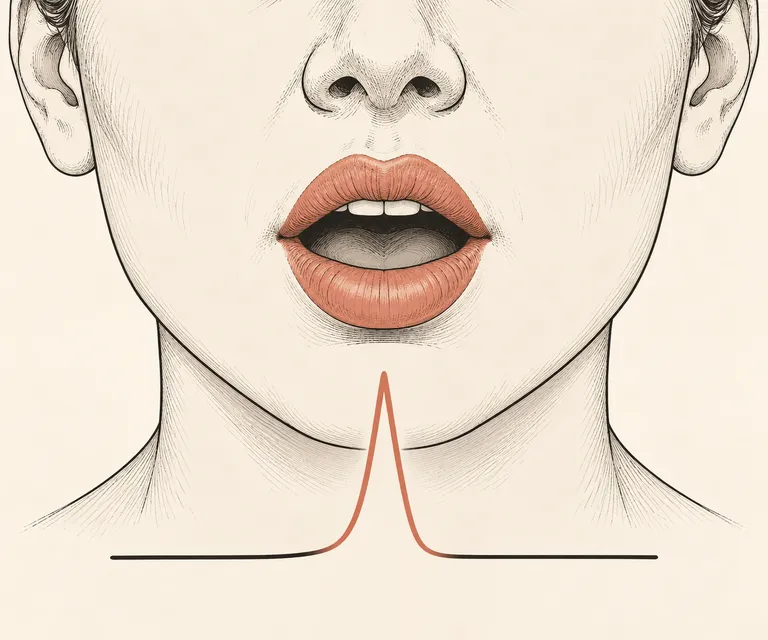
Pitch jumps sharply upward on one focused key word, then drops steeply right afterward, creating one clear peak rather than a gradual curve.
Open mouth anatomy is plausible; the pitch curve is clearly schematic.
attempt 0 · 2026-10-03
accepted
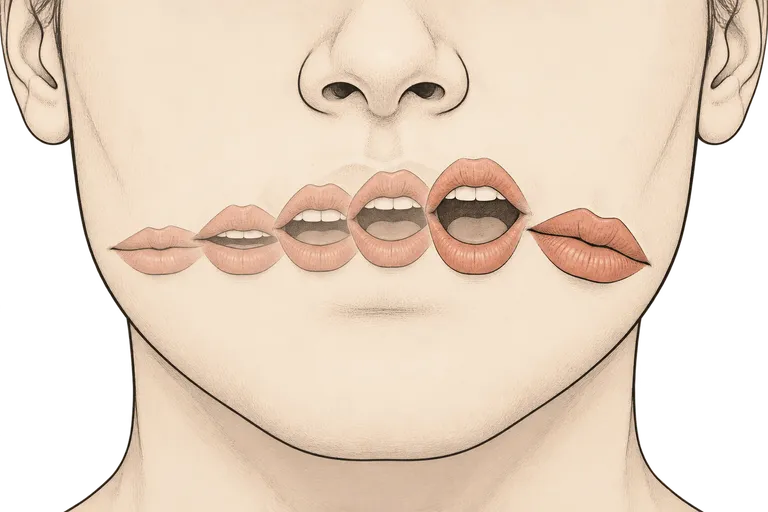
Pitch rises across the sentence but then dips or falls slightly at the very end, creating a rise-fall shape.
Multiple mouth positions form a coherent speech sequence without anatomical distortion.
attempt 0 · 2026-10-03
accepted
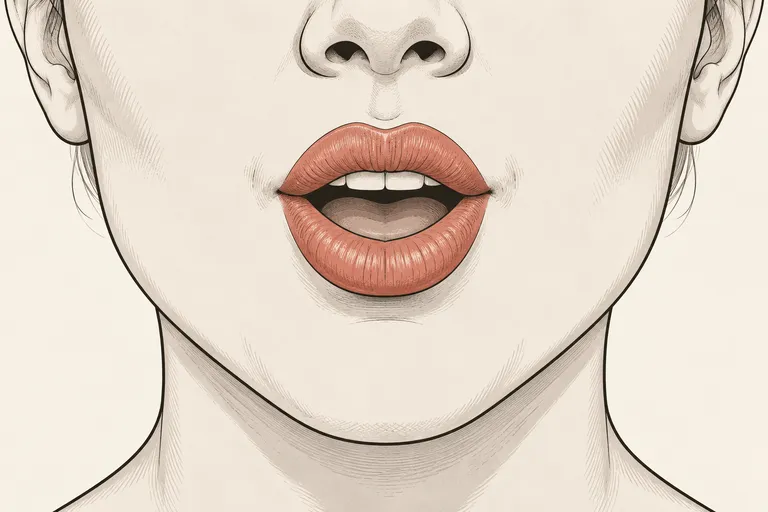
Pitch keeps climbing right through the final stressed syllable and stays high at the very end, with no closing fall.
Mouth, teeth, tongue, lips, and jaw appear anatomically plausible.
attempt 0 · 2026-10-03
accepted
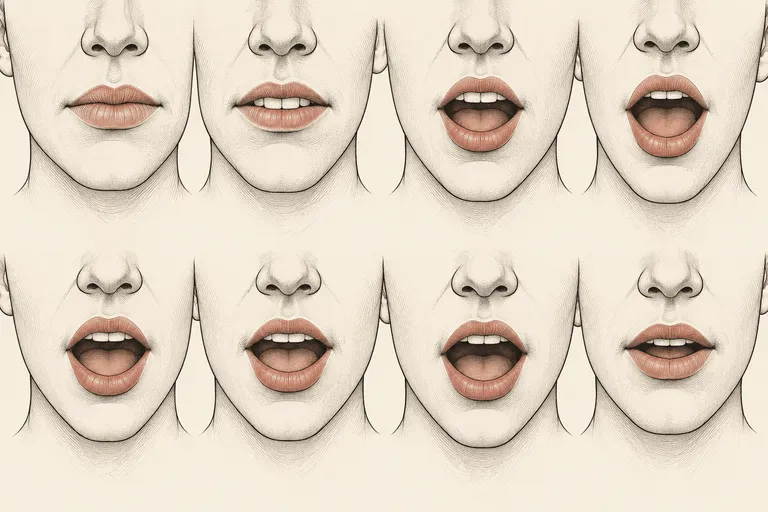
Words are often kept as separate rhythmic units, with liaison limited mainly to moving a final consonant onto a following vowel, and little to no glide insertion between vowels.
All eight mouth poses are distinct, coherent, and anatomically plausible.
attempt 0 · 2026-10-03
accepted
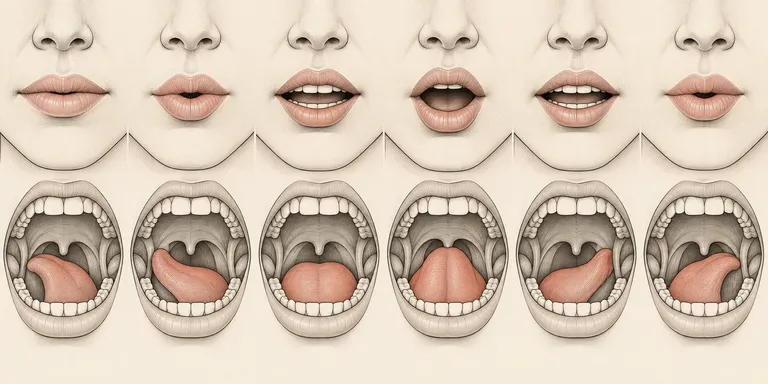
Final consonants glide smoothly into following vowels, and small w, j, or r sounds are inserted between adjacent vowels across word boundaries, creating continuous, connected chains of speech.
Tongue positions vary naturally without splitting, twisting, looping, or duplication.
attempt 0 · 2026-10-03
accepted
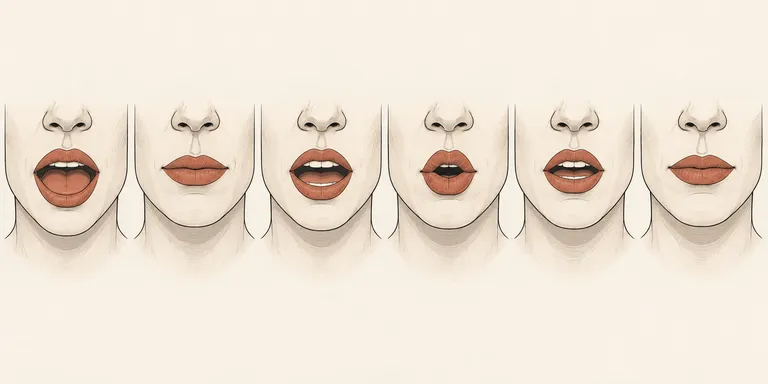
Every syllable receives roughly the same amount of time, producing an even, metronome-like string of beats regardless of stress.
The repeated mouths are coherent speech poses with plausible anatomy.
attempt 0 · 2026-10-02
accepted
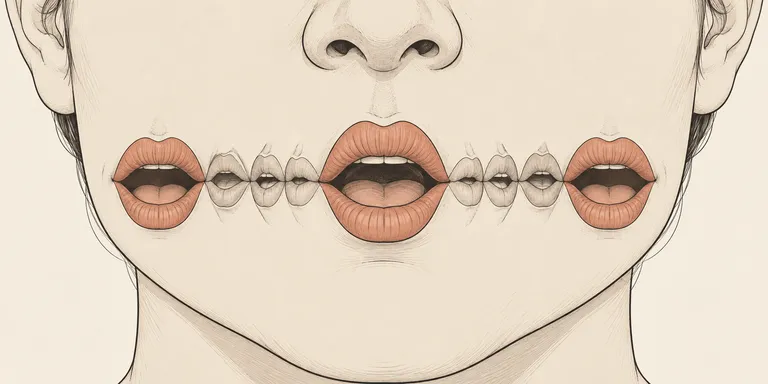
Stressed syllables land at roughly even time intervals while unstressed syllables between them compress, speeding up or slowing down as needed to keep the beat.
Overlaid mouth sequence is schematic but anatomically plausible and visually coherent.
attempt 0 · 2026-10-02
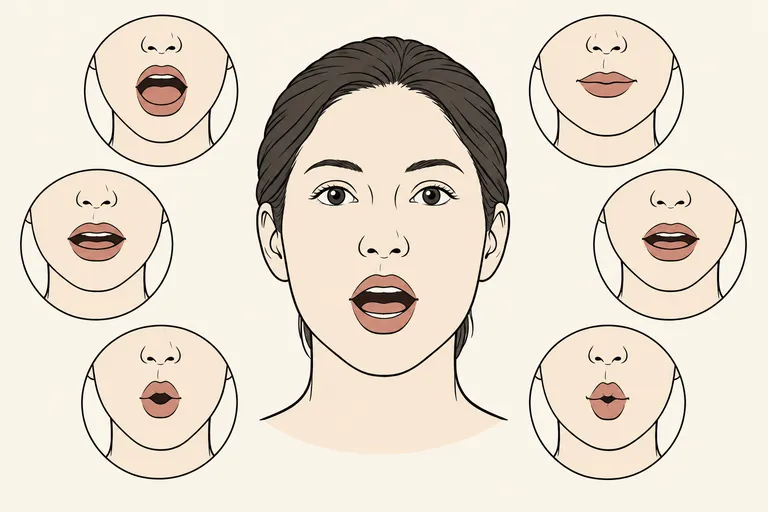
accepted
Every vowel, whether stressed or not, keeps its full, distinct quality and length, giving each syllable equal clarity.
Face and separate mouth examples show plausible anatomy without malformed or duplicated features.
attempt 1 · 2026-10-03
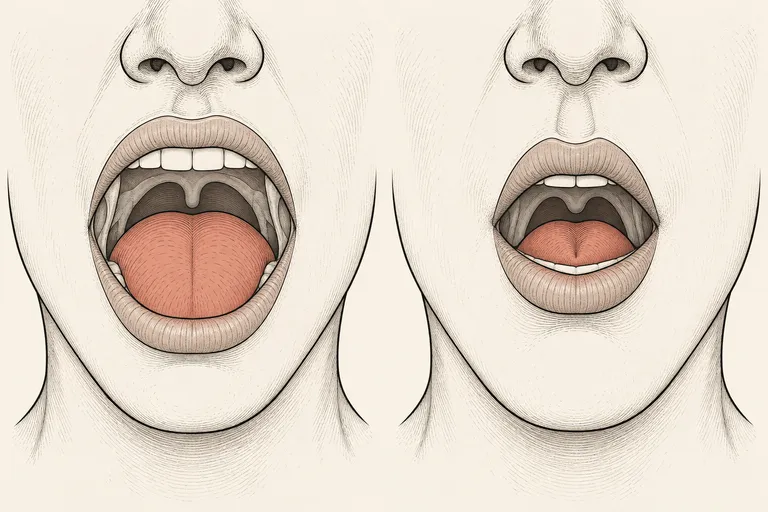
accepted
Stressed vowels stay full and clear, but unstressed vowels shrink dramatically toward a quick, neutral, low-effort schwa-like sound.
Both mouths show plausible tongue, lip, tooth, and jaw anatomy.
attempt 0 · 2026-10-02
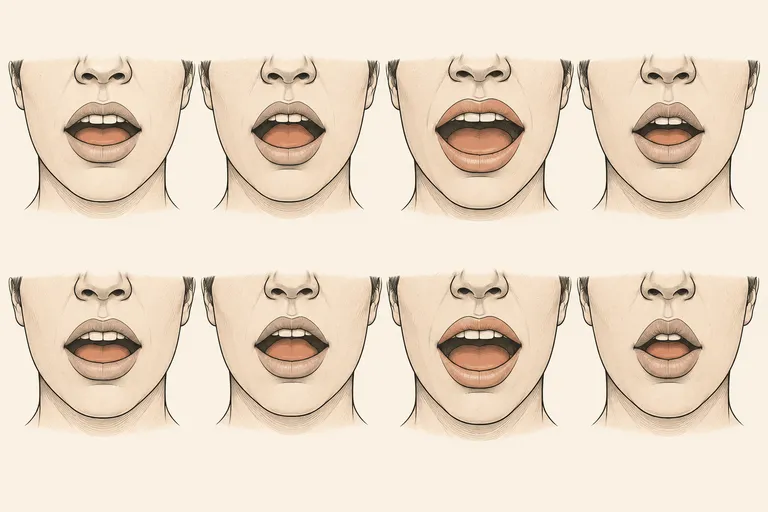
accepted
Each syllable is spoken with fairly even loudness and pitch, with only a mild boost on the stressed syllable, reflecting Spanish's more evenly distributed prominence.
The repeated mouth views are anatomically plausible without malformed tongues or facial glitches.
attempt 0 · 2026-10-03
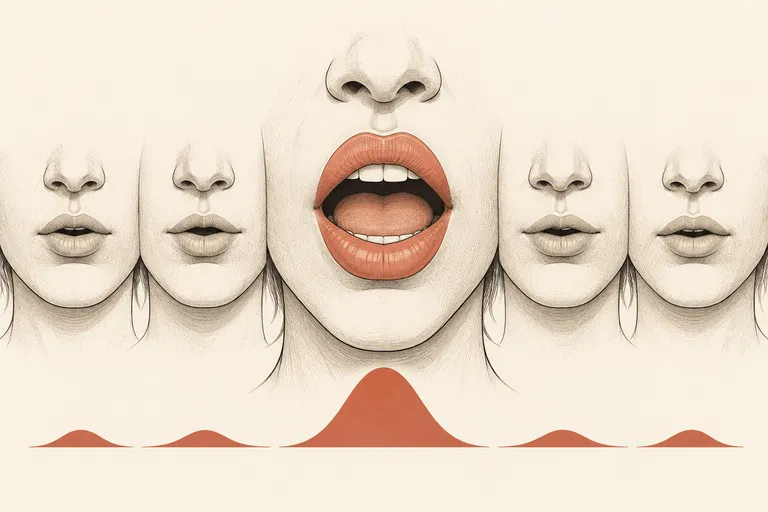
accepted
The stressed syllable is markedly louder, longer, and higher or lower in pitch than its neighbors, while unstressed syllables shrink and flatten dramatically by comparison.
The mouth sequence and emphasis waveform are visually coherent and anatomically plausible.
attempt 0 · 2026-10-03
accepted
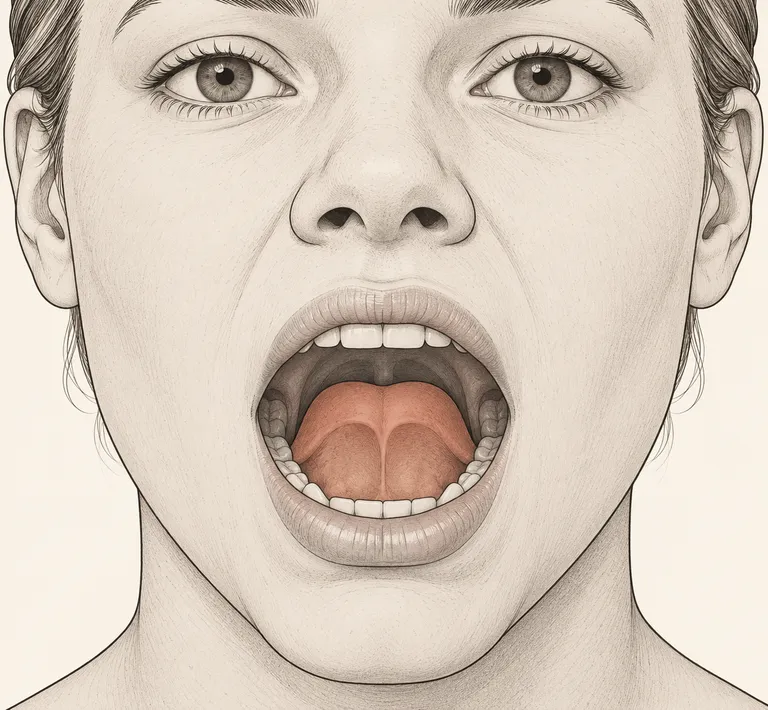
Tongue either raised to the mid-front /e/ position or pulled back and centered to the /a/ position, missing the specific low-front target.
Open-mouth anatomy is coherent; the central tongue groove is normal and not a true split.
attempt 0 · 2026-10-03
accepted
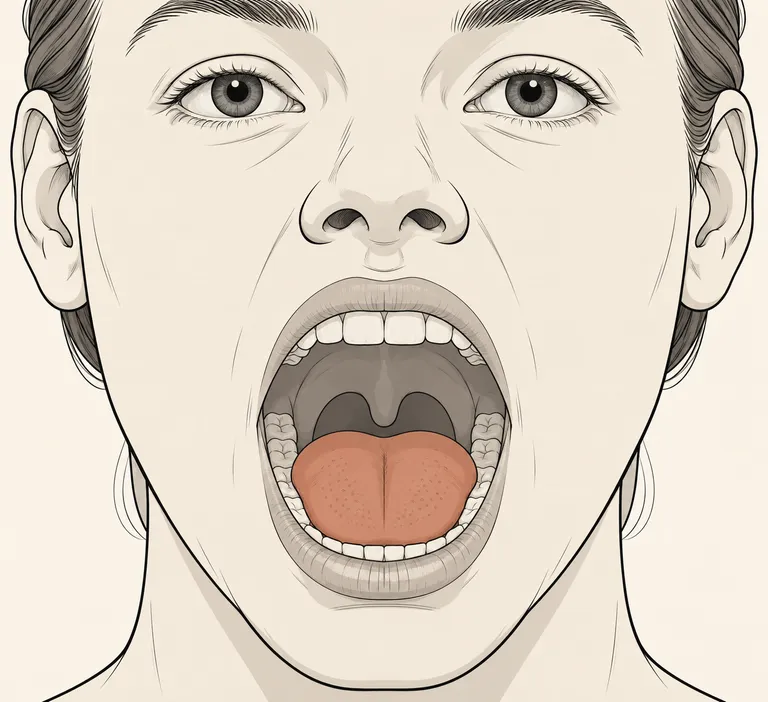
Jaw dropped wide open, tongue body low and pushed forward, distinctly lower than e and further forward than a.
Wide jaw opening and low, forward tongue are anatomically plausible.
attempt 0 · 2026-10-03
accepted
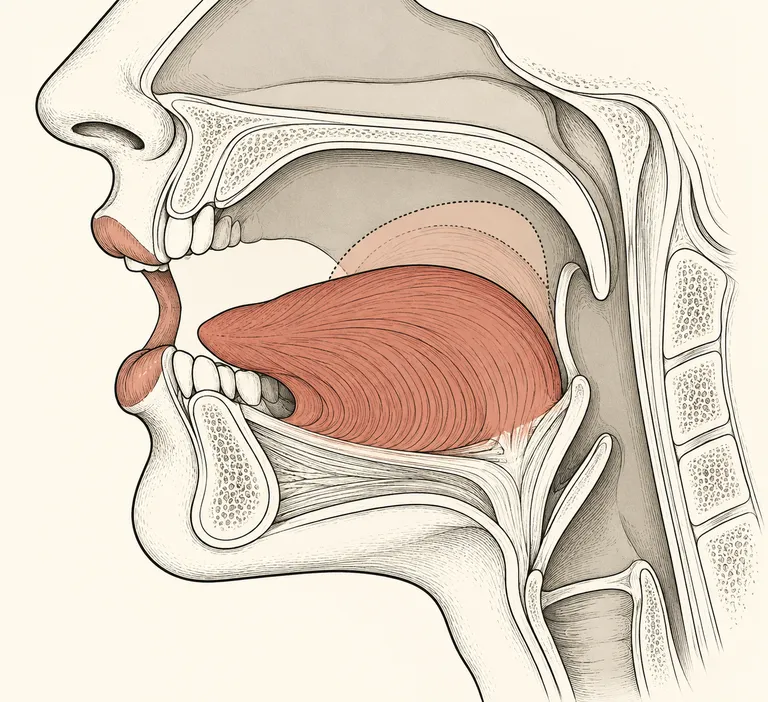
Jaw opens briefly and the glide from open a to close i happens quickly, as in 'hay' or 'aire'.
The sagittal vocal tract and broad tongue shape are anatomically plausible.
attempt 0 · 2026-10-03
accepted
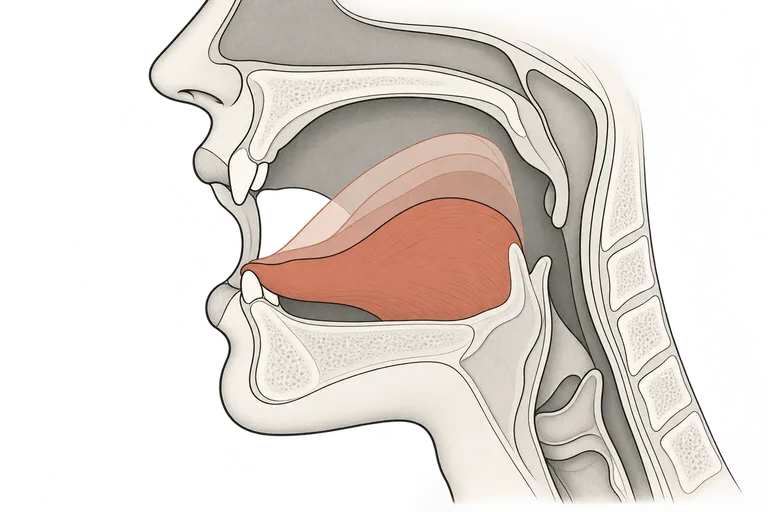
Jaw opens wider and the low starting position is held noticeably longer before a slower glide up toward a near-'ee' finish.
The sagittal tract and translucent tongue-position overlays plausibly depict a vowel glide.
attempt 0 · 2026-10-03
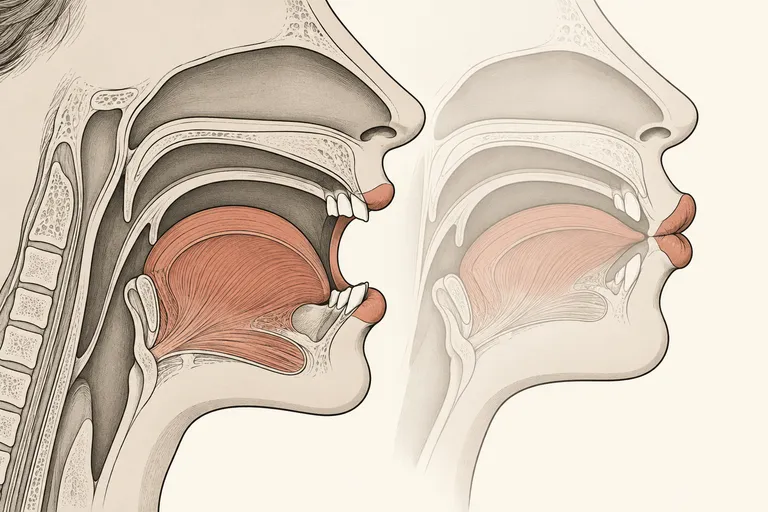
accepted
Quick glide from open 'a' to a lightly rounded close-back vowel, as in 'causa' or 'autor'.
Both sagittal views show plausible tongue positions and coherent vocal-tract anatomy.
attempt 0 · 2026-10-03
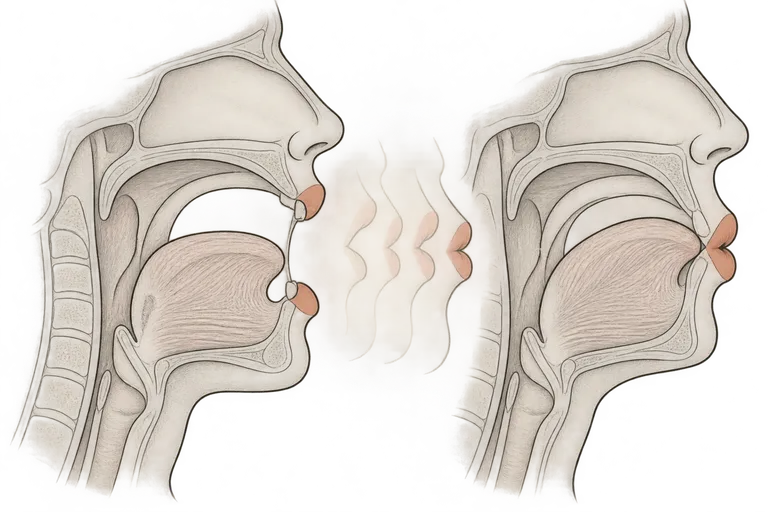
accepted
Wider jaw opening held longer at the start, followed by a slower glide with stronger lip rounding toward a near-'oo' finish.
The paired sagittal views and transition silhouettes are coherent, with plausible tongues and lip rounding.
attempt 0 · 2026-10-03
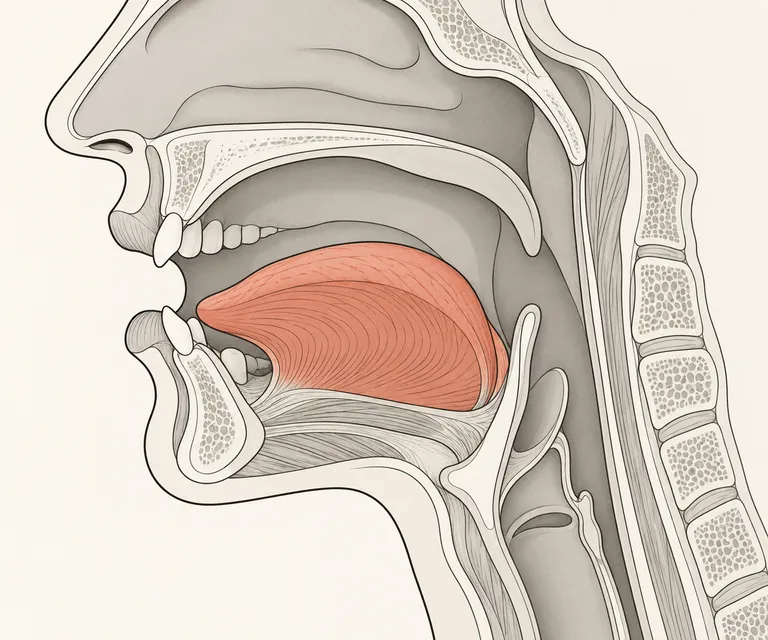
accepted
Tongue centered and only moderately low, not pulled back toward the throat.
Tongue shape and moderately low central placement are anatomically plausible.
attempt 0 · 2026-10-03
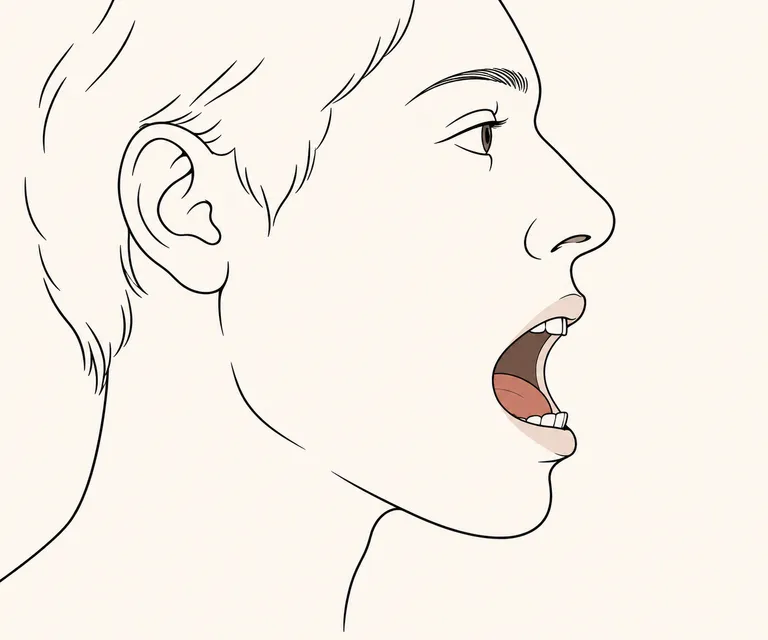
accepted
Tongue pulled back and low toward the throat, jaw dropped wide, lips completely relaxed and unrounded.
Open jaw, teeth, and low tongue appear anatomically plausible in profile.
attempt 1 · 2026-10-03
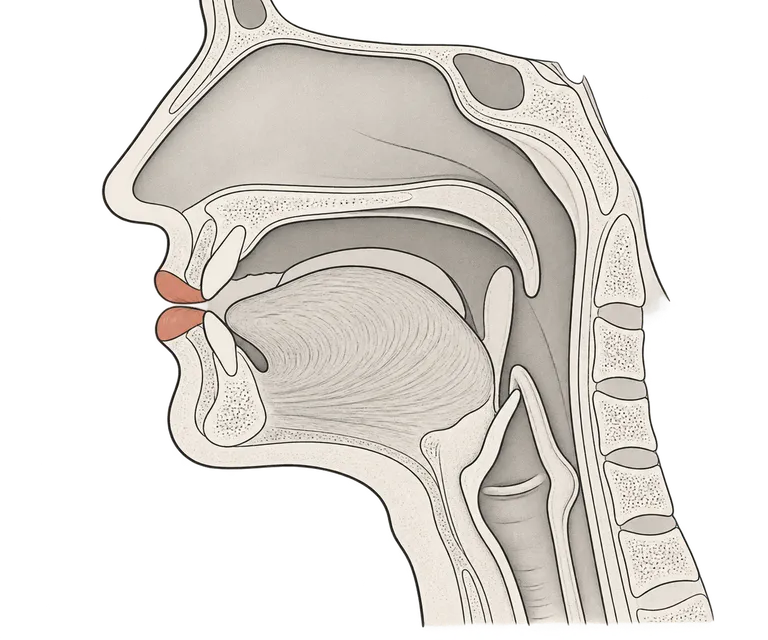
accepted
Lips barely touch or only approach each other between vowels, letting air continue to flow, as in 'lobo' or 'sabe'.
Anatomically coherent sagittal view with plausible tongue, lips, teeth, and airway.
attempt 0 · 2026-10-03
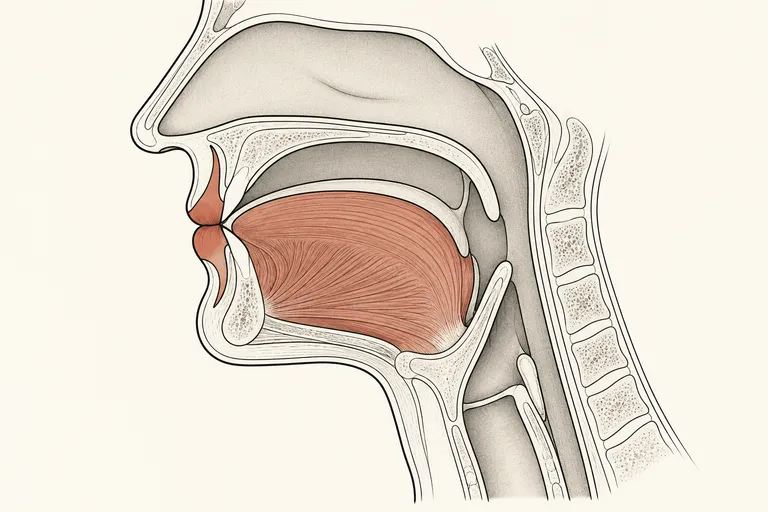
accepted
Lips fully close in every position, including between vowels, briefly stopping all airflow before releasing.
Closed lips and broad tongue are anatomically plausible without distortion or duplication.
attempt 0 · 2026-10-03
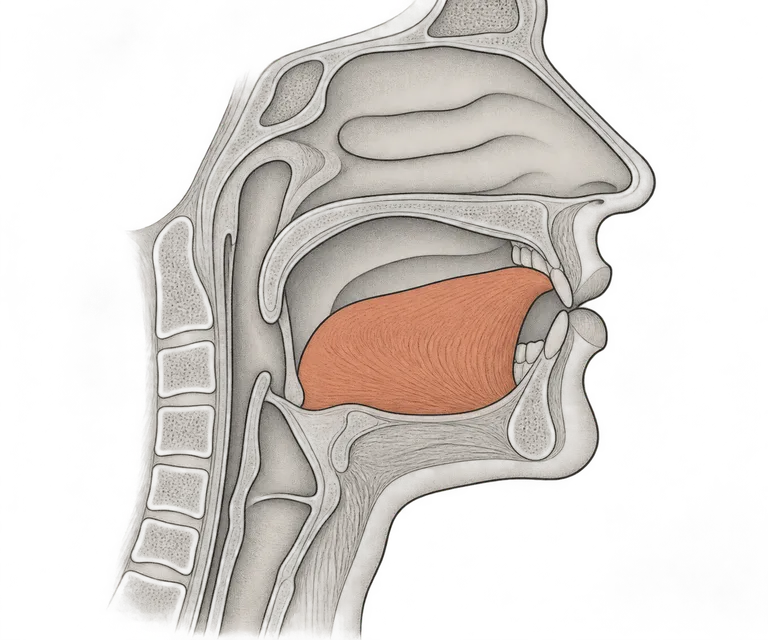
accepted
Tongue tip barely touches the back of the upper teeth between vowels, letting air continue to flow through, close to an English 'th' sound.
Tongue tip approaches the upper teeth plausibly; surrounding anatomy is coherent.
attempt 0 · 2026-10-03
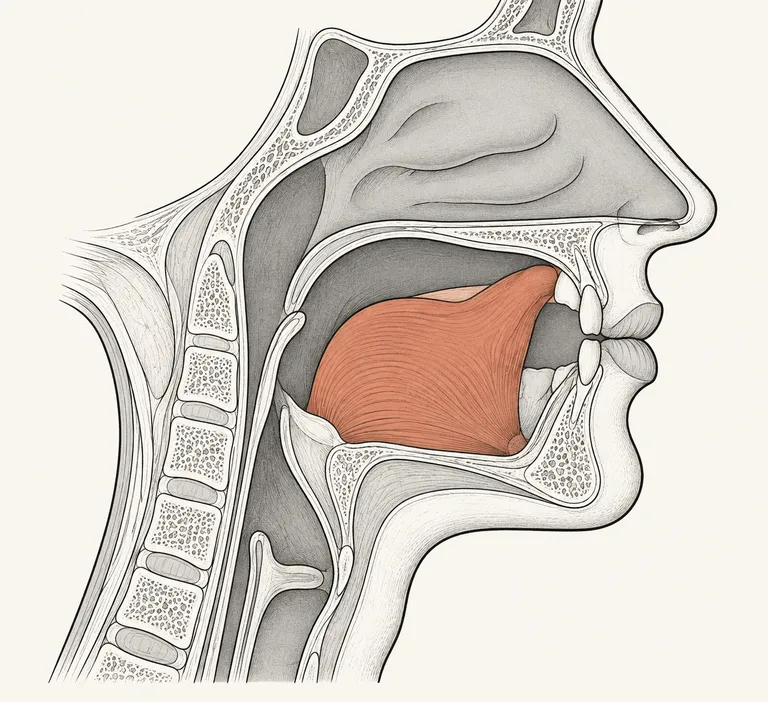
accepted
Tongue tip presses firmly against the back of the upper teeth or the ridge for a full stop, as used for Spanish 'd' in every context.
Sagittal anatomy is coherent, with the tongue contacting the upper dental region plausibly.
attempt 0 · 2026-10-03
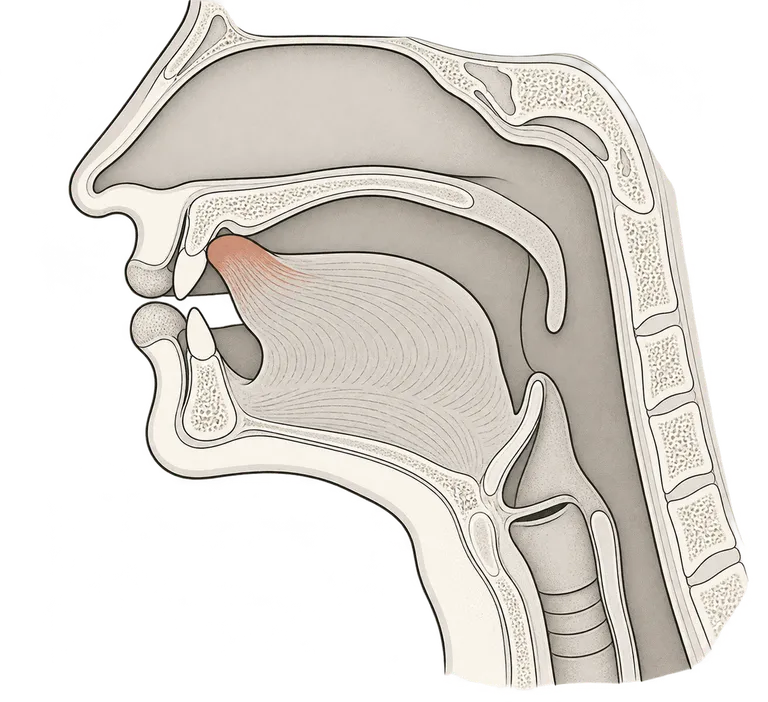
accepted
Tongue tip presses firmly against the alveolar ridge for a full stop in most positions, or taps it quickly between a stressed and unstressed vowel.
Tongue tip contacts the alveolar region naturally with no impossible curling.
attempt 0 · 2026-10-03
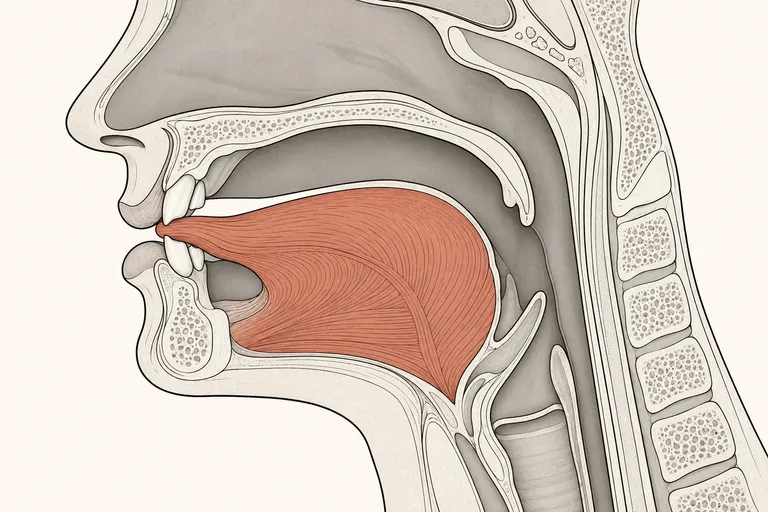
accepted
Tongue tip rests lightly between the upper and lower front teeth, letting air continue to flow with the voice turned on, rather than stopping it.
Tongue tip extends lightly between the front teeth without implausible curling or distortion.
attempt 0 · 2026-10-03
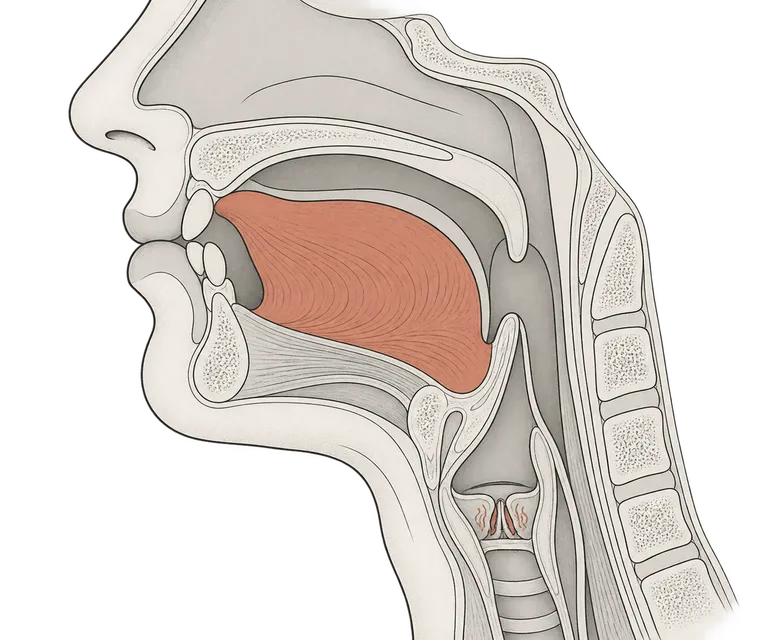
accepted
Tongue tip forms the same seal and release as tʃ but without voicing, or the mouth uses a much looser palatal approximant with no full closure at all, as in Spanish 'y'.
Tongue is bulky but anatomically plausible, with coherent teeth, jaw, and airway.
attempt 0 · 2026-10-03
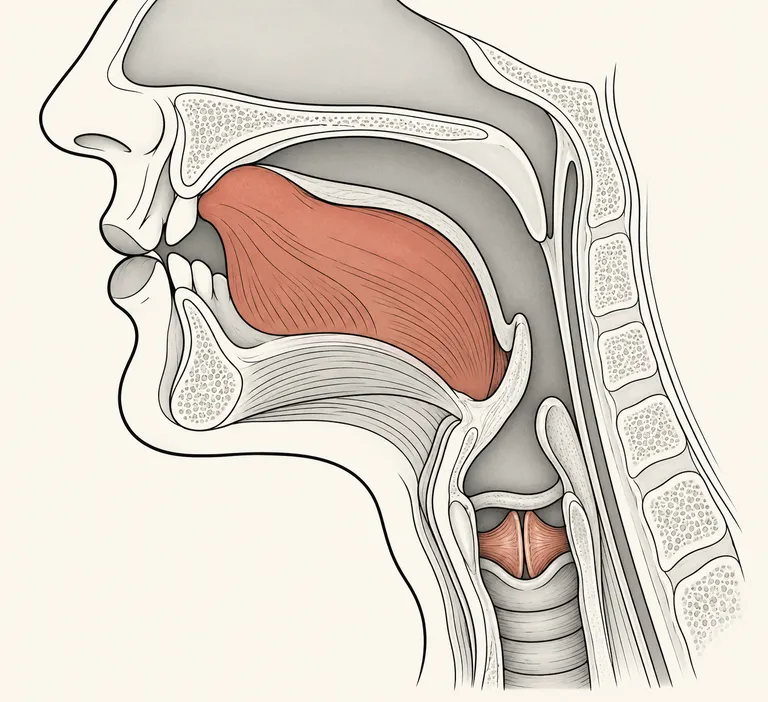
accepted
Tongue tip seals against the ridge exactly as for tʃ, but the vocal folds are already vibrating before the release, so the burst comes out as a voiced buzz.
Tongue and vocal tract form a plausible sagittal anatomy without visible glitches.
attempt 0 · 2026-10-03
accepted
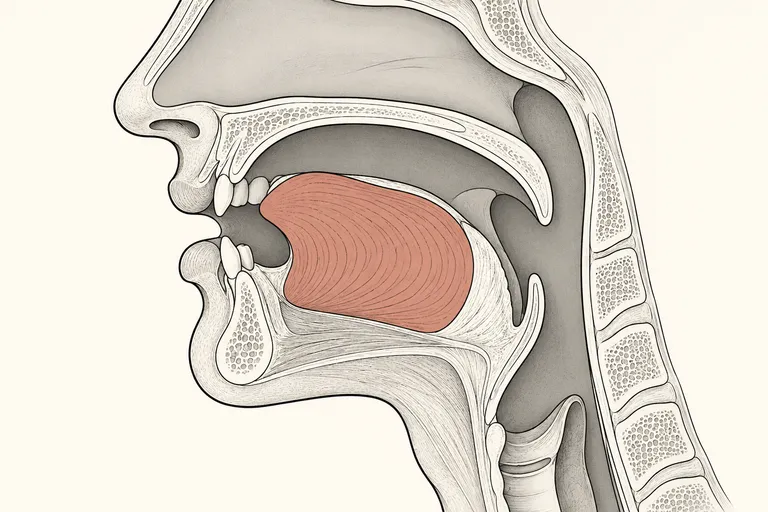
Tongue held steady at a single mid-front position for the whole vowel, with no movement toward the end.
Mid-front tongue posture is stylized but anatomically sane and undistorted.
attempt 0 · 2026-10-03
accepted
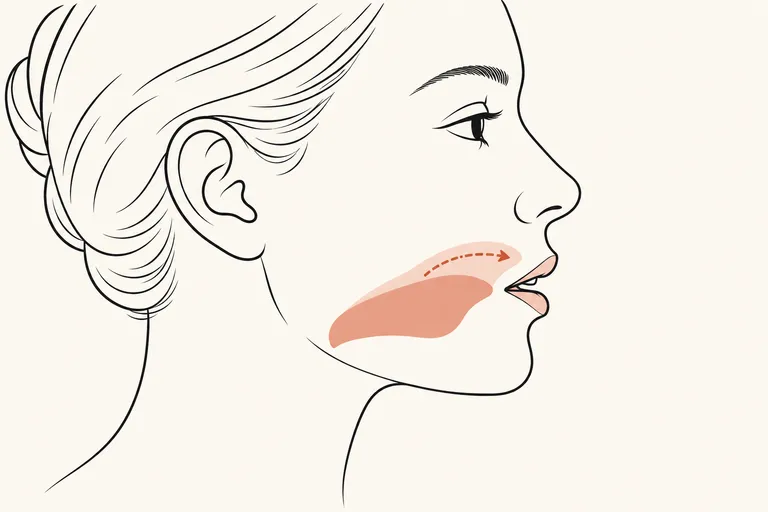
Tongue starting at a mid-front position and gliding upward and slightly forward toward an 'ee'-like finish.
Schematic tongue overlay has a plausible shape without excessive curling or distortion.
attempt 1 · 2026-10-03
accepted
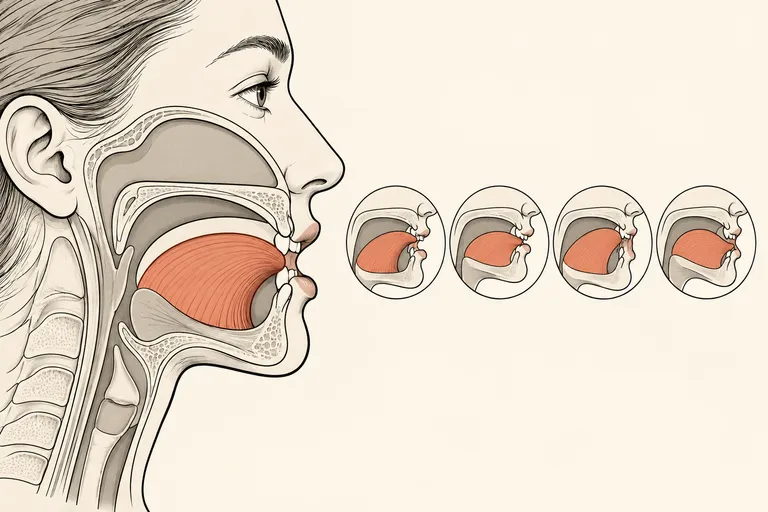
Every syllable, including unstressed ones, keeps a full, clearly articulated vowel matching its spelling.
Main cutaway and inset mouth diagrams are anatomically coherent and visually sane.
attempt 0 · 2026-10-03
accepted
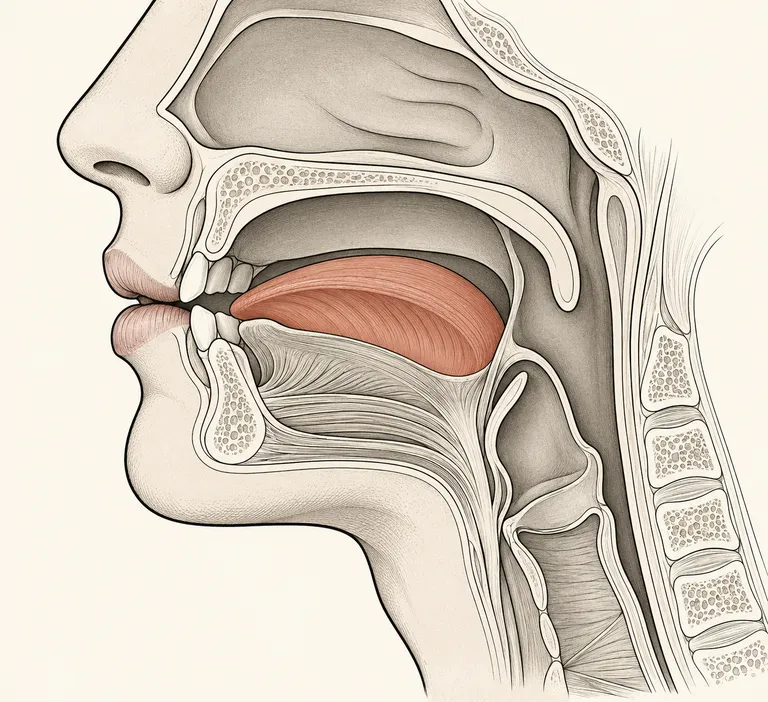
Unstressed syllables collapse to a relaxed, mid-central vowel with minimal jaw movement, no matter what letter they're spelled with.
Relaxed tongue posture and surrounding vocal-tract anatomy appear plausible.
attempt 0 · 2026-10-03
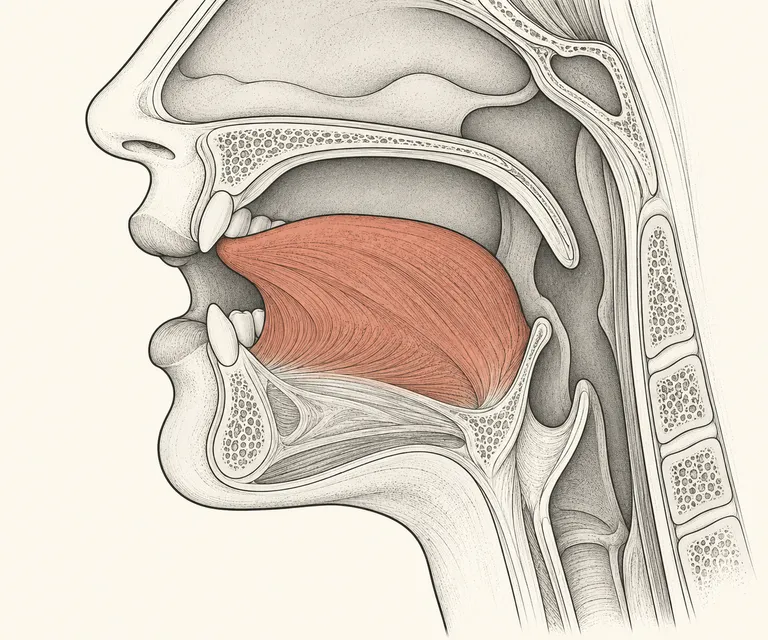
accepted
Tongue held at a mid-front height, similar to the vowel used for English 'day', with no lowering for this sound.
Broad mid-front tongue remains anatomically connected and has no impossible curling.
attempt 0 · 2026-10-03
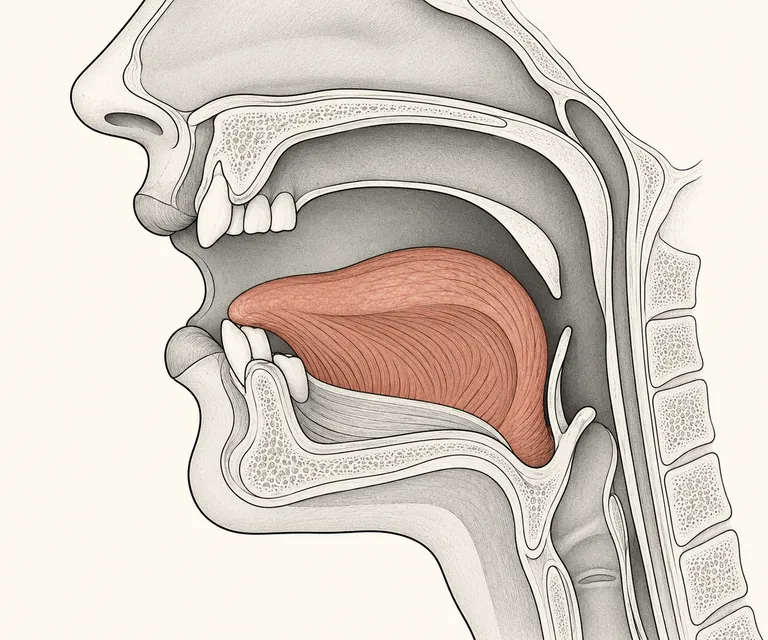
accepted
Tongue noticeably lower and jaw more open than for e, held steady with no glide.
Lower tongue and open jaw form a plausible steady vowel configuration.
attempt 0 · 2026-10-03
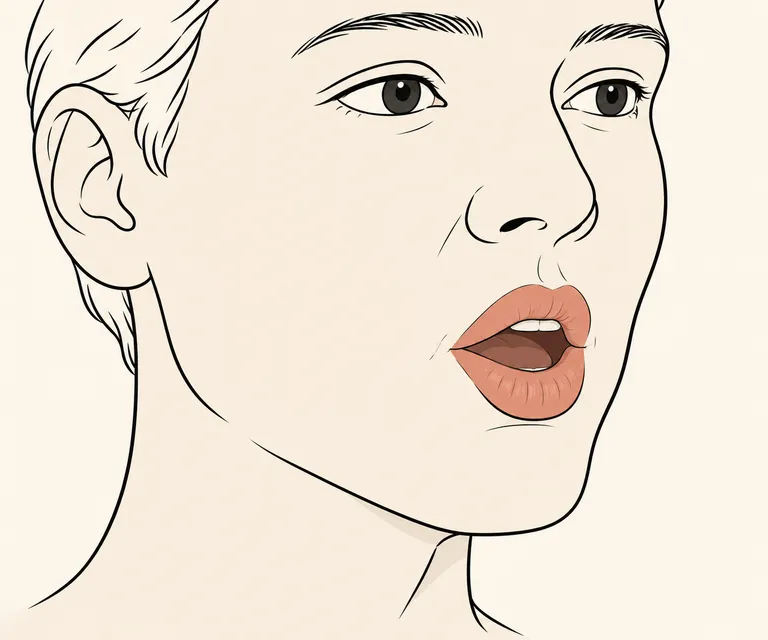
accepted
A full vowel (e, o, or u) is produced first, followed by a separate tap or trill of the tongue tip against the ridge for r.
Lips, teeth, and visible tongue sit plausibly within the open mouth.
attempt 1 · 2026-10-03
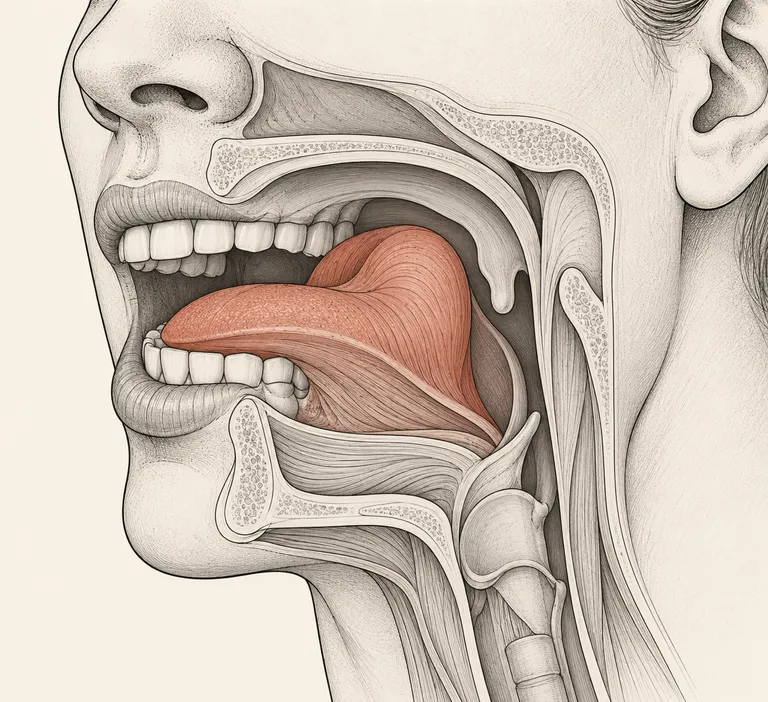
accepted
The tongue curls or bunches upward and backward for the entire vowel, blending vowel and r-coloring into one smooth sound with no separate tap.
Single bunched tongue curves upward without looping; surrounding anatomy is coherent.
attempt 0 · 2026-10-03
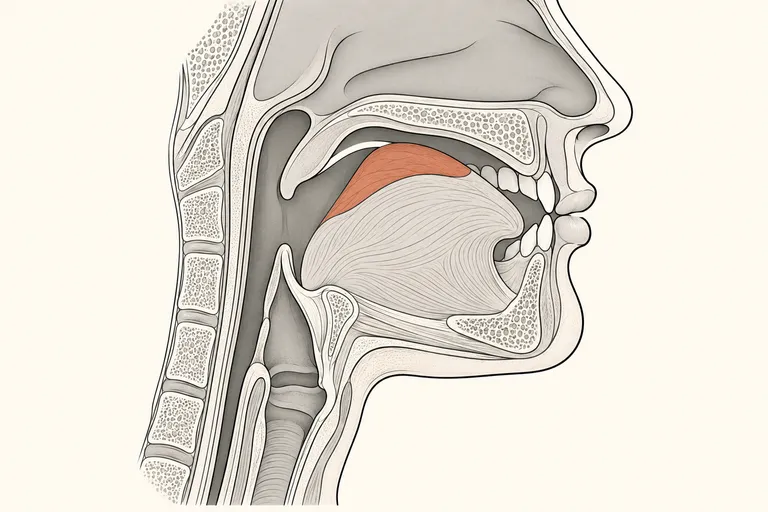
accepted
Back of the tongue barely touches or only approaches the soft palate between vowels, letting air continue to flow, as in 'lago' or 'amigo'.
Sagittal anatomy is visually coherent; tongue and surrounding structures have plausible shapes.
attempt 0 · 2026-10-03
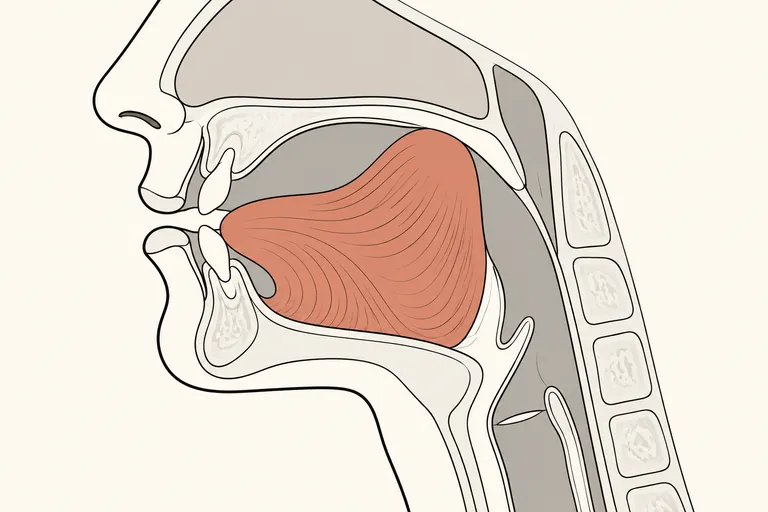
accepted
Back of the tongue fully seals against the soft palate in every position, including between vowels, briefly stopping all airflow before releasing.
Single broad tongue with raised back fits plausibly within the sagittal vocal tract.
attempt 1 · 2026-10-03
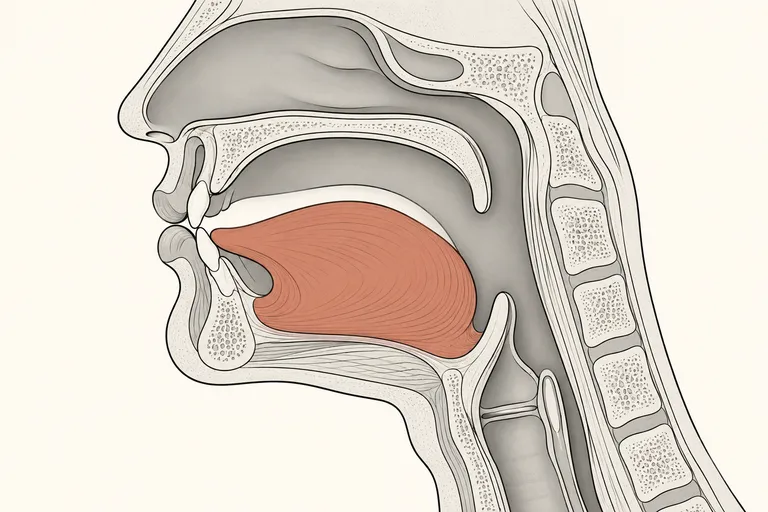
accepted
Either no airflow event at all (silent letter habit), or the back of the tongue rises to constrict against the soft palate, producing a rough, audible scrape.
Broad tongue shape and open vocal tract are anatomically plausible.
attempt 0 · 2026-10-03
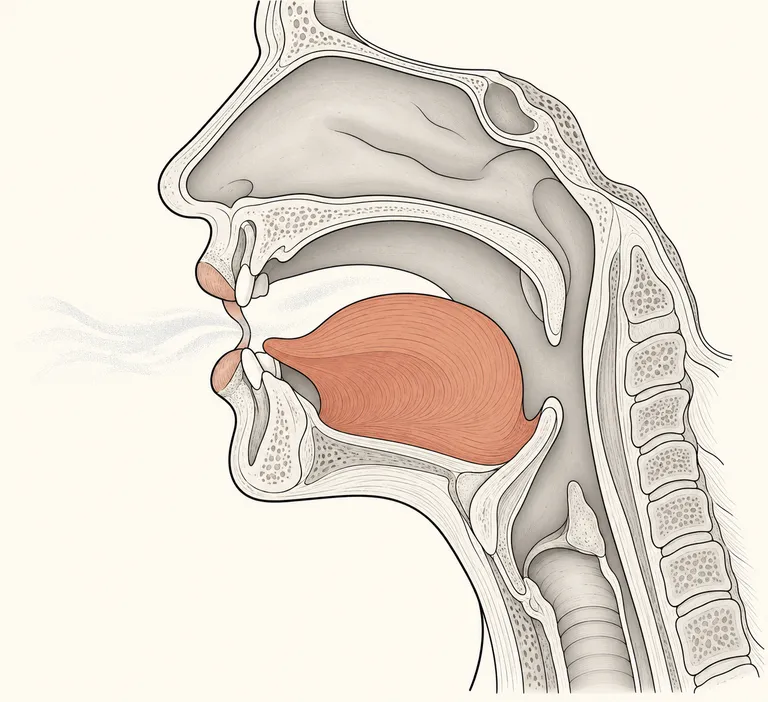
accepted
The mouth is already shaped for the upcoming vowel with no tongue constriction anywhere; only a light puff of breath passes through an open vocal tract.
Tongue, teeth, palate, and airway form a coherent sagittal anatomy.
attempt 0 · 2026-10-03
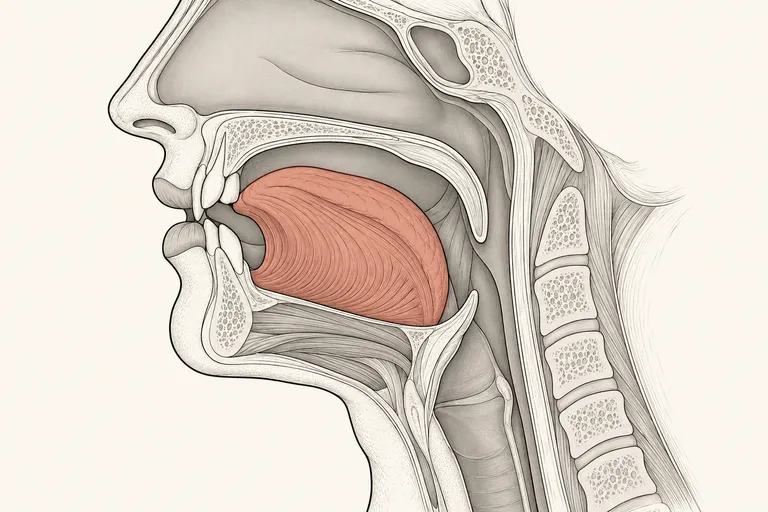
accepted
Tongue raised high and front but with moderate tension and shorter duration; jaw only slightly closed.
Raised front tongue remains broad and anatomically plausible without twisting or looping.
attempt 0 · 2026-10-03
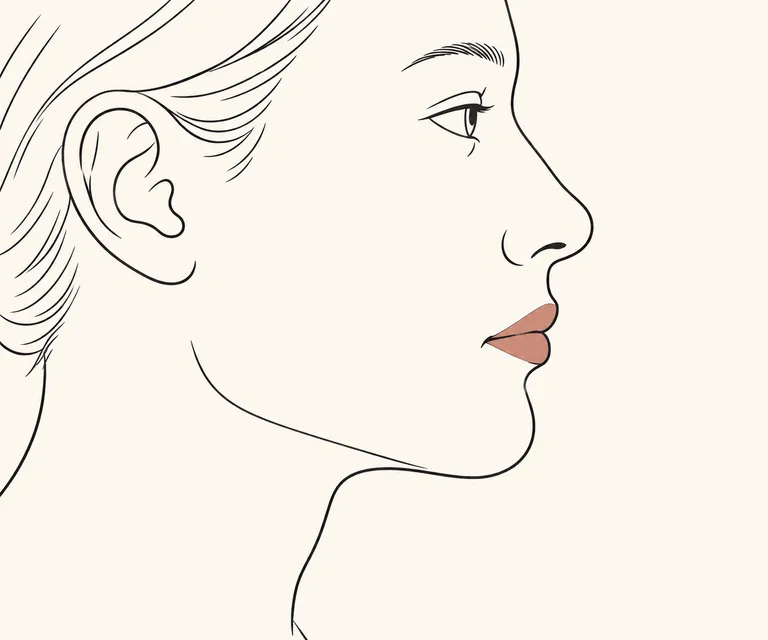
accepted
Tongue bunched very high and front with strong tension, jaw nearly closed, vowel held noticeably longer.
Normal stylized profile with anatomically plausible lips and jaw.
attempt 1 · 2026-10-03
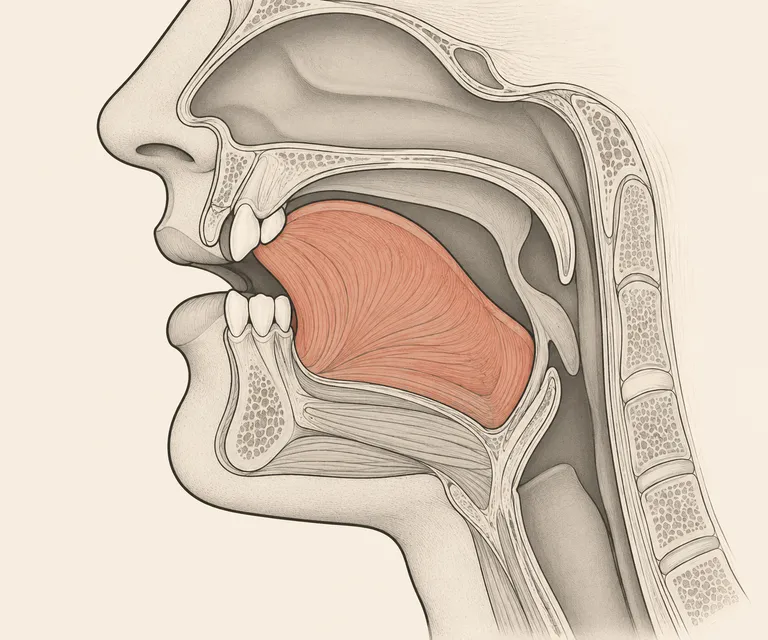
accepted
Tongue held high, tense, and front for every high-front vowel, whether the target is 'seat' or 'sit'.
High front tongue posture and sagittal vocal-tract anatomy appear plausible.
attempt 0 · 2026-10-03
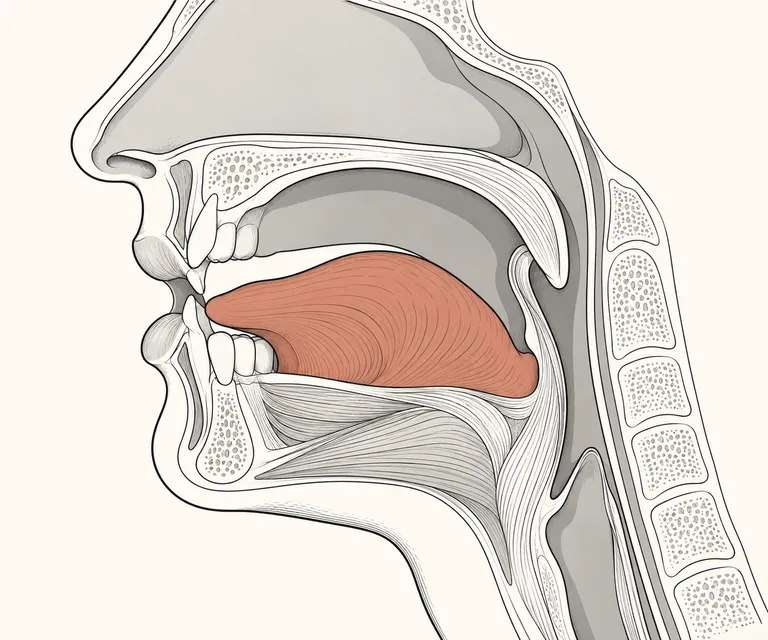
accepted
Tongue relaxed and slightly lower/more central than for i, jaw a touch more open, overall looser muscle tension.
Relaxed, slightly lowered tongue and open jaw are anatomically plausible.
attempt 0 · 2026-10-03
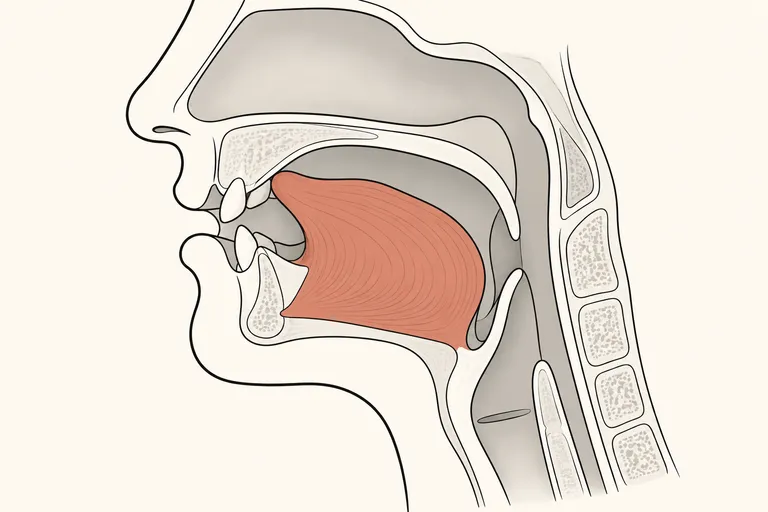
accepted
Front of the tongue rises close to the palate with enough constriction to add audible friction or buzz, especially strong at the start of a word.
Raised tongue front and broad tongue body are anatomically plausible, without hooking or splitting.
attempt 1 · 2026-10-03
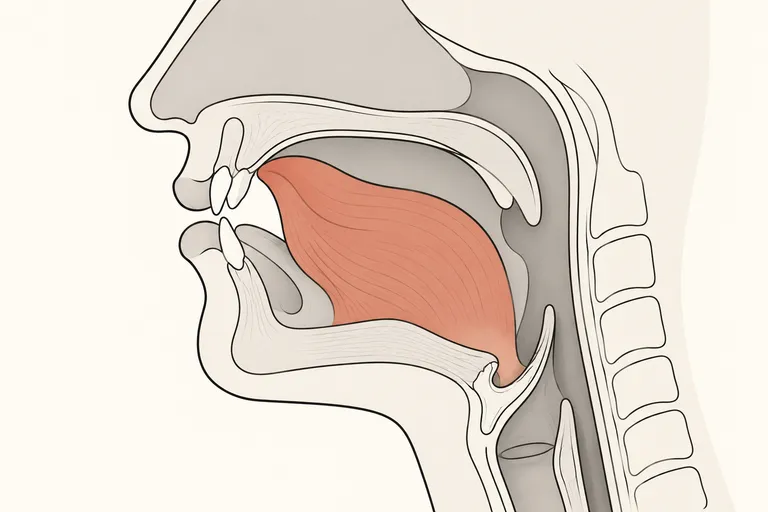
accepted
Front of the tongue rises to nearly the same spot but stays looser, gliding quickly into the following vowel with smooth, non-turbulent airflow and no friction.
Tongue rises toward the front palate with a plausible continuous contour.
attempt 1 · 2026-10-03
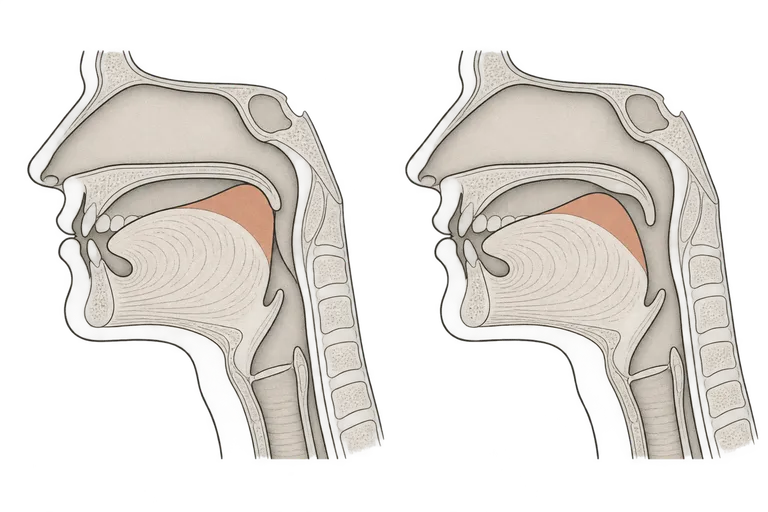
accepted
Back of tongue seals against the soft palate and releases cleanly with no extra air, in every position.
Paired sagittal views show plausible tongue and palate anatomy without distortions.
attempt 0 · 2026-10-03
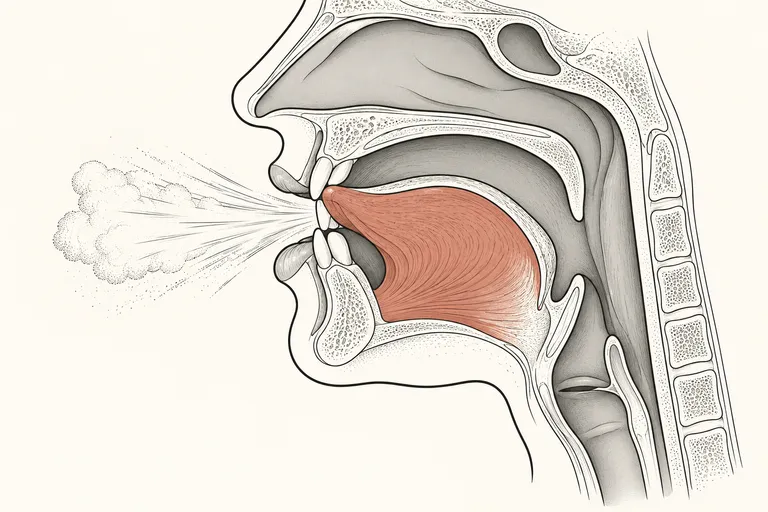
accepted
At the start of a stressed syllable, the release is accompanied by a strong, audible puff of air before the vowel begins.
Tongue, jaw, teeth, and aspirated airflow are anatomically coherent.
attempt 0 · 2026-10-03
accepted
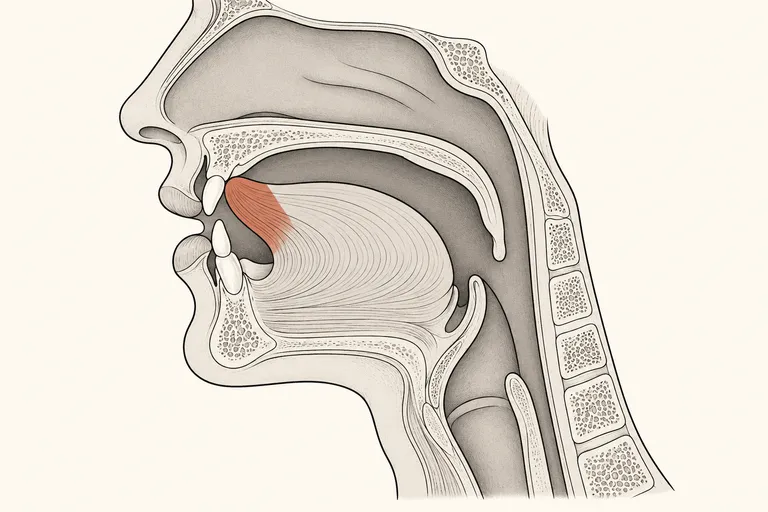
Tongue tip touches the ridge with the tongue body staying forward and light in every position, whether at the start or end of a word.
Tongue tip contacts the alveolar region with a plausible forward tongue body.
attempt 0 · 2026-10-03
accepted
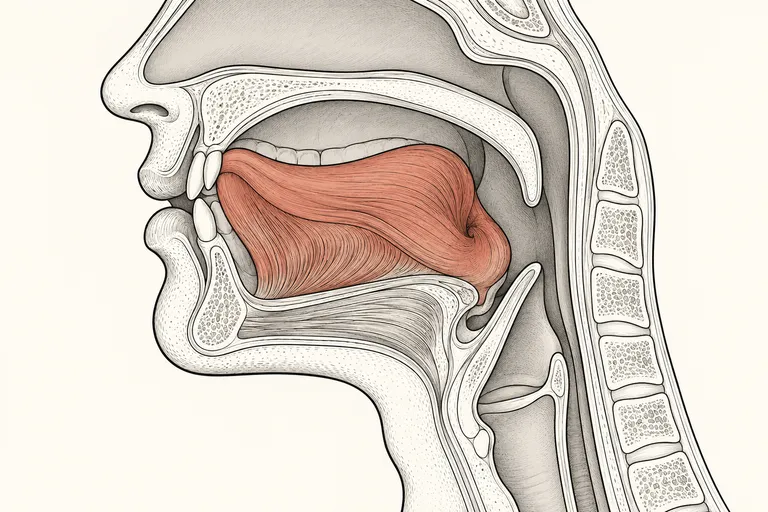
Tongue tip still touches the ridge at the end of a word, but the back of the tongue now bunches and pulls toward the throat, giving a deeper, hollow quality.
The tongue tip and raised posterior tongue form a plausible dark-L configuration.
attempt 0 · 2026-10-03
accepted
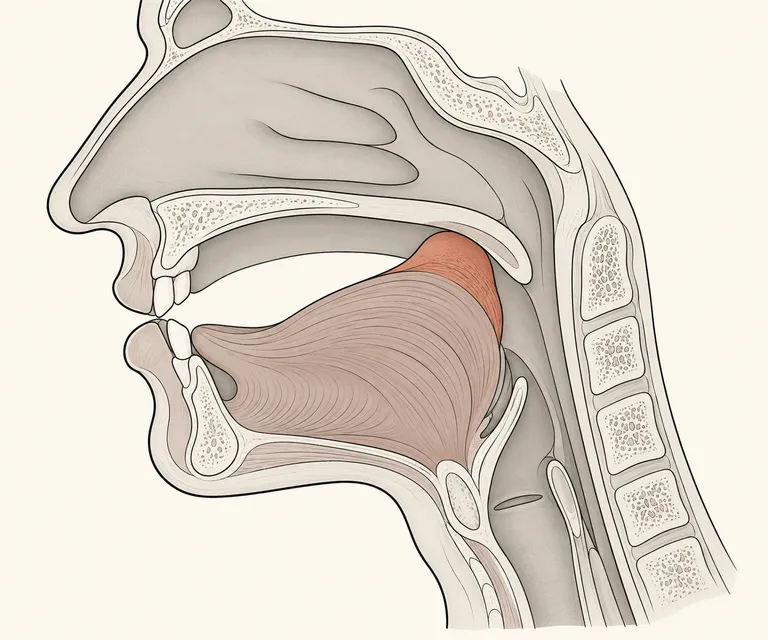
The back of the tongue only rises to the velum automatically right before a following k or g sound; alone at the end of a word, speakers default to the familiar tongue-tip n or add a following g.
Raised posterior tongue and lowered tip form a plausible velar closure.
attempt 0 · 2026-10-03
accepted
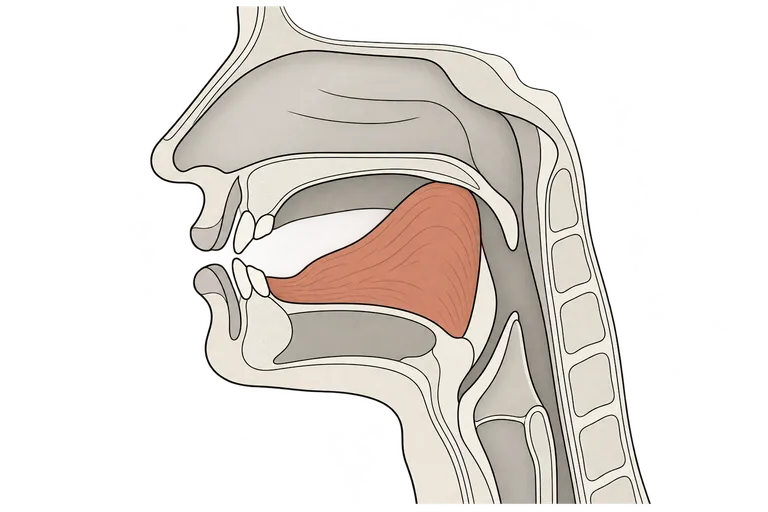
The back of the tongue rises to touch the velum and stays there as the final sound of the word, with the tongue tip staying low and no following stop released at all.
Stylized cutaway shows a plausible posterior tongue-to-velum contact without major distortion.
attempt 0 · 2026-10-03
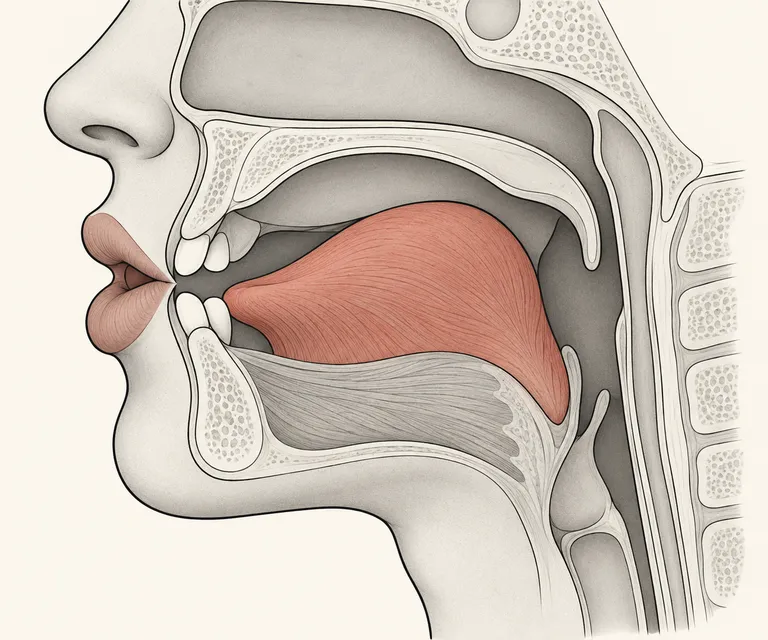
accepted
Lips round and tongue holds a steady mid-back position for the whole vowel, with no change in shape.
Rounded lips and a broad mid-back tongue posture appear anatomically plausible.
attempt 0 · 2026-10-03
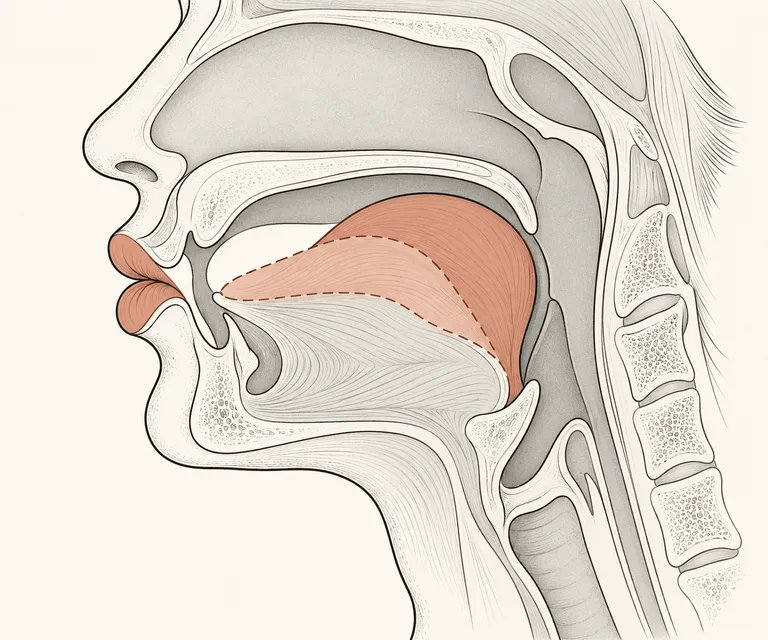
accepted
Lips round and tongue starts mid-back, then rises and rounds further toward u by the end of the vowel.
Overlaid tongue positions clearly depict a plausible vowel movement without malformed anatomy.
attempt 0 · 2026-10-03
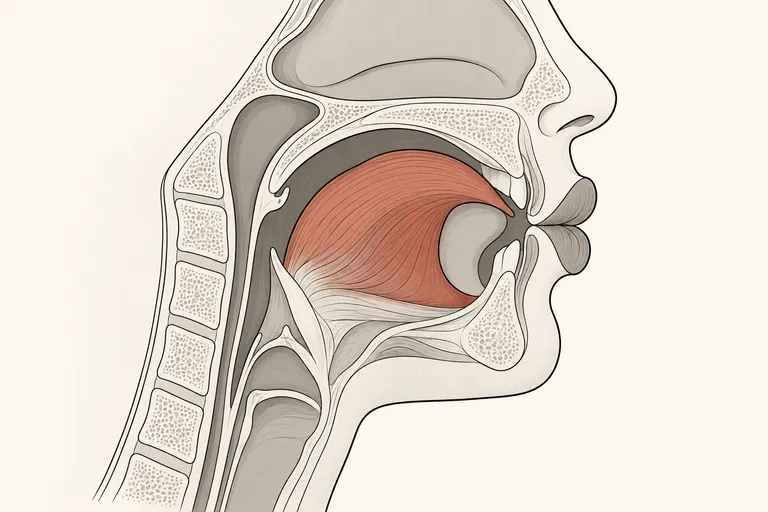
accepted
Tongue raised higher and lips rounded more tightly, close to the position used for Spanish 'o'.
Plausible sagittal anatomy with a raised, broad tongue and rounded lips.
attempt 0 · 2026-10-03
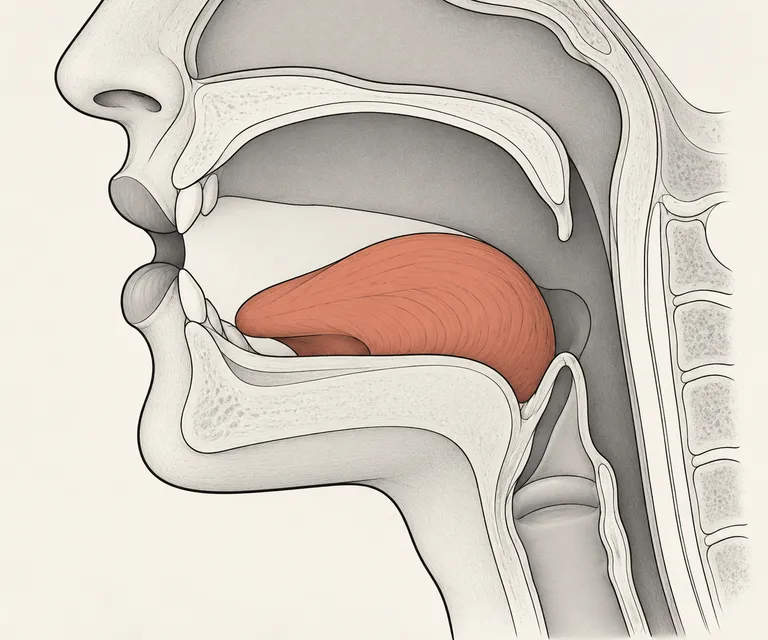
accepted
Tongue lower and further back, lips only lightly rounded, jaw more open, held steady with no glide.
Tongue is anatomically coherent, low and retracted within an open jaw.
attempt 0 · 2026-10-03
accepted
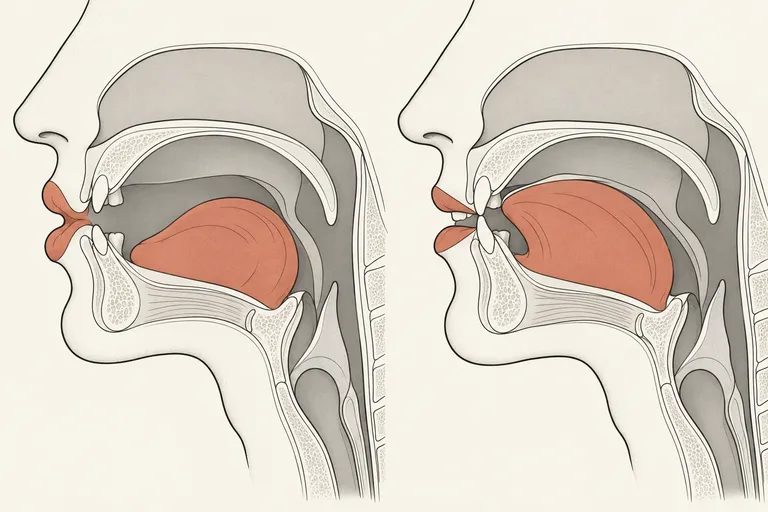
Glide starts from a fairly high, tightly rounded mid-back o and moves quickly to a full close front i, as in 'hoy'.
Both comparison diagrams show plausible tongue positions without distortions or duplication glitches.
attempt 0 · 2026-10-03
accepted
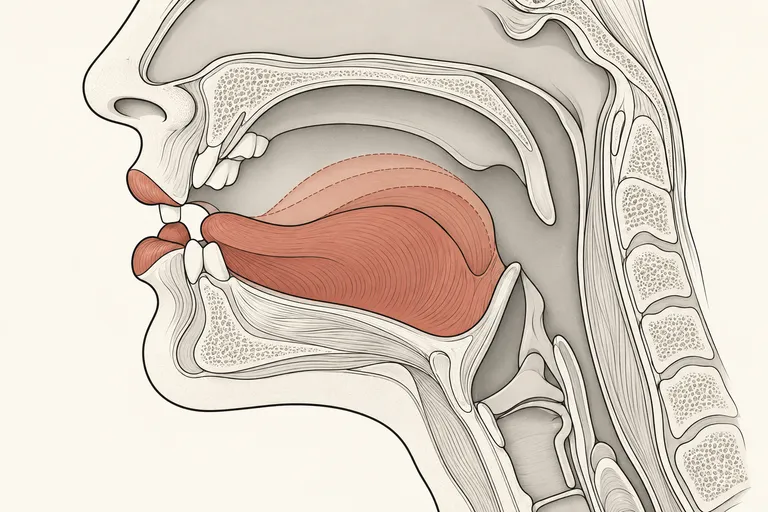
Glide starts from a lower, more open ɔ, held a bit longer, then unrounds and rises only to a short 'ih' rather than a full 'ee'.
Solid tongue and dashed motion overlay plausibly illustrate a vowel glide.
attempt 0 · 2026-10-03
accepted
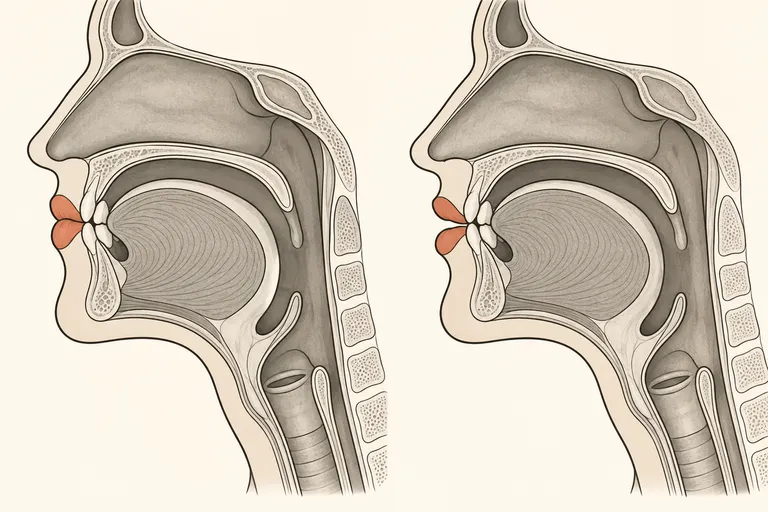
Lips press together and release cleanly with no extra puff of air, identical in every position.
Both sagittal views show coherent anatomy and natural closed-lip contact.
attempt 0 · 2026-10-03
accepted
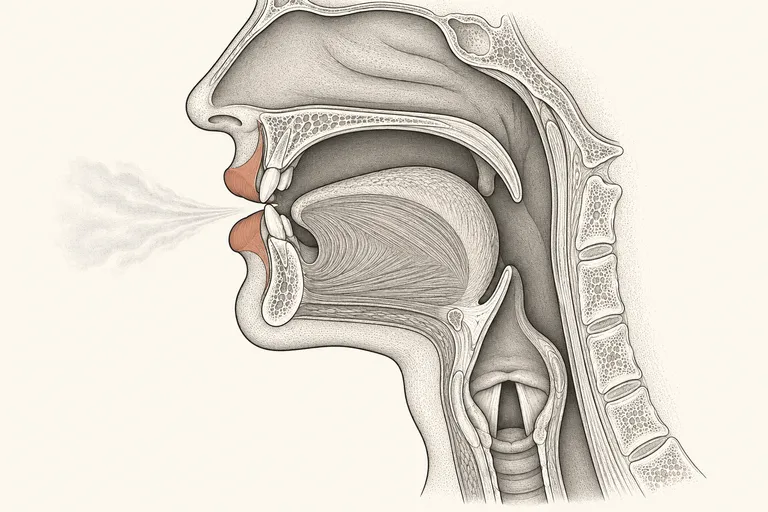
At the start of a stressed syllable, lips release with a strong, audible puff of air before the vowel begins.
The lip release, airflow, tongue, teeth, and vocal tract are visually coherent.
attempt 0 · 2026-10-03
accepted
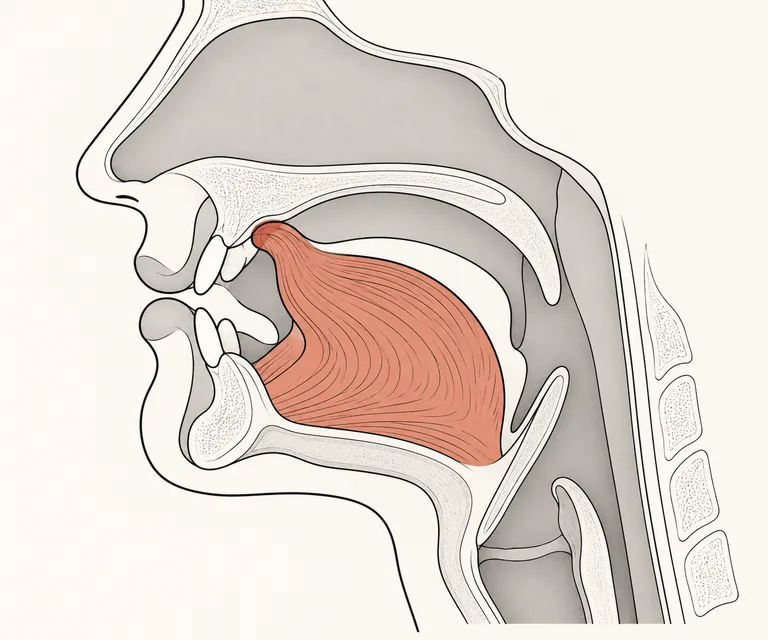
Tongue tip strikes or repeatedly taps the alveolar ridge, creating one or more brief interruptions in the airflow.
Plausible sagittal anatomy with the tongue tip contacting the alveolar ridge.
attempt 0 · 2026-10-03
accepted
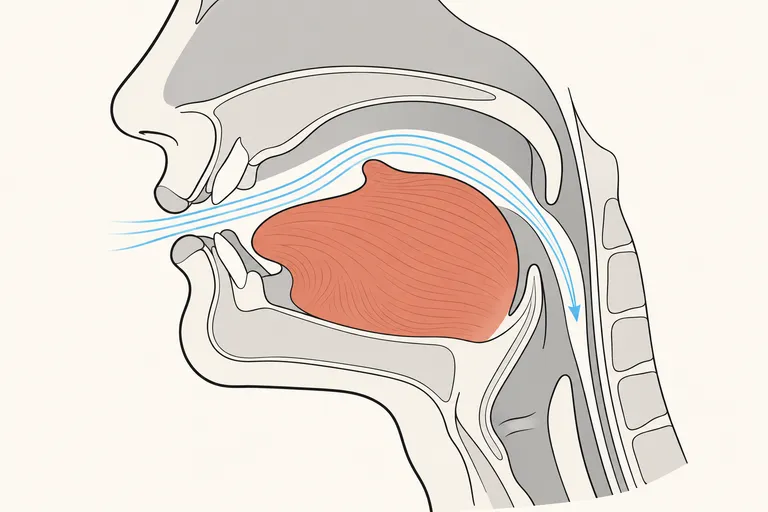
Tongue tip curls upward and back (or the tongue body bunches) close to the roof of the mouth without ever making contact, letting air flow smoothly and continuously.
Tongue forms a plausible broad bunch with a clear gap beneath the palate.
attempt 4 · 2026-10-04
accepted
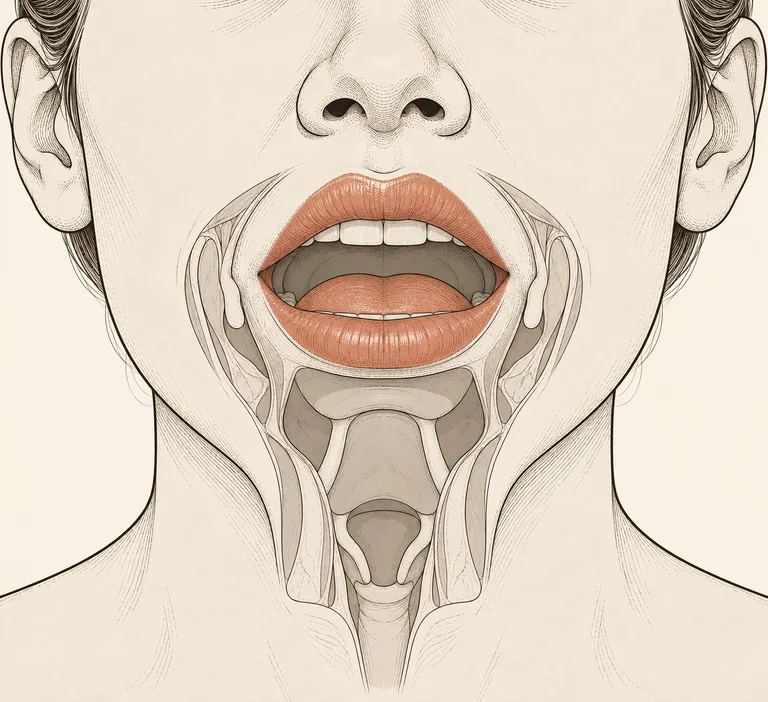
A brief 'e' vowel is inserted before words beginning with s plus another consonant, as required by Spanish phonotactics (e.g., 'estudiante').
Stylized frontal cutaway remains anatomically coherent without tongue distortion.
attempt 0 · 2026-10-03
accepted
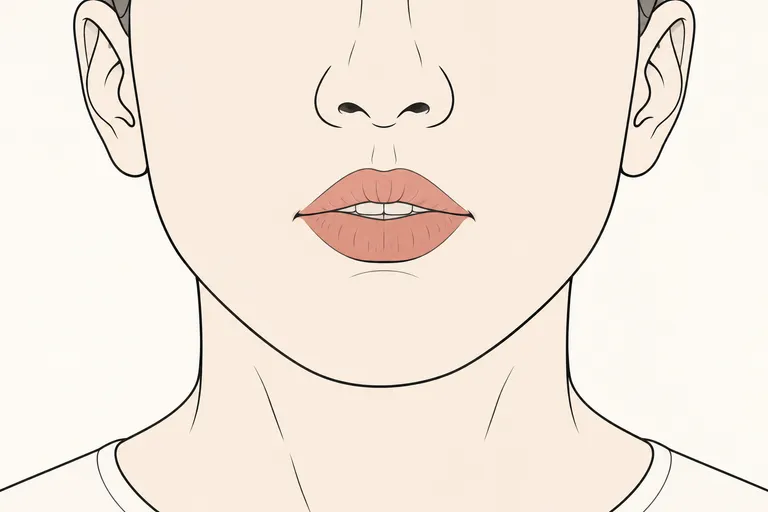
The word begins directly with the s-consonant cluster, with no vowel before it, keeping the syllable count exactly as spelled.
Slightly parted lips and visible teeth are anatomically plausible.
attempt 1 · 2026-10-03
accepted
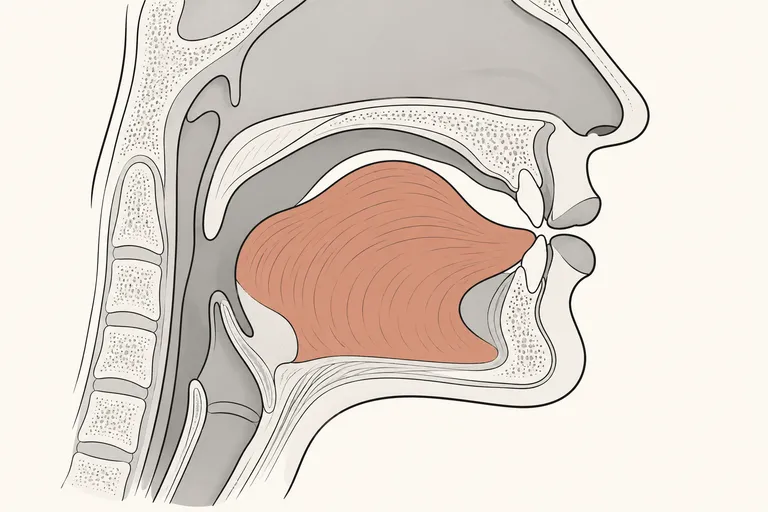
Tongue either taps fully closed against the ridge for a tʃ-style stop-plus-release, or narrows to the forward s-position, without the broader, rounded channel English ʃ needs.
Single broad tongue approaches the front teeth without twisting or impossible curvature.
attempt 0 · 2026-10-03
accepted
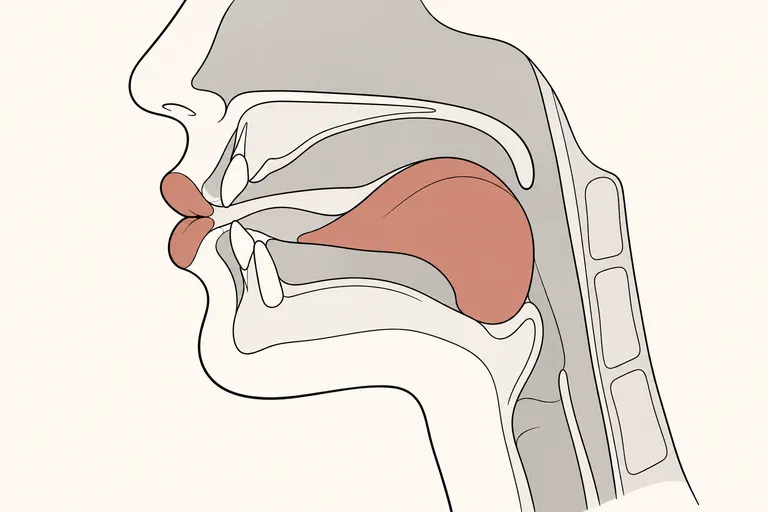
Lips round and push forward while the tongue bunches further back than for s, creating continuous turbulent airflow with no stop closure at all.
Schematic cross-section shows a continuous tongue with plausible bulk and no abnormal tip curling.
attempt 1 · 2026-10-03
accepted
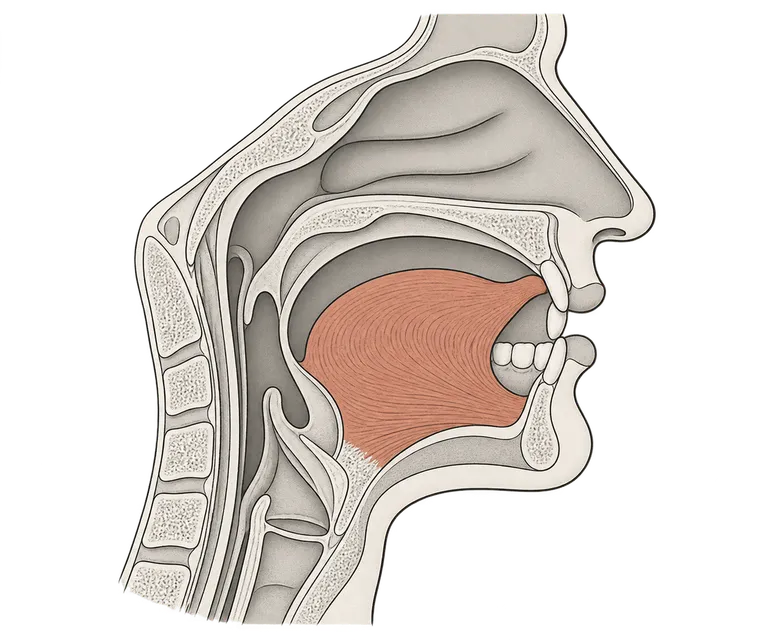
Tongue tip touches the back of the upper teeth, releases cleanly with no puff of air, same articulation in every position.
Plausible sagittal tongue posture with contact behind the upper teeth.
attempt 0 · 2026-10-03
accepted
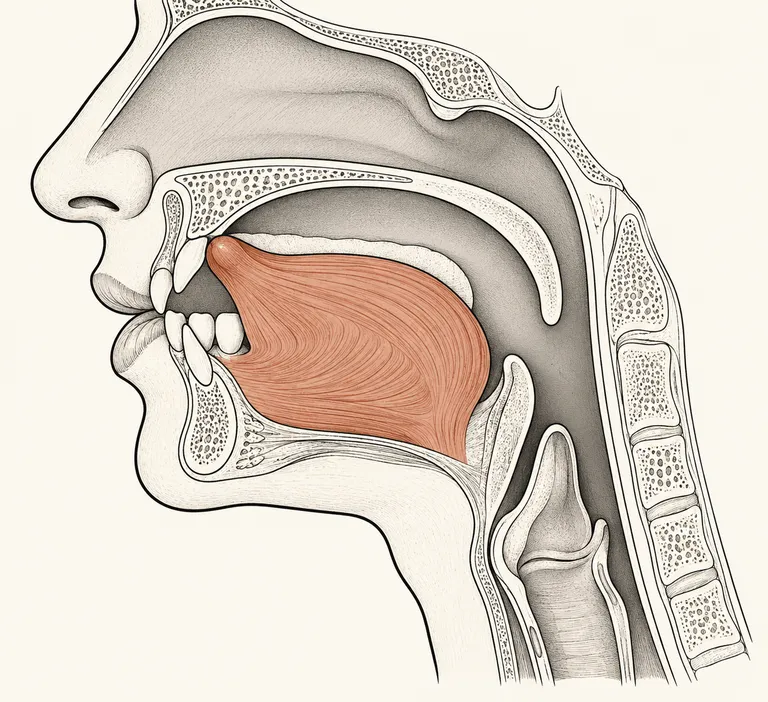
Tongue tip touches the alveolar ridge; strongly aspirated at the start of stressed syllables, reduced to a quick tap between vowels.
Tongue and vocal-tract structures appear anatomically plausible.
attempt 0 · 2026-10-03
accepted
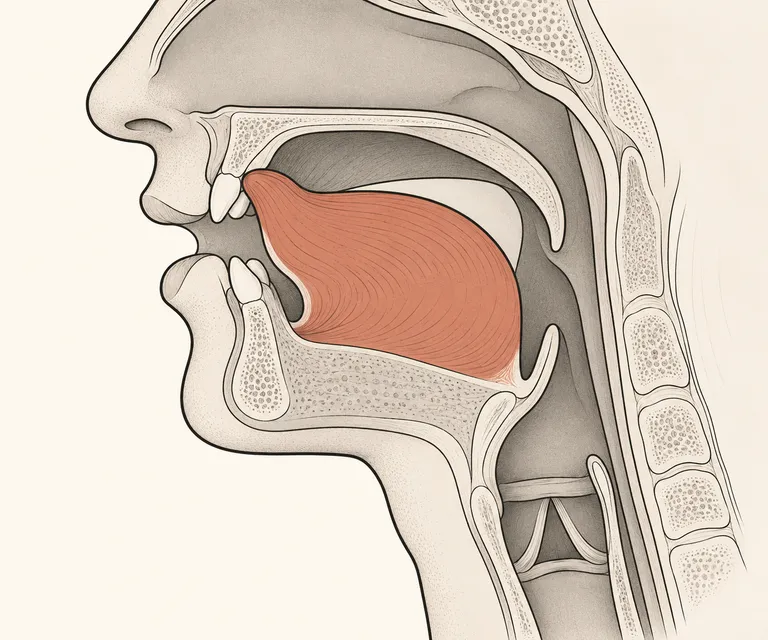
Tongue tip presses firmly against the alveolar ridge, sealing airflow, then releases into a brief hiss — essentially identical to the target, but this same shape is sometimes reused for the voiced sound dʒ as well.
Broad tongue shape and alveolar contact are visually and anatomically plausible.
attempt 0 · 2026-10-03
accepted
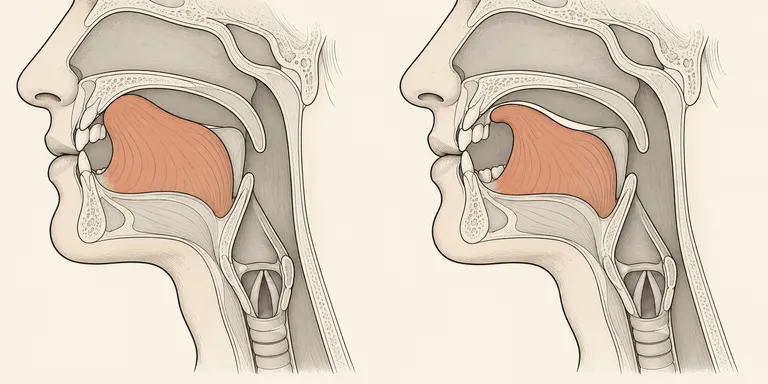
Same closure-then-hiss sequence, but voicing must stay off throughout, and this articulation must stay distinct from its voiced twin dʒ, which adds a vocal buzz.
Both sagittal diagrams show plausible tongue positions without impossible curling.
attempt 0 · 2026-10-03
accepted
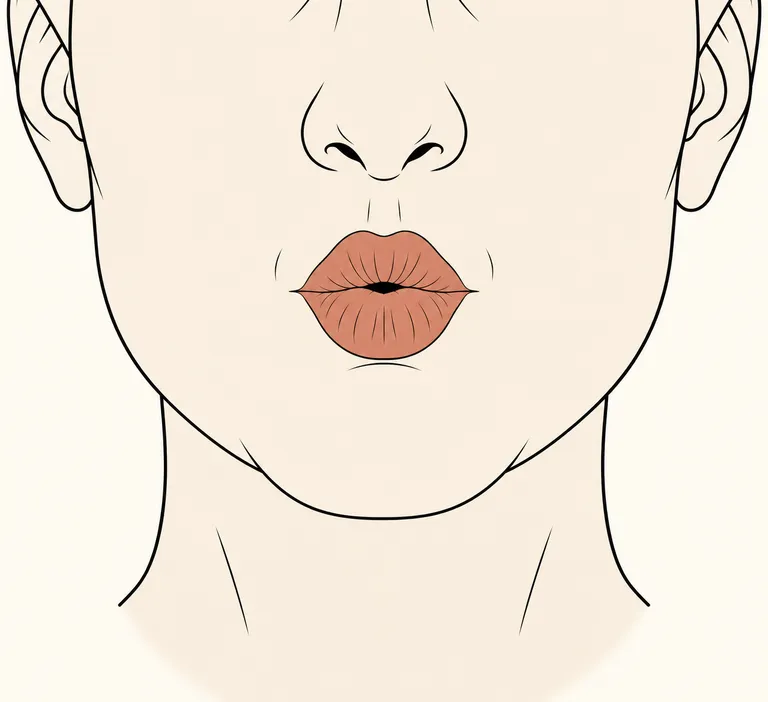
Tongue pulled fully back, lips tightly pursed and rounded in every context, vowel kept relatively short.
Pursed lips form a plausible small opening without anatomical distortions.
attempt 1 · 2026-10-03
accepted
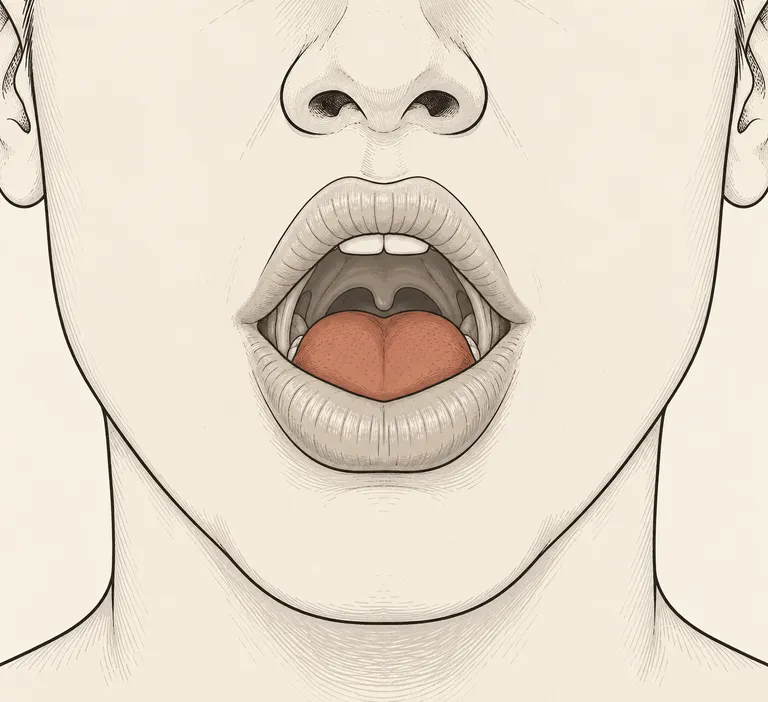
Tongue often pulled slightly forward (especially after t, d, n), lips rounded but less tightly, vowel held longer.
Open mouth, tongue, teeth, and lips appear anatomically plausible.
attempt 0 · 2026-10-03
accepted
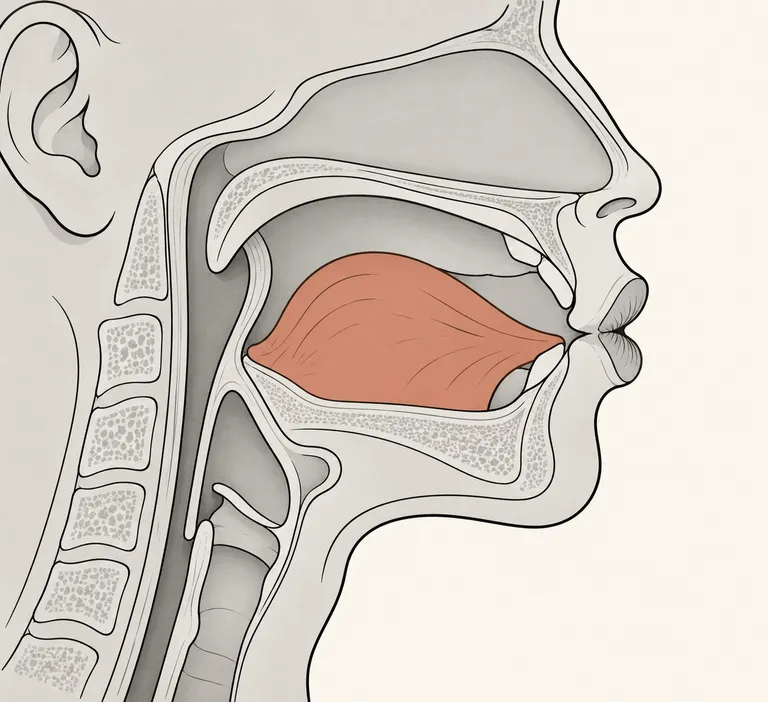
Tongue pushed high and back, lips strongly rounded and pursed, used for every 'oo'-type vowel.
High-backed tongue, pursed lips, teeth, and jaw are coherently positioned.
attempt 0 · 2026-10-03
accepted
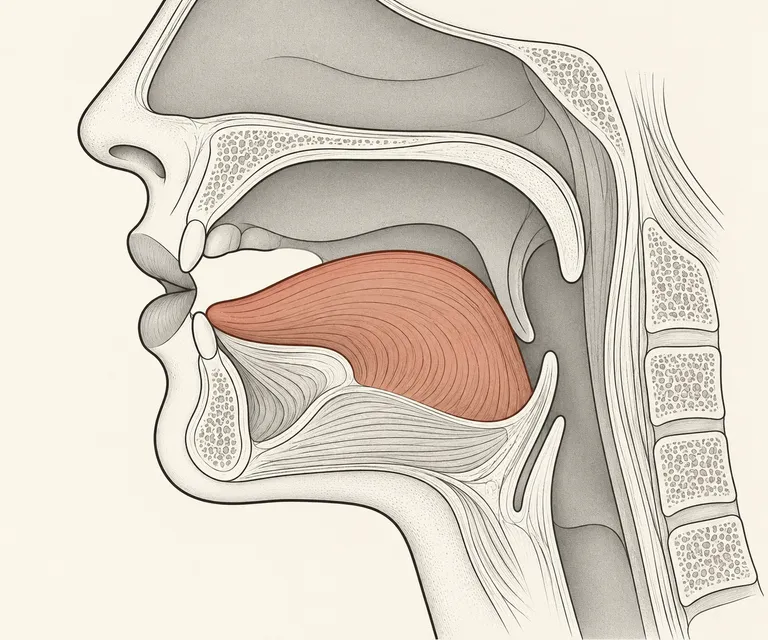
Tongue relaxed and slightly lower than for u, lips only lightly rounded, jaw a touch more open.
Single relaxed tongue is slightly lowered with plausible lips, jaw, and airway.
attempt 0 · 2026-10-03
accepted
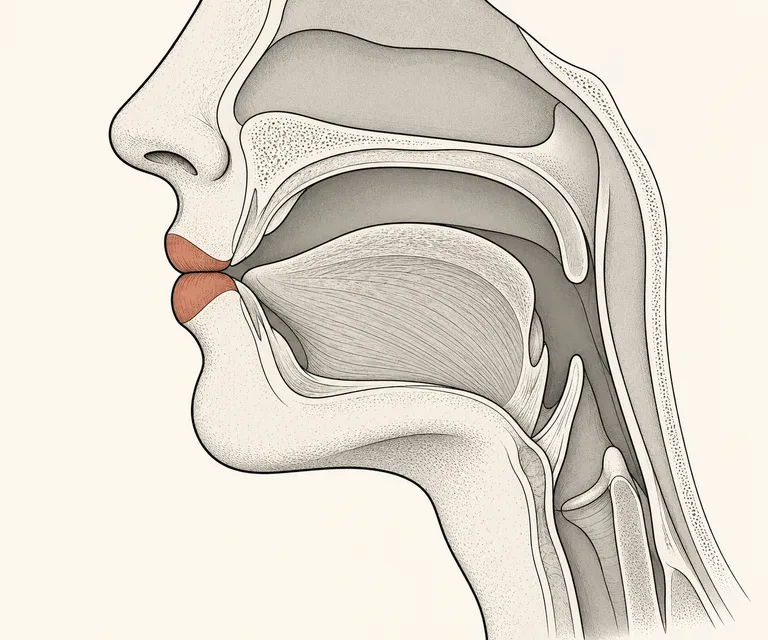
Both lips come together or approach each other, producing the same bilabial sound whether the spelling is 'b' or 'v'.
Sagittal mouth anatomy and bilabial lip contact appear plausible.
attempt 0 · 2026-10-03
accepted
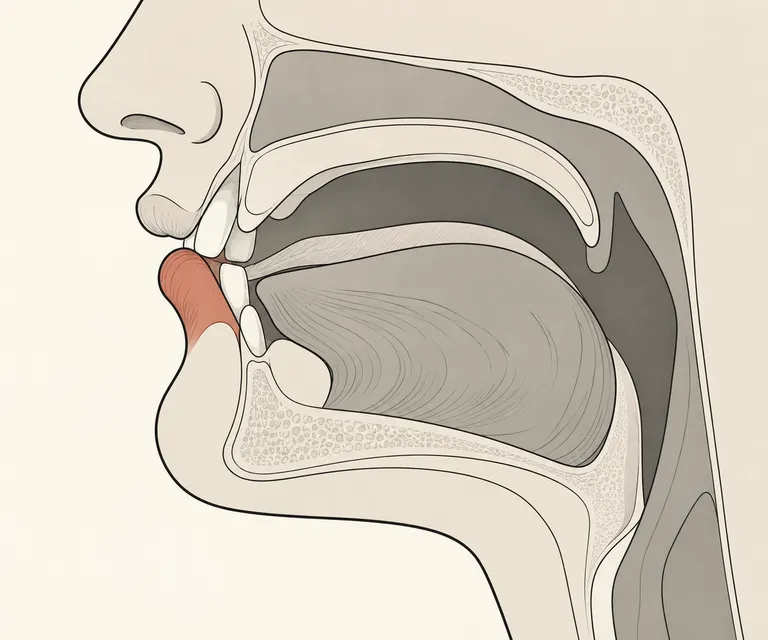
Lower lip rises to touch the edge of the upper front teeth, leaving the upper lip uninvolved, producing a continuous labiodental buzz distinct from b.
Lower lip plausibly contacts the upper incisors without tongue distortion.
attempt 0 · 2026-10-03
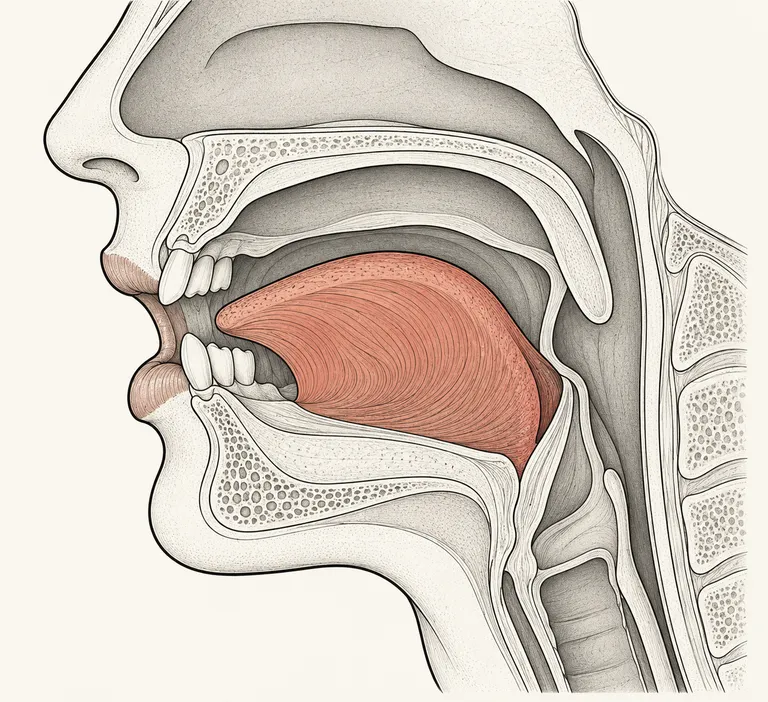
accepted
Jaw drops fully open, tongue low and central, as in the Spanish 'a' of 'casa'.
Tongue and surrounding vocal tract have plausible sagittal anatomy.
attempt 0 · 2026-10-03
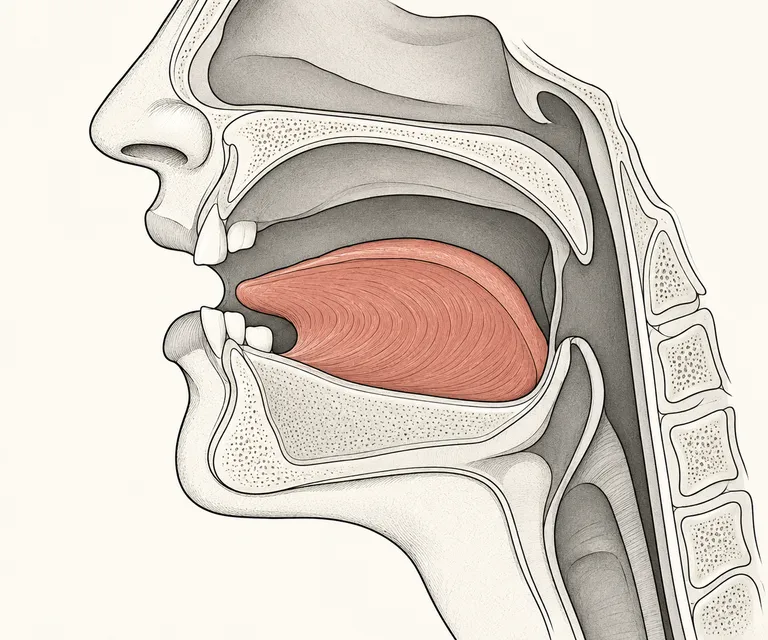
accepted
Jaw opens only moderately, tongue rests higher and more relaxed in a mid-low central position.
Tongue shape and moderately open jaw appear anatomically plausible.
attempt 0 · 2026-10-03
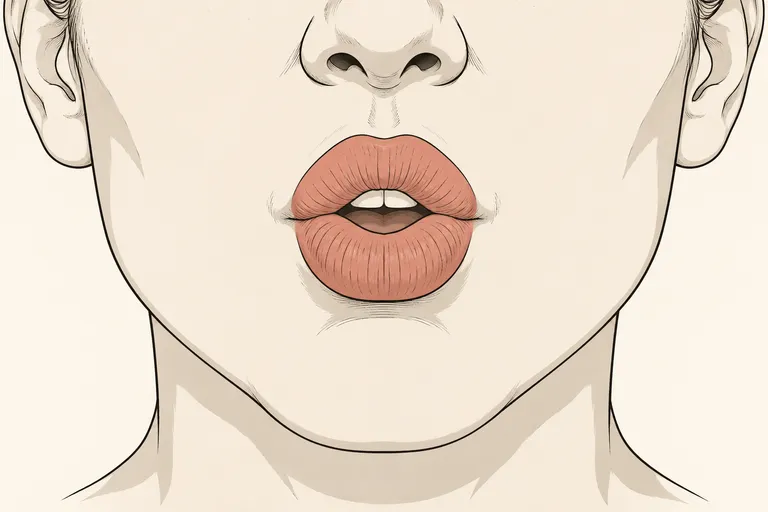
accepted
Lips round and push forward for both target sounds; the lower lip never approaches the upper teeth, so v-spelled words come out sounding just like w-spelled ones.
Rounded protruding lips and visible oral structures appear anatomically sane.
attempt 0 · 2026-10-03
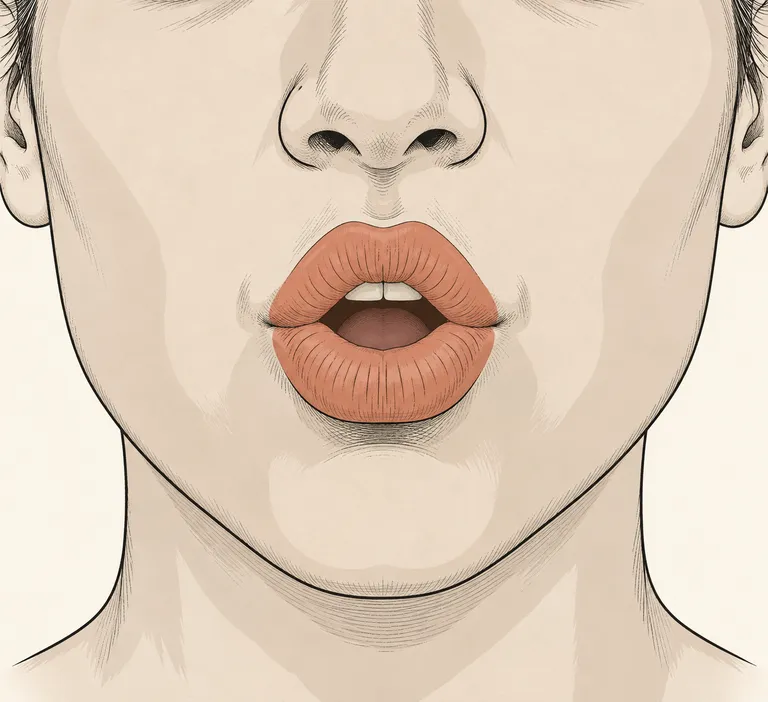
accepted
For w, lips round and push forward with the tongue back raised; for v (a separate sound), the lower lip must touch the upper teeth instead, keeping the two categories distinct.
Rounded lips, teeth, and visible tongue appear anatomically plausible.
attempt 0 · 2026-10-03
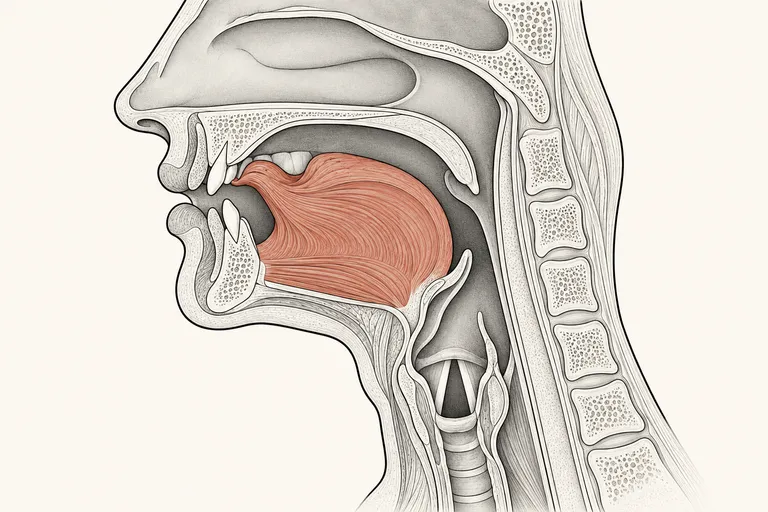
accepted
Tongue forms the same narrow groove as for s near the alveolar ridge, but the vocal folds stay open, so no buzz is added even in positions where English requires voicing.
Tongue is broad and naturally positioned near the alveolar region.
attempt 0 · 2026-10-03
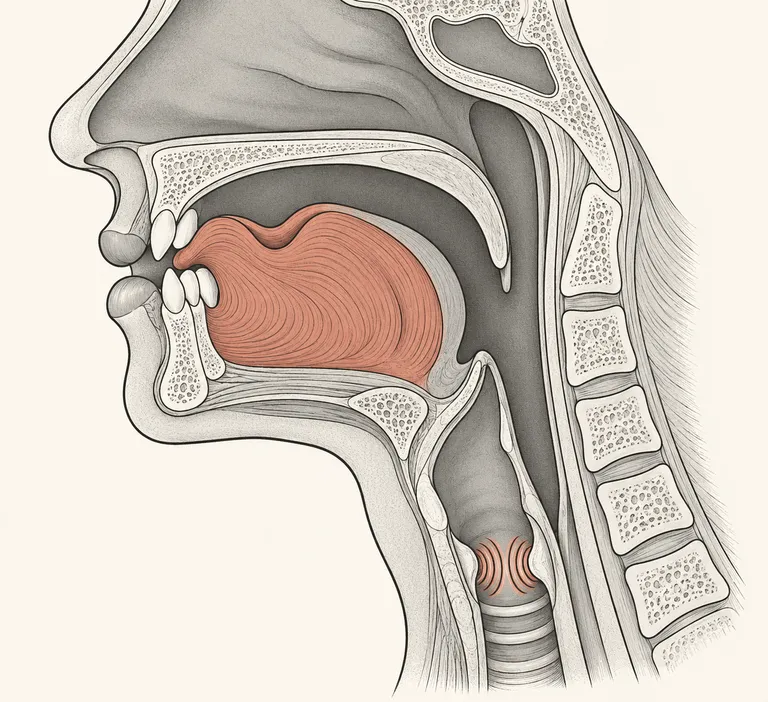
accepted
Same tongue groove, but the vocal folds vibrate continuously throughout the fricative, adding an audible buzz on top of the hiss.
Sagittal tongue and vocal-tract structures are coherent and anatomically plausible.
attempt 0 · 2026-10-03
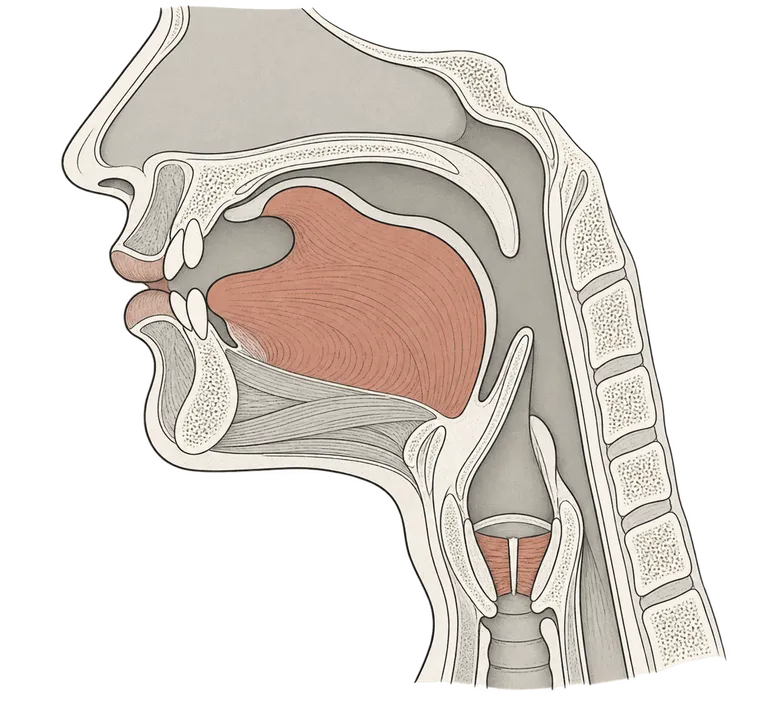
accepted
Tongue either fully closes then releases (as for dʒ) or the vocal folds stop vibrating partway through (as for ʃ), instead of maintaining continuous voiced friction.
Raised anterior tongue remains continuous and anatomically plausible.
attempt 0 · 2026-10-03
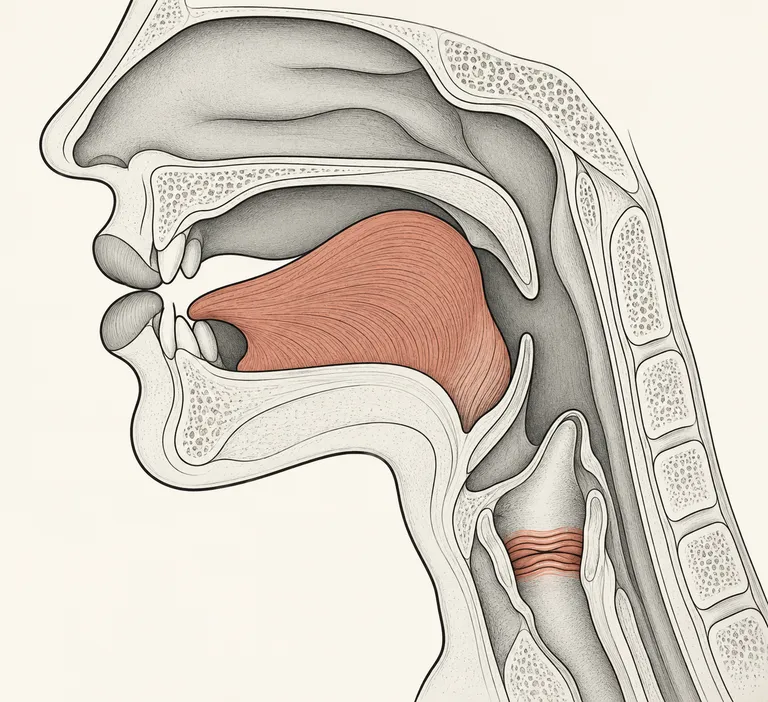
accepted
Same rounded-lip, back-bunched tongue shape as ʃ, but the vocal folds vibrate the entire time, producing a smooth buzzing hush with no stop and no devoicing.
Bunched tongue and vocal tract structures are visually coherent.
attempt 0 · 2026-10-03
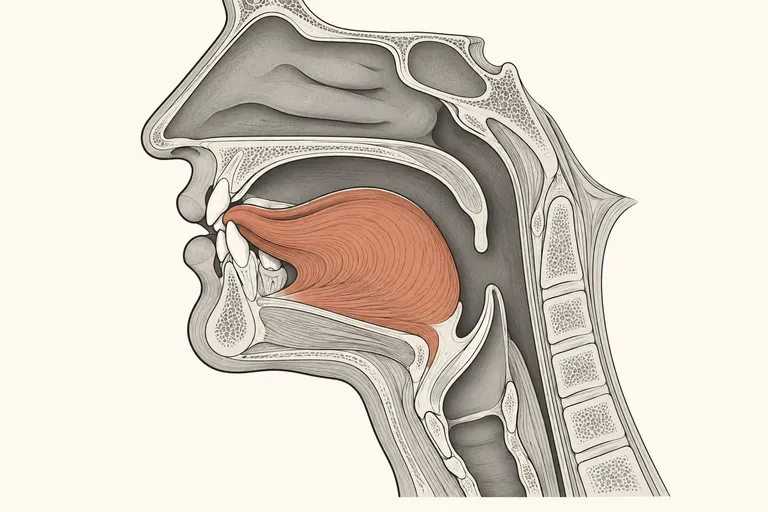
accepted
Tongue tip stays behind the teeth, air is shaped into a narrow groove for a sharp 's' hiss, as normally used for all 's'-type sounds.
Tongue remains naturally shaped behind the teeth without deformation.
attempt 0 · 2026-10-03
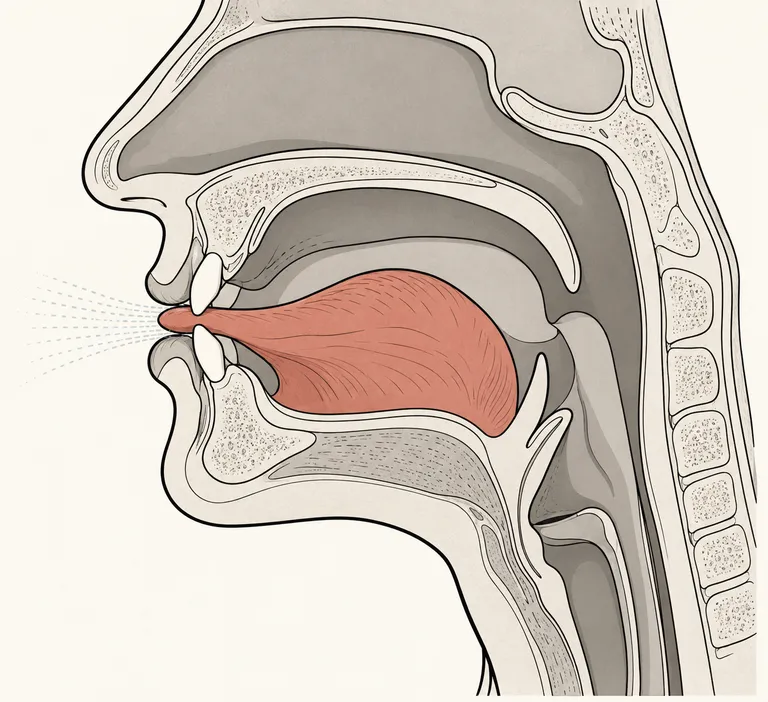
accepted
Tongue tip protrudes lightly between the upper and lower front teeth, letting air hiss softly over its flat surface.
Tongue protrudes lightly between the incisors in a plausible position.
attempt 0 · 2026-10-03
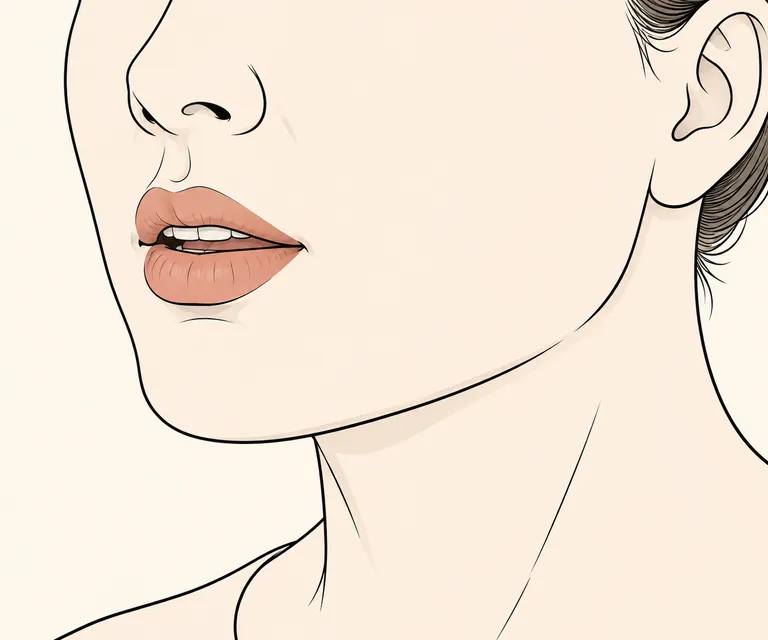
accepted
Jaw only slightly open, lips neutral and relaxed, tongue tip resting forward near the upper gum ridge, muscles evenly and moderately tensed.
Slight jaw opening and visible teeth are plausible; no malformed oral structures appear.
attempt 1 · 2026-10-03
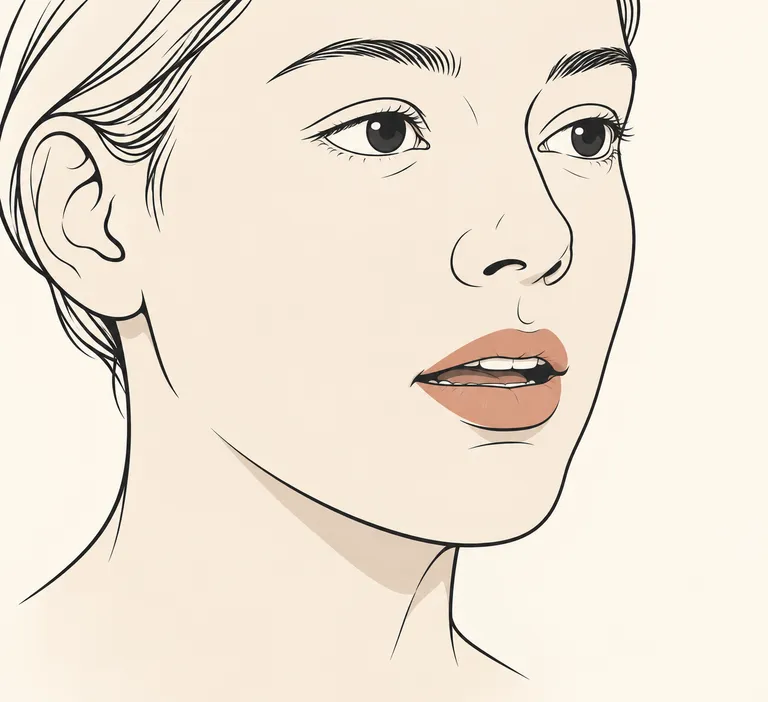
accepted
Jaw loosely dropped, lips neutral to slightly spread, tongue body low and retracted with the tip curled back in readiness for r, overall muscles looser.
Visible tongue remains inside the mouth without excessive curling or distortion.
attempt 1 · 2026-10-03
Pair hu-en-US (189)
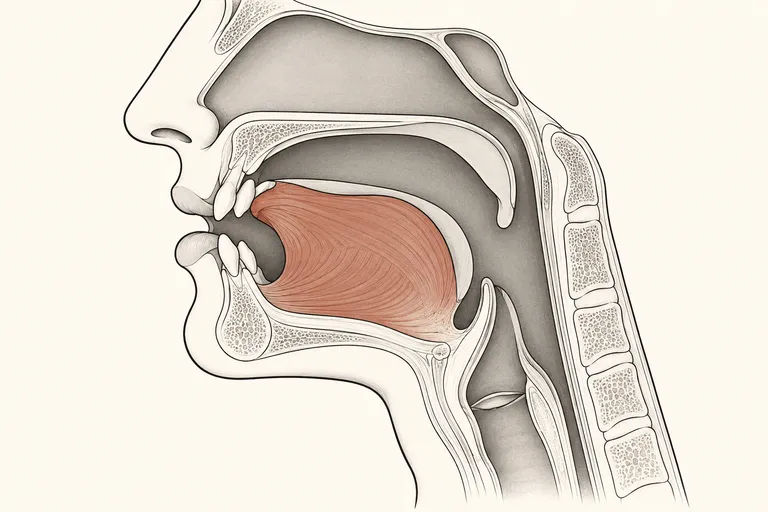
accepted
Lips or tongue releasing the stop directly into the vowel with no extra puff of air, regardless of stress.
Plausible sagittal anatomy with a normally shaped tongue and closed lips.
attempt 0 · 2026-10-02
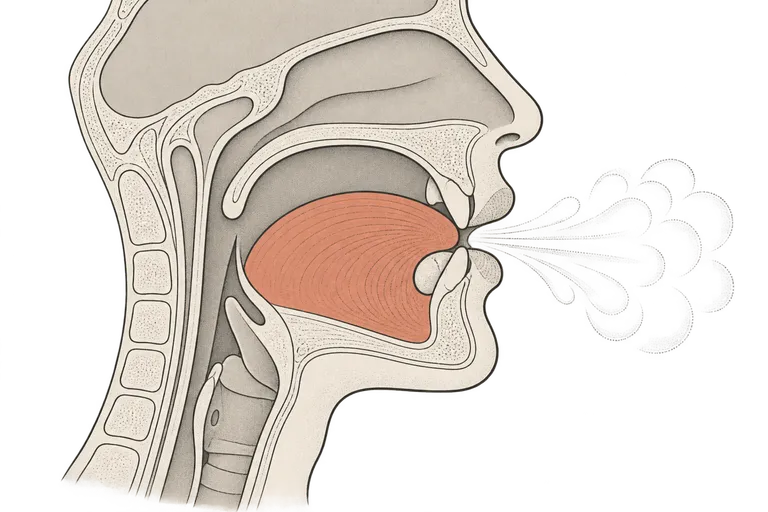
accepted
A clear burst of air released between the consonant and the vowel when the stop starts a stressed syllable.
Anatomically coherent vocal tract and tongue; the airflow burst is visually sensible.
attempt 0 · 2026-10-02
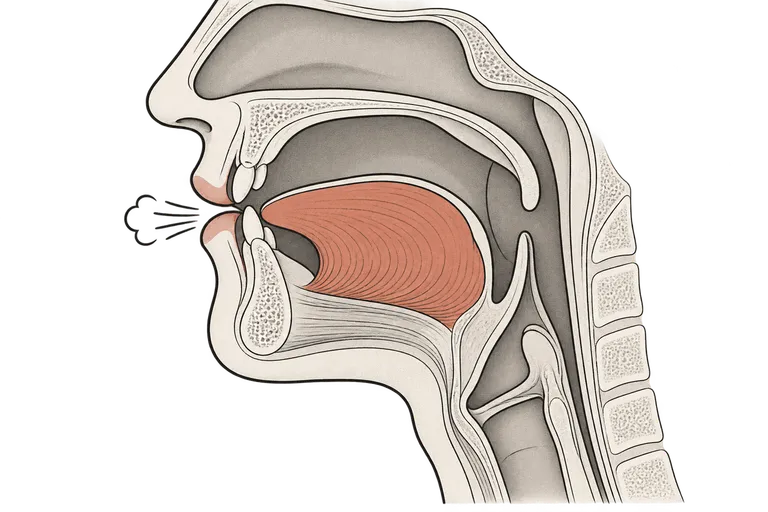
accepted
Tongue or lips making full contact then clearly releasing with an audible burst of air at the end of a word.
Tongue and oral structures are plausible, with a clear release burst at the lips.
attempt 0 · 2026-10-02
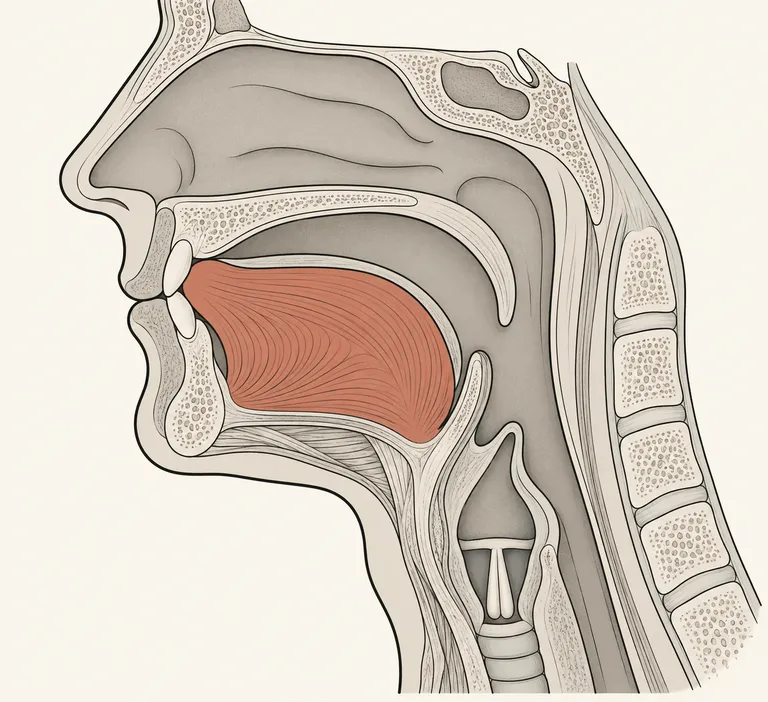
accepted
Tongue or lips making contact but holding the closure with little or no audible release, sometimes replaced by a light glottal catch.
Plausible sagittal anatomy with a broad, untwisted tongue and maintained oral closure.
attempt 0 · 2026-10-02
accepted
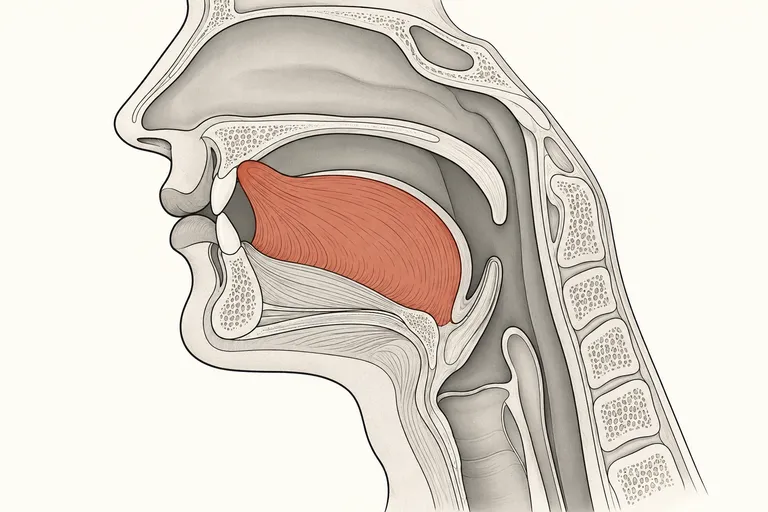
Tongue tip pressing firmly against the alveolar ridge and holding briefly before a crisp, audible release.
Tongue shape and contact near the alveolar ridge are anatomically plausible.
attempt 0 · 2026-10-02
accepted
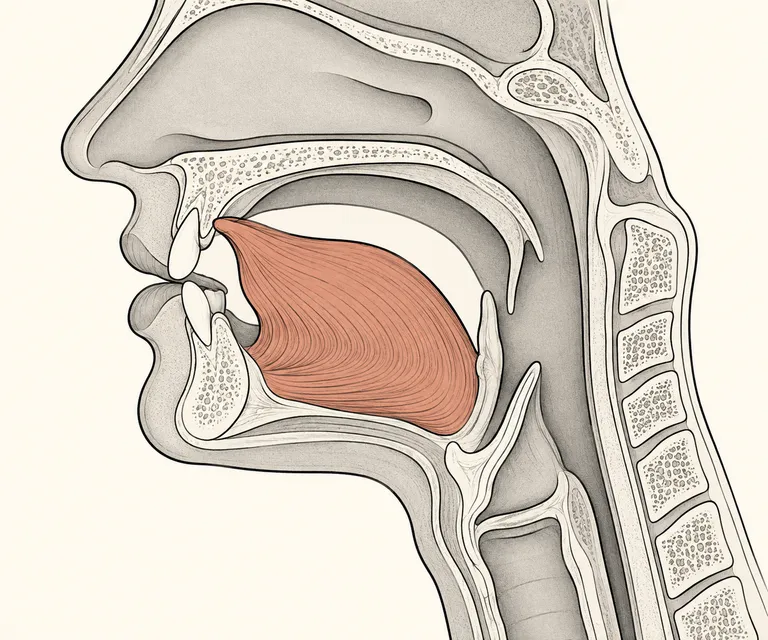
Tongue tip touching the alveolar ridge only very briefly in a single quick tap, with almost no build-up of pressure.
Large but anatomically plausible tongue with a normal tip raised toward the alveolar ridge.
attempt 0 · 2026-10-02
accepted
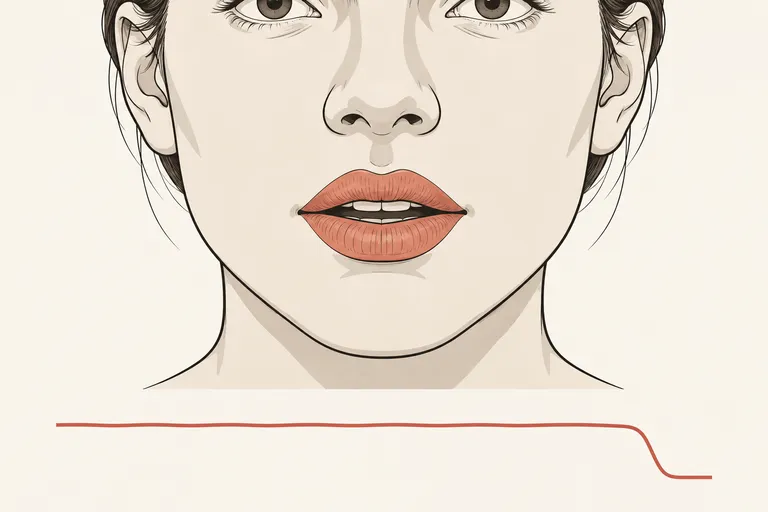
A pitch line that stays fairly flat, then drops sharply only at the very last syllable.
Front-facing mouth and facial anatomy are coherent; the pitch line is clean and sensible.
attempt 0 · 2026-10-02
accepted
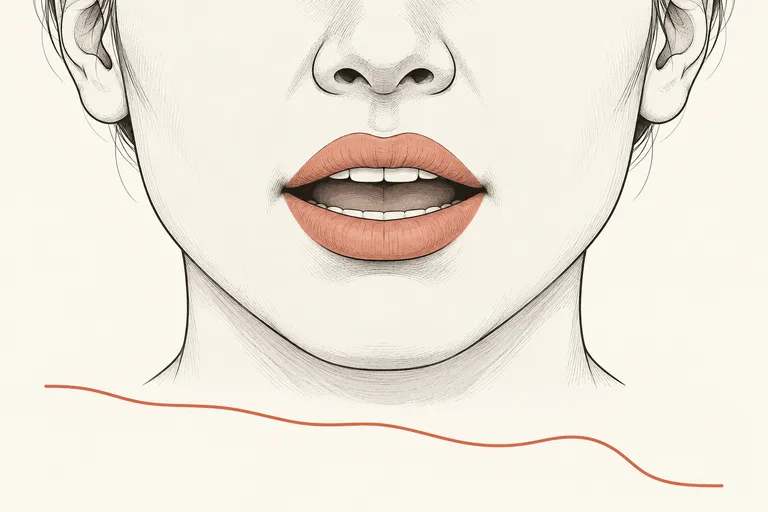
A pitch line that slopes gradually downward across the whole sentence, ending in a smooth final fall.
Facial and oral anatomy appear natural, with a smooth undistorted pitch contour.
attempt 0 · 2026-10-02
accepted
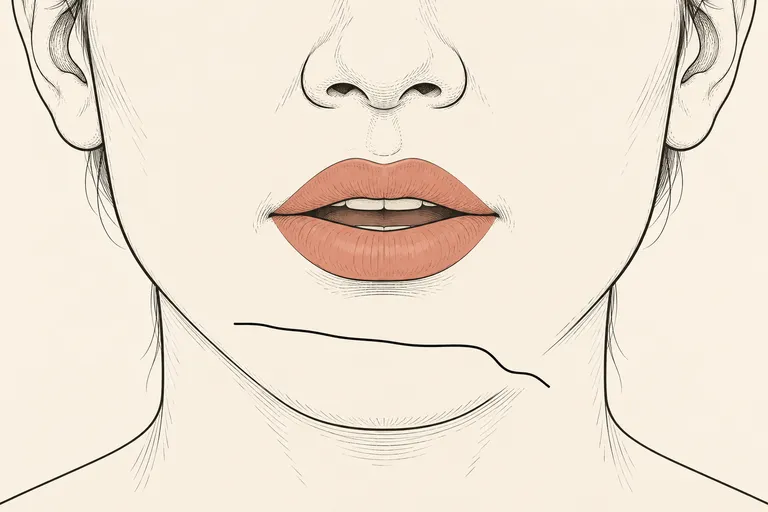
A falling pitch line with a narrower overall range and a somewhat abrupt drop near the end.
Mouth anatomy is visually plausible with no malformed tongue or facial artifacts.
attempt 0 · 2026-10-02
accepted
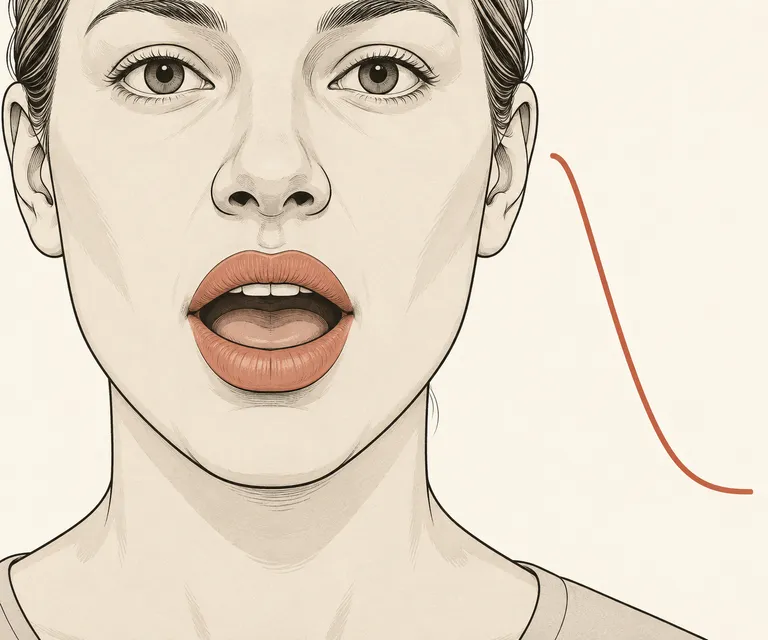
A falling pitch line with a wider range and a smoother, more gradual glide down to the end.
Open mouth, tongue, teeth, lips, and jaw appear anatomically plausible.
attempt 0 · 2026-10-02
accepted
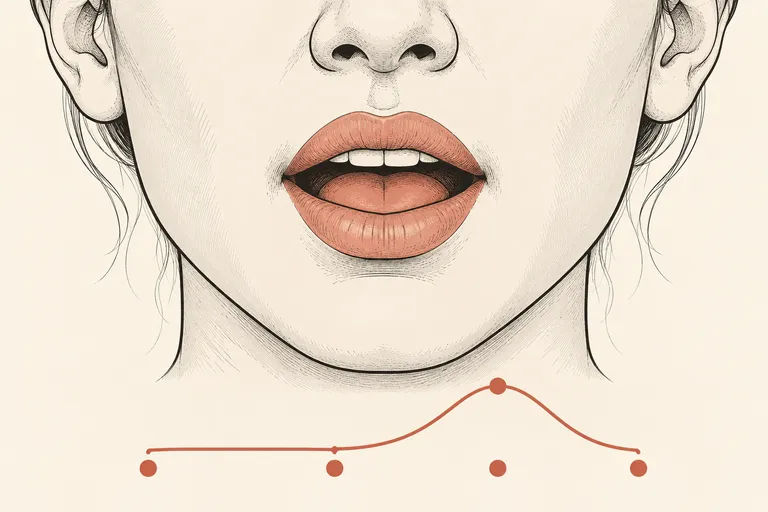
Pitch line rising sharply on the second-to-last syllable then dropping back down on the final syllable.
Visible tongue and open mouth are normally formed without distortion.
attempt 0 · 2026-10-02
accepted
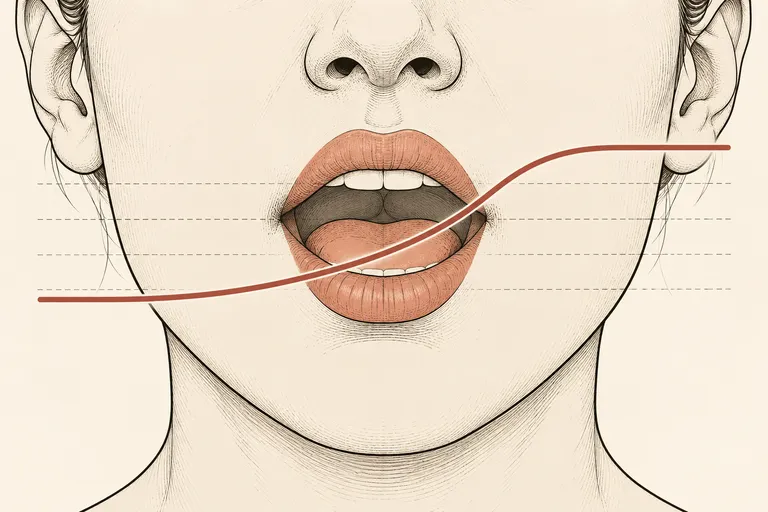
Pitch line rising steadily and staying high through to the very last syllable, with no late fall.
Mouth anatomy is coherent; the overlaid pitch line does not create anatomical abnormalities.
attempt 0 · 2026-10-02
accepted
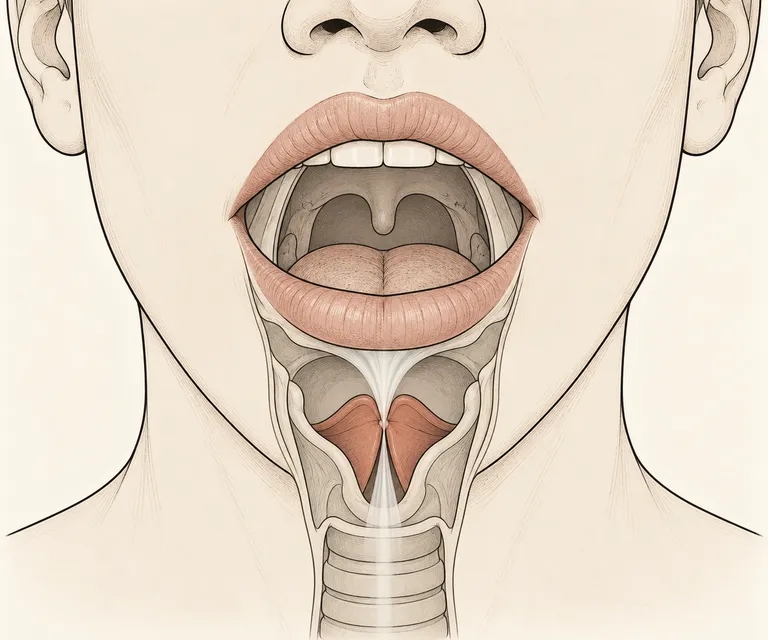
A small gap or glottal catch shown between two words, one ending in a consonant, the next beginning with a vowel.
Stylized frontal cutaway is coherent and shows no clearly impossible mouth structures.
attempt 0 · 2026-10-02
accepted
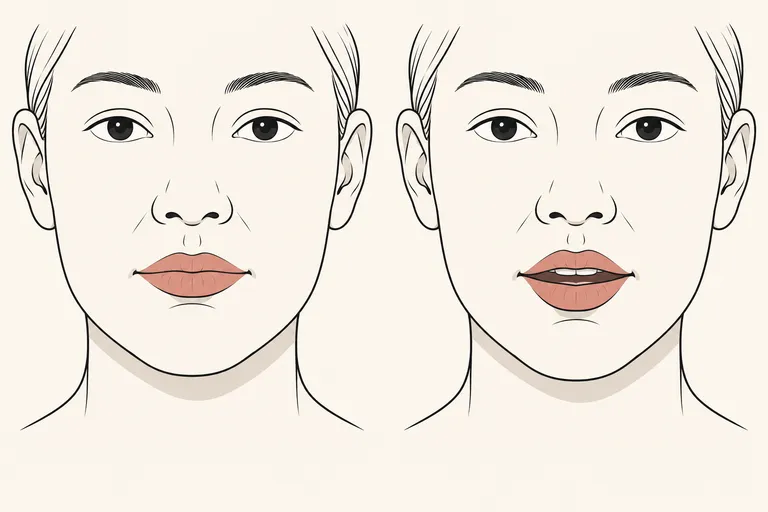
The same two words shown merging smoothly with no gap, the final consonant sliding directly onto the following vowel.
Two separate intact faces show plausible closed and slightly open mouth positions.
attempt 1 · 2026-10-03
accepted
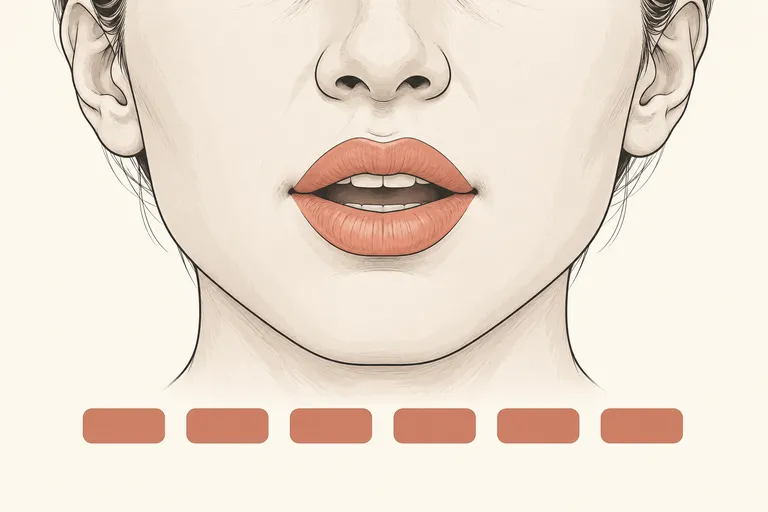
A row of evenly sized, evenly spaced syllable blocks representing steady syllable timing with little compression.
Mouth and facial anatomy are visually sane with a normally positioned tongue.
attempt 0 · 2026-10-02
accepted
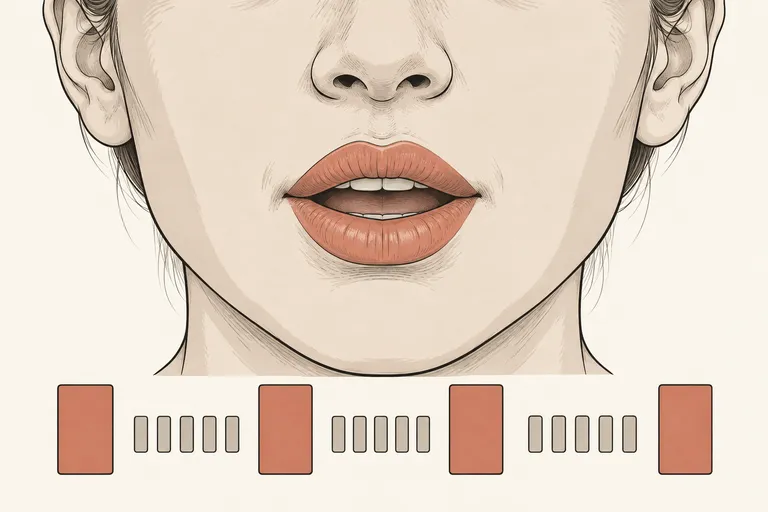
A row of syllable blocks with a few tall, spaced-out stressed blocks and clusters of tiny, squeezed unstressed blocks between them.
Mouth, lips, teeth, and partially visible tongue appear anatomically plausible.
attempt 0 · 2026-10-02
accepted
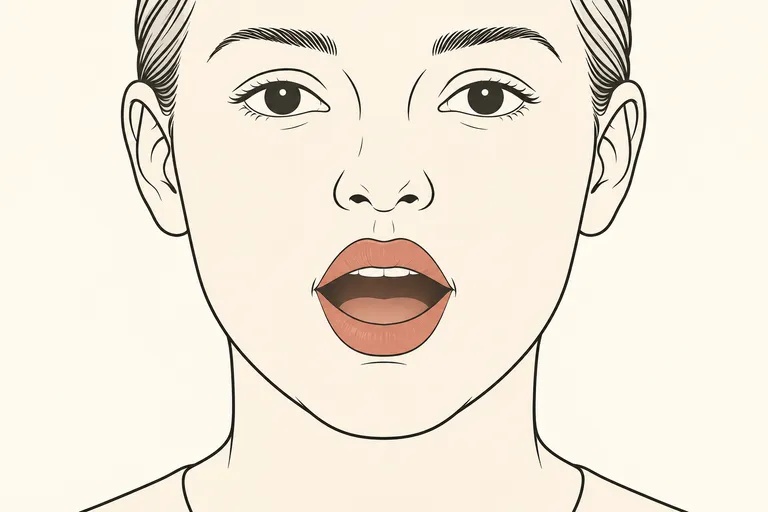
Every vowel in a word shown as equally sized and clearly shaped, with no vowel shrinking regardless of stress.
Face, lips, teeth, and visible tongue appear anatomically plausible.
attempt 1 · 2026-10-03
accepted
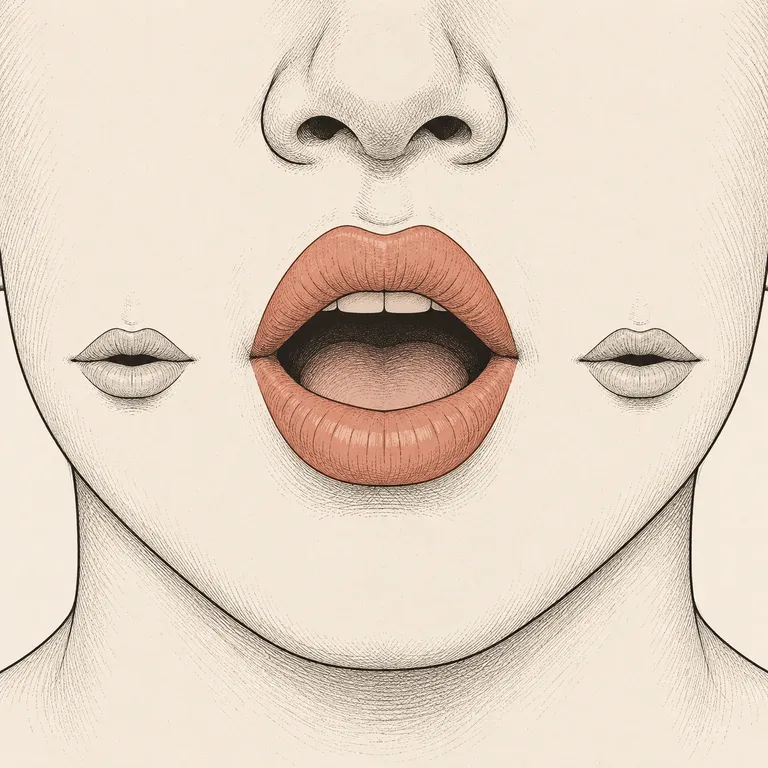
Only the stressed vowel shown full-sized and clear; surrounding unstressed vowels shrink into a small, neutral schwa shape.
Central mouth and surrounding schematic mouths are anatomically plausible.
attempt 0 · 2026-10-02
accepted
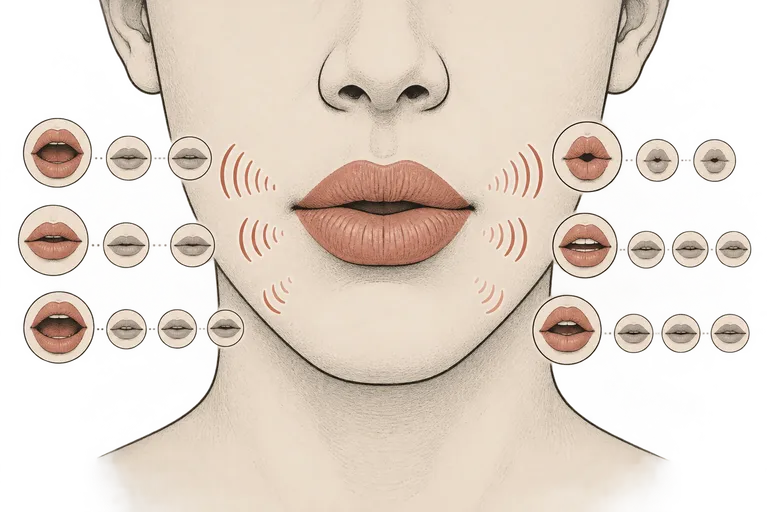
Every word shown with even, modest emphasis automatically placed on the first syllable, regardless of word length or part of speech.
Stylized mouth sequence is visually coherent without anatomical impossibilities.
attempt 0 · 2026-10-02
accepted
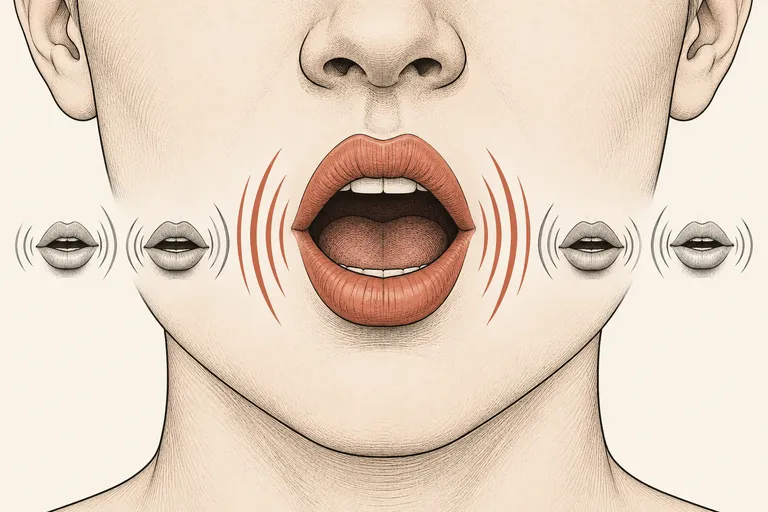
Stress marked on a variable syllable per word, shown with a taller, louder, longer syllable and visibly shrunken neighboring syllables.
Mouths and stress-wave symbols are anatomically and visually sane.
attempt 0 · 2026-10-02
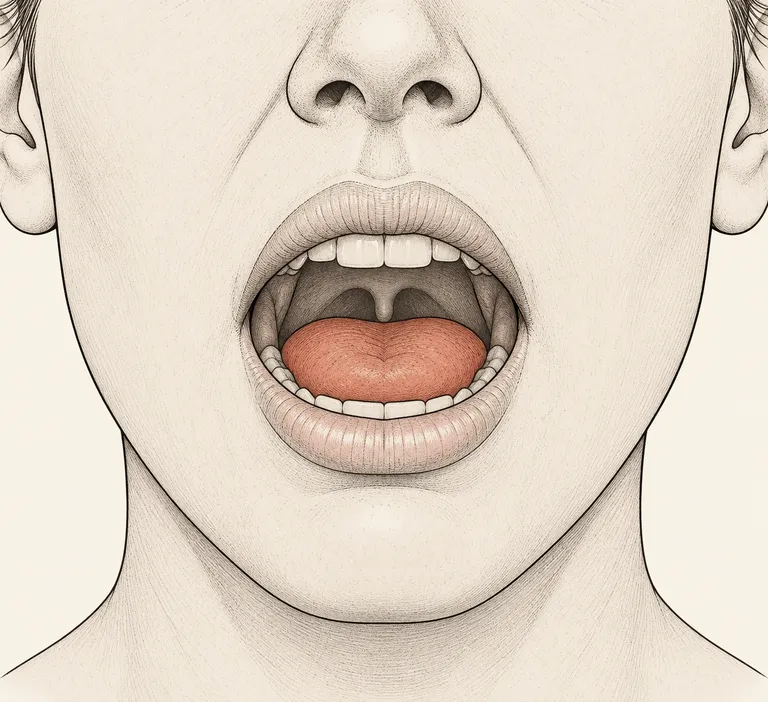
accepted
Jaw moderately open, tongue mid-low and front — the same position used for Hungarian e.
Moderately open jaw and broad mid-low tongue appear anatomically plausible.
attempt 0 · 2026-10-02
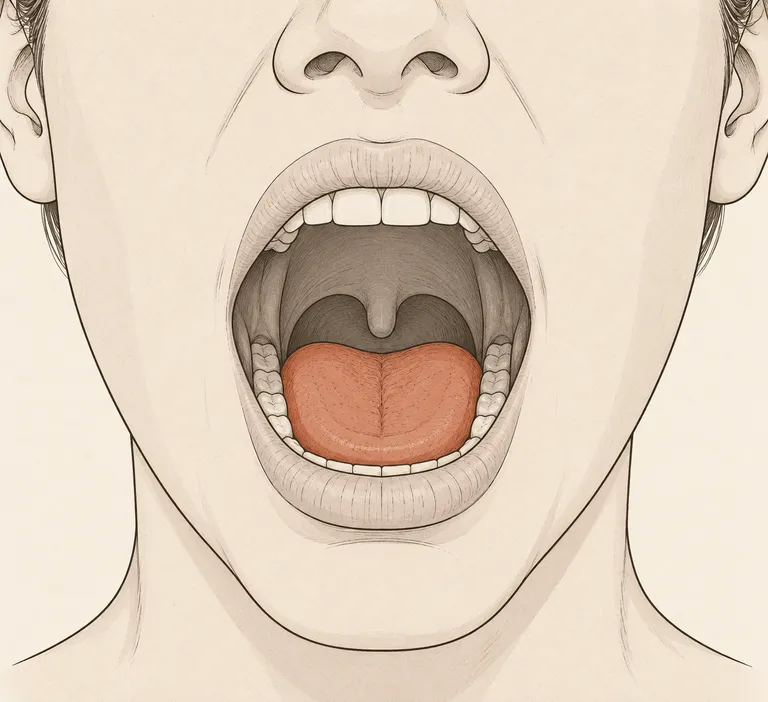
accepted
Jaw dropped much wider, tongue pushed lower and more forward, close to the floor of the mouth.
Wide-open jaw and low tongue position are realistic and visually coherent.
attempt 0 · 2026-10-02
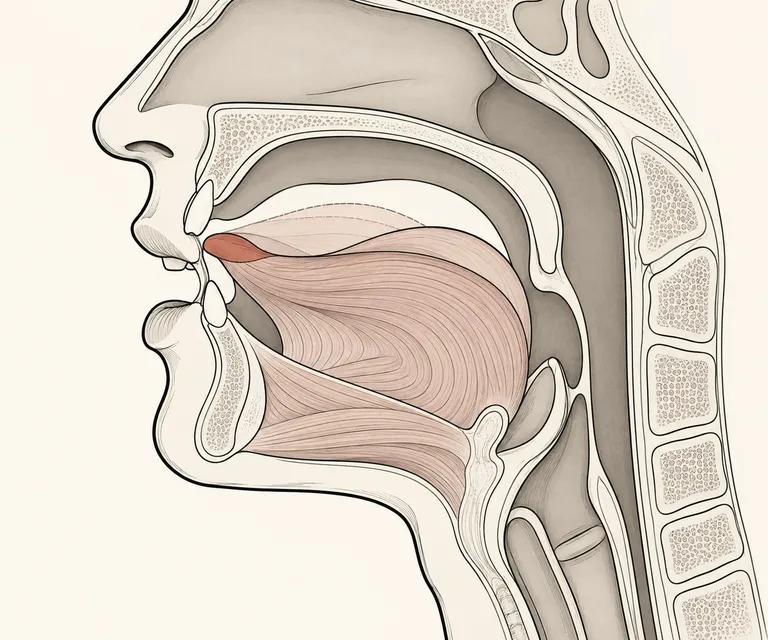
accepted
Starts from a rounded, retracted low back vowel, gliding into a consonantal j with tongue tip active.
Single tongue remains plausibly shaped and positioned within the vocal tract.
attempt 0 · 2026-10-02
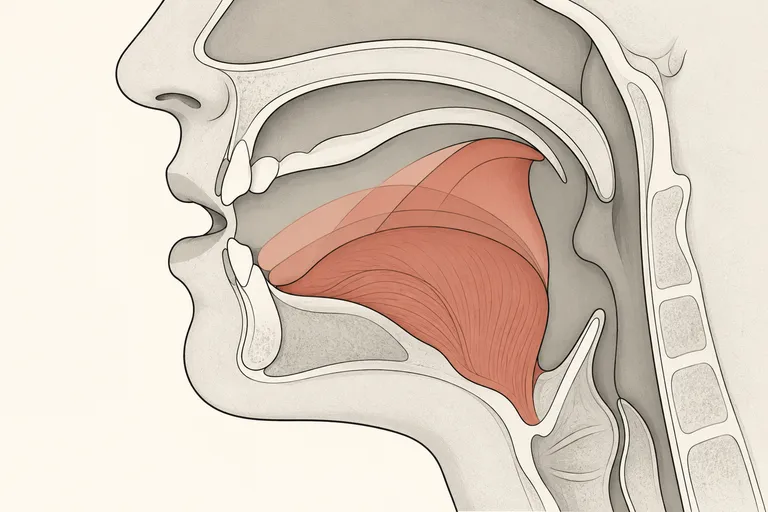
accepted
Starts from a fully open, unrounded central-back vowel, gliding smoothly into a high-front vowel-like offglide.
Overlaid tongue positions plausibly illustrate a continuous articulatory glide.
attempt 0 · 2026-10-02
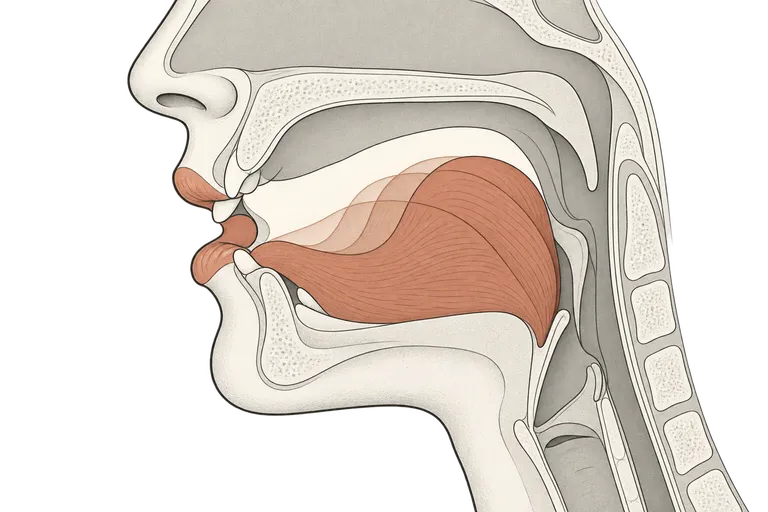
accepted
A low vowel followed by a separate, distinctly syllabified u, as if two vowel sounds in a row.
Superimposed tongue positions remain broad, coherent, and anatomically plausible.
attempt 0 · 2026-10-02
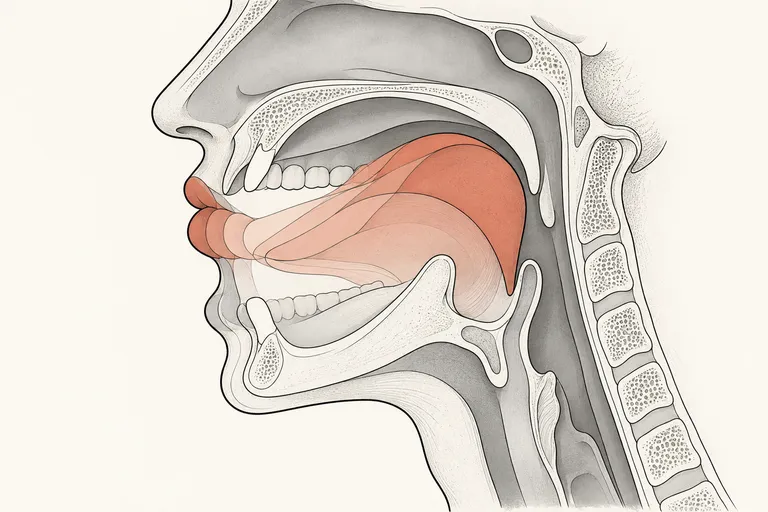
accepted
One continuous glide: jaw wide open at the start, then closing while the tongue rises, retracts, and the lips round toward a single high-back finish.
Overlaid glide positions show plausible tongue retraction, elevation, and lip rounding.
attempt 0 · 2026-10-02
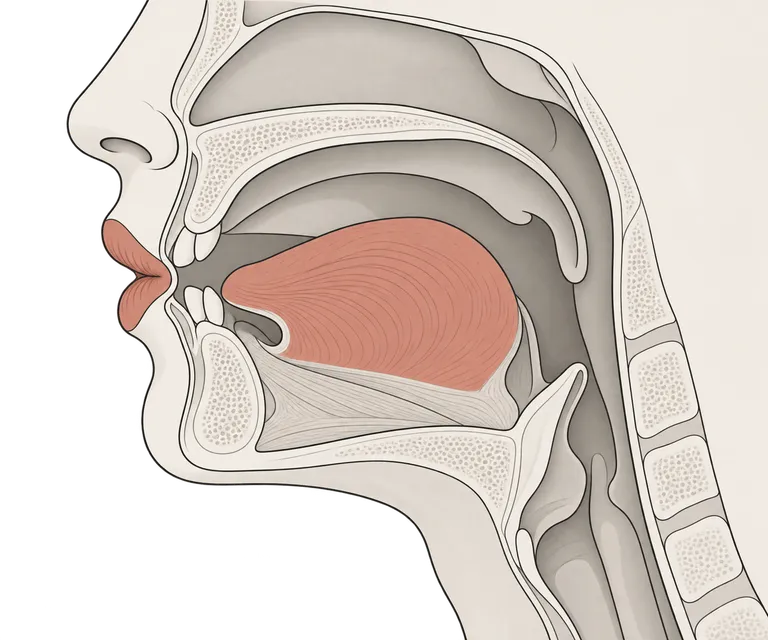
accepted
Either a rounded, less-retracted back vowel (short a) or an unrounded but fronted long vowel (á).
Tongue, lips, teeth, and vocal tract are anatomically plausible.
attempt 0 · 2026-10-02
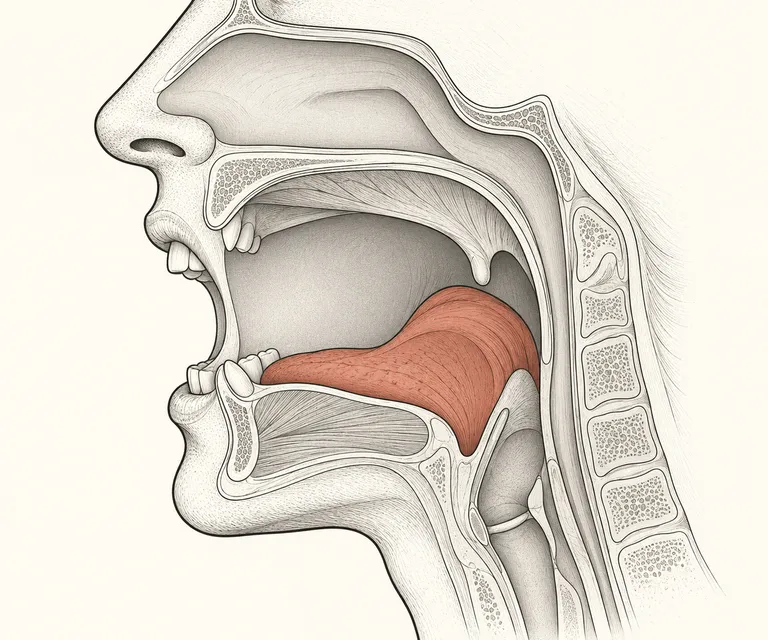
accepted
Jaw wide open, tongue low and fully retracted toward the back, lips completely relaxed and unrounded.
Low, retracted tongue and open jaw are realistically depicted.
attempt 0 · 2026-10-02
accepted
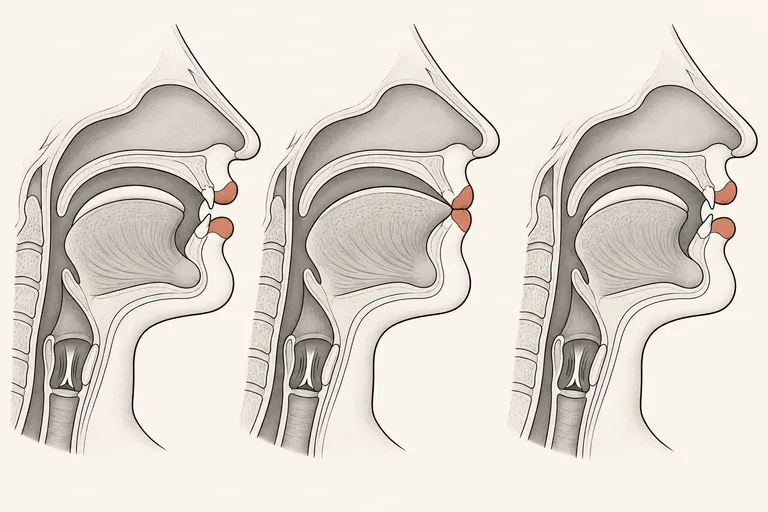
Lips close and release with no voicing at all at the end of the word, and the vowel before it stays short — identical to how 'p' is made.
Three coherent sagittal views with plausible tongues, lips, teeth, and vocal tracts.
attempt 0 · 2026-10-02
accepted
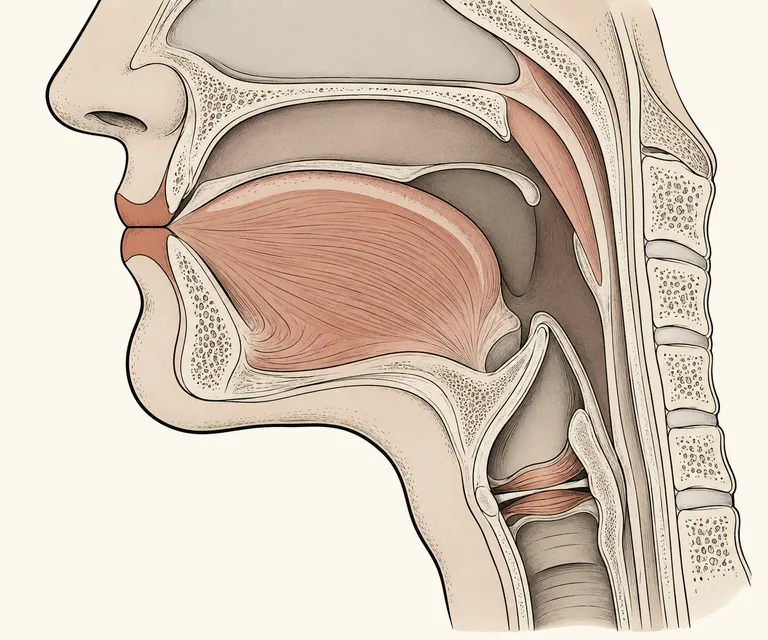
Lips close the same way, but a trace of voicing continues into the closure and the preceding vowel is held noticeably longer.
Anatomically plausible sagittal section with a normal broad tongue and closed lips.
attempt 0 · 2026-10-02
accepted
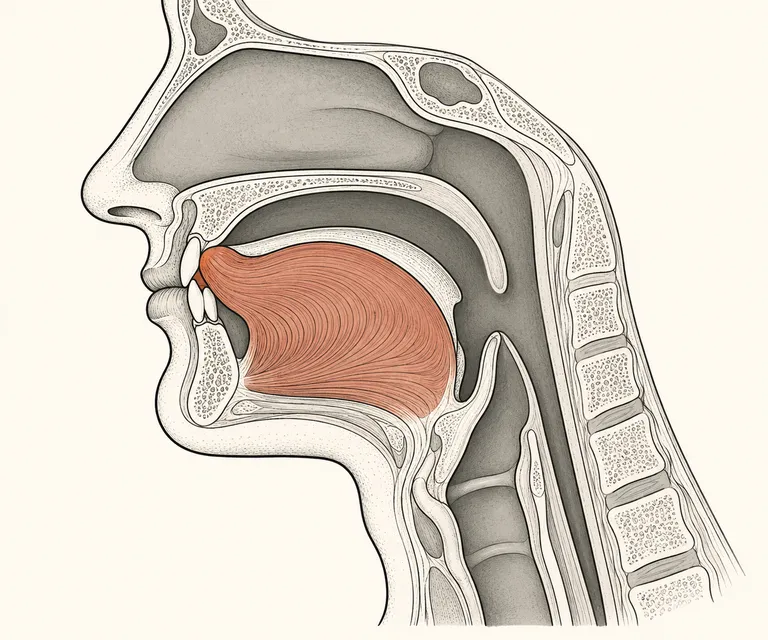
Tongue tip against the upper teeth, held as a full voiced closure in every position, including between vowels.
Tongue tip contacts the upper teeth plausibly without twisting, looping, or deformation.
attempt 0 · 2026-10-02
accepted
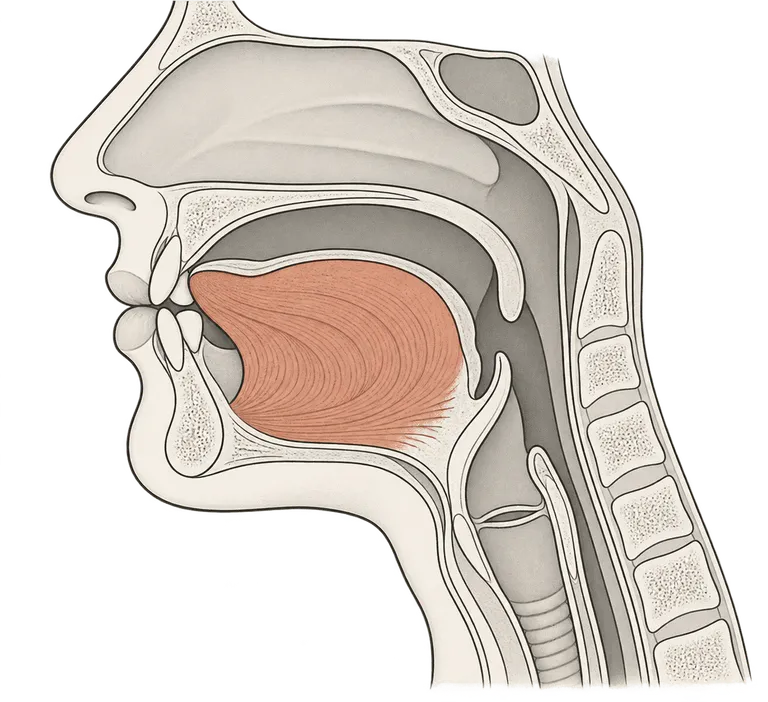
Tongue tip stays behind the teeth, forming a full stop (d) or fricative further back (z, v), with the voice buzzing but no protrusion.
Tongue remains inside behind the teeth with a plausible untwisted shape.
attempt 0 · 2026-10-02
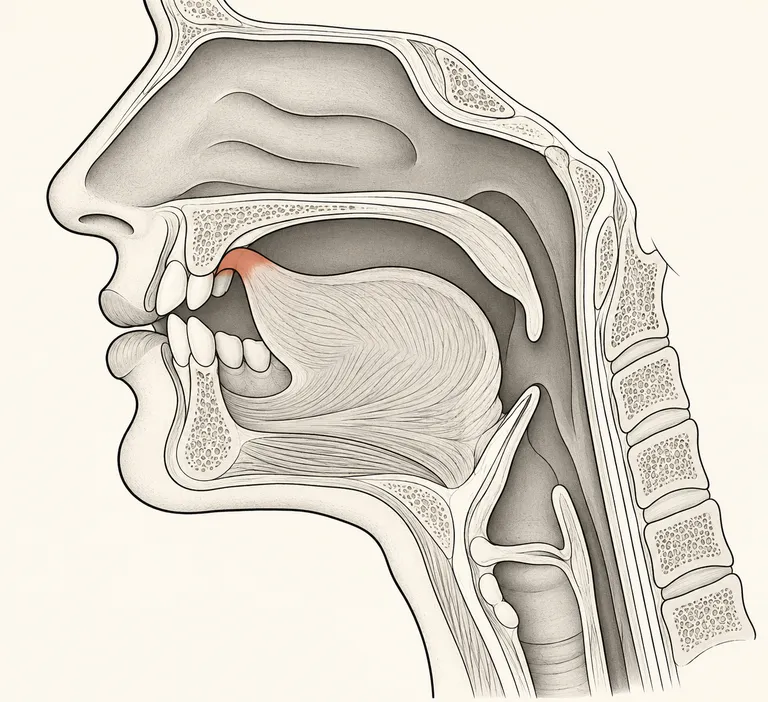
accepted
Tongue tip taps the alveolar ridge briefly between two vowels, as in 'ladder', becoming the same quick flap used for t.
Tongue and highlighted alveolar contact appear anatomically plausible for a brief flap.
attempt 0 · 2026-10-02
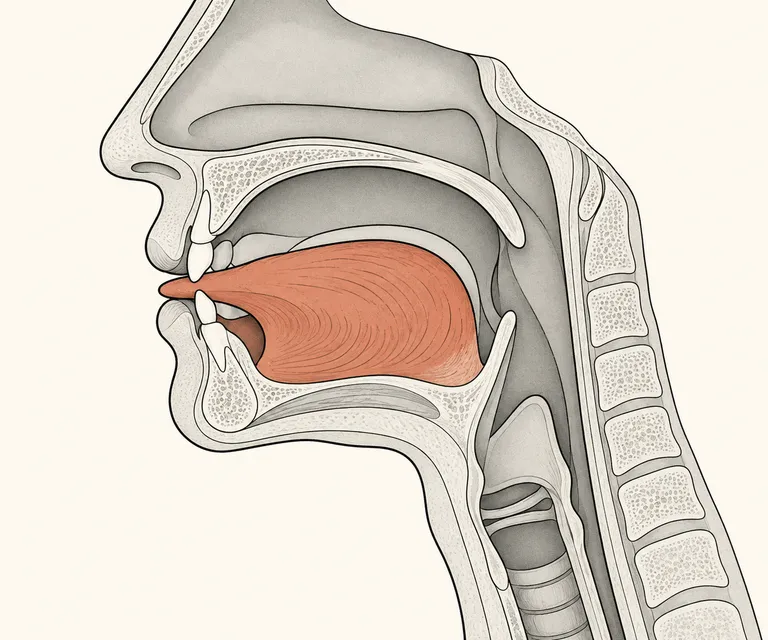
accepted
Tongue tip rests lightly between the upper and lower front teeth while the voice buzzes continuously through the gap.
Tongue tip protrudes only slightly between the incisors, appropriately for the intended sound.
attempt 0 · 2026-10-02
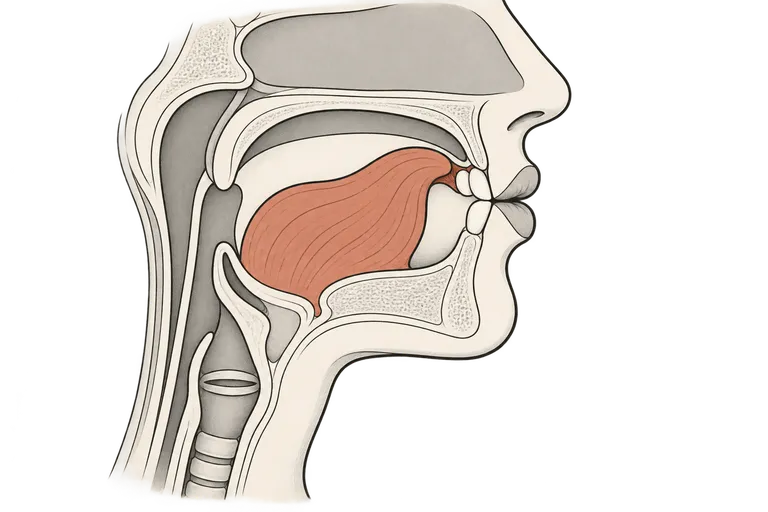
accepted
Same tongue-stop-into-hiss motion as tʃ, but with the voicing dropped at the very end of the word and the vowel before it kept short.
Large but plausible tongue remains contained within a coherent sagittal vocal tract.
attempt 0 · 2026-10-02
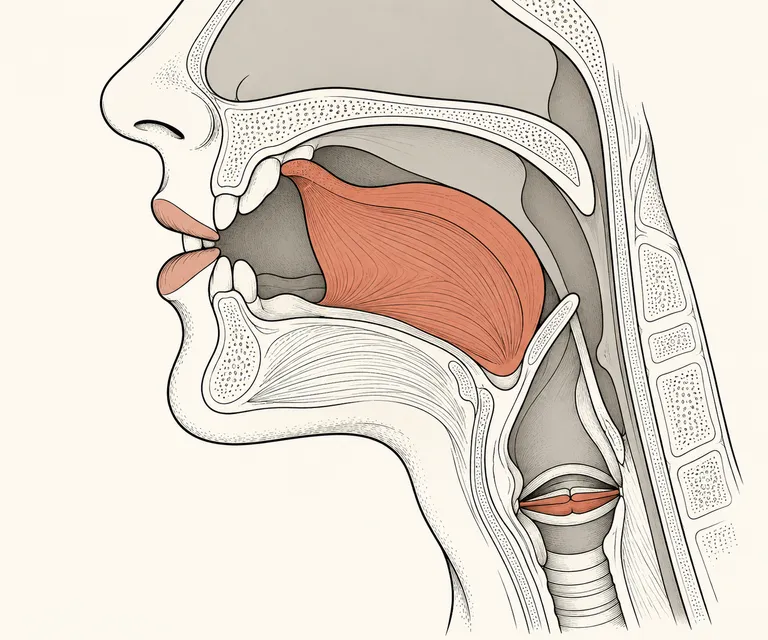
accepted
Same motion, but the voice buzzes continuously through the closure and release, and the preceding vowel is stretched noticeably longer.
Broad tongue and anterior contact are plausible despite slight schematic exaggeration.
attempt 0 · 2026-10-02
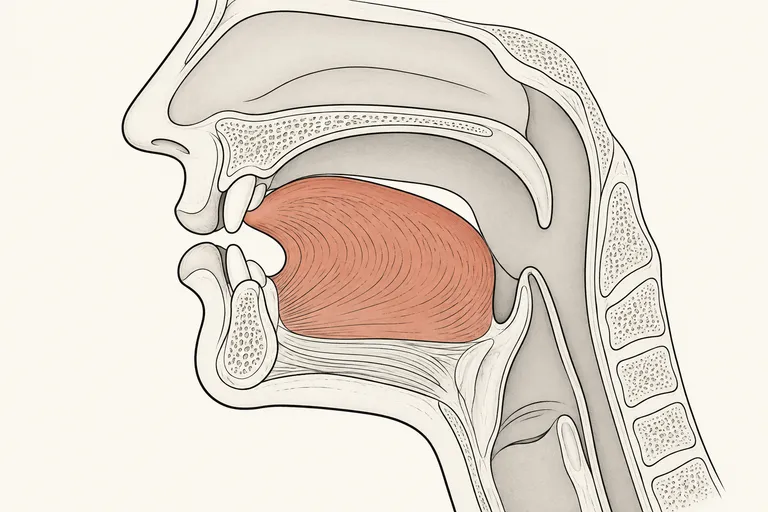
accepted
Tongue held steady at an upper-mid front position for the vowel's full length, with no upward movement.
Tongue is bulky but anatomically coherent, with no impossible curling or splitting.
attempt 0 · 2026-10-02
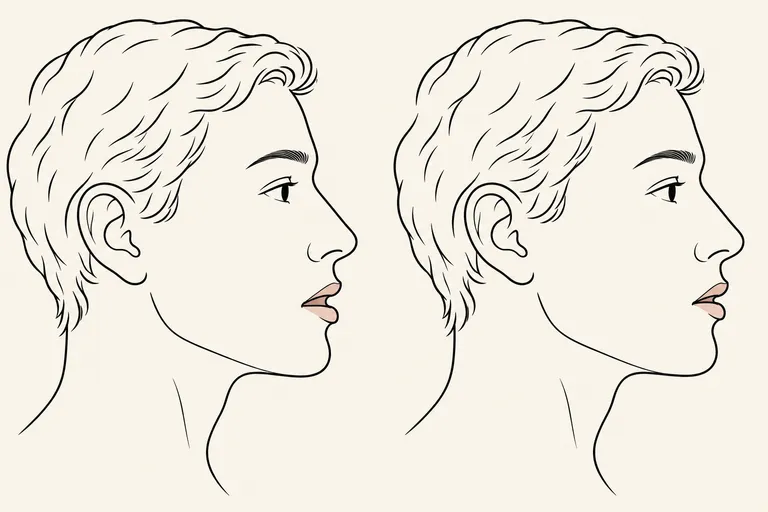
accepted
Tongue starts at the same upper-mid front position, then glides slightly higher and more forward toward the end of the vowel.
Both profile views show plausible facial anatomy and lip positions.
attempt 1 · 2026-10-03
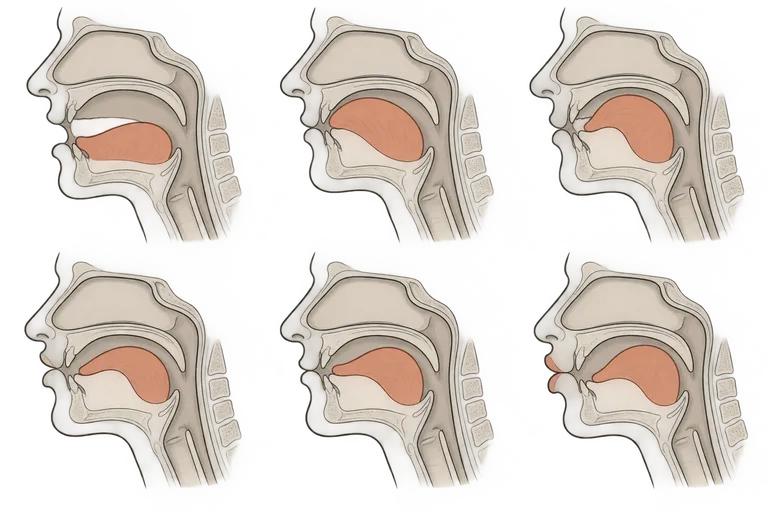
accepted
Every syllable, stressed or not, keeps its full, clearly articulated vowel quality.
Multiple sagittal examples show plausible tongue shapes and oral anatomy.
attempt 0 · 2026-10-02
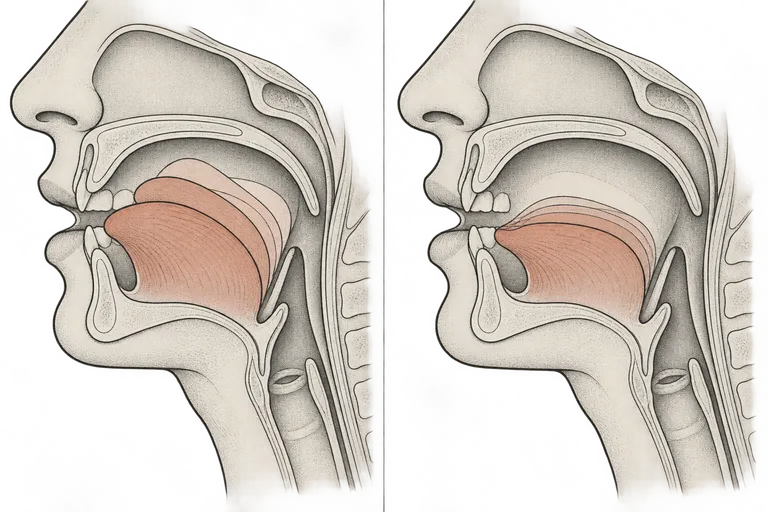
accepted
Unstressed syllables collapse toward a relaxed, mid-central vowel with minimal jaw and tongue movement.
Both cutaways show anatomically plausible tongues with schematic movement contours.
attempt 0 · 2026-10-02
accepted
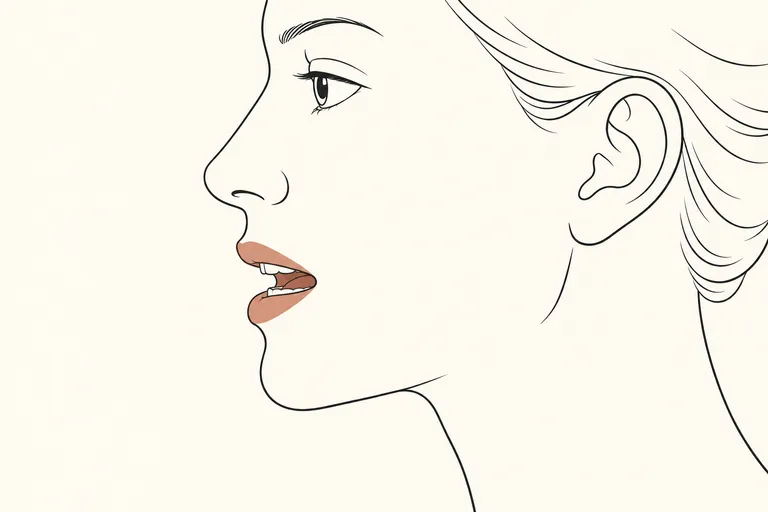
ɛ held at a constant short duration no matter what consonant follows, tongue steady mid-low front.
Lips, teeth, and jaw are plausibly positioned.
attempt 1 · 2026-10-03
accepted
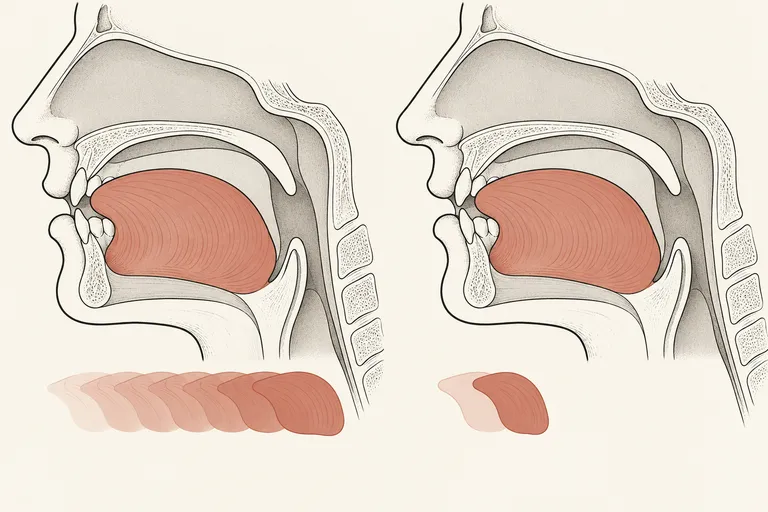
Same tongue position, but ɛ stretches noticeably longer before a voiced consonant like d, and stays short before a voiceless one like t.
Tongue positions are plausible; faded silhouettes reasonably depict duration or movement.
attempt 0 · 2026-10-02
accepted
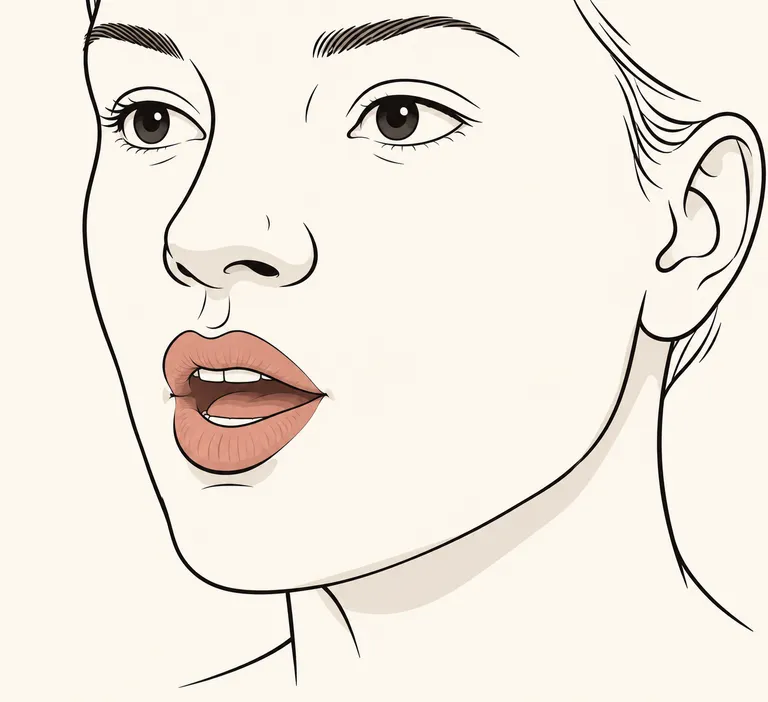
A plain central or front vowel followed by a separate tapped or trilled r made with the tongue tip near the front of the mouth.
Visible tongue remains broad and contained within an anatomically plausible mouth.
attempt 1 · 2026-10-03
accepted
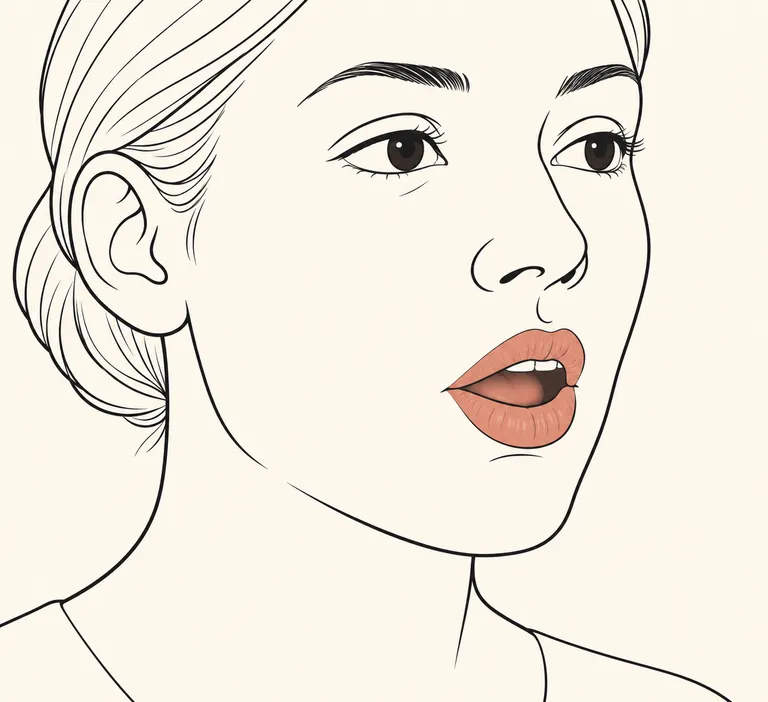
Tongue tip curls or bunches upward and back inside the mouth, fused with the vowel into one continuous sound.
Open mouth and visible tongue have plausible shapes without excessive curling.
attempt 1 · 2026-10-03
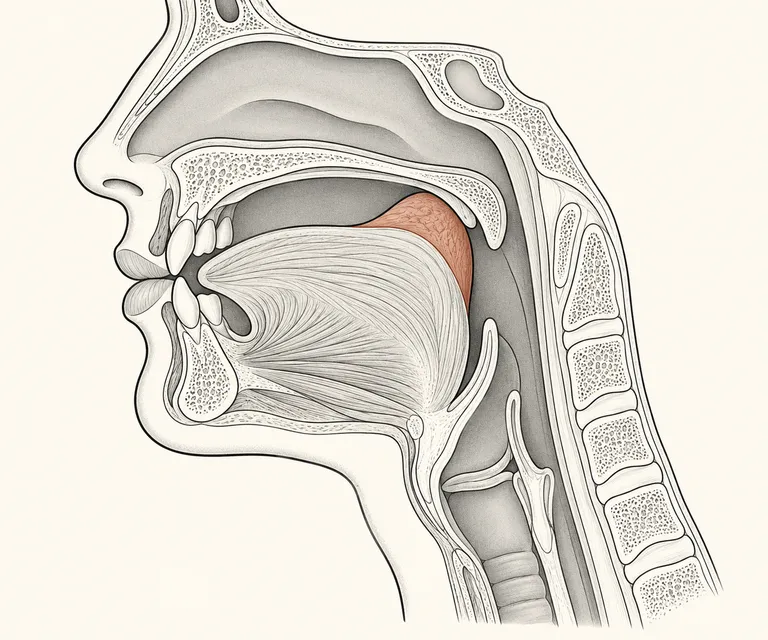
accepted
Back of tongue seals against the soft palate and releases with no voicing left, vowel before it kept short — identical to how k is made.
Single coherent tongue and plausible sagittal vocal-tract anatomy.
attempt 0 · 2026-10-02
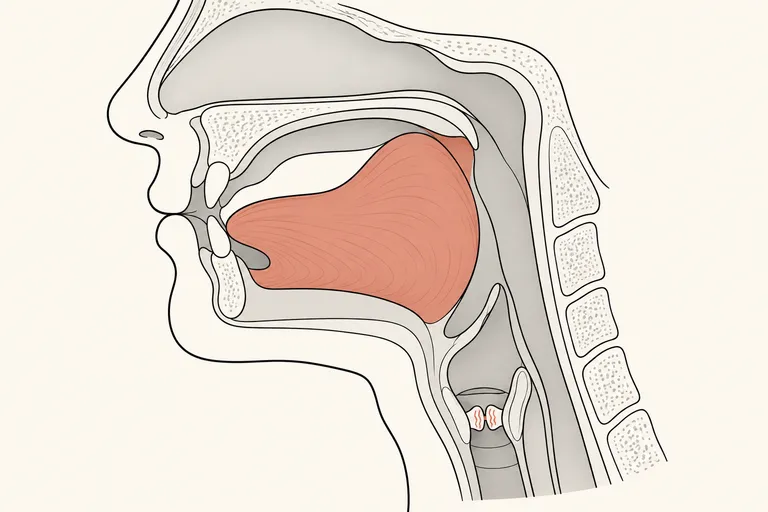
accepted
Same tongue seal, but a trace of voicing carries into the closure and the vowel just before it is stretched noticeably longer.
Tongue forms a plausible velar closure; vocal tract anatomy is coherent.
attempt 1 · 2026-10-03
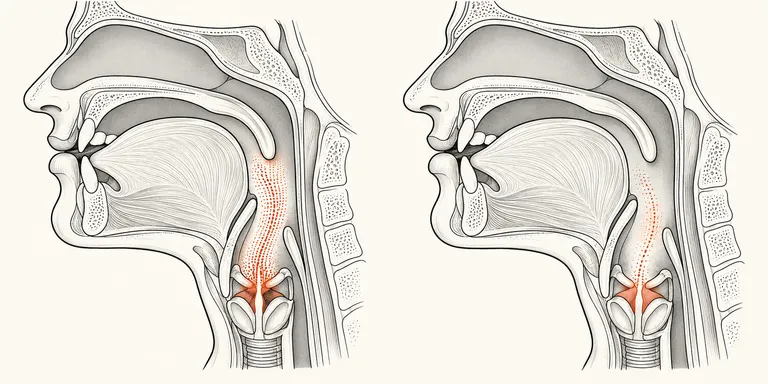
accepted
Stronger, more audible friction at the glottis, sometimes carried into positions with no following vowel.
Both sagittal diagrams show coherent tongues and plausible glottal highlighting.
attempt 0 · 2026-10-02
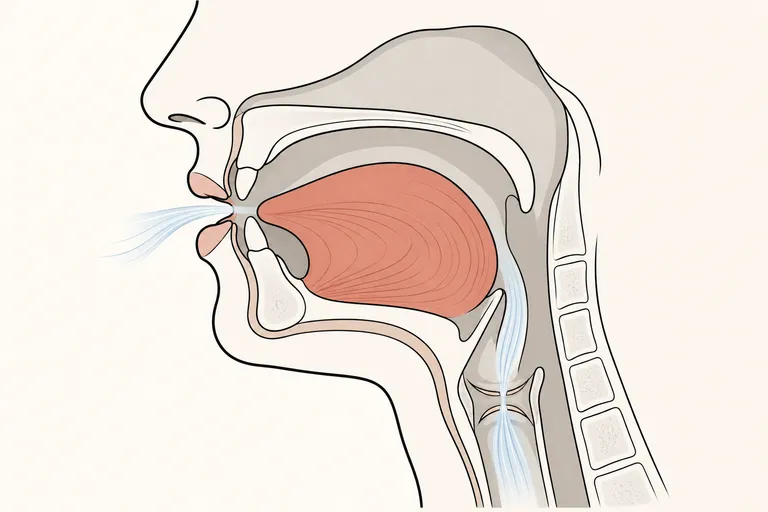
accepted
Mouth already shaped for the vowel that follows; a light, quick breath is released before voicing for that vowel begins.
Tongue shape, lip opening, and vocal tract are anatomically plausible.
attempt 1 · 2026-10-03
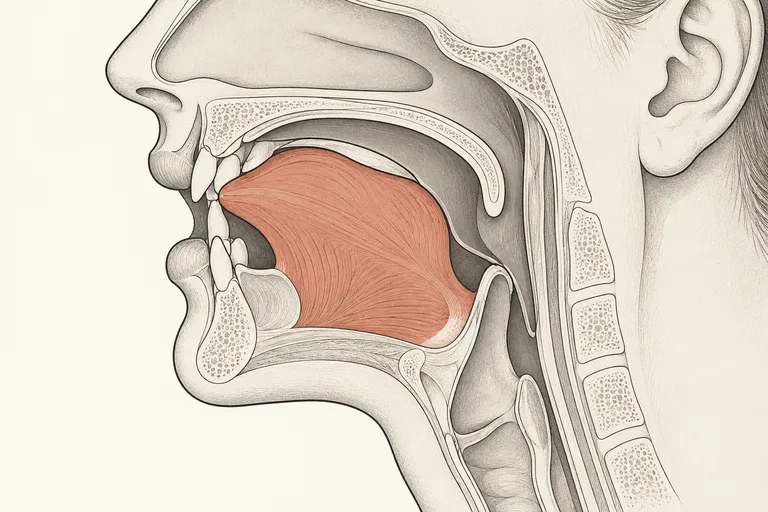
accepted
Tongue high and front, held in a steady, evenly long vowel regardless of surrounding sounds.
Broad single tongue has plausible shape and placement.
attempt 0 · 2026-10-02
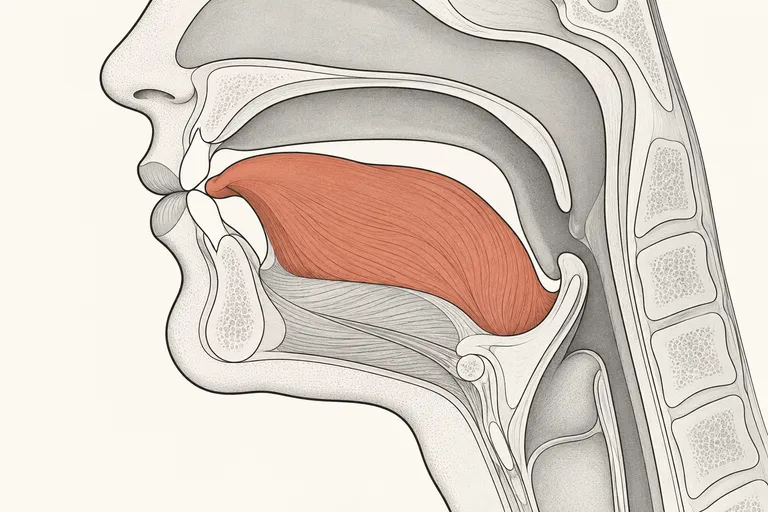
accepted
Tongue equally high and front, but with a small closing glide at the end and duration that shortens or lengthens depending on stress and the next consonant.
Single tongue remains anatomically coherent without impossible curling.
attempt 0 · 2026-10-02
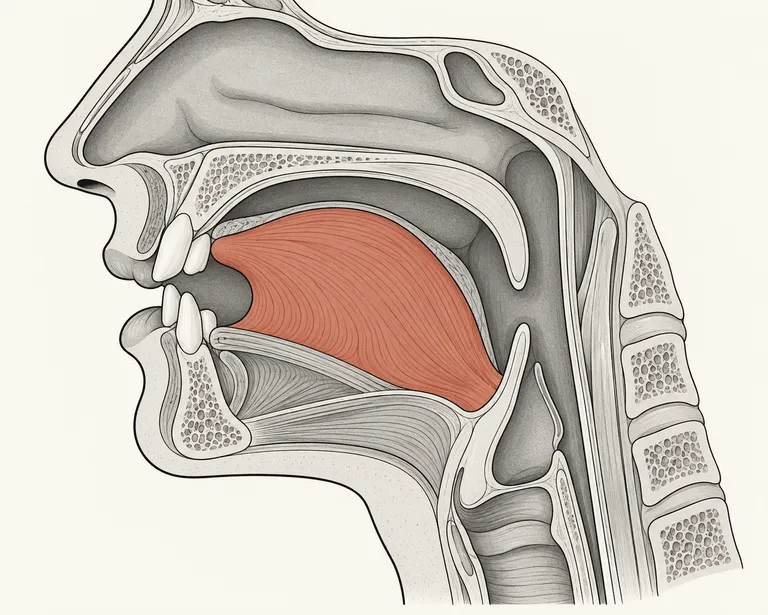
accepted
Tongue held in the same high, tense position as long í, just clipped shorter in duration.
The sagittal anatomy and broad high tongue posture are plausible.
attempt 0 · 2026-10-02
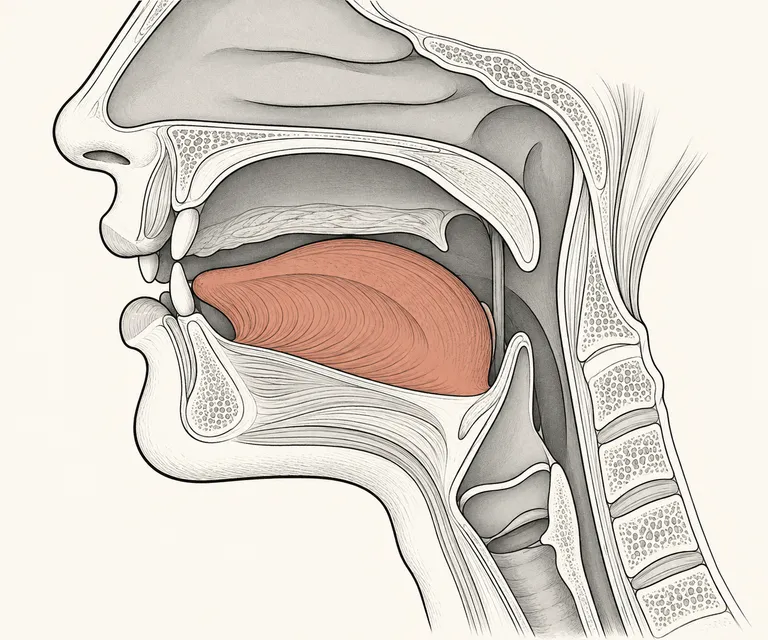
accepted
Tongue body relaxes and drops slightly lower than for i, jaw opens a touch more, with looser overall muscle tension.
The relaxed, slightly lowered tongue posture and surrounding anatomy appear plausible.
attempt 0 · 2026-10-02
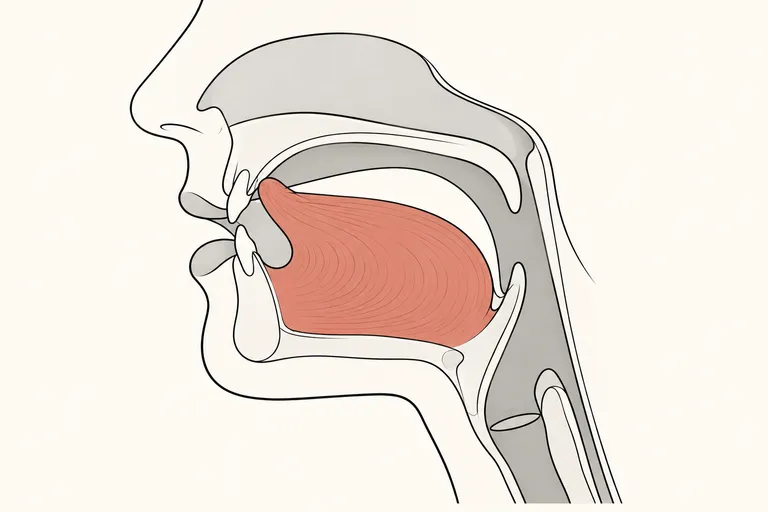
accepted
The consonant before the vowel absorbs the palatal quality (as in native ty/gy/ny sounds), and the following glide is skipped, leaving just consonant + vowel.
Raised anterior tongue maintains a continuous, plausible shape without excessive curling.
attempt 1 · 2026-10-03
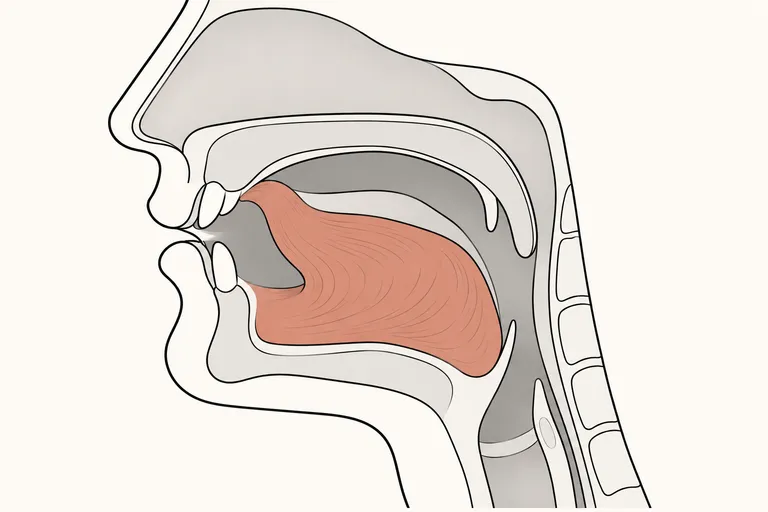
accepted
The onset consonant is released cleanly, then the front of the tongue quickly rises near the hard palate for a distinct /j/ glide, before moving into the vowel.
Raised tongue front remains continuous and anatomically plausible, without excessive curling or distortion.
attempt 4 · 2026-10-04
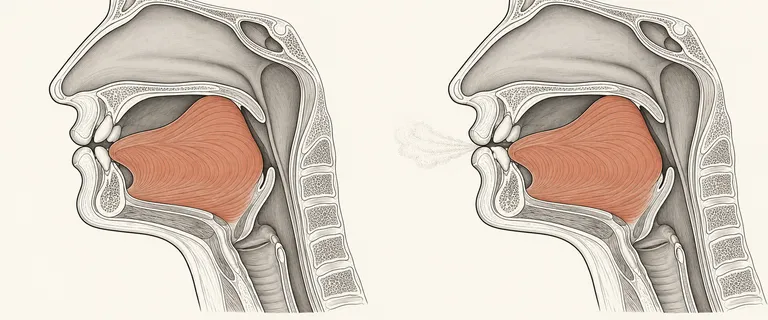
accepted
Back of tongue seals against the soft palate and releases cleanly with no burst of air, the same way in every position.
Both sagittal views show a plausible tongue body and posterior velar seal.
attempt 0 · 2026-10-02
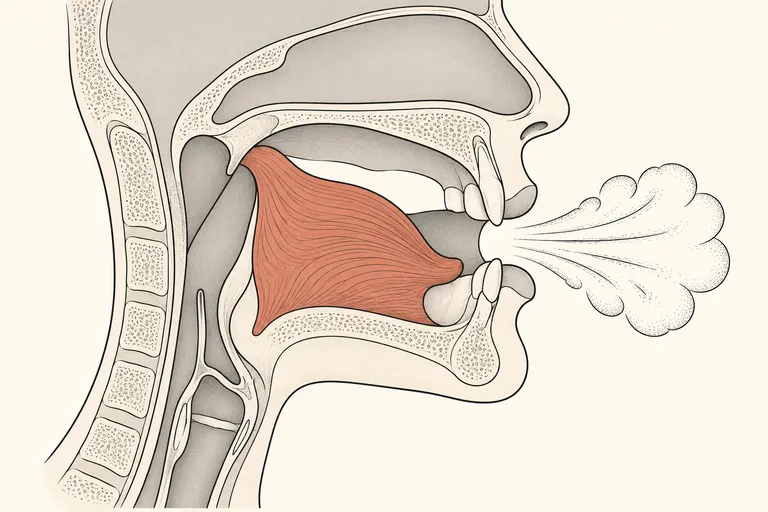
accepted
Same tongue seal, but at the start of a stressed syllable the release is followed by a strong, audible puff of air before the vowel begins.
Tongue shape, velar contact, jaw, teeth, and aspiration plume are anatomically coherent.
attempt 0 · 2026-10-02
accepted
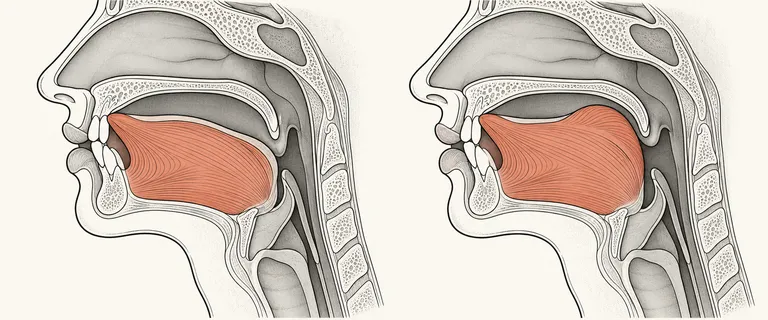
Tongue tip touches the ridge behind the teeth while the tongue body stays forward and bright, the same in every position, including at the end of a word.
Both tongue positions are smooth, continuous, and anatomically plausible.
attempt 0 · 2026-10-02
accepted
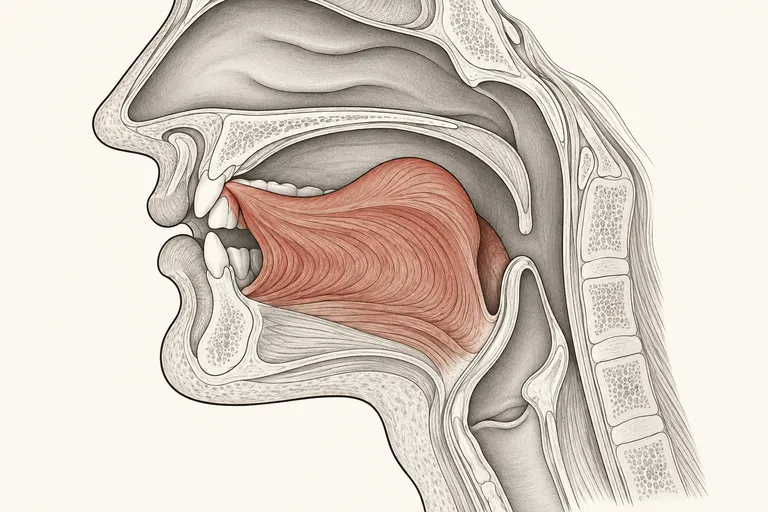
Same tip contact, but at the end of a word or before a consonant, the back of the tongue bunches up and pulls toward the throat, giving a deeper, hollow sound.
The enlarged, retracted tongue body plausibly depicts dark-l bunching without twisting or looping.
attempt 0 · 2026-10-02
accepted
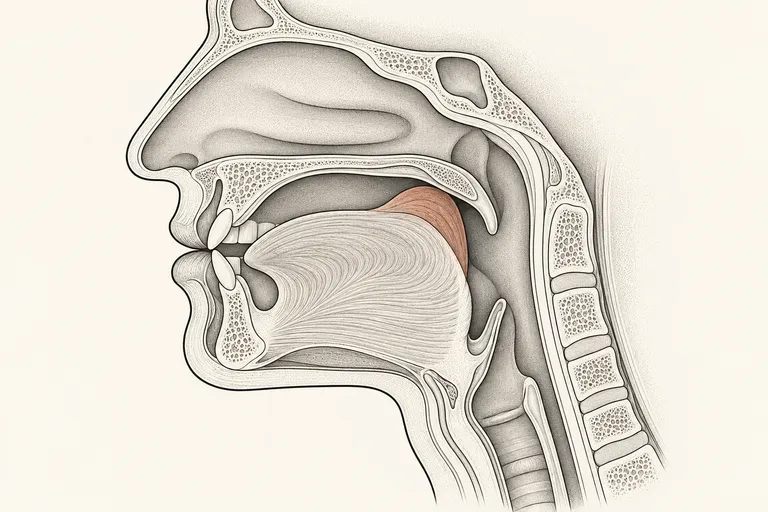
Back of the tongue rises to the soft palate only right before a following k or g, and an extra stop tends to appear after a final ŋ.
Plausible sagittal anatomy with a normally shaped tongue and raised posterior region.
attempt 0 · 2026-10-02
accepted
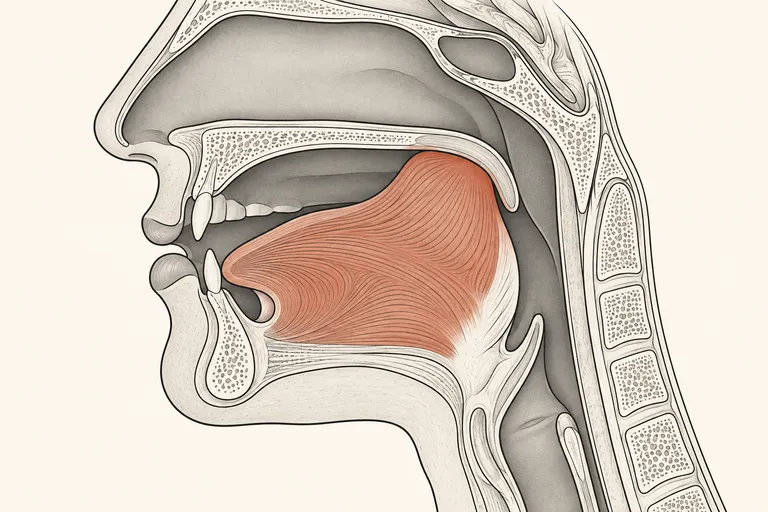
Back of the tongue rises to the soft palate and stays there as the word ends, with no following stop released at all.
Large but anatomically coherent tongue contacting the posterior palate.
attempt 0 · 2026-10-02
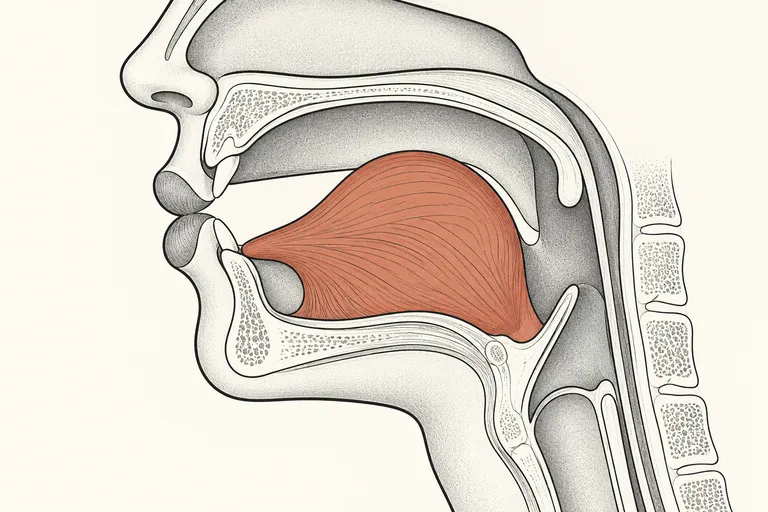
accepted
Lips rounded and tongue mid-back, held steady in one position for the vowel's full duration.
Rounded lips and a smooth mid-back tongue posture are visually plausible.
attempt 0 · 2026-10-02
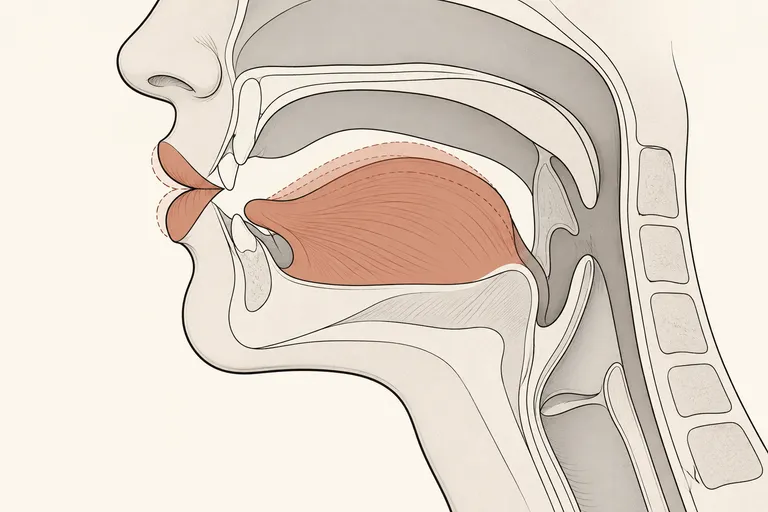
accepted
Lips and tongue start in the same position, then round and rise further toward the end of the vowel, gliding slightly toward 'oo'.
Overlayed glide positions remain anatomically coherent; the tongue is neither split nor excessively protruded.
attempt 0 · 2026-10-02
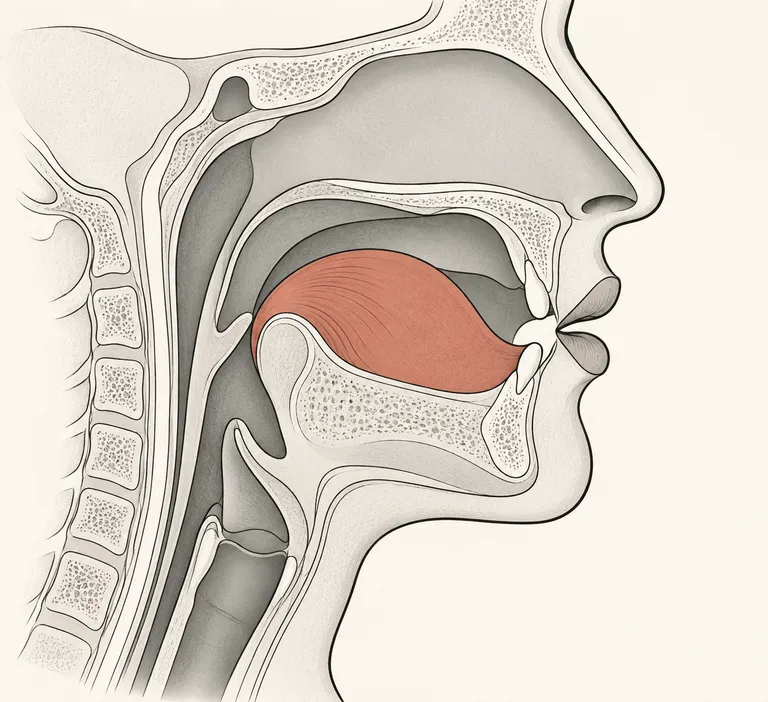
accepted
Tongue mid-back and rounded, jaw only lightly open — higher and more closed than the English target.
Reversed orientation aside, the tongue and surrounding anatomy remain coherent.
attempt 0 · 2026-10-02
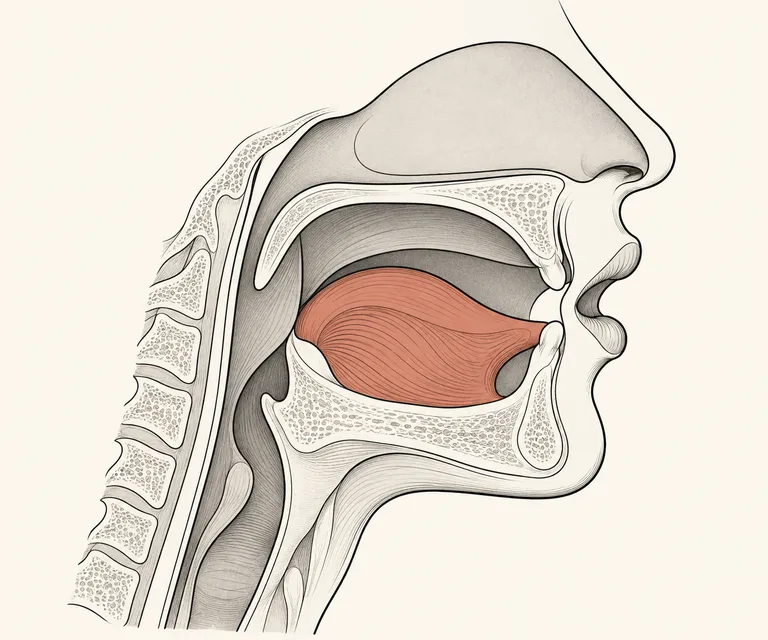
accepted
Tongue mid-low and back, jaw moderately open, lips gently rounded rather than tightly pursed.
Tongue shape, jaw opening, and gently rounded lips appear plausible.
attempt 0 · 2026-10-02
accepted
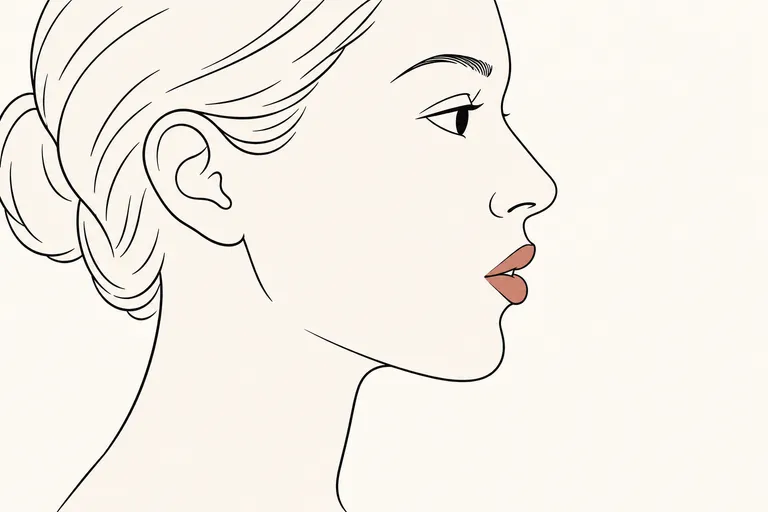
Starts from a higher, tenser rounded vowel, gliding into a firm consonantal j.
Plausible profile anatomy with naturally rounded lips and no visible abnormalities.
attempt 1 · 2026-10-03
accepted
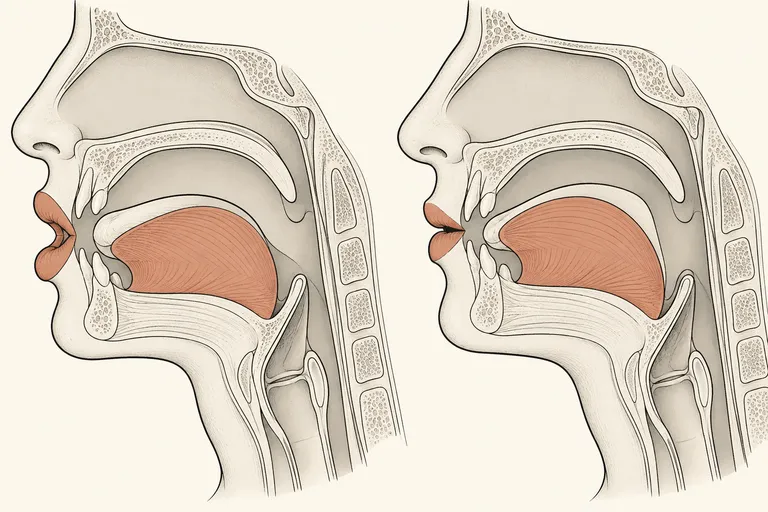
Starts from a lower, more open rounded back vowel, gliding smoothly into a vowel-like ɪ as the lips gradually unround.
Two valid comparative mouth diagrams, each with a coherent single tongue.
attempt 0 · 2026-10-02
accepted
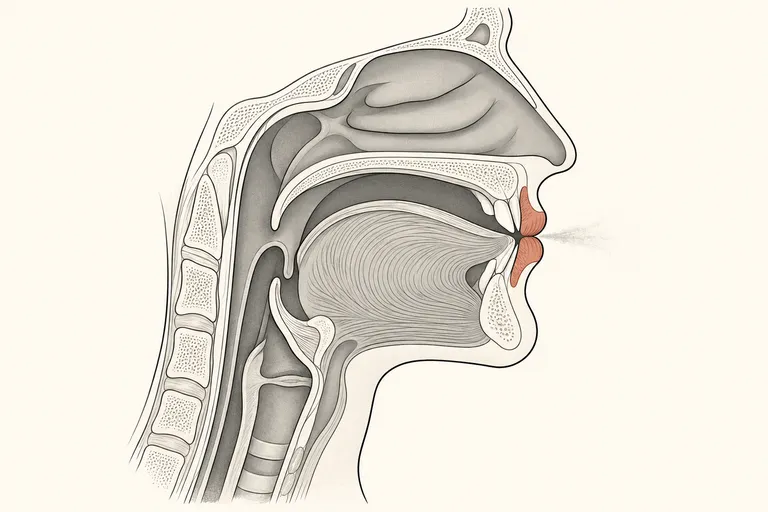
Lips press together and release with only a brief, minimal puff of air in every position.
Closed lips and the single relaxed tongue are anatomically sane.
attempt 0 · 2026-10-02
accepted
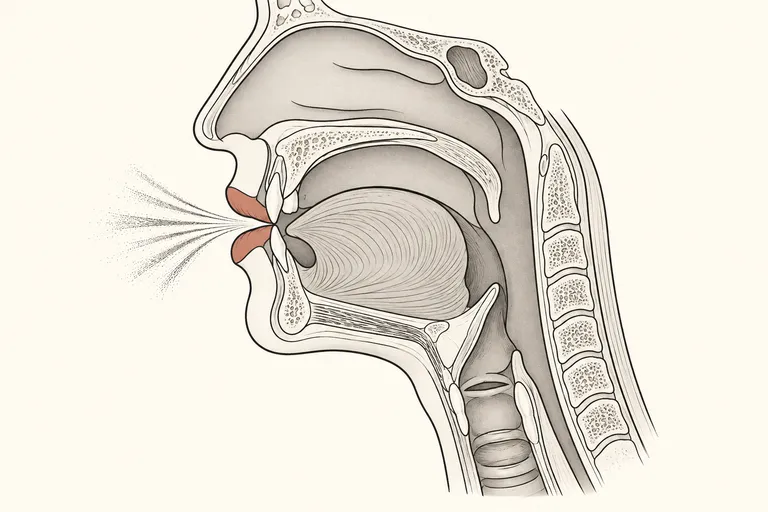
Lips press together and release with a strong, audible burst of air before the voicing of the next vowel begins.
Lip closure, aspiration plume, and internal vocal-tract anatomy are coherent and plausible.
attempt 0 · 2026-10-02
accepted
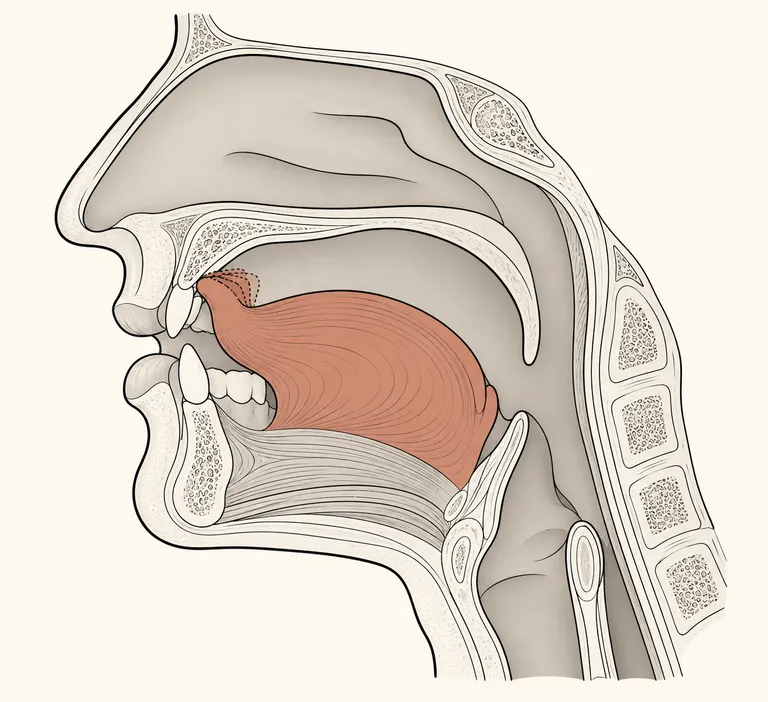
Tongue tip taps or vibrates rapidly against the alveolar ridge, making brief, repeated contact.
Sagittal anatomy and tongue shape are visually plausible.
attempt 0 · 2026-10-02
accepted
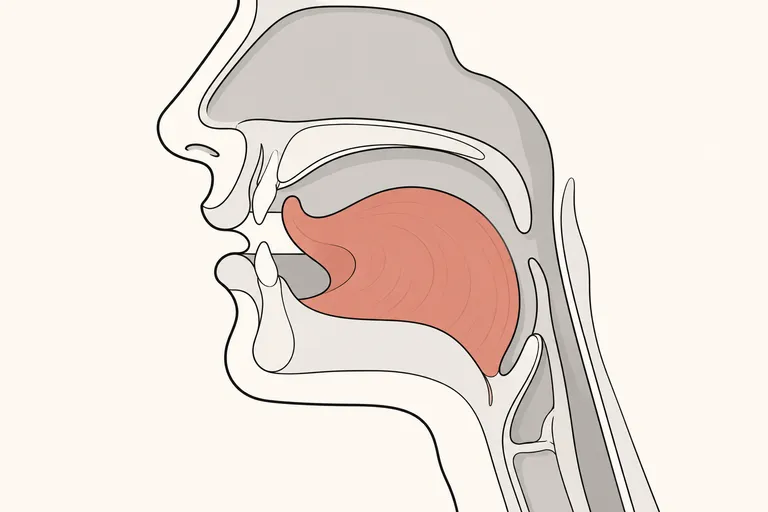
Tongue tip curls upward and backward, or the tongue body bunches, without ever touching the roof of the mouth.
Single broad tongue with modest tip elevation and plausible clearance from the palate.
attempt 9 · 2026-10-04
accepted
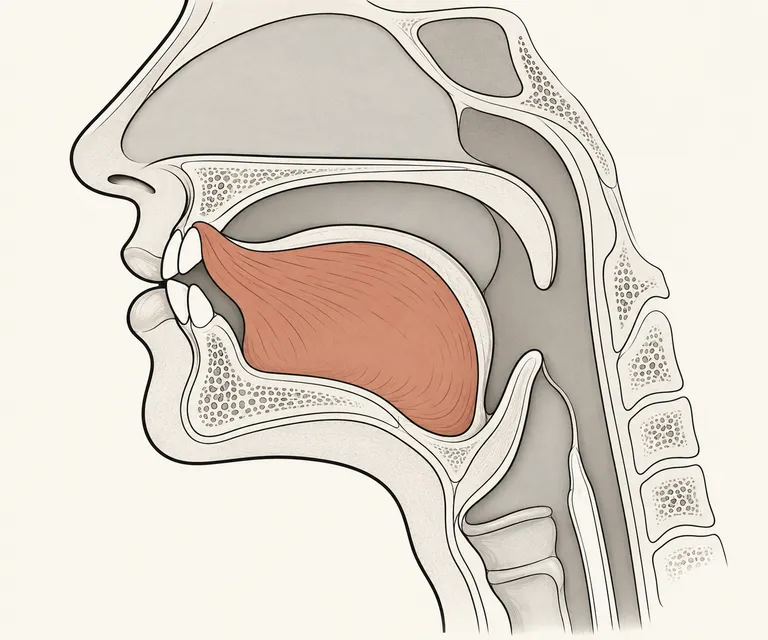
Tongue tip against the upper teeth, released the same way in every position, with little to no aspiration.
Tongue shape and tip placement against the upper teeth are plausible.
attempt 0 · 2026-10-02
accepted
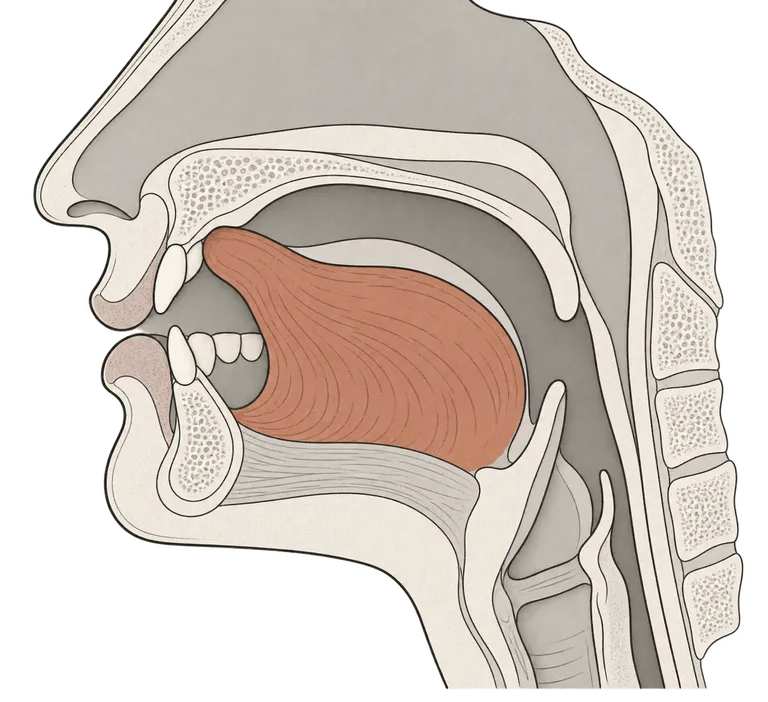
Tongue tip moves slightly back to the alveolar ridge; strongly aspirated at stressed onsets, but reduced to a fast voiced tap between vowels, as in 'butter'.
Tongue and vocal-tract anatomy appear visually plausible.
attempt 0 · 2026-10-02
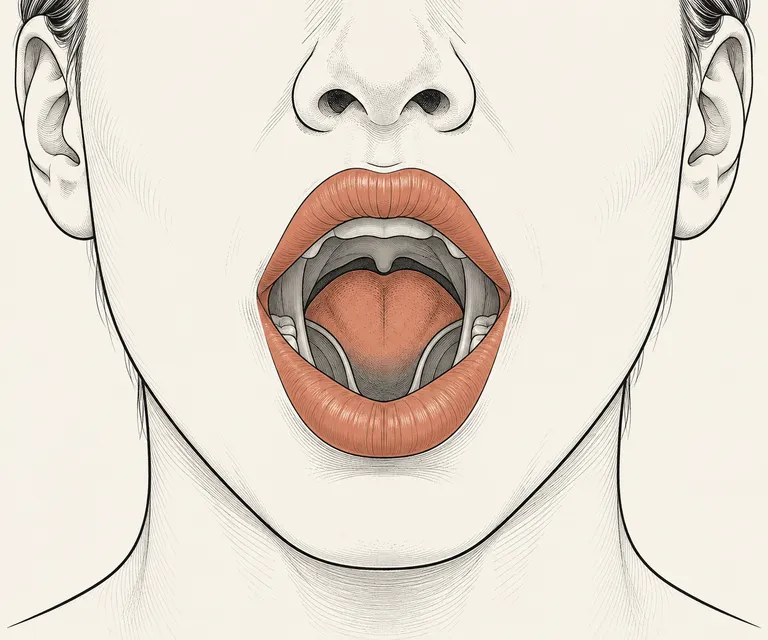
accepted
Lips strongly and consistently rounded, tongue fully back and high throughout the vowel.
Open-mouth view shows plausible lips, teeth, and tongue.
attempt 0 · 2026-10-02
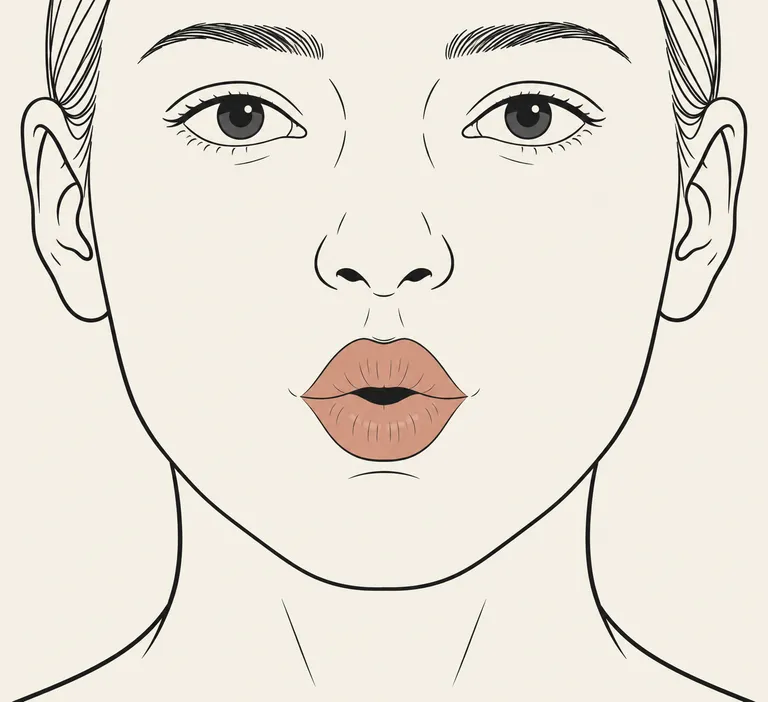
accepted
Similar strong rounding in most contexts, but the tongue often pulls forward toward center after t, d, or n.
Rounded lips and surrounding facial anatomy appear plausible.
attempt 1 · 2026-10-03
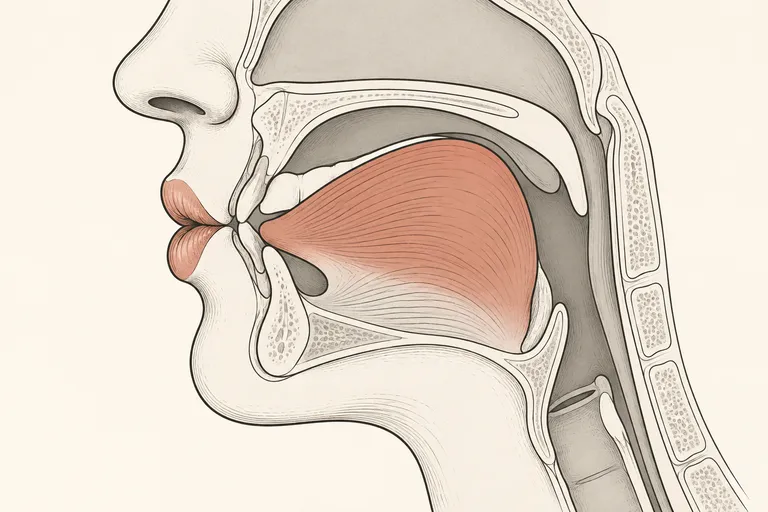
accepted
Lips strongly rounded, tongue high and back — the same tense position as long ú, just held briefly.
Anatomically coherent sagittal tongue and vocal tract without impossible deformation.
attempt 0 · 2026-10-02
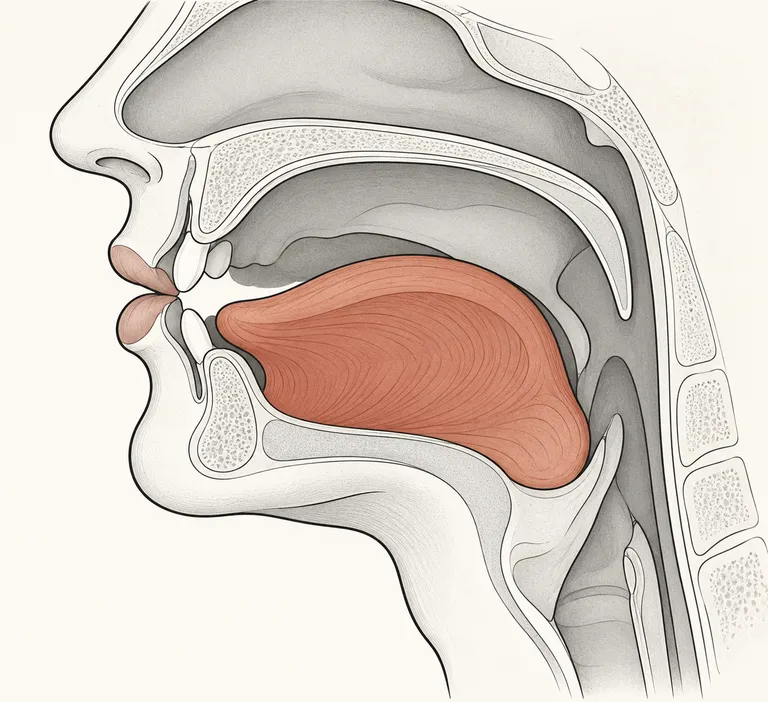
accepted
Tongue slightly lower and more relaxed than for u, lips only lightly rounded, jaw a touch more open.
Broad relaxed tongue remains anatomically plausible within the oral cavity.
attempt 0 · 2026-10-02
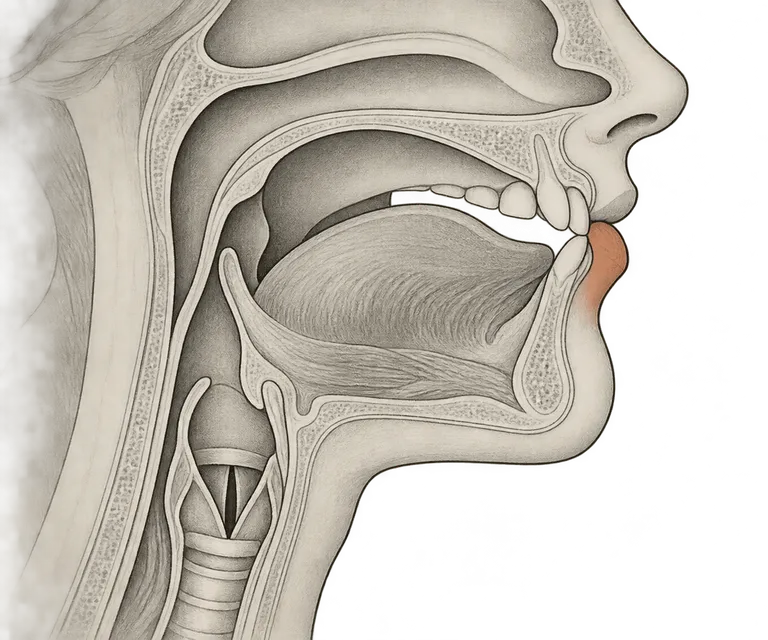
accepted
Lower lip touches the upper teeth and air passes through with no voicing at the very end of the word, vowel before it kept short.
Tongue, jaw, teeth, and lip contact are anatomically plausible.
attempt 0 · 2026-10-02
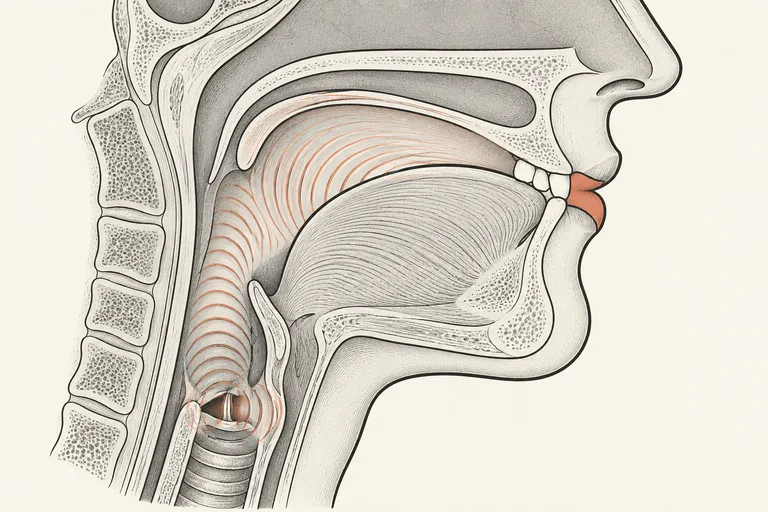
accepted
Same lip contact, but the buzz of voicing continues into the sound and the preceding vowel is held noticeably longer.
Sagittal anatomy and lower-lip contact with upper teeth appear plausible.
attempt 0 · 2026-10-02
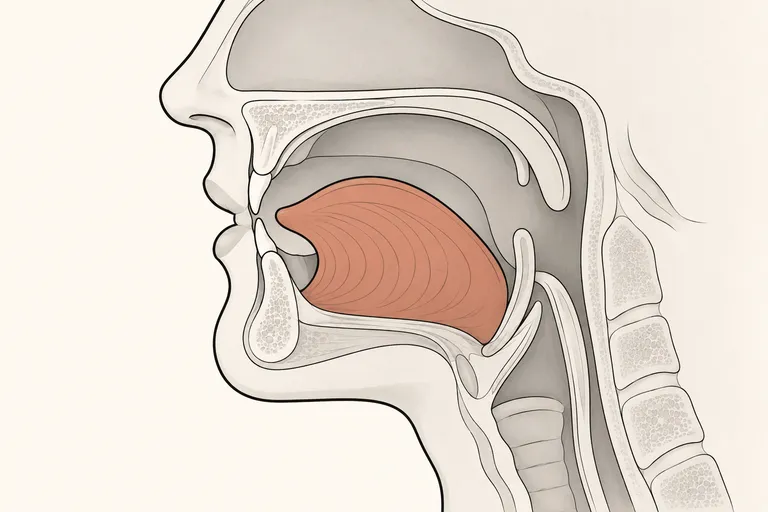
accepted
Tongue low and back, lips clearly rounded — the same vowel used in Hungarian 'a'.
Simplified tongue shape is smooth, coherent, and anatomically possible.
attempt 0 · 2026-10-02
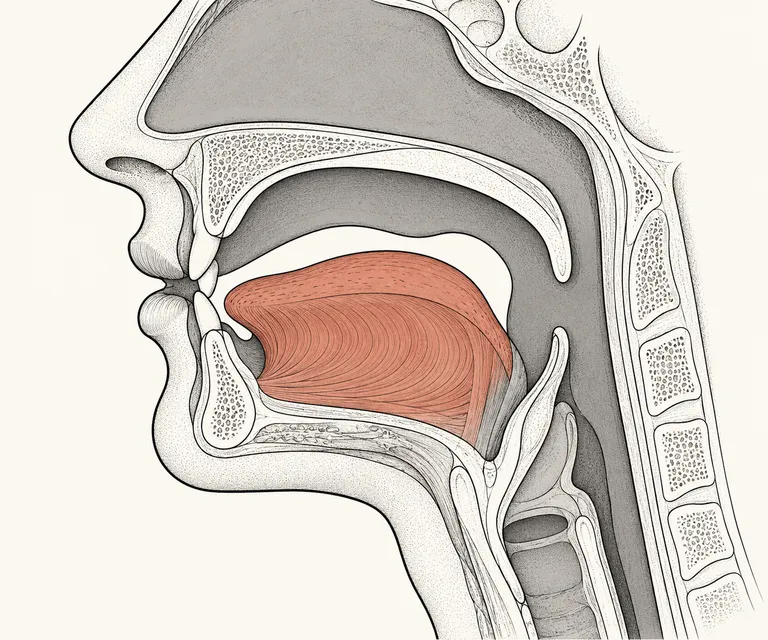
accepted
Tongue relaxed in a mid-low, central position — not pushed to the front or back — with lips completely unrounded.
Tongue has a plausible concave posture without twisting, splitting, or looping.
attempt 0 · 2026-10-02
accepted
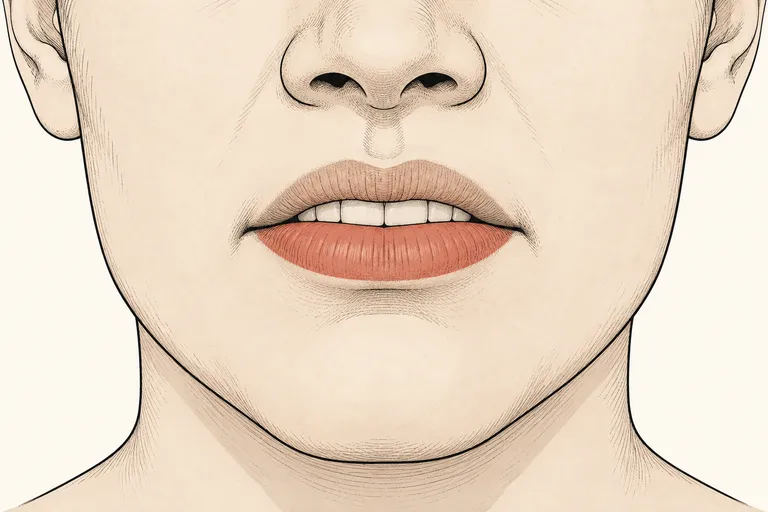
Lower lip drawn up to lightly touch the upper front teeth; a narrow gap produces continuous buzzing friction; lips are not rounded.
Lower lip lightly contacts the upper incisors; mouth anatomy appears plausible.
attempt 0 · 2026-10-02
accepted
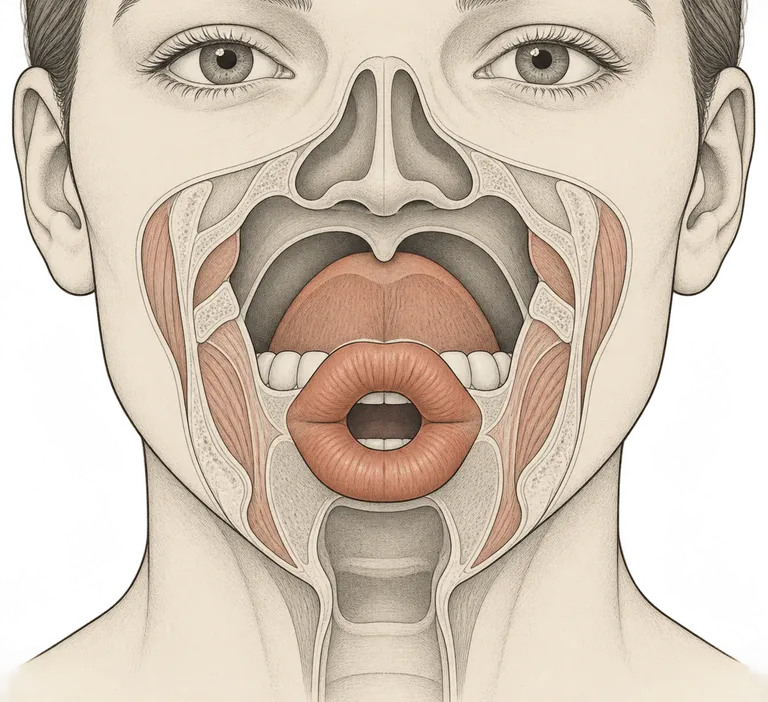
Both lips pushed forward into a tight round shape with no tooth contact at all; the back of the tongue rises toward the soft palate; airflow is smooth and non-turbulent.
Frontal cutaway is stylized but anatomically coherent, with rounded lips and one normal tongue.
attempt 0 · 2026-10-02
accepted
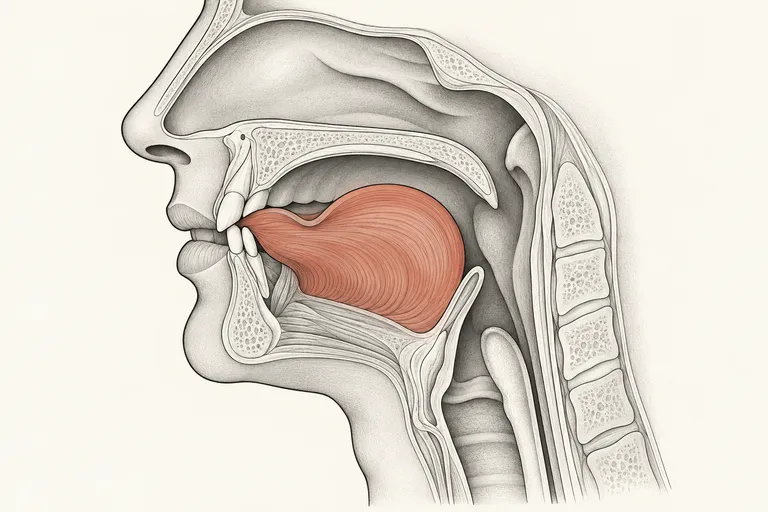
Same tongue groove as s, but with no voicing left at the very end of the word and the vowel before it kept short.
Sagittal tongue is broad, untwisted, and plausibly positioned near the front teeth.
attempt 0 · 2026-10-02
accepted
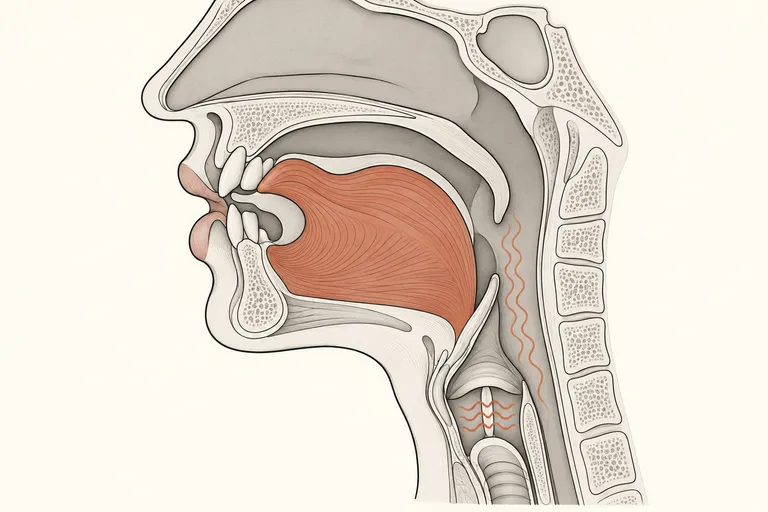
Same tongue groove, but the buzz of voicing continues into the sound and the preceding vowel is stretched noticeably longer.
Tongue and vocal tract form a coherent sagittal cross-section without impossible distortions.
attempt 0 · 2026-10-02
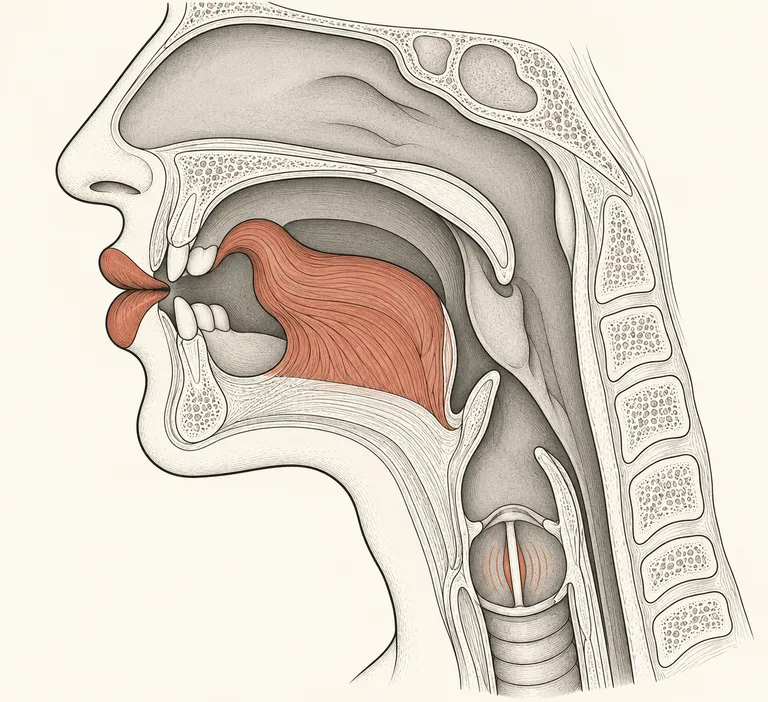
accepted
Same bunched tongue and rounded lips as ʃ, but with the voicing dropped in word-final loanword positions.
Raised and bunched tongue remains continuous and anatomically plausible.
attempt 0 · 2026-10-02
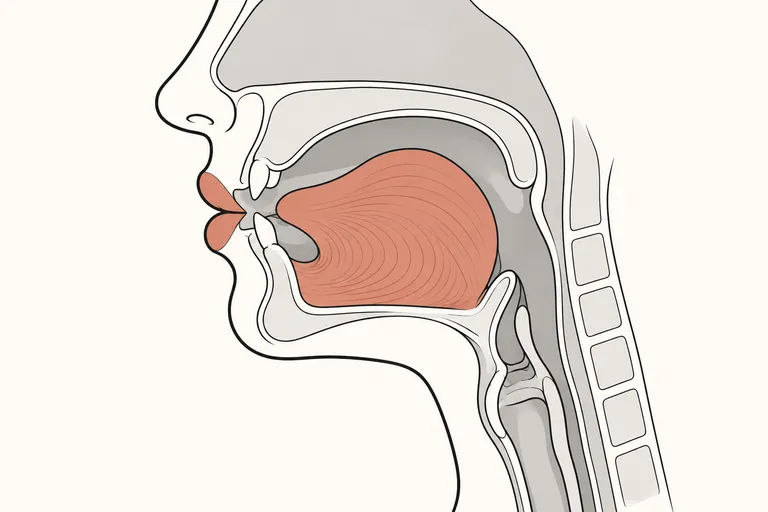
accepted
Same tongue and lip shape, but the voice buzzes continuously through the whole sound, even at the end of a word.
Sagittal tongue shape is broad and continuous, with plausible placement inside the oral cavity.
attempt 1 · 2026-10-03
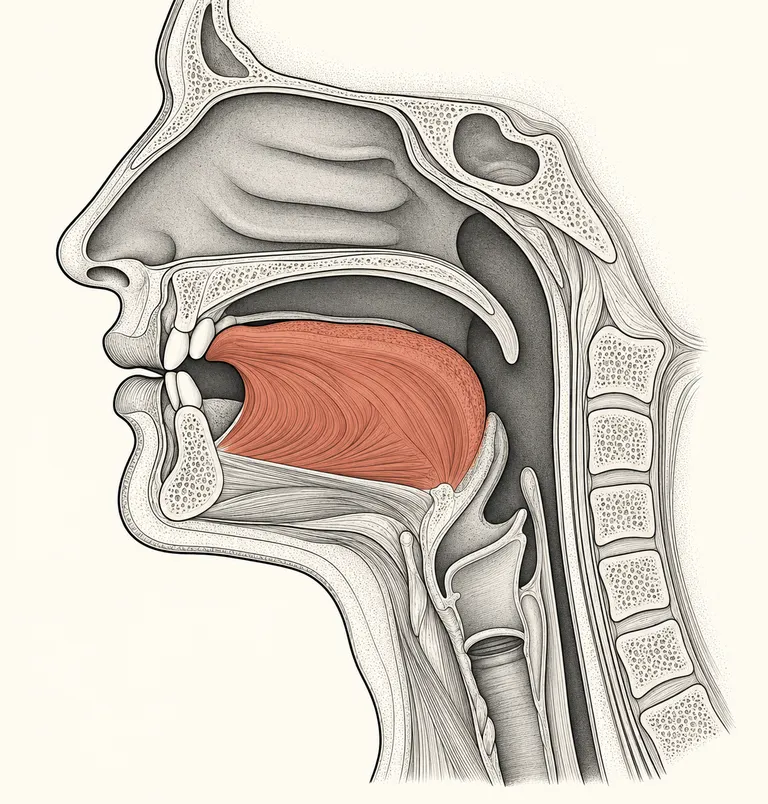
accepted
Tongue tip stays behind the teeth, making a full stop (t) or a narrow groove further back (s), never protruding between the teeth.
Tongue stays behind the teeth and has a coherent anatomical shape.
attempt 0 · 2026-10-02
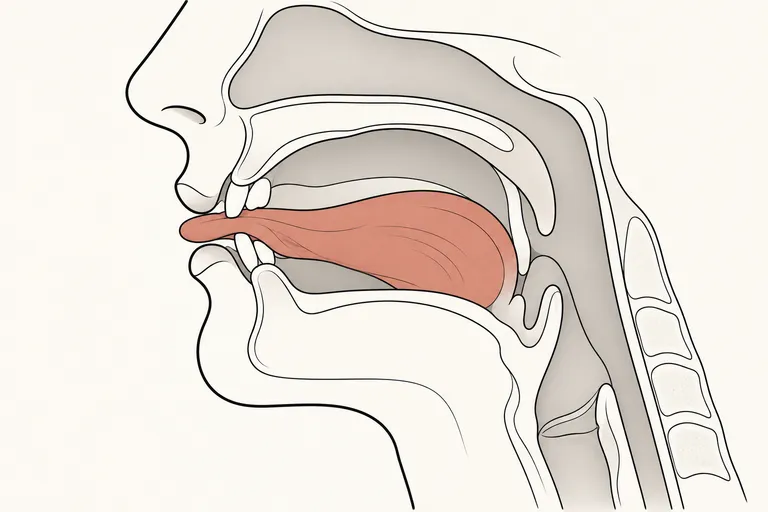
accepted
Tongue tip pokes gently out between the upper and lower front teeth, letting air hiss steadily over its surface.
Tongue extends between the front teeth in a plausible interdental position without twisting or splitting.
attempt 1 · 2026-10-03
accepted
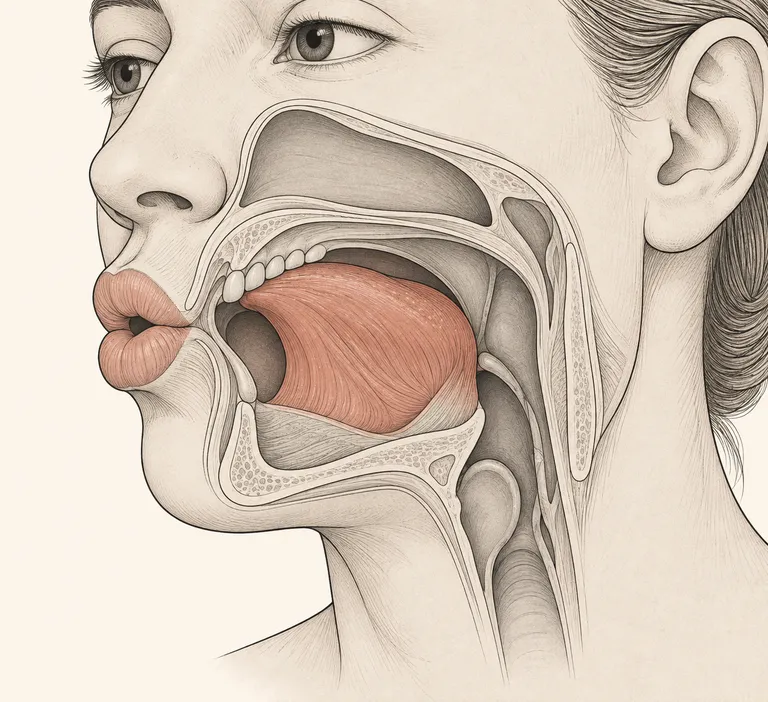
Jaw steady, lips actively rounded and slightly forward, tongue body sitting high and forward, tongue tip near the upper gum ridge without curling back.
Sagittal anatomy and rounded lips appear plausible; tongue is high without an impossible curl.
attempt 0 · 2026-10-02
accepted
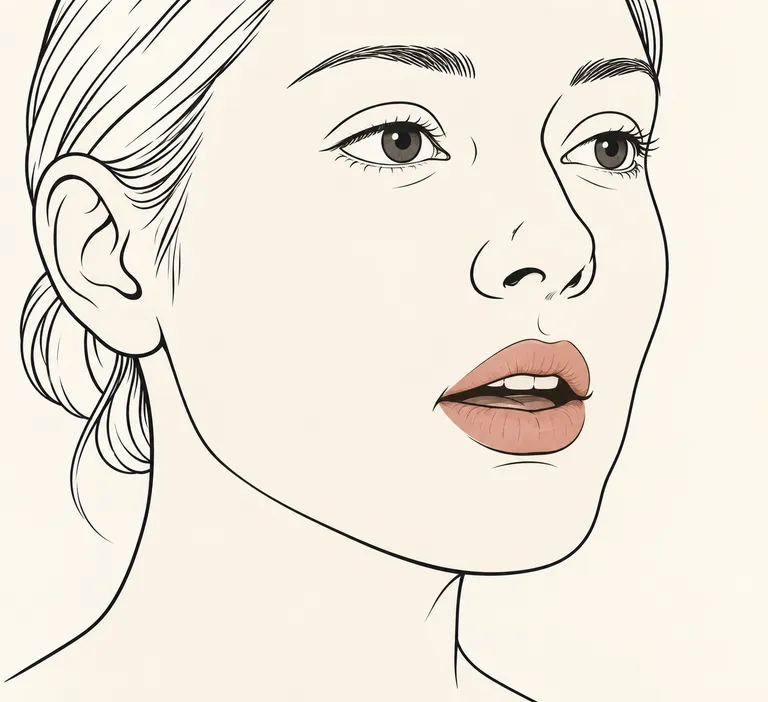
Jaw loose and slightly dropped, lips neutral to loosely spread, tongue body lower and slightly retracted, tongue tip curled upward and back in readiness for rhotic r.
Slightly open jaw, lips, teeth, and visible tongue appear anatomically plausible.
attempt 1 · 2026-10-03
accepted
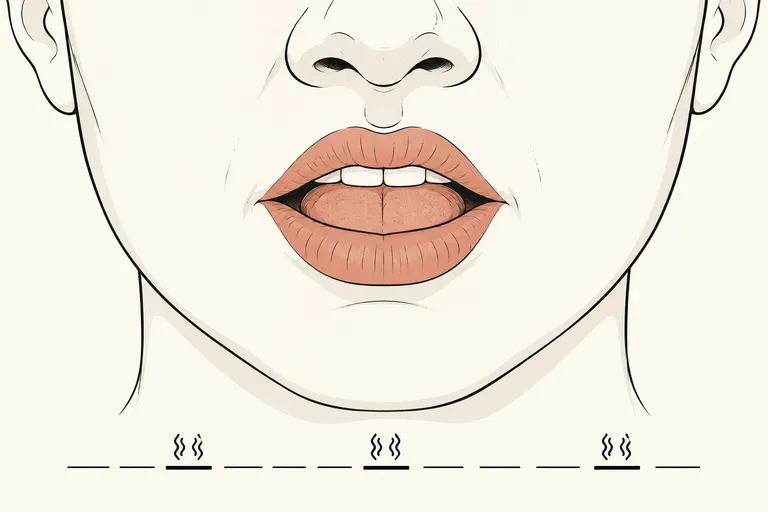
A practice sentence with every ð word underlined and a small vibration icon marking the buzz cue.
Frontal mouth and visible tongue are anatomically plausible.
attempt 0 · 2026-10-02
accepted
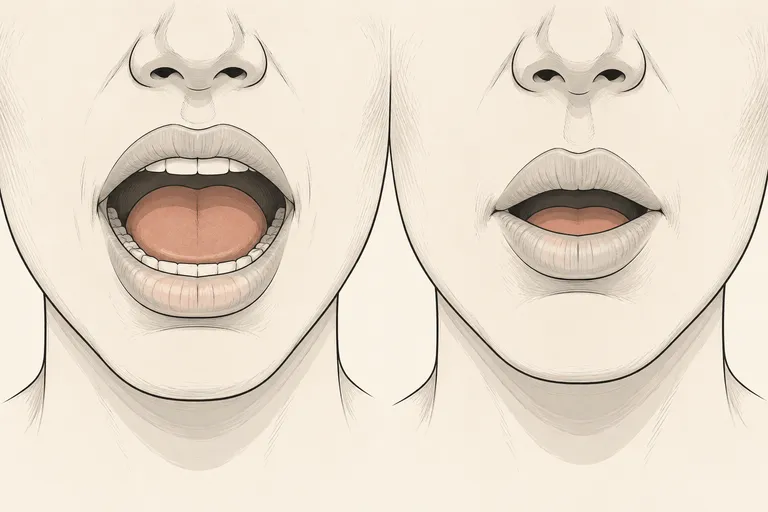
A practice sentence shown with stressed syllables in bold capital letters and unstressed syllables shown smaller and shaded gray.
Both mouths are visually coherent with realistic tongue placement.
attempt 0 · 2026-10-02
accepted
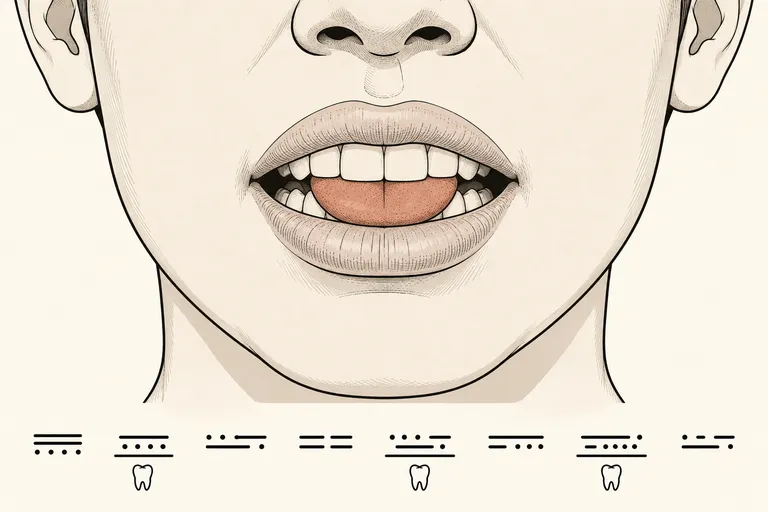
A practice sentence with every θ word underlined and its tongue-protrusion cue marked with a small tooth icon.
Mouth, teeth, lips, and tongue appear anatomically sane.
attempt 0 · 2026-10-02
accepted
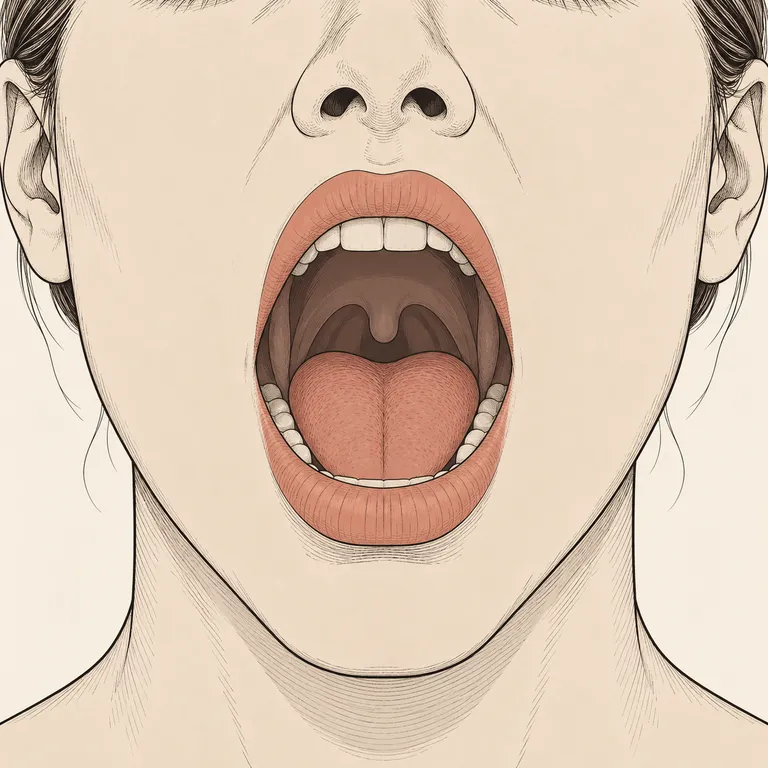
Jaw dropped further than normal, almost like a wide yawn, held for an extra beat.
Wide-open jaw, tongue, teeth, and palate appear anatomically plausible.
attempt 0 · 2026-10-02
accepted
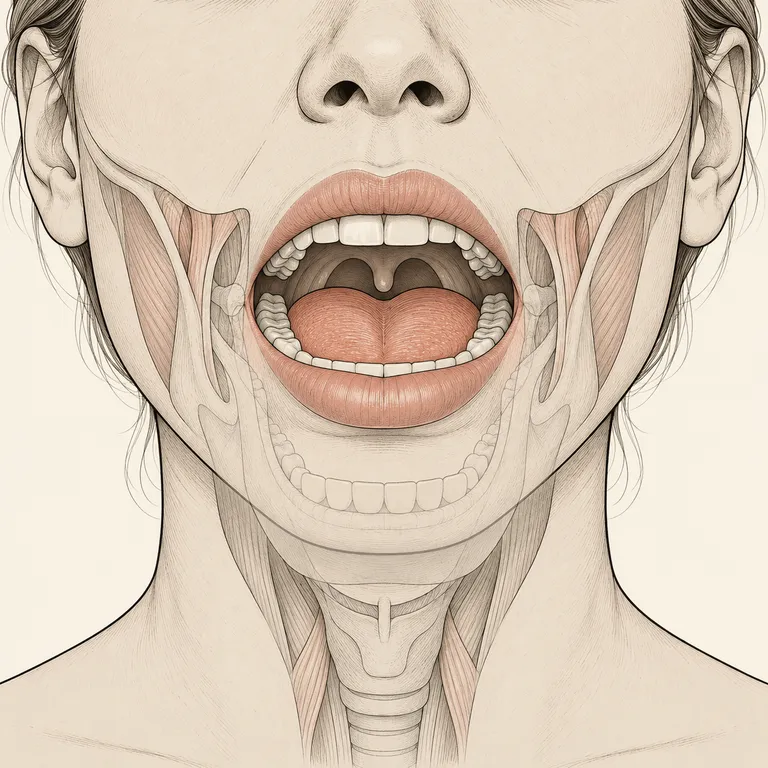
Same wide quality but with normal jaw opening and duration, blended smoothly into connected speech.
Stylized anatomical overlay remains coherent, with plausible jaw and tongue placement.
attempt 0 · 2026-10-02
accepted
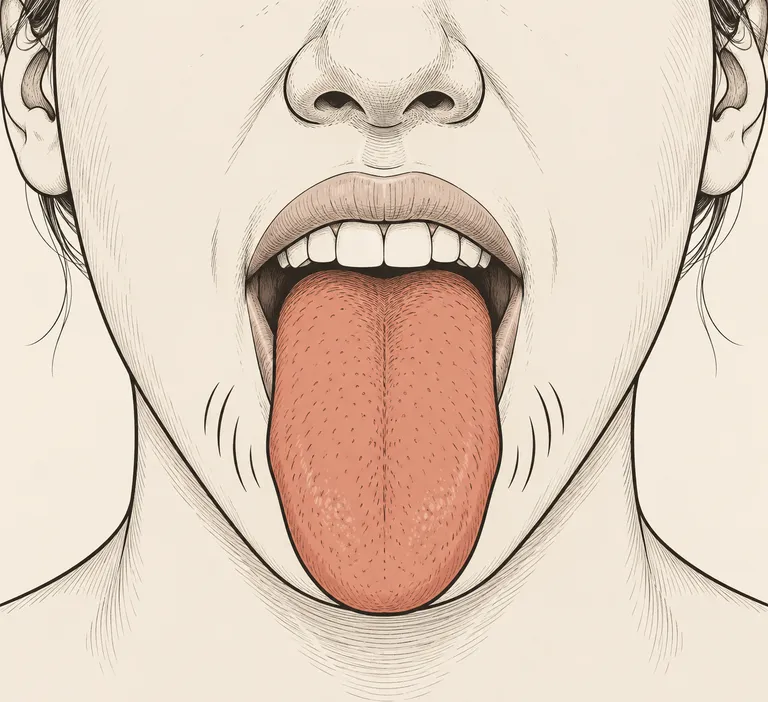
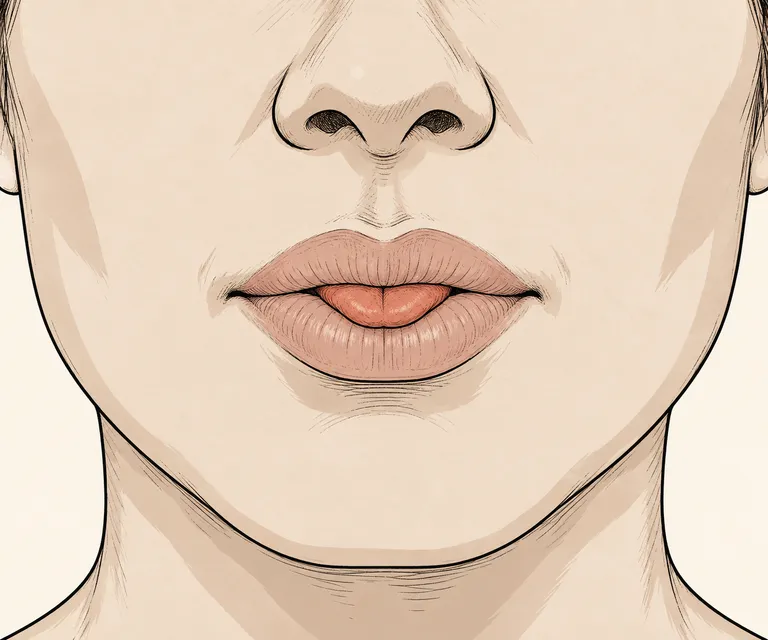
Tongue pushed far out past the teeth, extra-loud, extra-long buzz.
Strong tongue protrusion is anatomically plausible and explicitly required by the intended content.
attempt 0 · 2026-10-02
accepted
Tongue tip only slightly poking out, brief but clear buzz at normal speed.
Tongue tip protrudes slightly between normally positioned lips, matching the intended articulation.
attempt 0 · 2026-10-02
accepted
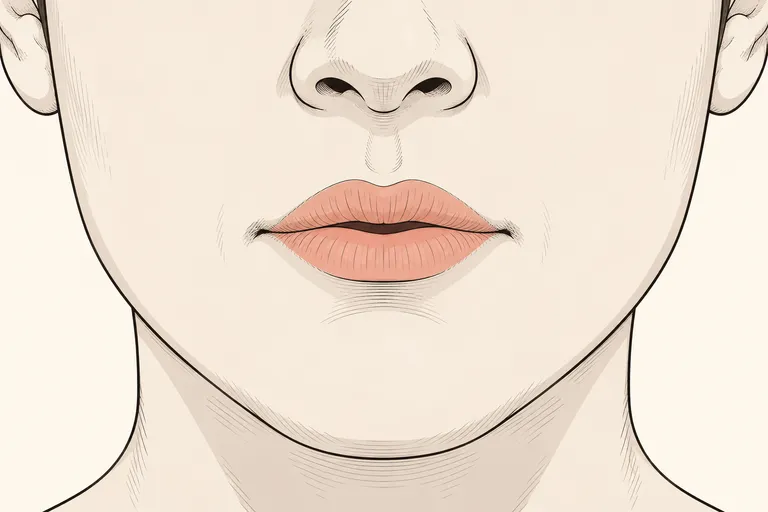
Unstressed syllable almost disappears, mouth barely moving.
Nearly closed, relaxed lips and jaw appear anatomically normal.
attempt 0 · 2026-10-02
accepted
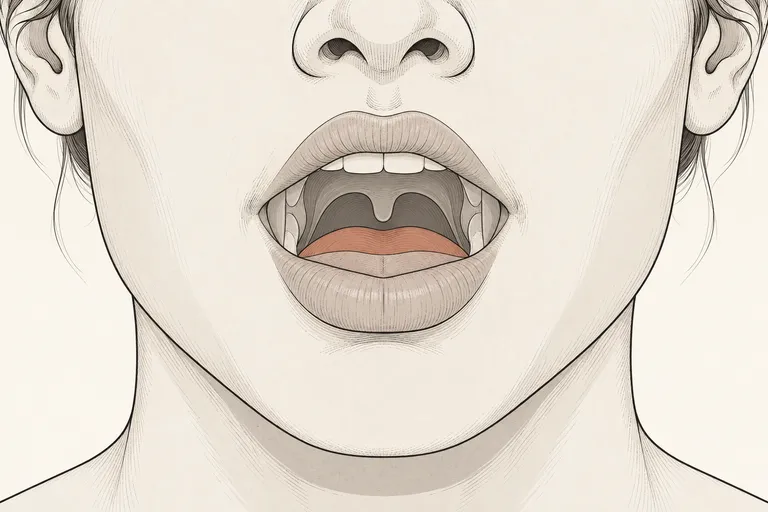
A small but audible schwa reappears, still clearly reduced compared to the stressed syllables.
Mouth and tongue appear anatomically plausible for a reduced central vowel.
attempt 0 · 2026-10-02
accepted
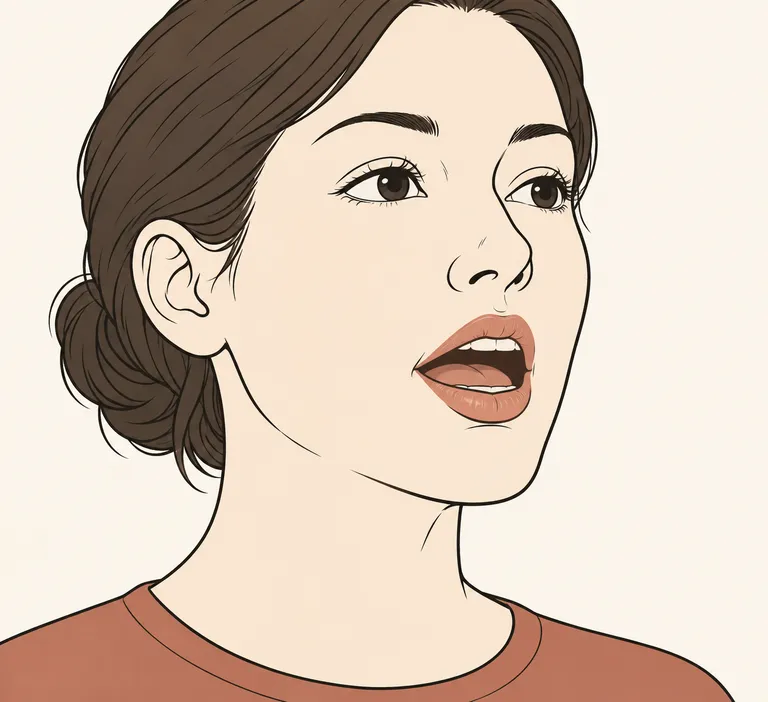
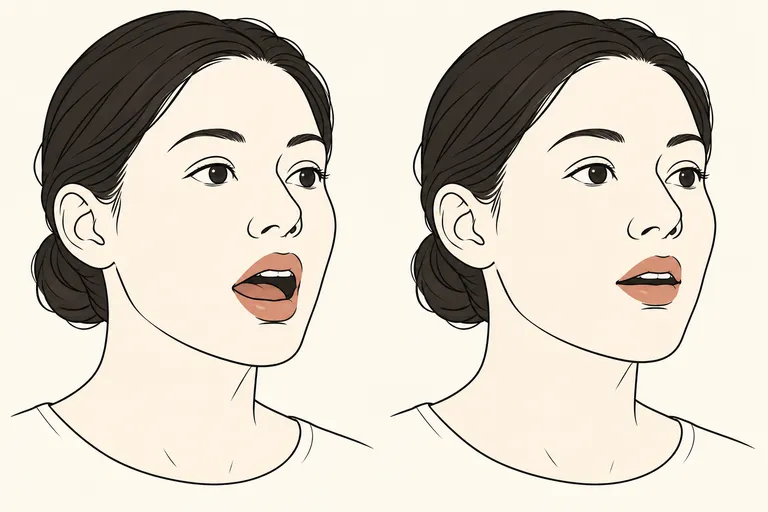
An extra-long, held 'errrrr' with the curl visibly sustained for several seconds.
Face, lips, teeth, and visible tongue appear anatomically plausible.
attempt 1 · 2026-10-03
accepted
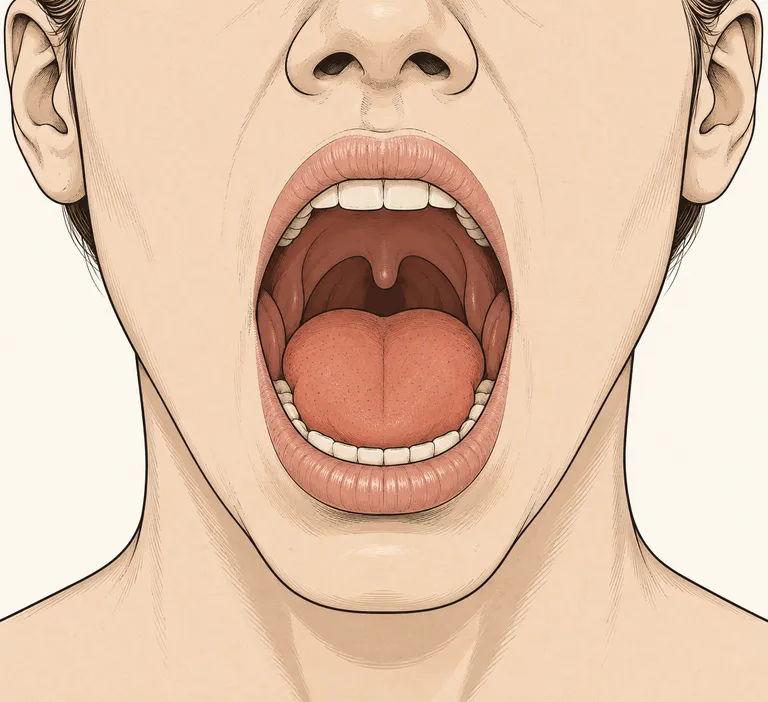
The same curled shape, but shortened to normal vowel length within the word.
Both faces show plausible mouth openings and oral anatomy.
attempt 1 · 2026-10-03
accepted
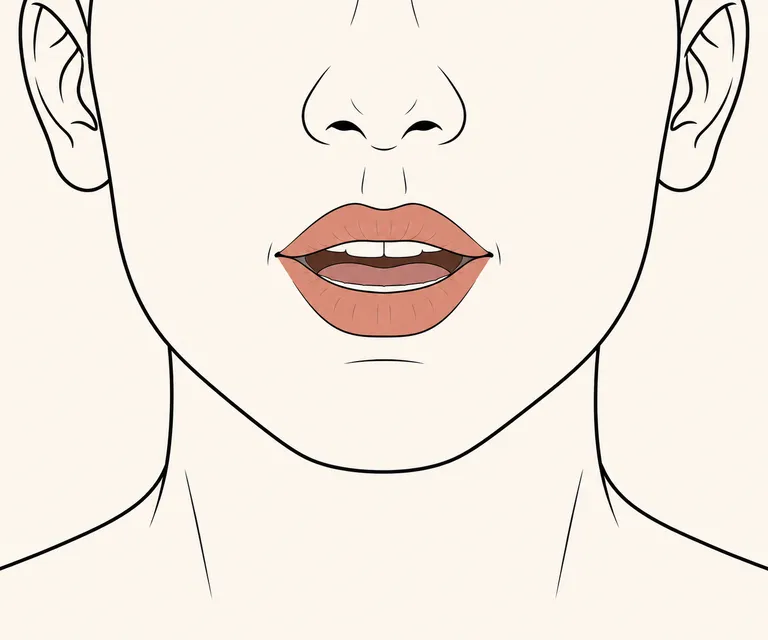
Jaw dropped further than normal, tongue clearly relaxed and held for an extra beat, almost cartoonish.
Wide jaw opening and relaxed tongue remain anatomically plausible.
attempt 0 · 2026-10-02
accepted
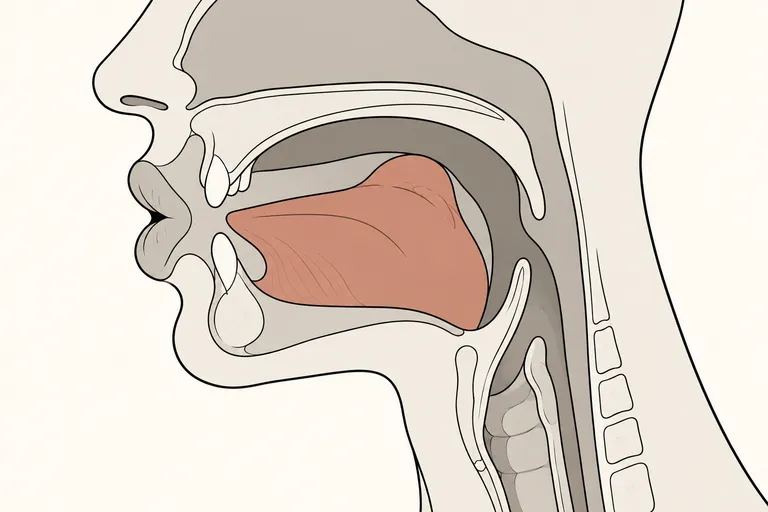
Same relaxed quality but with normal jaw opening and duration, blended smoothly into connected speech.
Lips, teeth, jaw, and visible tongue have plausible shapes and positions.
attempt 1 · 2026-10-03
accepted
Tongue tip curls far back and up, held for an extra-long, cartoonish 'rrrr' with strong lip rounding.
Tongue remains a single plausible muscular shape, without excessive curling or distortion.
attempt 13 · 2026-10-04
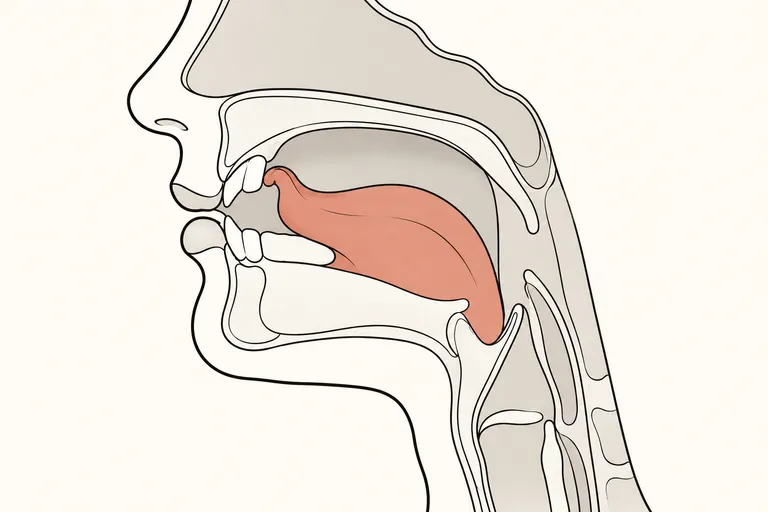
accepted
Same curl, but shorter and lighter, blended smoothly into surrounding sounds.
Tongue tip bends slightly upward; the overall tongue and vocal tract remain anatomically plausible.
attempt 1 · 2026-10-03
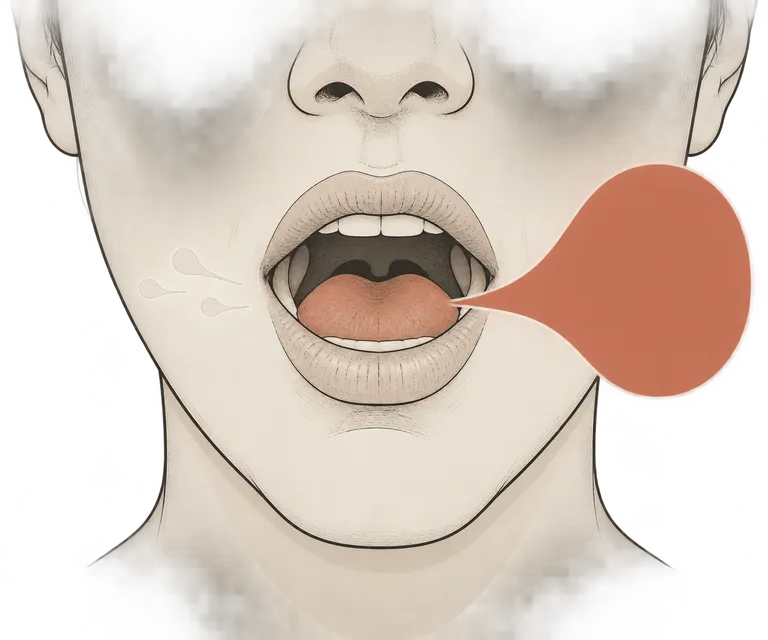
accepted
Unstressed vowels shrunk almost to a whisper, drawn as tiny faint shapes; the stressed vowel shown huge and bold.
Mouth anatomy is sane; the large external vowel shape is clearly symbolic.
attempt 0 · 2026-10-02
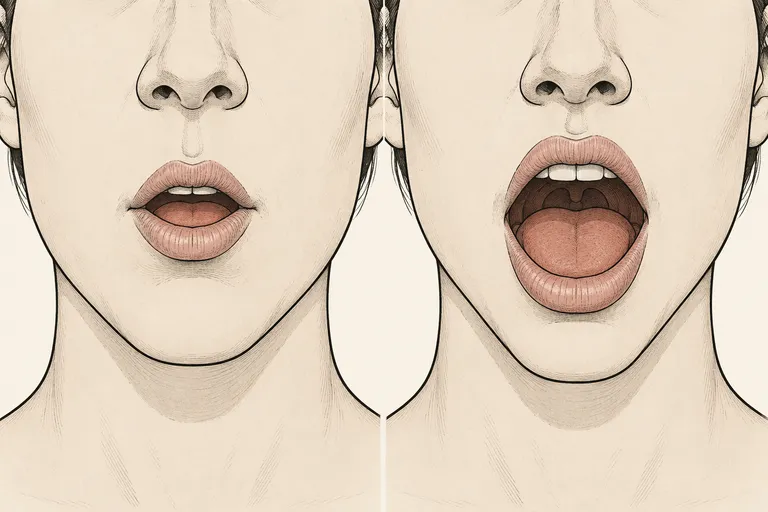
accepted
Unstressed vowels shown small but clearly present as a light schwa; stressed vowel still clearly larger.
Both mouth positions are anatomically plausible and clearly rendered.
attempt 0 · 2026-10-02
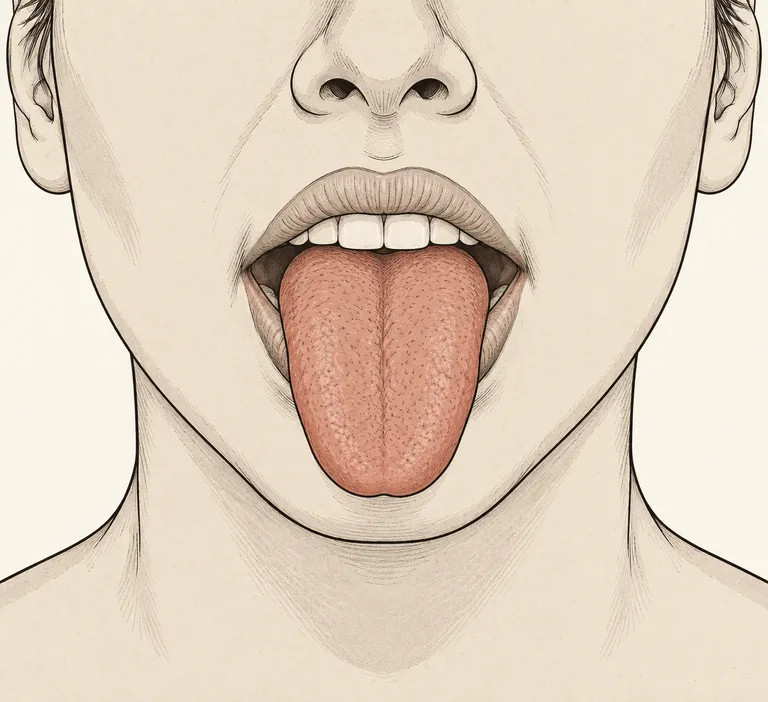
accepted
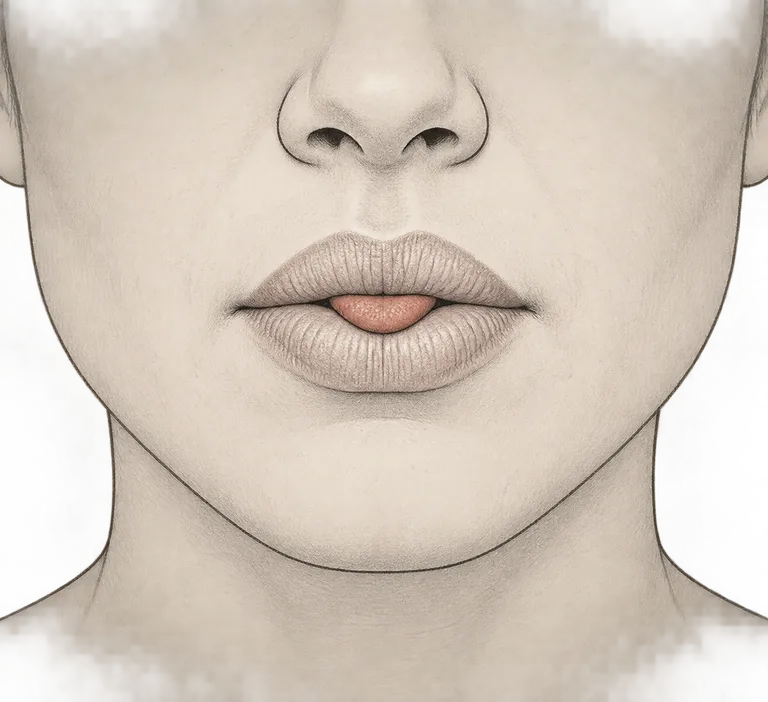
Tongue pushed far out past the teeth, held for a long hiss.
Extended tongue is exaggerated as intended but remains anatomically coherent.
attempt 0 · 2026-10-02
accepted
Tongue tip only slightly poking out, brief hiss at normal speed.
Tongue tip protrudes slightly between normally positioned lips.
attempt 0 · 2026-10-02
accepted
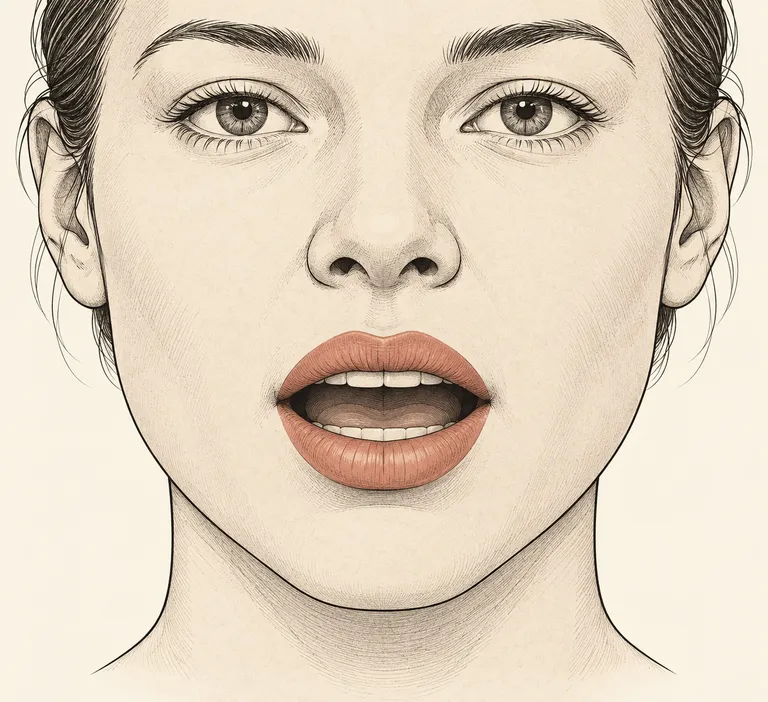
A labeled circle for the vowel in 'bed', with a moderate jaw opening.
Face, lips, teeth, and open jaw appear anatomically coherent.
attempt 0 · 2026-10-02
accepted
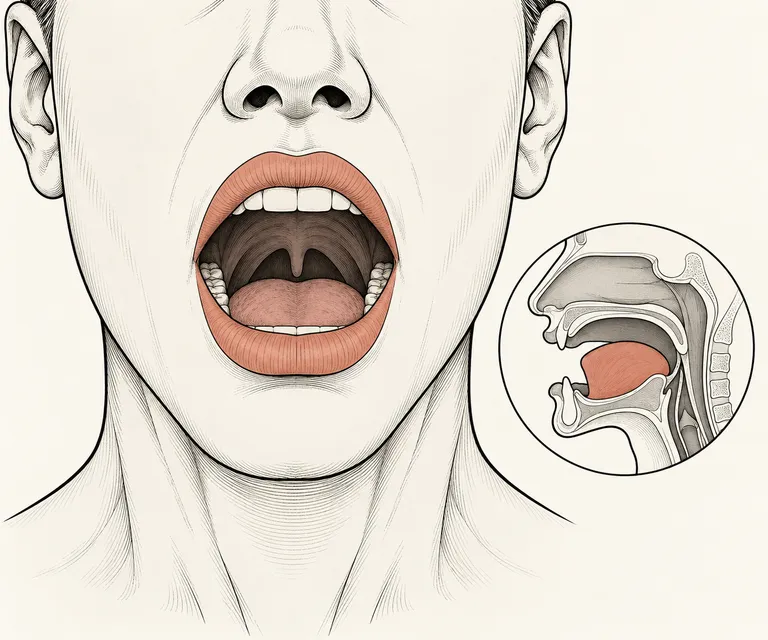
A labeled circle for the vowel in 'bad', with a noticeably wider jaw opening.
Wide jaw opening, tongue, palate, teeth, and uvula appear plausible.
attempt 0 · 2026-10-02
accepted
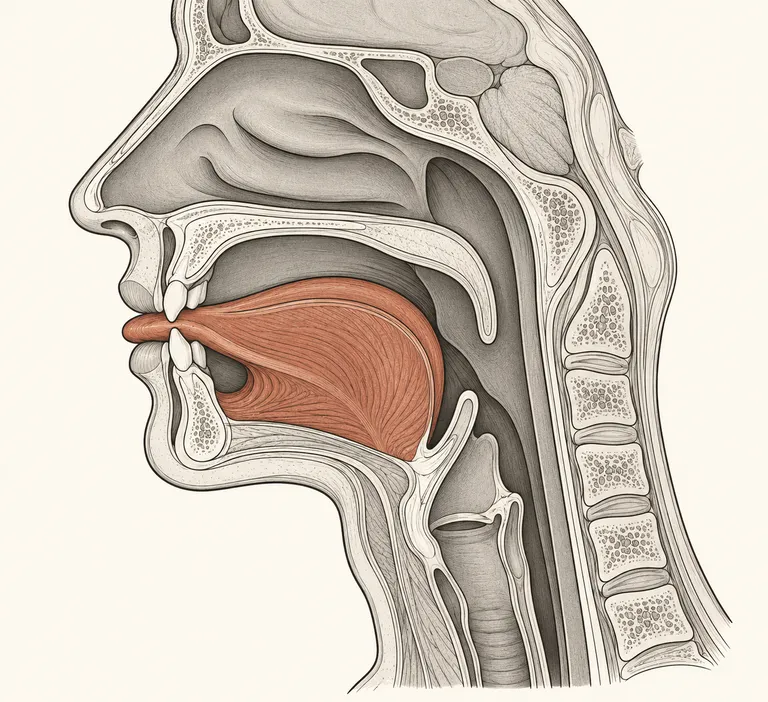
Tongue tip visible between the teeth, continuous voiced buzz.
Tongue protrusion between the teeth is moderate and anatomically plausible.
attempt 0 · 2026-10-02
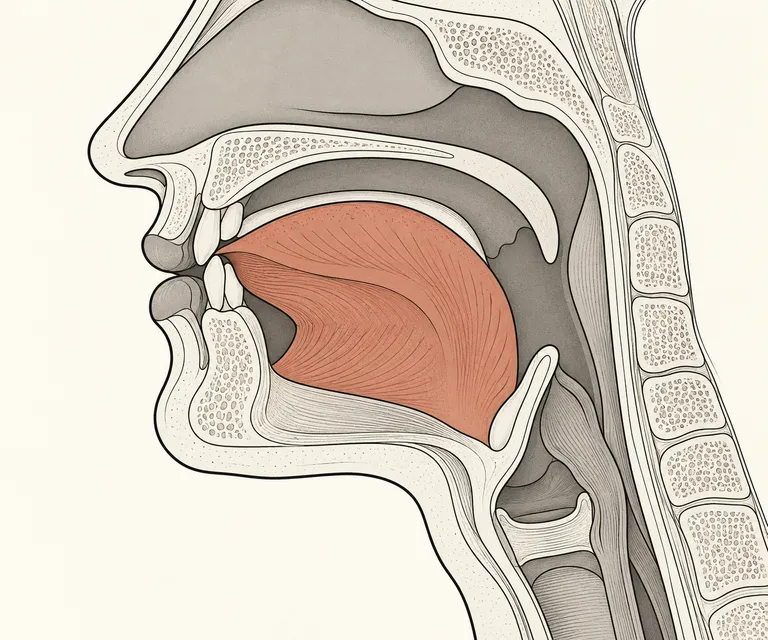
accepted
Tongue tip retracted behind the teeth, a full stop or a sharper sibilant buzz.
Sagittal tongue and vocal-tract anatomy are visually coherent and plausible.
attempt 0 · 2026-10-02
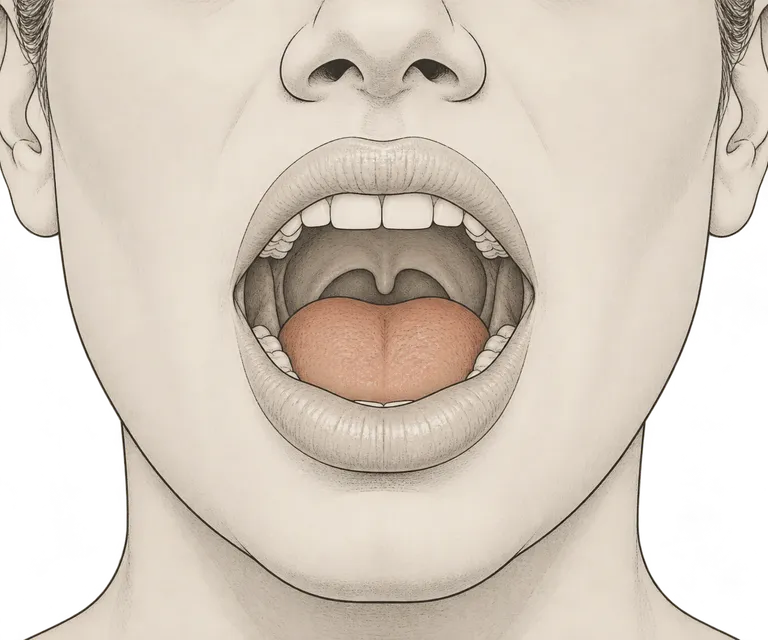
accepted
The stressed syllable keeps a clear, full vowel quality, as in the first syllable of the noun 'OBject'.
Open mouth, tongue, teeth, palate, and uvula appear anatomically coherent.
attempt 0 · 2026-10-02
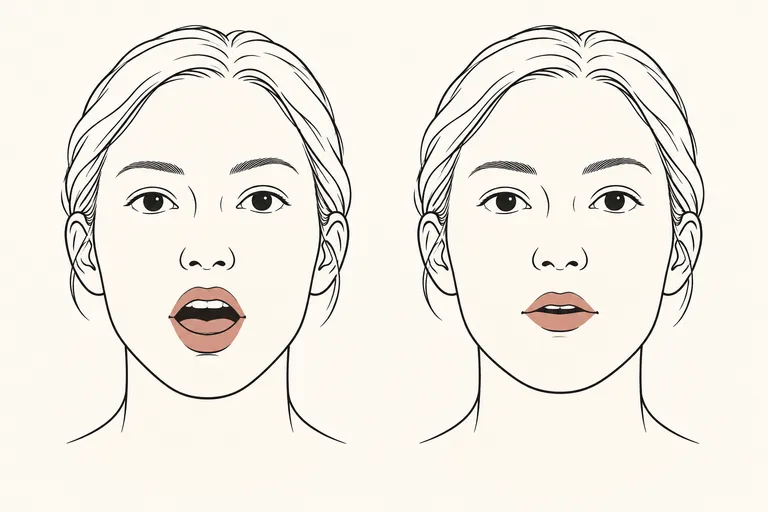
accepted
The unstressed syllable collapses to a quick, neutral schwa, as in the second syllable of the verb 'obJECT'.
Both faces and their mouth positions are anatomically plausible.
attempt 1 · 2026-10-03
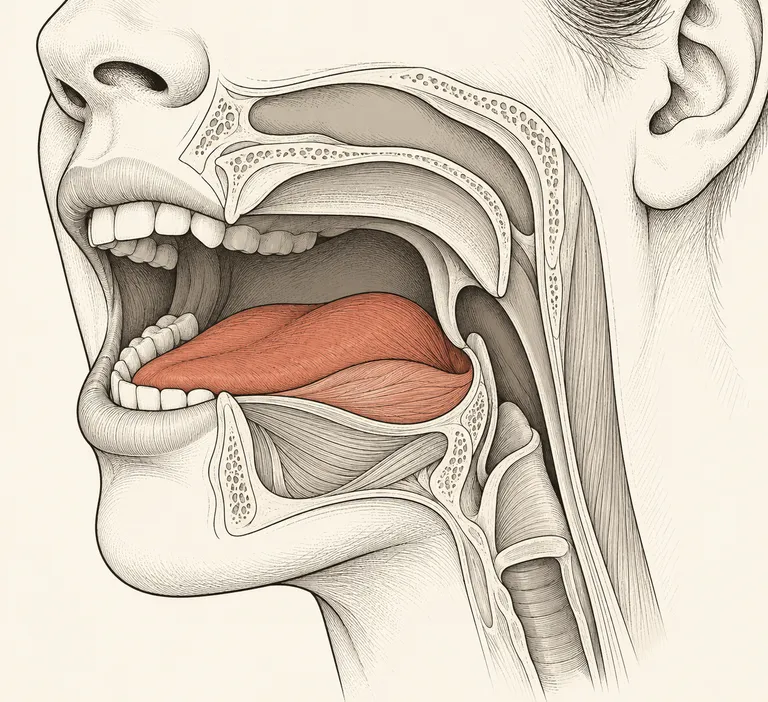
accepted
Tongue stays low and central for the whole vowel, no curling.
Single low, central tongue with plausible sagittal oral anatomy.
attempt 0 · 2026-10-02
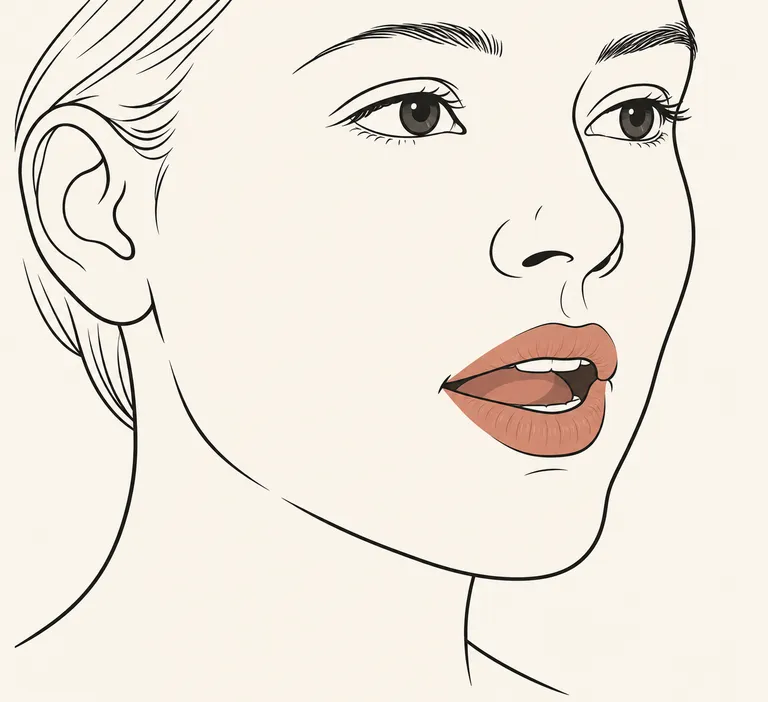
accepted
Tongue curls or bunches upward through the entire vowel, coloring it continuously.
Visible tongue remains within the mouth with plausible lips, teeth, and jaw.
attempt 1 · 2026-10-03
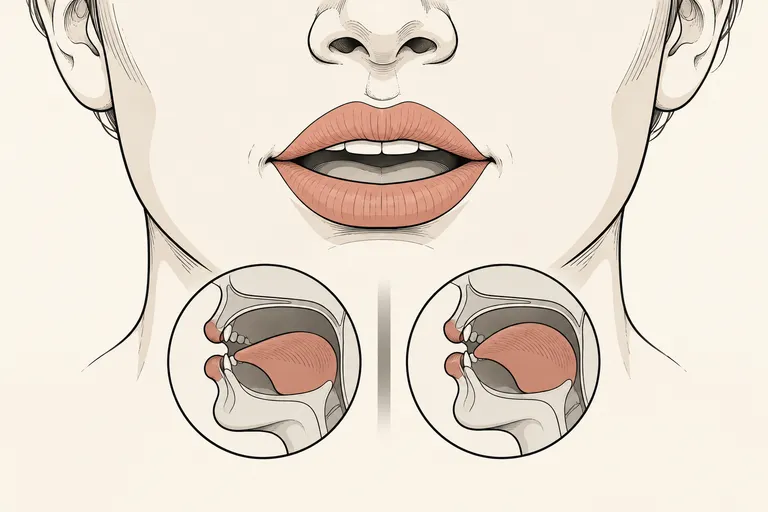
accepted
Two labeled circles, one for the vowel in 'bit' and one for the vowel in 'beat', with an arrow marking the boundary learners must sharpen.
Main mouth and both inset sagittal tongue positions are anatomically plausible.
attempt 0 · 2026-10-02
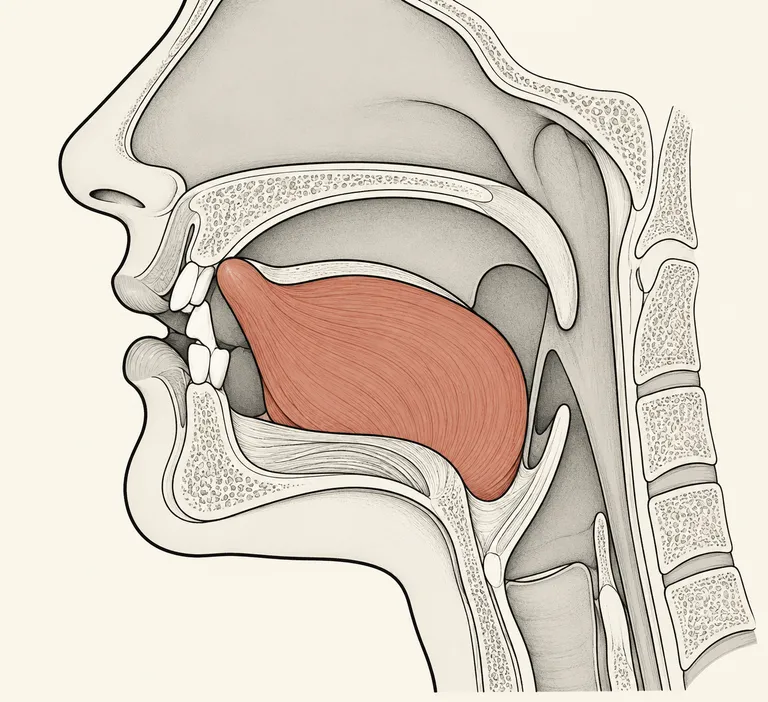
accepted
Tongue tip touches the alveolar ridge directly behind the teeth.
Sagittal tongue and vocal tract are anatomically coherent, with tip near the alveolar ridge.
attempt 0 · 2026-10-02
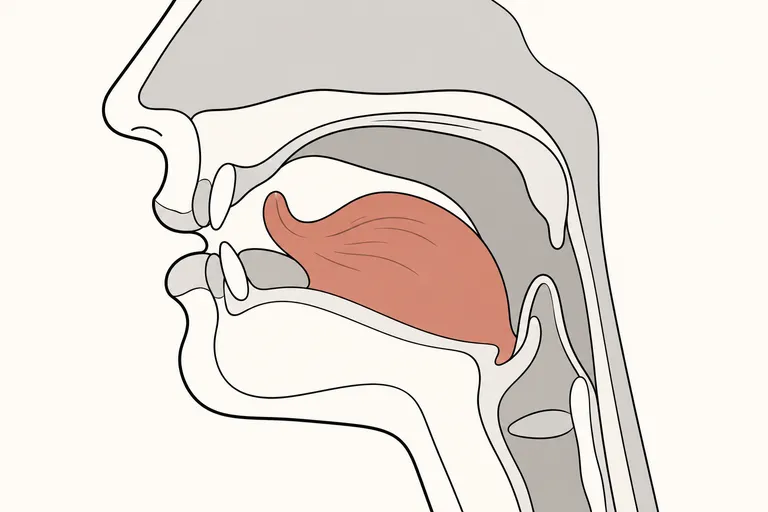
accepted
Tongue tip curls up and back or the tongue body bunches, never touching the roof of the mouth.
Single continuous tongue with a modest upward tip bend and plausible surrounding anatomy.
attempt 2 · 2026-10-03
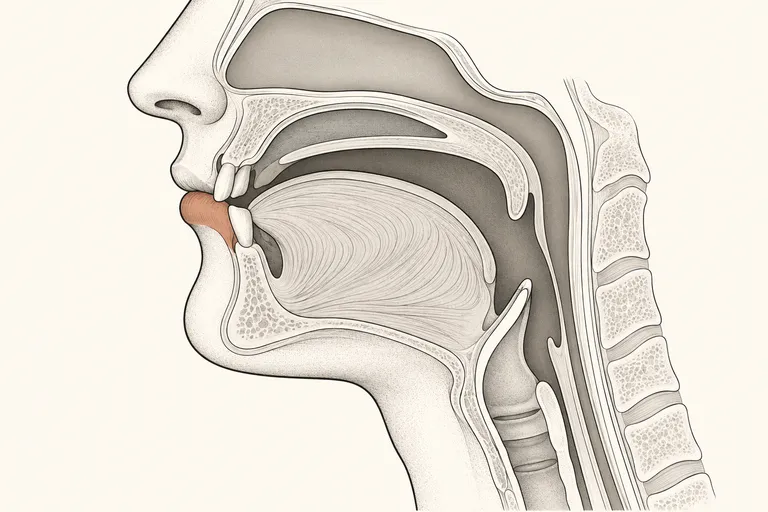
accepted
Lower lip touches the upper front teeth; a steady buzzing noise continues before the vowel starts.
Lower lip contacts the upper incisors; oral anatomy appears plausible.
attempt 0 · 2026-10-02
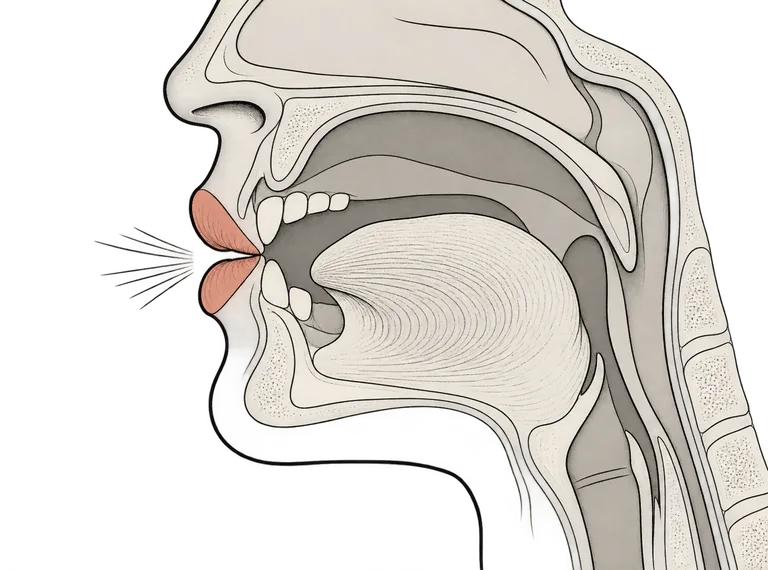
accepted
Both lips press together then release sharply, producing a short burst before the vowel.
Released lips and visible airflow are anatomically plausible for a bilabial burst.
attempt 0 · 2026-10-02
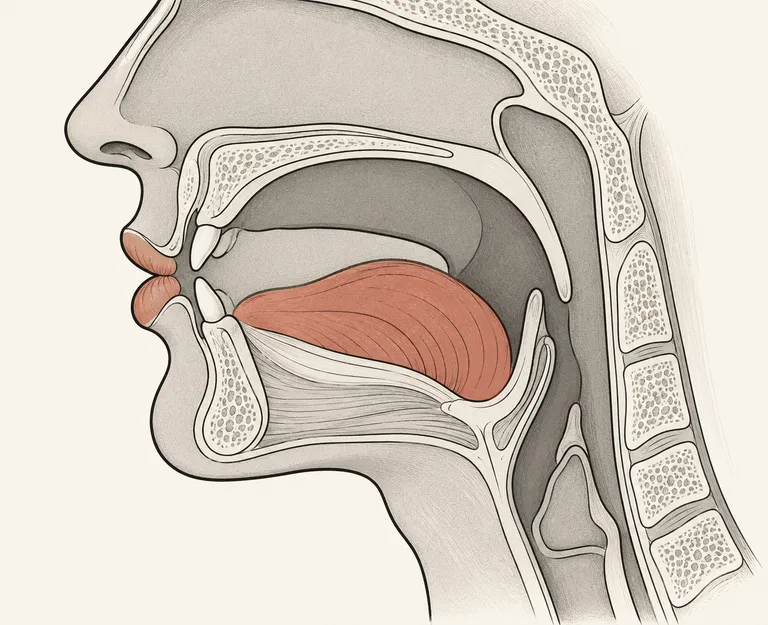
accepted
Tongue pulled back and low, lips slightly rounded, a darker-sounding vowel.
Single tongue is plausibly positioned low and back without distortion.
attempt 0 · 2026-10-02
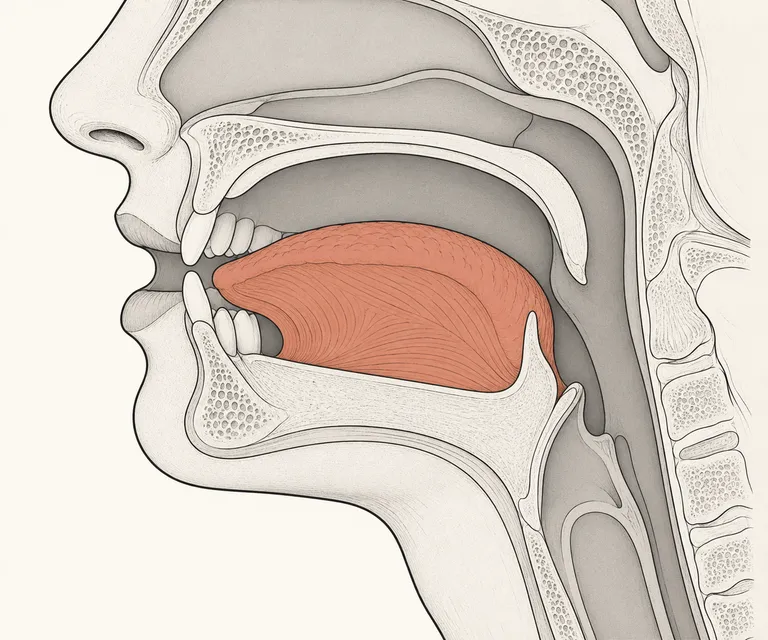
accepted
Tongue relaxed in the center of the mouth, lips completely unrounded, a brighter, shorter-sounding vowel.
Relaxed central tongue and surrounding vocal tract appear anatomically coherent.
attempt 0 · 2026-10-02
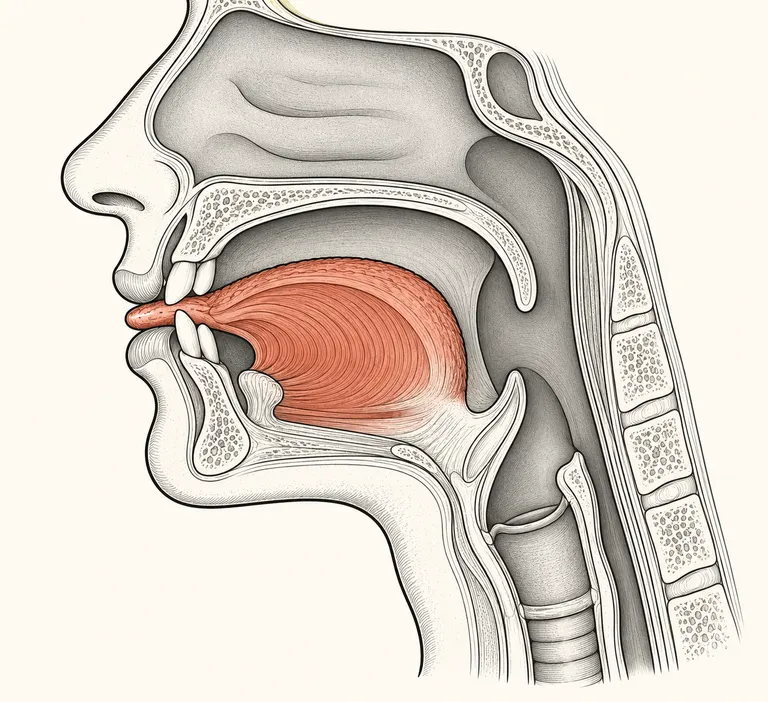
accepted
Tongue tip visible between the teeth, steady voiceless hiss.
Tongue tip extends slightly between the teeth in a plausible dental-fricative position.
attempt 0 · 2026-10-02
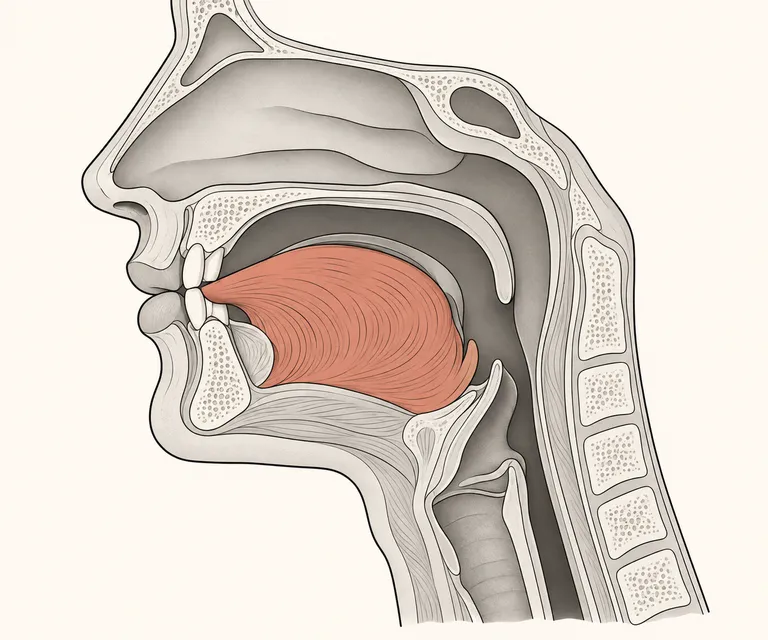
accepted
Tongue tip retracted behind the teeth, either a sharp stop or a sibilant hiss.
Tongue tip remains near and behind the front teeth with plausible anatomy.
attempt 0 · 2026-10-02
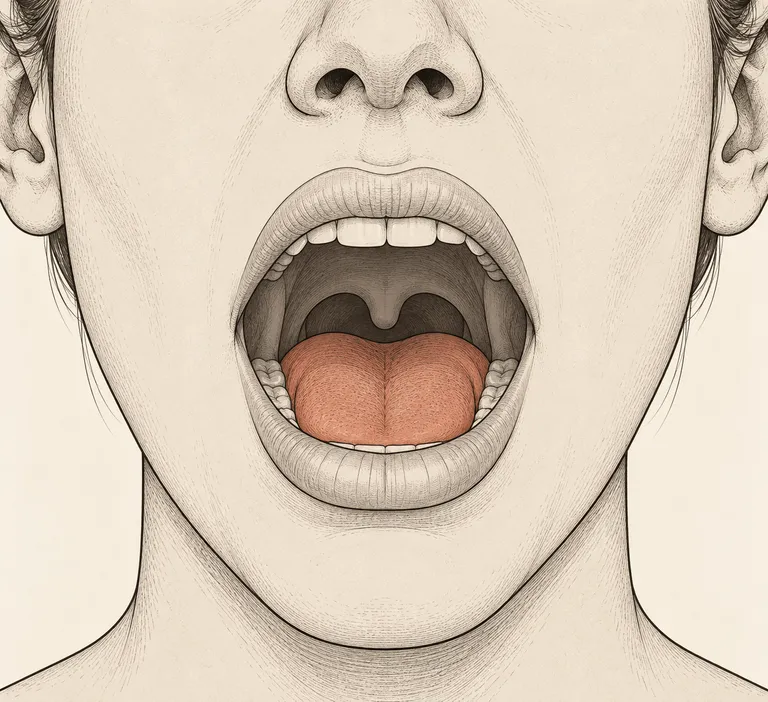
accepted
Jaw moderately open, tongue mid-low and front.
Open jaw and broad, low tongue appear anatomically plausible.
attempt 0 · 2026-10-02
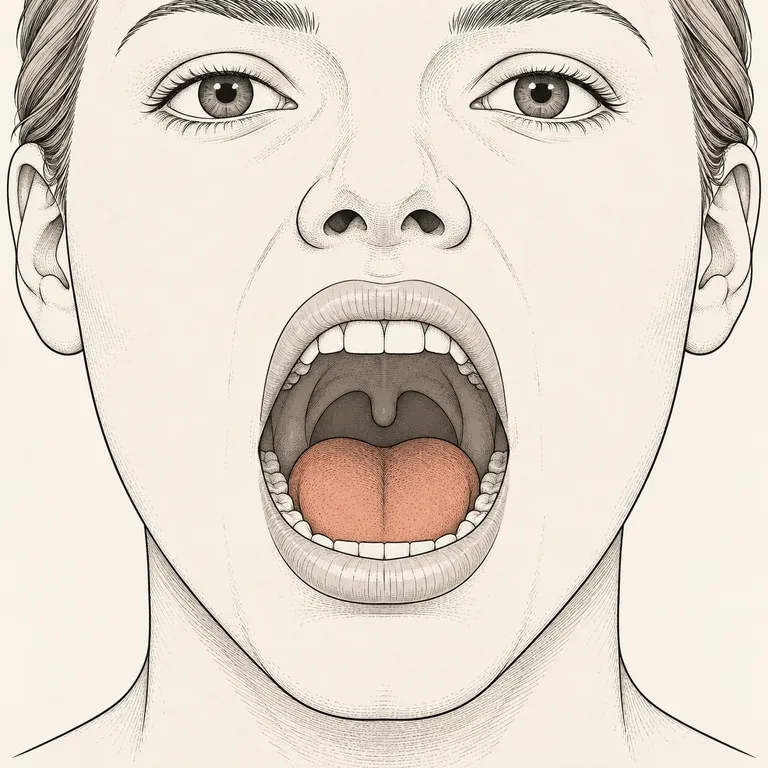
accepted
Jaw dropped noticeably wider, tongue lower and slightly forward, almost like starting a yawn.
Wide-open jaw and low, slightly forward tongue are anatomically coherent.
attempt 0 · 2026-10-02
accepted
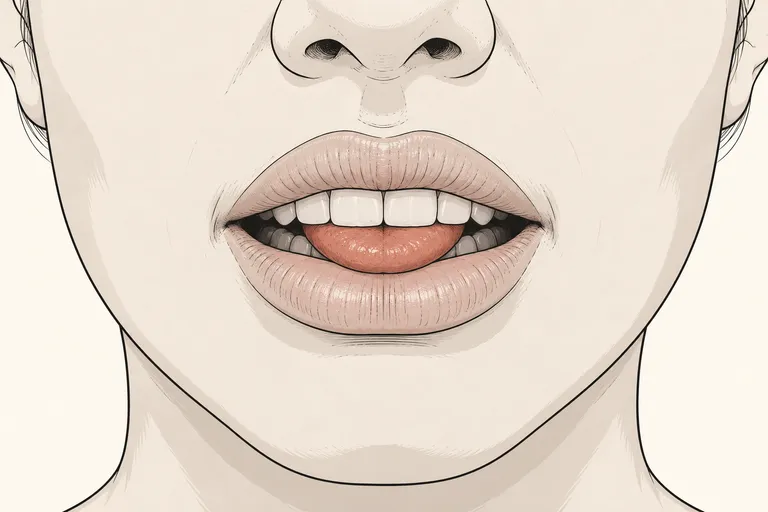
Tongue tip briefly visible between the teeth, continuous buzz.
Tongue tip is briefly visible between the teeth without distortion.
attempt 0 · 2026-10-02
accepted
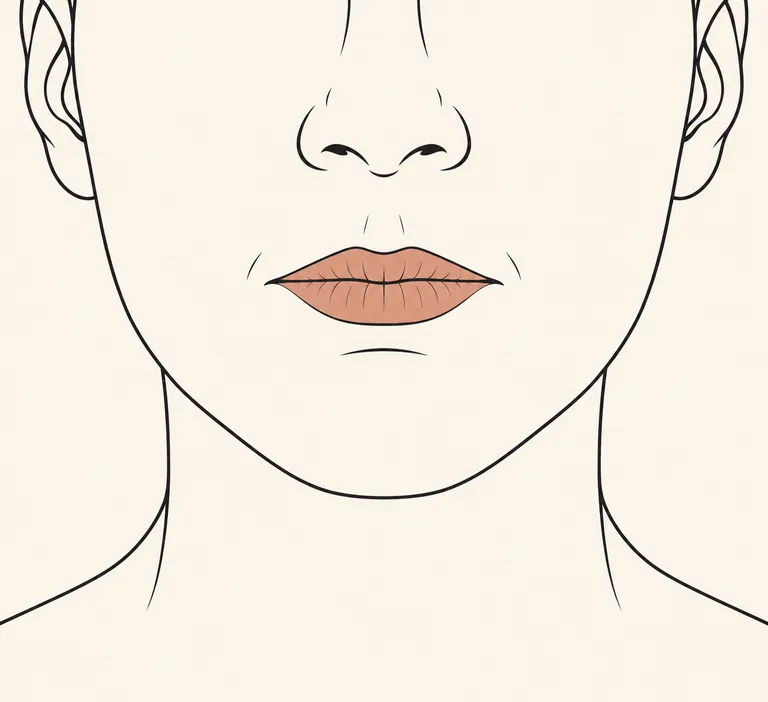
Tongue tip pulled back, quick stop, no protrusion visible.
Closed lips and facial anatomy appear plausible, with no abnormal tongue visible.
attempt 1 · 2026-10-03
accepted
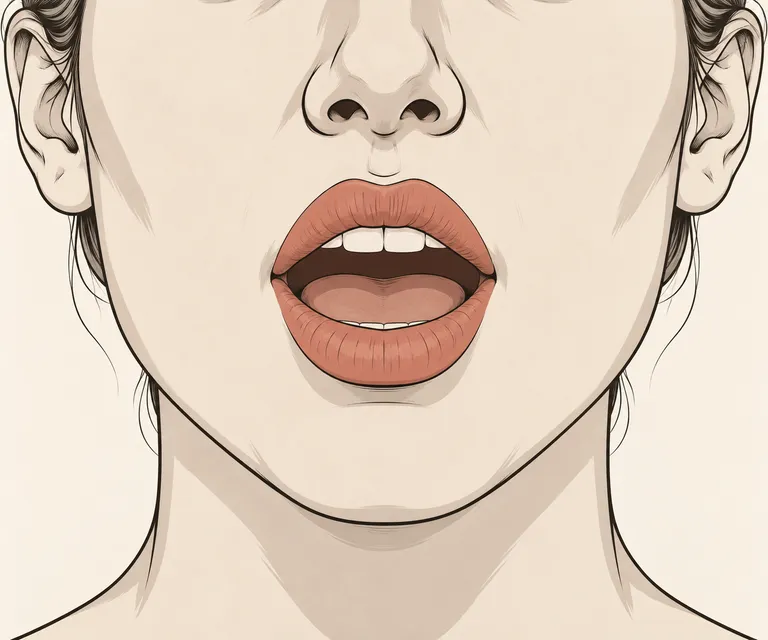
Mouth shapes a clear, full vowel with normal jaw and lip movement on the stressed syllable.
Normal open mouth, lips, teeth, and visible tongue anatomy.
attempt 0 · 2026-10-02
accepted
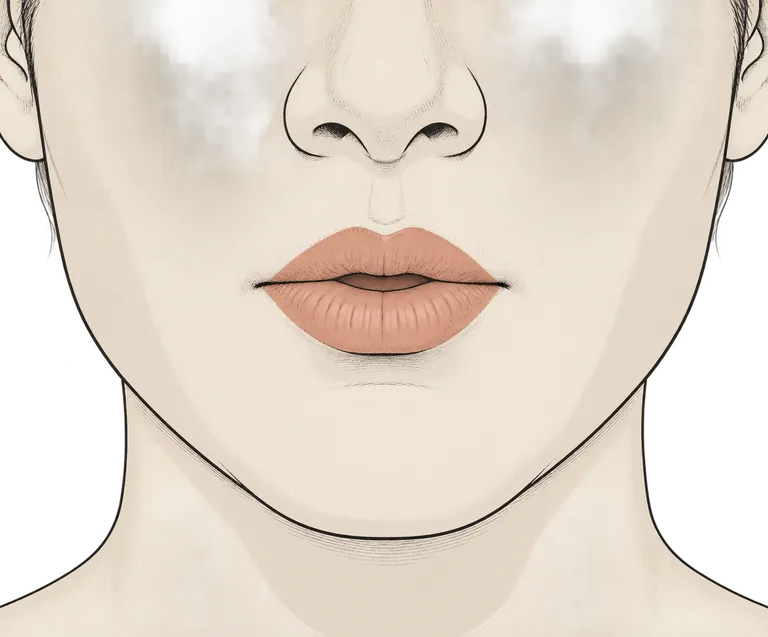
Mouth barely moves, jaw stays relaxed and central, producing a quick, neutral 'uh' on the unstressed syllable.
Relaxed closed-mouth posture appears anatomically plausible.
attempt 0 · 2026-10-02
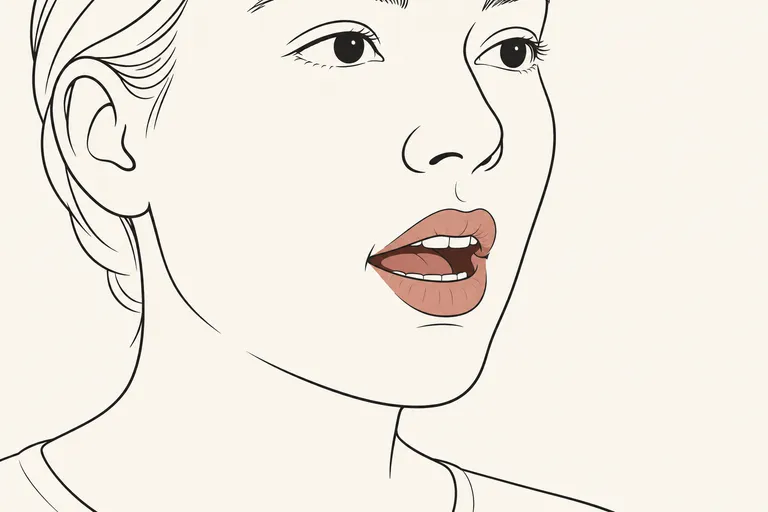
accepted
A plain vowel is followed by a brief separate tongue-tip tap.
Visible tongue, teeth, lips and jaw are anatomically plausible.
attempt 1 · 2026-10-03
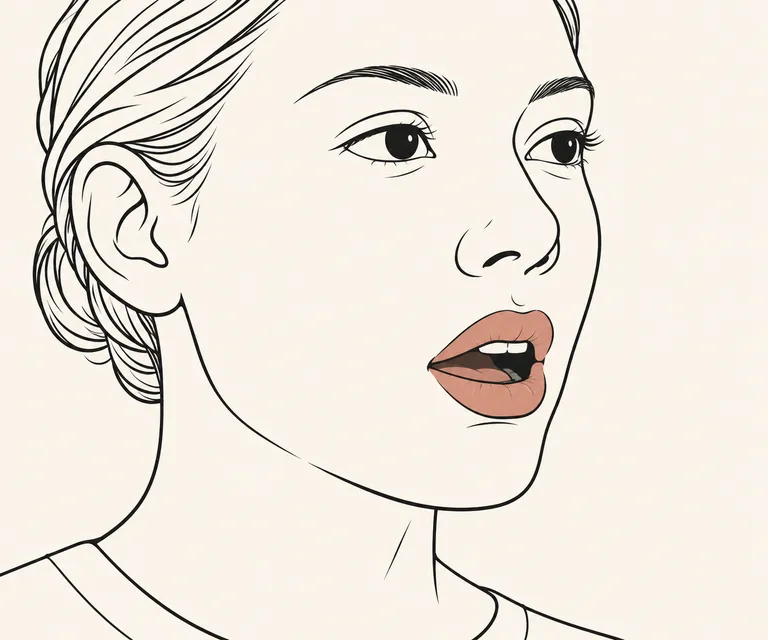
accepted
Tongue rises into the curled or bunched shape at the very start of the vowel and holds it the whole way through.
Tongue remains inside the mouth with a plausible shape; lips and teeth appear normal.
attempt 1 · 2026-10-03
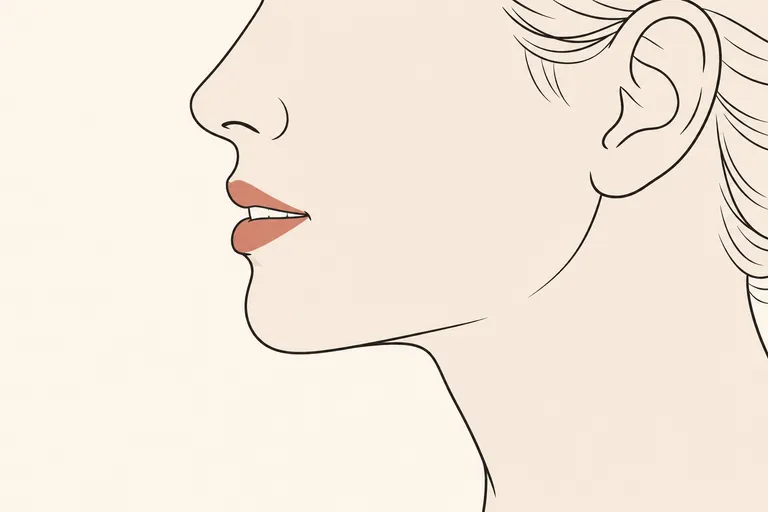
accepted
Tongue high and tense, lips slightly spread, jaw nearly closed.
Slightly parted lips and visible teeth form a plausible profile.
attempt 1 · 2026-10-03
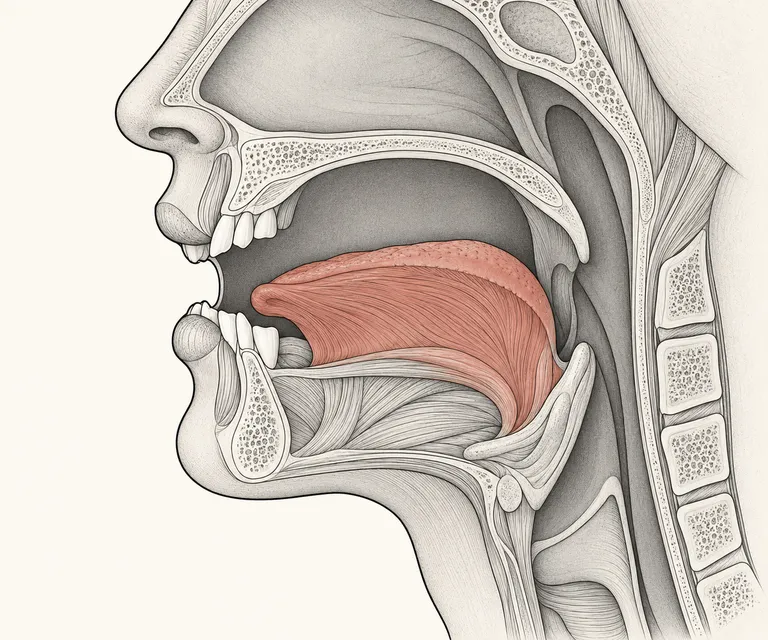
accepted
Tongue drops slightly and relaxes, jaw opens a touch more, muscles loosen.
Sagittal vocal tract and slightly lowered tongue are anatomically plausible.
attempt 0 · 2026-10-02
accepted
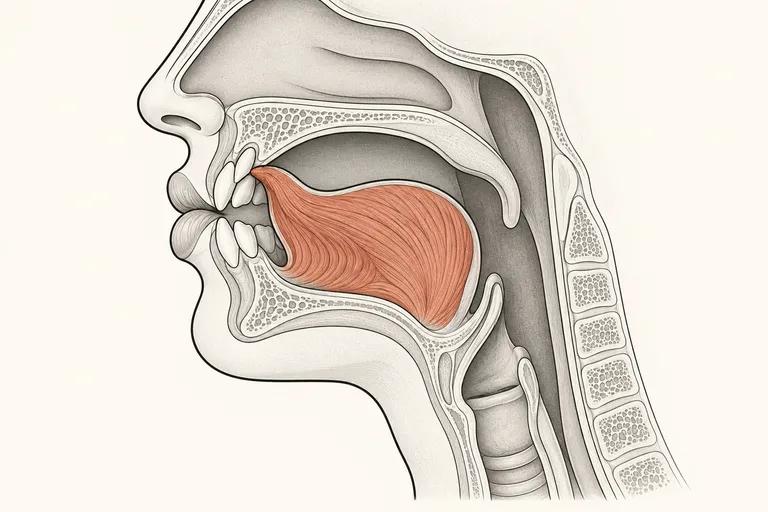
Tongue tip flicks against the ridge, producing a brief contact sound.
Plausible sagittal tongue anatomy with brief ridge contact.
attempt 0 · 2026-10-02
accepted
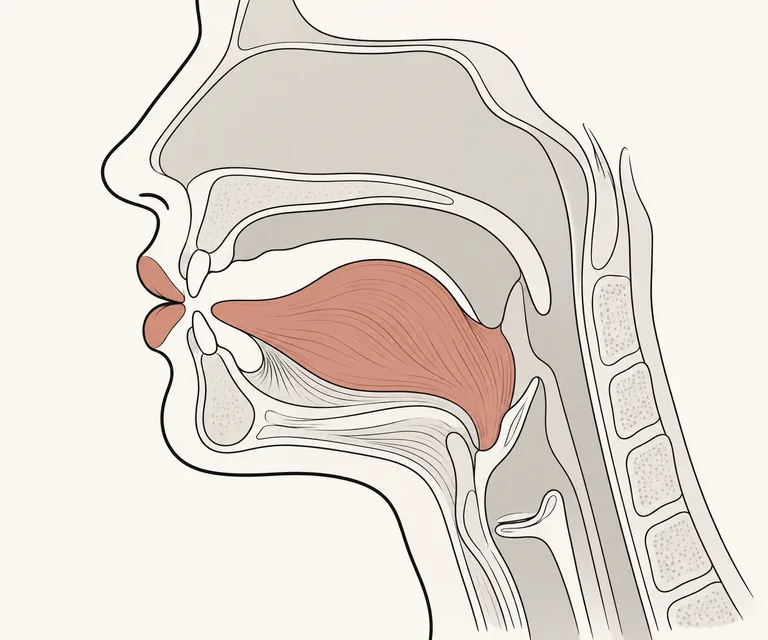
Tongue tip curls back or tongue body bunches with a gap of air all around it, lips slightly rounded.
Single anatomically plausible bunched tongue, with no excessive curling, abnormal elongation, or obvious rendering glitches.
attempt 15 · 2026-10-04
accepted
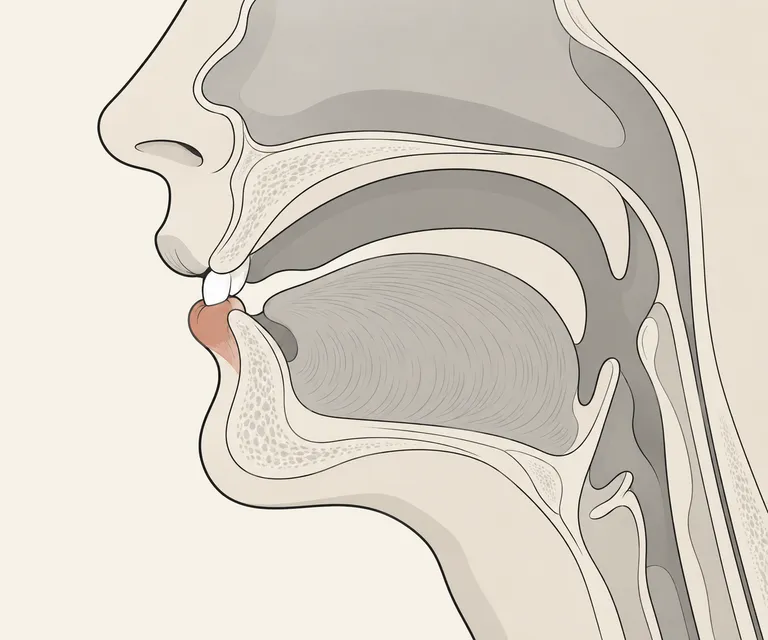
Both lips come together, same as for 'b'.
Stylized but anatomically coherent lips, teeth, jaw, and tongue.
attempt 0 · 2026-10-02
accepted
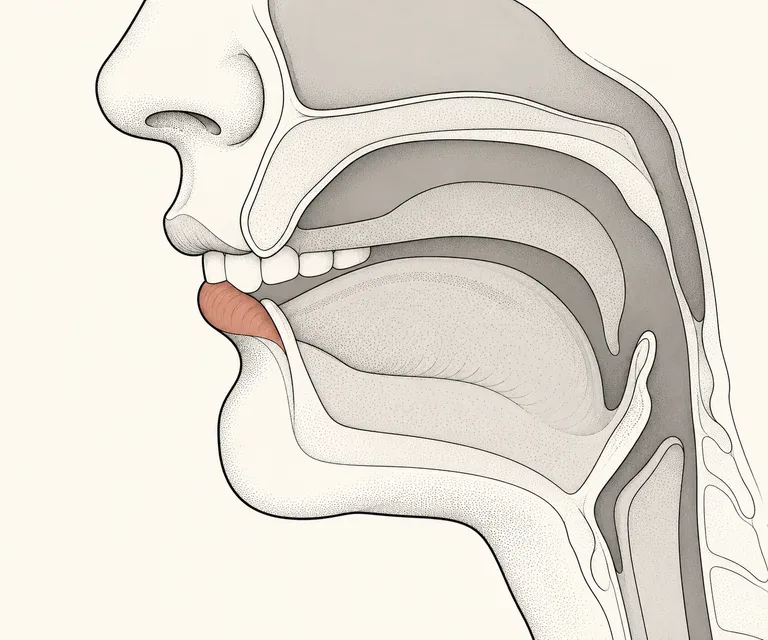
Lower lip lifts and rests lightly against the edge of the upper front teeth; upper lip stays relaxed and open.
Lower lip contacts the upper incisors in a plausible position.
attempt 0 · 2026-10-02
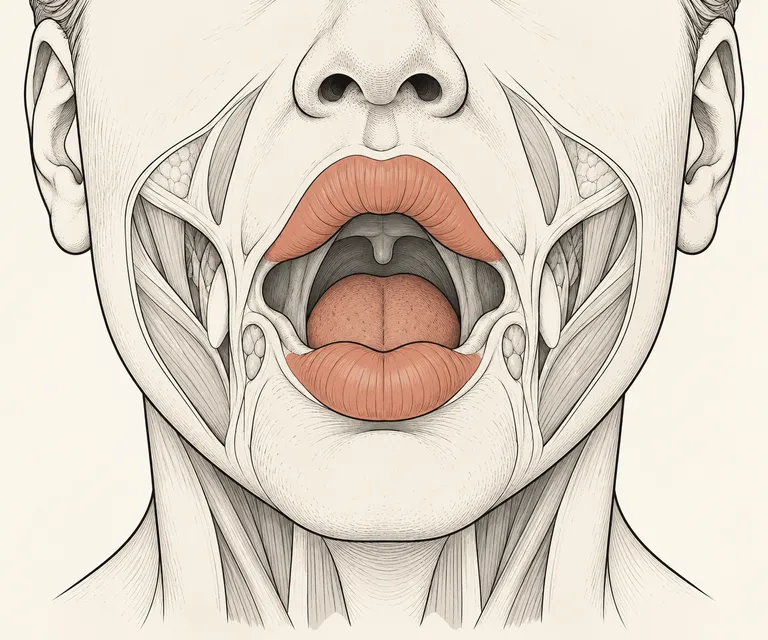
accepted
Lips visibly rounded and pushed slightly forward, tongue pulled back.
Frontal cutaway is stylized but mouth and tongue anatomy remain coherent.
attempt 0 · 2026-10-02
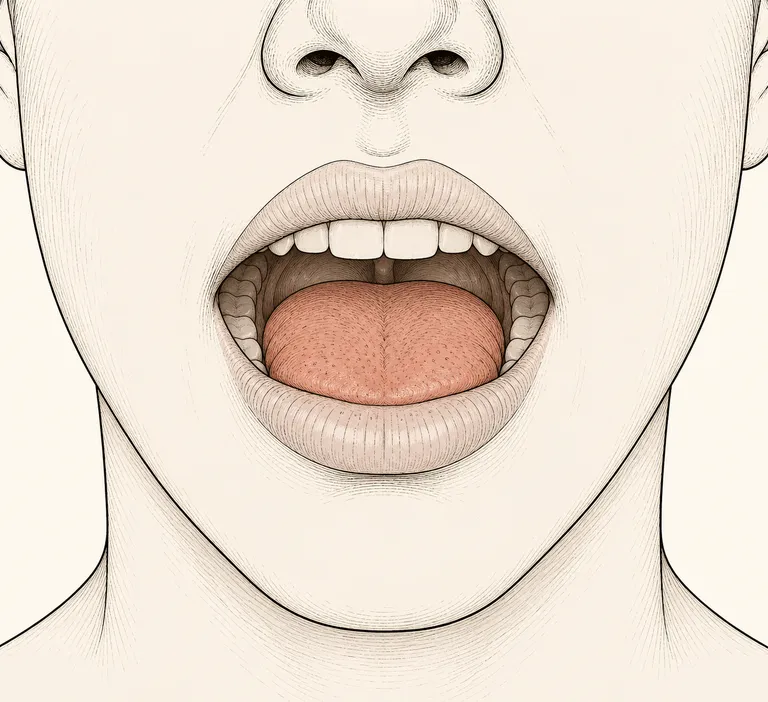
accepted
Lips completely relaxed and unrounded, tongue resting in the center of the mouth.
Relaxed central tongue and open mouth appear anatomically plausible.
attempt 0 · 2026-10-02
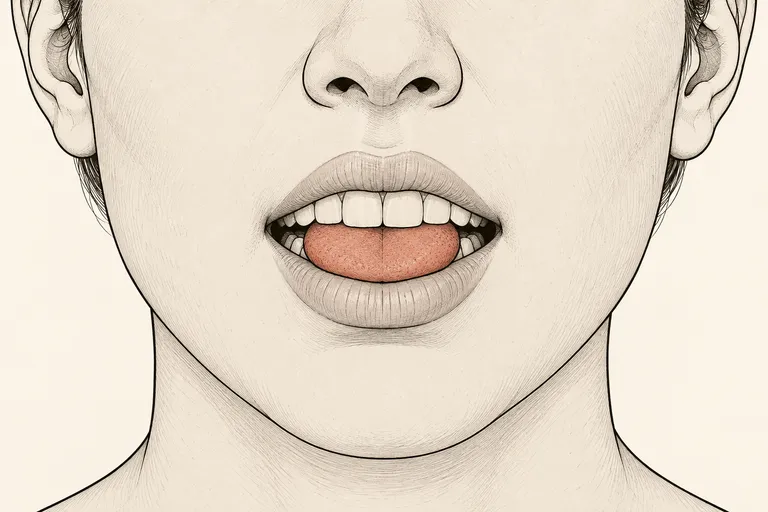
accepted
Tongue tip briefly visible between the teeth.
Tongue tip is briefly visible between the teeth with otherwise plausible anatomy.
attempt 0 · 2026-10-02
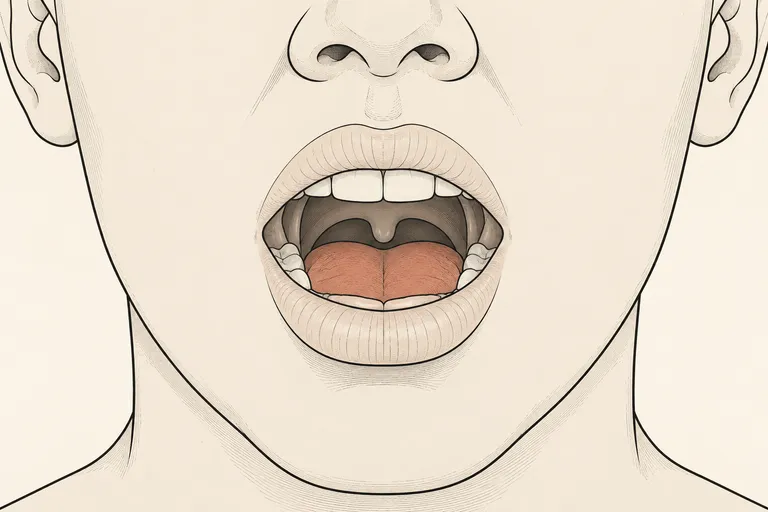
accepted
Tongue tip pulled back, no protrusion visible.
Retracted tongue remains inside the mouth; oral structures appear anatomically coherent.
attempt 0 · 2026-10-02
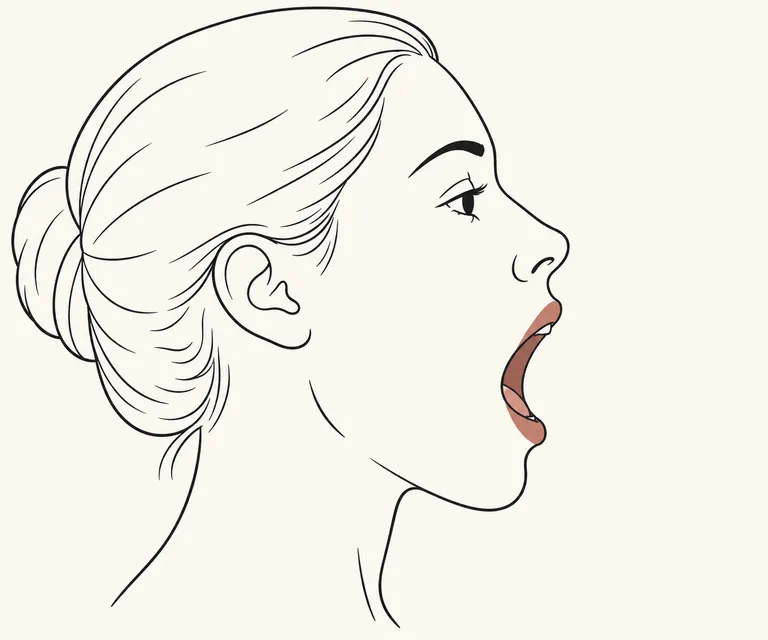
accepted
Begin a wide, relaxed yawn-like jaw drop, feeling the jaw open fully.
Wide jaw opening is plausible for a yawn; no obvious anatomical distortion.
attempt 1 · 2026-10-03
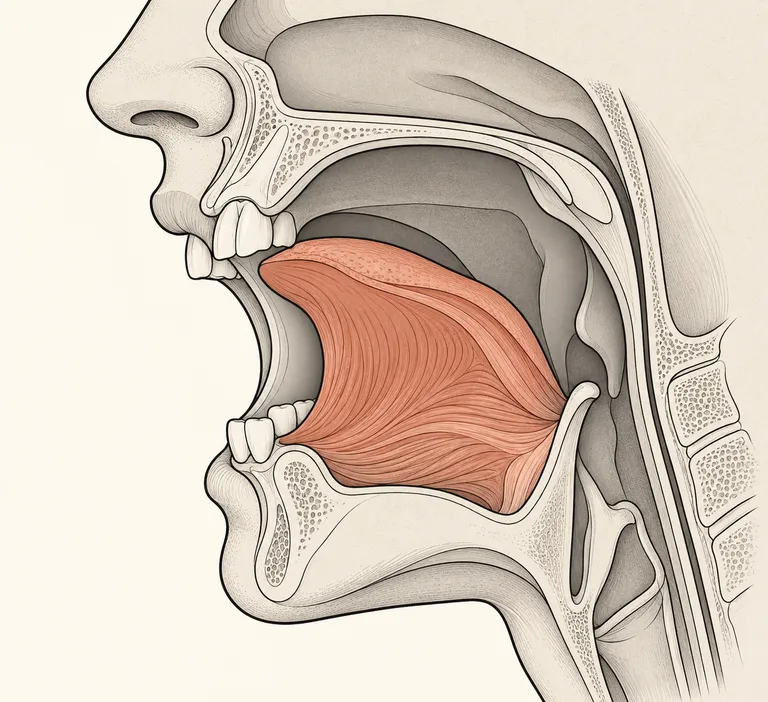
accepted
Keep that same wide jaw opening but bring the tongue forward and slightly up for the vowel in 'cat'.
Wide jaw opening and broad forward-raised tongue remain plausible without curling or distortion.
attempt 0 · 2026-10-02
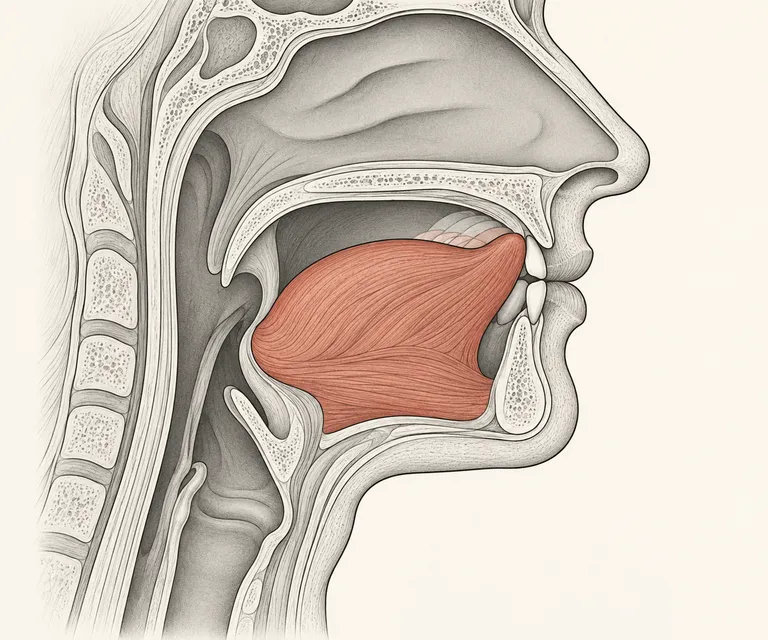
accepted
Tongue tip touching the alveolar ridge, voice buzzing but air fully stopped.
Single anatomically plausible tongue contacting the alveolar region.
attempt 0 · 2026-10-02
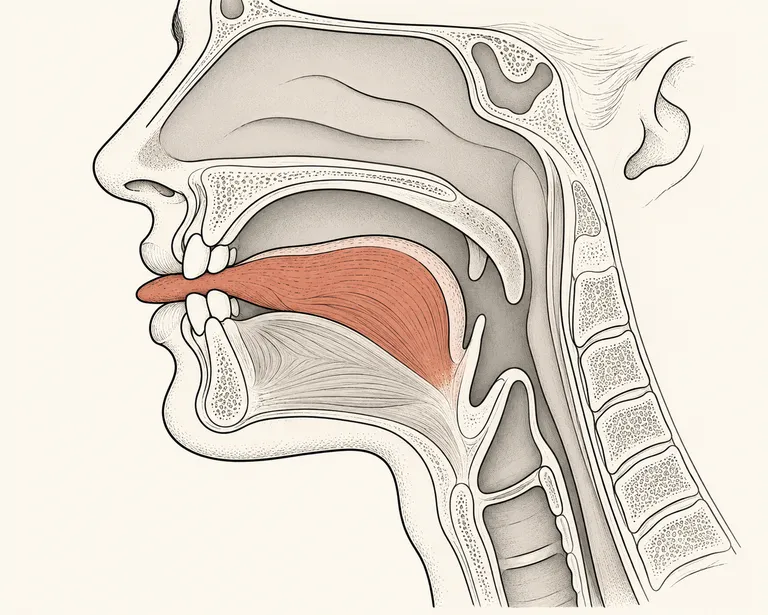
accepted
Tongue tip slid slightly forward between the teeth, voice buzzing continuously with airflow, no stop.
Tongue protrudes only slightly between the teeth as intended.
attempt 0 · 2026-10-02
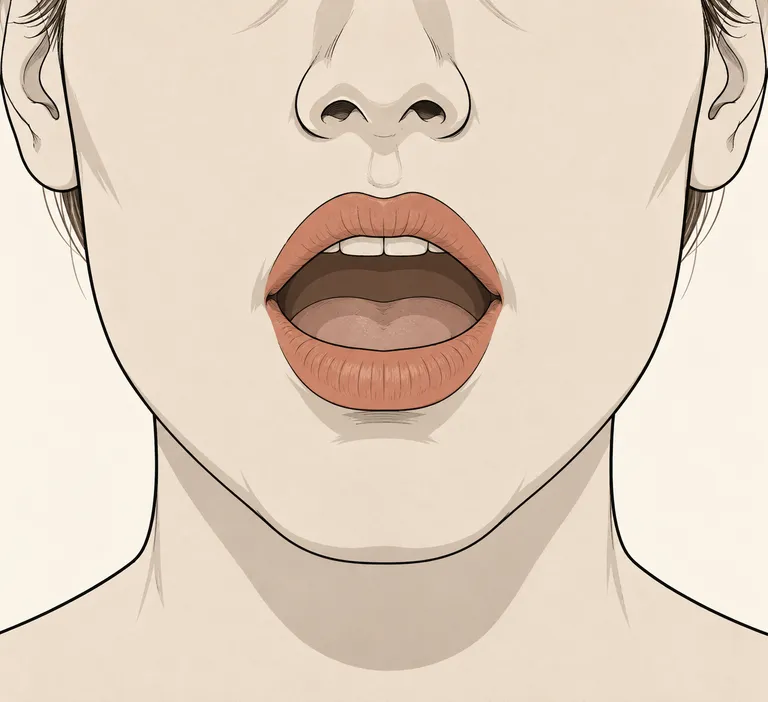
accepted
Lips rounded or spread, jaw dropped for a full vowel like 'ah' or 'oh'.
Open jaw and rounded lips are visually and anatomically plausible.
attempt 0 · 2026-10-02
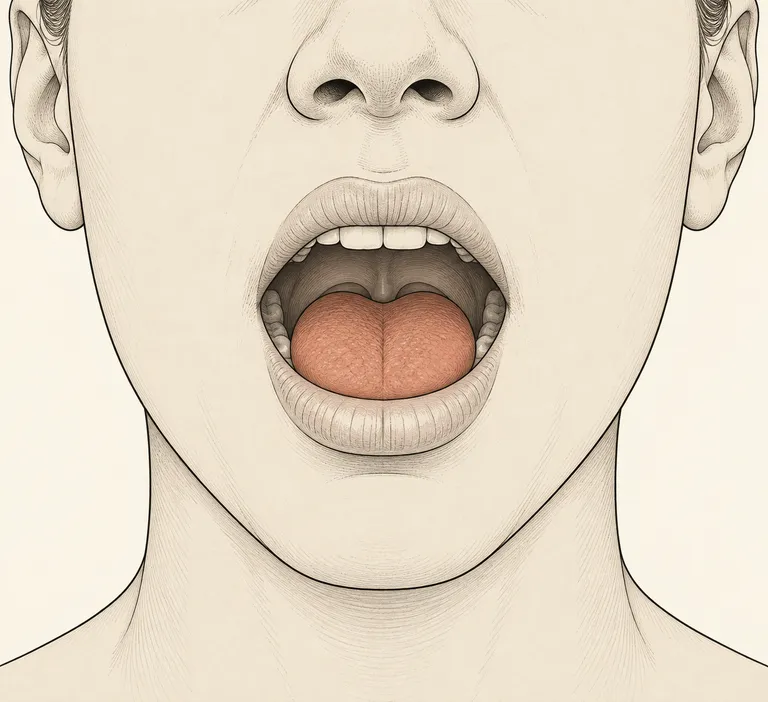
accepted
Jaw loosely hanging, lips neutral, tongue centered, as in a relaxed sigh.
Centered tongue, neutral lips, and relaxed open jaw appear plausible.
attempt 0 · 2026-10-02
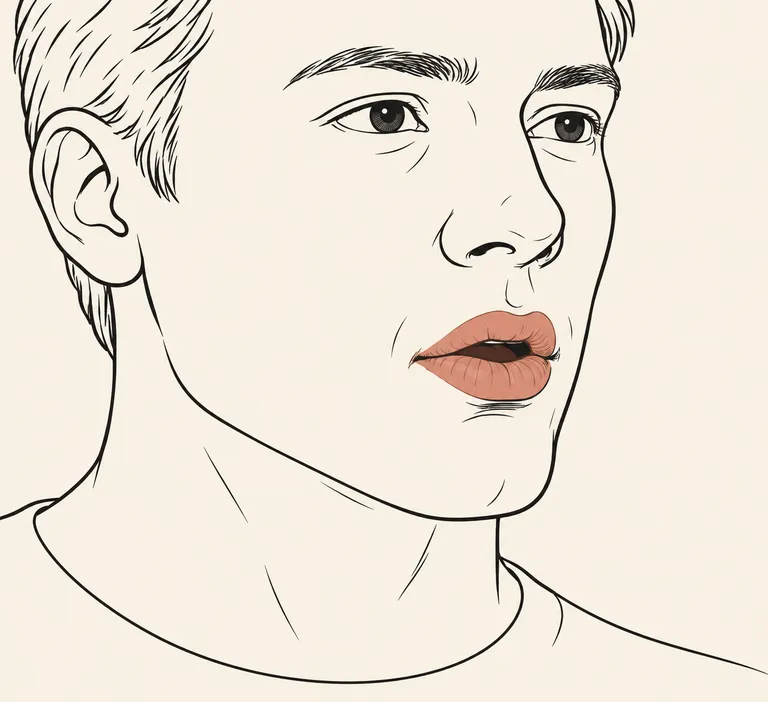
accepted
Tongue body pulled back and bunched, mouth relaxed, as in a low growl.
Relaxed mouth and facial structures appear plausible, without visible tongue abnormalities.
attempt 1 · 2026-10-03
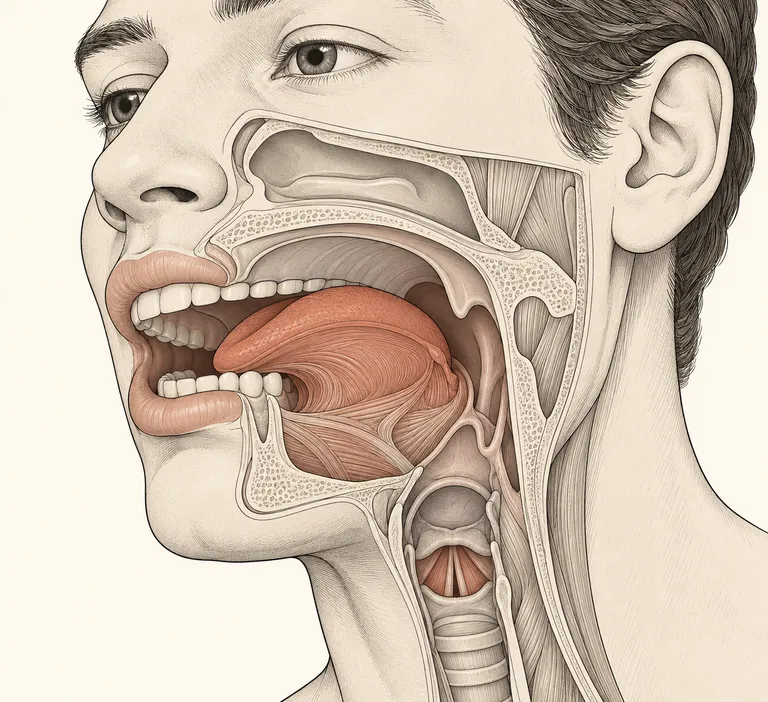
accepted
Same held posture, now voiced and stretched into a long 'errrr' sound with no consonant closure.
Single bunched tongue and cutaway vocal tract remain anatomically plausible.
attempt 0 · 2026-10-02
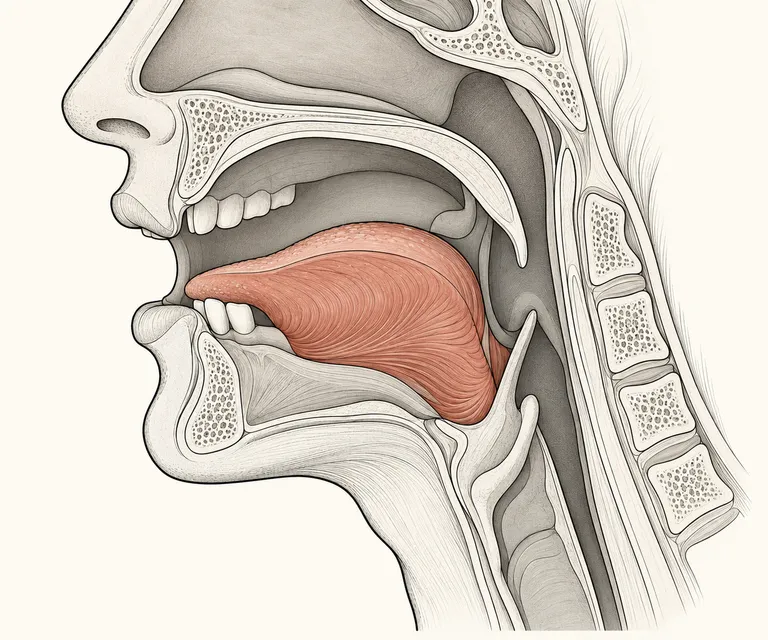
accepted
Begin a small, relaxed yawn-like jaw drop, feeling the jaw and tongue root go loose.
Relaxed tongue and modest jaw opening appear anatomically sane.
attempt 0 · 2026-10-02
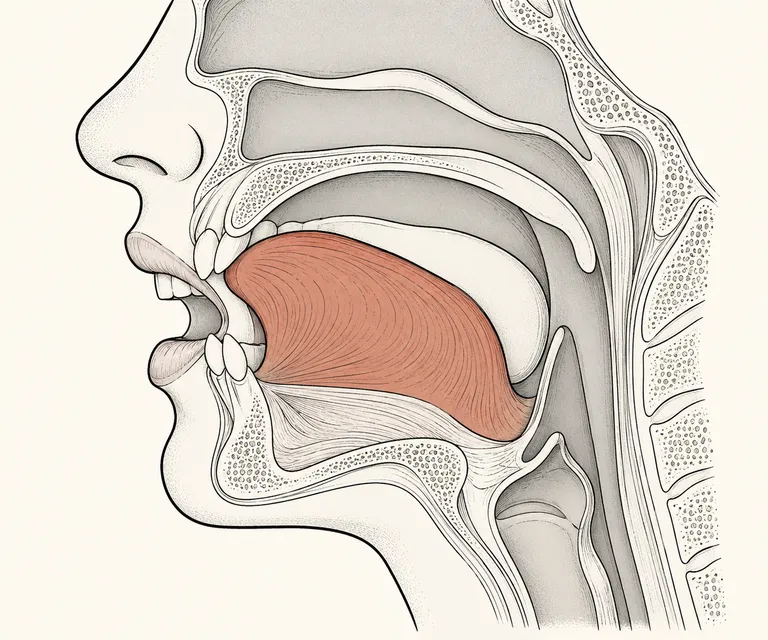
accepted
Keep that same loose jaw feeling but bring the tongue forward and slightly up for the vowel in 'bit'.
Single forward tongue has a plausible sagittal shape and placement.
attempt 0 · 2026-10-02
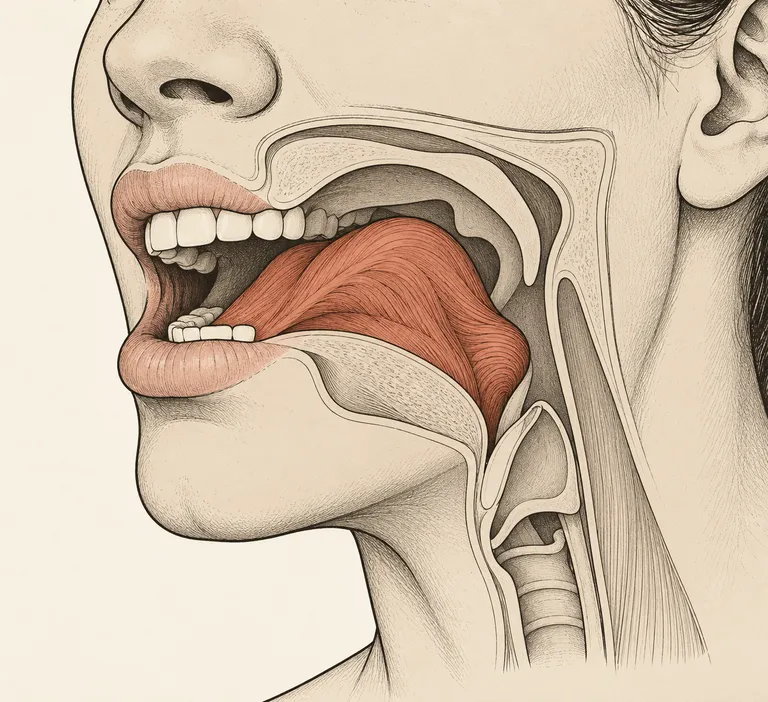
accepted
Mouth slightly open, tongue body pulled back and bunched upward, as in a playful animal growl.
Tongue is strongly bunched and elevated but does not twist, split, or loop.
attempt 0 · 2026-10-02
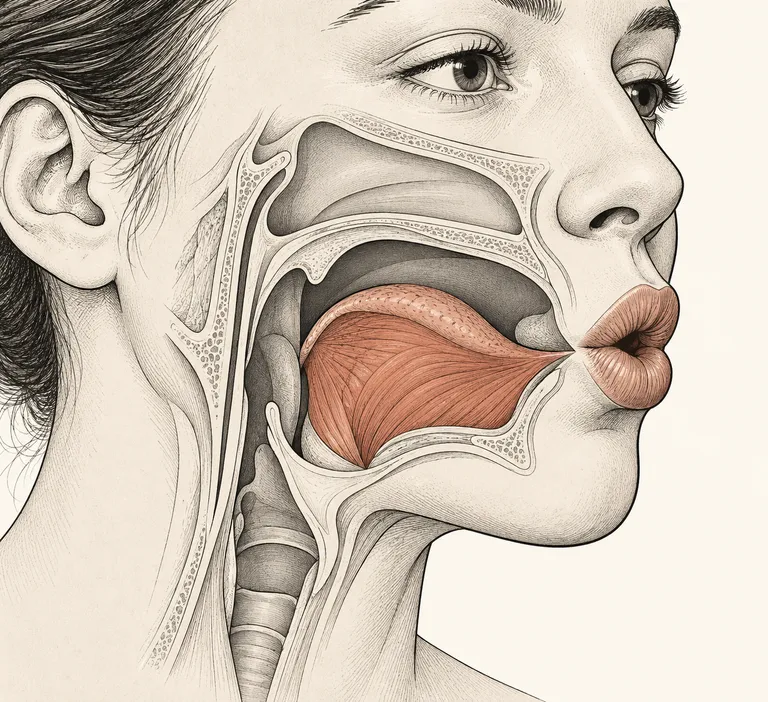
accepted
Same tongue posture held while lips round slightly and voice shifts into the vowel 'er'.
Rounded lips and elevated tongue are exaggerated slightly but remain anatomically plausible.
attempt 0 · 2026-10-02
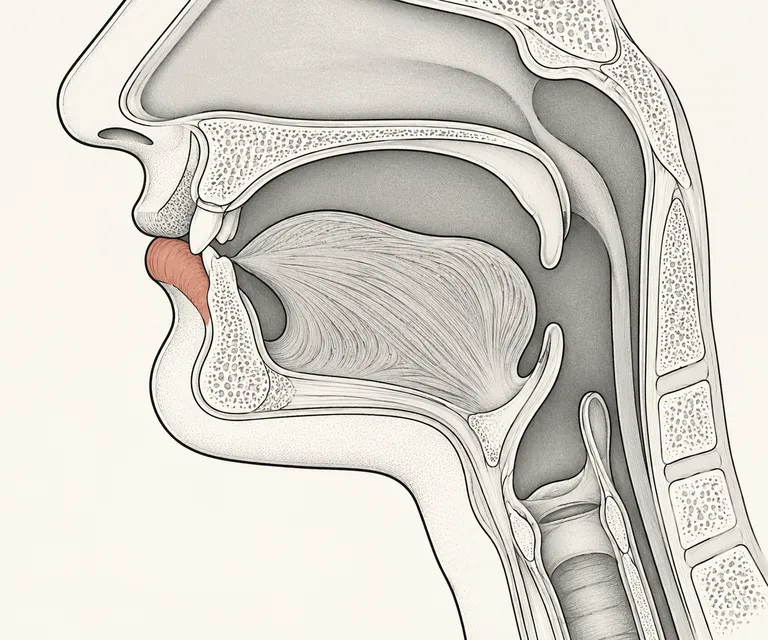
accepted
Lower lip against upper teeth, voiceless airflow, as in Spanish 'fácil'.
Lower lip approaches the upper incisors, with a plausible tongue and vocal tract.
attempt 0 · 2026-10-02
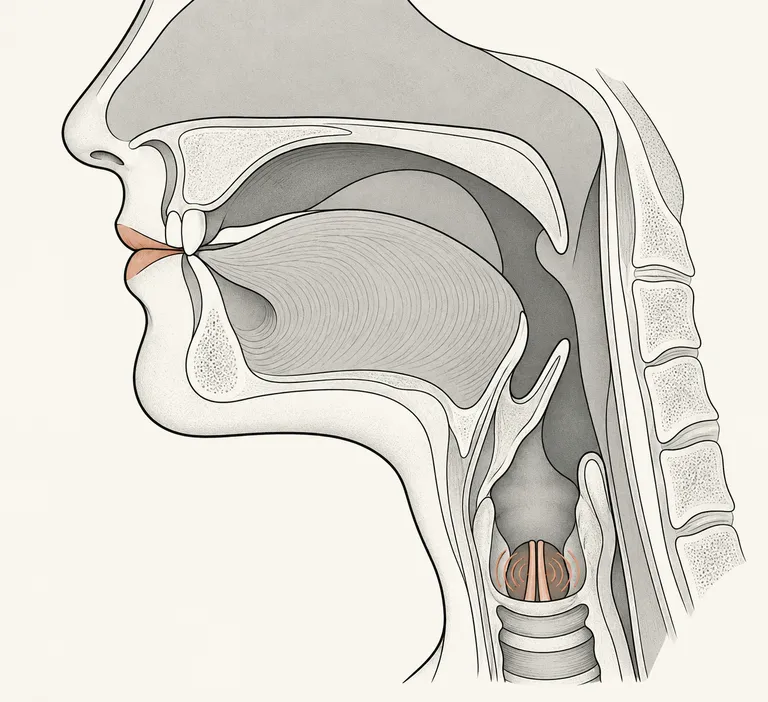
accepted
Identical lip-teeth position, but the vocal folds now vibrate, adding a buzz.
Lip-teeth contact and highlighted vibrating vocal folds are visually and anatomically coherent.
attempt 0 · 2026-10-02
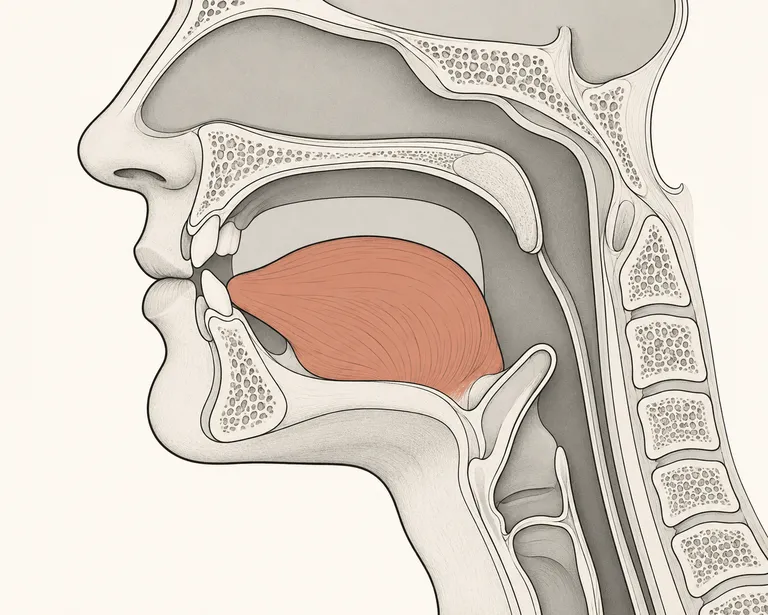
accepted
Mid-low tongue height, slightly fronted, lips neutral — as in Hungarian 'e'.
Tongue and surrounding vocal tract appear anatomically plausible.
attempt 0 · 2026-10-02
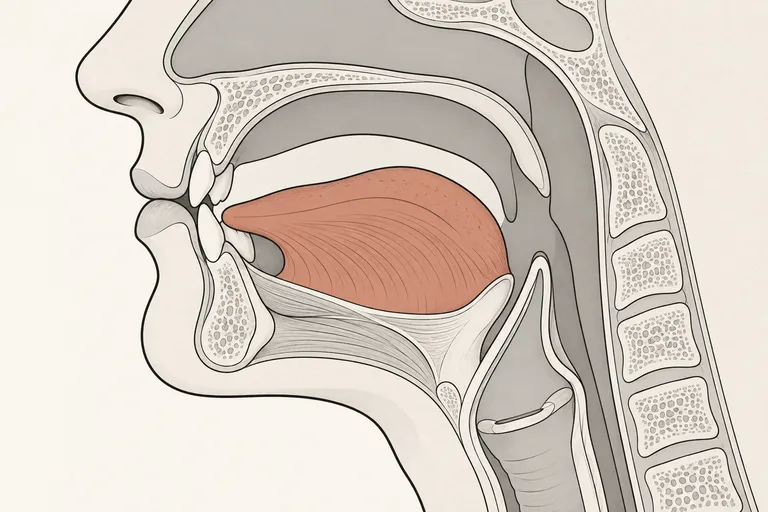
accepted
Same mid-low tongue height, but tongue eases back very slightly toward the center of the mouth, lips staying neutral and relaxed.
Tongue has a natural central position without distortion.
attempt 0 · 2026-10-02
accepted
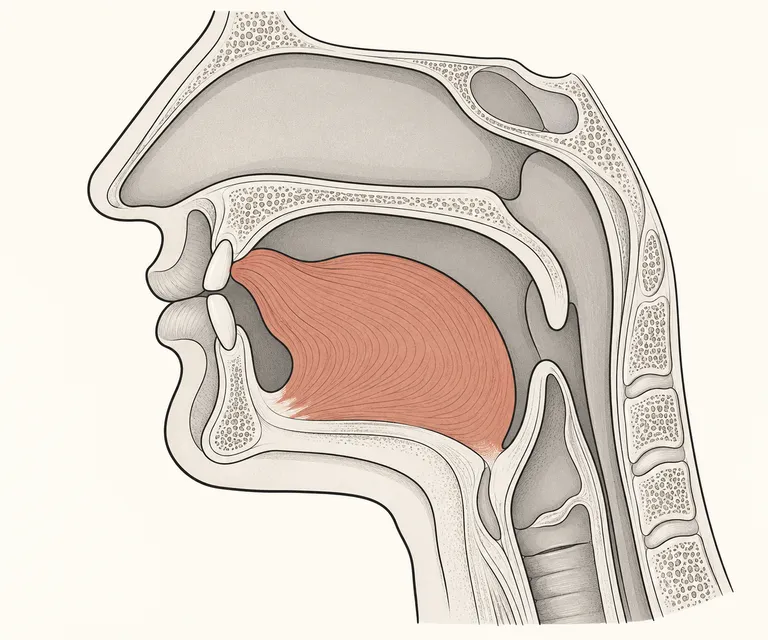
Tongue tip touching the alveolar ridge just behind the upper teeth, air stopped completely.
Tongue tip placement and overall anatomy are plausible.
attempt 0 · 2026-10-02
accepted
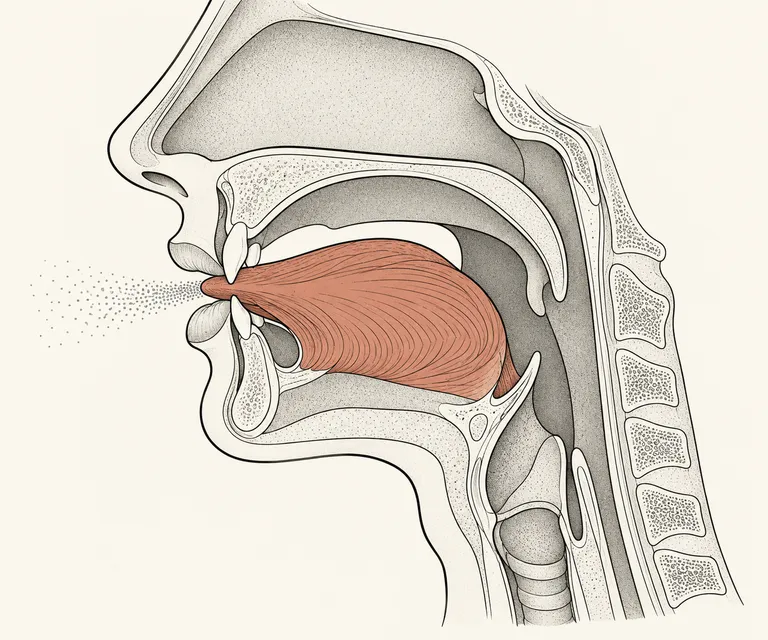
Tongue tip slid slightly forward, poking between the teeth, air flowing continuously as a hiss.
Slight interdental protrusion appropriately matches the intended articulation.
attempt 0 · 2026-10-02
accepted
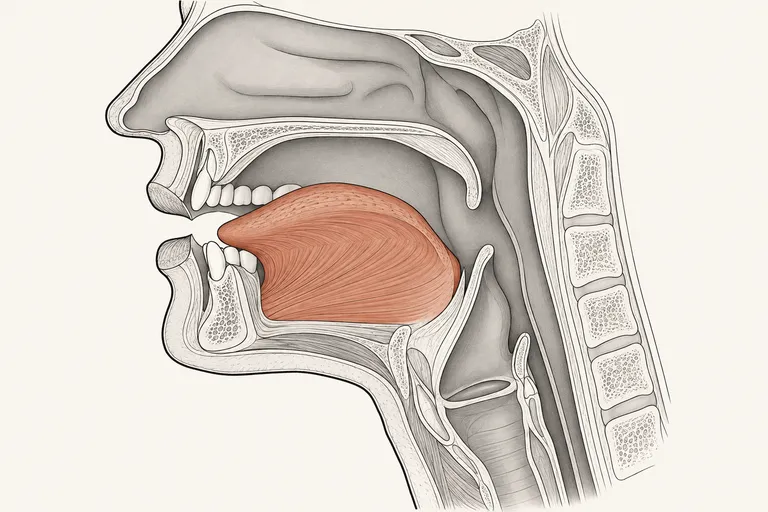
Jaw at its usual moderately-open position, as in 'bed'.
Moderate jaw opening and relaxed tongue position appear anatomically plausible.
attempt 0 · 2026-10-02
accepted
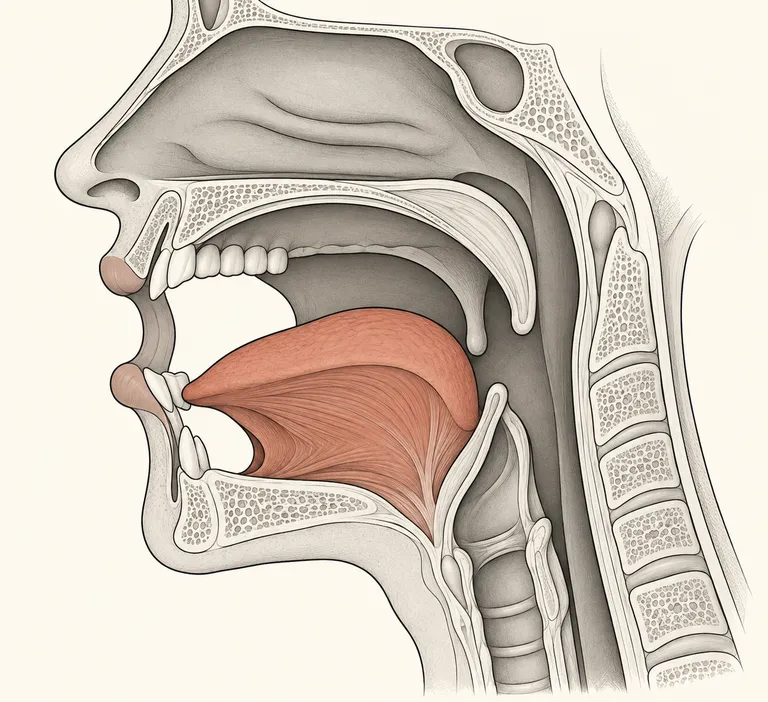
Slowly widen the jaw opening well past the ɛ position, in slow motion.
Wide jaw opening and lowered tongue remain within plausible anatomy.
attempt 0 · 2026-10-02
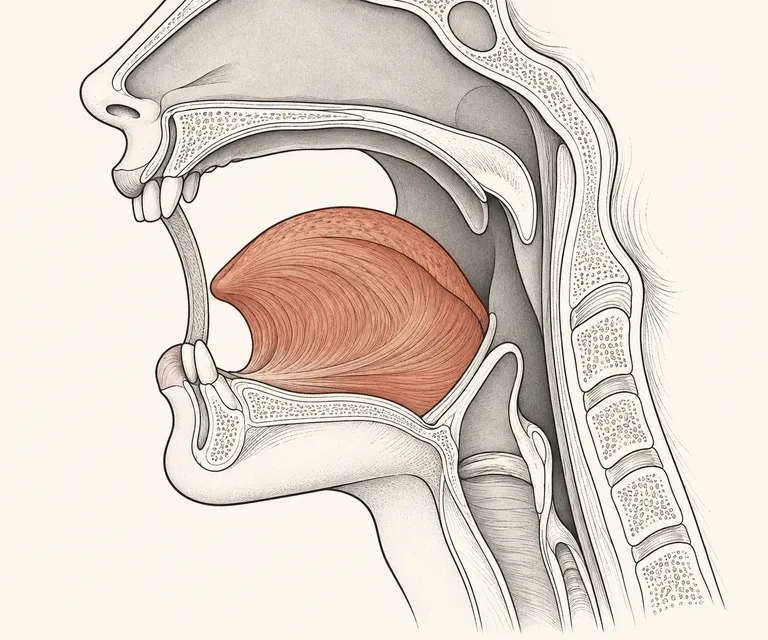
accepted
Settle into the wide-open target and hold for a full second before releasing into the word.
Open jaw and broad tongue posture are realistic for the target vowel.
attempt 0 · 2026-10-02
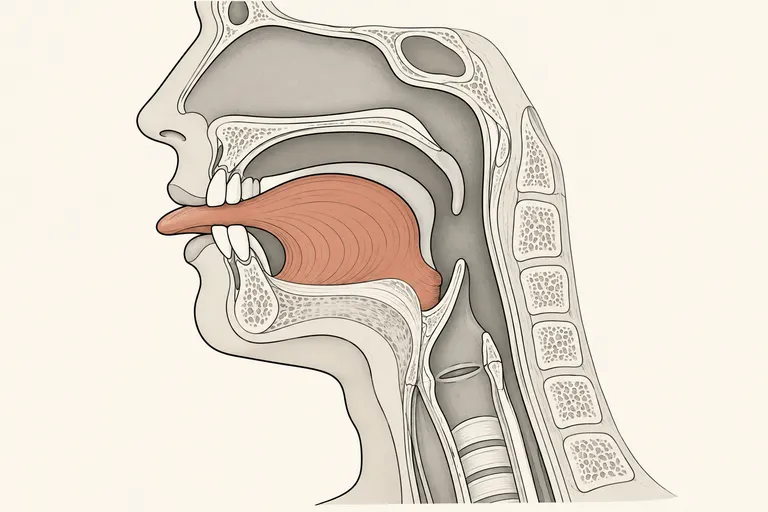
accepted
Tongue tip protrudes between the teeth, no voicing yet.
Tongue tip protrudes modestly between the teeth without twisting or excessive extension.
attempt 0 · 2026-10-02
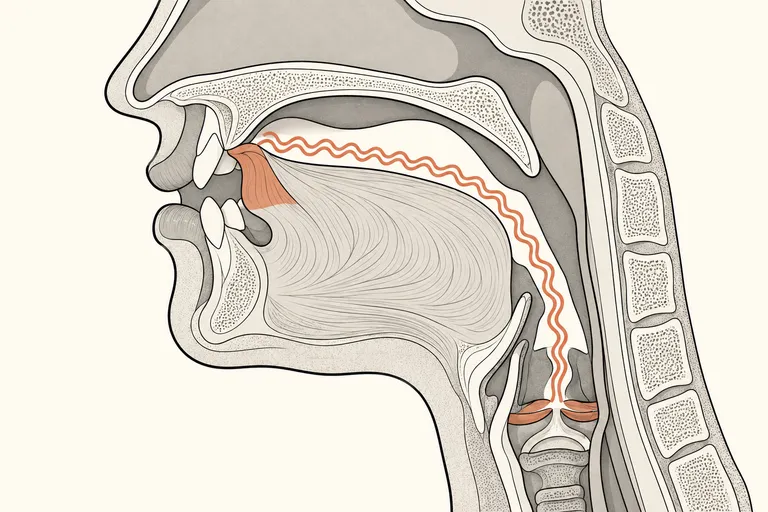
accepted
Voice turns on, a steady buzz flows over the tongue tip.
Interdental tongue placement and schematic airflow or voicing path are visually coherent.
attempt 0 · 2026-10-02
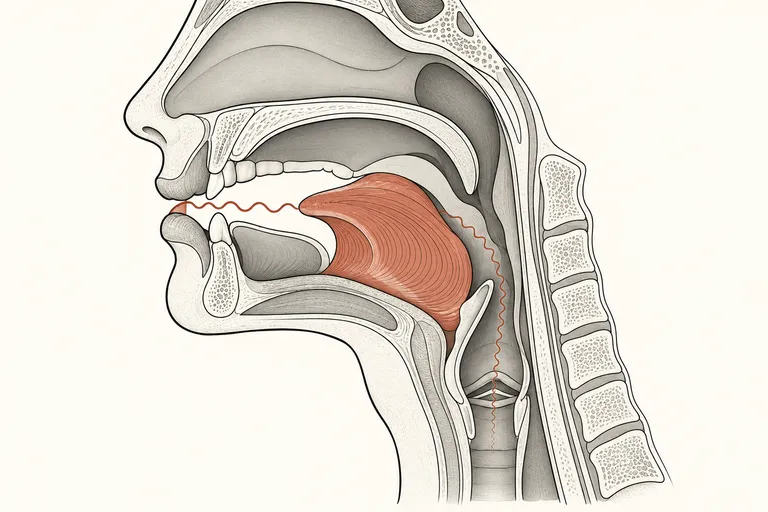
accepted
Tongue retracts as the buzz fades out.
Retracted tongue has a plausible curved posture without splitting, looping, or distortion.
attempt 0 · 2026-10-02
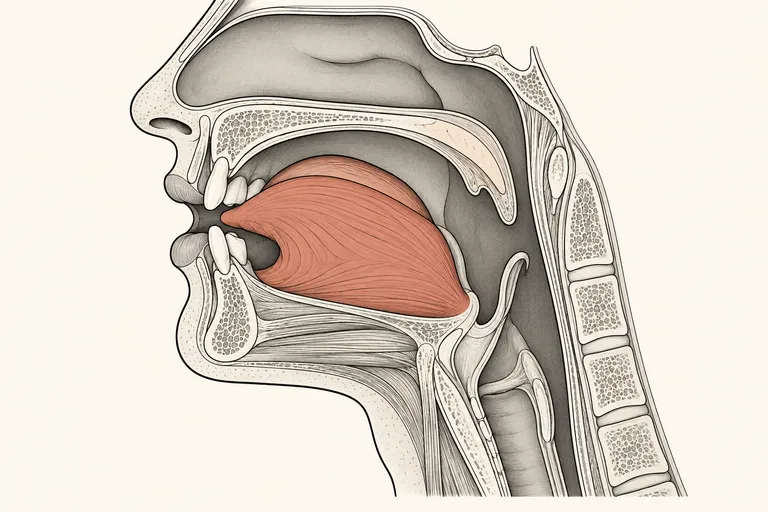
accepted
Articulate the stressed syllable's full vowel with normal jaw and tongue movement, e.g., the first vowel in 'photograph'.
Large but anatomically coherent tongue with plausible oral structures.
attempt 0 · 2026-10-02
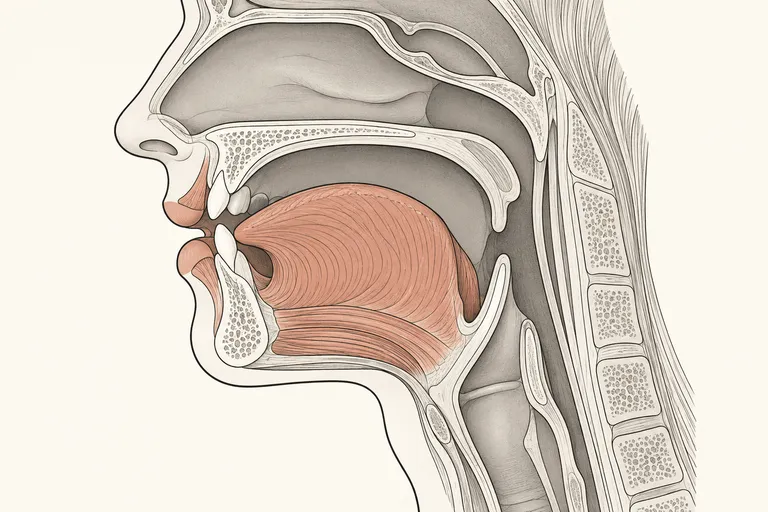
accepted
Slowly let the jaw and tongue return toward a neutral, mid-central resting position, in slow motion.
Tongue and jaw remain anatomically plausible during movement toward neutral.
attempt 0 · 2026-10-02
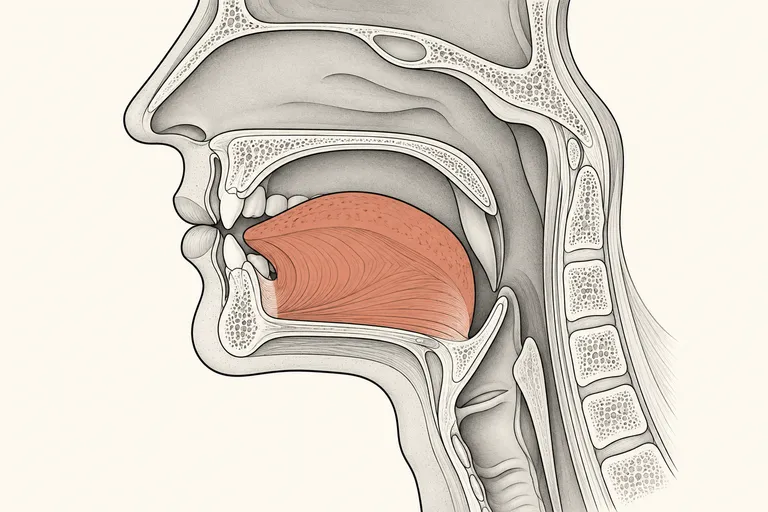
accepted
Settle into the minimal, relaxed schwa position and hold it briefly before finishing the word.
Relaxed tongue position and surrounding anatomy appear coherent.
attempt 0 · 2026-10-02
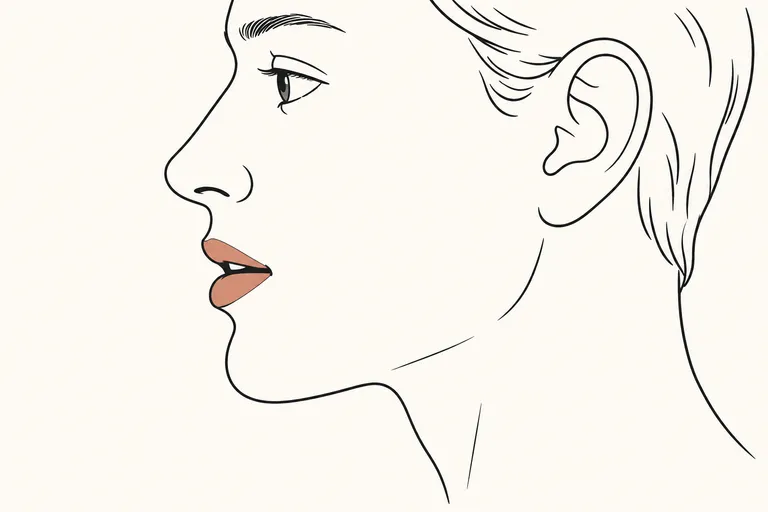
accepted
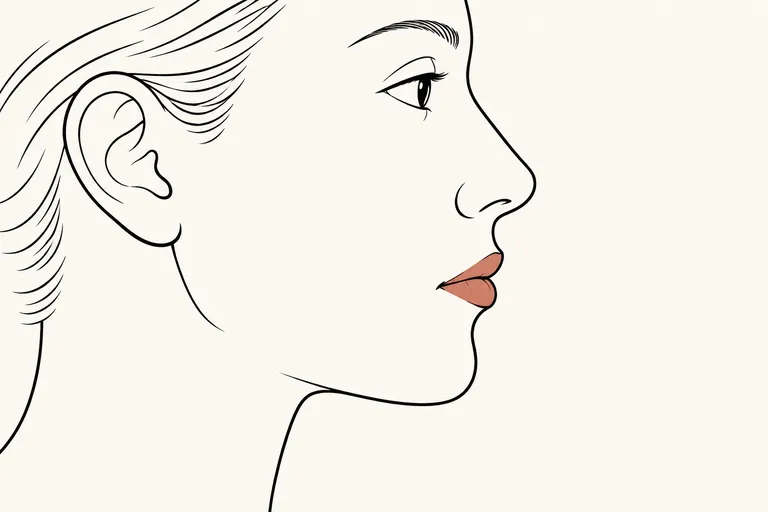
Tongue begins already slightly curled or bunched as the voice starts.
Normal facial profile with parted lips; no visible tongue abnormalities.
attempt 1 · 2026-10-03
accepted
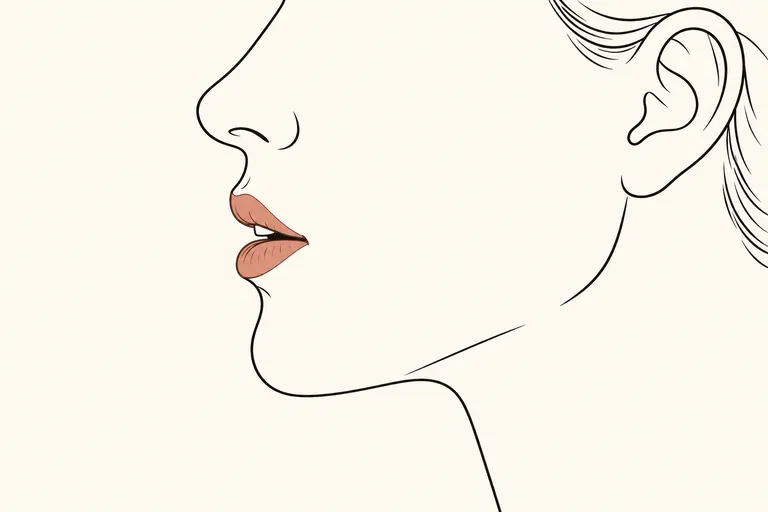
Tongue holds the exact same curled shape steadily through the middle of the vowel.
Facial profile and closed lips are anatomically plausible; tongue is hidden.
attempt 1 · 2026-10-03
accepted
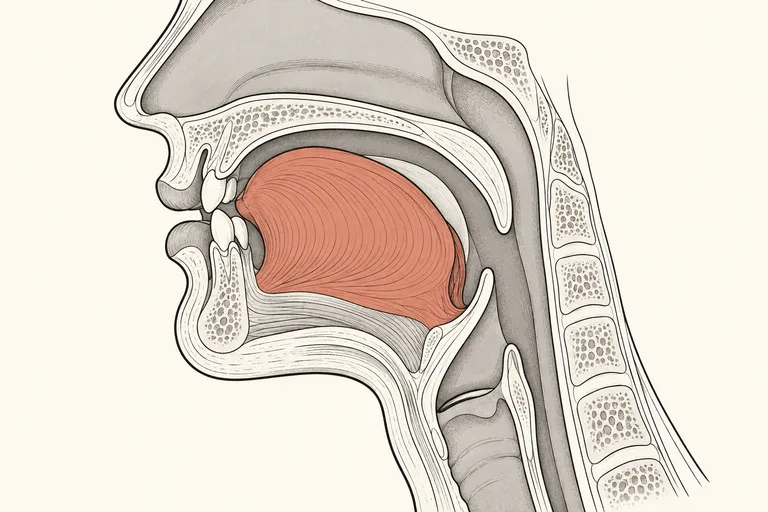
The curl relaxes only at the very end, as the sound finishes.
Plausible lips, teeth, and jaw placement; tongue is not visible.
attempt 1 · 2026-10-03
accepted
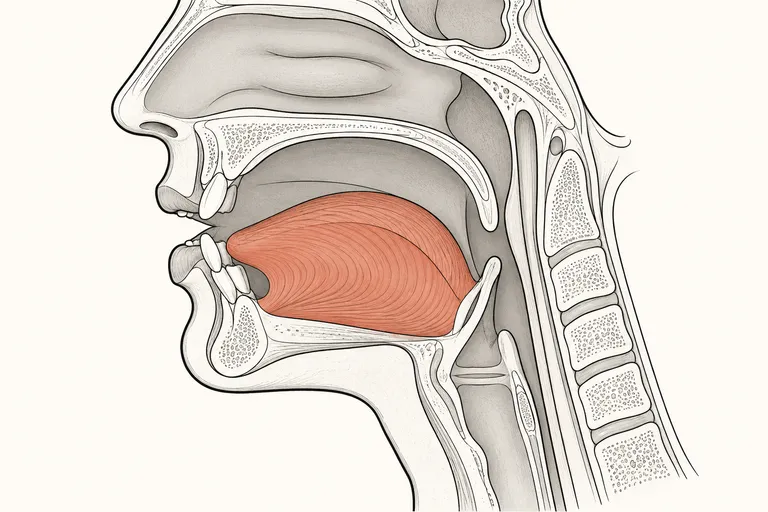
Tongue high, tense, near the roof of the mouth, as if starting to say 'ee'.
High tongue body is exaggerated but anatomically coherent.
attempt 0 · 2026-10-02
accepted
Slowly let the tongue body sink and the muscles go slack, jaw easing open.
Lowered tongue and eased jaw appear anatomically plausible.
attempt 0 · 2026-10-02
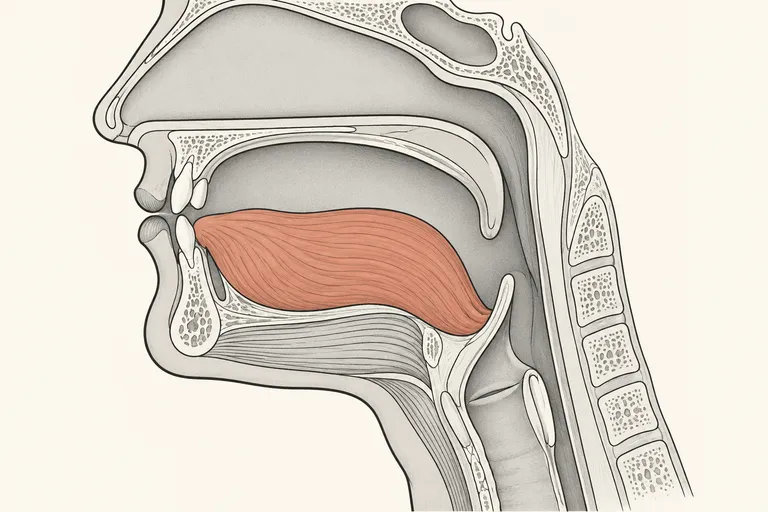
accepted
Settle into the relaxed, slightly lower target position and hold it for a full second.
Plausible sagittal anatomy with a relaxed, slightly lowered tongue position.
attempt 0 · 2026-10-02
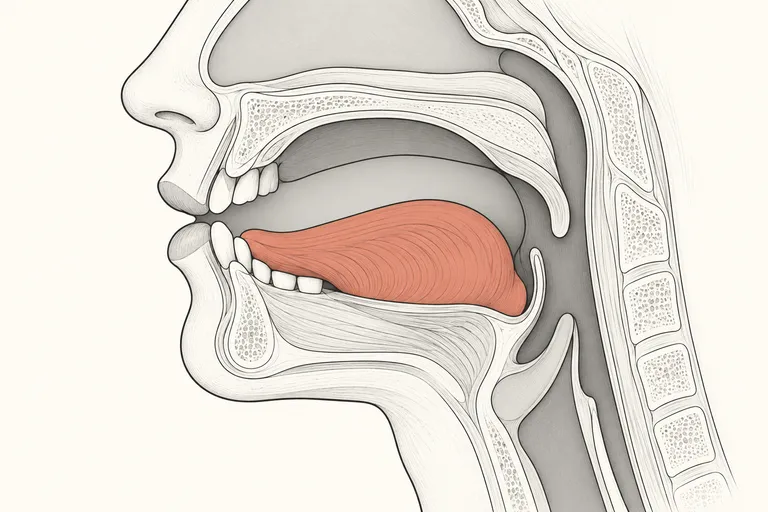
accepted
Tongue lies flat and relaxed, tip near the lower teeth.
Tongue lies flat with plausible proportions and positioning.
attempt 0 · 2026-10-02
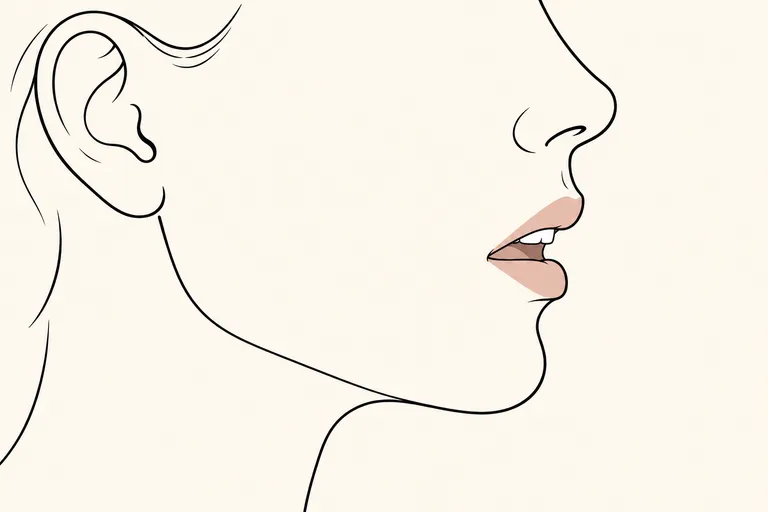
accepted
Tongue tip rises and curls back, or the mid-tongue bunches, moving slowly toward the target.
Parted lips, visible teeth and contained tongue appear anatomically plausible.
attempt 1 · 2026-10-03
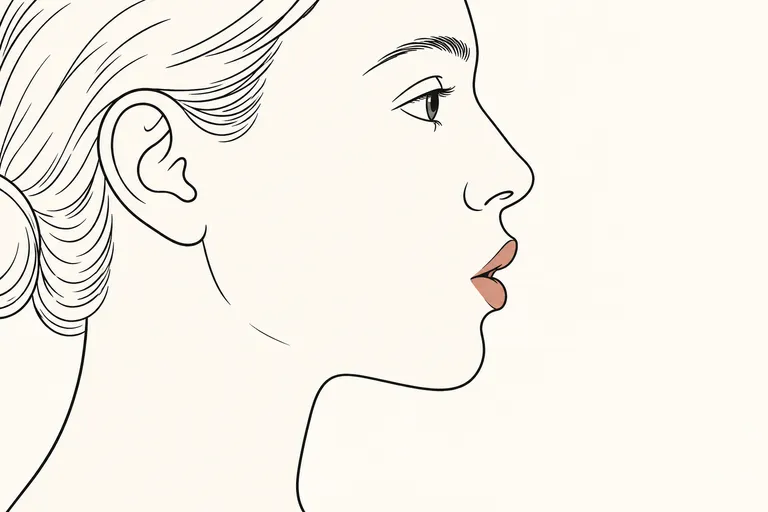
accepted
Tongue holds the curled/bunched shape steadily in the air, with visible space above it and lips slightly rounded.
Plausible profile and slightly rounded lips; tongue is not visible.
attempt 1 · 2026-10-03
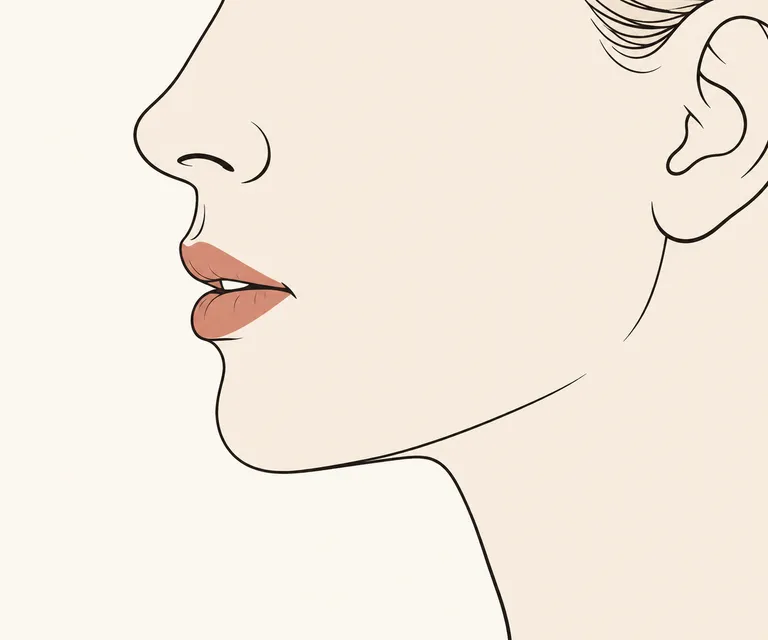
accepted
Lips relaxed and slightly parted, as in a neutral position.
Slightly parted lips and visible teeth appear anatomically plausible.
attempt 1 · 2026-10-03
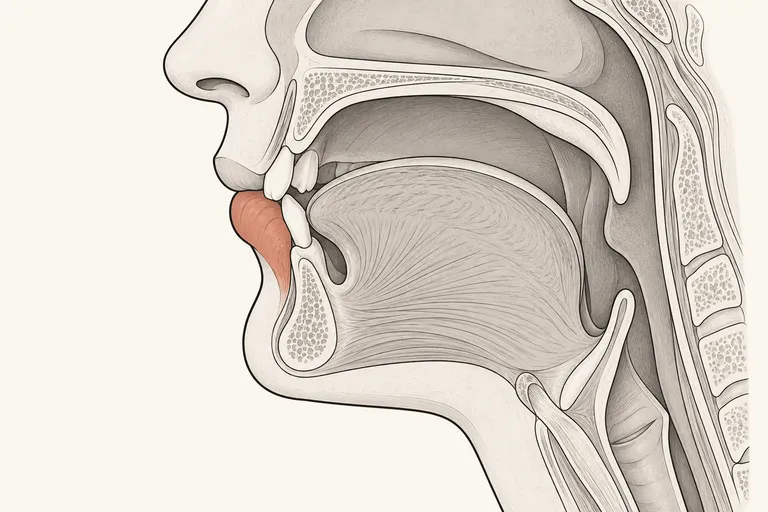
accepted
Lower lip rises slowly until it just grazes the bottom edge of the upper front teeth.
Lower lip correctly approaches the upper incisors; oral anatomy remains plausible.
attempt 0 · 2026-10-02
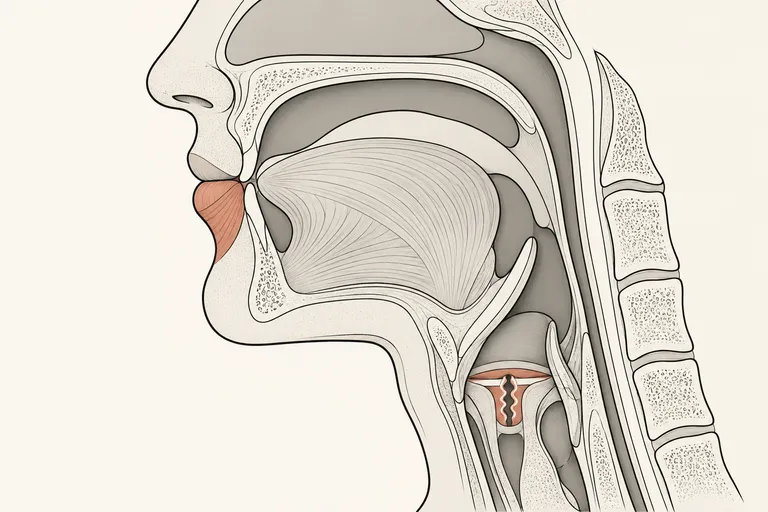
accepted
With contact held, the vocal folds start vibrating, producing a steady buzz before the lips separate into the vowel.
Lip-to-teeth contact and vocal-fold indication are anatomically coherent.
attempt 0 · 2026-10-02
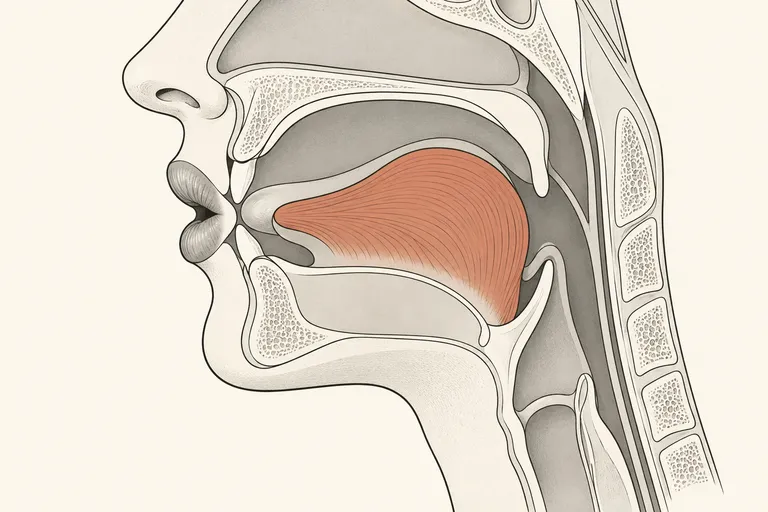
accepted
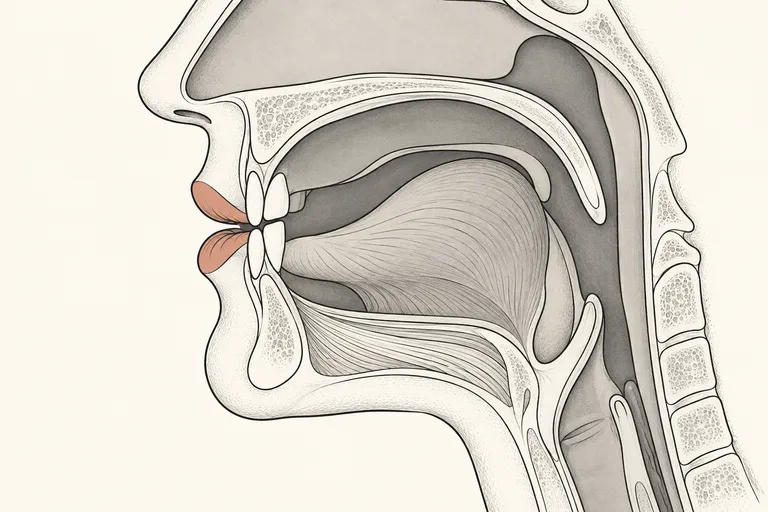
Begin from the rounded, backed Hungarian /ɒ/ shape.
Backed tongue and rounded lips are anatomically plausible.
attempt 0 · 2026-10-02
accepted
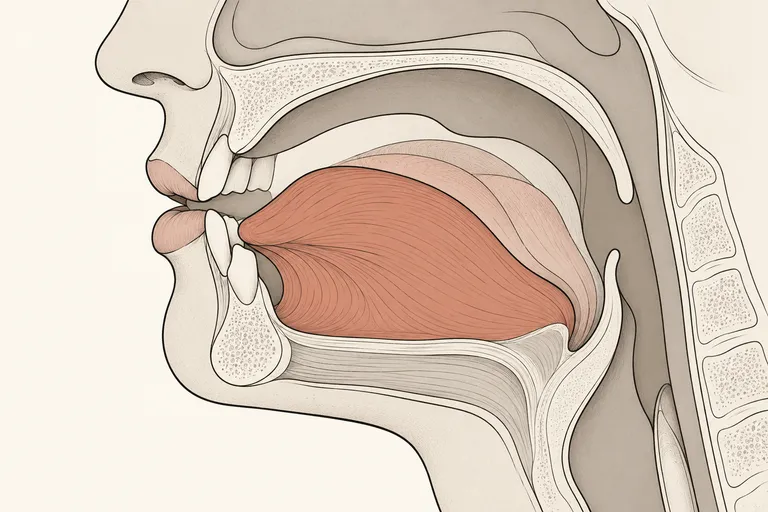
Slowly relax and flatten the lips, keeping the tongue in place.
Tongue remains normally shaped while the lips flatten plausibly.
attempt 0 · 2026-10-02
accepted
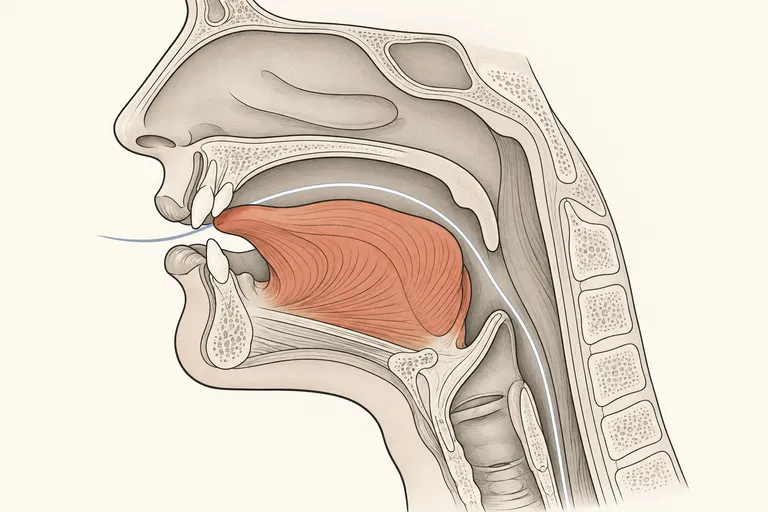
Gently slide the tongue forward from the back of the mouth toward the center, arriving at the relaxed target vowel.
Plausible central tongue position; translucent overlay reasonably indicates movement.
attempt 0 · 2026-10-02
accepted
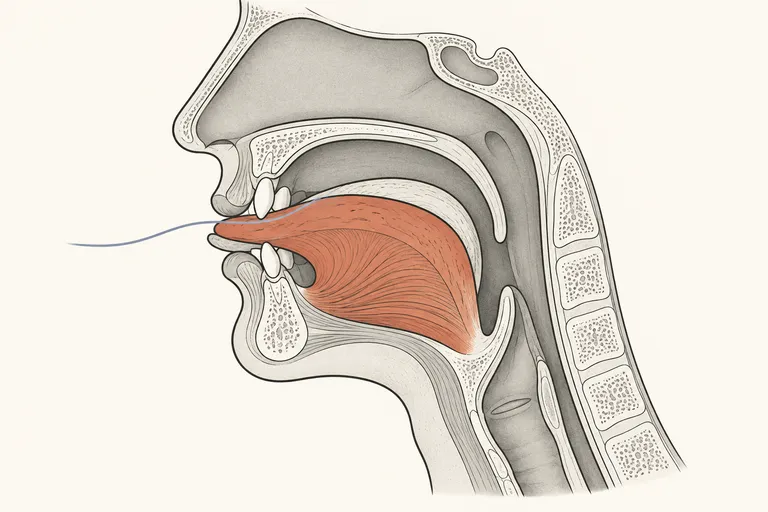
Jaw relaxed, mouth slightly open.
Relaxed jaw and near-dental tongue placement are anatomically coherent.
attempt 0 · 2026-10-02
accepted
Tongue tip slides forward and pokes out between the teeth.
Tongue tip protrudes modestly between the teeth as intended.
attempt 0 · 2026-10-02
accepted
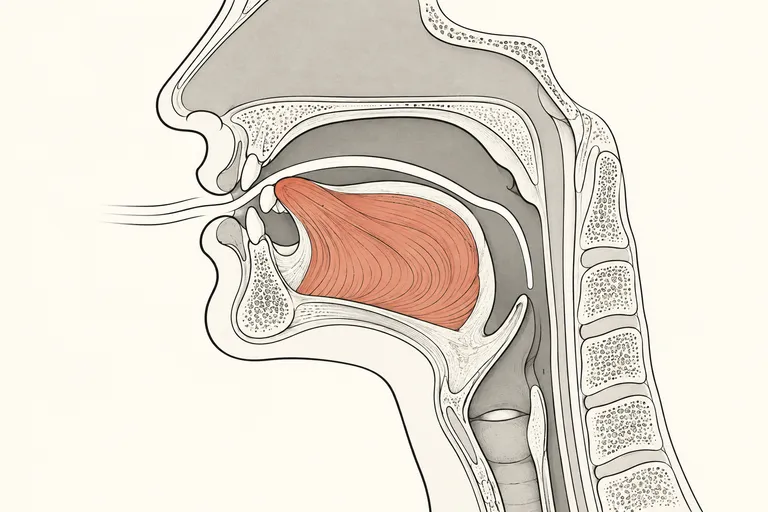
Steady voiceless airflow hisses over the tongue tip.
Tongue-to-teeth placement and illustrated airflow are plausible for voiceless th.
attempt 0 · 2026-10-02
Pair zh-en-US (66)
accepted
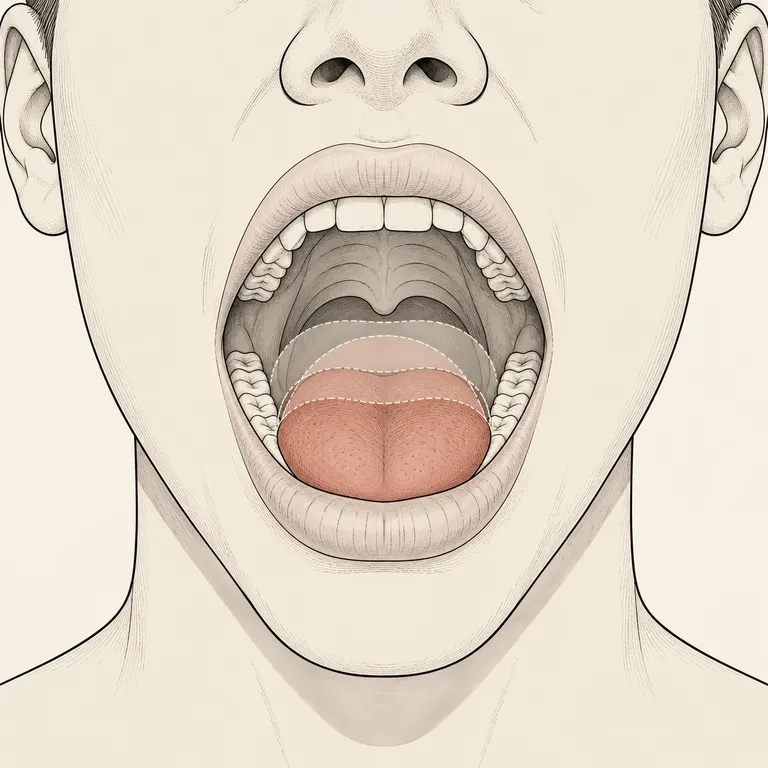
Jaw open, tongue low and central, used flexibly for multiple purposes, lips relaxed.
Open jaw and broad low tongue are visually sane and anatomically plausible.
attempt 0 · 2026-10-03
accepted
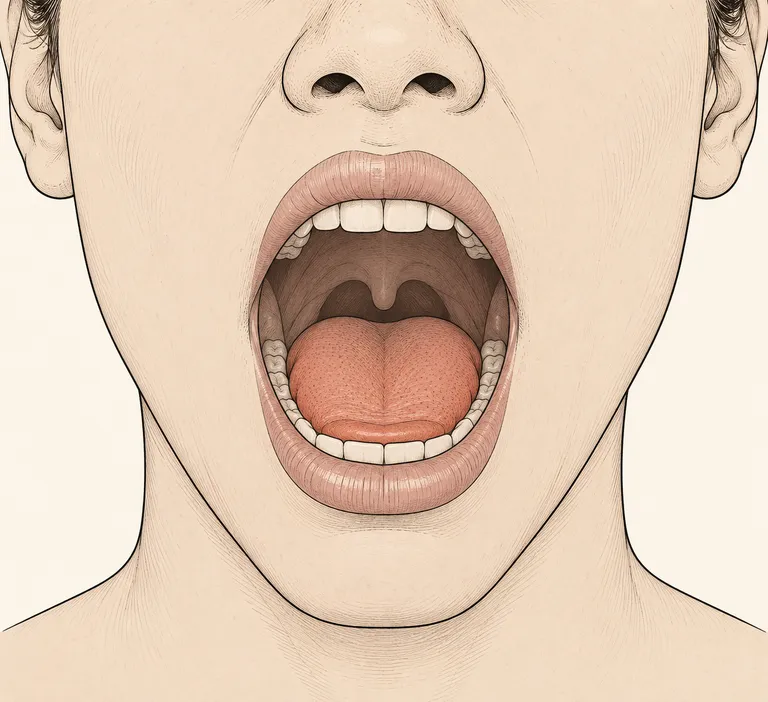
Jaw dropped wide open, tongue body pushed low and clearly forward, tip resting behind the lower teeth.
Wide-open mouth, teeth, palate, and low forward tongue appear anatomically coherent.
attempt 0 · 2026-10-03
accepted
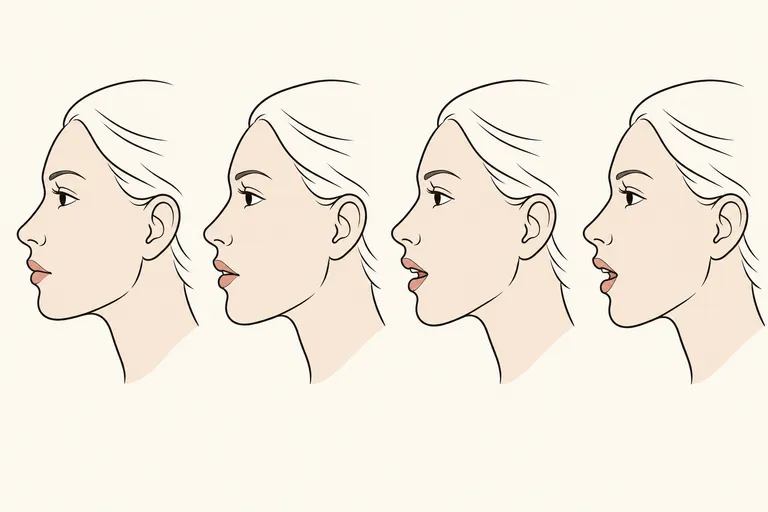
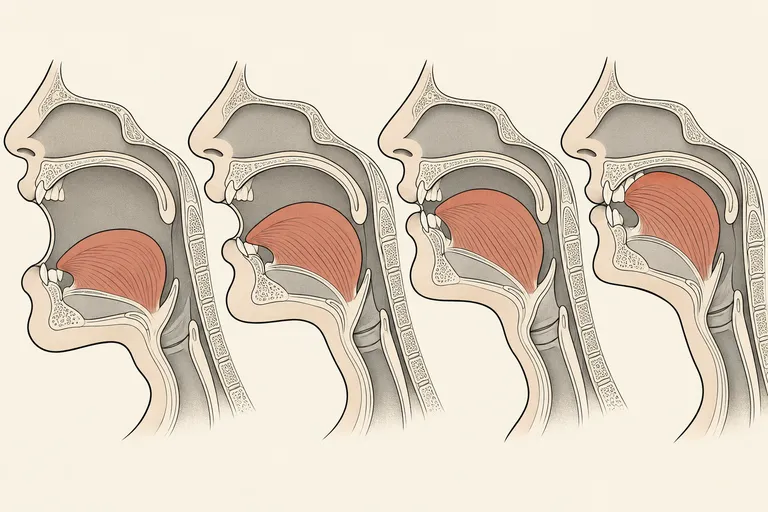
Tongue starts low and central-back and glides up and forward toward a high front position, lips relaxed.
Four intentional profile views show plausible facial anatomy and mouth positions without garbling.
attempt 1 · 2026-10-03
accepted
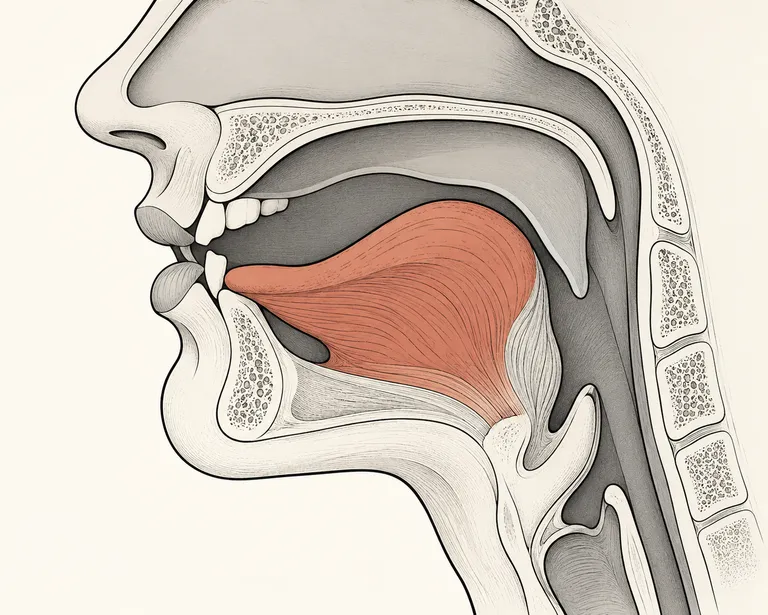
Same basic glide, but typically held with a fuller, more complete movement from a wide-open jaw to a near-'ee' finish.
Multiple sagittal stages show plausible jaw opening and tongue movement.
attempt 0 · 2026-10-03
accepted
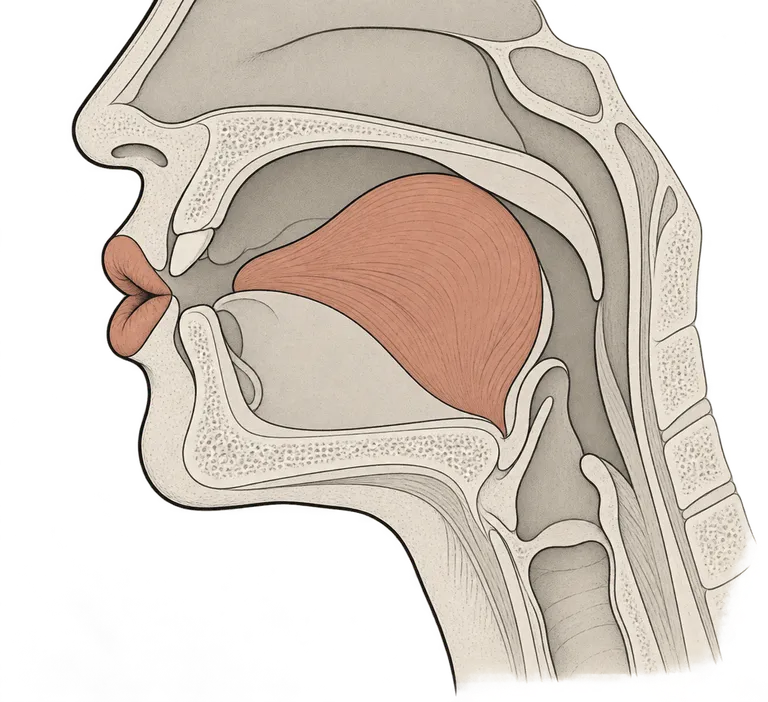
Tongue starts low and central, glides up and back with lip rounding, lips relaxed at the start.
Tongue, lips, teeth, and vocal tract form a coherent sagittal anatomy.
attempt 0 · 2026-10-03
accepted
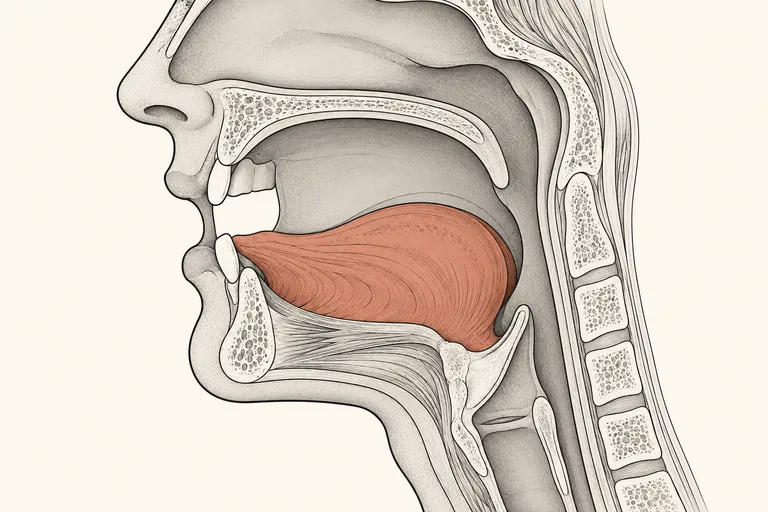
Same basic glide, but typically with a fuller rise, retraction, and more complete lip rounding by the end.
Large raised tongue and rounded protruding lips remain anatomically plausible.
attempt 0 · 2026-10-03
accepted
Tongue low, position varying slightly with context, lips unrounded, jaw open.
Open jaw and broad low tongue appear anatomically plausible.
attempt 0 · 2026-10-03
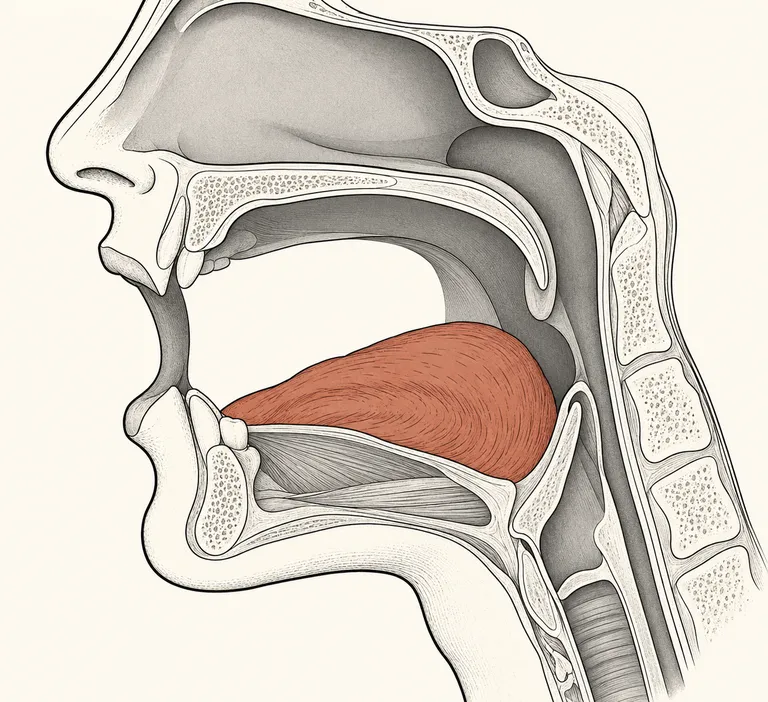
accepted
Jaw dropped wide open, tongue body consistently low and pulled back toward the throat, lips unrounded.
Wide-open jaw and low retracted tongue remain within realistic anatomical limits.
attempt 0 · 2026-10-03
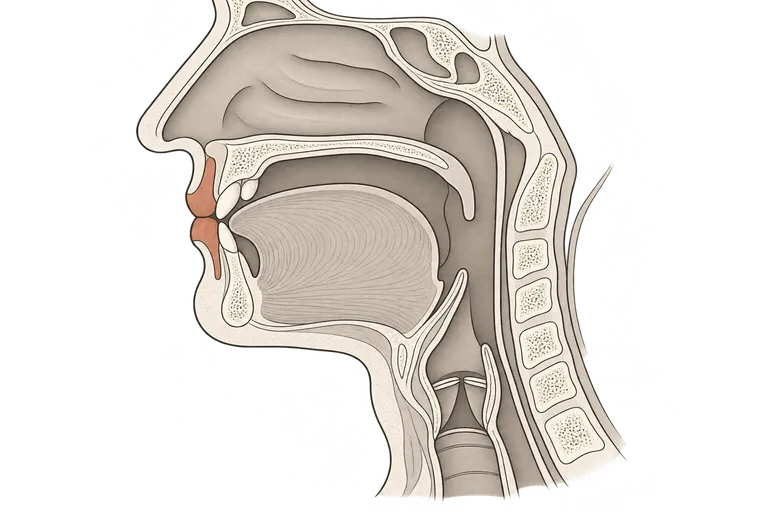
accepted
Lips close and release with no vocal fold vibration and no puff of air, producing an unaspirated voiceless stop that sounds close to an English 'p'.
Closed lips and internal vocal-tract structures are visually coherent and anatomically plausible.
attempt 0 · 2026-10-03
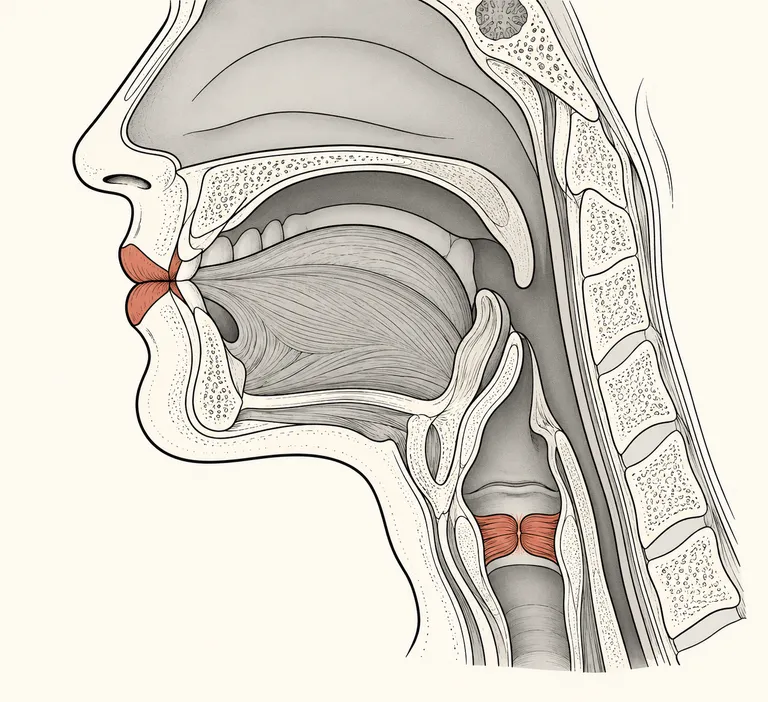
accepted
Lips close while the vocal folds are already vibrating, producing an audible low hum or buzz during the closure itself, then release softly with no air puff.
Closed lips, tongue, teeth, and highlighted vocal folds are anatomically coherent.
attempt 0 · 2026-10-03
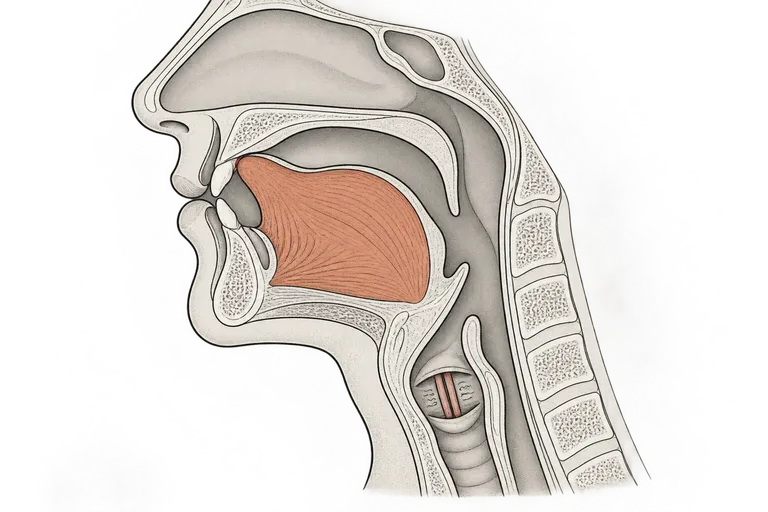
accepted
Tongue tip presses the alveolar ridge and releases with no vocal fold vibration and no air puff, sounding like an unaspirated English 't'.
Single anatomically plausible tongue and coherent sagittal vocal tract.
attempt 0 · 2026-10-03
accepted
Tongue tip touches behind the upper teeth as for /d/ or forms a narrow groove as for /z/, instead of protruding between the teeth.
Plausible sagittal anatomy; tongue tip approaches the front teeth without distortion.
attempt 0 · 2026-10-03
accepted
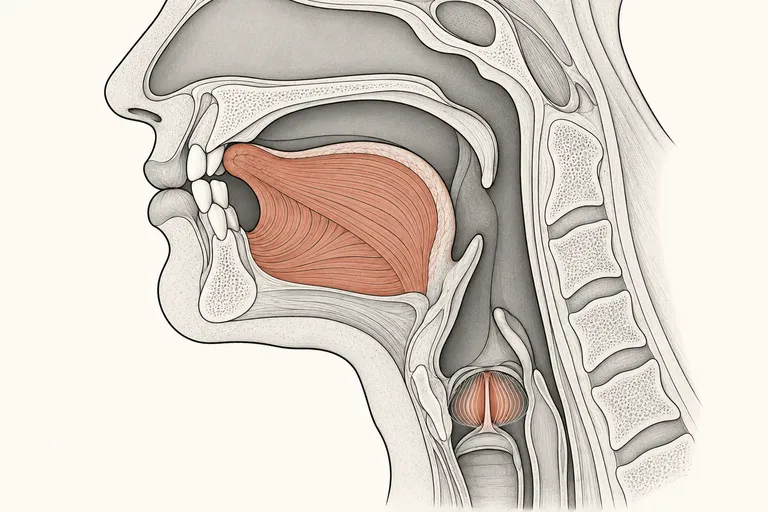
Tongue tip presses the same spot but the vocal folds vibrate throughout the closure, producing an audible buzz before the soft release.
Tongue shape and vocal-fold depiction are anatomically plausible.
attempt 0 · 2026-10-03
accepted
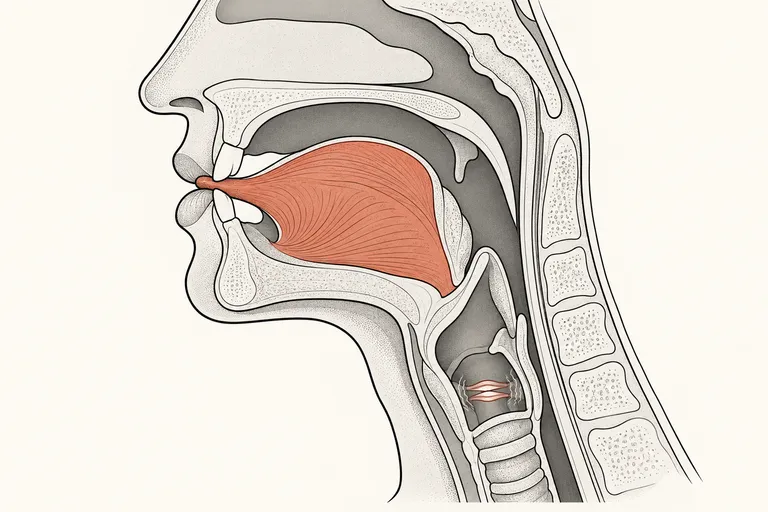
Tongue tip rests lightly between the upper and lower front teeth while the vocal folds vibrate, producing a soft, buzzing hiss.
Tongue placement between the incisors and visible vocal folds are anatomically coherent.
attempt 0 · 2026-10-03
accepted
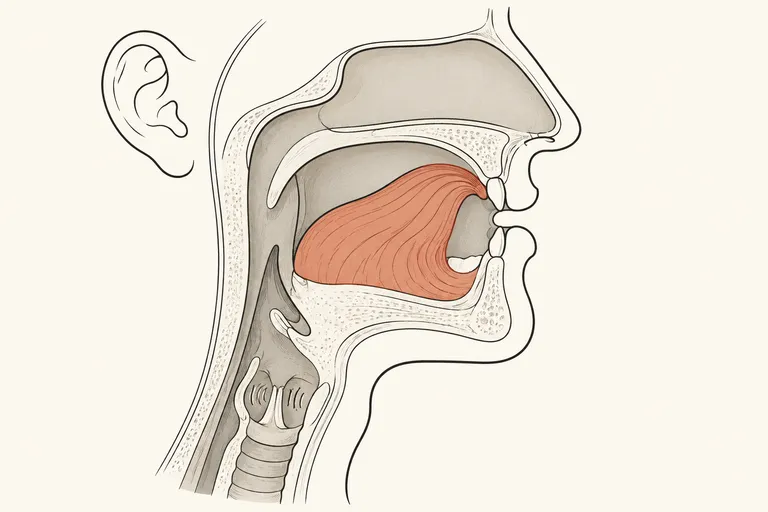
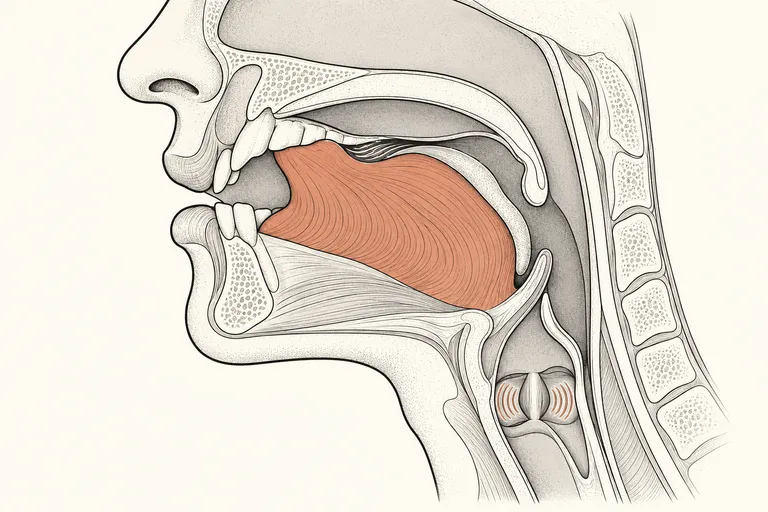
Tongue seals and releases into a fricative exactly as for 'ch', but with no vocal fold vibration anywhere in the sequence.
Raised tongue remains continuous and plausible without excessive curling.
attempt 0 · 2026-10-03
accepted
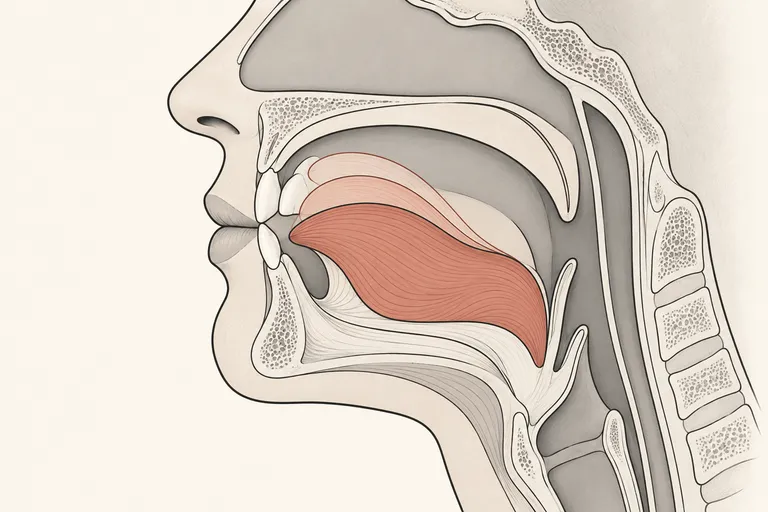
Tongue makes the identical stop-then-fricative motion, but the vocal folds vibrate continuously throughout both the closure and the release.
Broad tongue and oral structures are coherent and anatomically plausible.
attempt 0 · 2026-10-03
accepted
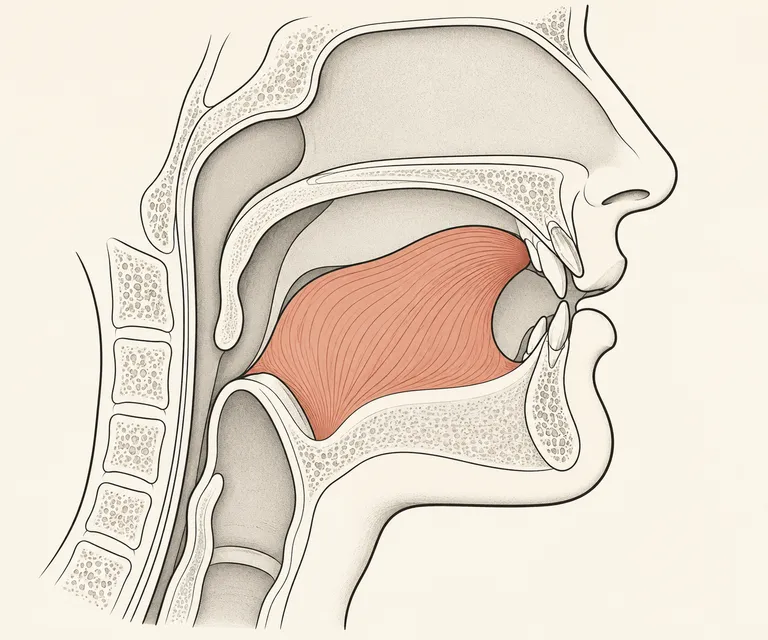
Tongue starts at a mid-front position and glides upward toward i, lips neutral throughout.
Overlaid tongue positions plausibly illustrate a vowel glide.
attempt 0 · 2026-10-03
accepted
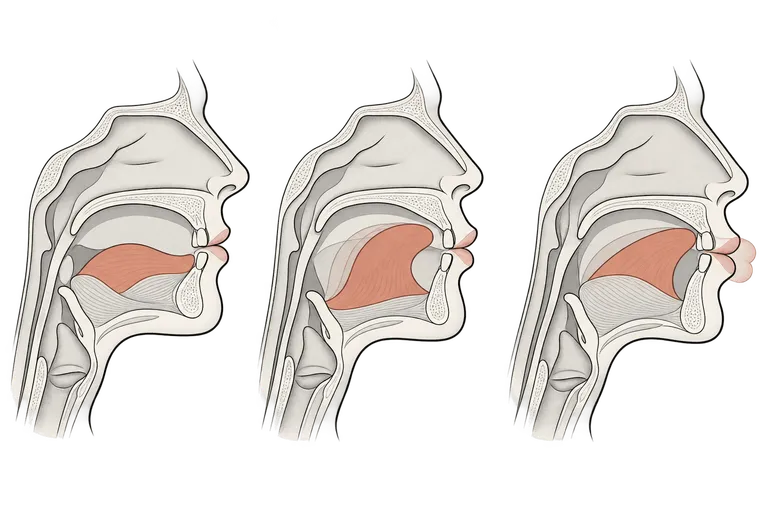
Nearly the same starting point and glide, often held slightly longer and more consistently in stressed syllables.
Single smoothly contoured tongue fits plausibly within the oral cavity.
attempt 0 · 2026-10-03
accepted
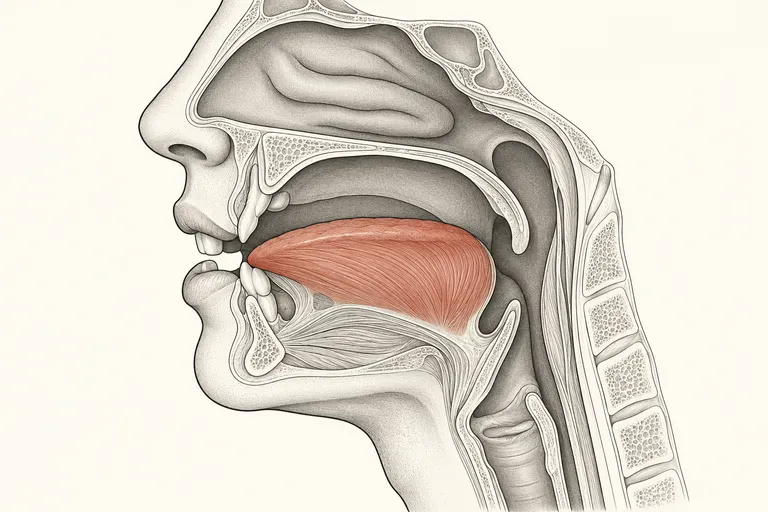
Each syllable, including unstressed ones, keeps a full, clear vowel quality, and an extra neutral vowel is sometimes added after a final consonant.
Three sagittal mouths show anatomically plausible tongue positions and facial structures.
attempt 0 · 2026-10-03
accepted
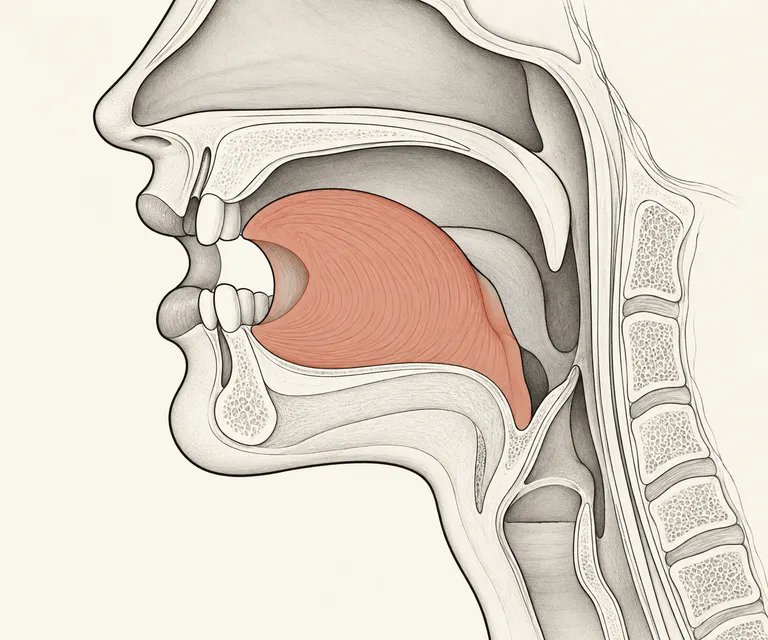
Mouth relaxes completely in unstressed syllables, with jaw slightly open, tongue flat and central, and no added vowel after final consonants.
Tongue is broad, central, and relaxed within a plausible sagittal vocal tract.
attempt 0 · 2026-10-03
accepted
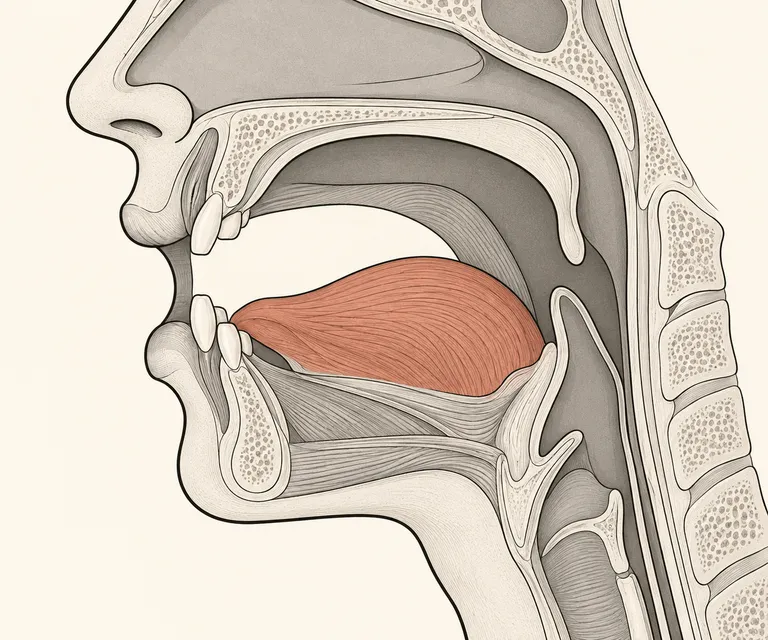
Tongue raised toward a mid-front position with an upward glide, jaw only moderately open, borrowed from the closest native Mandarin vowel.
Raised tongue body remains anatomically coherent despite its strongly domed posture.
attempt 0 · 2026-10-03
accepted
Tongue body sits lower and more front, jaw opens more, held steady with no glide.
Lower tongue position and open jaw are anatomically plausible and visually coherent.
attempt 0 · 2026-10-03

accepted
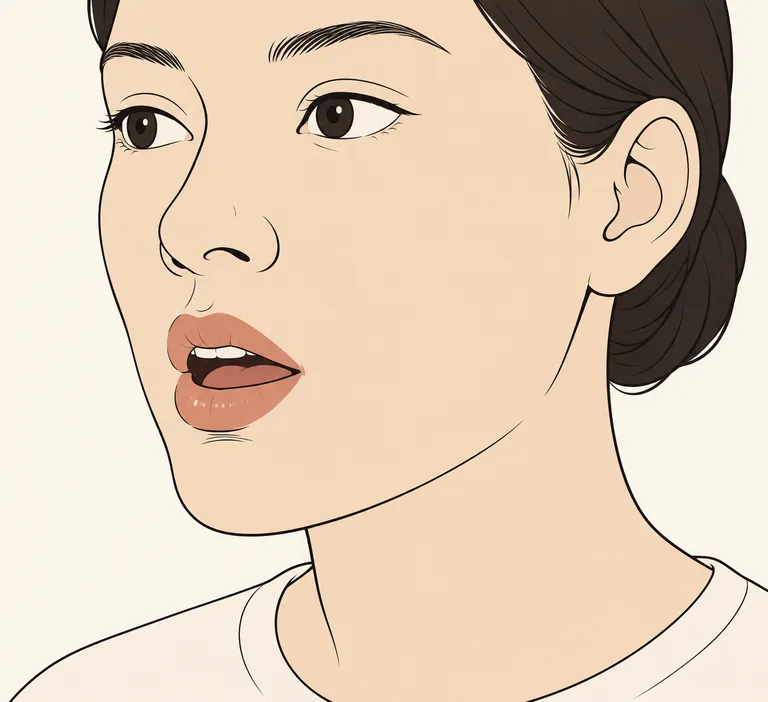
Tongue tip curls up and back briefly and lightly, used as an unstressed, attached syllable suffix.
Facial anatomy and slightly parted lips appear plausible; tongue is concealed.
attempt 1 · 2026-10-03
accepted
Same tongue-curling gesture, but sustained, fully stressed, and used as the main vowel of the syllable, as in 'bird'.
Open mouth, visible teeth, and tongue surface appear anatomically plausible.
attempt 1 · 2026-10-03
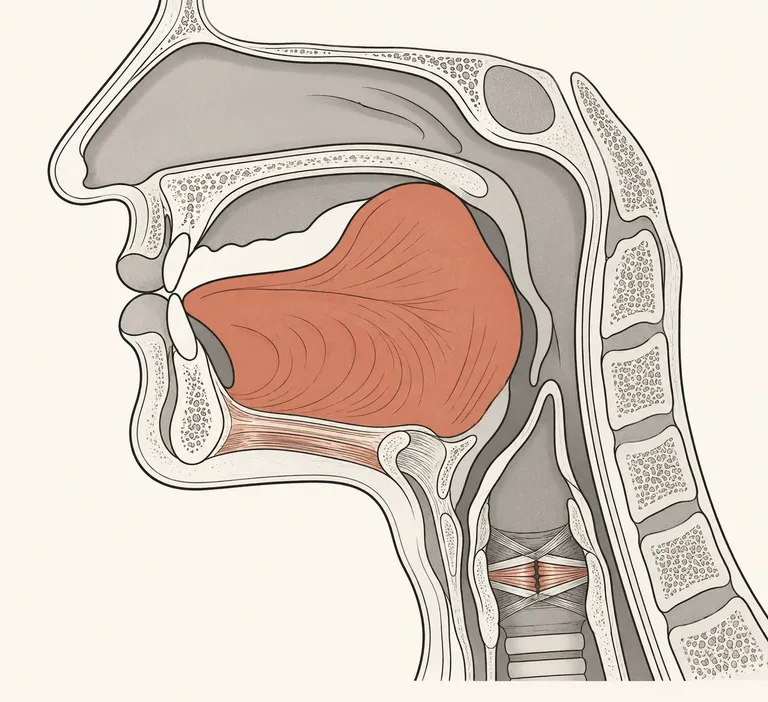
accepted
Back of tongue seals and releases with no vocal fold vibration and no air puff, sounding like an unaspirated English 'k'.
Posterior tongue elevation is exaggerated but remains anatomically coherent.
attempt 0 · 2026-10-03
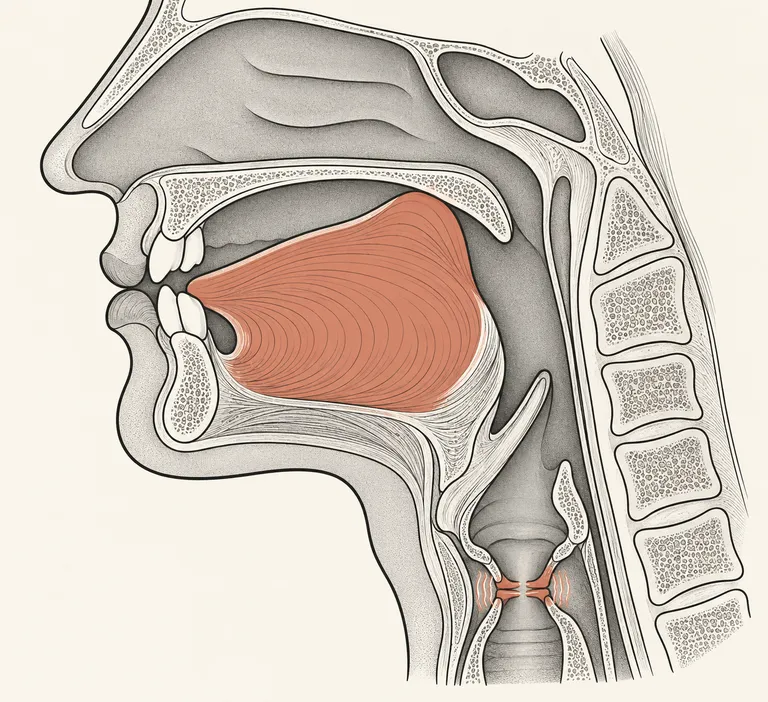
accepted
Back of tongue seals at the same spot but the vocal folds vibrate throughout, producing an audible buzz before a soft, unaspirated release.
Broad tongue forms a plausible posterior closure with coherent surrounding anatomy.
attempt 0 · 2026-10-03
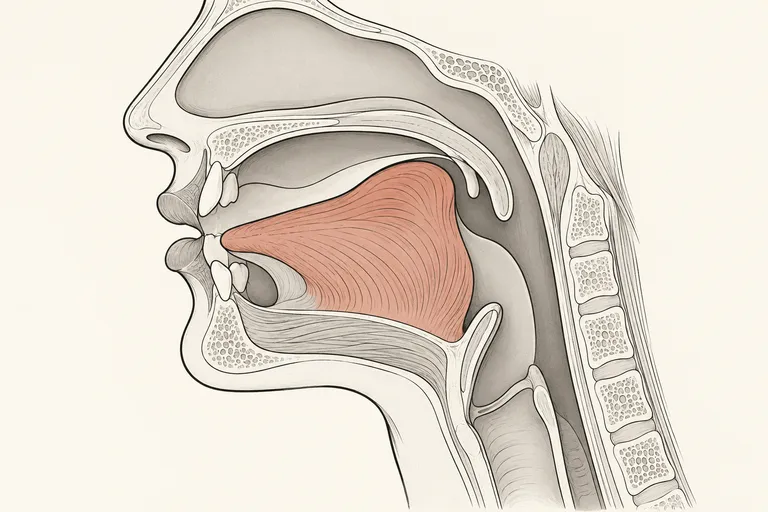
accepted
Back of the tongue rises close to the soft palate, creating audible friction there, giving the sound a harsher, raspier quality.
Plausible sagittal anatomy with a broad tongue dorsum raised toward the soft palate.
attempt 0 · 2026-10-03
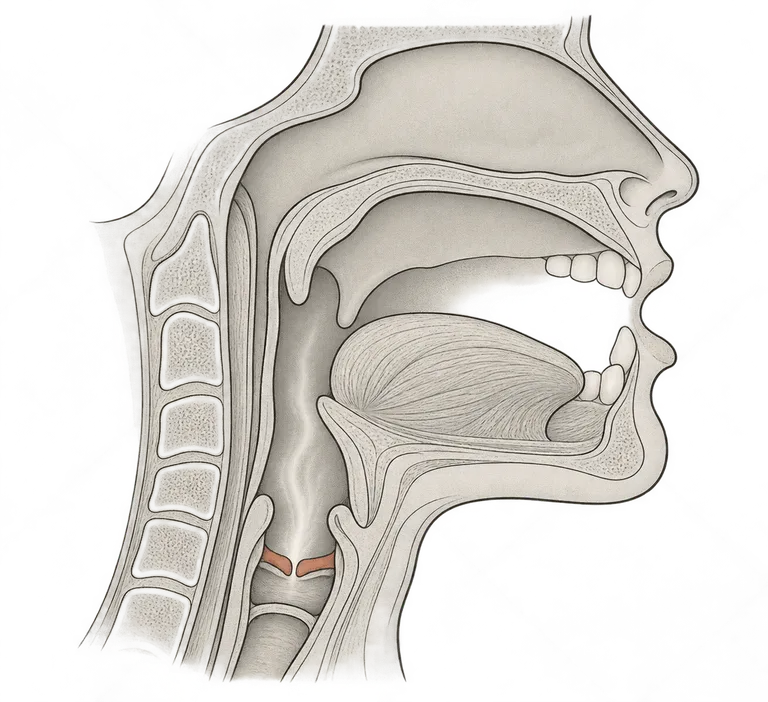
accepted
The mouth is already shaped for the upcoming vowel with no oral constriction at all; the sound is just an audible puff of breath originating at the vocal folds.
Tongue rests naturally without oral constriction; vocal-fold highlighting is anatomically plausible.
attempt 0 · 2026-10-03
accepted
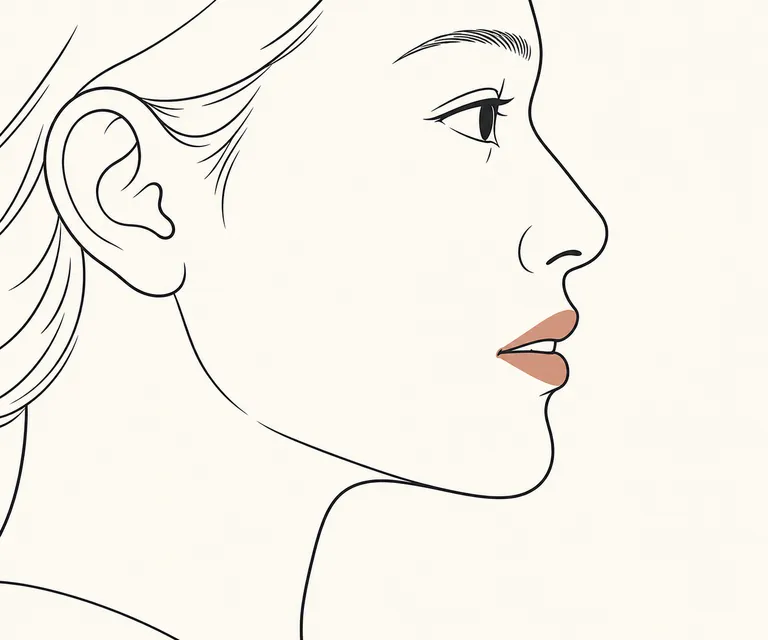
Tongue bunched very high and forward near the hard palate, held steady with no glide, lips neutral to slightly spread.
Plausible facial profile, lips, teeth, and jaw; tongue is not visible.
attempt 1 · 2026-10-03
accepted
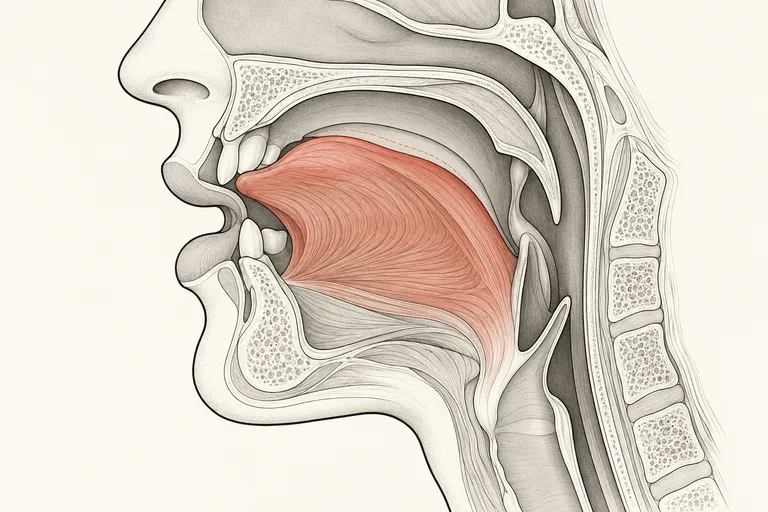
Tongue reaches the same high-front position but with slightly more tension and a light upward offglide in open stressed syllables.
Broad tongue and elevated front position remain anatomically coherent without twisting or looping.
attempt 0 · 2026-10-03
accepted
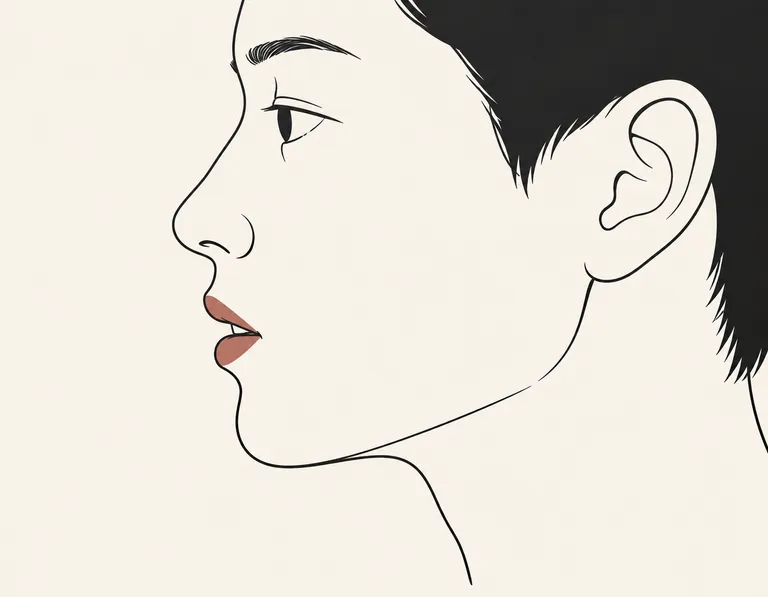
Tongue bunched very high and tense near the hard palate, jaw nearly closed, the only front-high vowel Mandarin has available.
Nearly closed jaw and slightly parted lips form a plausible facial profile.
attempt 1 · 2026-10-03
accepted
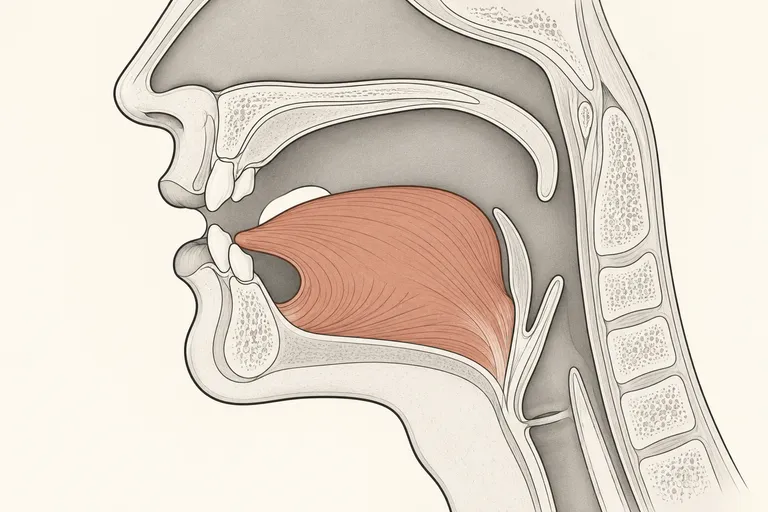
Tongue slightly lower and more relaxed than for i, jaw a touch more open, overall looser muscle tension.
Tongue, jaw, teeth, and vocal tract form a coherent sagittal anatomy.
attempt 0 · 2026-10-03
accepted
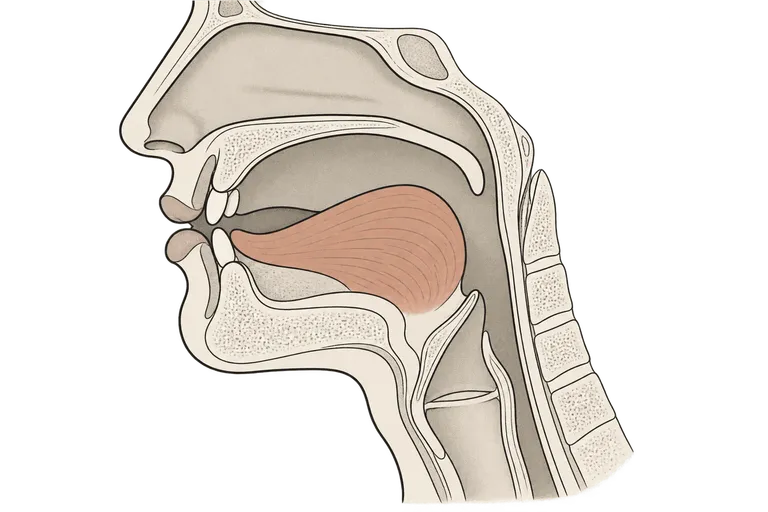
The back-of-tongue closure for final k is skipped or followed by an extra vowel, so 'back' can drift toward 'ba' or 'ba-kuh'.
Tongue is somewhat tapered but remains a plausible single muscular structure.
attempt 0 · 2026-10-03
accepted
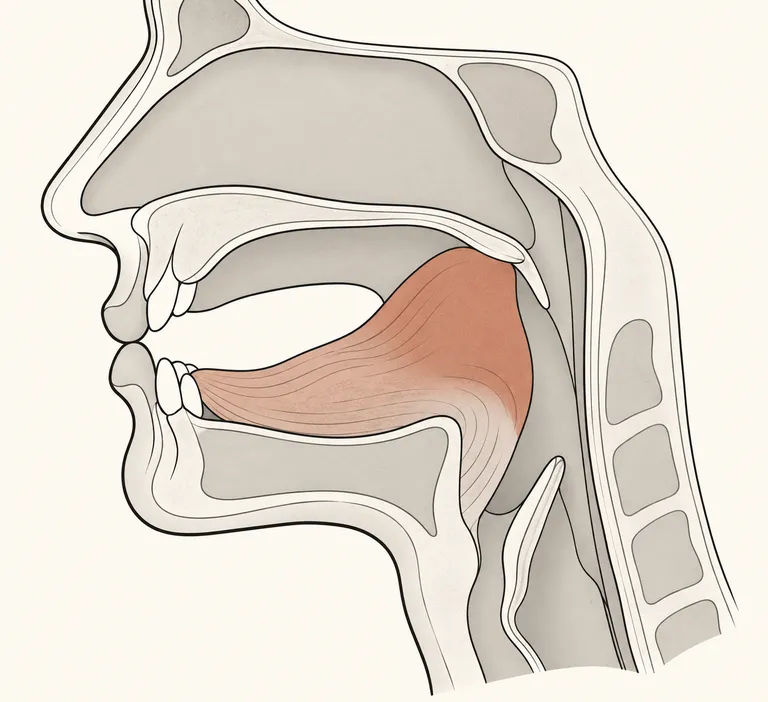
The back of the tongue seals against the soft palate at the end of the word and the closure is simply held, with no release burst or extra vowel required.
Tongue dorsum rises toward the soft palate with a plausible held velar closure.
attempt 0 · 2026-10-03
accepted
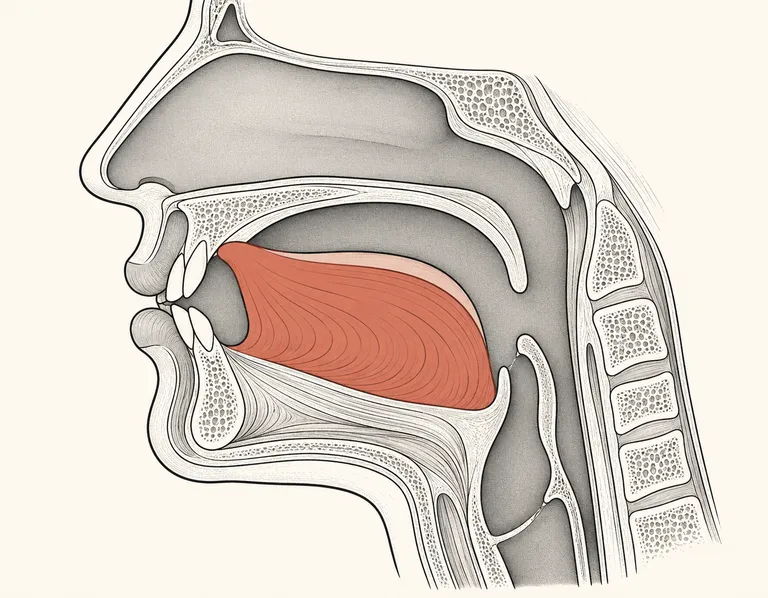
The tongue tip only loosely approaches the alveolar ridge or the vowel itself is nasalized, blurring the distinction with a back-of-tongue /ŋ/ closure.
Single tongue has a coherent broad shape and plausible loose anterior contact.
attempt 0 · 2026-10-03
accepted
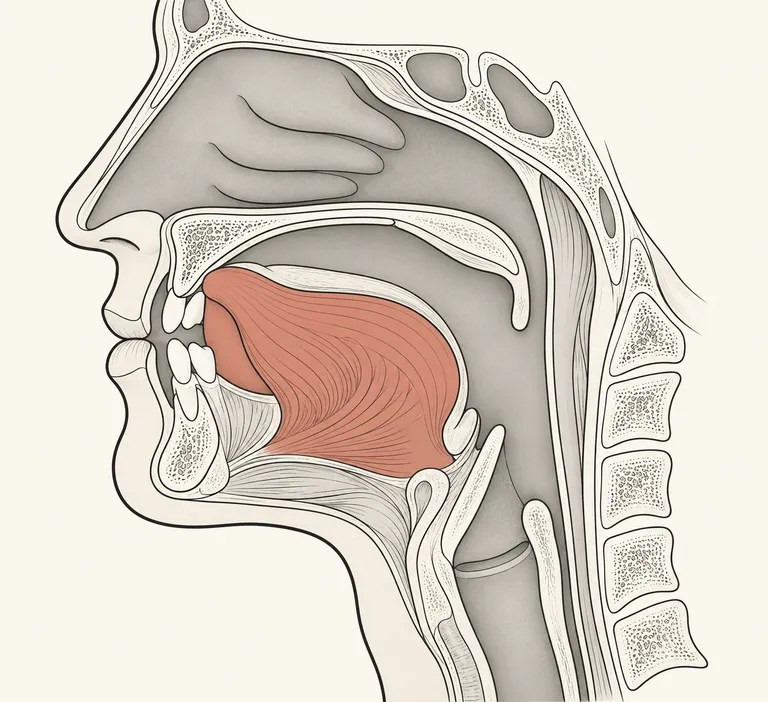
Tongue tip presses firmly and completely against the alveolar ridge right behind the top teeth, clearly sealing the mouth there while the hum escapes through the nose.
Tongue tip contacts behind the upper teeth while the remaining tongue anatomy stays coherent.
attempt 0 · 2026-10-03
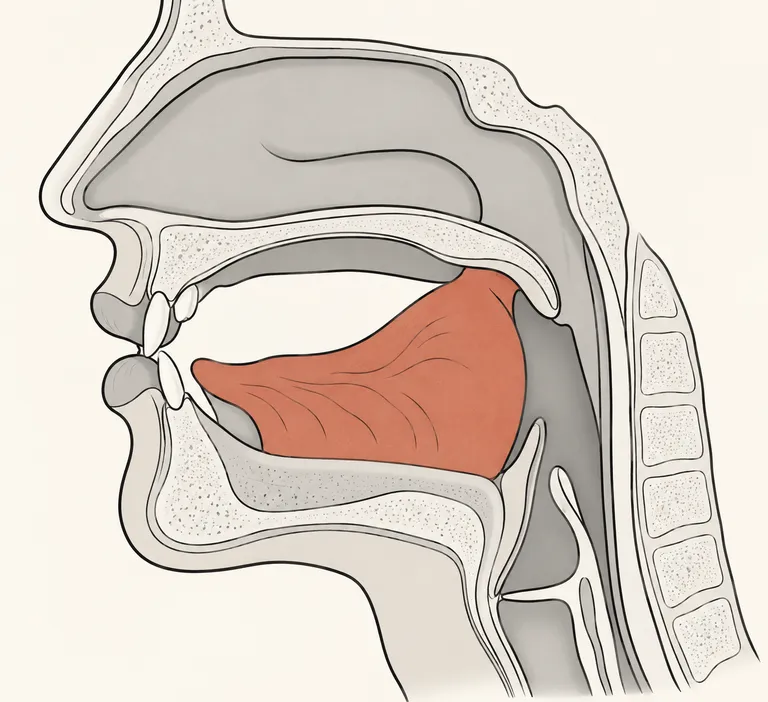
accepted
The back-of-tongue contact against the soft palate is weakened or shifted forward, making the sound drift toward an alveolar /n/.
Tongue is intact and smoothly shaped with plausible posterior elevation.
attempt 0 · 2026-10-03
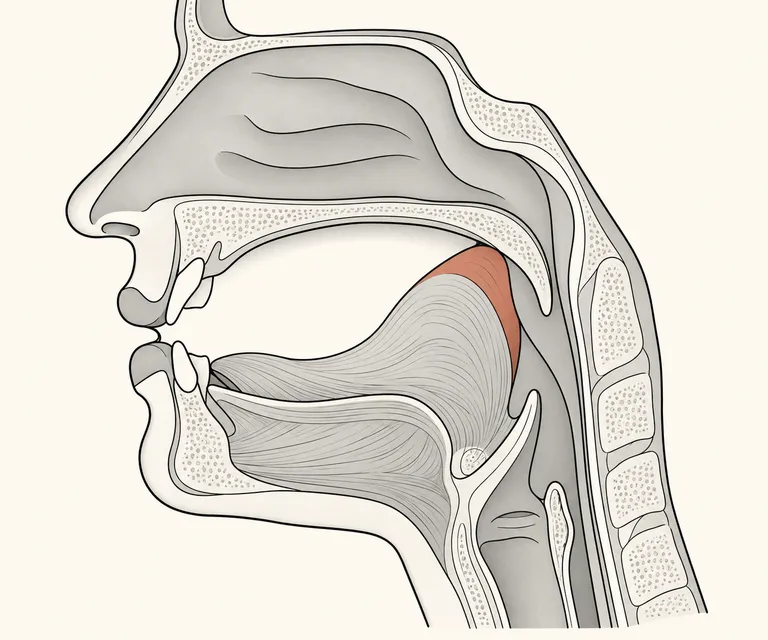
accepted
The back of the tongue rises firmly to seal against the soft palate, well behind the alveolar ridge, while the tongue tip stays low and uninvolved.
Low tongue tip and raised posterior tongue form a plausible velar closure.
attempt 0 · 2026-10-03
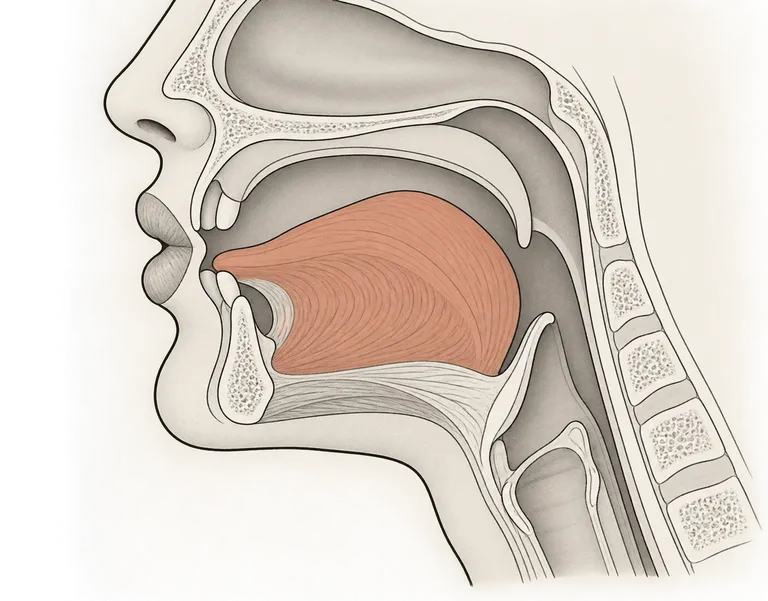
accepted
Lips rounded, tongue mid-back, held fairly steady with little glide.
Single broad tongue remains anatomically plausible within a coherent sagittal vocal tract.
attempt 0 · 2026-10-03
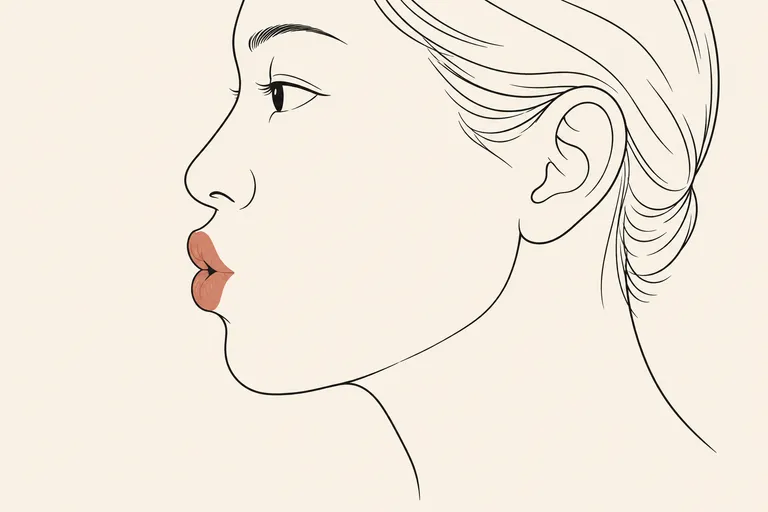
accepted
Lips rounded at the same starting point, but the tongue and lips continue rising and rounding further into a glide toward u.
Rounded, protruded lips remain anatomically plausible.
attempt 1 · 2026-10-03
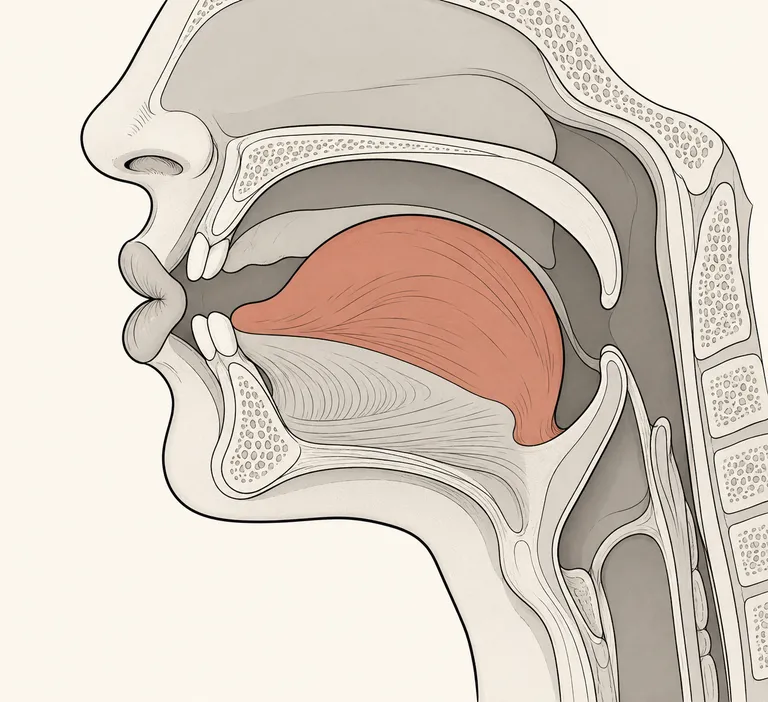
accepted
Tongue mid-back, lips strongly rounded, a sound Mandarin uses for its own 'o' vowel.
Rounded lips and smoothly arched tongue are anatomically coherent.
attempt 0 · 2026-10-03
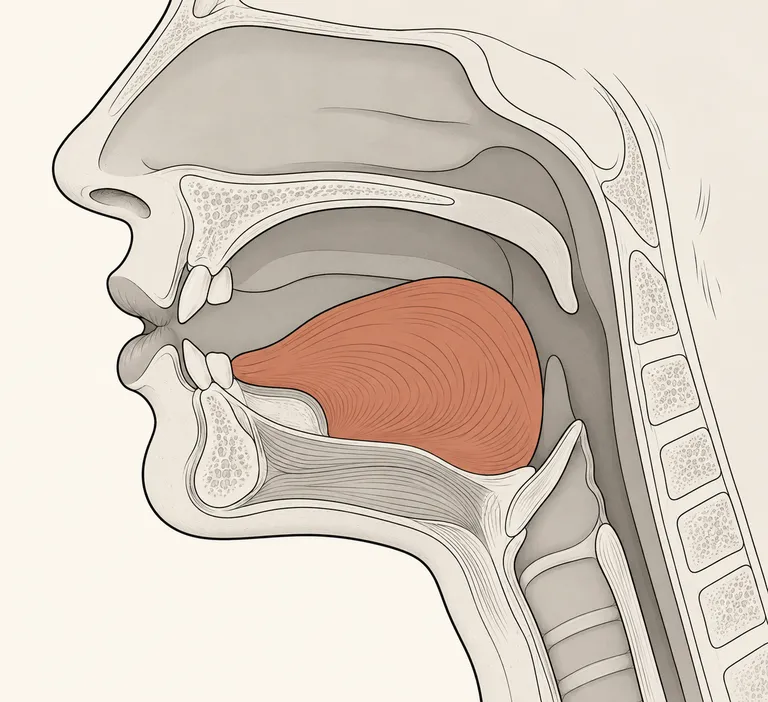
accepted
Tongue mid-low and back, lips only gently rounded, a lower and looser articulation than Mandarin o.
Tongue is intact, broad, and plausibly positioned in the lower back of the mouth.
attempt 0 · 2026-10-03
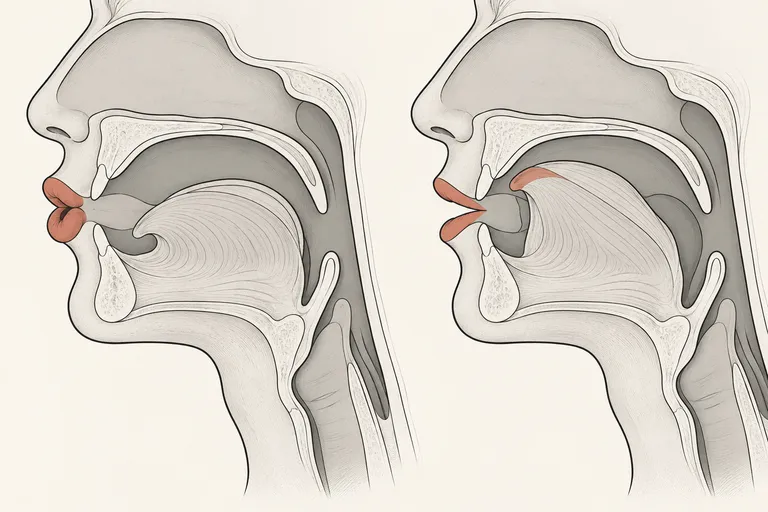
accepted
Lips rounded for a separate o-like sound, followed by a somewhat detached high front i, produced as two looser beats rather than one glide.
Two-panel sagittal diagram shows plausible lip and tongue positions without anatomical distortion.
attempt 0 · 2026-10-03
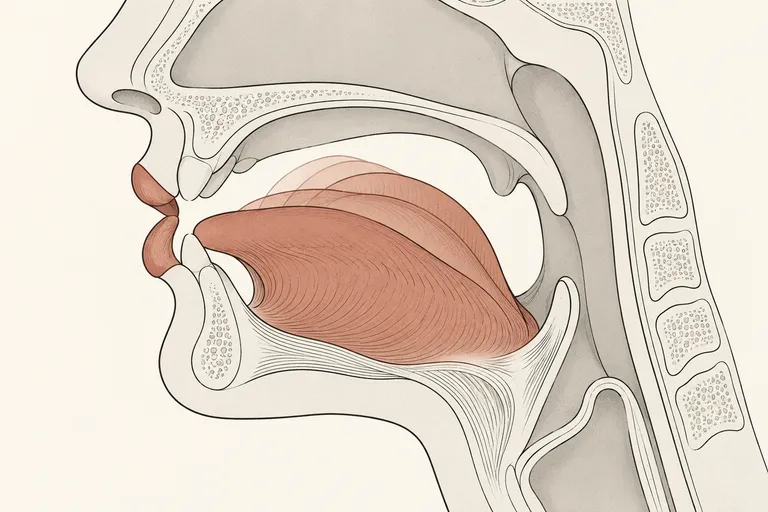
accepted
Lips rounded at a mid-back starting position, then smoothly unrounding while the tongue glides up and forward to a near-'ih' finish, all in one continuous motion.
Overlaid tongue positions plausibly depict a continuous forward and upward vowel glide.
attempt 0 · 2026-10-03
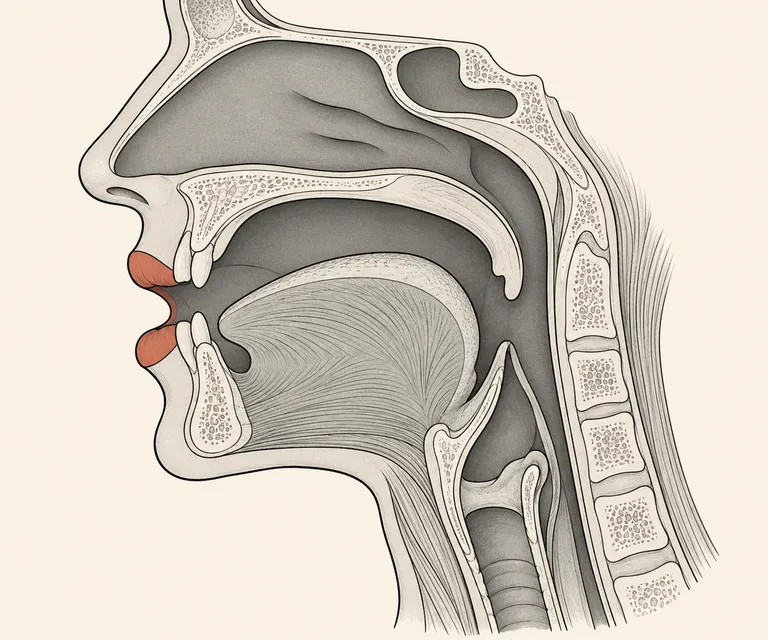
accepted
Lips release fully with an added vowel or the closure is skipped, so 'cap' drifts toward 'ca-puh' or 'ca'.
Tongue, lips, teeth, jaw, and airway form a visually coherent sagittal section.
attempt 0 · 2026-10-03
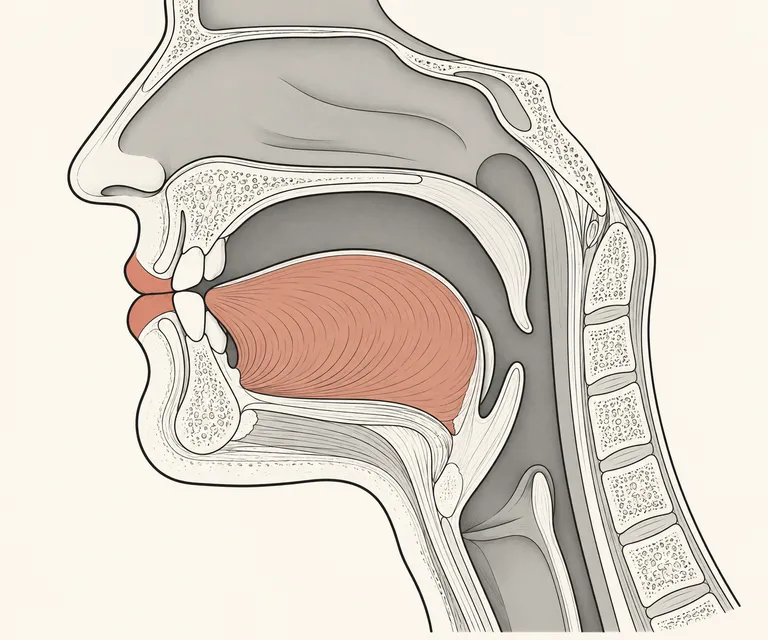
accepted
Lips seal firmly at the end of the word and the closure is simply held or releases with no audible puff, not a burst or extra vowel.
Closed lips and broad resting tongue are anatomically plausible and visually coherent.
attempt 0 · 2026-10-03
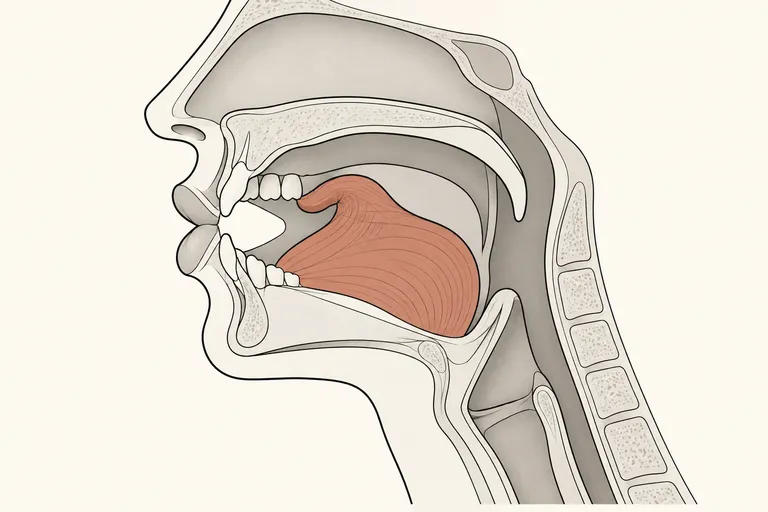
accepted
Tongue tip curls further back and up, closer to a retroflex position, giving the hiss a slightly harder, more curled quality.
The raised, mildly curled tongue tip remains plausible for a retroflex articulation.
attempt 0 · 2026-10-03
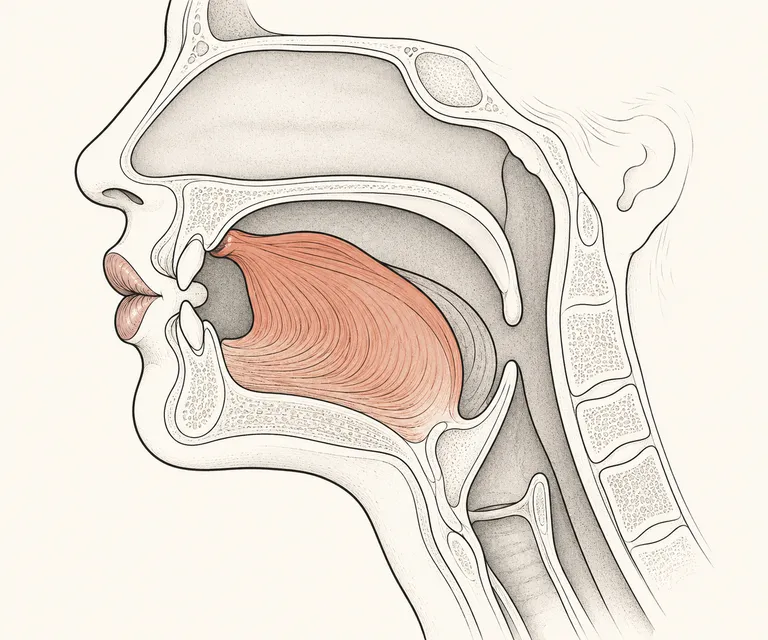
accepted
Tongue blade bunches just behind the alveolar ridge without curling the tip back, lips rounded and pushed forward, giving a softer hushing quality.
Bunched tongue blade and rounded lips are anatomically coherent without excessive curling.
attempt 0 · 2026-10-03
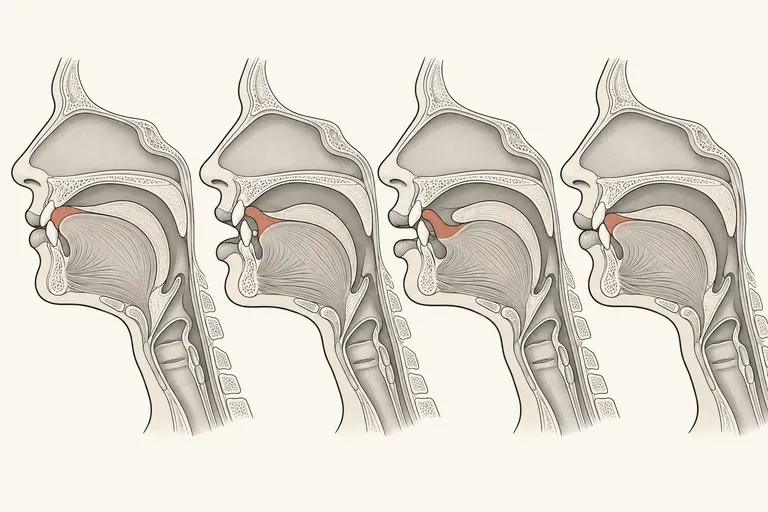
accepted
A fully released, often aspirated tongue-tip stop is used in every position, including between vowels, and final /t/ may be dropped or followed by an extra vowel.
Four schematic sections show plausible tongue-tip contacts without impossible curling or duplication.
attempt 0 · 2026-10-03
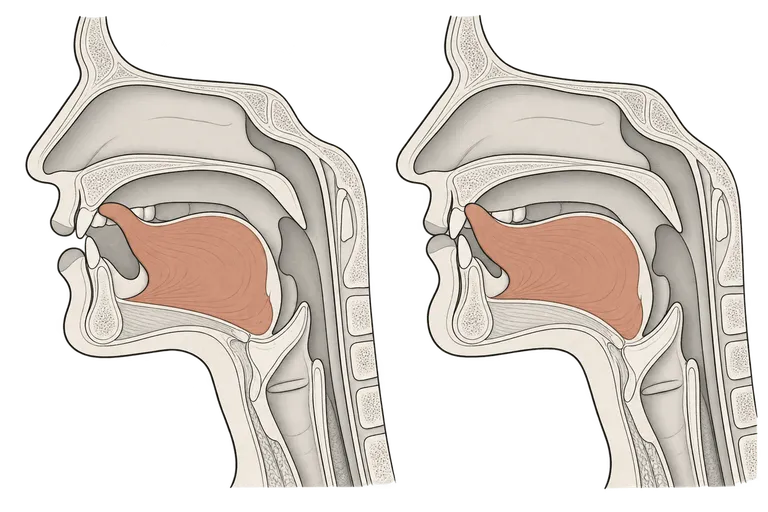
accepted
Between vowels the tongue tip just barely taps the ridge for a fast, voiced flap; at the end of a word the tongue tip closure is held or released very lightly with no added vowel.
Both sagittal views contain single, normally shaped tongues with plausible oral anatomy.
attempt 0 · 2026-10-03
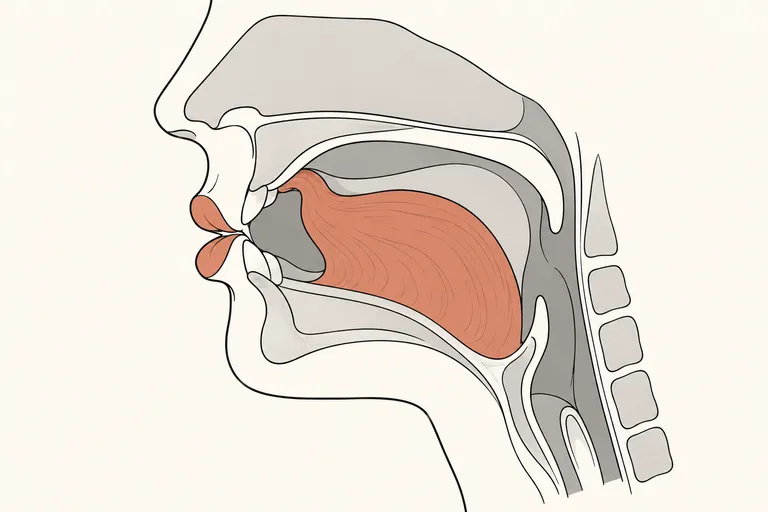
accepted
Tongue tip curls further back for the stop closure, closer to a retroflex position, giving the release a slightly harder edge.
Single continuous tongue with a plausible raised tip; lips, teeth, and jaw remain reasonably positioned.
attempt 3 · 2026-10-04
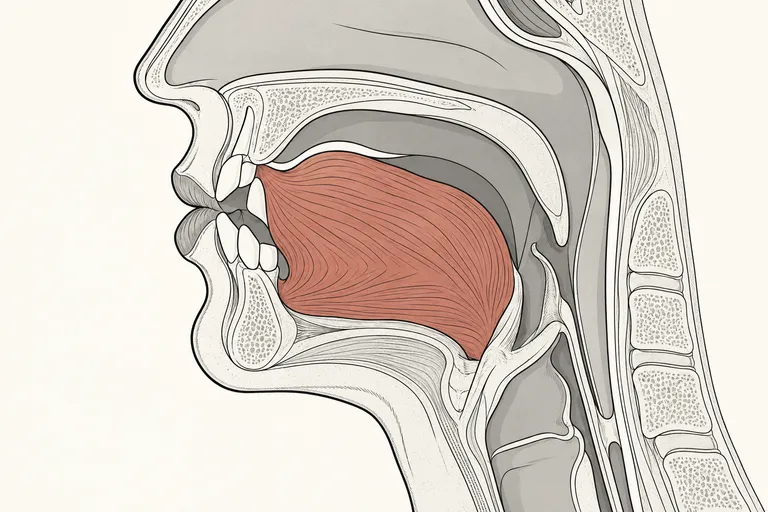
accepted
Tongue tip seals against the alveolar ridge without curling back, then releases into a bunched-tongue fricative just behind the ridge, with lips slightly rounded.
The broad bunched tongue remains continuous and anatomically plausible despite stylized proportions.
attempt 0 · 2026-10-03
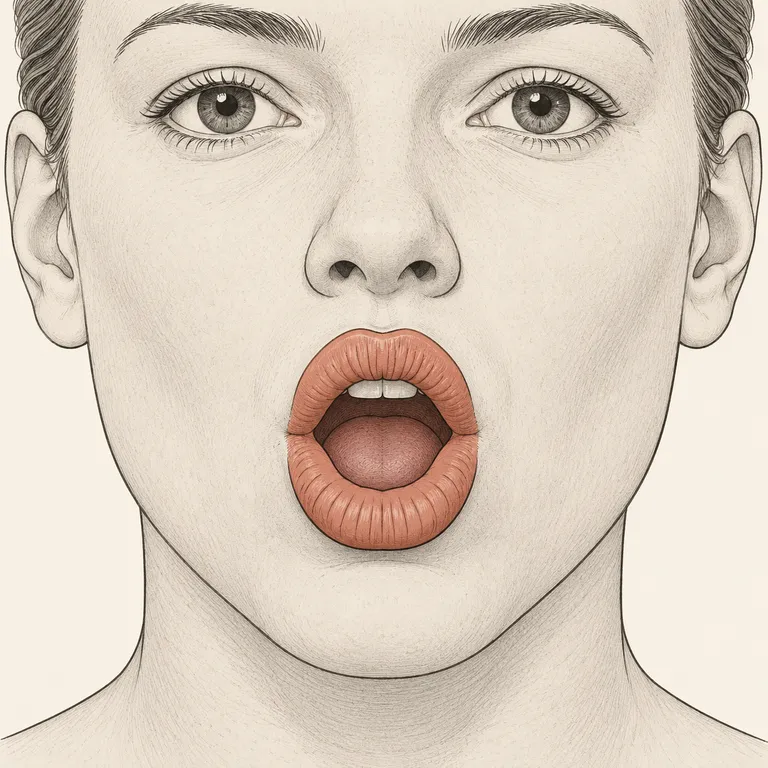
accepted
Lips strongly rounded and pushed forward, tongue high and consistently back, jaw nearly closed.
Anatomically plausible face and rounded mouth; no visible rendering abnormalities.
attempt 0 · 2026-10-03
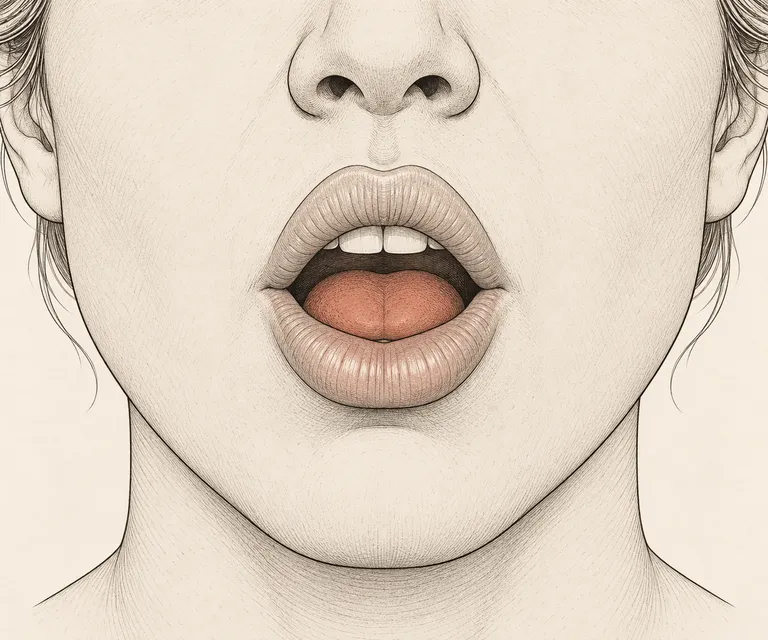
accepted
Same strong rounding and height, but the tongue may shift slightly forward in many American accents, especially after t, d, or n.
Mouth, lips, teeth, and visible tongue appear anatomically plausible.
attempt 0 · 2026-10-03
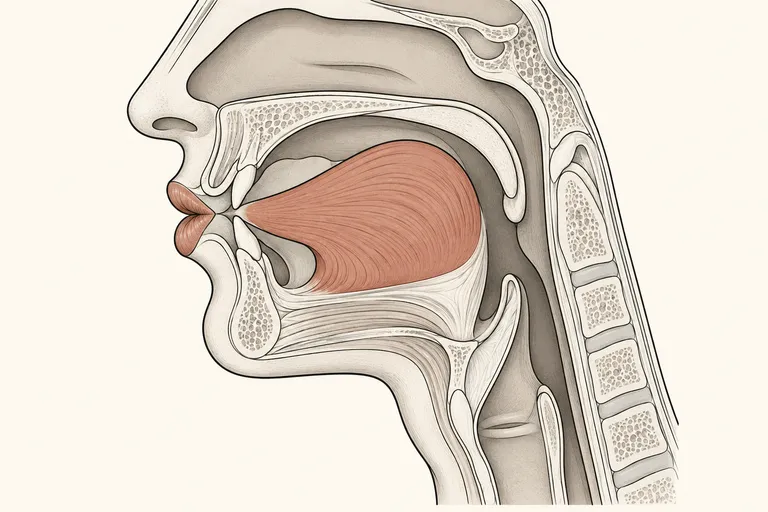
accepted
Tongue high-back, lips strongly rounded and protruded, jaw nearly closed, the only high back vowel Mandarin has.
High-backed tongue and protruded rounded lips appear anatomically plausible.
attempt 0 · 2026-10-03
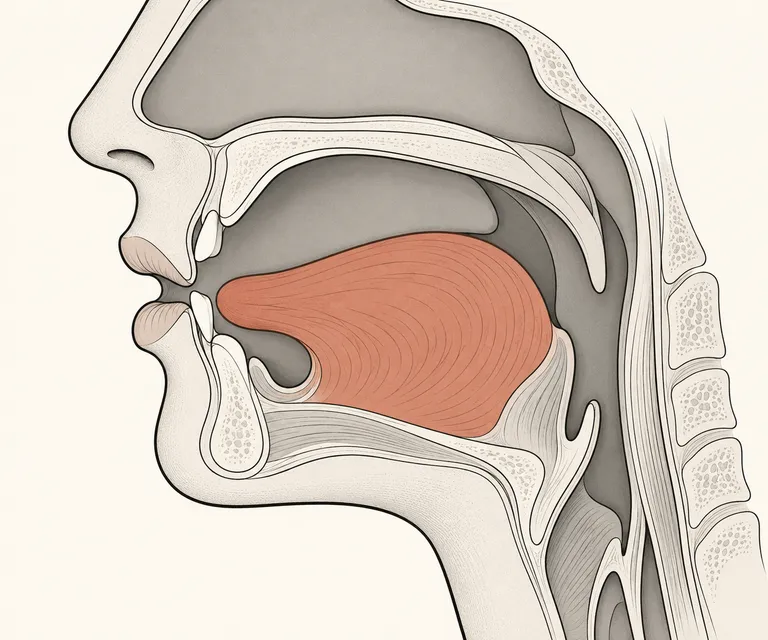
accepted
Tongue slightly lower and looser than for u, lips only lightly rounded, jaw a touch more open.
Relaxed high-back tongue position and slightly open jaw are visually coherent.
attempt 0 · 2026-10-03
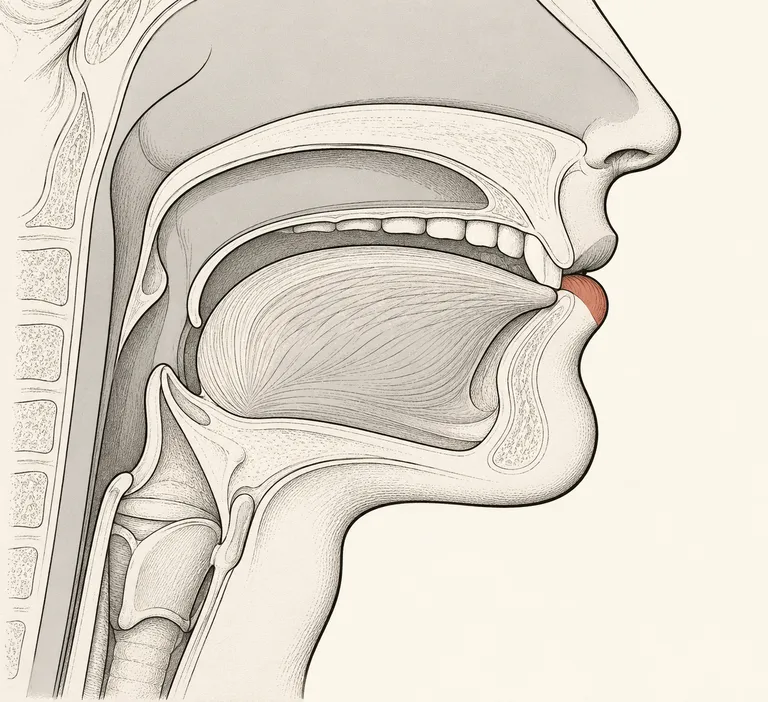
accepted
Lips round and approach each other without touching the teeth (a w-like glide), or the lower lip touches the teeth but voicing is absent (an f-like sound).
Sagittal vocal tract and tongue have coherent, anatomically plausible proportions.
attempt 0 · 2026-10-03
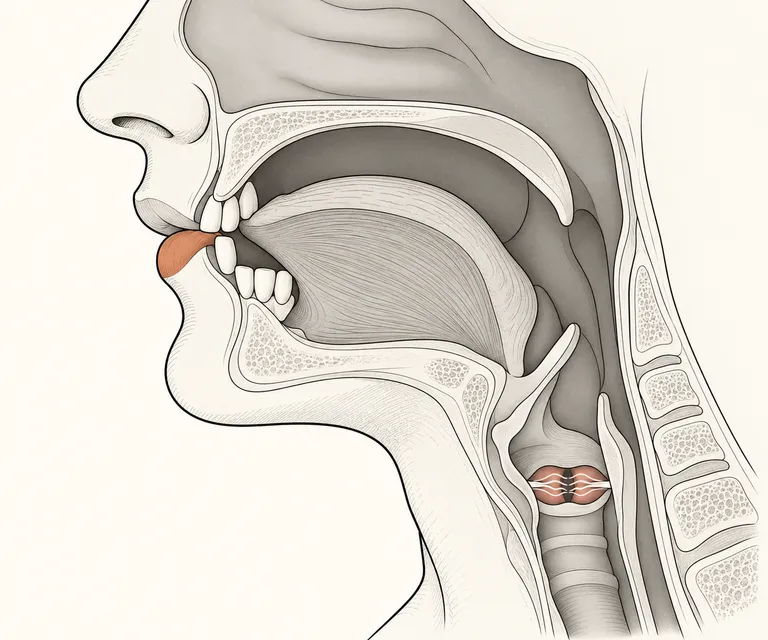
accepted
Lower lip lightly touches the edge of the upper front teeth while the vocal folds vibrate continuously, producing a steady voiced buzz.
Lower-lip and upper-teeth contact is plausible; cutaway anatomy is coherent.
attempt 0 · 2026-10-03
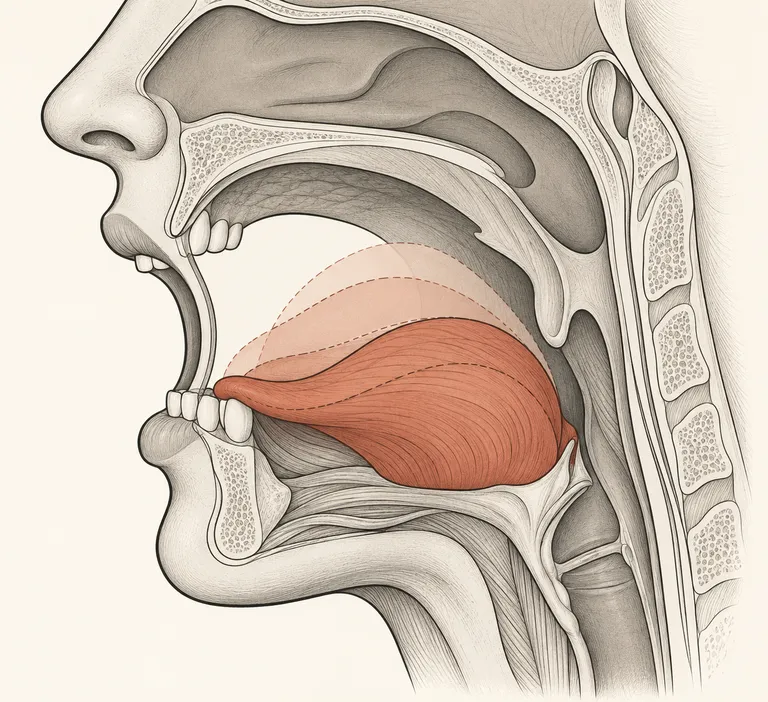
accepted
Jaw wide open, tongue low, used flexibly for several purposes, lips relaxed.
Low tongue and wide jaw are plausible; translucent outlines reasonably indicate alternate positions.
attempt 0 · 2026-10-03
accepted
Jaw moderately open, tongue relaxed in a mid-low, central-to-back position, lips neutral and unrounded.
Moderately open jaw and visible mouth structures appear anatomically plausible.
attempt 1 · 2026-10-03
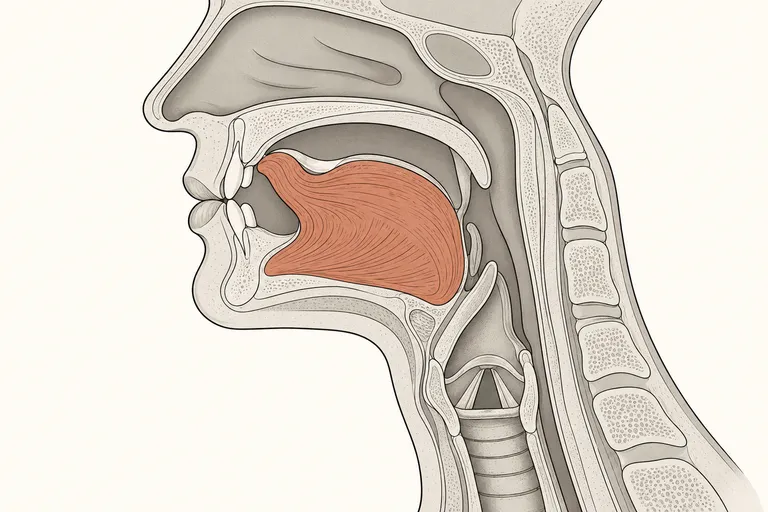
accepted
Tongue forms the same narrow groove as for /s/, but the vocal folds stay silent, producing a plain voiceless hiss.
Tongue is broad and continuous with no impossible curling, splitting, or duplication.
attempt 0 · 2026-10-03
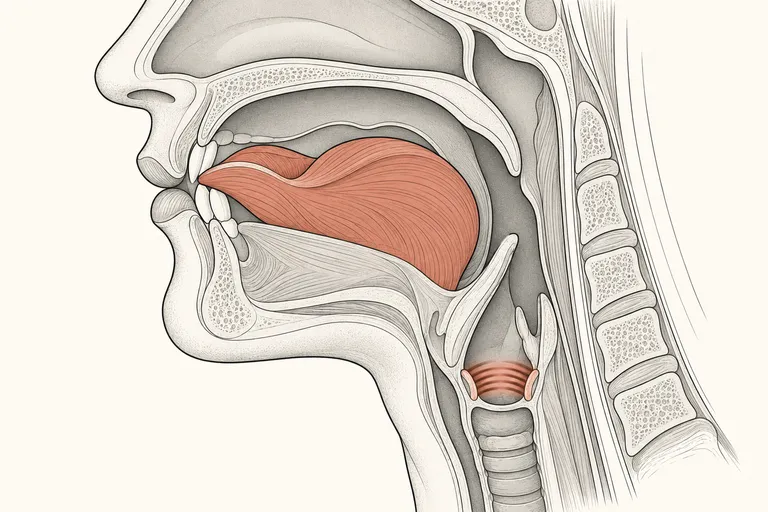
accepted
Tongue forms the identical groove, but the vocal folds vibrate throughout, adding a buzzing quality to the hiss.
Raised tongue remains continuous and anatomically plausible despite simplified muscle rendering.
attempt 0 · 2026-10-03
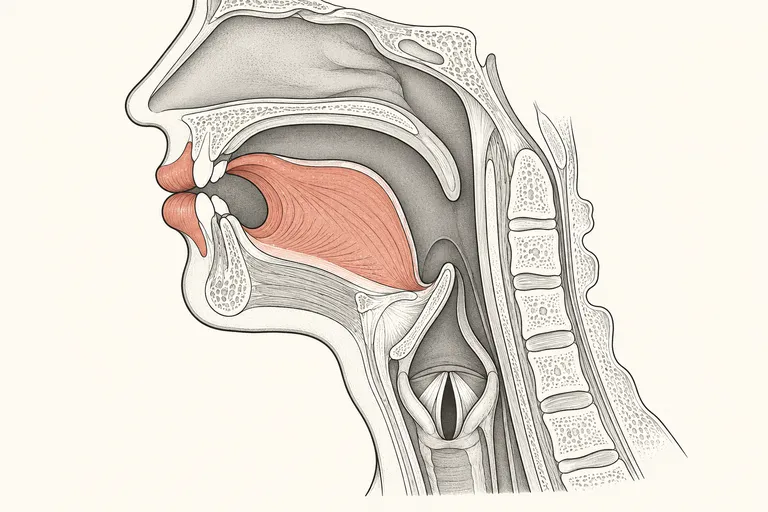
accepted
Tongue and lips form the same shape as for 'sh', but the vocal folds stay silent, producing a voiceless hushing sound.
Sagittal anatomy and tongue shape are visually plausible.
attempt 0 · 2026-10-03
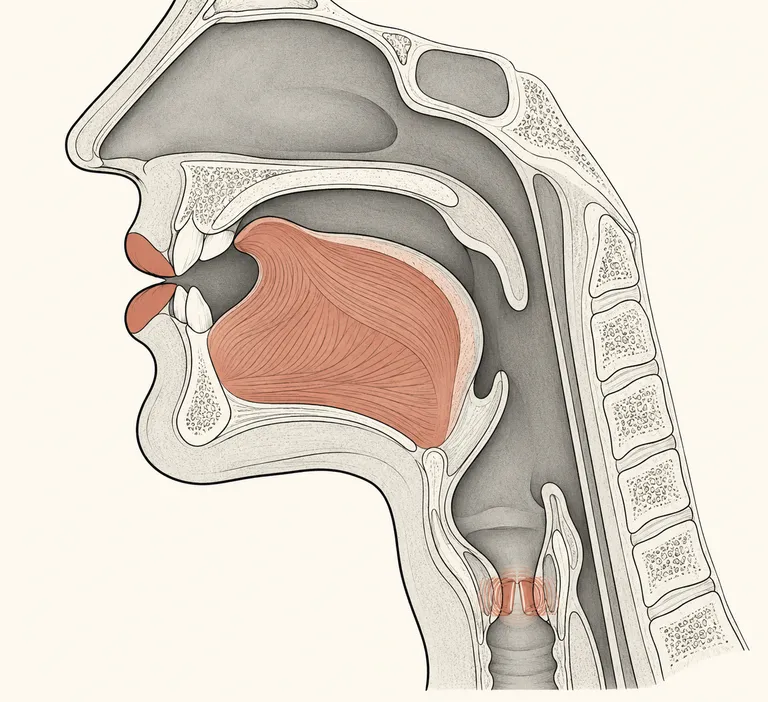
accepted
Tongue and lips form the identical shape, but the vocal folds vibrate throughout, adding a buzzing quality to the hush.
Tongue, teeth, airway, and vocal folds appear anatomically coherent.
attempt 0 · 2026-10-03
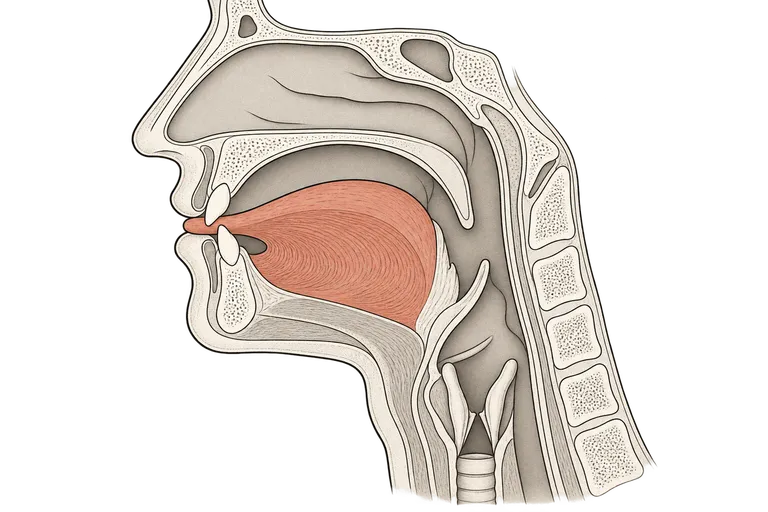
accepted
Tongue tip stays behind the teeth and forms a narrow groove like for /s/, producing a sharp hiss instead of the softer interdental sound.
Tongue is broad and naturally shaped without impossible curling or splitting.
attempt 0 · 2026-10-03
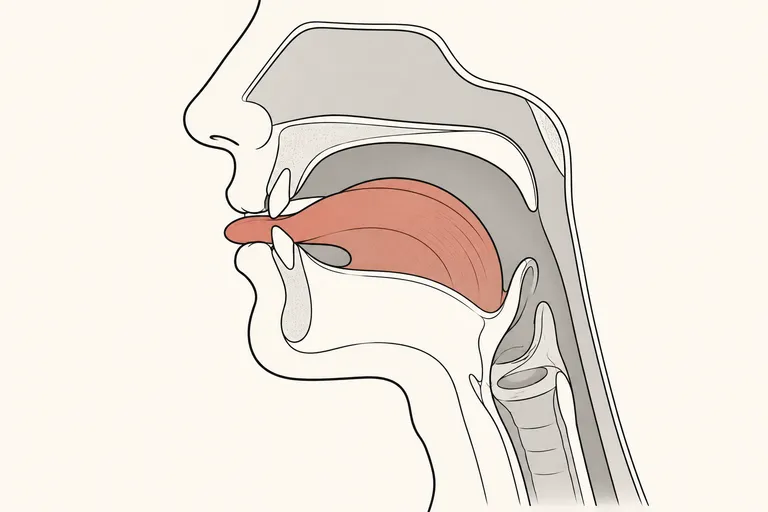
accepted
Tongue tip protrudes lightly between the upper and lower front teeth, letting air hiss gently over its surface with no vocal fold vibration.
Single continuous tongue protrudes slightly between the front teeth, consistent with the intended articulation.
attempt 1 · 2026-10-03
Language settings · ar (2)
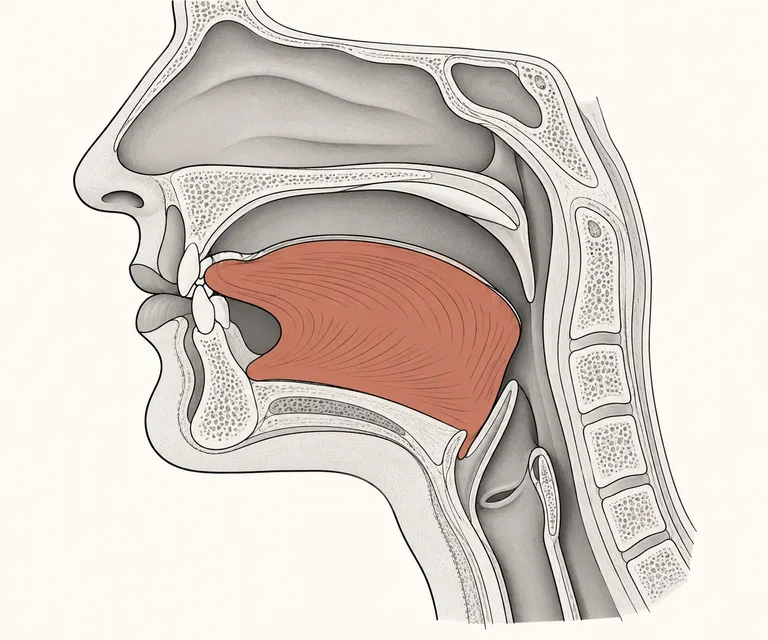
accepted
Side cross-section showing a neutral tongue-root position with an open pharyngeal space, tongue tip near the alveolar ridge.
Neutral tongue root, open pharynx, and forward tongue tip appear anatomically plausible.
attempt 0 · 2026-10-02
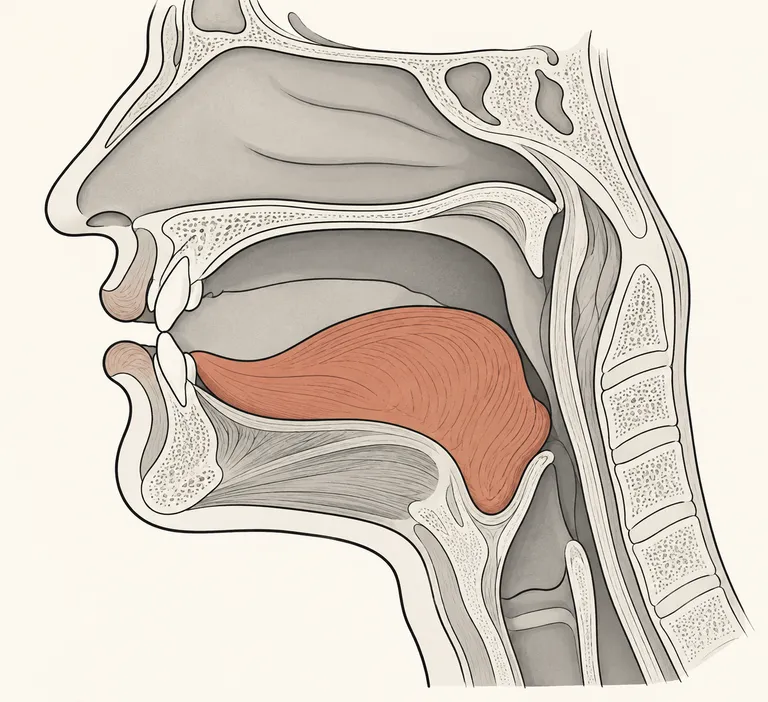
accepted
Same cross-section but with the tongue root pulled back and the pharynx visibly narrowed, tongue body lowered and bunched slightly toward the back.
Plausible sagittal anatomy with a lowered, posteriorly bunched tongue narrowing the pharynx.
attempt 0 · 2026-10-02
Language settings · bn (3)
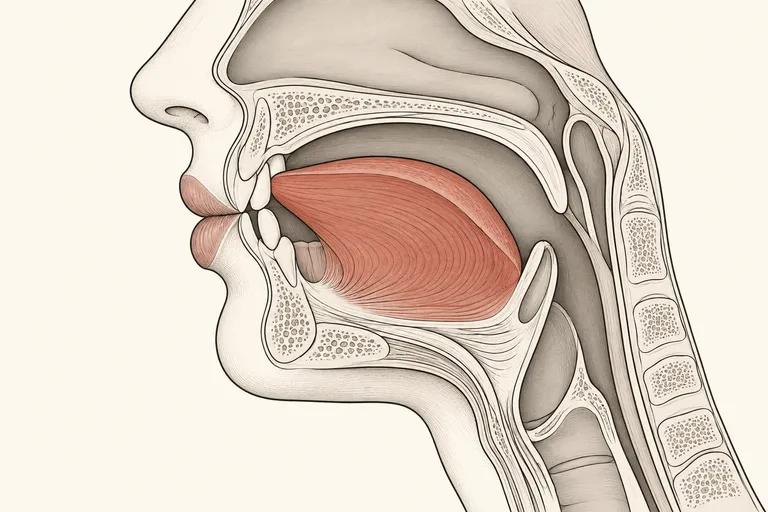
accepted
Mouth gently closed, jaw only slightly dropped, tongue resting forward and mid-high with the tip near the upper teeth.
Tongue is broad and intact, resting forward near the upper teeth without impossible deformation.
attempt 0 · 2026-10-02
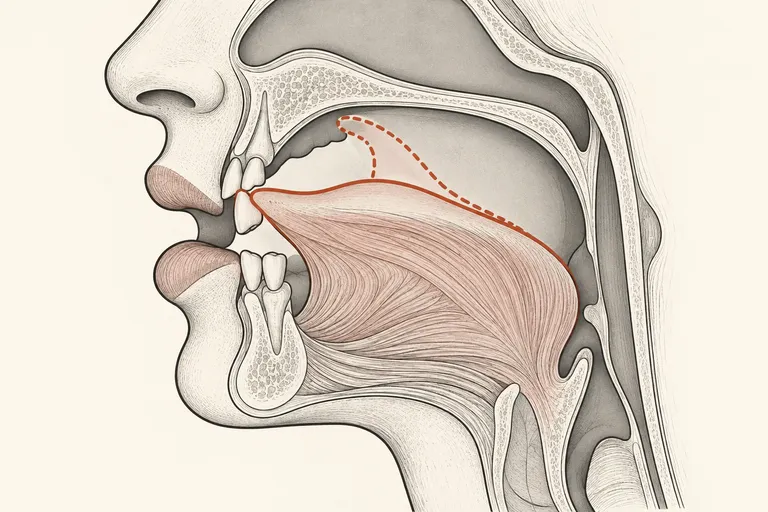
accepted
Two overlaid tongue outlines: one showing the tongue tip against the back of the upper teeth (dental stop), one showing the tongue tip curled back toward the hard palate (retroflex stop).
Solid and dashed tongue positions clearly depict dental and modest retroflex configurations without looping.
attempt 0 · 2026-10-02
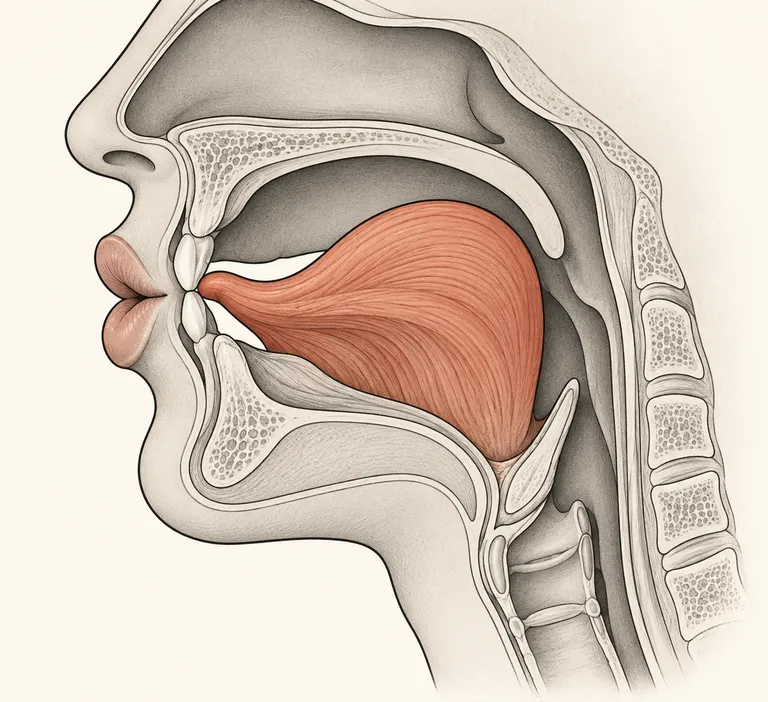
accepted
Lips rounded and slightly protruded for a back vowel, with tongue body raised toward the back of the mouth.
Rounded lips and raised posterior tongue form a plausible back-vowel posture.
attempt 0 · 2026-10-02
Language settings · de (2)
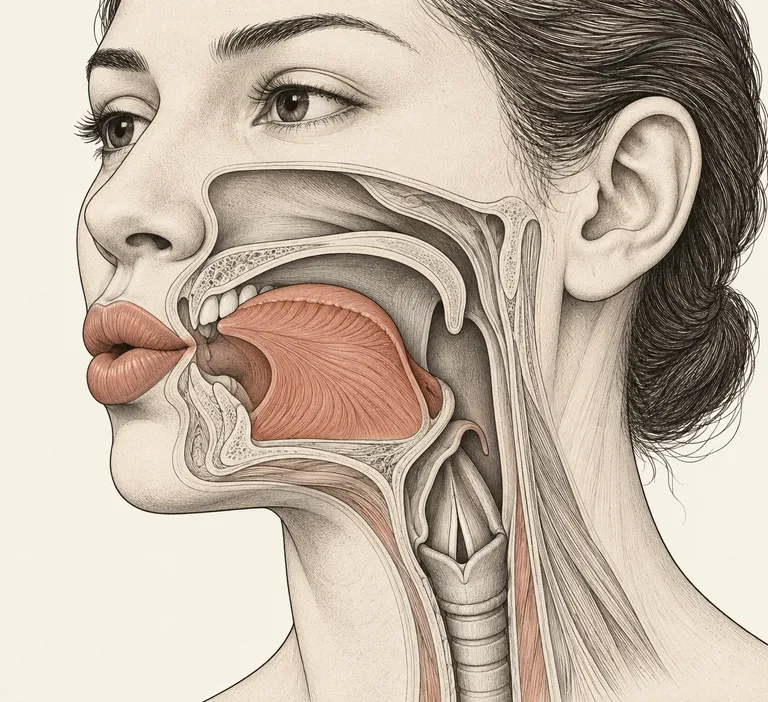
accepted
Neutral face at rest: lips gently closed, jaw relaxed but poised, tongue tip near the alveolar ridge.
Cutaway integrates coherently with the illustrated face; tongue and oral structures remain anatomically plausible.
attempt 0 · 2026-10-02
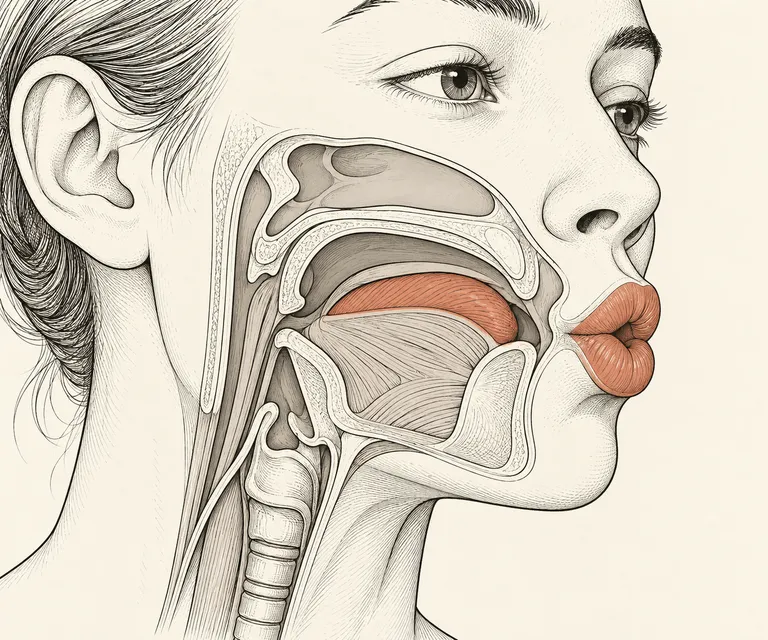
accepted
Lips pushed forward into a rounded shape while the tongue stays fronted and raised, illustrating a mouth posture with no equivalent in English.
Rounded lips and elevated tongue posture are plausible, with no splits, twists, or rendering defects.
attempt 0 · 2026-10-02
Language settings · el (2)
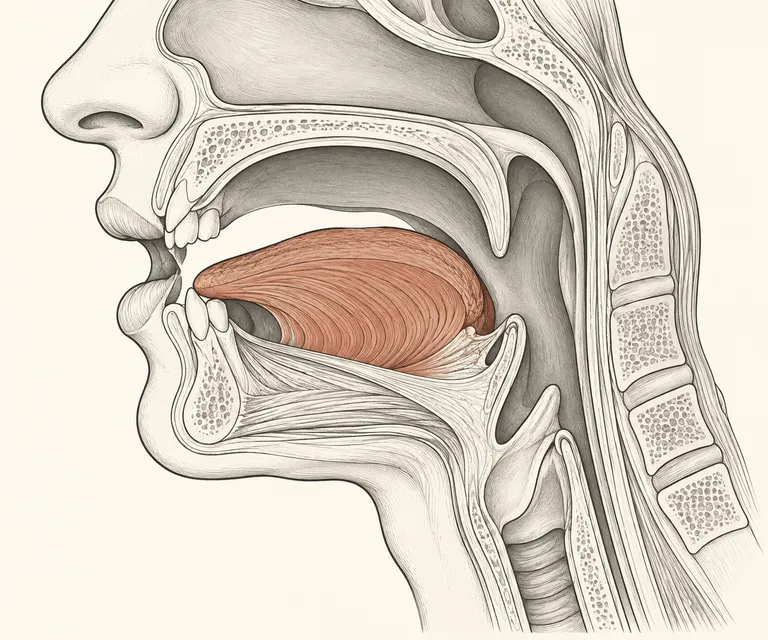
accepted
Jaw relaxed and moderately open, tongue centered and level, lips neutral, throat open and untensed.
Centered tongue, relaxed jaw, and open pharynx appear anatomically coherent.
attempt 0 · 2026-10-02
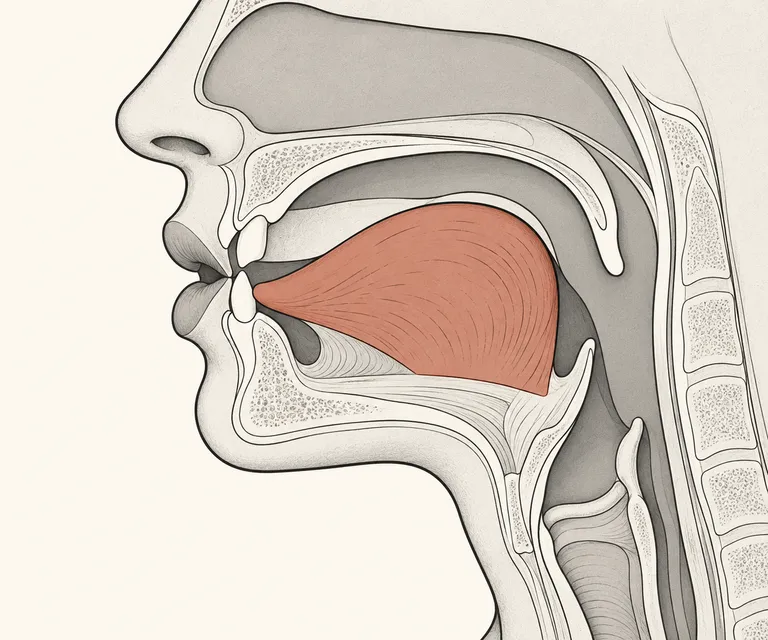
accepted
Tongue shifts smoothly to a clear, full vowel position without reducing toward the center, lips showing mild rounding for back vowels, even muscular effort visible across the mouth.
Smooth full tongue body and mildly rounded lips show a plausible sustained vowel posture.
attempt 0 · 2026-10-02
Language settings · en-US (2)
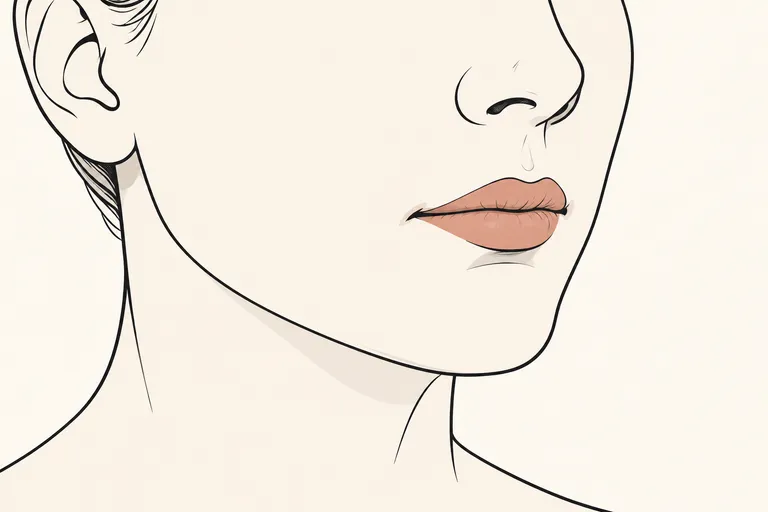
accepted
Mouth gently closed, jaw relaxed and slightly dropped, tongue tip curled slightly back near the lower gum ridge in readiness for the rhotic sound.
Closed lips and relaxed jaw appear anatomically plausible; tongue is hidden.
attempt 4 · 2026-10-03
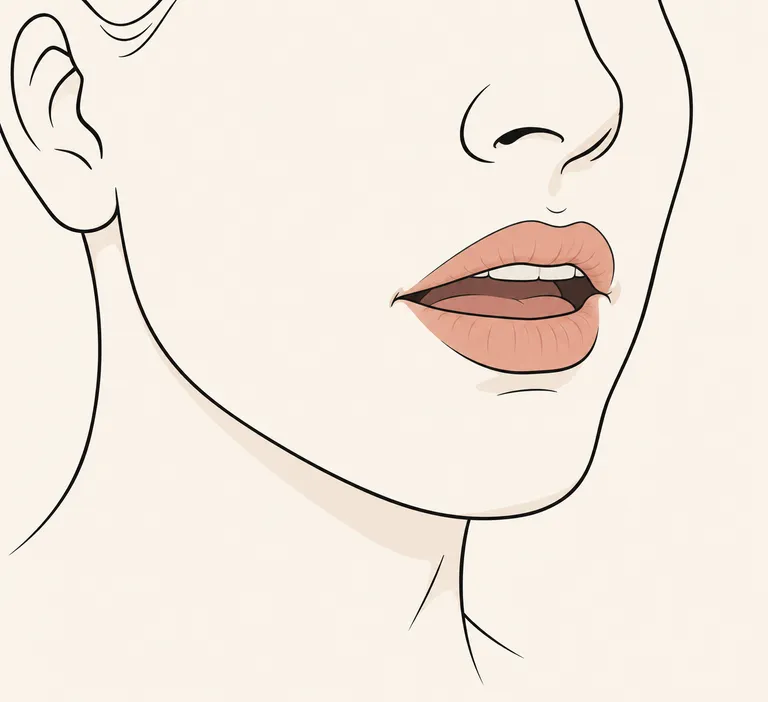
accepted
Jaw slightly lowered, lips loosely spread, tongue tip bunched and curled upward and backward without touching the roof of the mouth, as in producing 'r'.
Visible tongue, teeth, lips, and jaw are anatomically plausible, without excessive tongue curling or distortion.
attempt 4 · 2026-10-03
Language settings · es (2)
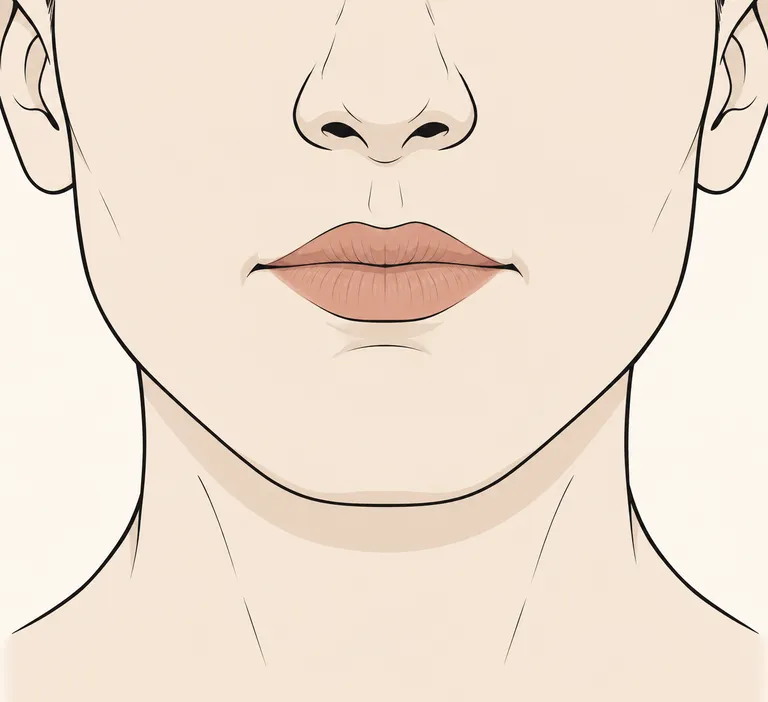
accepted
Lips gently closed and relaxed, jaw only slightly open, tongue tip resting near the upper gum ridge, cheeks loose.
Relaxed closed lips and frontal lower-face anatomy appear natural.
attempt 1 · 2026-10-03
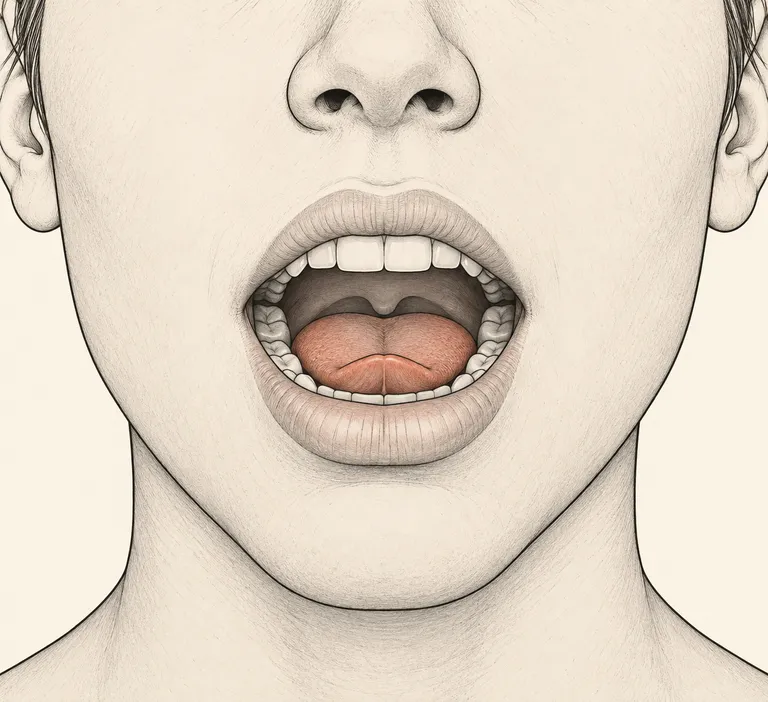
accepted
Jaw opens evenly, tongue stays low and central without bunching, lips stay neutral rather than spreading.
Tongue, teeth, lips, and jaw are anatomically plausible.
attempt 0 · 2026-10-02
Language settings · fr (2)
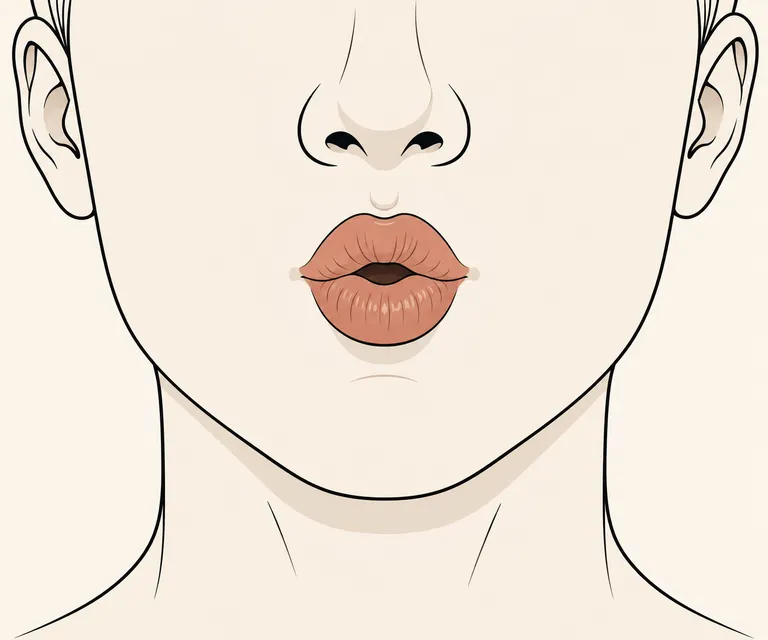
accepted
Lips pushed forward into a rounded shape while the tongue body stays high and fronted, as for a front rounded vowel.
Rounded, pursed lips form a plausible small opening; facial anatomy is coherent.
attempt 1 · 2026-10-03
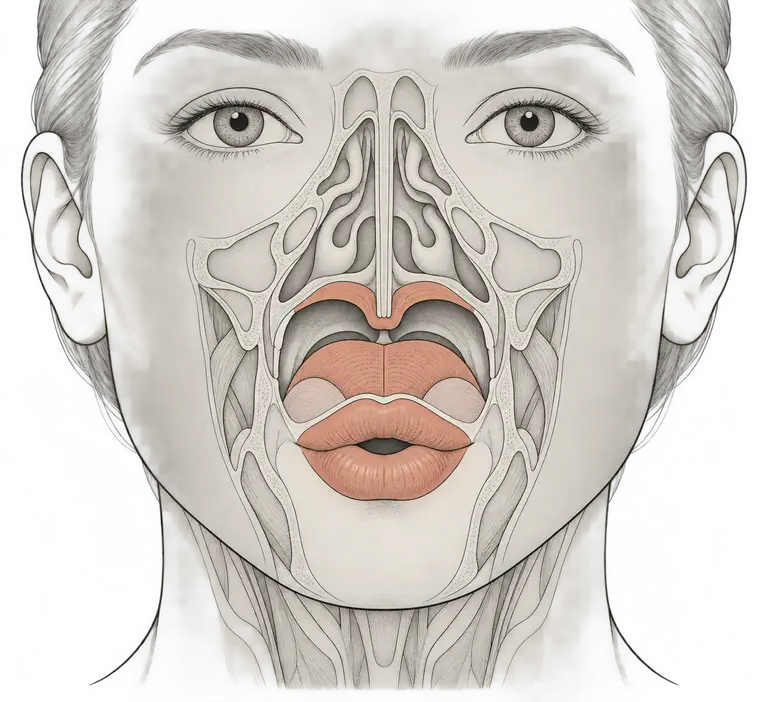
accepted
Mouth holds an oral vowel shape while the velum lowers so air passes through the nose as well as the mouth.
The cutaway plausibly shows an oral posture with a lowered velum.
attempt 0 · 2026-10-02
Language settings · hi (2)
accepted
Neutral face at rest: lips gently closed, jaw relaxed, tongue tip resting near the upper front teeth.
Neutral face with gently closed lips and anatomically coherent features.
attempt 1 · 2026-10-03
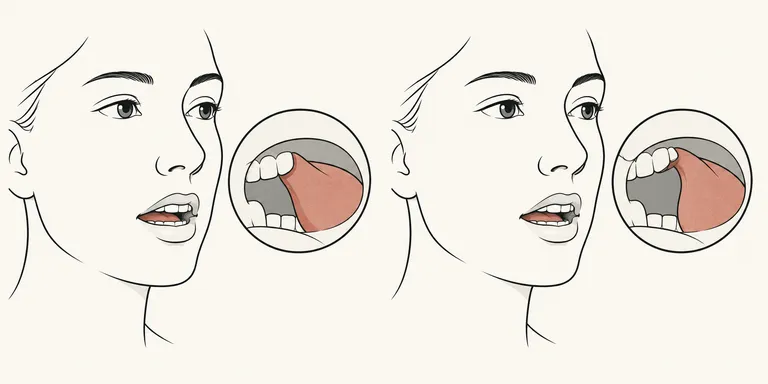
accepted
Two tongue placements shown side by side: tongue tip against the upper teeth for a dental sound, and tongue tip curled back toward the hard palate for a retroflex sound.
Both tongue placements remain plausible, without loops, splits, or excessive elongation.
attempt 1 · 2026-10-03
Language settings · hu (2)
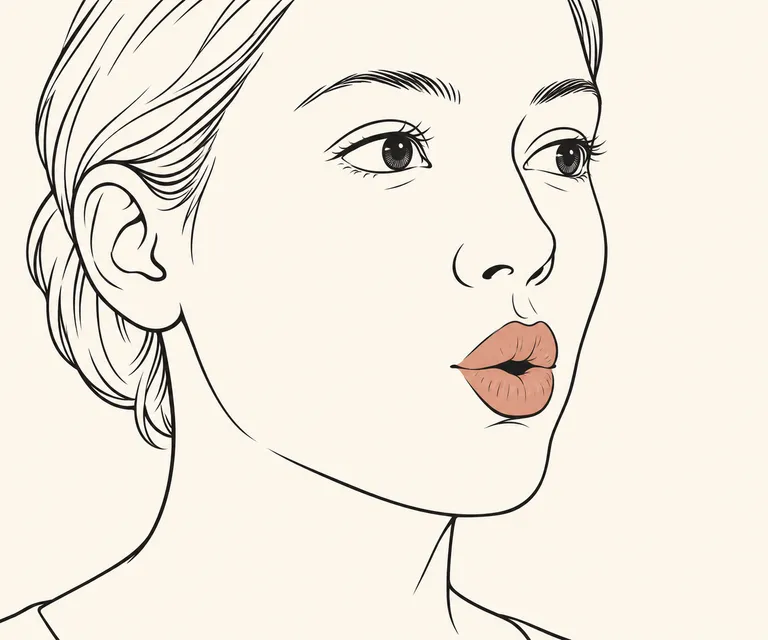
accepted
Jaw steady, lips gently rounded and slightly forward, tongue body sitting high and forward in the mouth.
Rounded lips and facial anatomy appear natural.
attempt 2 · 2026-10-03
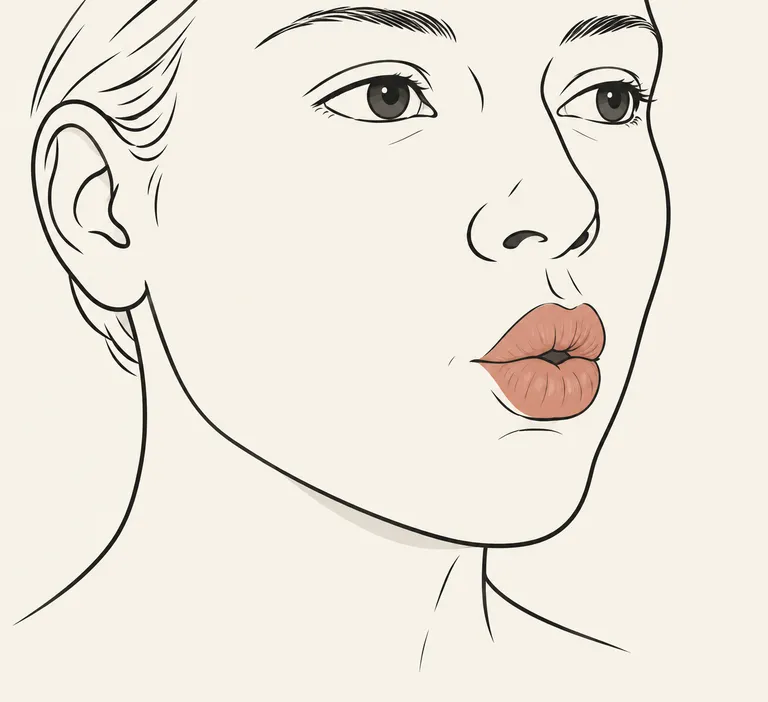
accepted
Lips pushed forward and rounded like a whistling shape, tongue tip low near the lower teeth while the tongue body arches high and forward.
Rounded, protruded lips form a plausible whistling shape; no anatomical abnormalities are visible.
attempt 1 · 2026-10-03
Language settings · it (2)
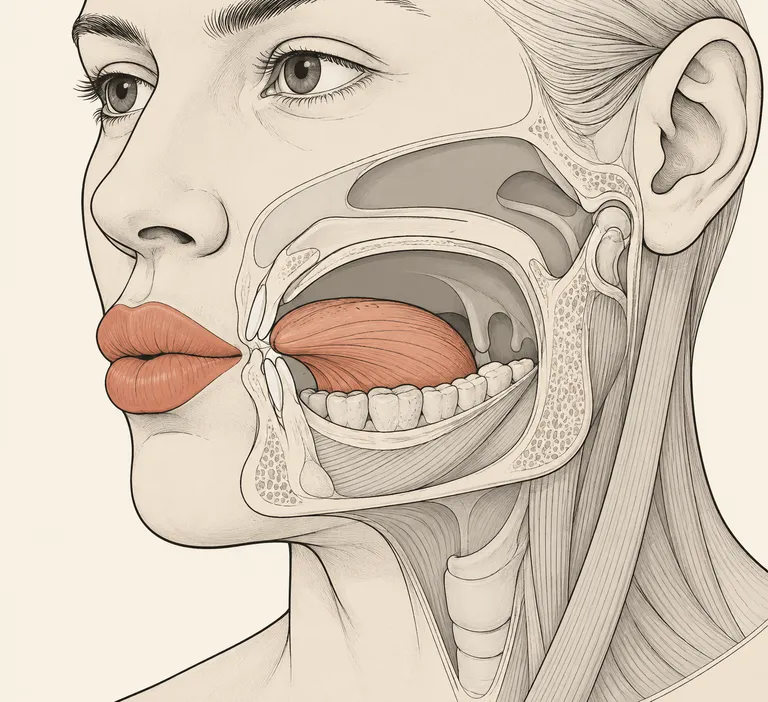
accepted
Jaw loosely closed, lips softly together, tongue resting toward the front of the mouth
Tongue, teeth, lips, and jaw form a visually coherent anatomical cutaway.
attempt 0 · 2026-10-02
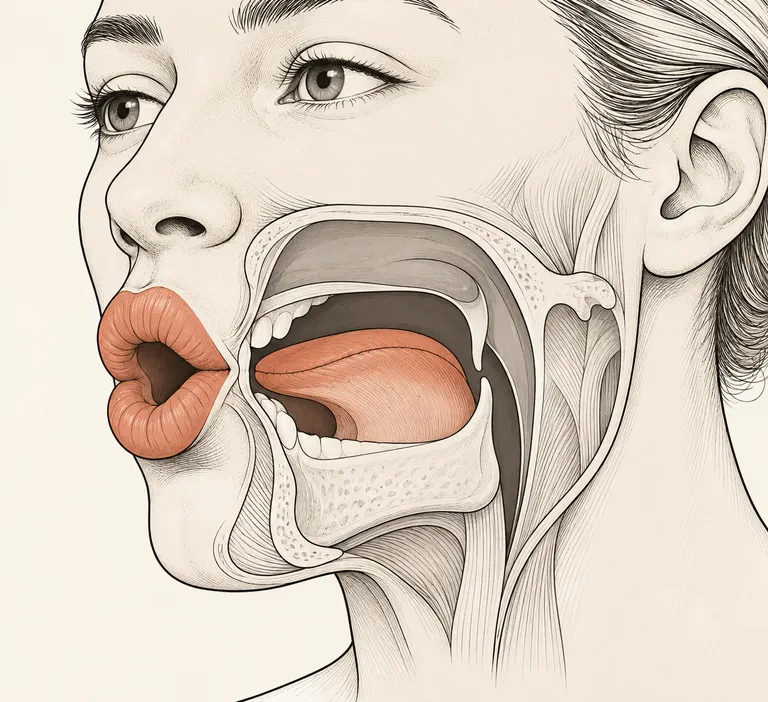
accepted
Jaw dropped moderately, lips rounded and pushed forward for a back vowel, cheeks slightly engaged
Tongue shape and moderately open, rounded mouth are anatomically plausible.
attempt 0 · 2026-10-02
Language settings · ja (3)
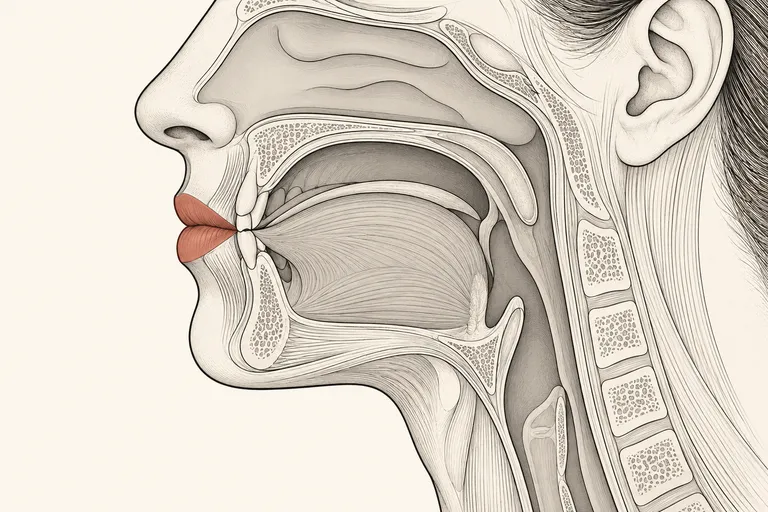
accepted
Side profile showing a closed, relaxed jaw, lips lightly together, and the tongue resting in a neutral mid-mouth position.
Closed lips and broad neutral tongue position are anatomically plausible.
attempt 0 · 2026-10-02
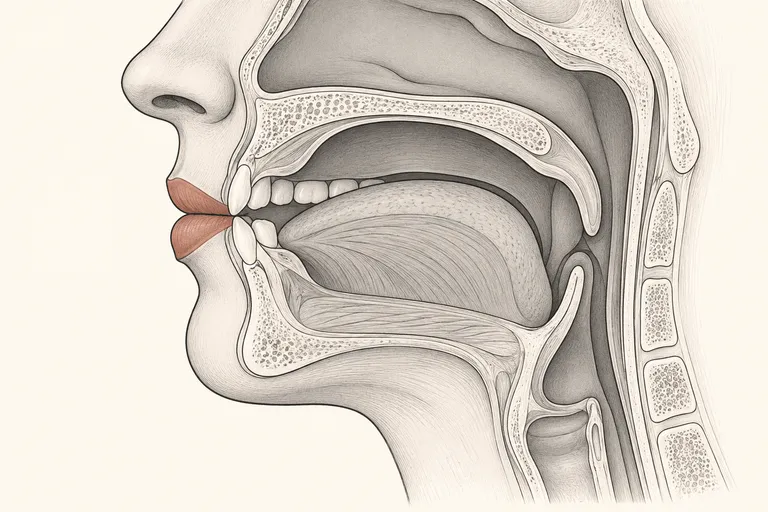
accepted
Mouth slightly open with only a small jaw drop, much less than the wide opening used for English 'father'.
Slight jaw opening and gently arched tongue appear anatomically coherent.
attempt 0 · 2026-10-02
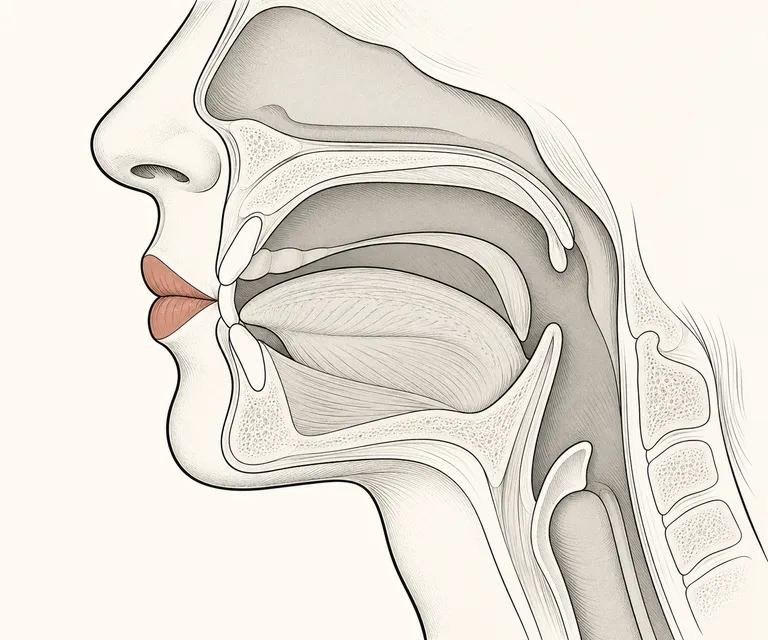
accepted
Lips lightly compressed toward each other rather than pushed forward and rounded, showing the difference from English rounded 'oo'.
Compressed lips and neutral tongue posture are plausible despite schematic simplification.
attempt 0 · 2026-10-02
Language settings · ko (3)
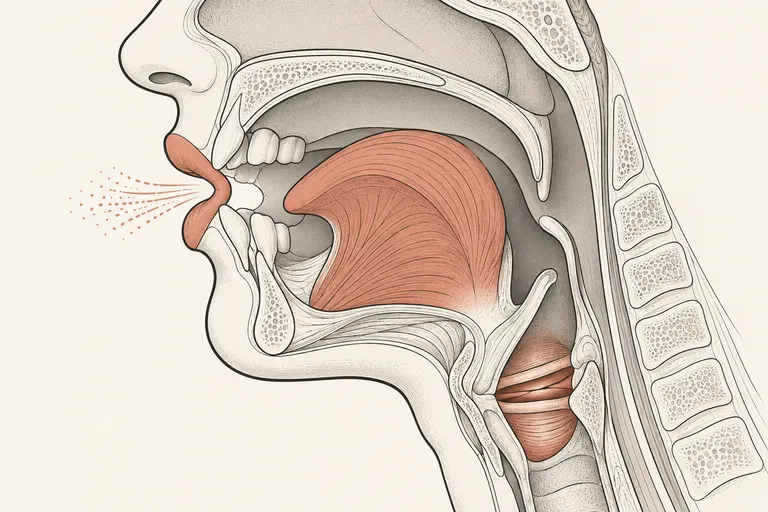
accepted
Side profile with a moderately open jaw, neutral lip position, and the tongue resting slightly further back than in Japanese.
Broad retracted tongue and moderately open jaw remain anatomically plausible.
attempt 0 · 2026-10-02
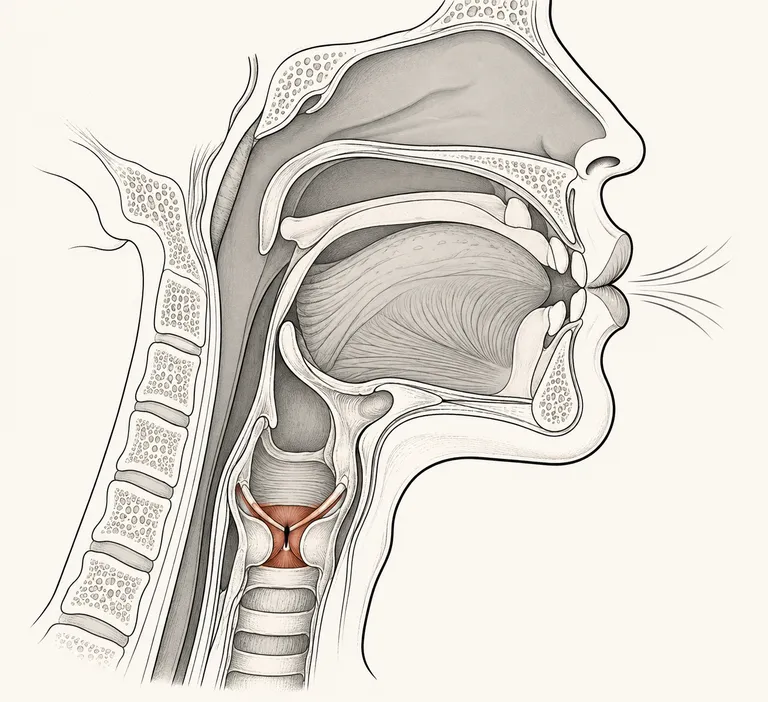
accepted
Larynx area highlighted to show a brief, tight glottal closure and increased laryngeal tension typical of fortis (tense) consonants.
Plausible sagittal vocal tract with appropriately highlighted laryngeal structures.
attempt 0 · 2026-10-02
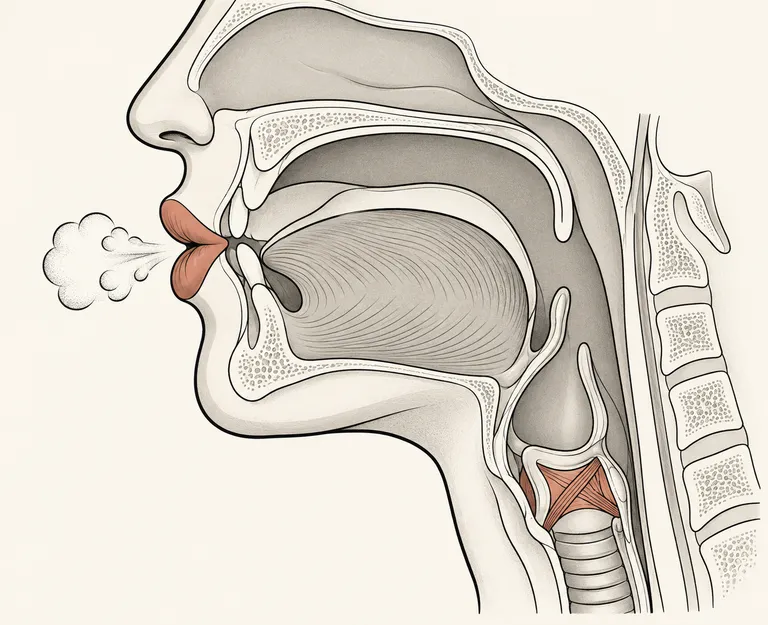
accepted
Small arrow or puff-of-air symbol near the lips showing the strong burst of air that follows aspirated consonants.
Anatomically coherent sagittal mouth with a clear external air-puff symbol.
attempt 0 · 2026-10-02
Language settings · nl (2)
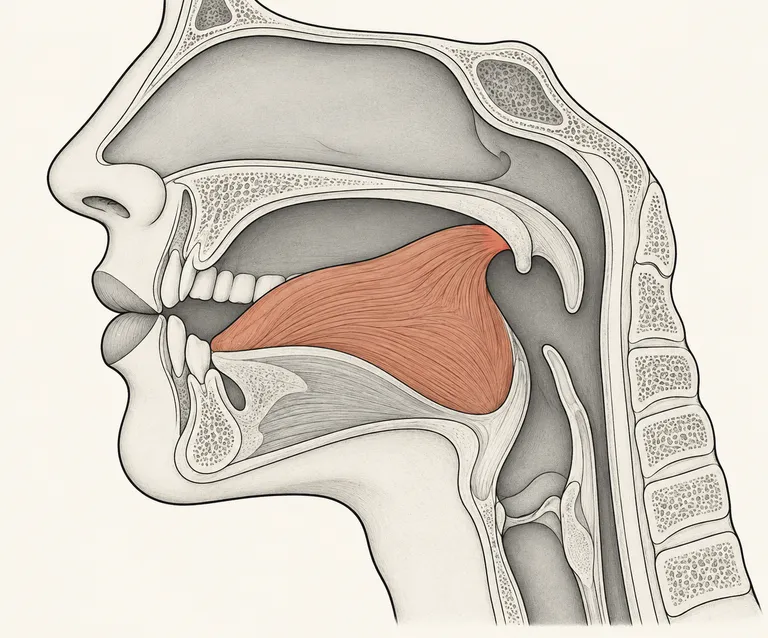
accepted
Jaw loosely closed, tongue tip low and tongue body slightly forward and raised, lips neutral, throat relaxed.
Tongue is broad, intact, and plausibly positioned slightly forward and raised.
attempt 0 · 2026-10-02
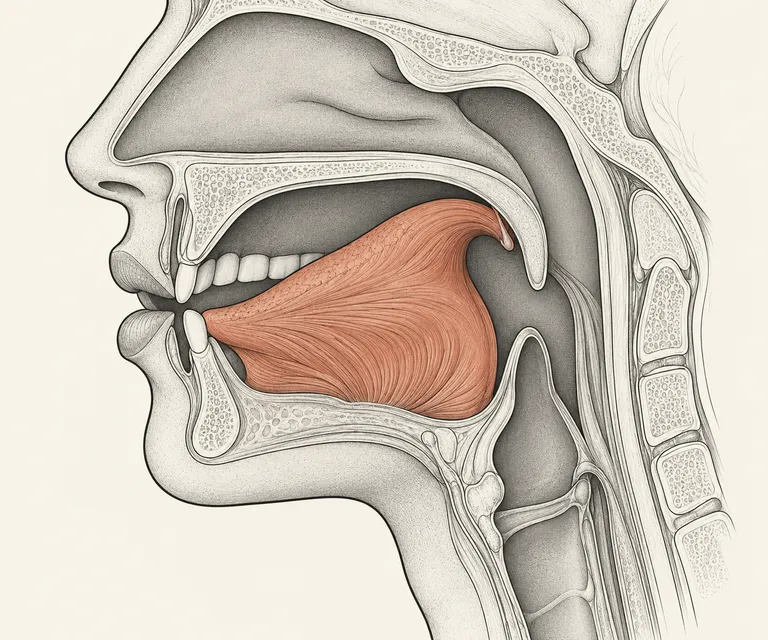
accepted
Tongue back arches up toward the uvula/soft palate creating a narrow channel, visible tension at the back of the tongue and upper throat, mouth slightly open.
Tongue back arches toward the soft palate without twisting or looping.
attempt 0 · 2026-10-02
Language settings · pl (3)
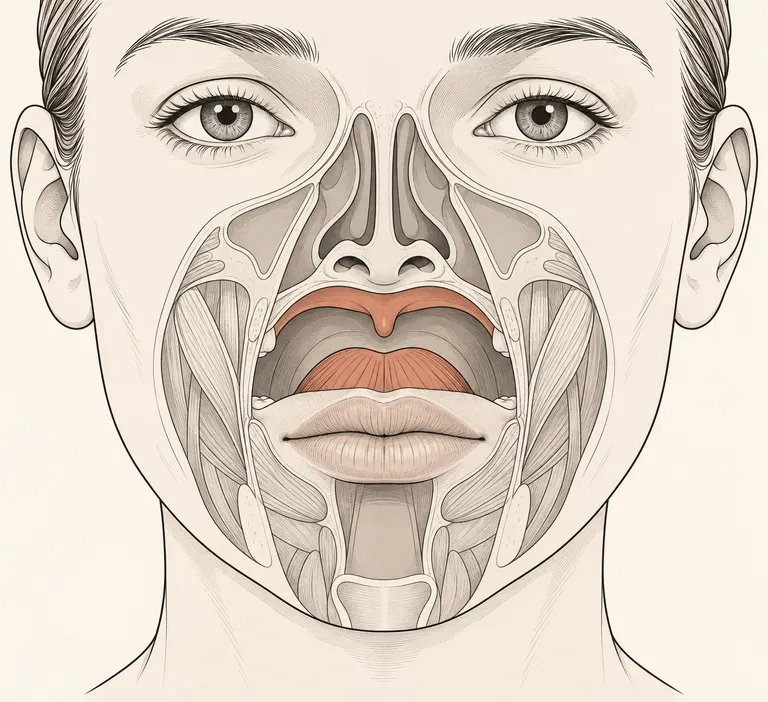
accepted
Baseline face at rest with lips neutral, jaw slightly closed, illustrating Polish's everyday resting posture.
Stylized frontal cutaway remains visually coherent with intact oral structures.
attempt 0 · 2026-10-02
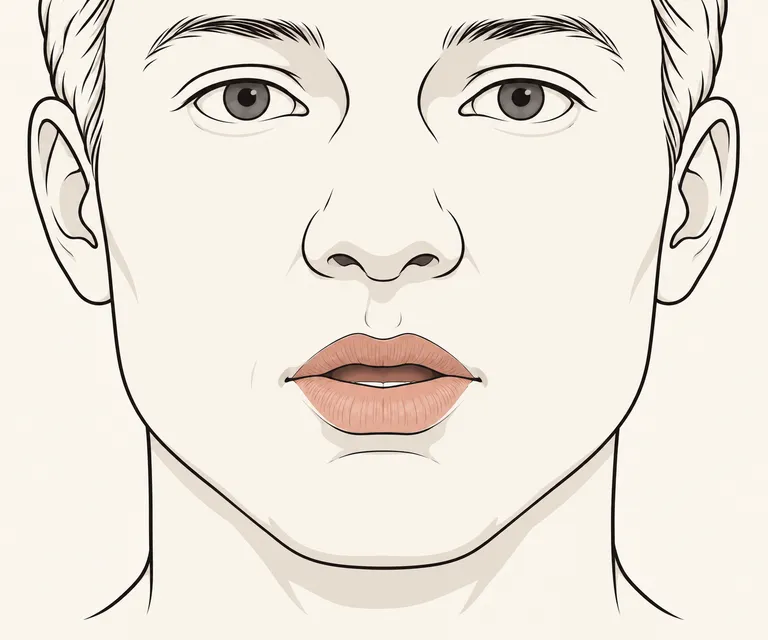
accepted
Tongue blade and tip tensed and precisely placed for a cluster onset such as in 'wstrz-'.
Lips, jaw, and visible mouth opening are anatomically plausible.
attempt 1 · 2026-10-03
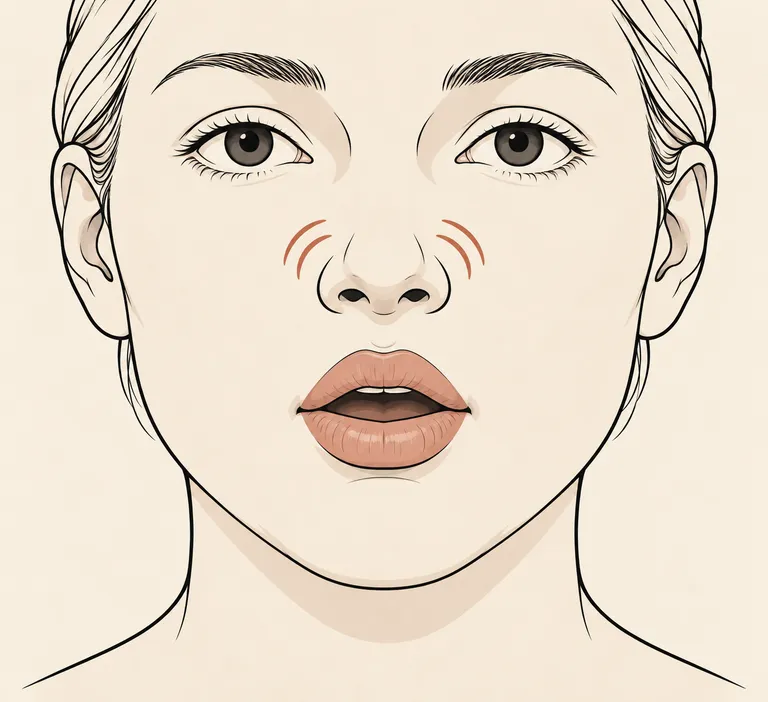
accepted
Velum lowered slightly to produce the nasal vowel 'ą', with soft nasal resonance visible in the diagram.
Facial anatomy is plausible; nasal resonance marks introduce no anatomical distortion.
attempt 1 · 2026-10-03
Language settings · pt-BR (2)
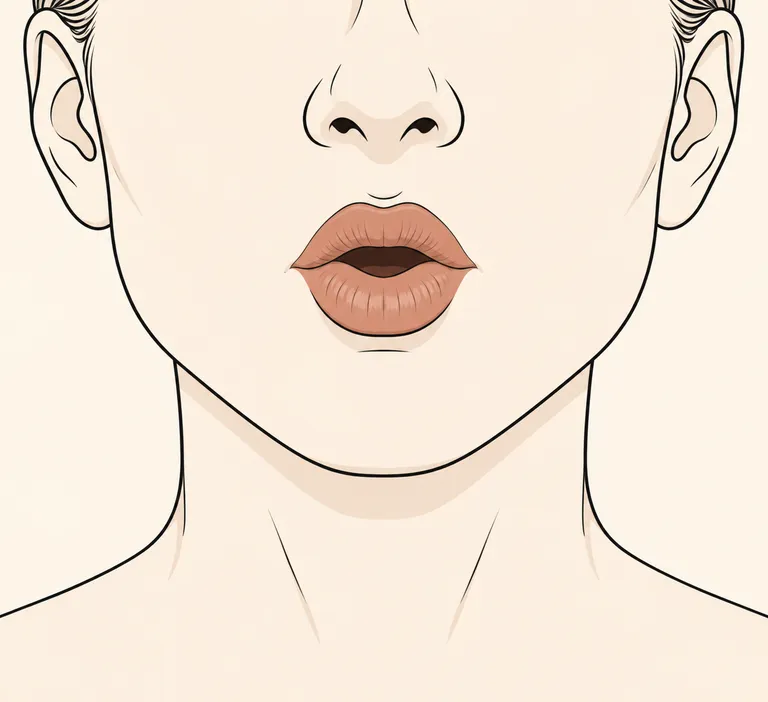
accepted
Face at rest, lips loosely rounded, jaw slightly dropped, velum raised so air flows only through the mouth.
Loosely rounded lips and slightly open jaw appear anatomically natural.
attempt 1 · 2026-10-03
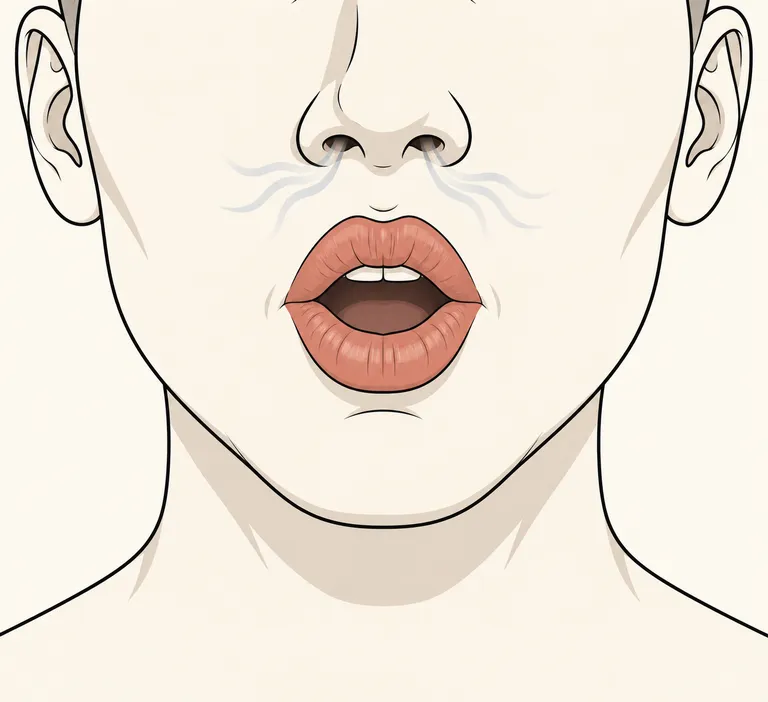
accepted
Same mouth shape but velum drawn down, soft palate lowered, and a faint suggestion of airflow escaping through the nose alongside the mouth, lips still rounded.
Rounded lips, visible teeth, tongue, and facial structures are anatomically plausible; airflow marks are schematic.
attempt 2 · 2026-10-03
Language settings · ru (2)
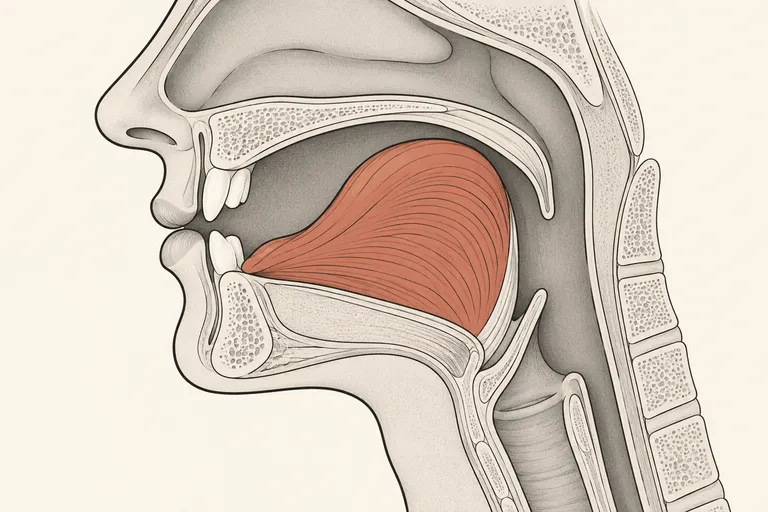
accepted
Tongue body pulled back and slightly raised toward the soft palate, tongue tip low, lips neutral and unrounded.
The retracted, slightly raised tongue body and low tip are anatomically plausible.
attempt 0 · 2026-10-02
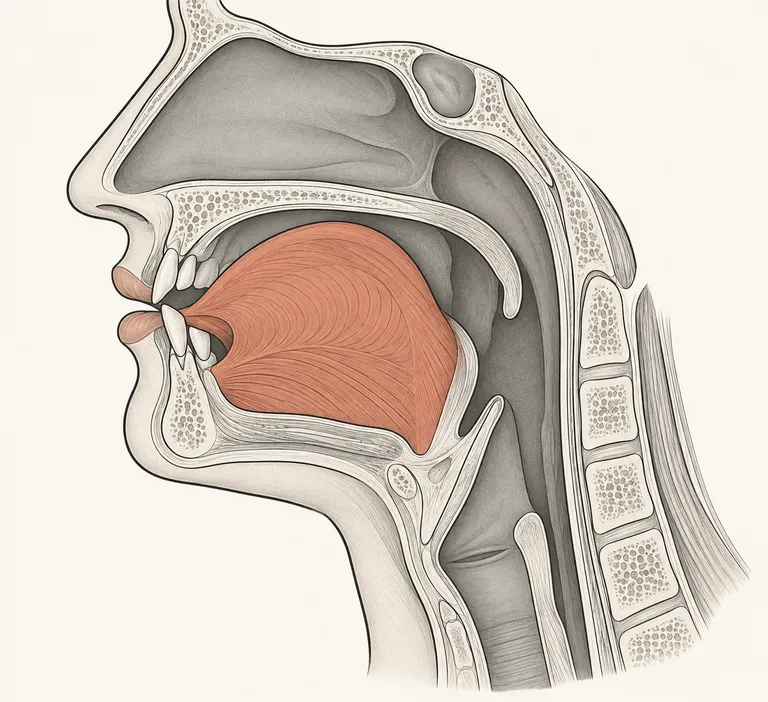
accepted
Tongue body arches forward and high toward the hard palate, tongue tip may touch the lower teeth, lips slightly spread.
The forward high tongue arch and low tip appear anatomically plausible.
attempt 0 · 2026-10-02
Language settings · ta (3)
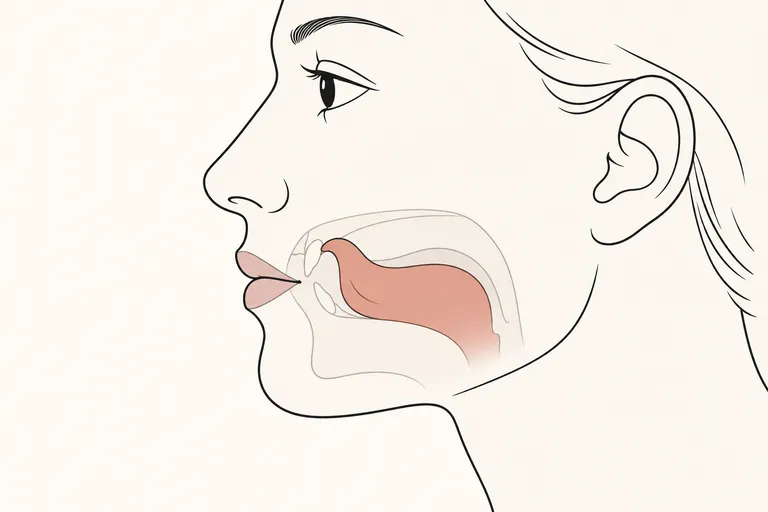
accepted
Jaw moderately closed, lips neutral, tongue tip resting near the upper teeth.
Single continuous tongue rises toward the upper teeth without looping or excessive curling.
attempt 1 · 2026-10-03
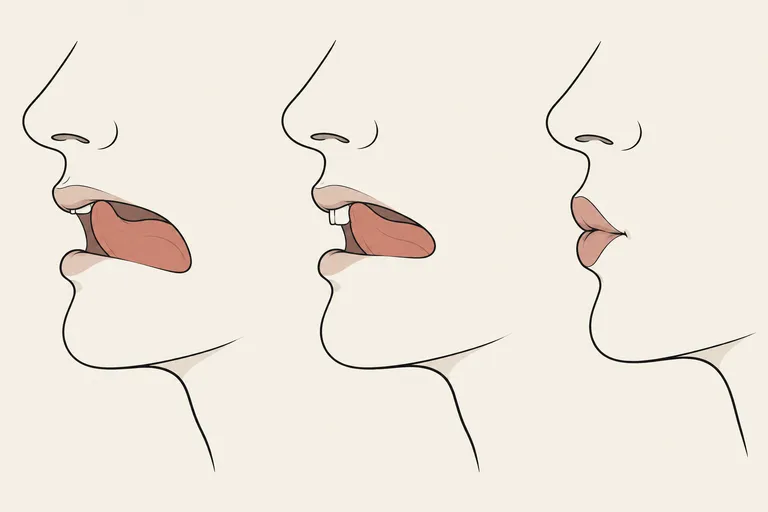
accepted
Tongue tip curled upward and back toward the hard palate, illustrating the retroflex consonant position that often replaces English alveolar sounds.
Multiple schematic mouths show single tongues with plausible upward bends and reasonable oral anatomy.
attempt 3 · 2026-10-04
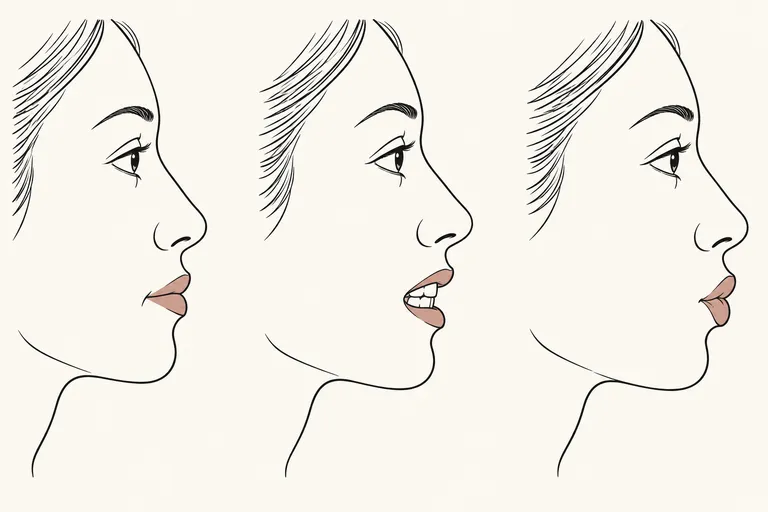
accepted
Tongue tip pressed against the back of the upper front teeth, illustrating the dentalized stop used in place of English th sounds.
Profile faces, lips, teeth, and jaw positions are anatomically plausible.
attempt 1 · 2026-10-03
Language settings · th (3)
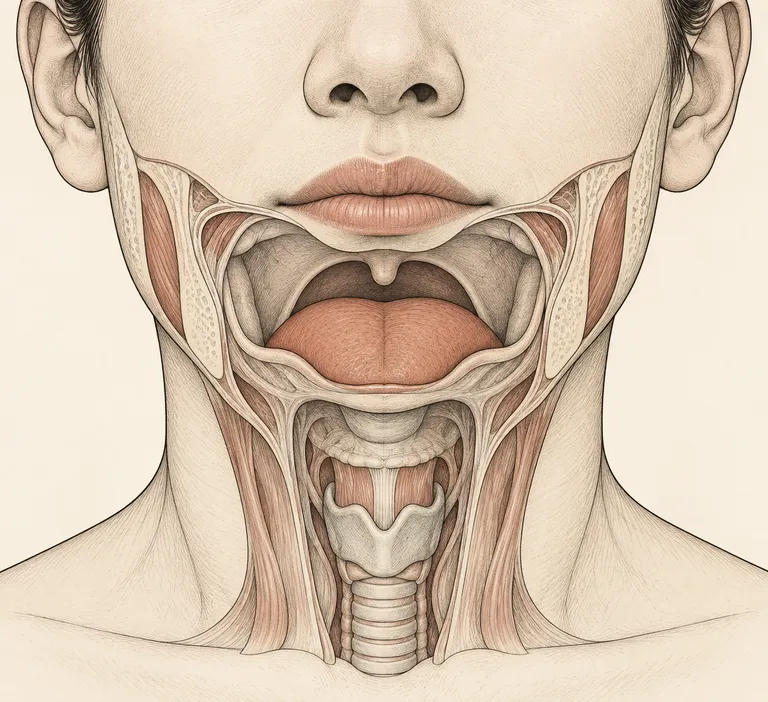
accepted
Jaw neutral, lips relaxed and less spread than English, tongue resting central-low, larynx relaxed.
The central-low tongue, relaxed lips, jaw, and laryngeal anatomy are visually coherent.
attempt 0 · 2026-10-02
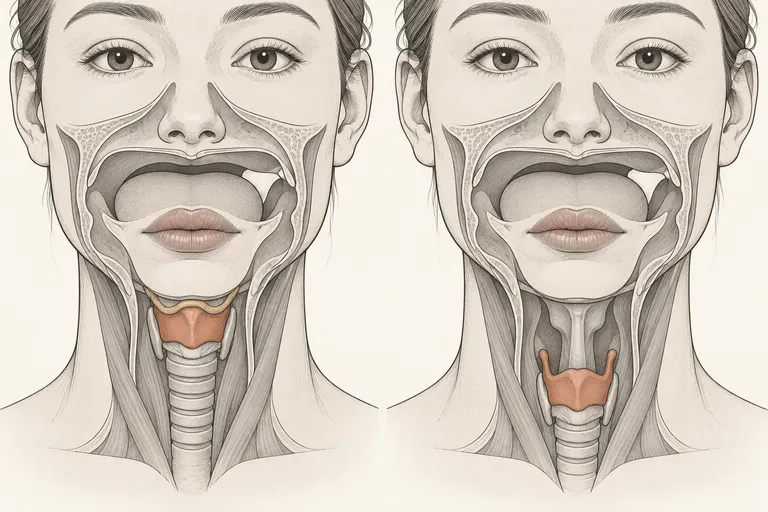
accepted
Larynx height shifts noticeably, raised for a high tone or lowered for a low tone, while the mouth shape for the vowel itself stays constant.
The paired cutaways plausibly show different larynx heights with consistent mouth shape.
attempt 0 · 2026-10-02
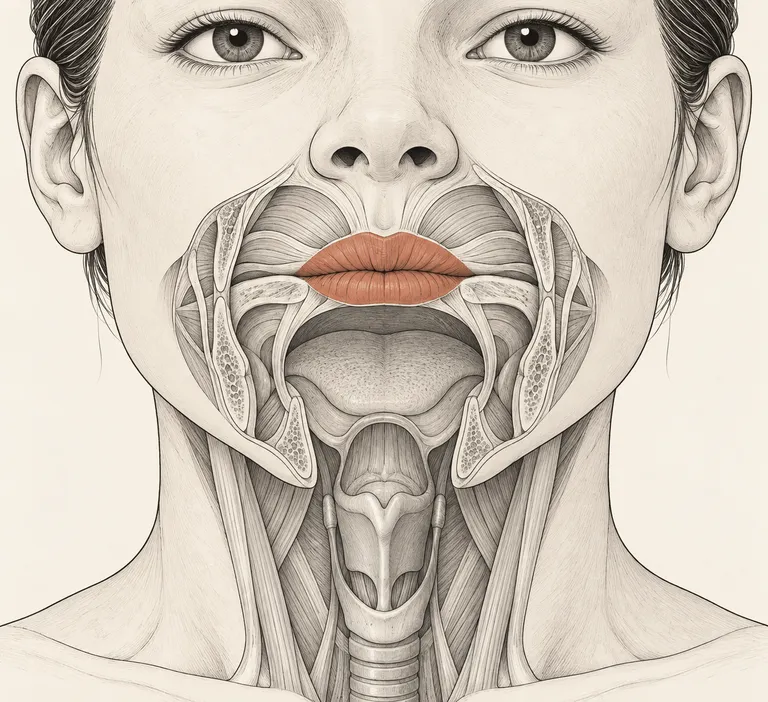
accepted
Lips or tongue close for a final consonant such as p, t, or k but stop short of a release burst, unlike English's audible release.
Stylized frontal cutaway, but the tongue and visible vocal structures remain anatomically plausible.
attempt 0 · 2026-10-02
Language settings · tr (3)
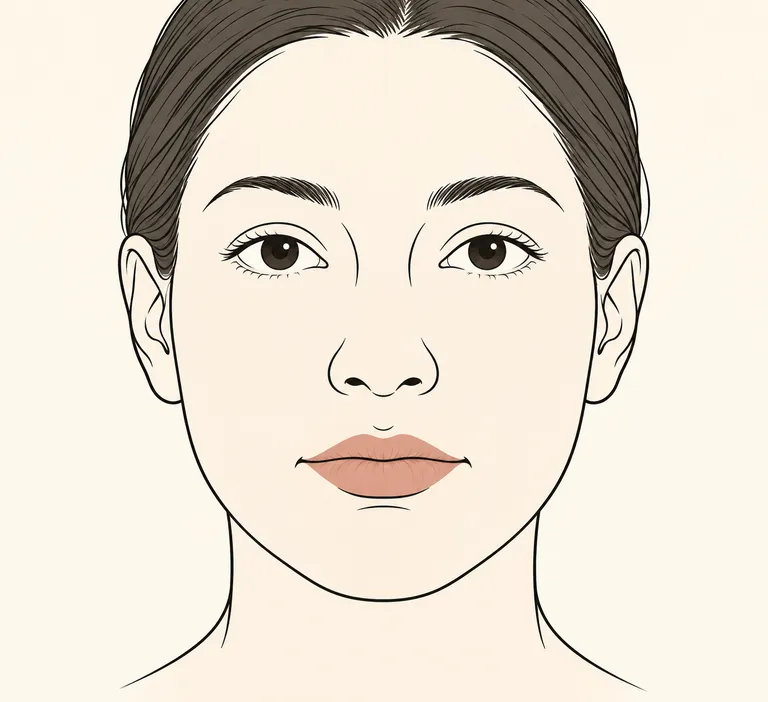
accepted
Face at rest showing the relaxed jaw, neutral lips, and low pharyngeal tension typical of Turkish's baseline articulatory setting.
Resting face has plausible anatomy, relaxed lips, and a neutral jaw.
attempt 1 · 2026-10-03
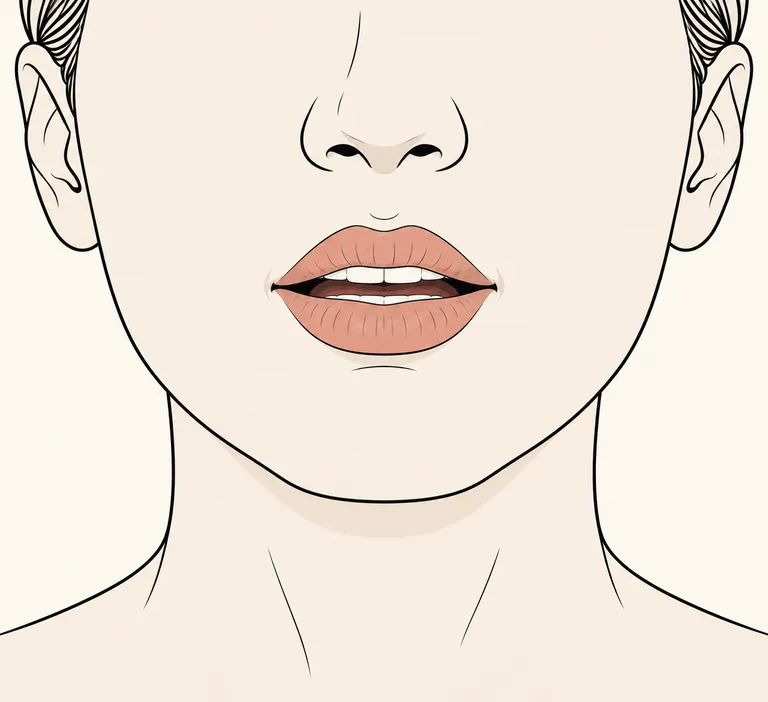
accepted
Tongue fronted and body slightly raised, lips unrounded, illustrating articulation of a front vowel such as in 'ev' (house).
Slightly parted lips and visible teeth appear anatomically plausible.
attempt 1 · 2026-10-03
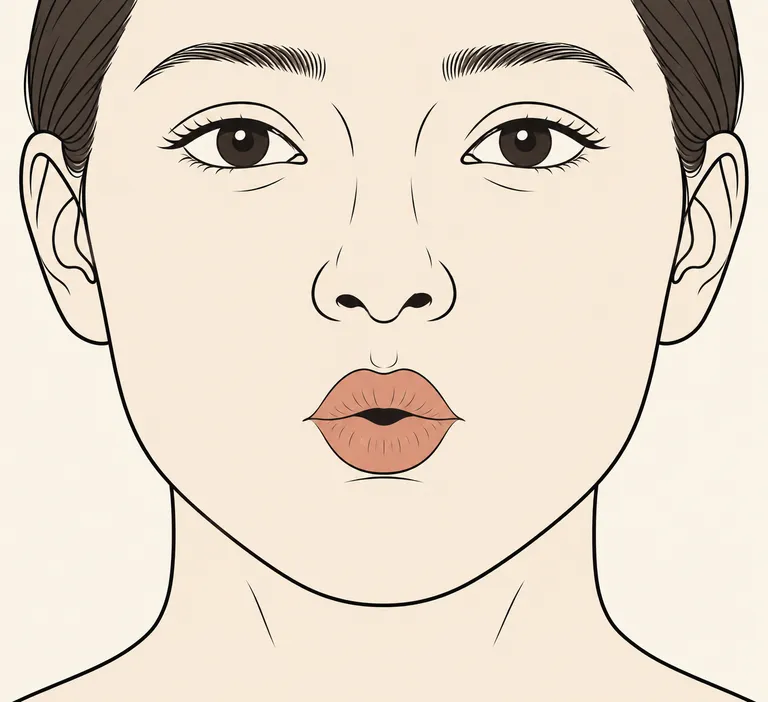
accepted
Tongue retracted toward the back of the mouth with optional lip rounding, illustrating a back vowel such as in 'okul' (school).
Rounded lips and facial proportions are anatomically plausible.
attempt 1 · 2026-10-03
Language settings · uk (3)
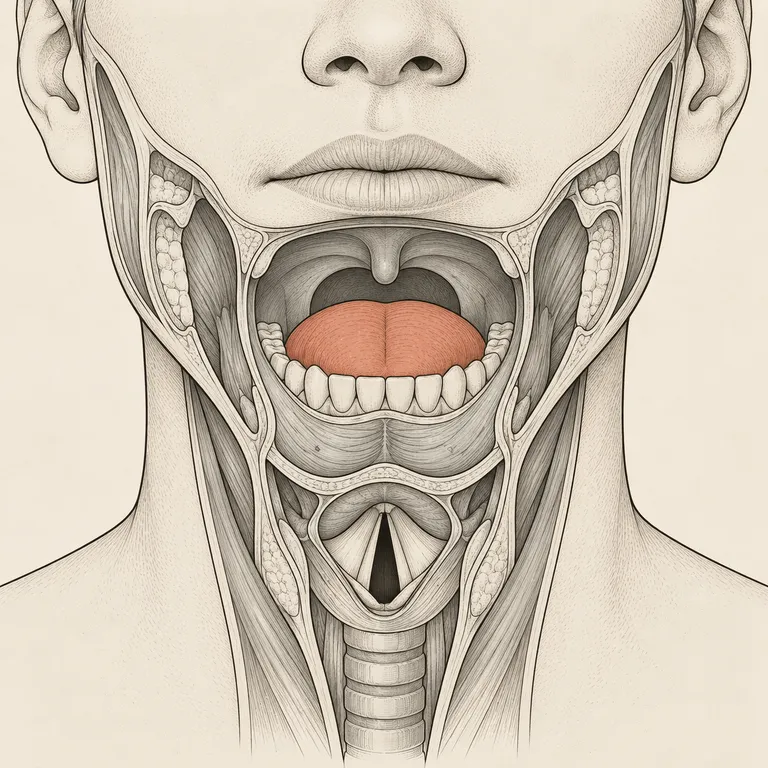
accepted
Mouth closed, jaw relaxed but not dropped, lips neutral, tongue resting forward-high behind the lower teeth.
The exposed cutaway is stylized, but tongue shape and surrounding anatomy are visually plausible.
attempt 0 · 2026-10-02
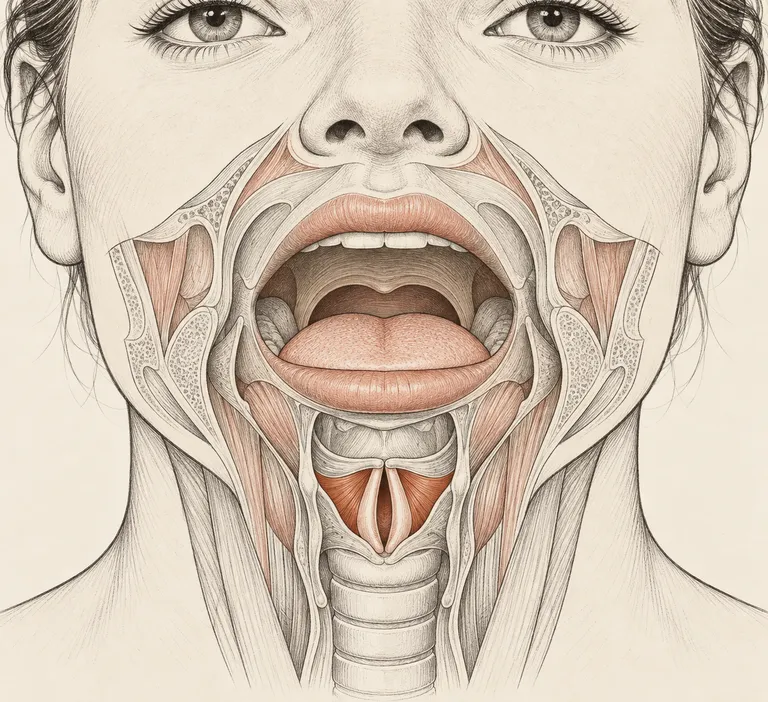
accepted
Slight glottal opening with breathy airflow and no back-of-tongue constriction, contrasting with a velar stop.
Tongue, oral cavity, and slightly open glottis appear anatomically coherent.
attempt 0 · 2026-10-02
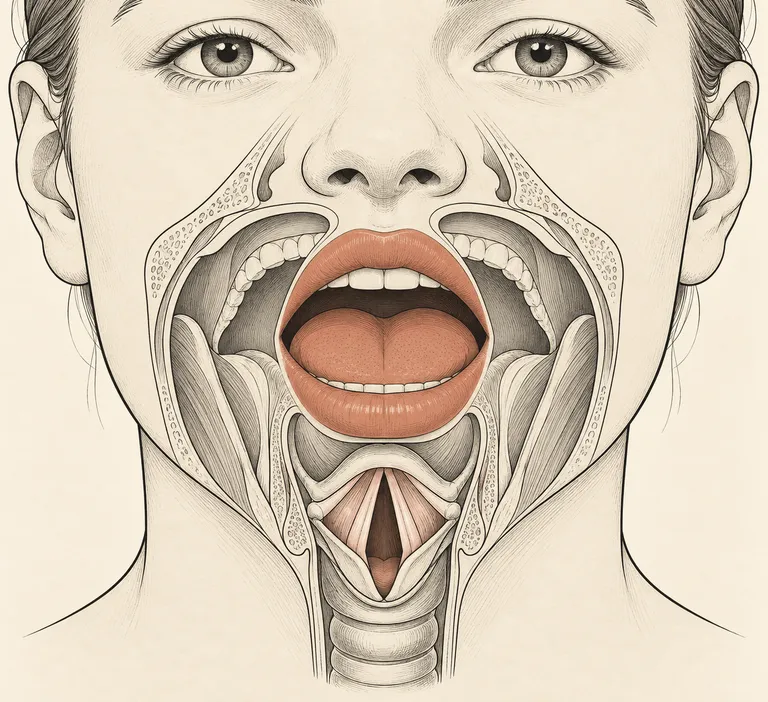
accepted
Lips and tongue keep a full, undiminished vowel shape even though the syllable is unstressed, with no schwa collapse.
Broad tongue with a central groove is plausible and not split or duplicated.
attempt 0 · 2026-10-02
Language settings · vi (2)
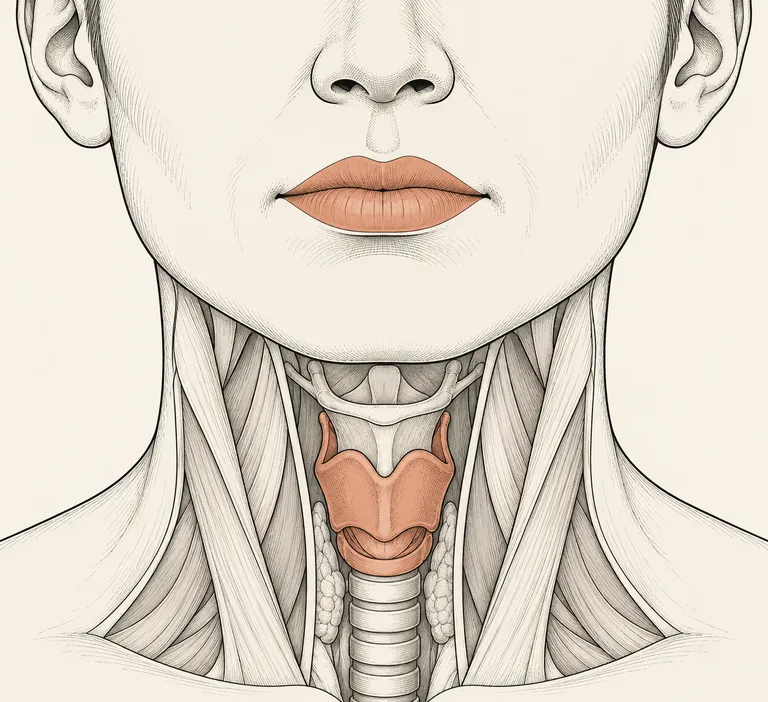
accepted
Neutral face, lips gently closed, jaw relaxed, minimal muscular activity visible
Clean neck cutaway with plausible laryngeal anatomy and no visible anatomical distortions.
attempt 0 · 2026-10-02
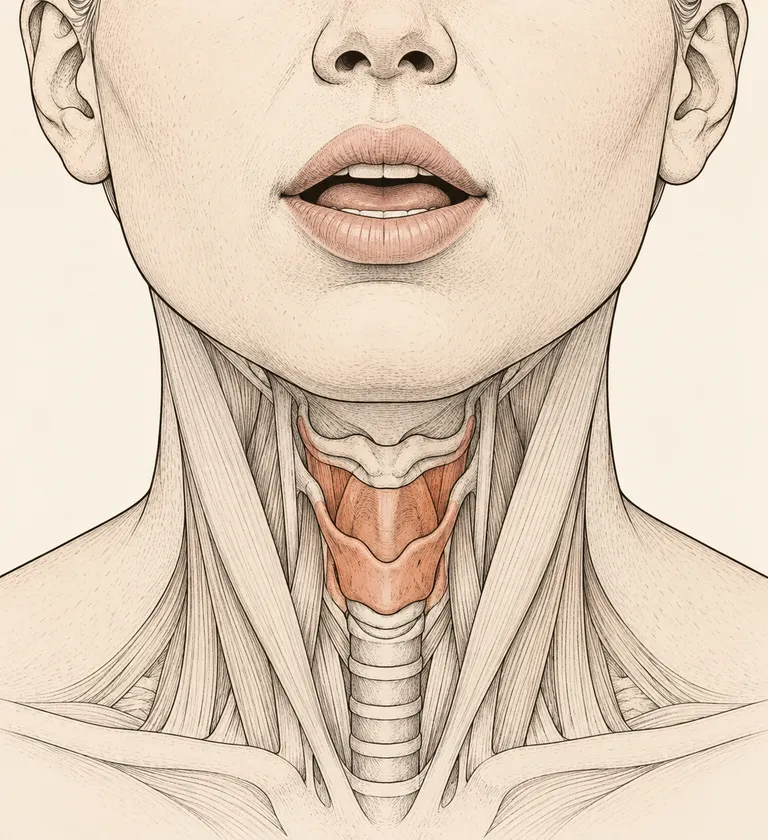
accepted
Subtle throat/larynx movement visible, indicating rising or falling pitch and a creaky-voice moment during a tone-bearing syllable
Frontal laryngeal anatomy is visually coherent and plausible.
attempt 0 · 2026-10-02
Language settings · zh (2)
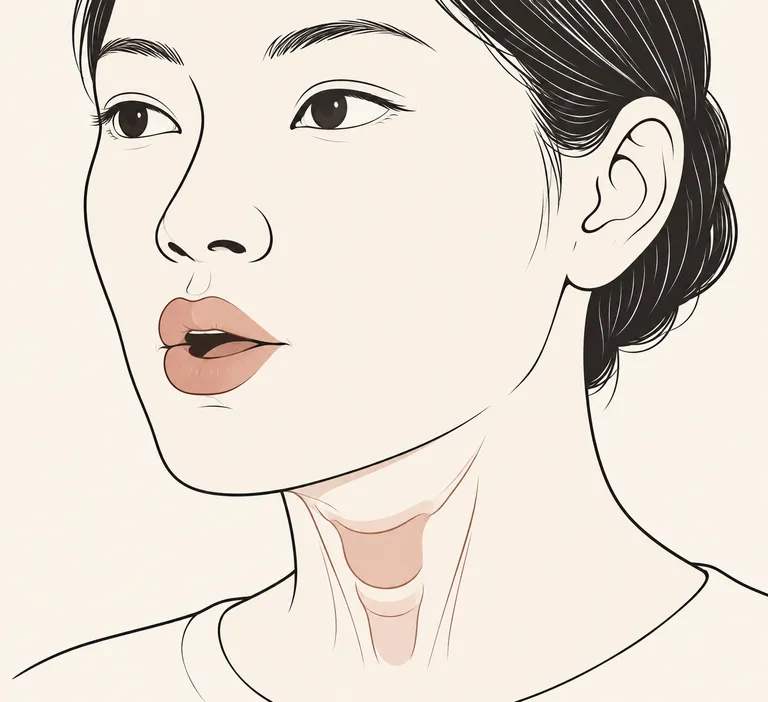
accepted
Jaw slightly open, lips neutral, larynx held steady to produce a high, level pitch.
Face, parted lips, and schematic larynx depiction show no obvious anatomical impossibilities.
attempt 1 · 2026-10-03
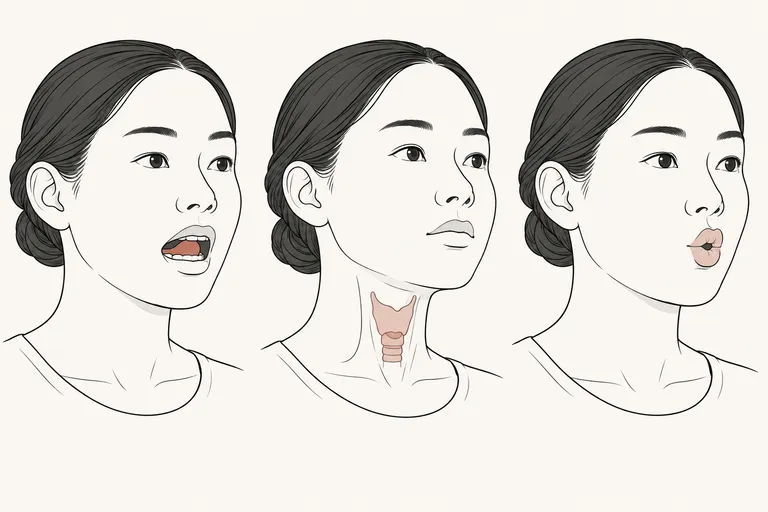
accepted
Tongue tip curls back toward the hard palate, a shape not used in English consonants.
Faces, visible mouth structures, and schematic throat anatomy appear visually coherent.
attempt 4 · 2026-10-04
Inventory ar (45)
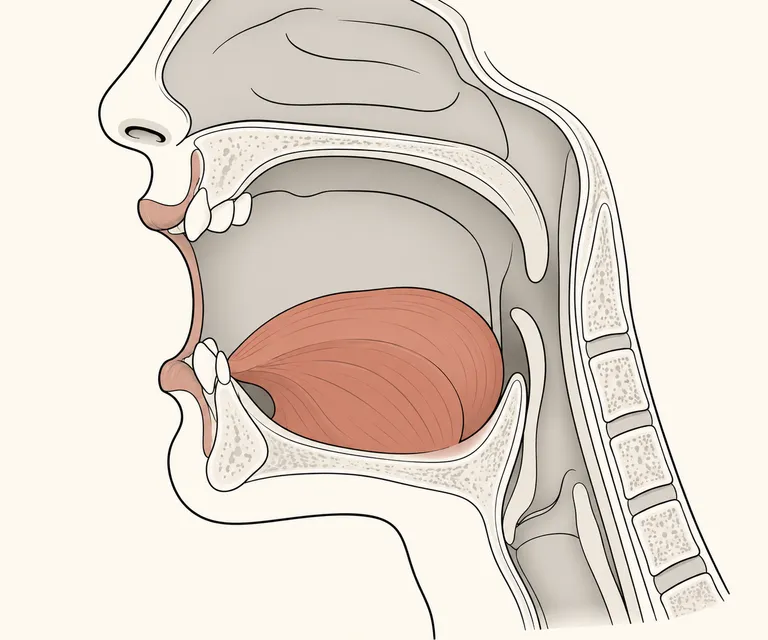
accepted
Jaw wide open, tongue low and central, lips neutral, as in a plain open vowel.
Single broad tongue and open jaw are anatomically plausible; no abnormal curling or distortion.
attempt 0 · 2026-10-04
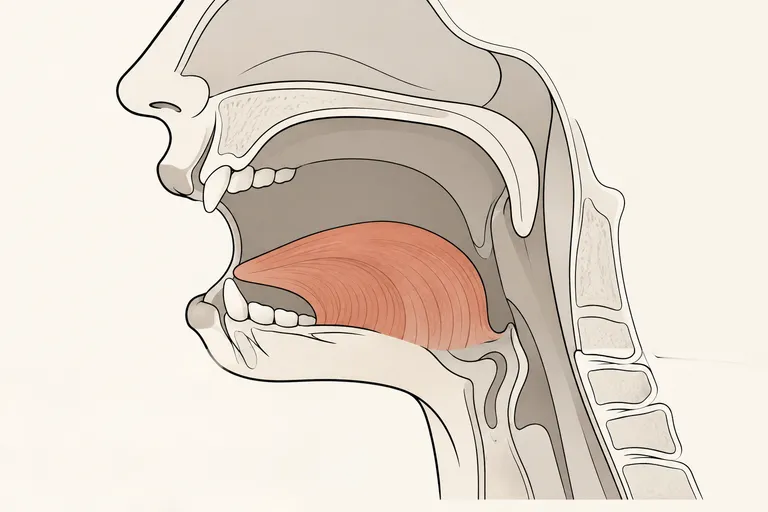
accepted
Same open jaw, but tongue body pulled further back and down, giving a darker, more 'ah' quality.
Retracted tongue remains continuous and plausibly shaped within the open mouth.
attempt 0 · 2026-10-04
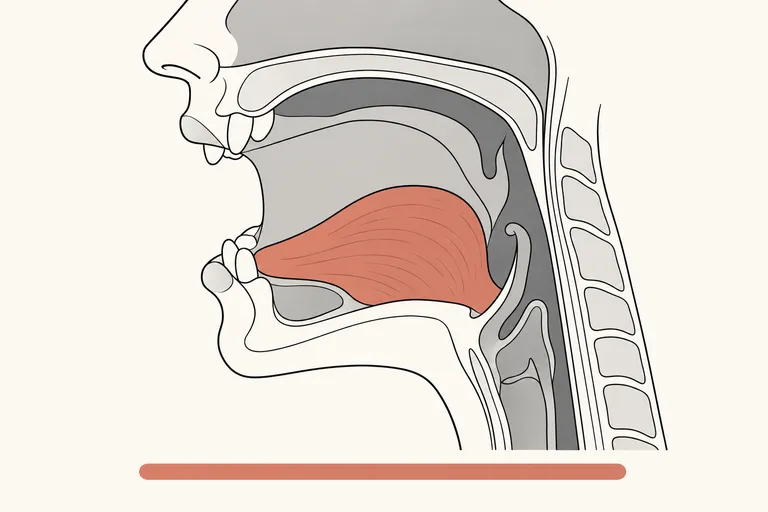
accepted
Jaw wide open, tongue low and central, held for a clearly longer duration than the short /a/, shown with an elongated timeline marker.
Single tongue has a plausible contour; the timeline marker introduces no anatomical or rendering problems.
attempt 0 · 2026-10-04
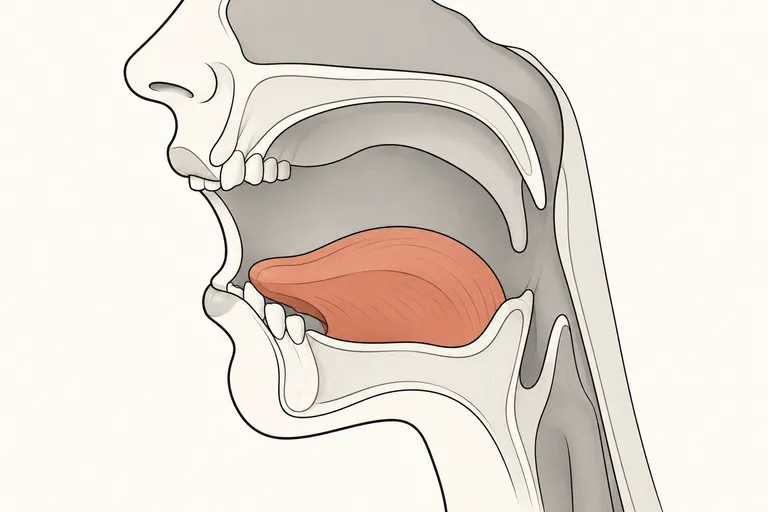
accepted
Jaw wide open, tongue low and central, as for the vowel /a/.
Low tongue has a plausible rounded tip, with no looping, splitting, or excessive extension.
attempt 0 · 2026-10-04
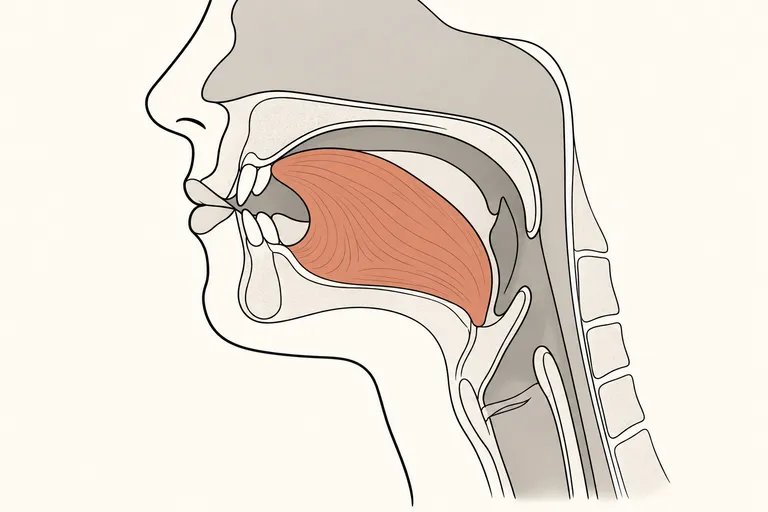
accepted
Jaw closing, tongue gliding up and forward into a high front position, as for /i/ or the glide /j/.
Elevated tongue front forms a plausible continuous contour without a hooked or rolled tip.
attempt 0 · 2026-10-04
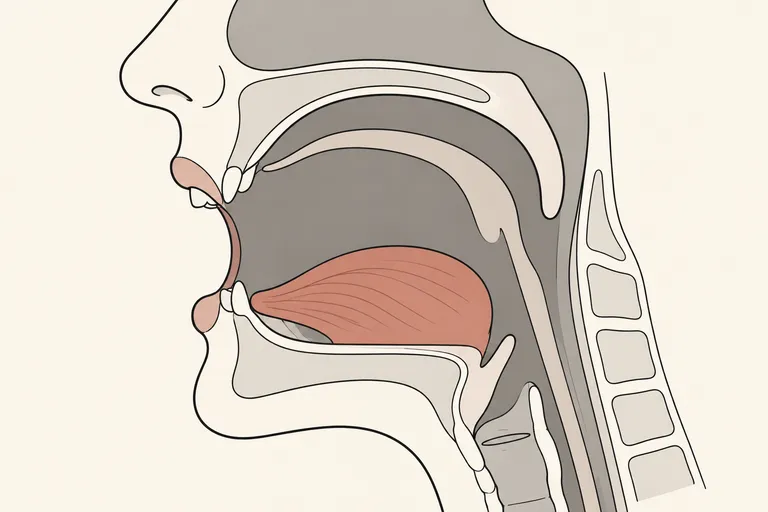
accepted
Jaw wide open, tongue low and central, lips unrounded, as for the vowel /a/.
Tongue rests within the lower mouth; lips, teeth, and jaw have plausible placement.
attempt 0 · 2026-10-04
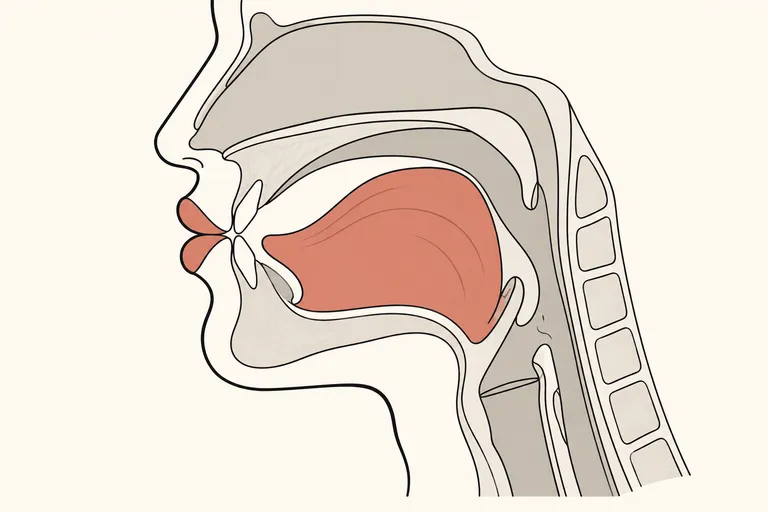
accepted
Jaw closing, tongue gliding up and back, lips rounding and protruding, as for /u/ or the glide /w/.
Raised tongue body and rounded lips are plausible, with no tongue looping or abnormal extension.
attempt 0 · 2026-10-04
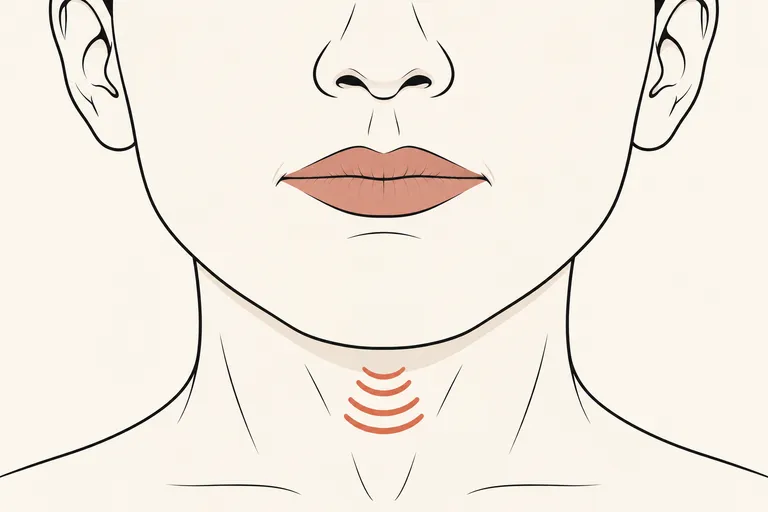
accepted
Front view of lips pressed together with a small vibration icon over the throat to indicate voicing during the closure.
Closed lips and frontal facial anatomy are plausible; throat vibration marks are appropriate schematic symbols.
attempt 0 · 2026-10-04
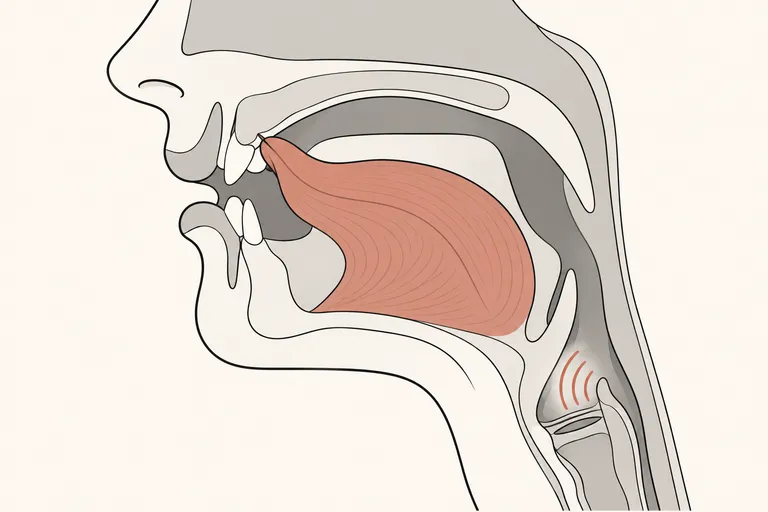
accepted
Side view of the tongue tip at the alveolar ridge with a vibration icon starting slightly before the release, showing that voicing often begins early.
Single continuous tongue with plausible raised tip; surrounding anatomy is coherent.
attempt 0 · 2026-10-04
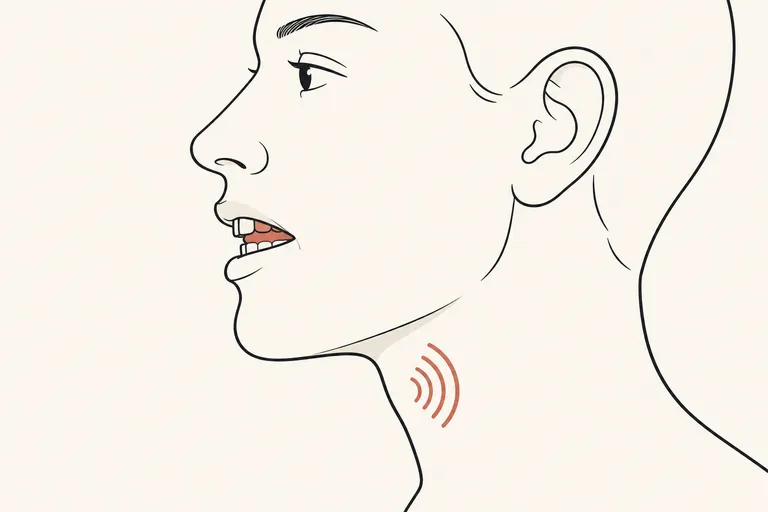
accepted
Side view of the tongue tip lightly touching the back of the upper teeth with a vibration icon over the throat to show voicing during the hiss.
Plausible profile, teeth, and visible tongue placement; no obvious anatomical distortion.
attempt 1 · 2026-10-04
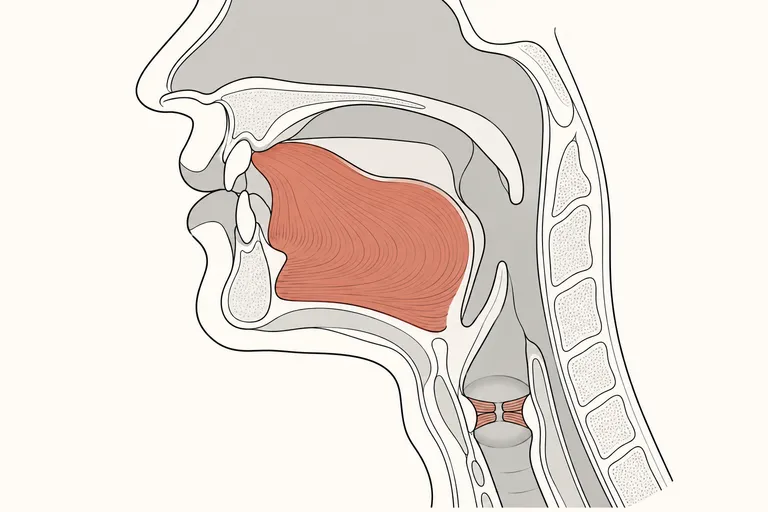
accepted
Tongue blade pressed against the back of the alveolar ridge, completely blocking air, vocal folds vibrating.
Raised tongue blade and overall vocal tract anatomy are plausible schematic representations.
attempt 0 · 2026-10-04
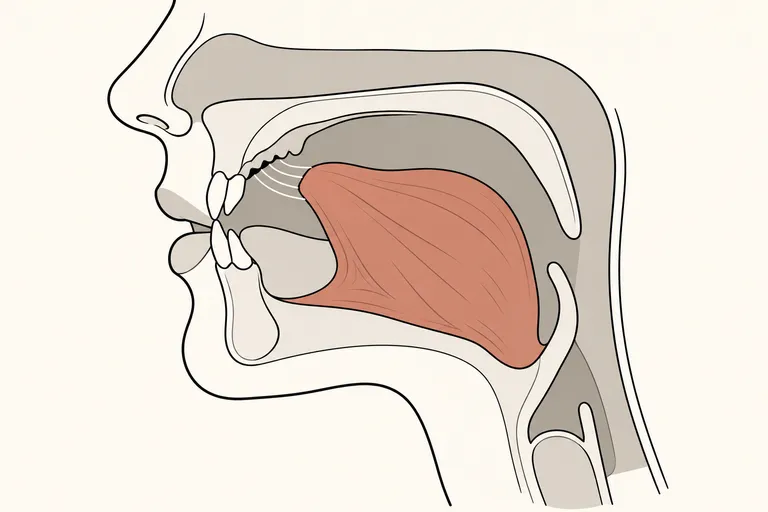
accepted
Tongue blade pulls slightly back to release the stop into a brief hissing fricative, same place of articulation.
Tongue blade is slightly withdrawn, with a plausible shape and no excessive curl.
attempt 0 · 2026-10-04
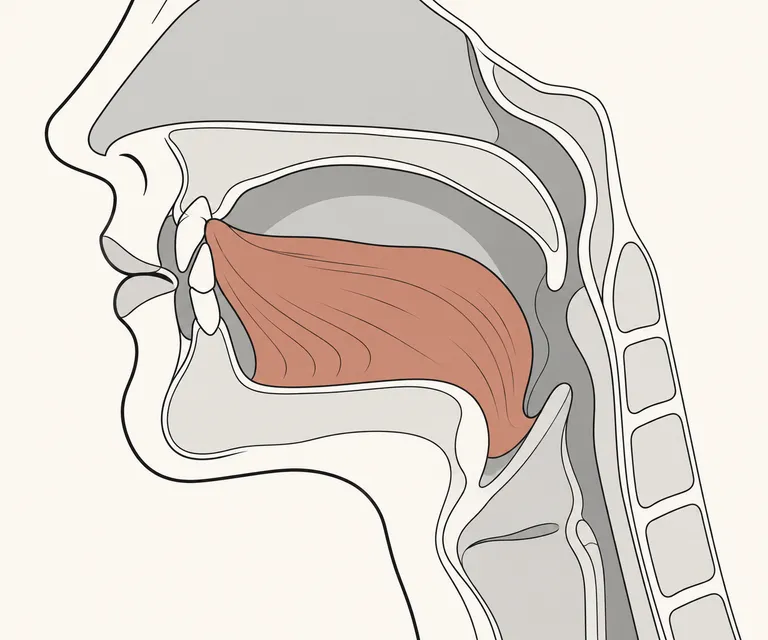
accepted
Tongue tip pressed to the alveolar ridge, same basic position as /d/, voicing present.
Tongue tip contact and retracted tongue body are anatomically plausible.
attempt 0 · 2026-10-04
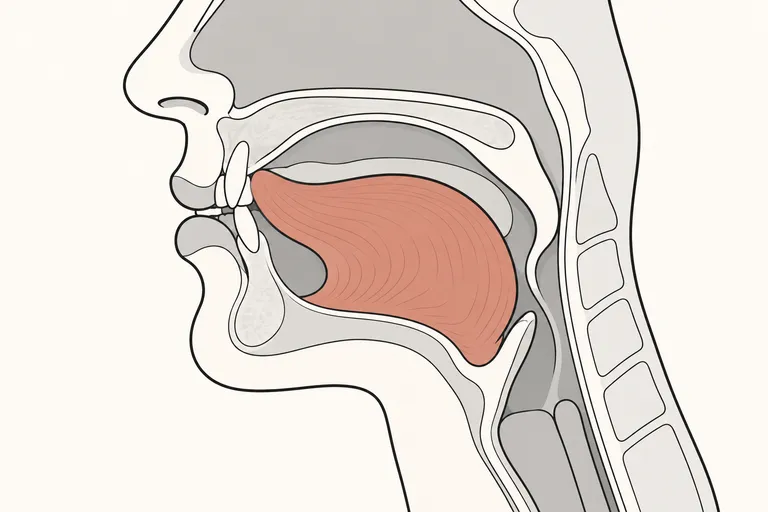
accepted
Tongue tip lightly at the upper teeth, same basic position as /ð/, voicing present.
Tongue contacts the upper teeth plausibly, with a continuous body and no excessive curling.
attempt 0 · 2026-10-04
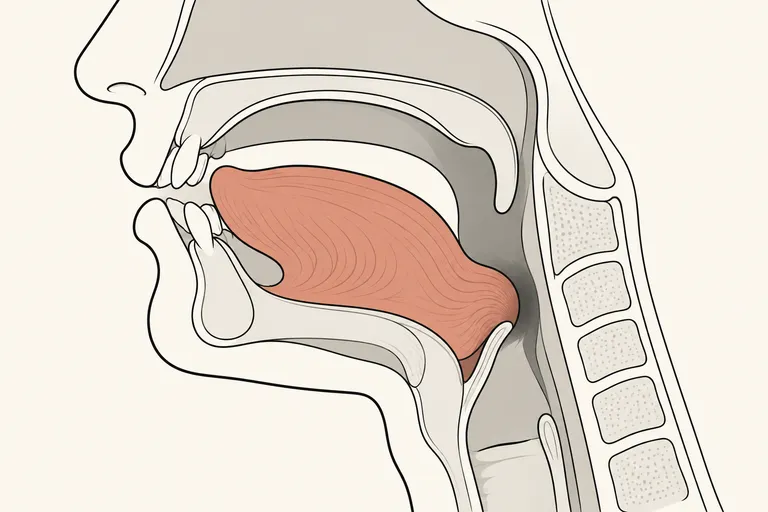
accepted
Tongue root simultaneously pulls back and down, narrowing the pharynx, darkening nearby vowels.
Retracted tongue root narrows the pharynx without implausible twisting or curling.
attempt 0 · 2026-10-04
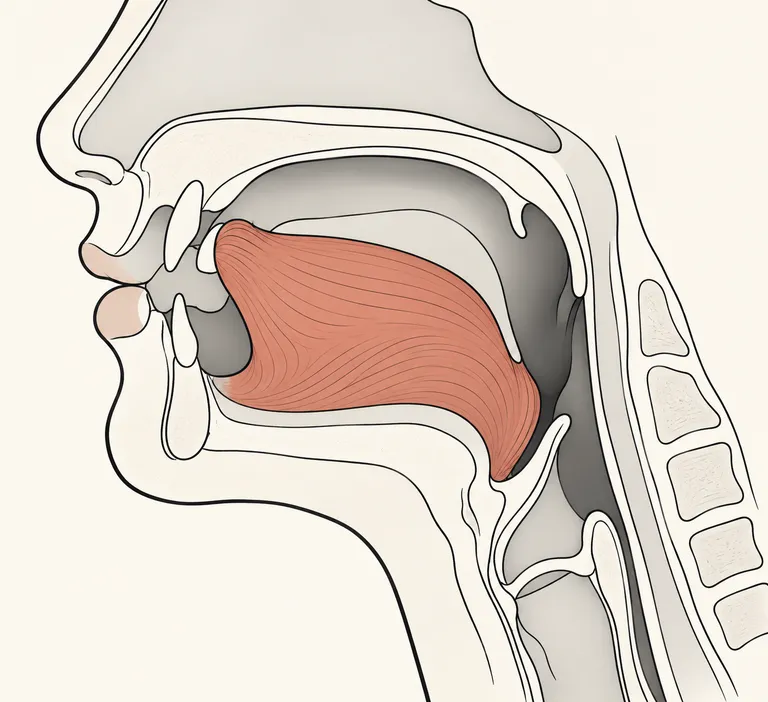
accepted
Tongue root simultaneously pulls back and down into the throat, narrowing the pharynx and darkening the vowel color.
Raised tongue tip and retracted root remain anatomically plausible, without looping or splitting.
attempt 0 · 2026-10-04
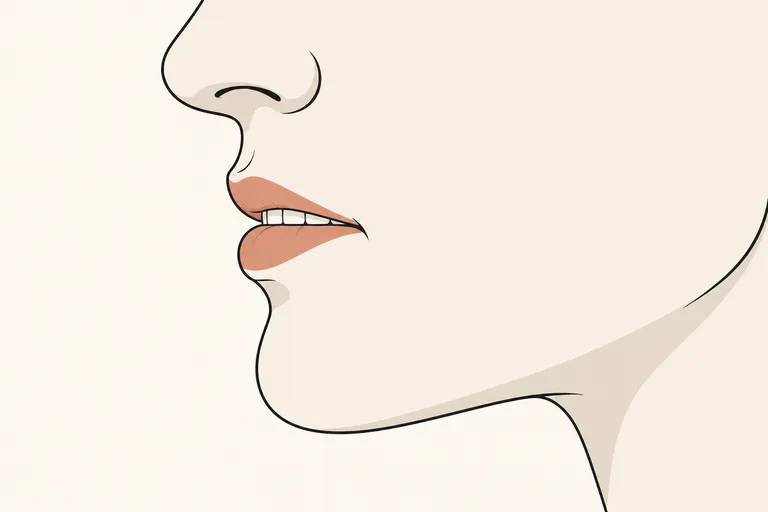
accepted
Side view of the lower lip touching the edge of the upper front teeth, leaving a narrow gap for an unvoiced hiss.
Lips, teeth, and jaw occupy plausible positions without obvious anatomical distortion.
attempt 1 · 2026-10-04
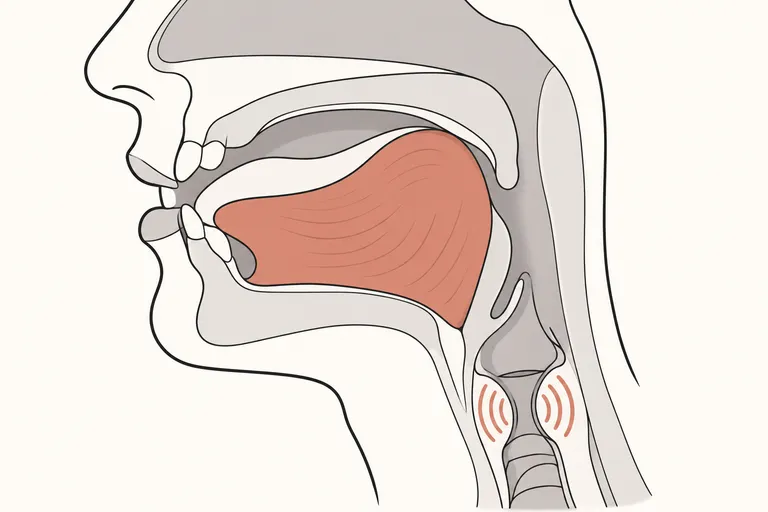
accepted
Side view showing the back of the tongue raised close to the soft palate or uvula, with a vibration icon over the throat, leaving a narrow channel for a buzzing hiss.
Single continuous tongue with plausible posterior elevation and normal oral placement.
attempt 0 · 2026-10-04
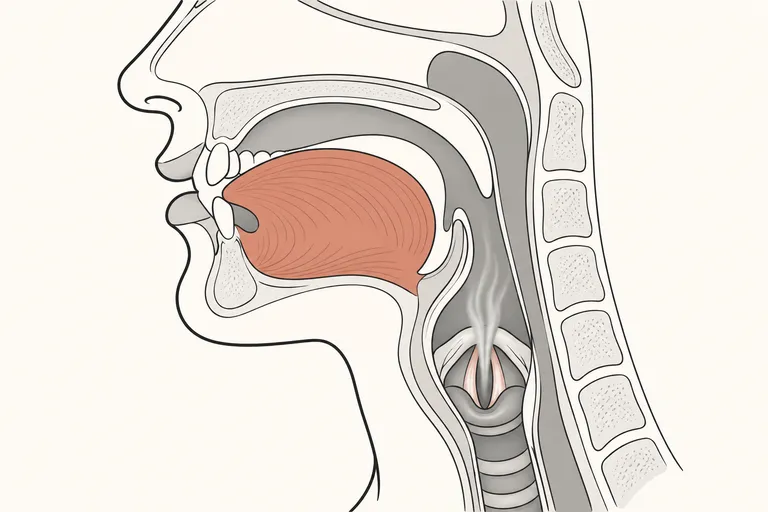
accepted
Side view of the throat showing the vocal folds slightly apart, letting a soft, breathy hiss pass through without full closure or vibration.
Tongue shape is plausible; the schematic laryngeal view shows separated vocal folds coherently.
attempt 0 · 2026-10-04
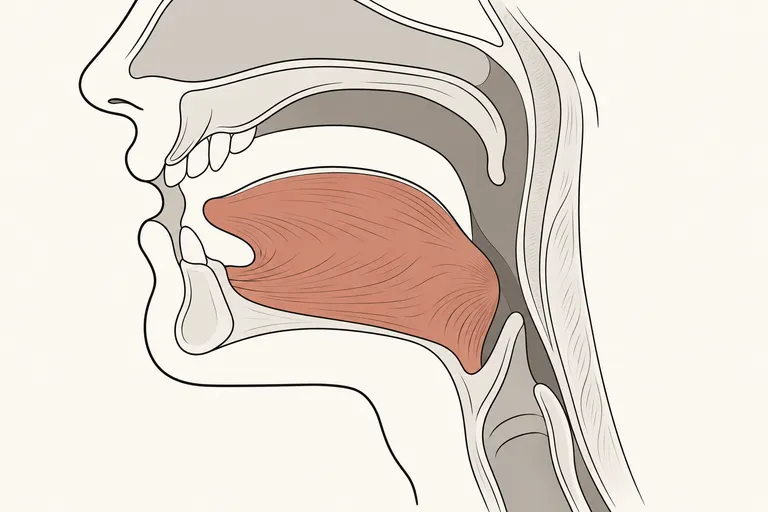
accepted
Side cross-section showing the tongue root pulled far back, narrowing the throat passage well below the soft palate while the mouth stays relatively open.
Continuous tongue and retracted root plausibly narrow the throat; the underside concavity is anatomically reasonable.
attempt 0 · 2026-10-04
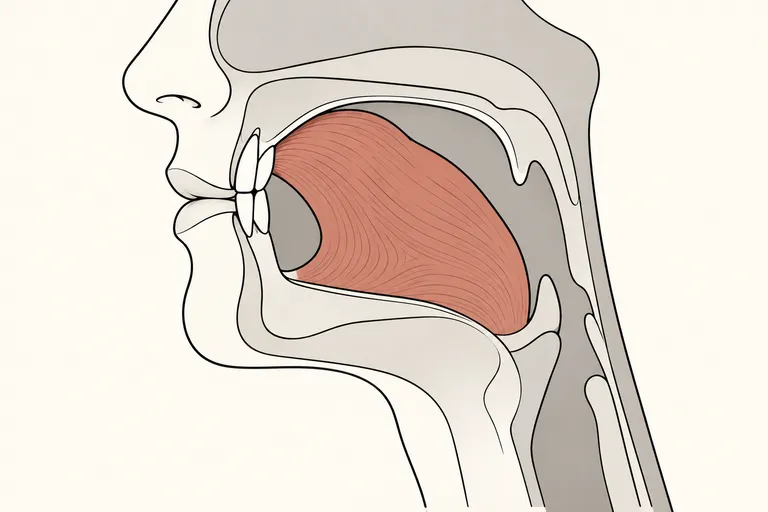
accepted
Side view of the tongue body raised high and forward, close to the hard palate, jaw nearly closed, lips slightly spread.
High forward tongue body and nearly closed jaw are anatomically plausible.
attempt 0 · 2026-10-04
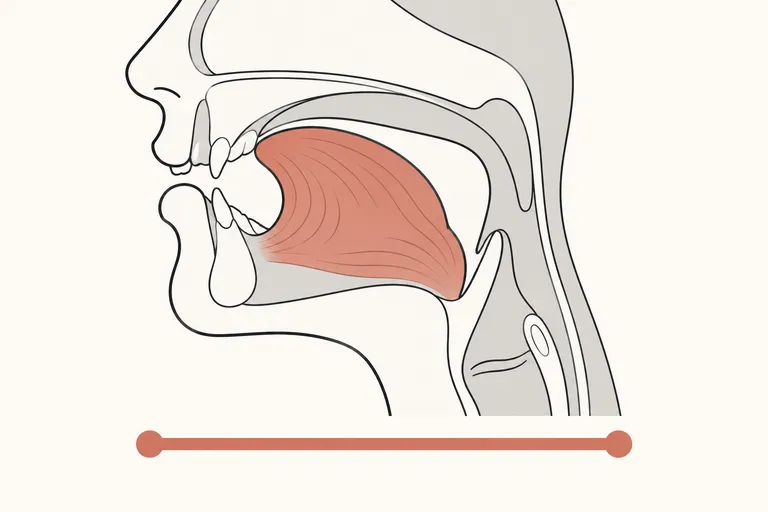
accepted
Tongue body raised high and forward as for short /i/, but held for a clearly longer duration, shown with an elongated timeline marker.
Tongue remains a single plausible muscular body, raised forward; timeline marker is appropriate.
attempt 0 · 2026-10-04
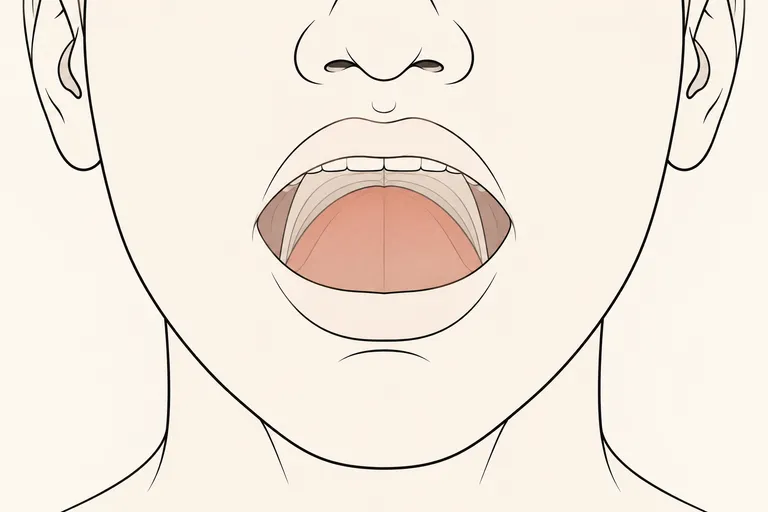
accepted
Front view of the tongue body raised high and forward toward the hard palate, lips neutral to slightly spread, as in making an English 'y'.
Raised tongue body and surrounding facial structures appear anatomically plausible.
attempt 0 · 2026-10-04
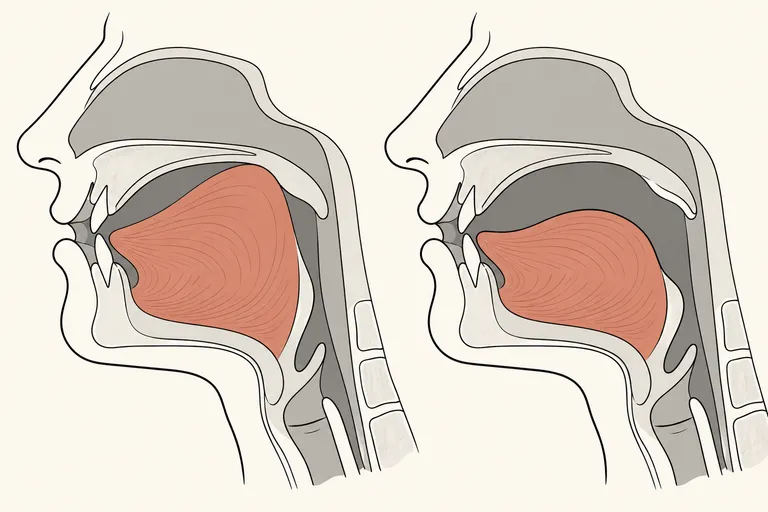
accepted
Side view of the back of the tongue raised to touch the soft palate, blocking airflow, then released.
Both cross-sections show plausible tongue shapes during closure and release.
attempt 0 · 2026-10-04
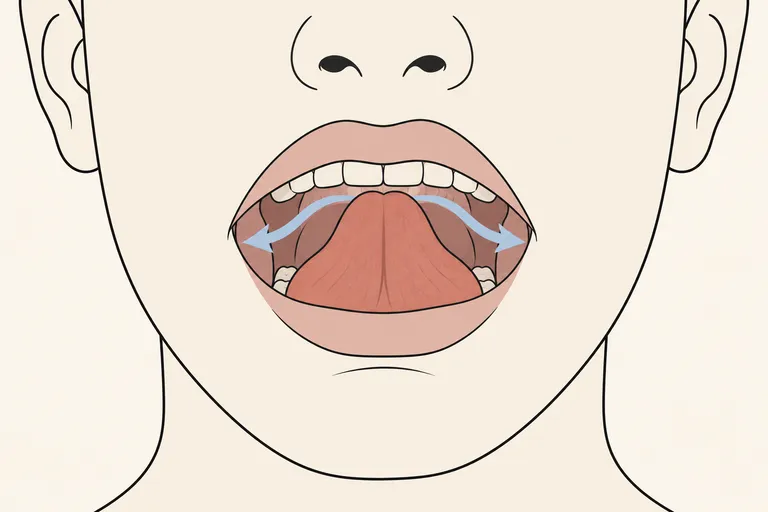
accepted
Front view of the tongue tip touching the ridge behind the teeth, with air shown flowing out around both sides of the tongue.
Elevated tongue tip and lateral airflow arrows are plausible; no abnormal splitting.
attempt 0 · 2026-10-04
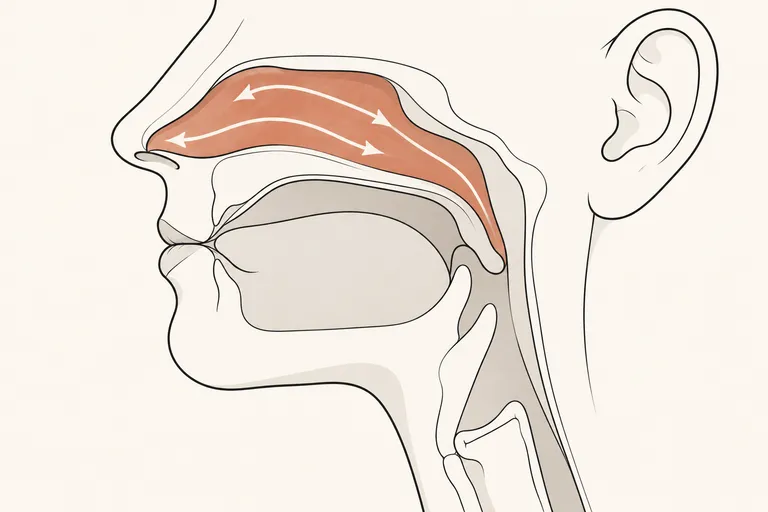
accepted
Side view of lips pressed together with the velum lowered, showing air diverted up through the nasal passage.
Closed lips, tongue position, and nasal passage form a plausible schematic cross-section.
attempt 0 · 2026-10-04
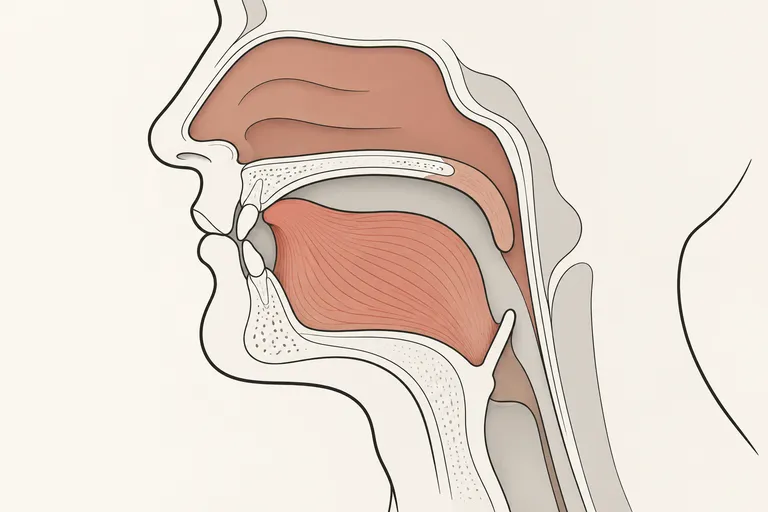
accepted
Side view of the tongue tip at the alveolar ridge with the velum lowered, showing air diverted up through the nasal passage.
Tongue tip contacts the alveolar region; tongue body and surrounding anatomy appear plausible.
attempt 0 · 2026-10-04
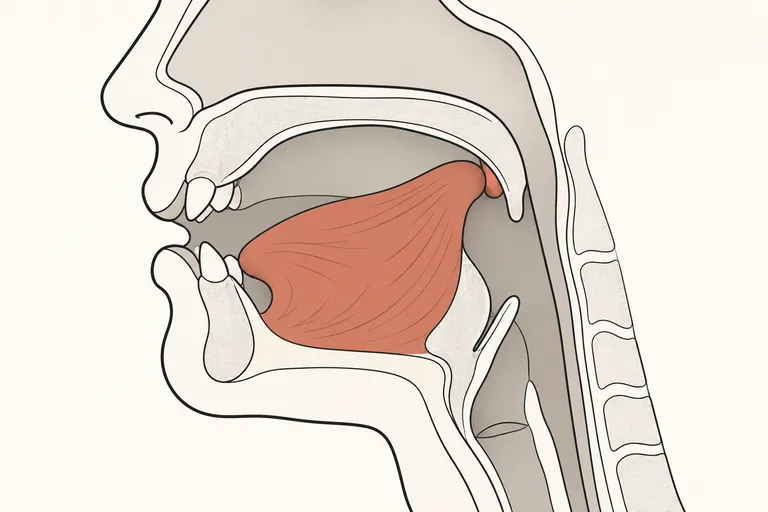
accepted
Side view of the very back of the tongue raised high to contact the uvula (the dangling flap at the back of the soft palate), well behind where English 'k' is made.
Raised posterior tongue contacts the uvular region without unnatural elongation or curling.
attempt 0 · 2026-10-04
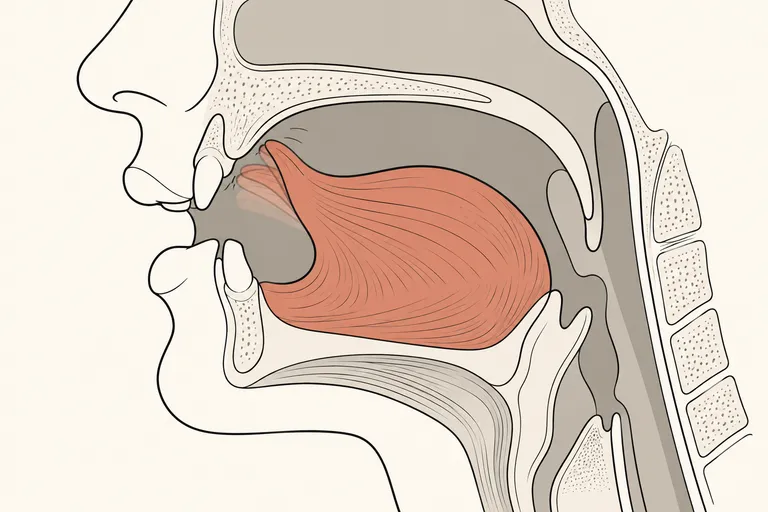
accepted
Side view of the tongue tip vibrating rapidly, tapping the alveolar ridge multiple times in quick succession while air flows continuously.
Tongue shape is plausible; translucent tip positions appropriately depict vibration rather than multiple tongues.
attempt 0 · 2026-10-04
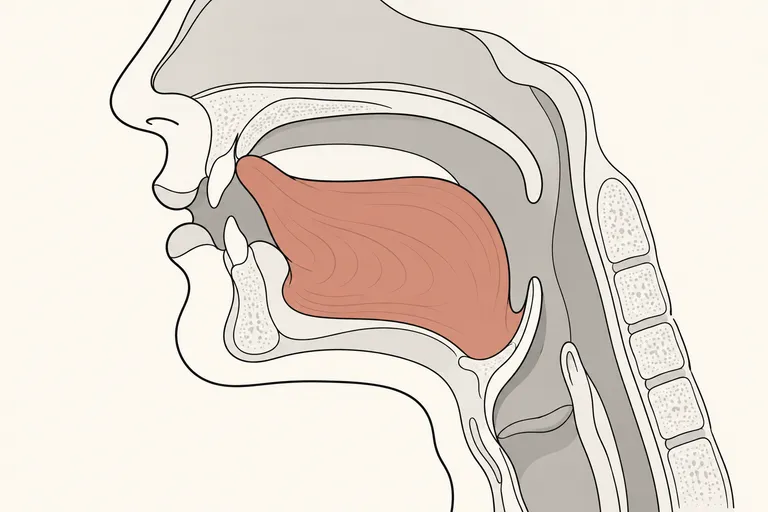
accepted
Tongue tip close to the alveolar ridge, tongue body kept forward and relatively flat, no pharyngeal narrowing.
Single broad tongue with plausible contours and normally positioned surrounding structures.
attempt 0 · 2026-10-04
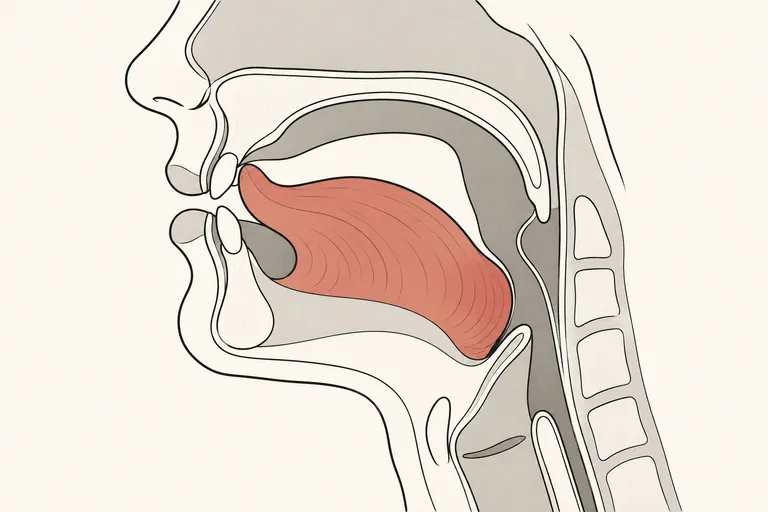
accepted
Same basic tongue-tip position but the tongue root is pulled back and the pharynx narrowed, lowering the pitch of nearby vowels.
Retracted tongue root and narrowed pharyngeal space remain anatomically plausible.
attempt 0 · 2026-10-04
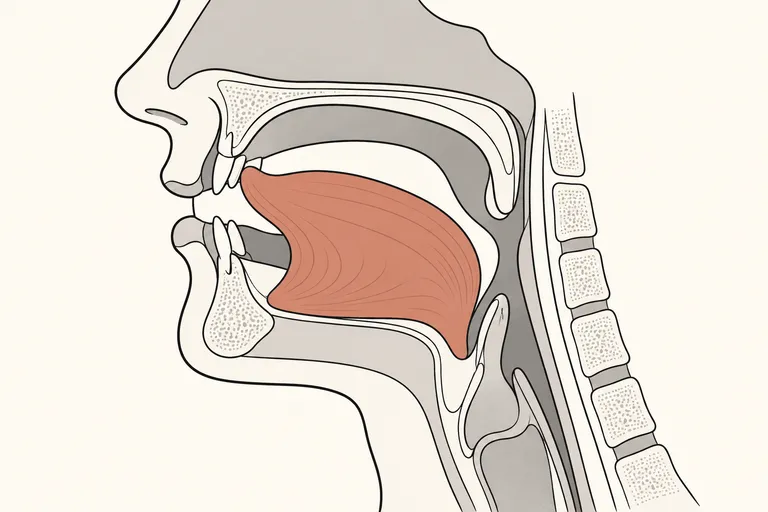
accepted
Tongue tip close to the alveolar ridge, same basic position as /s/.
Tongue and surrounding oral structures have plausible shapes without twisting or looping.
attempt 0 · 2026-10-04
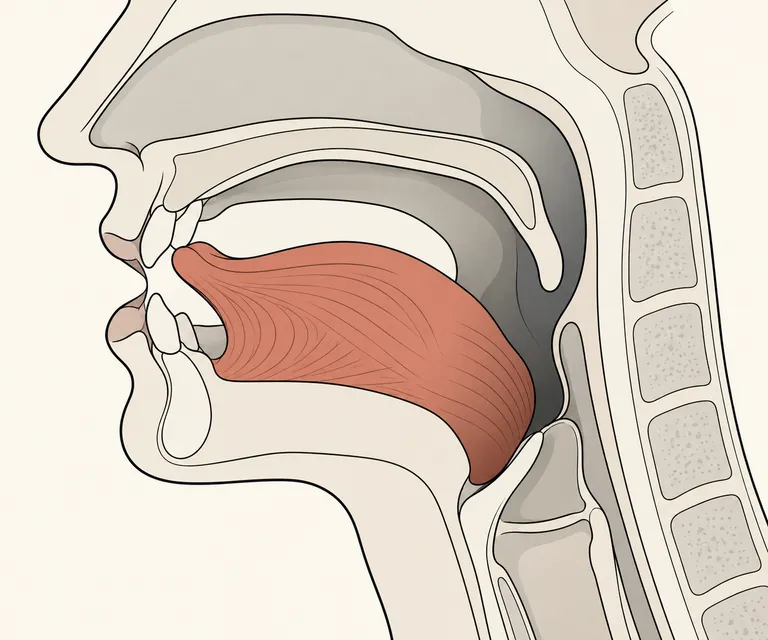
accepted
Simultaneously, the tongue root pulls back and down, narrowing the pharynx and giving the surrounding vowels a darker, heavier color.
Broad tongue with a lowered, retracted root remains anatomically plausible.
attempt 0 · 2026-10-04
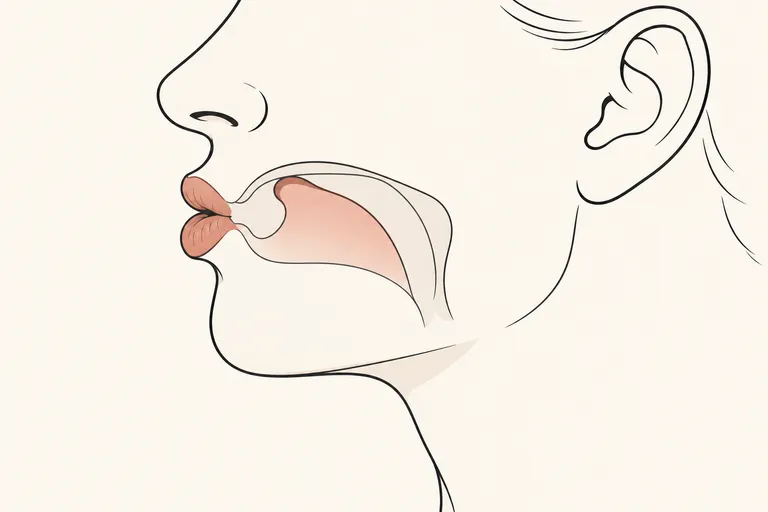
accepted
Side view of the tongue blade raised just behind the alveolar ridge with slightly protruded lips, creating a broader hissing channel than for /s/.
Raised tongue blade and protruded lips are anatomically plausible.
attempt 0 · 2026-10-04
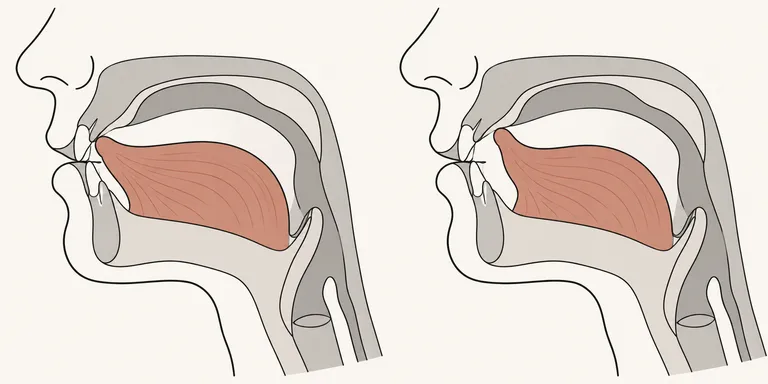
accepted
Side view showing the tongue tip touching the alveolar ridge with the tongue root and pharynx in a neutral, non-retracted position, contrasting with the emphatic ṭ.
Both cross-sections show plausible continuous tongues, alveolar contact, and coherent surrounding anatomy.
attempt 1 · 2026-10-04
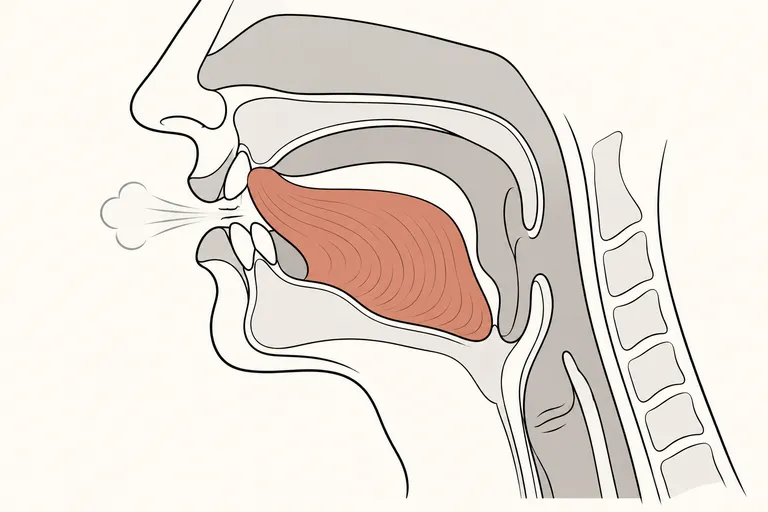
accepted
Tongue tip at the alveolar ridge, tongue root neutral, release accompanied by a clear puff of air.
Tongue has a plausible continuous shape; the schematic air puff introduces no anatomical distortion.
attempt 0 · 2026-10-04
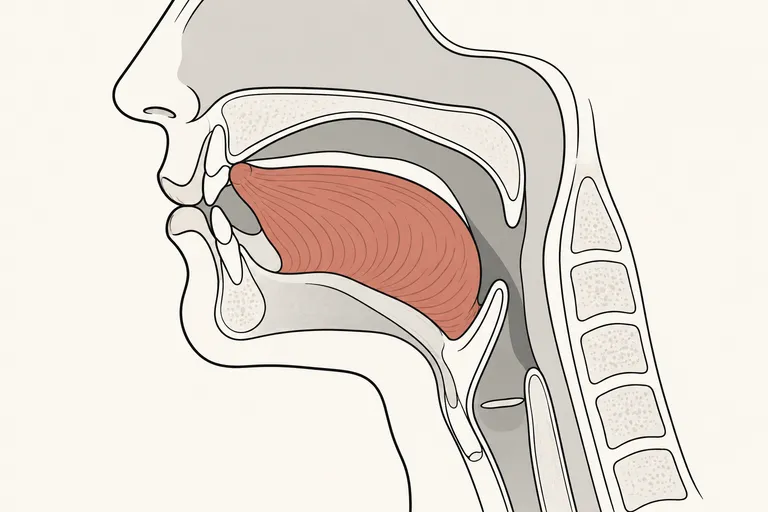
accepted
Same tongue-tip contact but tongue root pulled back, pharynx narrowed, and release is crisp with no aspiration puff.
Raised tongue tip and broad retracted tongue body are anatomically plausible.
attempt 0 · 2026-10-04
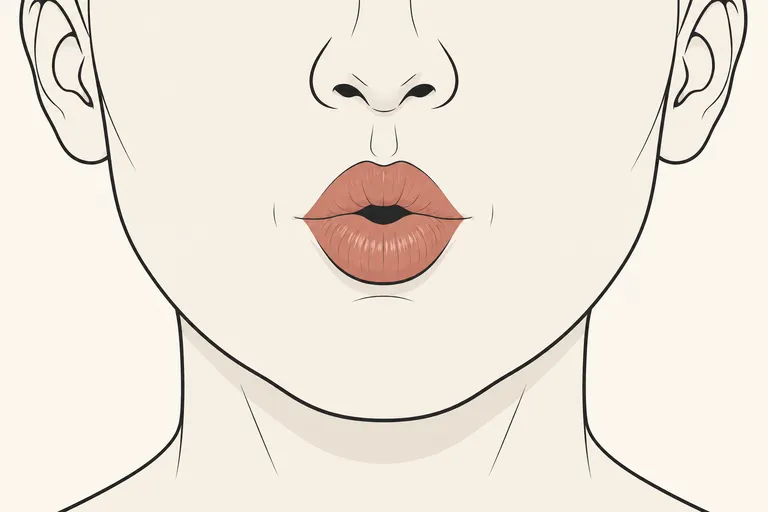
accepted
Front view of tightly rounded, slightly protruded lips with the tongue body raised high and back, jaw nearly closed.
Rounded lips, small oral opening, and facial proportions are anatomically plausible.
attempt 0 · 2026-10-04
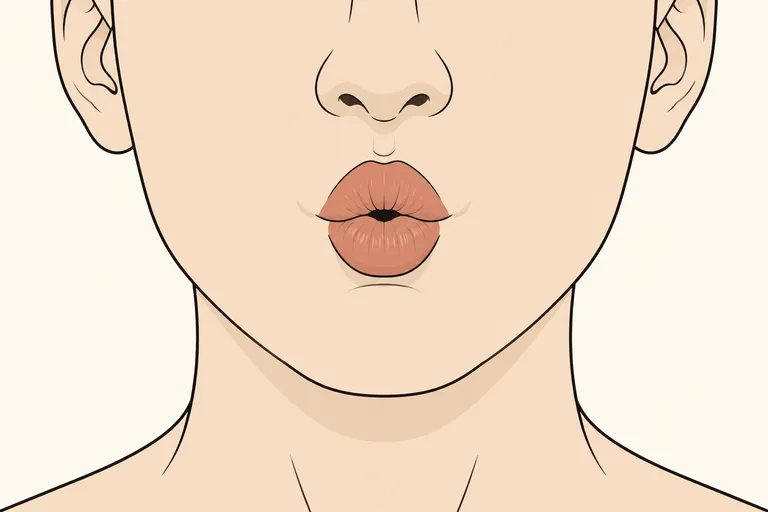
accepted
Tightly rounded, protruded lips with the tongue body raised high and back, held for a clearly longer duration than the short /u/.
Rounded, protruded lips and surrounding facial anatomy are plausible.
attempt 0 · 2026-10-04
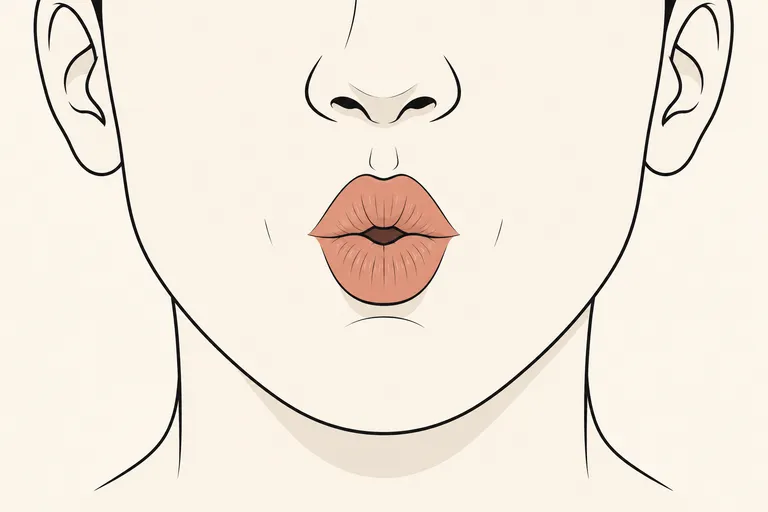
accepted
Front view of tightly rounded, protruded lips combined with the tongue back raised, as in making an English 'w'.
Pursed lips form a plausible small opening; facial anatomy is coherent.
attempt 0 · 2026-10-04
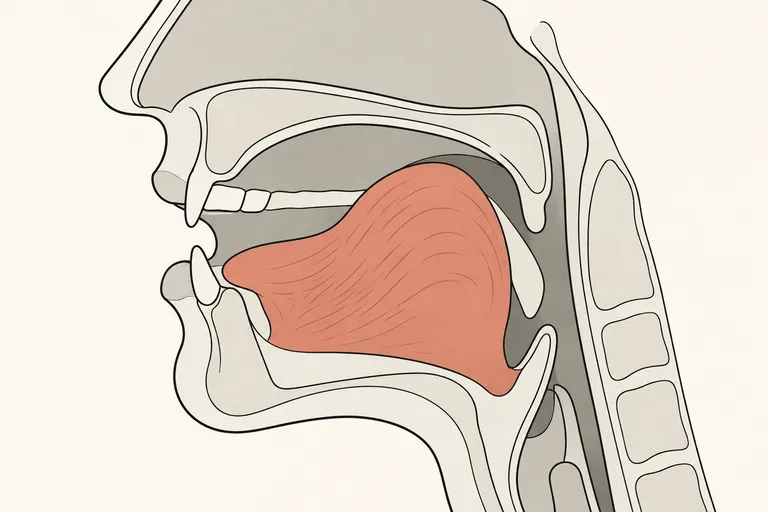
accepted
Side view showing the back of the tongue raised close to the soft palate or uvula, leaving a narrow channel for a rough, raspy hiss.
Single continuous tongue with a plausibly raised back and narrow passage near the soft palate.
attempt 0 · 2026-10-04
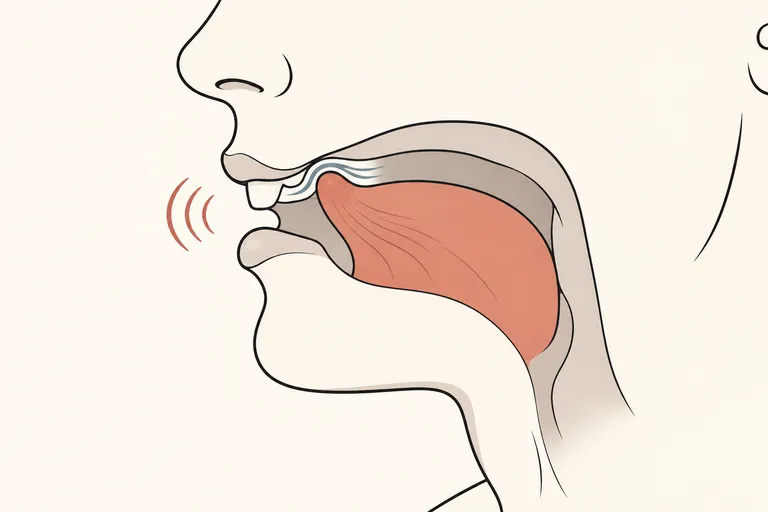
accepted
Side view of the tongue tip close to but not touching the alveolar ridge, with a narrow central channel for air and a vibration icon for voicing.
Tongue elevation and oral structures are plausible within a simplified sagittal view.
attempt 0 · 2026-10-04
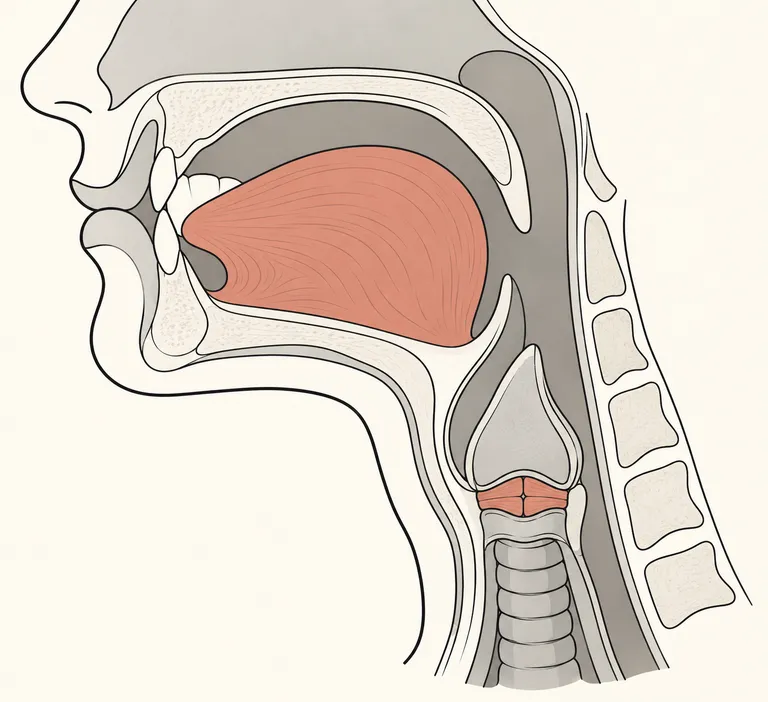
accepted
Side view of the throat showing the vocal folds pressed fully together, blocking airflow just above the lungs.
Tongue and surrounding structures form a plausible simplified vocal tract cross-section.
attempt 0 · 2026-10-04
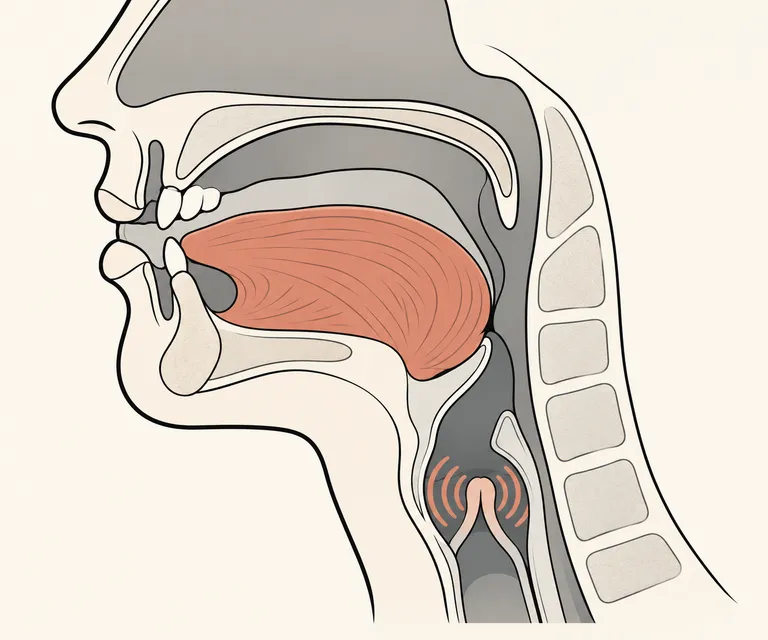
accepted
Side cross-section showing the tongue root pulled far back, narrowing the throat passage, with a vibration icon over the throat to show voicing.
Broad, continuous tongue with plausible root retraction and throat narrowing.
attempt 1 · 2026-10-04
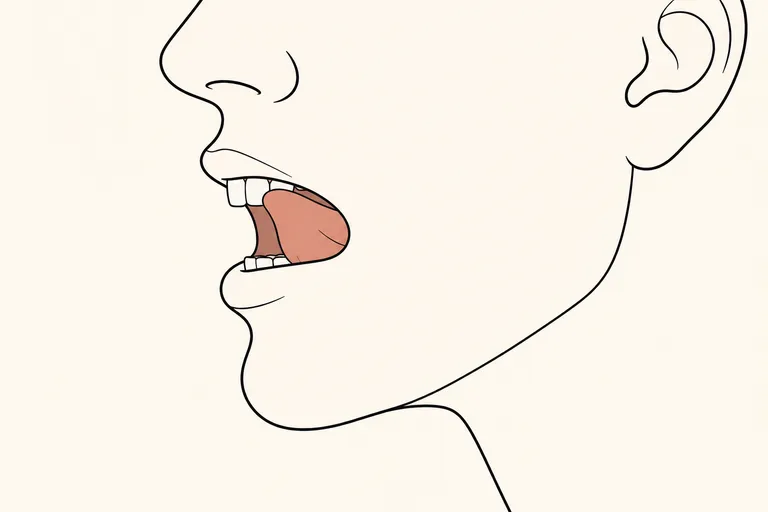
accepted
Side view of the tongue tip lightly touching the back of the upper teeth, leaving a narrow gap for air to hiss through.
Visible tongue remains within the mouth with plausible contact near the upper teeth.
attempt 0 · 2026-10-04
Inventory de (59)
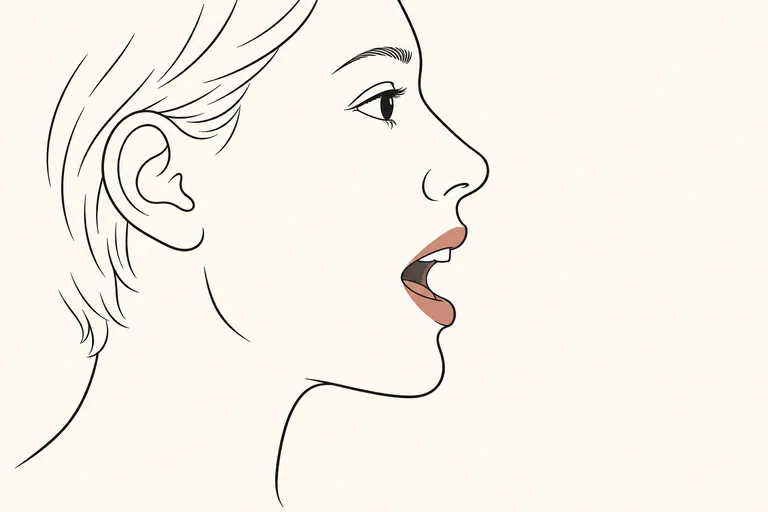
accepted
Same open, central tongue posture as long aː but clipped short.
Open jaw, lips, teeth, and visible tongue appear anatomically plausible.
attempt 0 · 2026-10-03
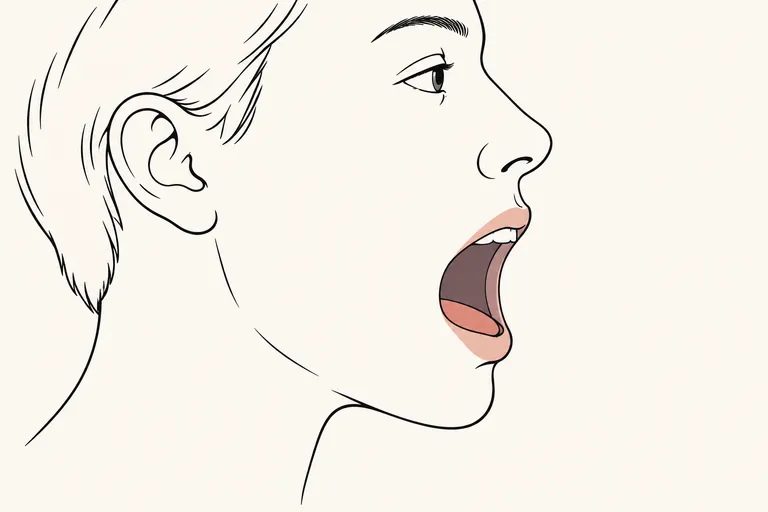
accepted
Jaw dropped wide open, tongue flat and low in the mouth, lips relaxed and neutral, held for a long duration.
Wide jaw opening, low tongue, and upper teeth are anatomically plausible.
attempt 0 · 2026-10-03
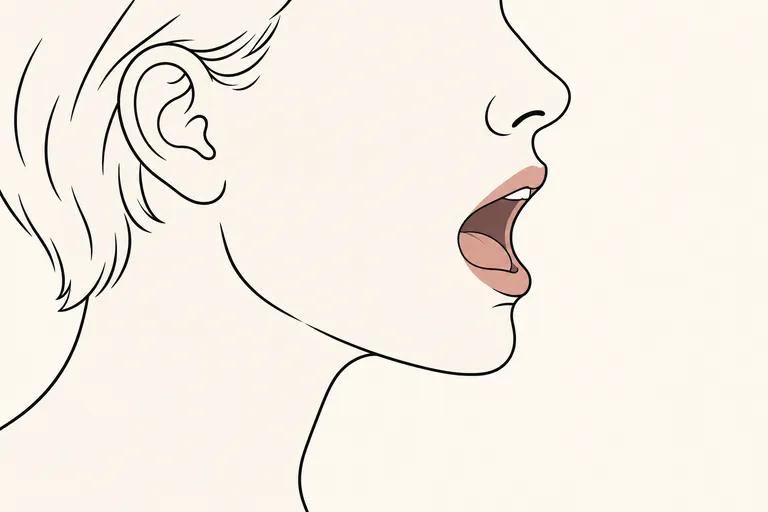
accepted
Jaw wide open, tongue low and central, as for the vowel a.
Open mouth with a plausible low tongue and normally positioned teeth and lips.
attempt 0 · 2026-10-03
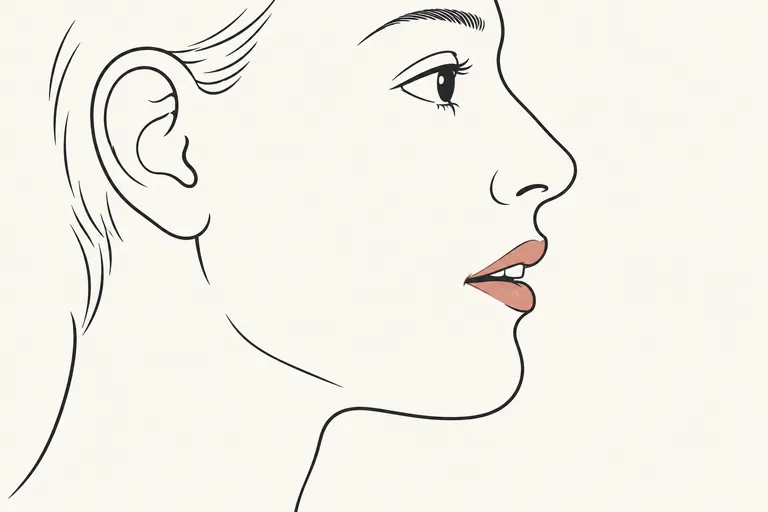
accepted
Jaw rises, tongue glides up and forward toward the ɪ position, lips staying unrounded throughout.
Slightly open jaw and visible teeth have plausible anatomy.
attempt 0 · 2026-10-03
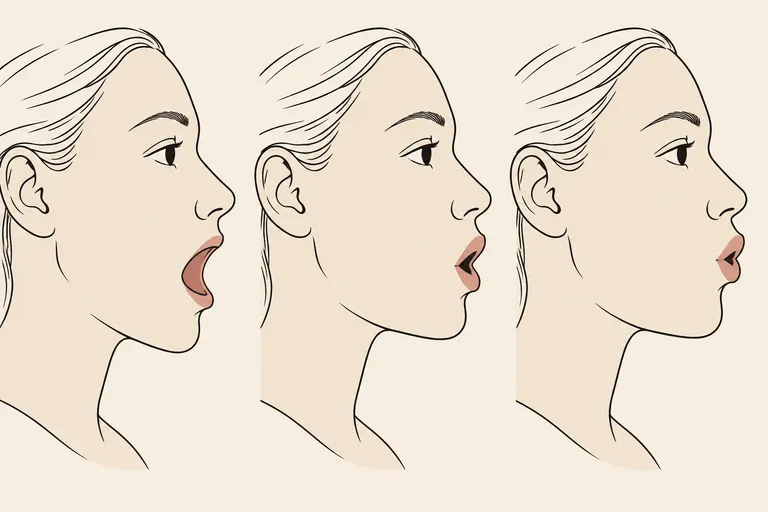
accepted
Jaw wide open, tongue low and central, lips neutral, as for the vowel a.
All three profiles show plausible jaw openings and lip positions without anatomical distortions.
attempt 0 · 2026-10-03
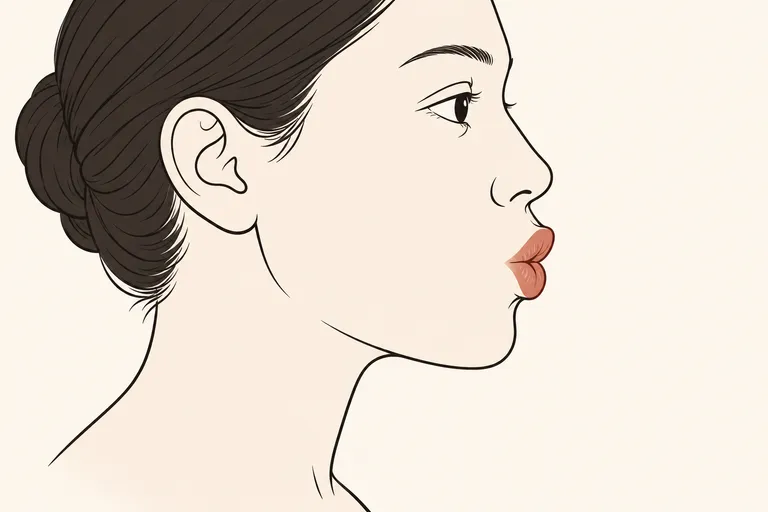
accepted
Jaw rises, tongue glides up and back, lips round into the ʊ position.
Rounded, protruded lips and facial anatomy are plausible.
attempt 0 · 2026-10-03
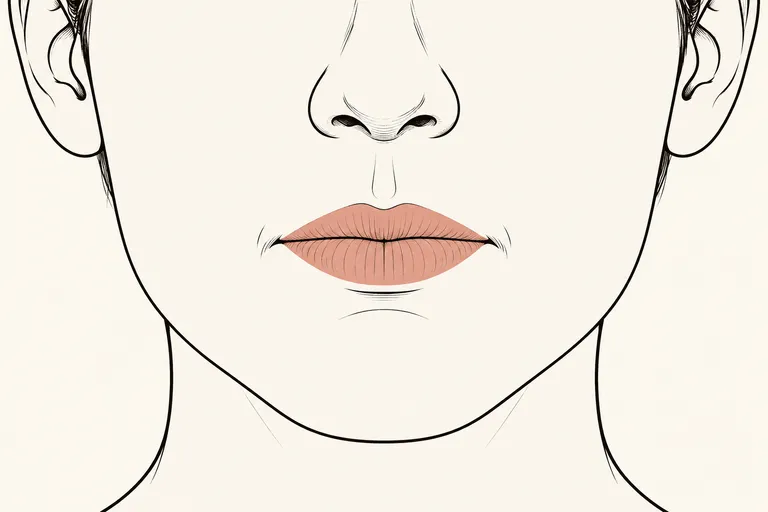
accepted
Lips pressed together with vocal folds vibrating throughout the closure, as in 'Liebe'.
Closed lips and surrounding facial anatomy are plausible.
attempt 0 · 2026-10-03
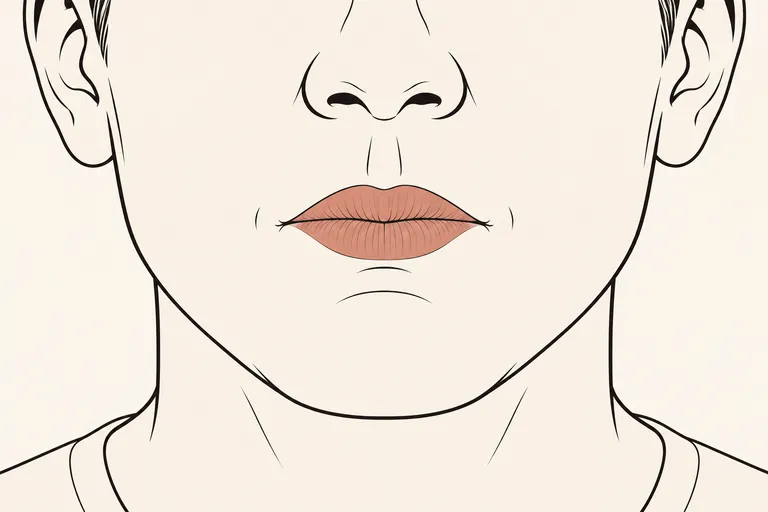
accepted
Same lip closure but voicing stops, and the sound comes out as a plain voiceless [p], as in 'halb'.
Lip closure and facial proportions are anatomically plausible.
attempt 0 · 2026-10-03
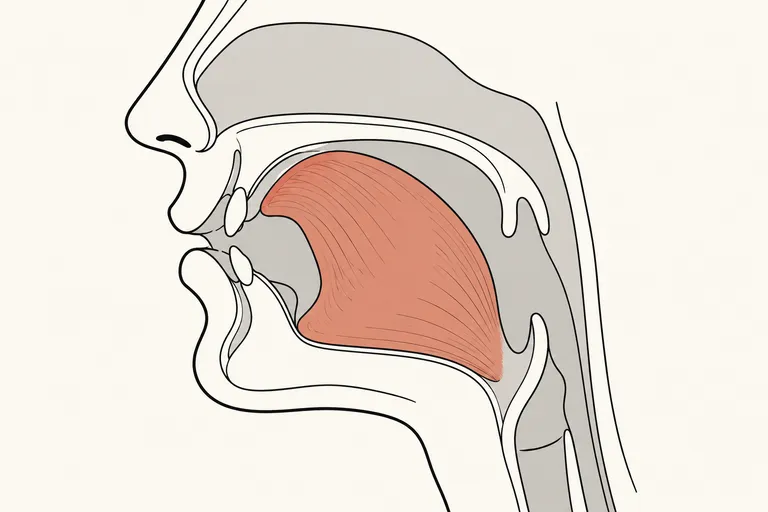
accepted
Tongue body raised high toward the hard palate (roughly the position for the vowel ee), leaving a narrow gap for a soft hiss; no English equivalent.
Coherent sagittal anatomy with one broad, raised tongue and no unnatural looping or splitting.
attempt 0 · 2026-10-03
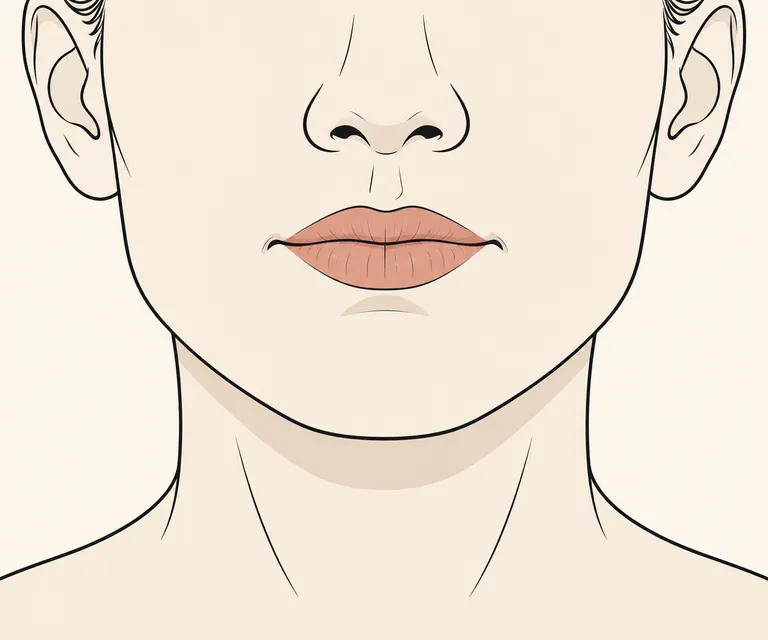
accepted
Tongue tip against the alveolar ridge with vocal folds vibrating throughout, as in 'Boden'.
External facial anatomy is plausible; tongue position is not visible.
attempt 0 · 2026-10-03
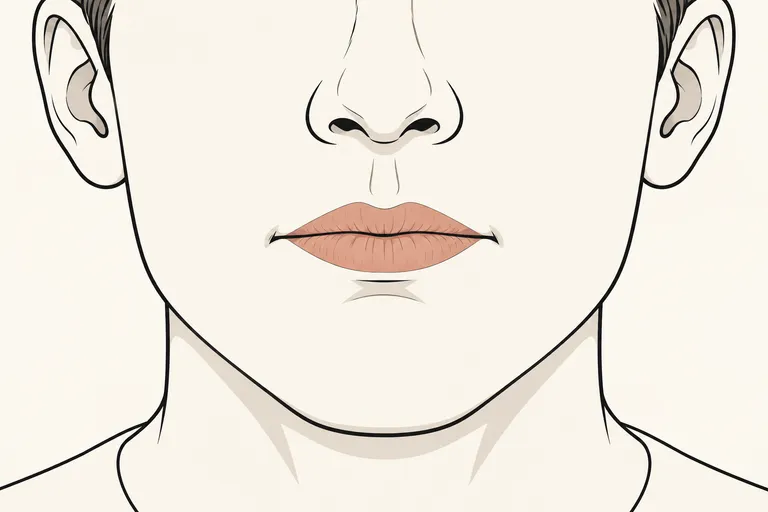
accepted
Same tongue closure but voicing stops, producing a plain [t], as in 'Hand'.
Lips, jaw, and face are anatomically plausible; internal articulation is not shown.
attempt 0 · 2026-10-03
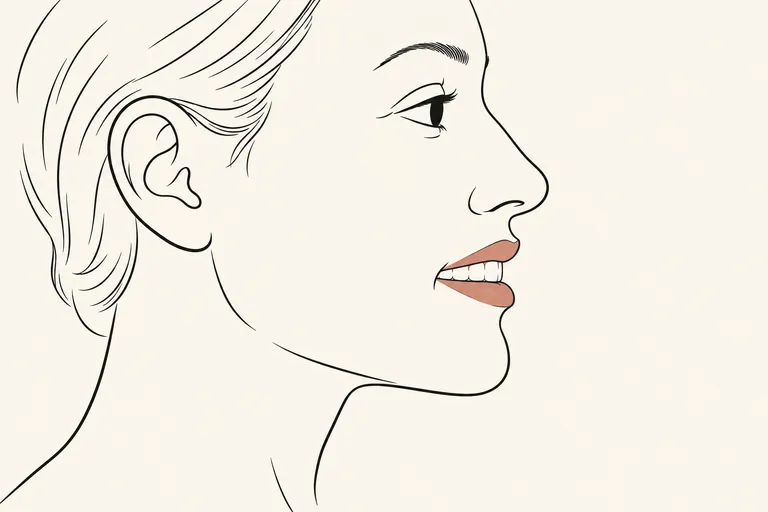
accepted
Tongue held high-mid and forward with tense muscles, lips spread, held longer than a typical English vowel.
Parted lips, visible teeth, and profile anatomy are plausible.
attempt 0 · 2026-10-03
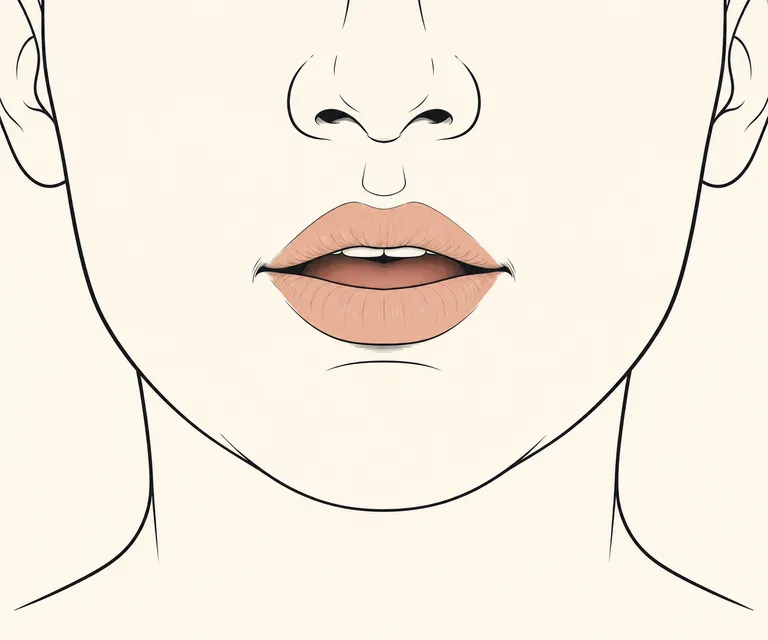
accepted
Mouth in a fully relaxed, neutral position, jaw slightly open, tongue resting in the middle of the mouth.
Relaxed mouth opening, visible teeth, and tongue are plausibly positioned.
attempt 0 · 2026-10-03
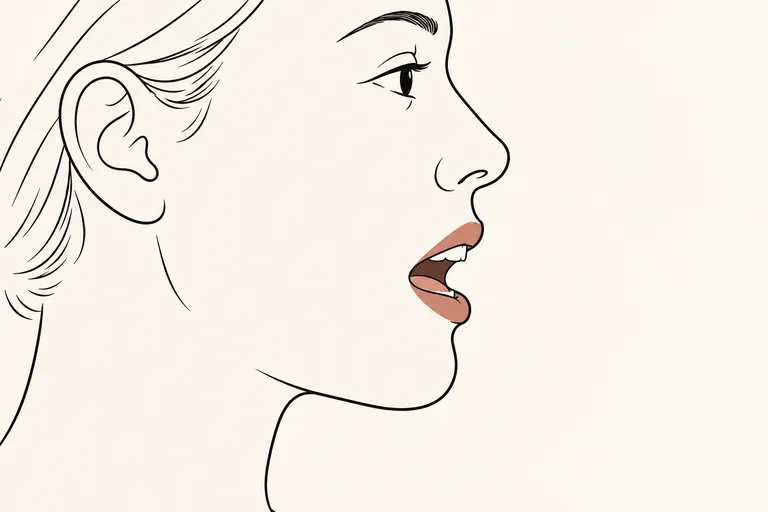
accepted
Jaw dropped moderately, tongue mid-low and front, similar to but slightly more open than English 'bed'.
Open jaw, lips, teeth, and visible tongue appear anatomically plausible.
attempt 0 · 2026-10-03
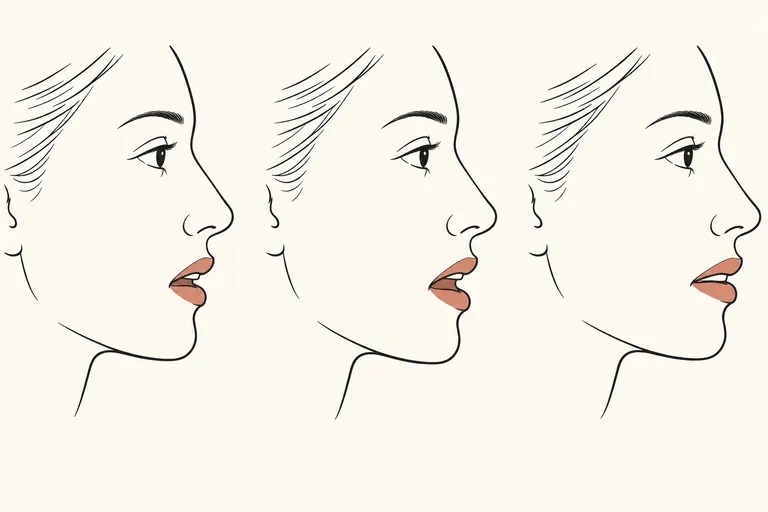
accepted
Same open-mid front tongue posture as short ɛ, but held for a noticeably longer duration.
Three intact profile views with plausible lips, jaws, and facial anatomy.
attempt 0 · 2026-10-03
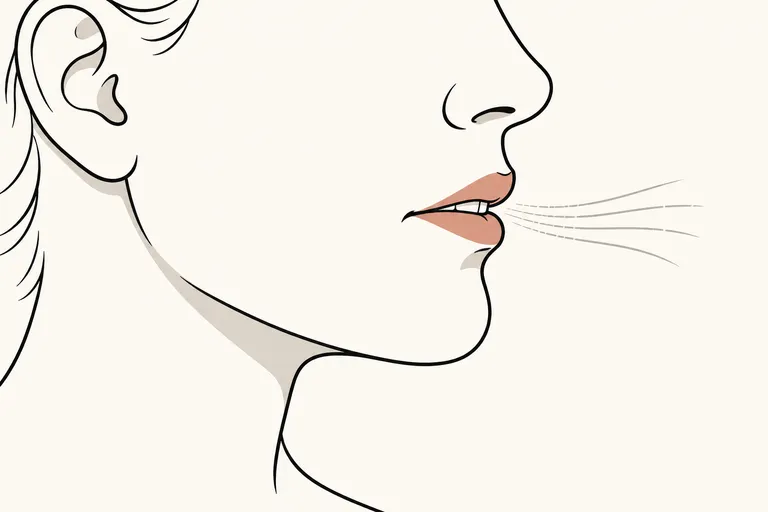
accepted
Lower lip resting lightly against the upper front teeth, air hissing continuously through the narrow gap.
Upper teeth near the lower lip form a plausible labiodental configuration.
attempt 0 · 2026-10-03
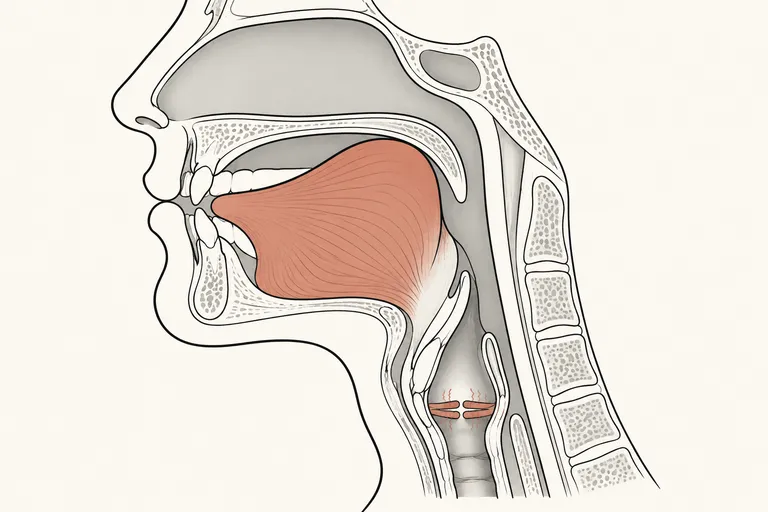
accepted
Back of tongue against the soft palate with vocal folds vibrating, as in 'sagen'.
Tongue is a single continuous mass with plausible raised dorsum and no abnormal curling.
attempt 0 · 2026-10-03
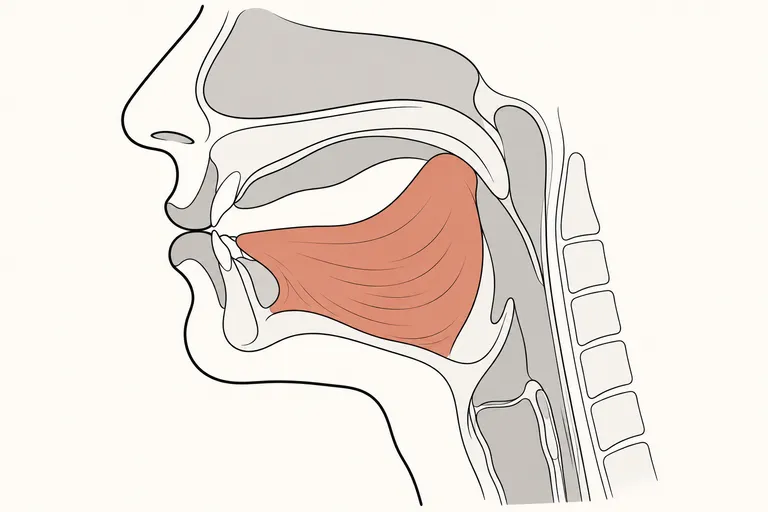
accepted
Same tongue closure but voicing stops, producing a plain [k], as in 'Tag'.
Raised tongue back and forward tongue tip form a plausible continuous tongue without distortion.
attempt 0 · 2026-10-03
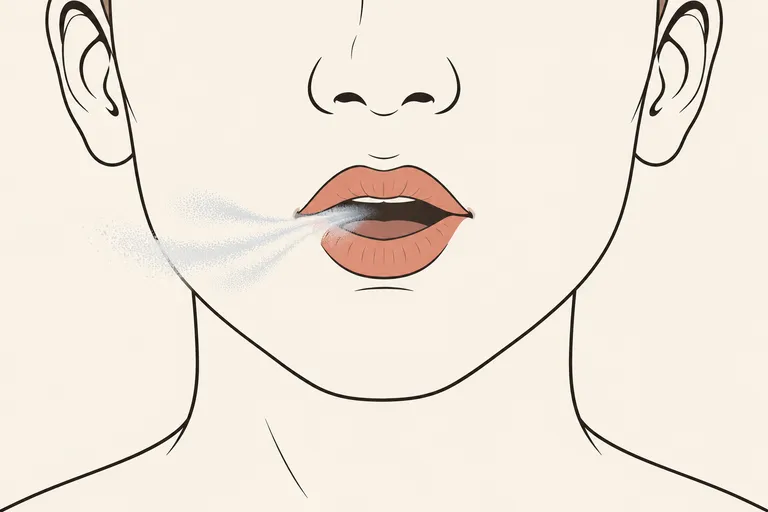
accepted
Mouth already shaped for the upcoming vowel while a breathy puff of air passes through the open vocal folds.
Plausible lips, jaw, and visible tongue; breath puff is a reasonable schematic effect.
attempt 0 · 2026-10-03
accepted
Neutral mouth position before the vowel.
Anatomically plausible side profile with neutral, closed lips.
attempt 0 · 2026-10-03
accepted
Tongue raised high and forward, nearly touching the palate, lips spread flat and slightly tense, jaw almost closed.
Plausible side profile and nearly closed lips; no visible anatomical abnormalities.
attempt 0 · 2026-10-03
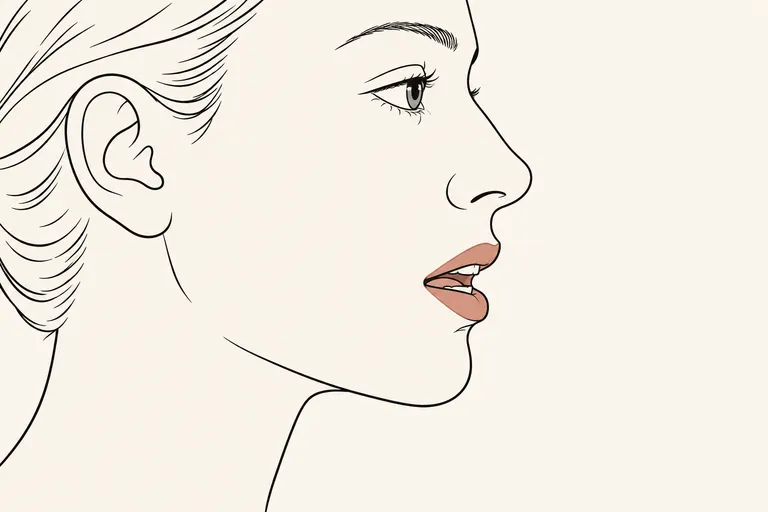
accepted
Tongue high-front but relaxed, lips loosely spread, jaw slightly more open than for the long iː.
Slightly parted lips and visible teeth are anatomically plausible.
attempt 0 · 2026-10-03
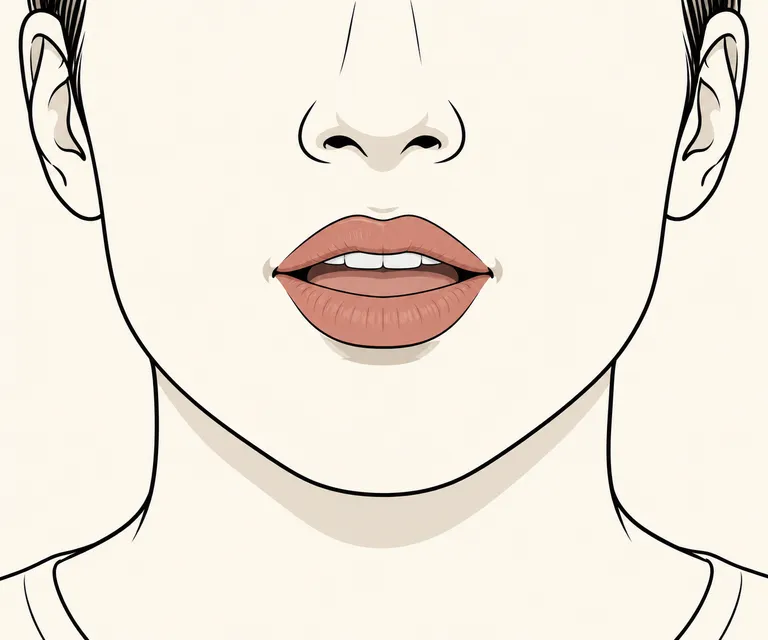
accepted
Tongue body raised high and forward, close to the position for the vowel ee, with voicing flowing smoothly into the following vowel.
Lips, teeth, and visible tongue have plausible shapes and positions.
attempt 0 · 2026-10-03
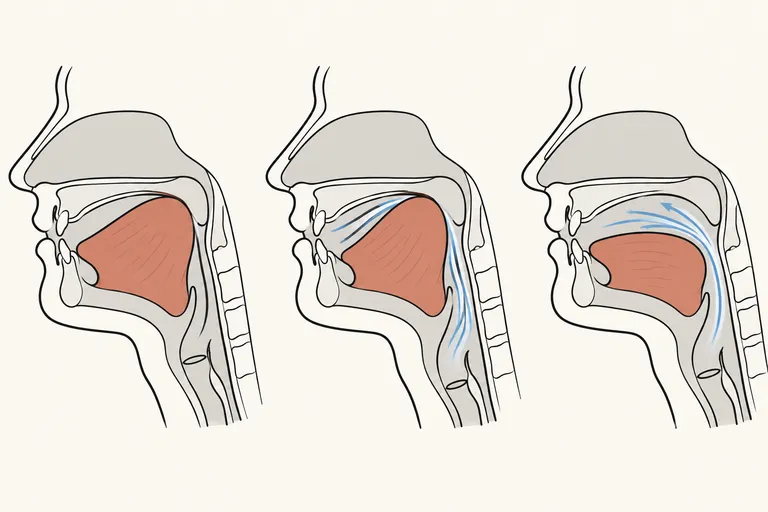
accepted
Back of the tongue raised to press against the soft palate, blocking airflow.
Schematic sagittal views show single, continuous tongues with plausible contours and no exaggerated curling.
attempt 0 · 2026-10-03
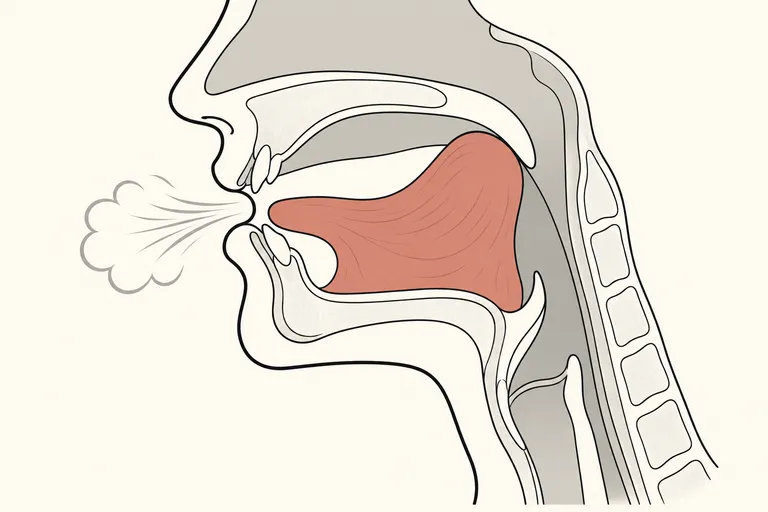
accepted
Tongue drops with a crisp puff of air on release, especially word-initially.
Single continuous tongue with plausible tip and raised dorsum; surrounding cutaway anatomy is visually coherent.
attempt 0 · 2026-10-03
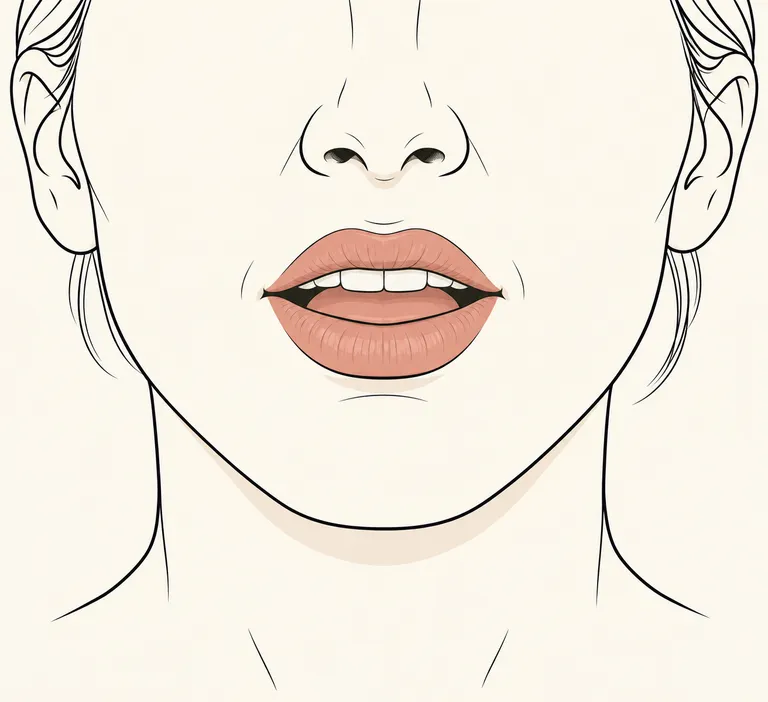
accepted
Tongue tip against the alveolar ridge with the tongue body kept front and light, air flowing around the sides.
Visible tongue, upper teeth, lips, and jaw are anatomically plausible.
attempt 0 · 2026-10-03
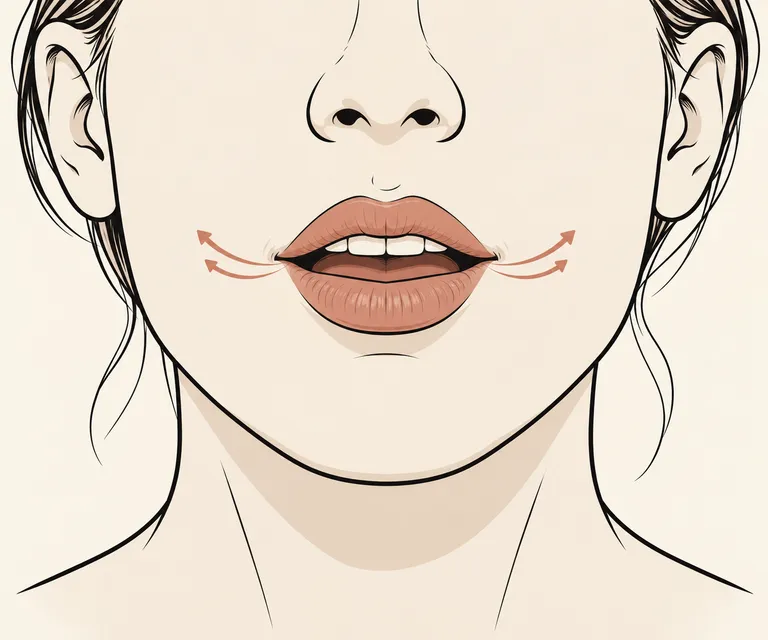
accepted
In English, syllable-final l often raises the back of the tongue, giving a darker, more muffled quality that German l avoids.
Mouth anatomy is plausible; external arrows are acceptable schematic indicators.
attempt 0 · 2026-10-03
accepted
Lips pressed together, velum lowered so air resonates through the nose while the voice buzzes.
Closed lips and visible facial anatomy are plausible.
attempt 0 · 2026-10-03
accepted
Tongue tip pressed against the alveolar ridge, velum lowered so air resonates through the nose.
Facial proportions and closed lips are anatomically plausible; tongue is not visible.
attempt 0 · 2026-10-03
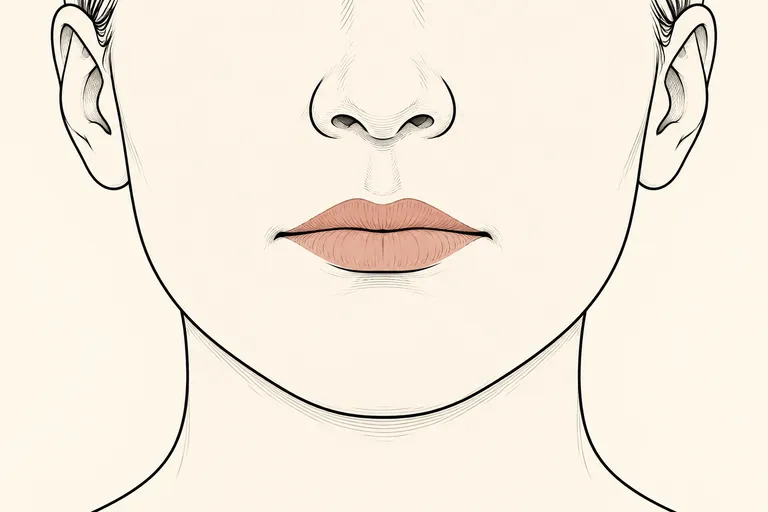
accepted
In the very common unstressed '-en' ending, the schwa often disappears and n alone carries the syllable, as in 'machen'.
Closed mouth has plausible lip contours and facial anatomy.
attempt 0 · 2026-10-03
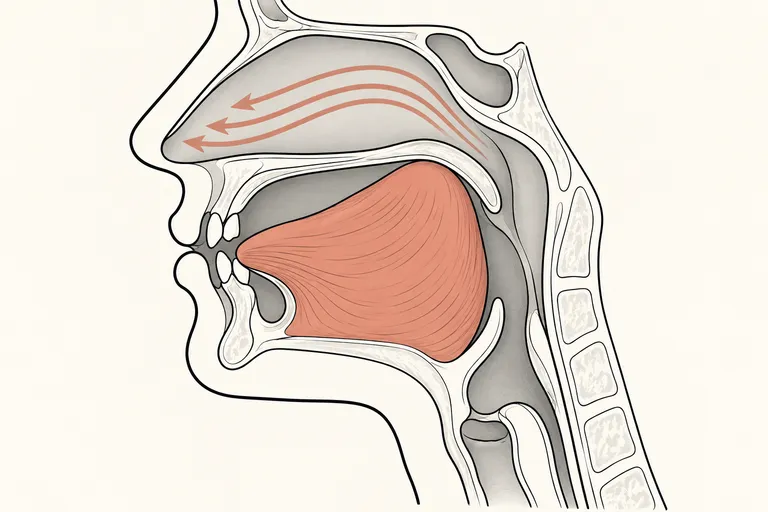
accepted
Back of the tongue raised against the soft palate, blocking the mouth while the voice buzzes and resonates through the nose.
Single continuous tongue with plausible raised back; sagittal anatomy and nasal airflow arrows are visually coherent.
attempt 0 · 2026-10-03
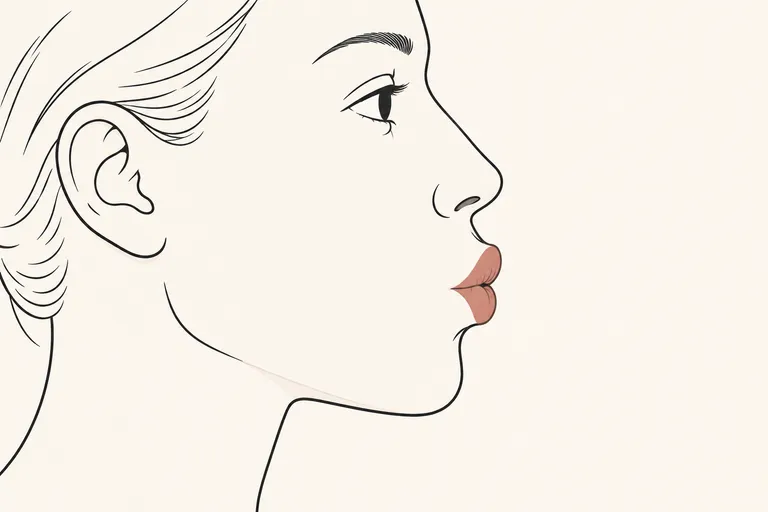
accepted
Lips tightly rounded and pushed slightly forward, tongue mid-high and backed, held for a long, pure duration.
Profile shows plausible forward lip rounding without anatomical distortion.
attempt 0 · 2026-10-03
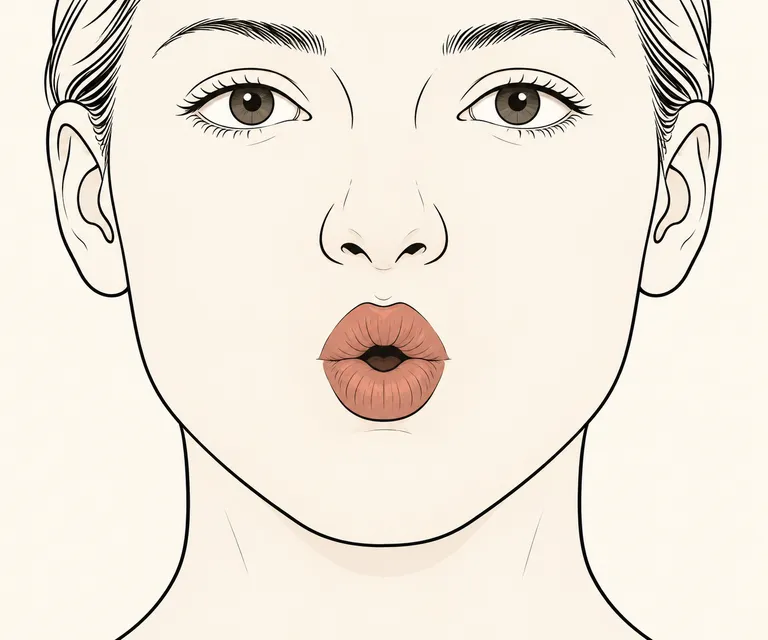
accepted
Tongue mid-high and forward as for eː, lips tightly rounded as for oː, held long and pure.
Rounded lips and facial anatomy are plausible; no visible anatomical abnormalities.
attempt 0 · 2026-10-03
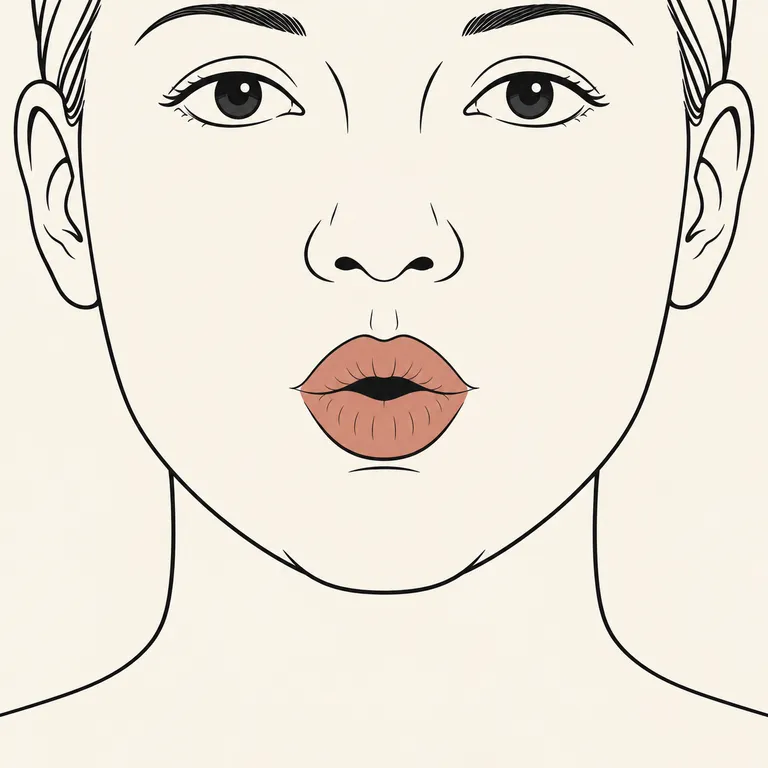
accepted
Tongue mid-low and front as for ɛ, lips loosely rounded as for ɔ, held briefly.
Loosely rounded lips and facial proportions are anatomically plausible.
attempt 0 · 2026-10-03
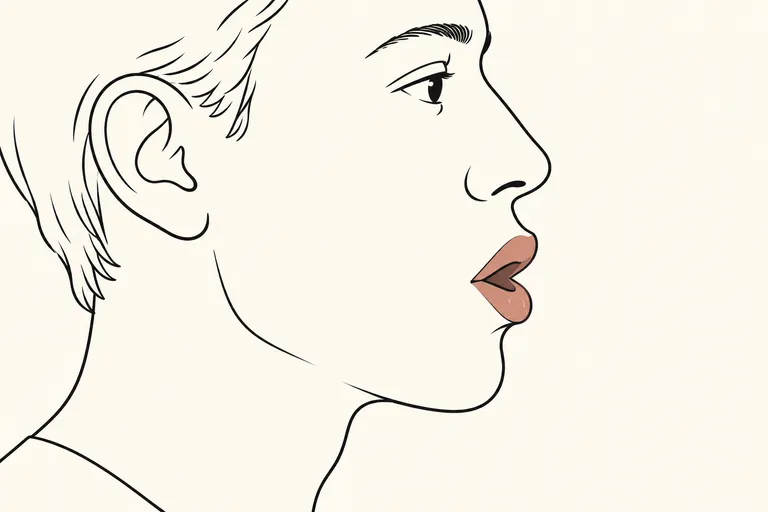
accepted
Jaw moderately open, lips loosely rounded, tongue mid-low and backed, similar to English 'law' but shorter.
Profile shows plausible lip rounding and jaw opening without anatomical distortions.
attempt 0 · 2026-10-03
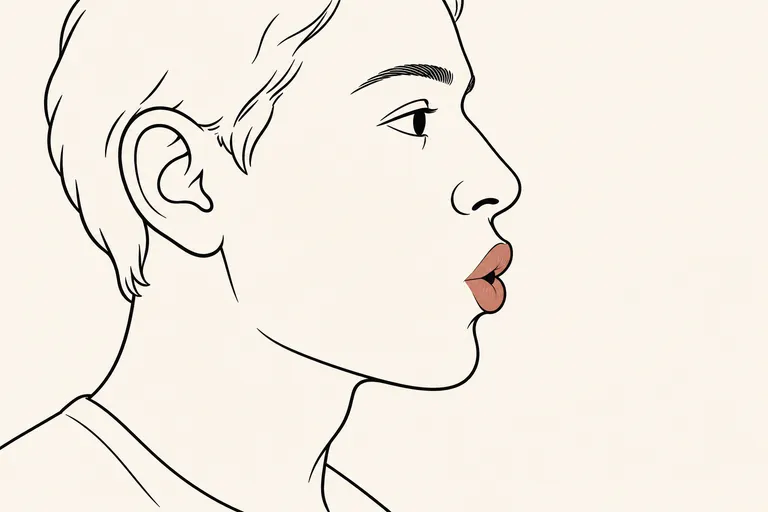
accepted
Lips rounded, tongue mid-low and back, as for the vowel ɔ.
Rounded lips and head profile are anatomically plausible.
attempt 0 · 2026-10-04
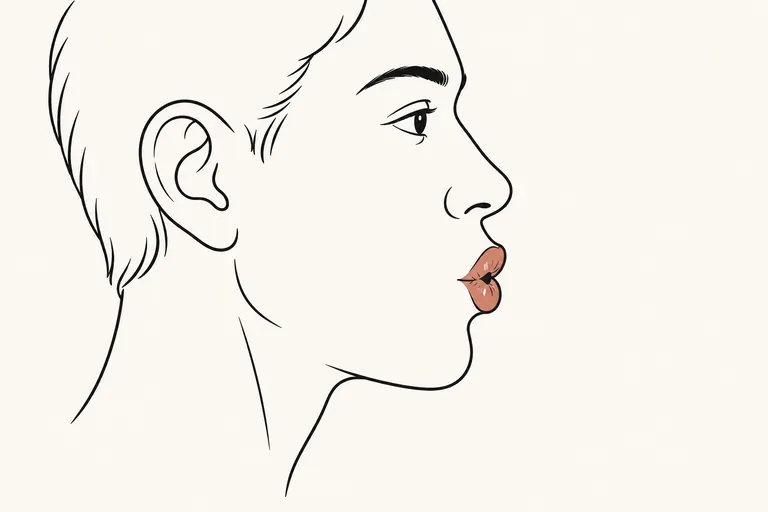
accepted
Tongue glides sharply forward while lips stay rounded, tightening toward the front rounded ʏ position.
Pursed lips form a plausible small opening; no visible anatomical abnormalities.
attempt 0 · 2026-10-04
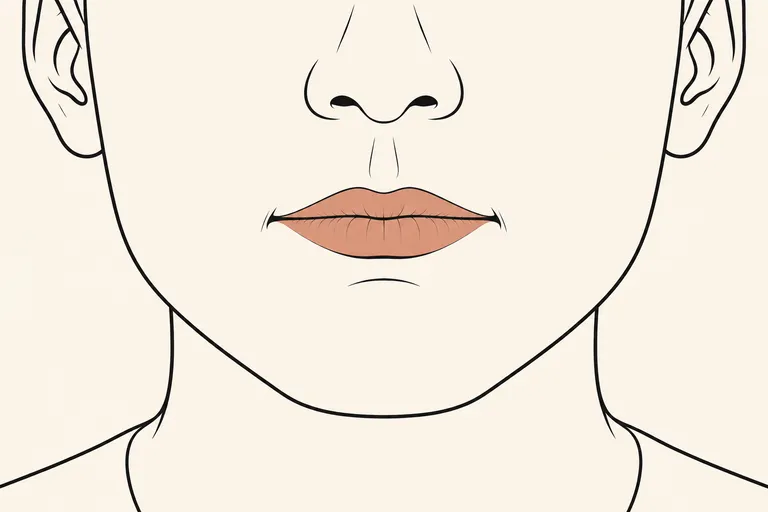
accepted
Lips pressed firmly together, blocking all airflow.
Pressed lips and surrounding facial structures appear anatomically plausible.
attempt 0 · 2026-10-04
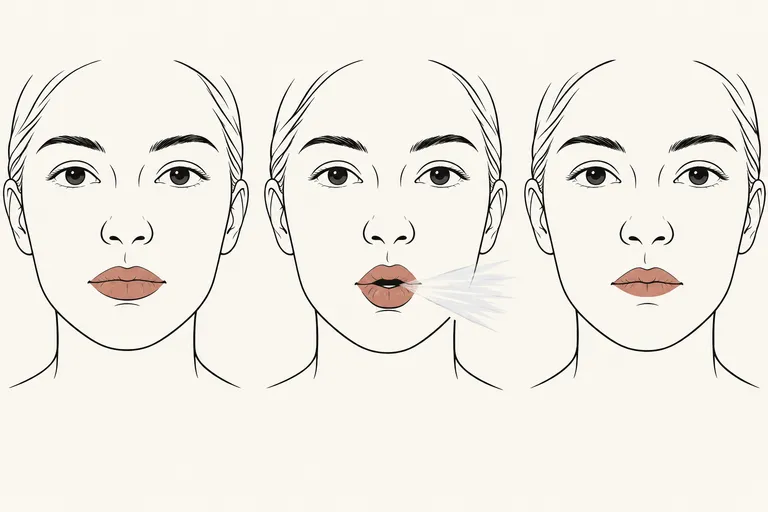
accepted
Lips part with a brisk puff of air on the release, especially word-initially.
Three coherent faces illustrate plausible lip closure and release; airflow markings are schematic.
attempt 0 · 2026-10-04
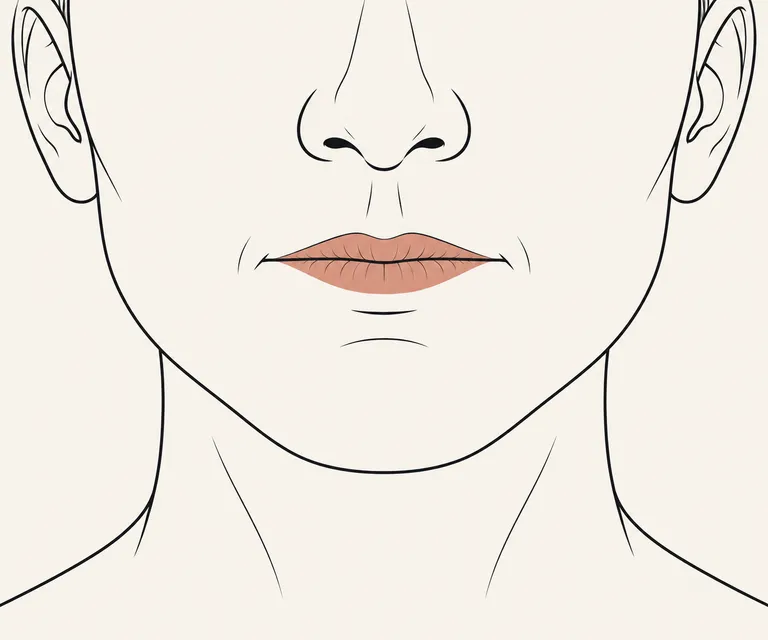
accepted
Lips pressed together as for p, blocking airflow.
Closed lips and surrounding facial anatomy are plausible.
attempt 0 · 2026-10-04
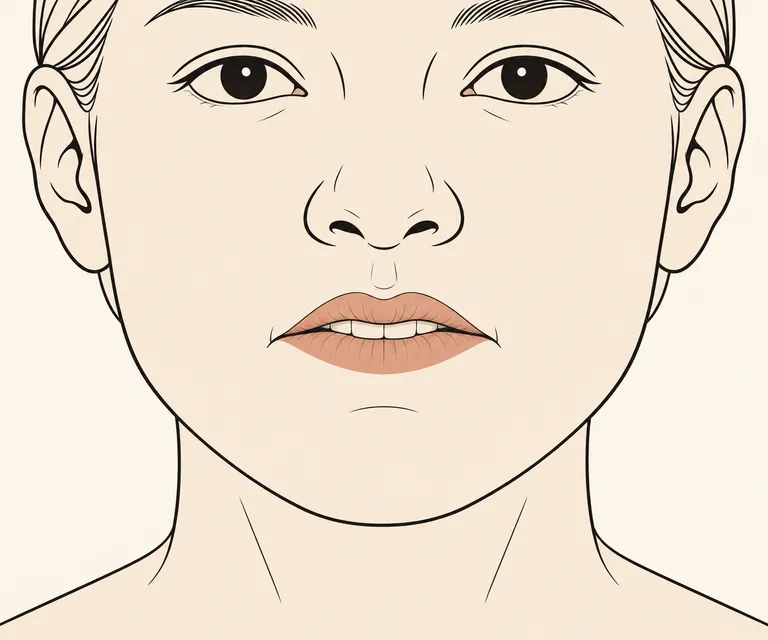
accepted
Lower lip moves quickly to touch the upper teeth, releasing the closure as a brief f-like friction instead of a clean pop.
Visible upper teeth and raised lower lip form an anatomically plausible mouth position.
attempt 0 · 2026-10-04
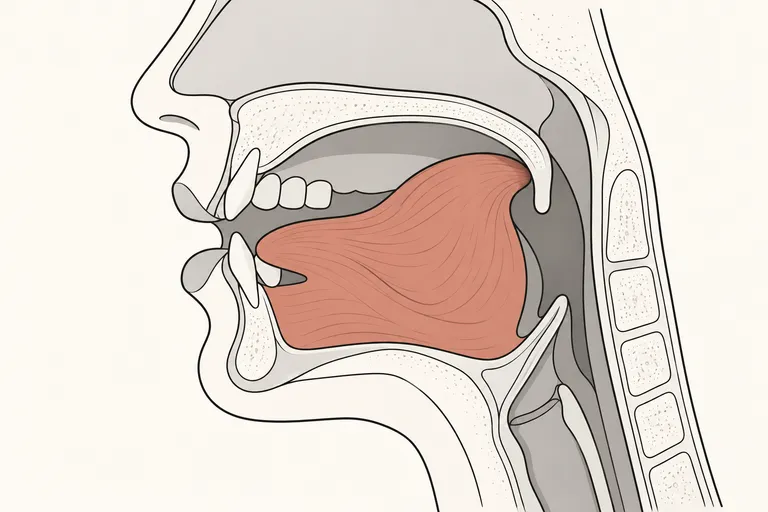
accepted
Back of the tongue raised toward the uvula, producing a soft, gargly friction, as in 'rot'.
A single broad tongue has a plausible raised back without twisting or looping.
attempt 0 · 2026-10-04
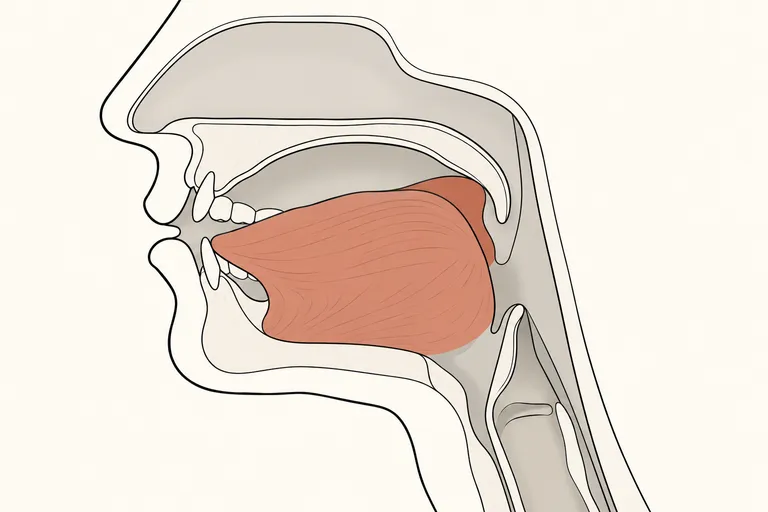
accepted
In syllable-final position, the consonant relaxes into a schwa-like vowel sound instead, as in 'Vater'.
Single continuous tongue with plausible contours in a stylized sagittal section.
attempt 1 · 2026-10-04
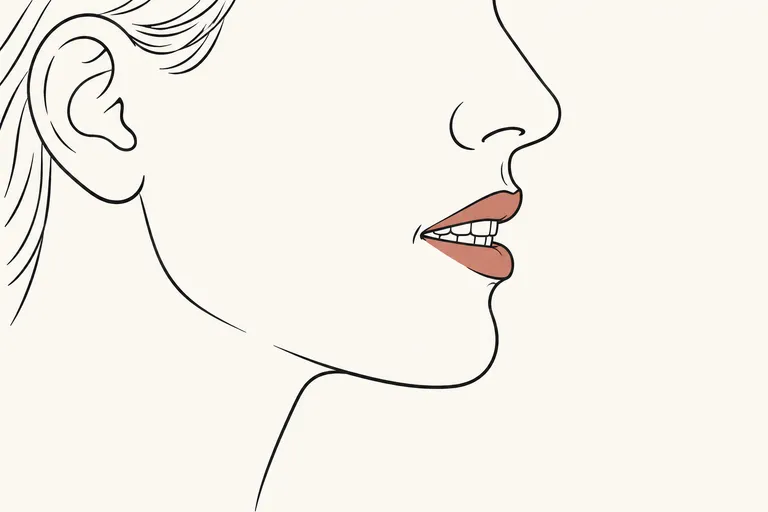
accepted
Tongue tip close to the alveolar ridge, forming a narrow channel with a steady hiss of air.
Plausible lips, teeth, and jaw; no visible tongue abnormality.
attempt 0 · 2026-10-04
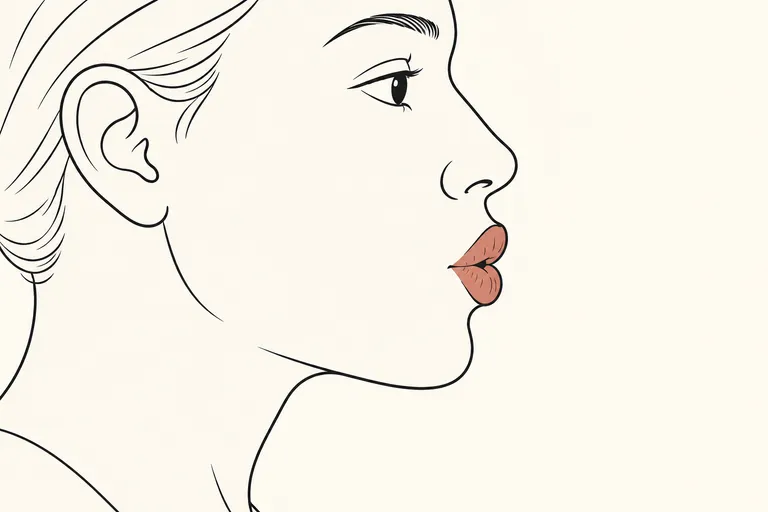
accepted
Lips rounded and pushed slightly forward, tongue tip curled toward the back of the alveolar ridge, steady hiss through a wider channel than s.
Rounded, protruded lips remain within a plausible human range.
attempt 0 · 2026-10-04
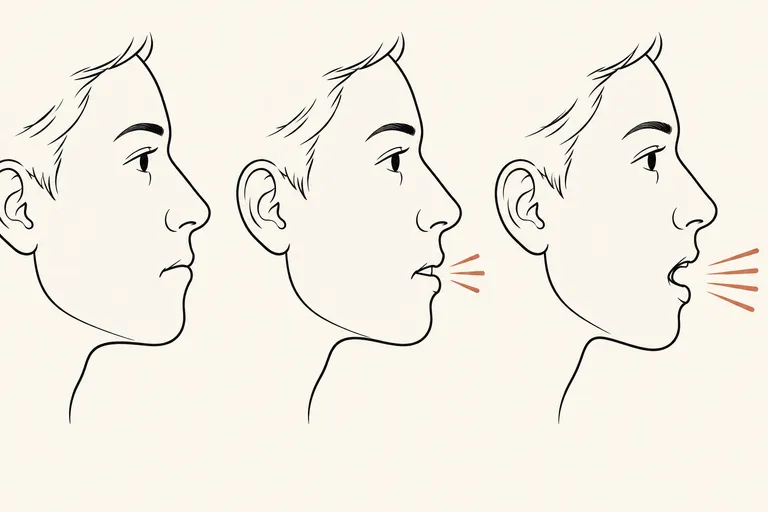
accepted
Tongue tip pressed firmly against the alveolar ridge, blocking airflow.
Three coherent profiles with plausible mouth positions and schematic airflow marks.
attempt 0 · 2026-10-04
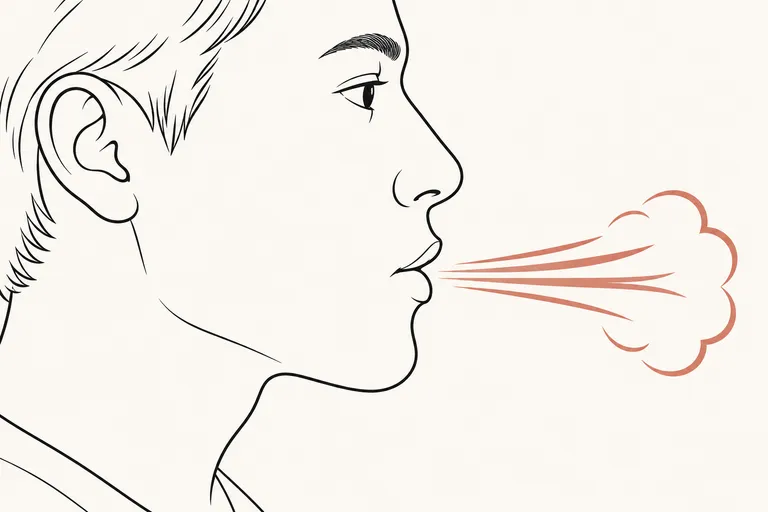
accepted
Tongue releases with a crisp puff of air, especially word-initially.
Anatomically plausible profile with schematic expelled air.
attempt 0 · 2026-10-04
accepted
Tongue tip pressed against the alveolar ridge as for t, blocking airflow.
Natural facial profile and slightly parted lips with plausible teeth placement.
attempt 0 · 2026-10-04
accepted
Tongue releases into a narrow groove producing a brief s-like hiss immediately after the stop.
Plausible open mouth, teeth, lips, and jaw without anatomical distortion.
attempt 0 · 2026-10-04
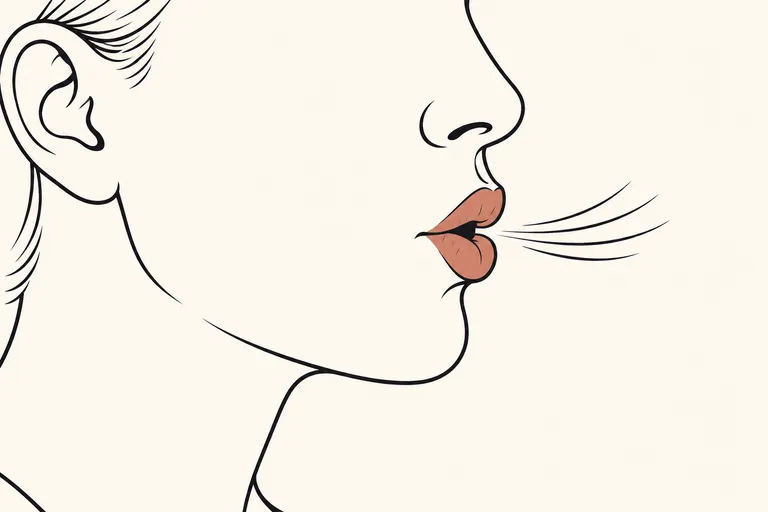
accepted
Tongue tip pressed just behind the alveolar ridge, lips slightly rounded, releasing into a soft 'sh'-like hiss.
Rounded lips and schematic airflow are anatomically plausible.
attempt 0 · 2026-10-04
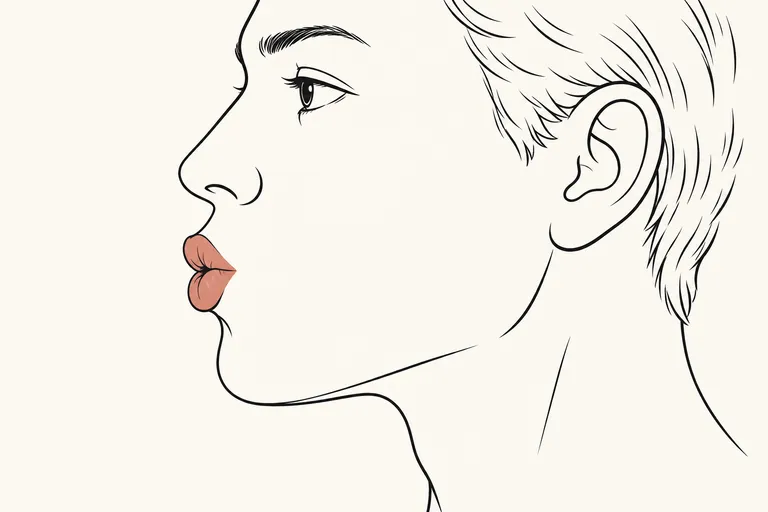
accepted
Lips rounded tightly and pushed forward, tongue high and back, held long and pure with no glide.
Protruded, tightly rounded lips are plausible for this vowel.
attempt 0 · 2026-10-04
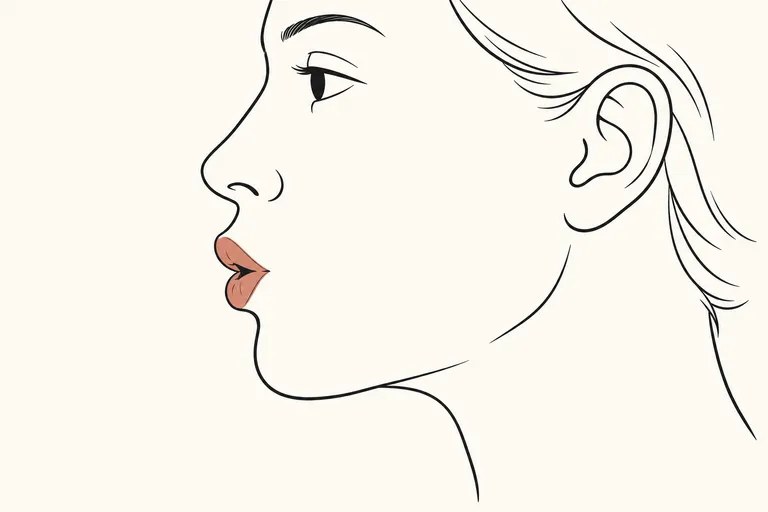
accepted
Lips loosely rounded, tongue high-back but relaxed, similar to English 'put' but always short.
Loosely rounded lips and surrounding facial structures appear anatomically plausible.
attempt 0 · 2026-10-04
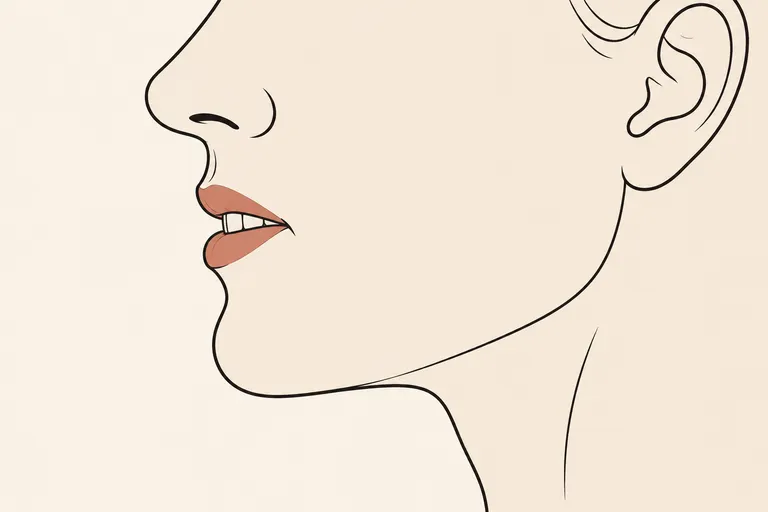
accepted
Lower lip against upper front teeth with continuous voiced friction, spelled with 'w' in German.
Lips, teeth, and jaw have plausible shapes and placement.
attempt 0 · 2026-10-04
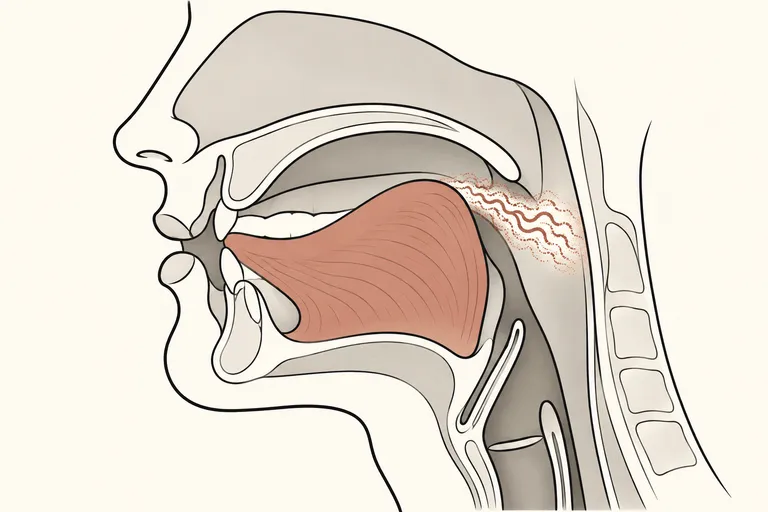
accepted
Back of the tongue raised toward the soft palate (roughly the position for the vowel oo), producing a rough, throaty hiss reminiscent of Scottish 'loch'.
Raised tongue dorsum is continuous and anatomically plausible, without looping or splitting.
attempt 0 · 2026-10-04
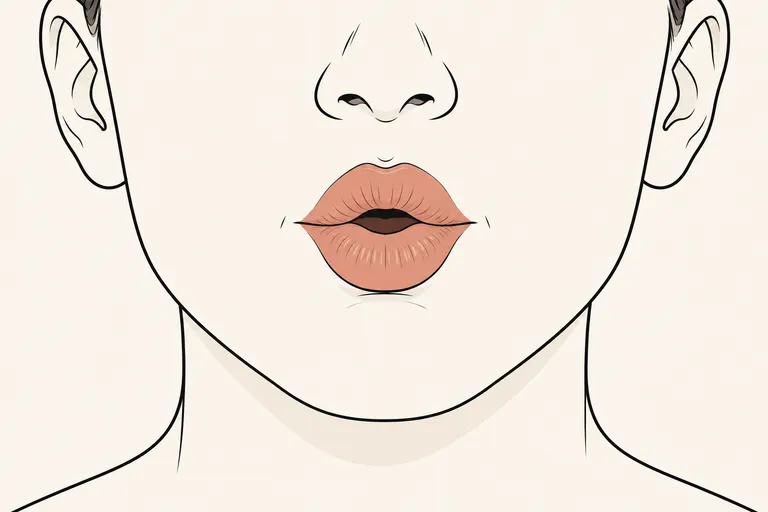
accepted
Reference shape: tongue high-front, lips spread.
Rounded lips and surrounding facial anatomy are visually coherent and anatomically plausible.
attempt 0 · 2026-10-04
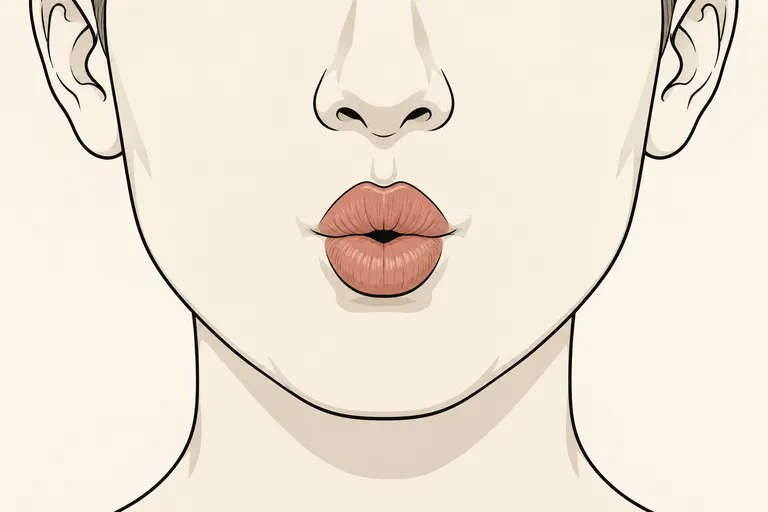
accepted
Same high-front tongue position as iː, but lips are now tightly rounded and pushed forward, with no English equivalent.
Rounded lips and visible facial anatomy are plausible.
attempt 0 · 2026-10-04
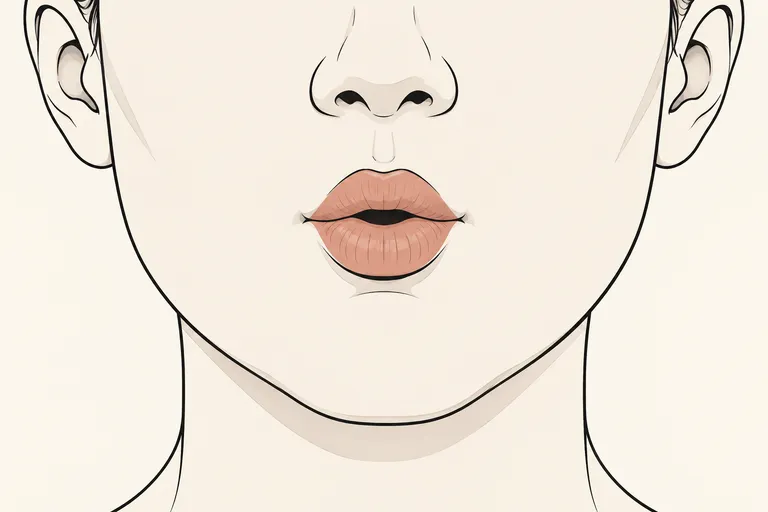
accepted
Tongue in the same relaxed high-front position as ɪ, lips loosely rounded, held briefly.
Loosely rounded lips and facial proportions are anatomically plausible.
attempt 0 · 2026-10-04
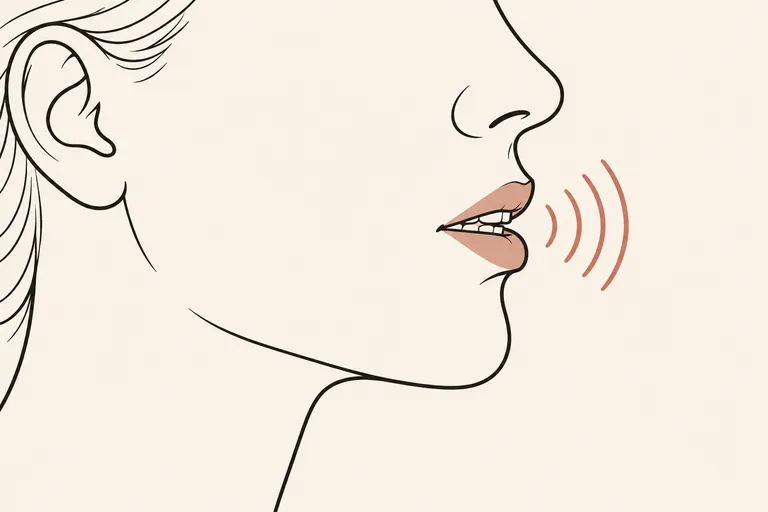
accepted
Same tongue posture as s, but with the vocal folds buzzing throughout — occurs only at the start of a syllable before a vowel.
Lips, teeth, and jaw are plausibly positioned; sound-wave marks are acceptable.
attempt 0 · 2026-10-04
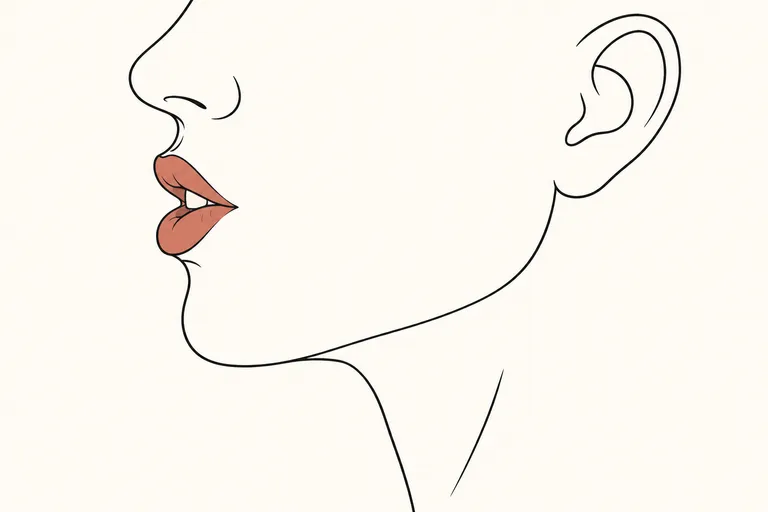
accepted
Same lip and tongue posture as ʃ, but with the vocal folds buzzing throughout, found only in French loanwords.
Profile shows plausible lips, teeth, and jaw placement.
attempt 0 · 2026-10-04
Inventory en-US (53)
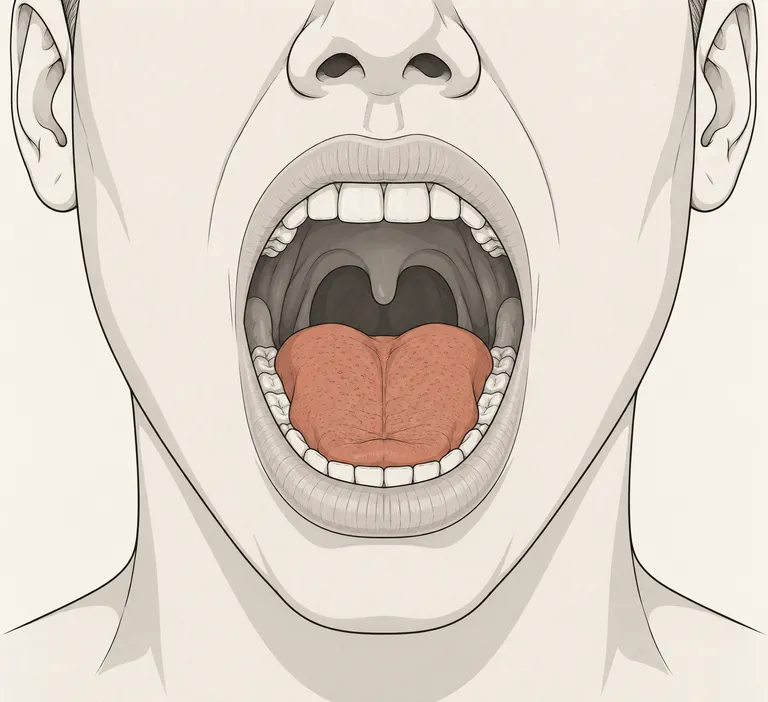
accepted
Jaw dropped wide open, tongue body low and pushed forward, tip resting behind the lower teeth, lips relaxed.
Open jaw and broad, low tongue appear anatomically plausible.
attempt 0 · 2026-10-03
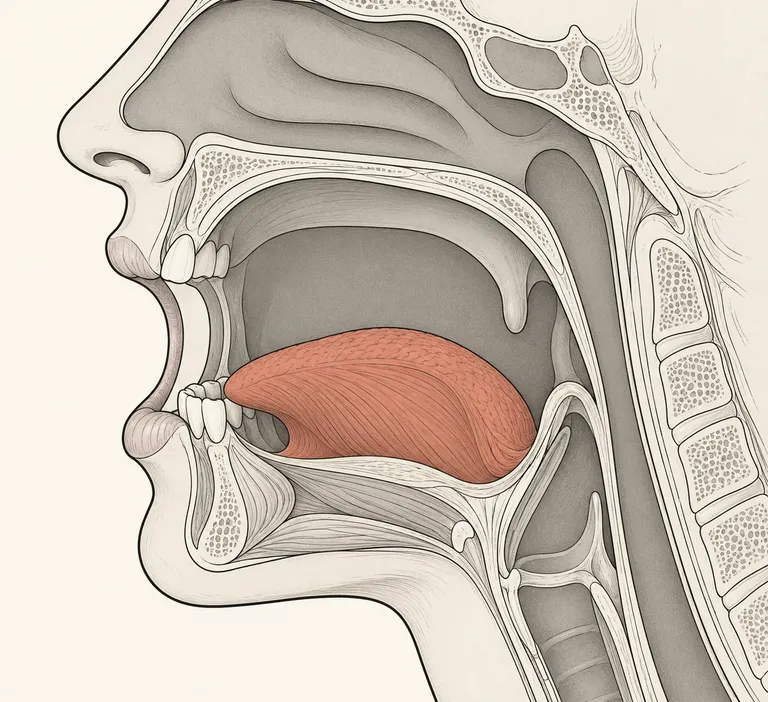
accepted
Jaw wide open, tongue low and central-back, lips relaxed — like starting an 'ah'.
Low, broad tongue and open jaw are anatomically plausible.
attempt 0 · 2026-10-03
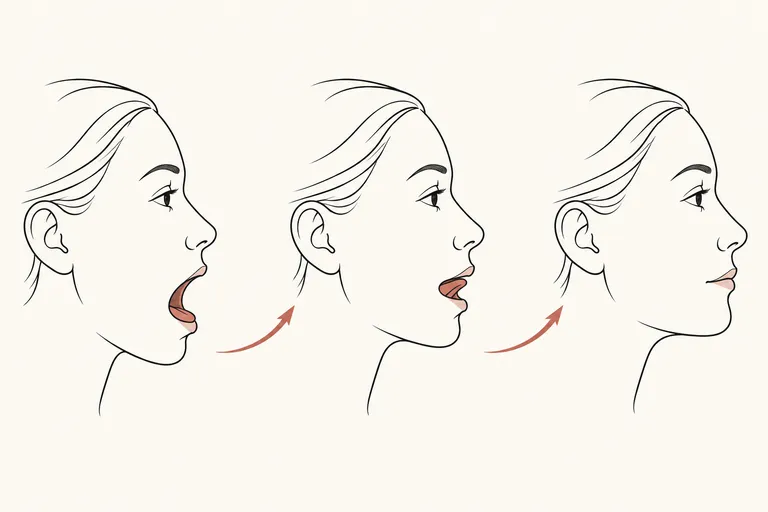
accepted
Jaw closes and tongue rises quickly toward a high front position, finishing near 'ee'.
Successive jaw and lip positions are plausible, with no malformed visible tongue.
attempt 1 · 2026-10-03
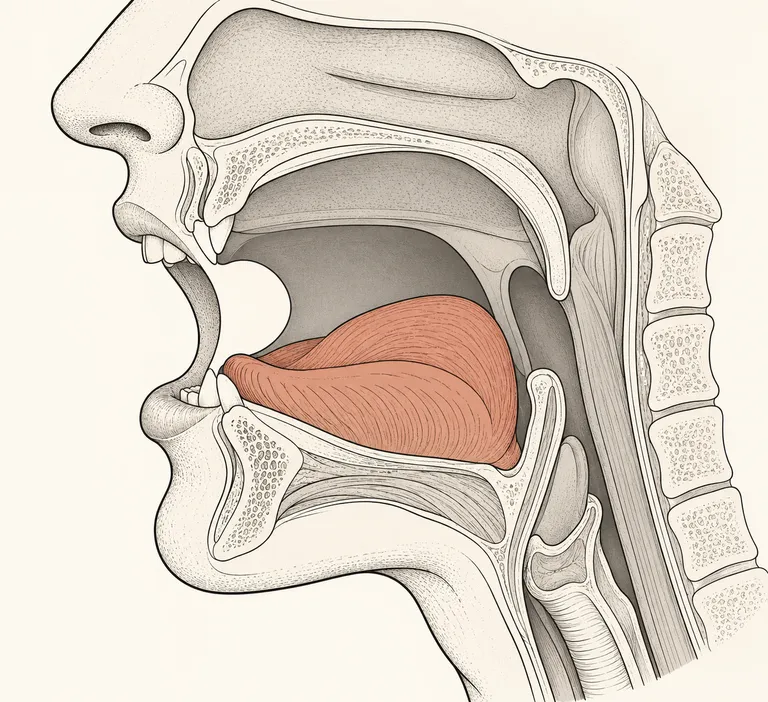
accepted
Jaw wide open, tongue low and central, lips relaxed — like starting an 'ah'.
Low central tongue posture and open jaw appear plausible.
attempt 0 · 2026-10-03
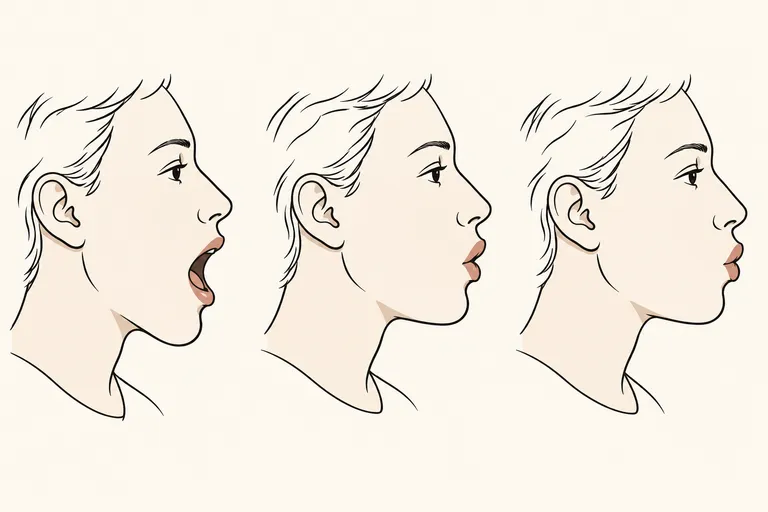
accepted
Jaw closes, tongue rises and pulls back, lips round toward a high back position, finishing near 'oo'.
Jaw closure and progressive lip rounding are anatomically plausible.
attempt 1 · 2026-10-03
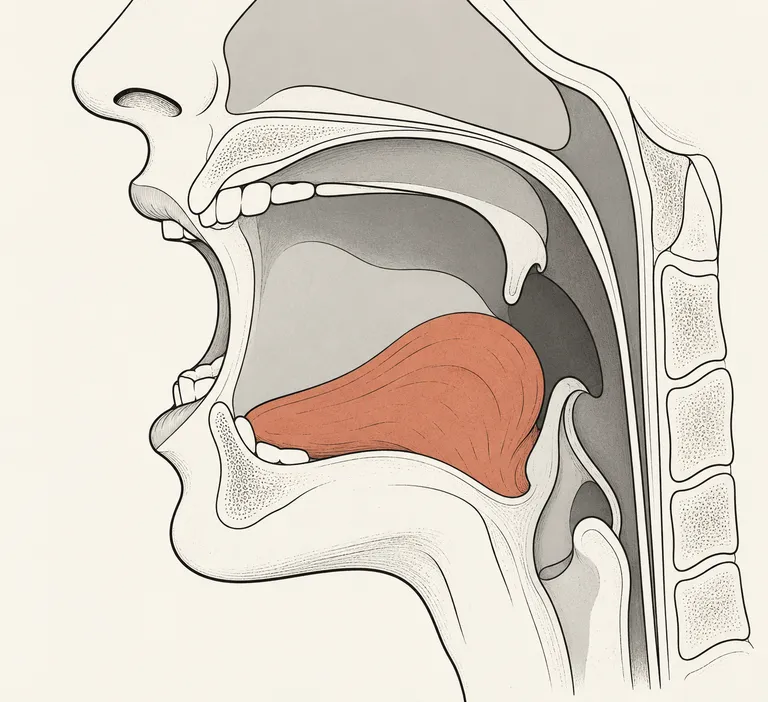
accepted
Jaw dropped wide open, tongue body low and pulled back toward the throat, lips left unrounded.
Tongue is broad, low, and retracted with a naturally open jaw.
attempt 0 · 2026-10-03
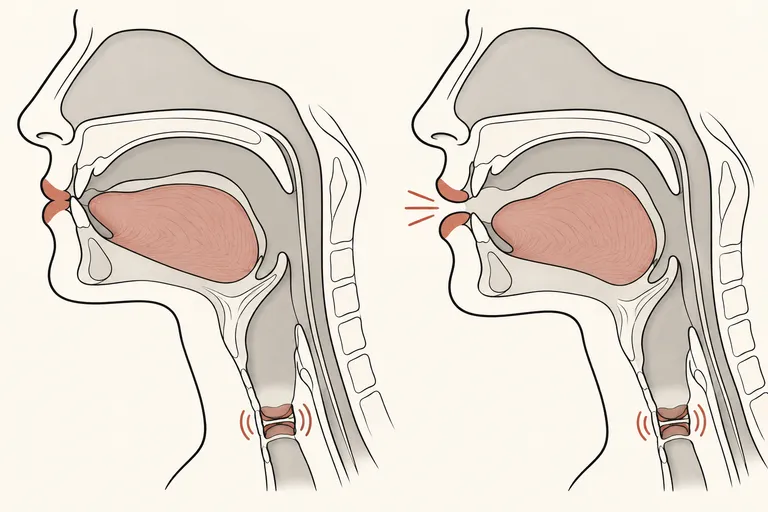
accepted
Lips pressed together while the vocal folds vibrate, building a low hum behind the closure, then released with a soft, unaspirated burst.
Both sagittal views show plausible tongue shapes, lip closure and release, and anatomically coherent vocal tracts.
attempt 1 · 2026-10-03
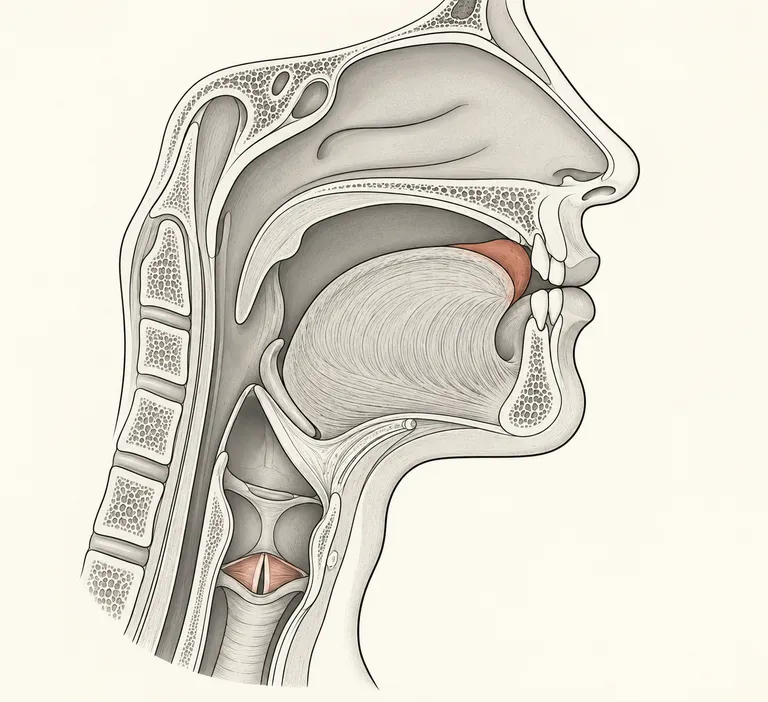
accepted
Tongue tip presses against the alveolar ridge while the vocal folds vibrate, then releases softly at the start of a word like 'dog'.
Plausible sagittal anatomy with tongue tip contacting the alveolar ridge.
attempt 0 · 2026-10-03
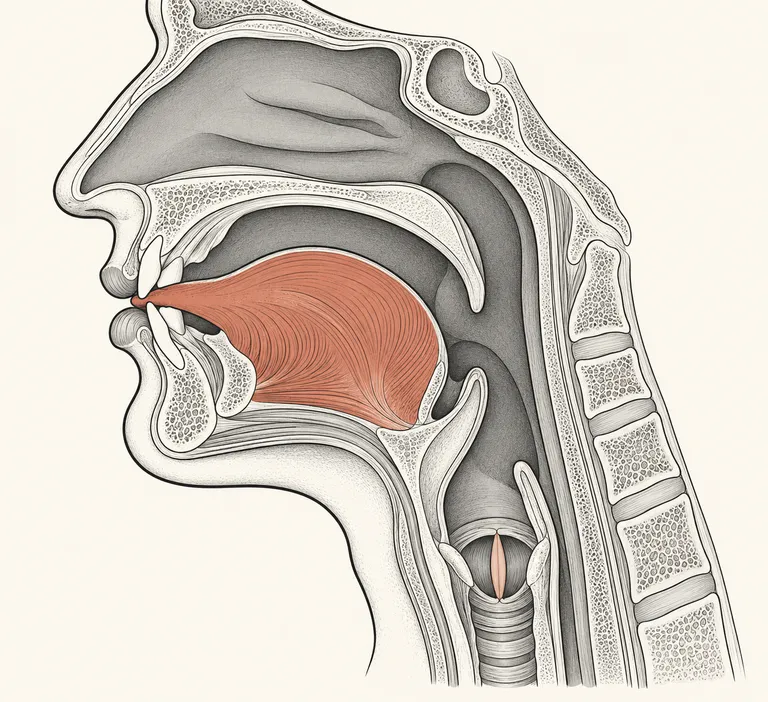
accepted
Tongue tip lightly between the teeth, exactly as for θ, but the vocal folds vibrate throughout, giving a soft buzz.
Tongue tip extends slightly between the teeth without curling, splitting, or distortion.
attempt 0 · 2026-10-03
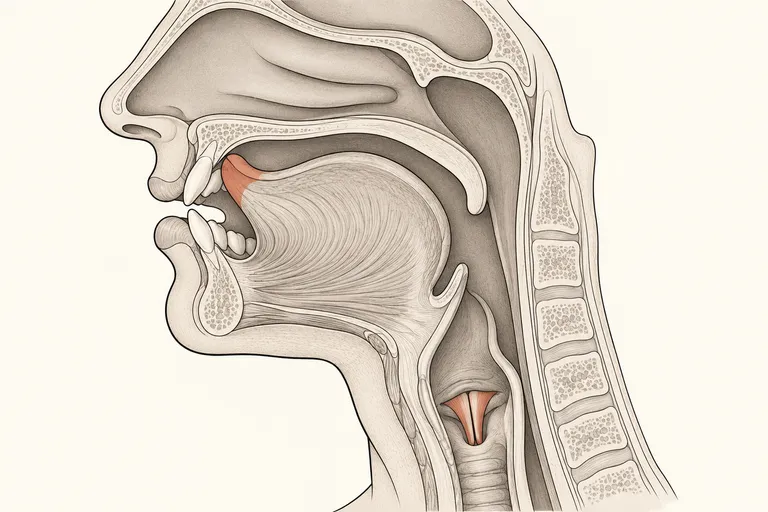
accepted
Tongue tip taps the alveolar ridge briefly between vowels, as in 'ladder', producing the same quick tap used for intervocalic t.
Tongue tip contact and surrounding oral anatomy appear plausible.
attempt 0 · 2026-10-03
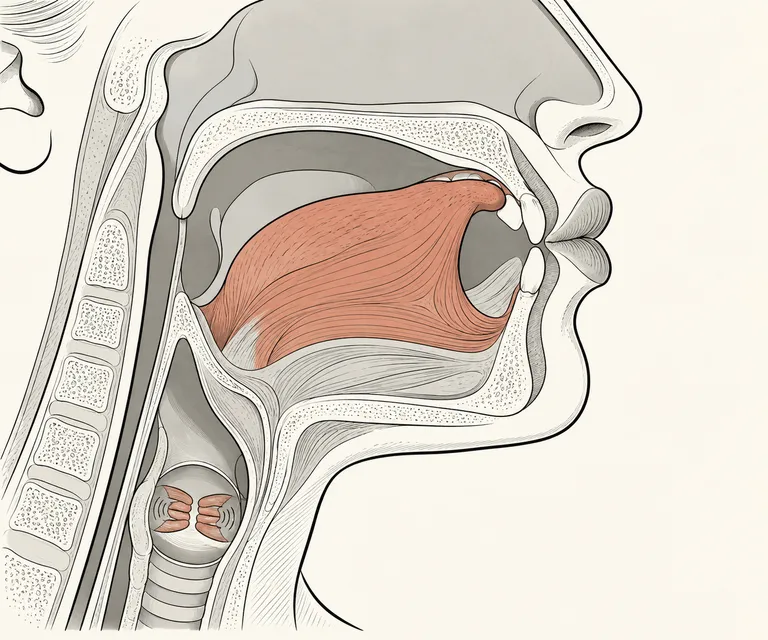
accepted
Tongue tip pressed against the alveolar ridge, sealing the airflow while the vocal folds are already vibrating (throat shown buzzing); lips slightly rounded.
Broad tongue posture and alveolar closure are anatomically coherent.
attempt 0 · 2026-10-03
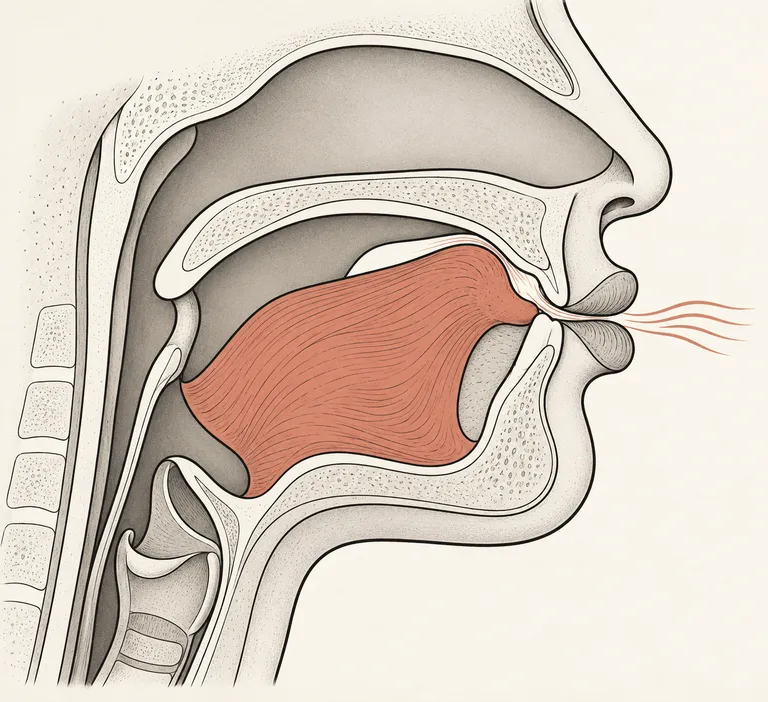
accepted
Tongue drops back slightly, releasing a brief voiced hiss through a narrow channel between tongue and palate.
Tongue remains anatomically continuous with a plausible forward release posture.
attempt 0 · 2026-10-03
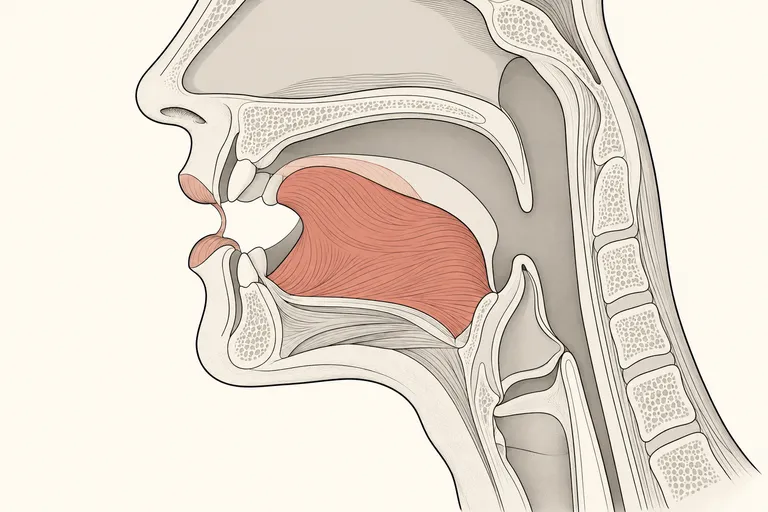
accepted
Tongue raised to upper-mid front position, jaw moderately open, lips relaxed.
Tongue shape and moderately open jaw are visually plausible.
attempt 0 · 2026-10-03
accepted
Tongue and jaw rise slightly further toward the i position as the sound closes.
Parted lips, chin, jaw, and neck form a coherent human profile.
attempt 1 · 2026-10-03
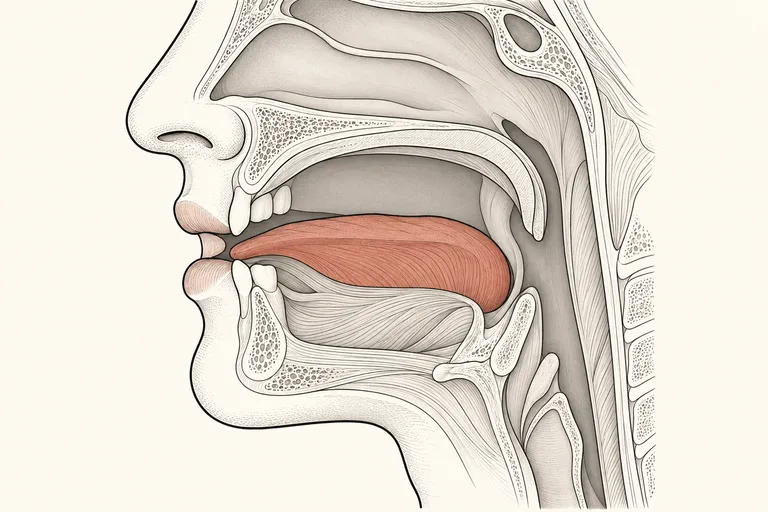
accepted
Mouth in its most neutral, relaxed resting shape: jaw slightly open, tongue flat and central, lips doing nothing special.
Tongue is flat and central in a plausible relaxed mouth posture.
attempt 0 · 2026-10-03
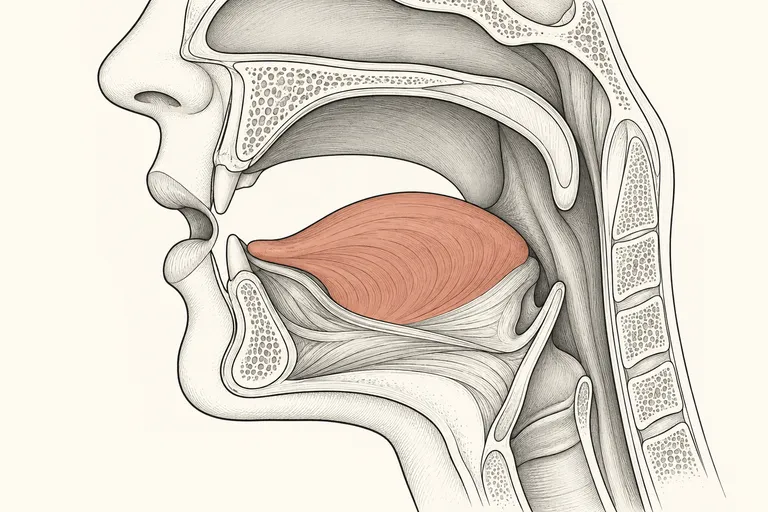
accepted
Tongue body sits mid-low and front, jaw moderately open, lips relaxed and neutral, no glide.
Broad tongue sits plausibly in a mid-low position without distortion.
attempt 0 · 2026-10-03
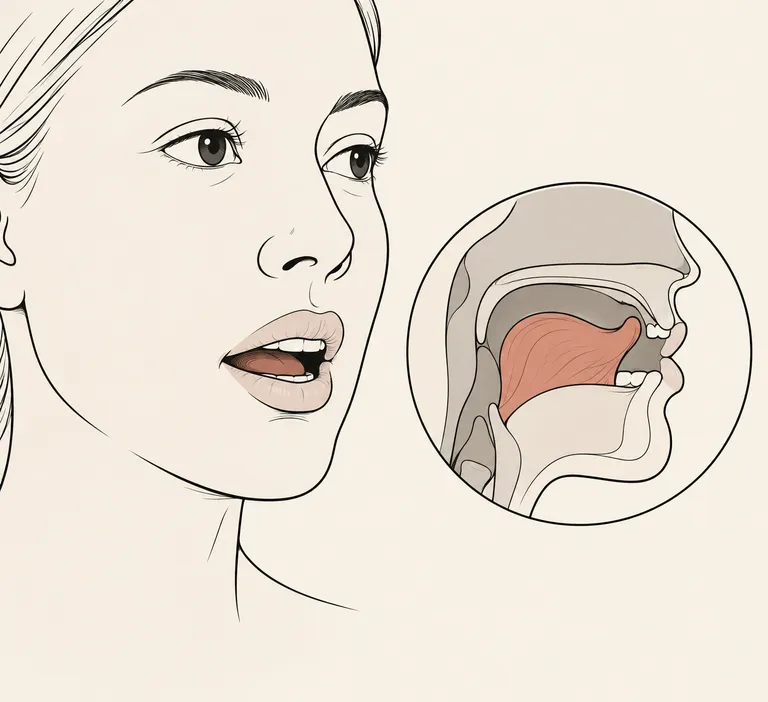
accepted
Jaw slightly open, tongue tip curled up and back without touching the palate, tongue body bunched and retracted, giving the vowel its rhotic color.
Single continuous tongue with plausible bunching and a modest upward tip bend; face and inset are coherent.
attempt 4 · 2026-10-04
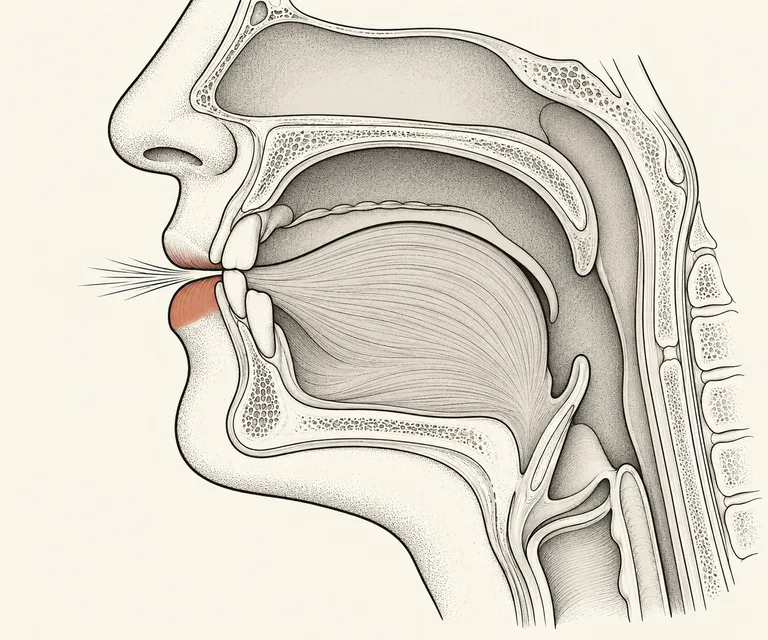
accepted
Lower lip lifted to lightly touch the edge of the upper front teeth, leaving a narrow gap through which air hisses continuously.
Lower lip contacts the upper incisors plausibly; tongue anatomy is sane.
attempt 0 · 2026-10-03
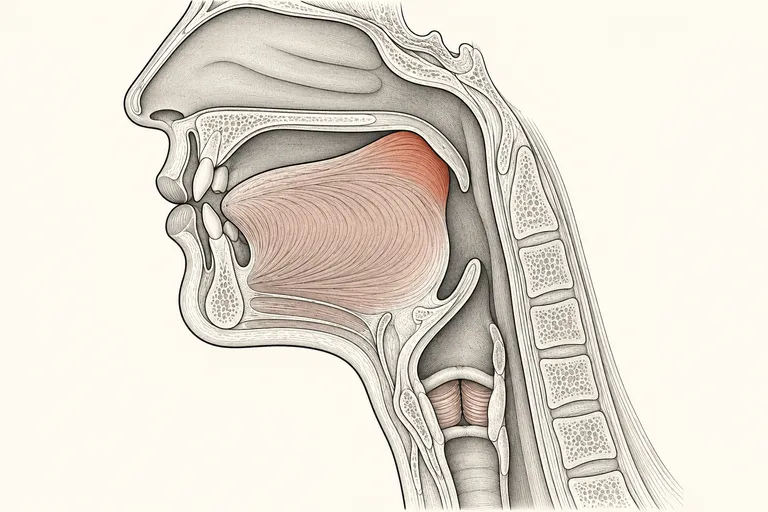
accepted
Back of the tongue sealed against the soft palate while the vocal folds vibrate, then pulled down softly to release without a puff of air.
Tongue back rises plausibly toward the soft palate without distortion.
attempt 0 · 2026-10-03
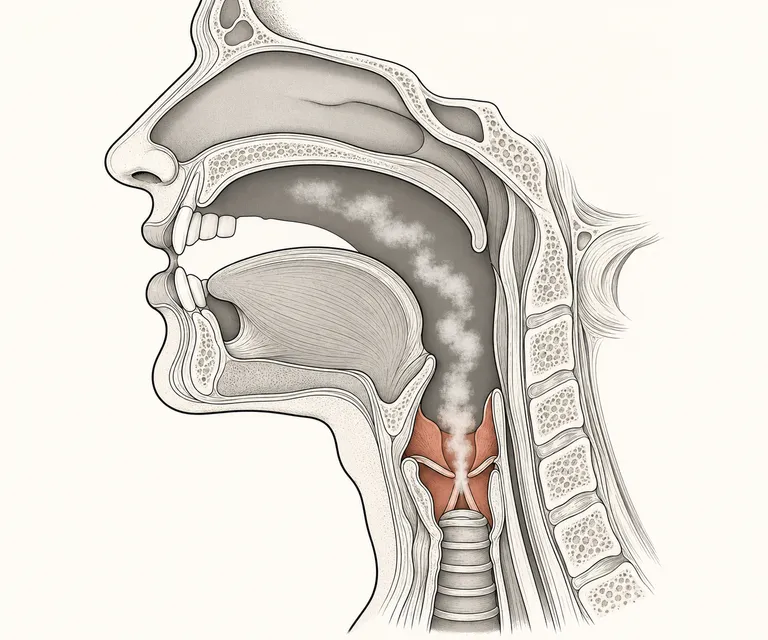
accepted
Open vocal tract with no oral constriction; mouth already shaped for the upcoming vowel; airflow shown as turbulent puffs originating at the glottis/larynx, not in the mouth.
Plausible sagittal anatomy with normal tongue and airflow puffs originating near the larynx.
attempt 0 · 2026-10-03
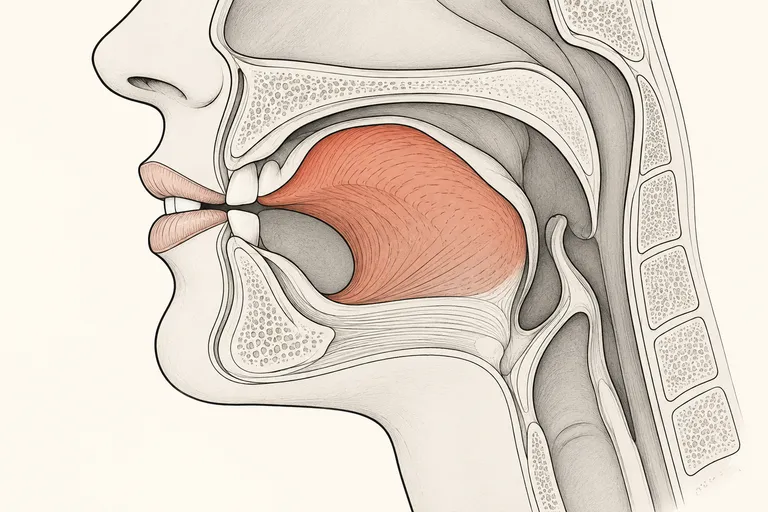
accepted
Lips spread slightly, jaw almost closed, tongue body arched high and forward nearly touching the hard palate, leaving a narrow but unobstructed central channel.
Tongue is naturally continuous and plausibly arched high and forward.
attempt 0 · 2026-10-03
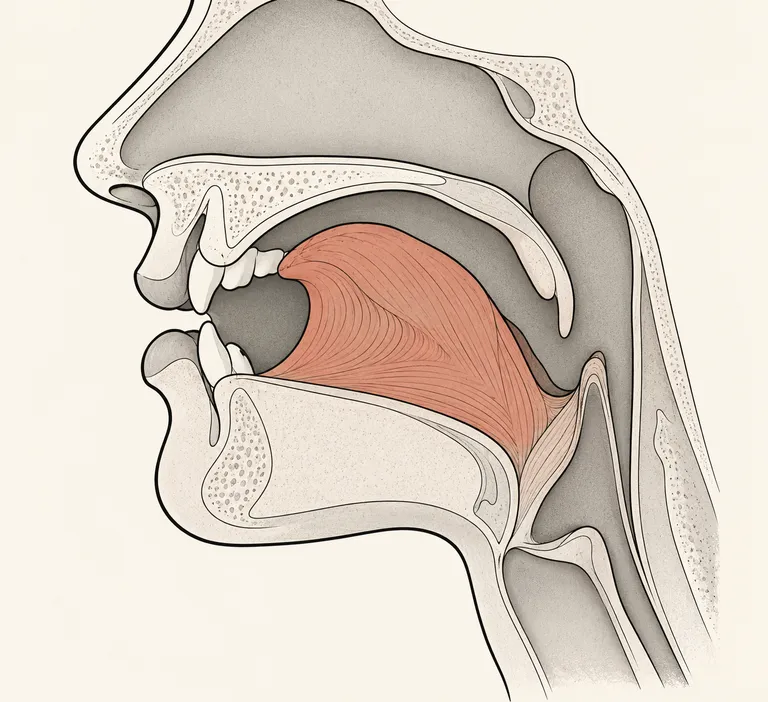
accepted
Tongue bunched very high and tense near the palate, jaw nearly closed.
High, tense tongue posture is exaggerated but anatomically coherent.
attempt 0 · 2026-10-03
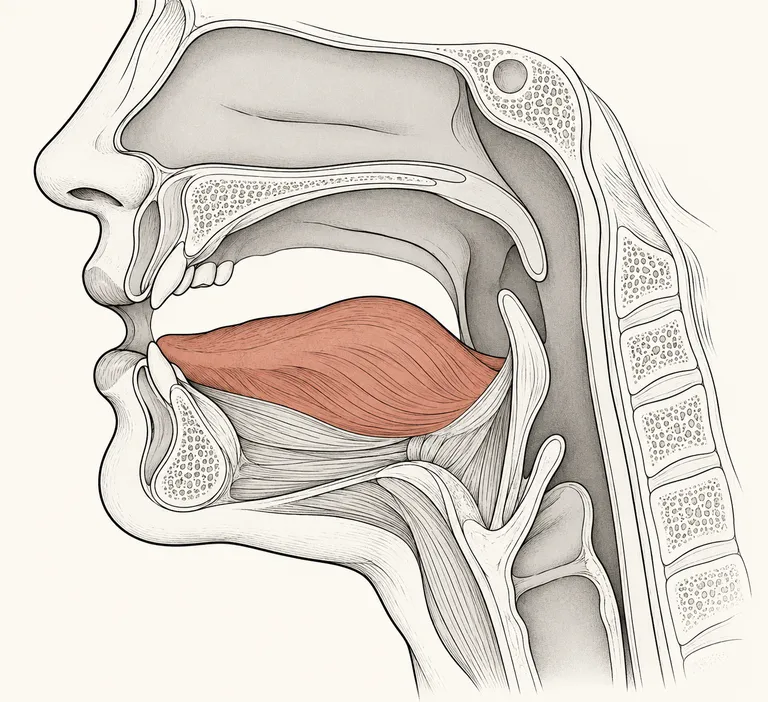
accepted
Tongue slightly lower and more relaxed than for i, jaw a touch more open, overall looser muscle tension.
Relaxed, slightly lowered tongue and open jaw appear anatomically plausible.
attempt 0 · 2026-10-03
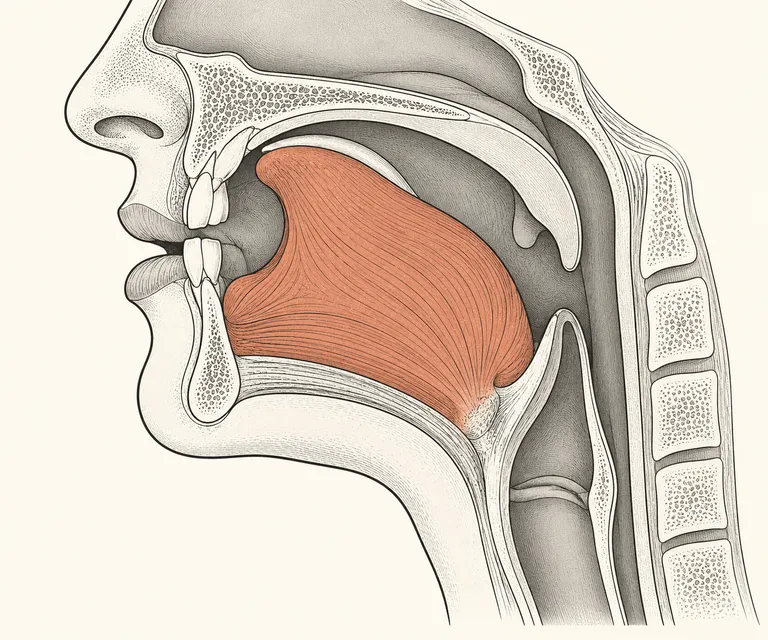
accepted
Front of the tongue raised high and close to the hard palate, almost like the shape for an 'ee' vowel, but the tongue then glides quickly away into the following vowel; lips neutral to slightly spread.
Large but anatomically coherent tongue raised toward the hard palate without twisting or curling.
attempt 0 · 2026-10-03
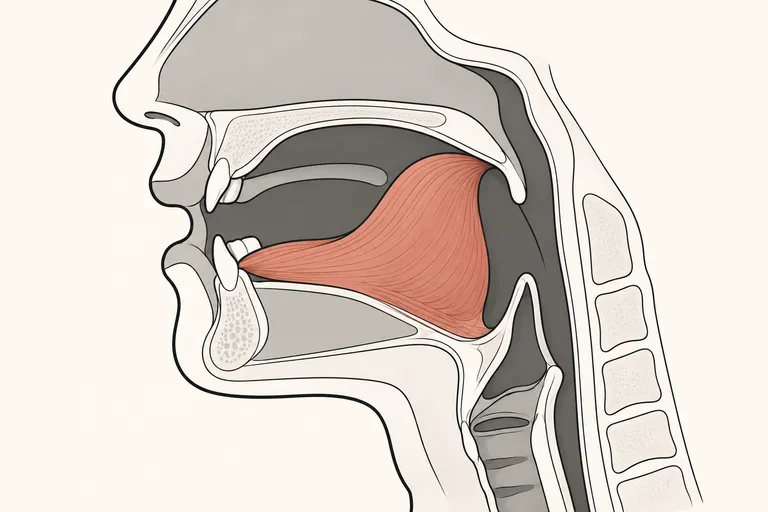
accepted
Back of the tongue raised to seal against the soft palate, blocking airflow, then pulled down suddenly to release with a burst of air, tongue tip staying low throughout.
Single tongue with a low tip and raised back contacting the soft palate is anatomically plausible.
attempt 1 · 2026-10-03
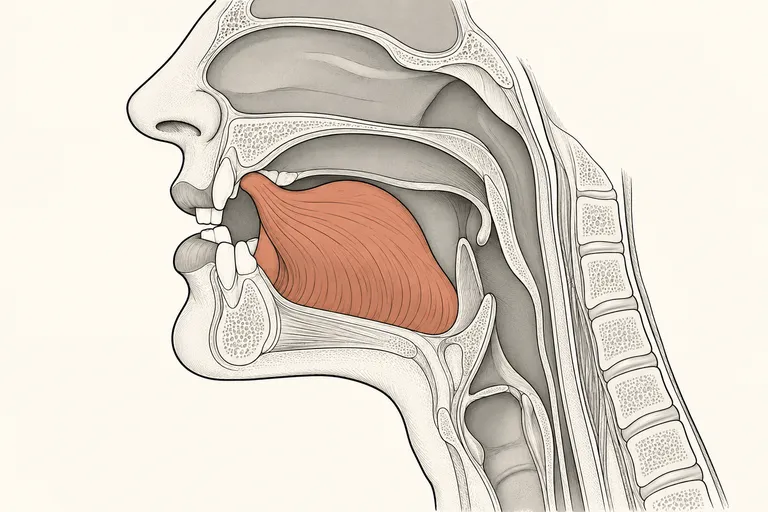
accepted
Tongue tip touches the alveolar ridge while the front of the tongue body stays fairly forward and relaxed; air flows around both sides of the tongue.
Tongue is anatomically coherent with its tip raised toward the alveolar ridge.
attempt 0 · 2026-10-03
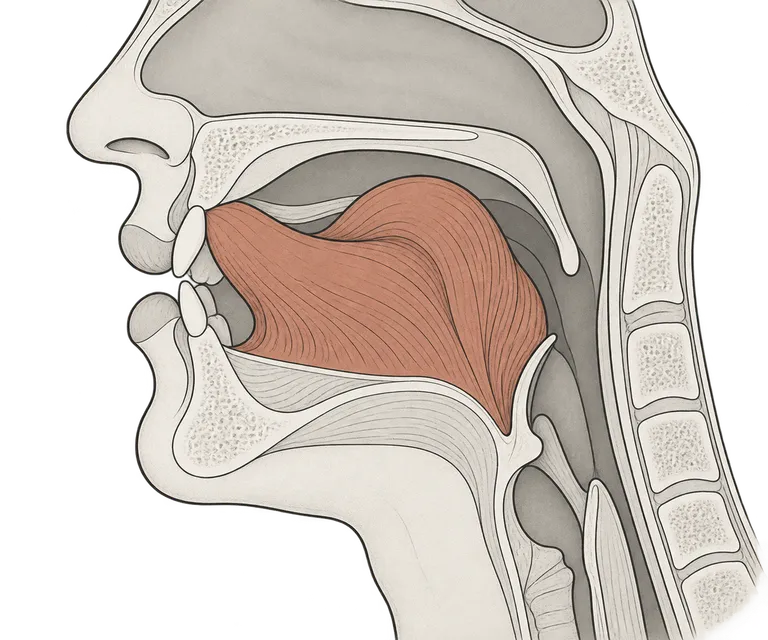
accepted
Tongue tip still touches the alveolar ridge, but the back of the tongue bunches up and pulls back toward the throat, giving a hollow, back-of-mouth quality.
Continuous tongue shows plausible tip contact and a strongly bunched rear.
attempt 0 · 2026-10-03
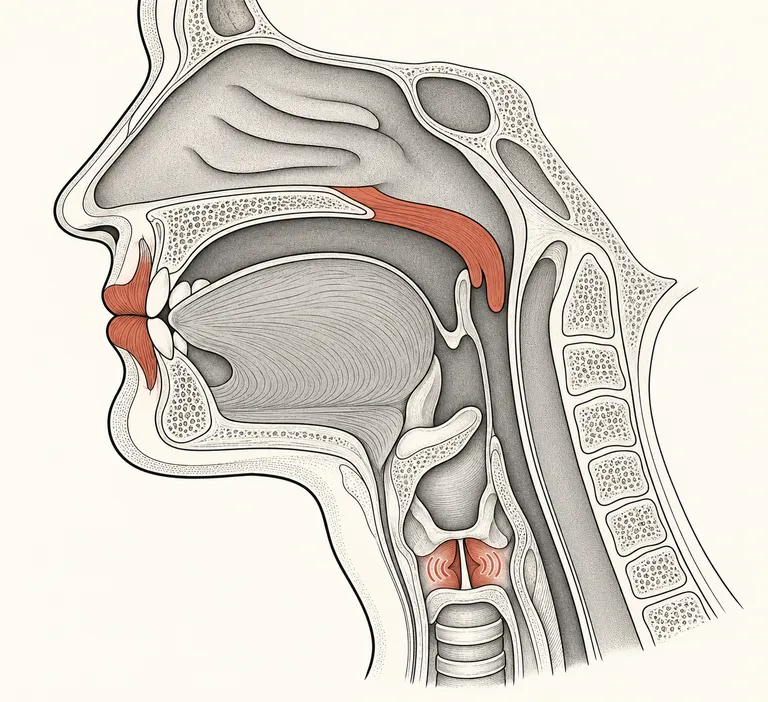
accepted
Lips gently pressed closed, sealing off the mouth; the velum (soft palate) is lowered, opening a passage so air flows out through the nose instead; vocal folds vibrating throughout.
Closed lips, lowered velum, and normal tongue anatomy are visually plausible.
attempt 0 · 2026-10-03
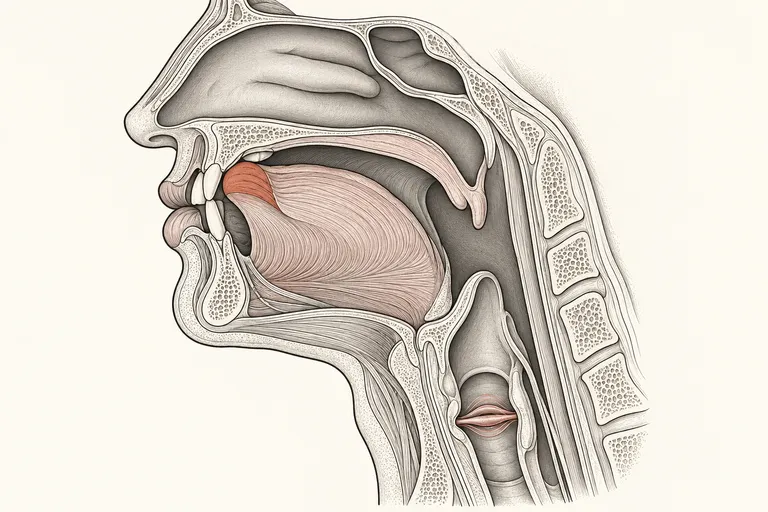
accepted
Tongue tip pressed against the alveolar ridge, sealing the oral cavity at the front; velum lowered so air escapes through the nose; vocal folds vibrating.
Tongue and vocal tract structures are coherent, with plausible anterior tongue elevation.
attempt 0 · 2026-10-03
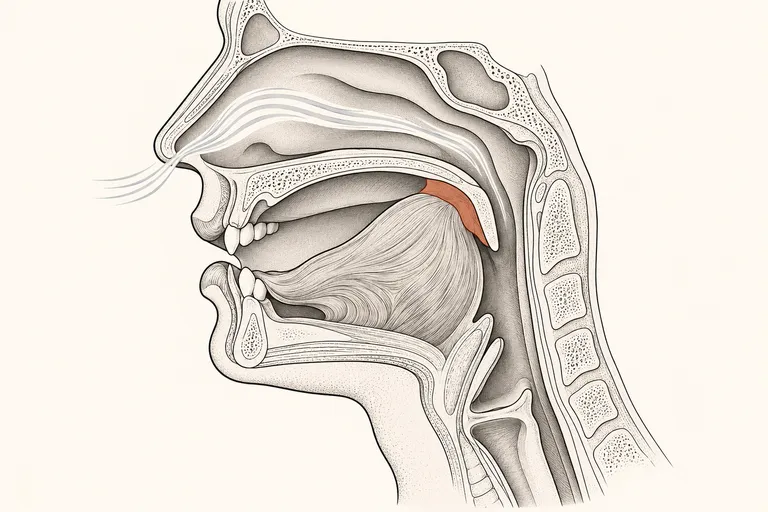
accepted
Back of the tongue raised to touch the soft palate (velum) far back in the mouth, sealing the oral cavity there; tongue tip stays low and relaxed behind the bottom teeth; air escapes through the nose.
Plausible sagittal anatomy with posterior tongue elevation, low tip, and open nasal airflow.
attempt 0 · 2026-10-03
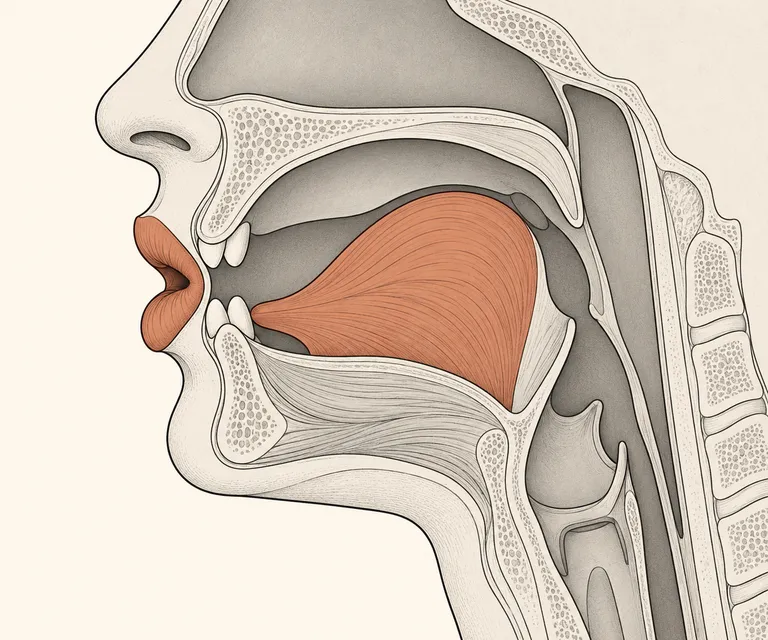
accepted
Lips rounded, tongue raised mid-back, jaw moderately open.
Plausible sagittal anatomy with rounded lips and a raised mid-back tongue.
attempt 0 · 2026-10-03
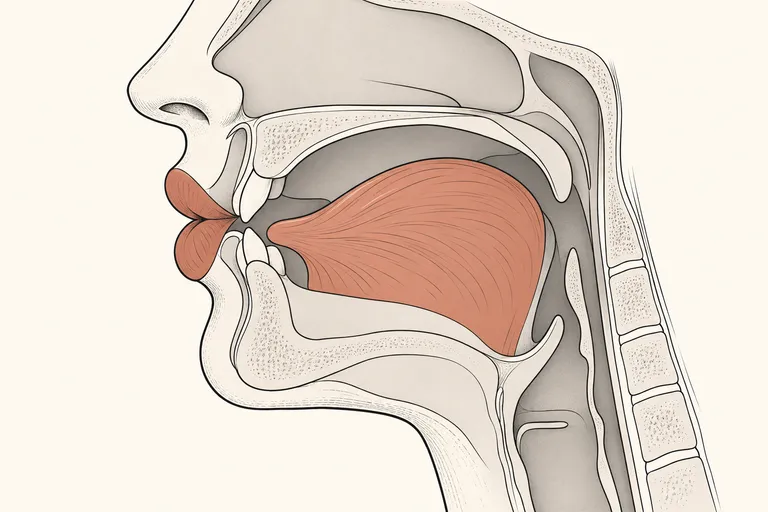
accepted
Lips round further and tongue rises slightly more toward u as the sound closes.
Tongue and lips show a plausible closing movement toward a rounded vowel.
attempt 0 · 2026-10-03
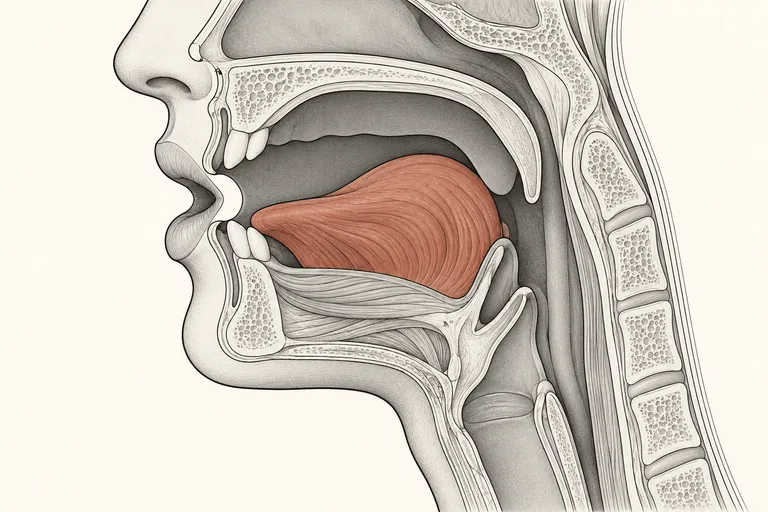
accepted
Tongue mid-low and back, jaw moderately open, lips gently rounded and slightly protruded.
Tongue shape and placement are anatomically plausible for a back vowel.
attempt 0 · 2026-10-03
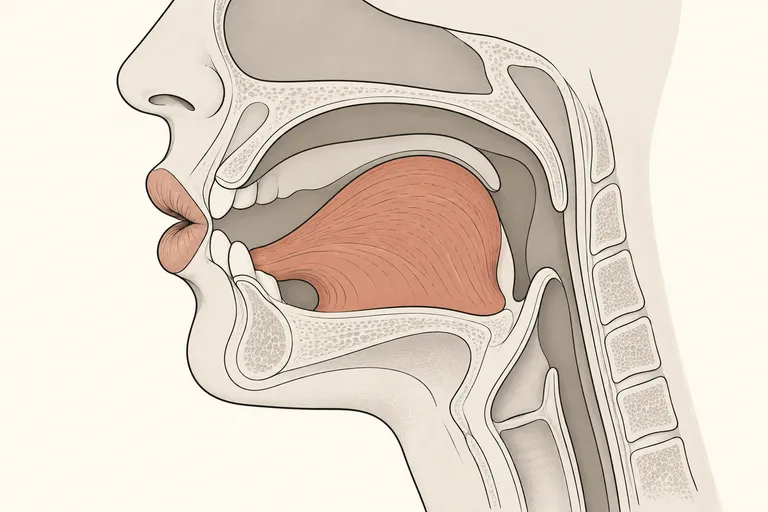
accepted
Lips rounded, tongue mid-back, jaw moderately open — like starting the vowel in 'law'.
Rounded lips and elevated back tongue appear anatomically coherent without impossible curling.
attempt 0 · 2026-10-03
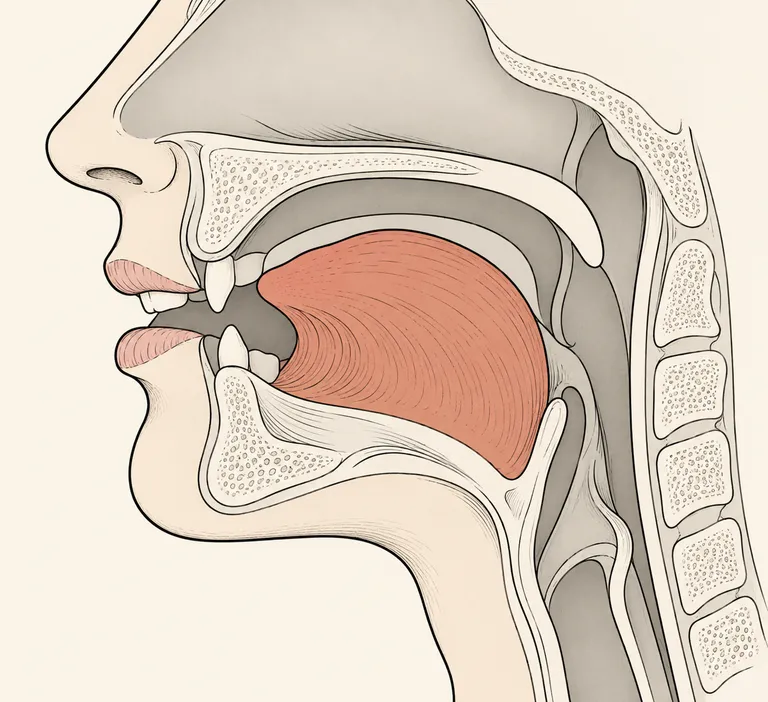
accepted
Lips unround and spread slightly, tongue rises and moves forward, finishing near a short 'ih'.
Forward-raised tongue and slightly spread lips remain anatomically plausible.
attempt 0 · 2026-10-03
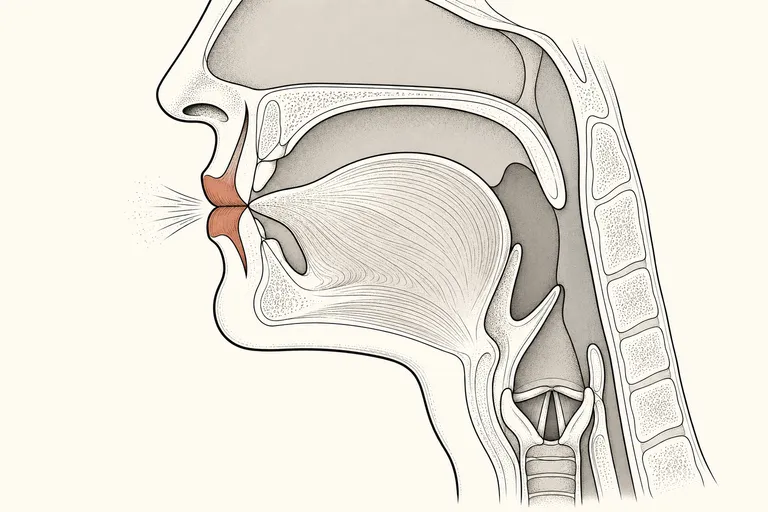
accepted
Lips pressed fully together to block airflow, then release suddenly with a small burst of air, no vocal fold vibration.
Closed lips and external air burst are anatomically coherent for an aspirated p.
attempt 0 · 2026-10-03
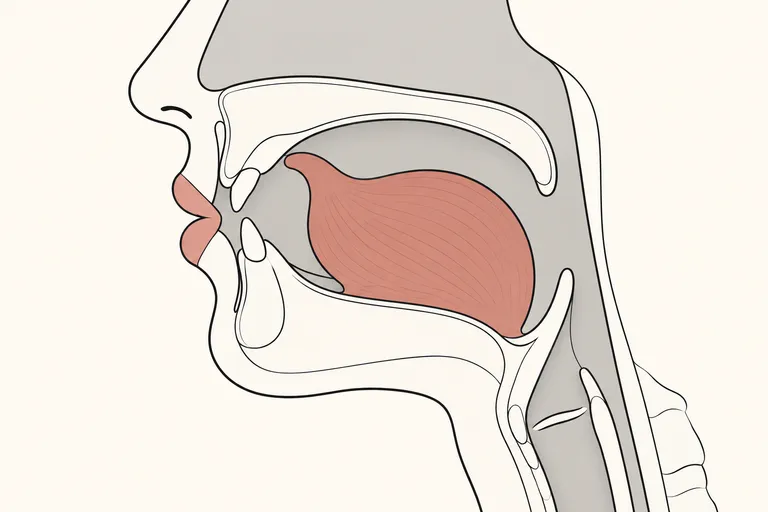
accepted
Tongue tip curled upward and backward toward the roof of the mouth, close to but not touching the palate; lips slightly rounded.
Single continuous tongue with modest tip elevation and plausible surrounding anatomy.
attempt 7 · 2026-10-04
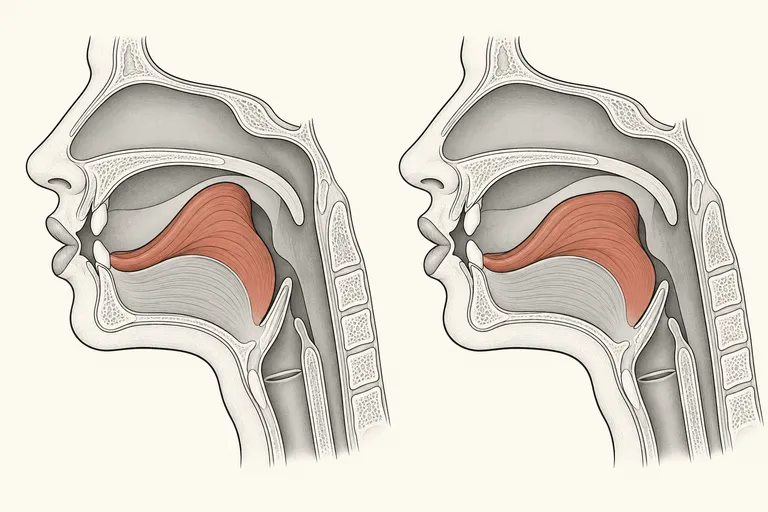
accepted
Tongue tip lowered behind the bottom teeth while the body of the tongue bunches up and pulls back high in the mouth; lips slightly rounded.
Both panels plausibly depict a lowered tip and bunched tongue body.
attempt 0 · 2026-10-03
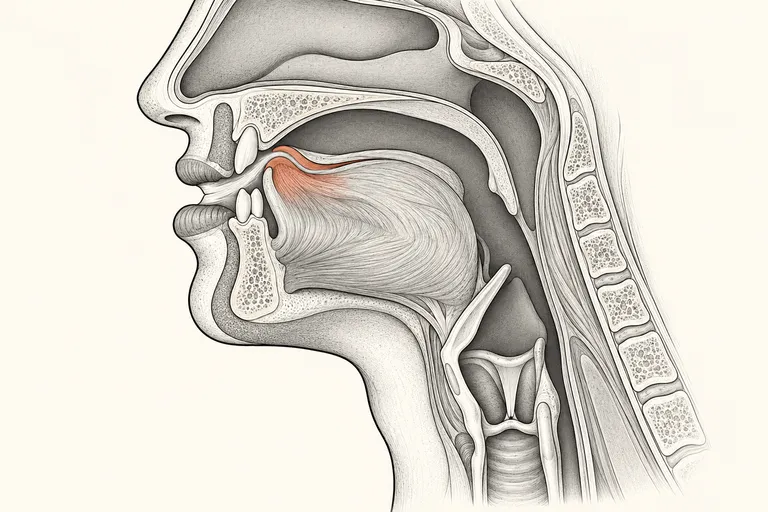
accepted
Tongue tip raised close to the alveolar ridge, forming a narrow groove that directs a thin, fast jet of air toward the teeth, producing a sharp hiss.
Tongue tip approaches the alveolar ridge without implausible twisting or looping.
attempt 0 · 2026-10-03
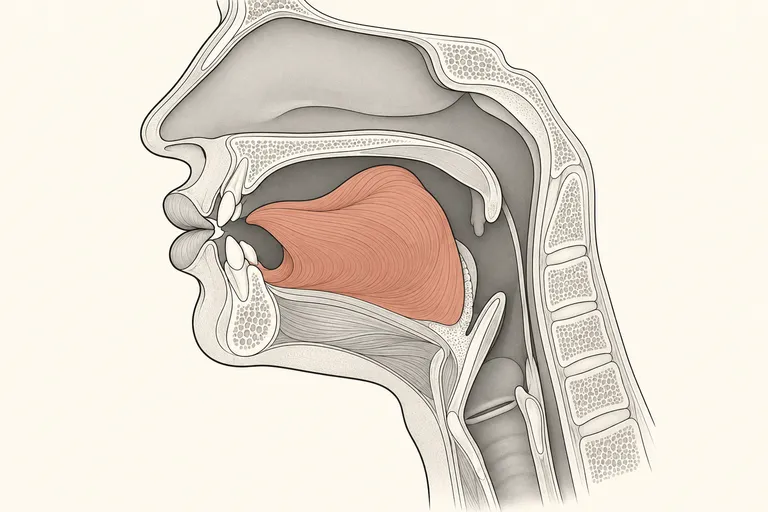
accepted
Tongue bunched and raised slightly further back than for s, lips rounded and pushed forward, creating a broader channel and a lower, hushing hiss.
Raised, retracted tongue and rounded lips form a plausible postalveolar posture.
attempt 0 · 2026-10-03
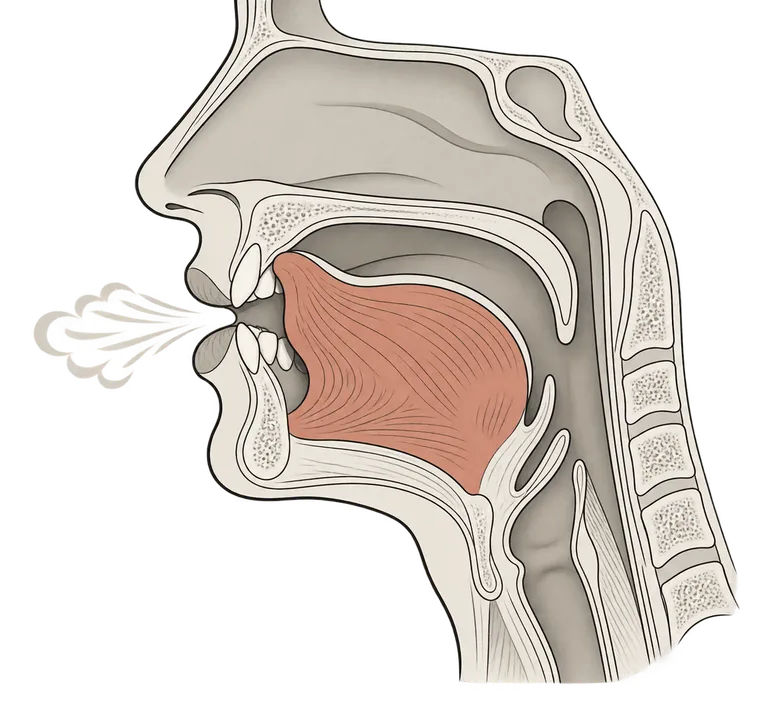
accepted
Tongue tip presses firmly against the alveolar ridge, then releases with a strong puff of air at the start of a stressed syllable.
Tongue contact at the alveolar ridge and release airflow are visually plausible.
attempt 0 · 2026-10-03
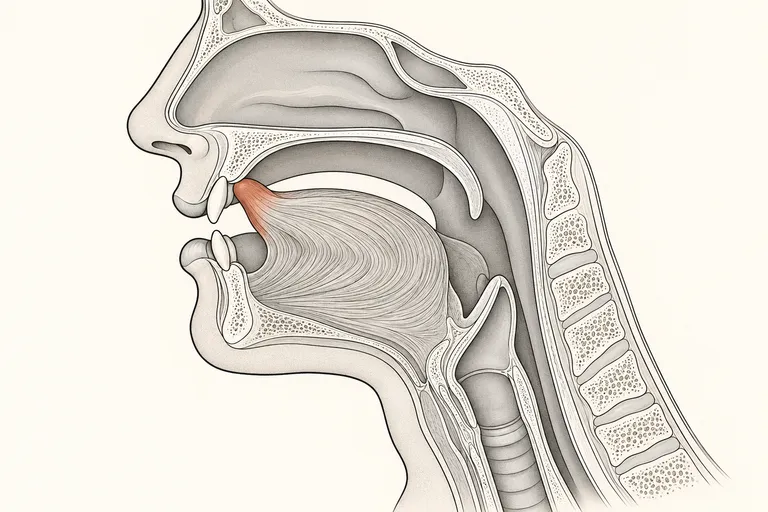
accepted
Tongue tip taps the alveolar ridge very briefly and lightly between two vowels, as in 'butter', producing a quick voiced tap instead of a full stop.
Highlighted tongue tip makes plausible brief contact with the alveolar ridge.
attempt 0 · 2026-10-03
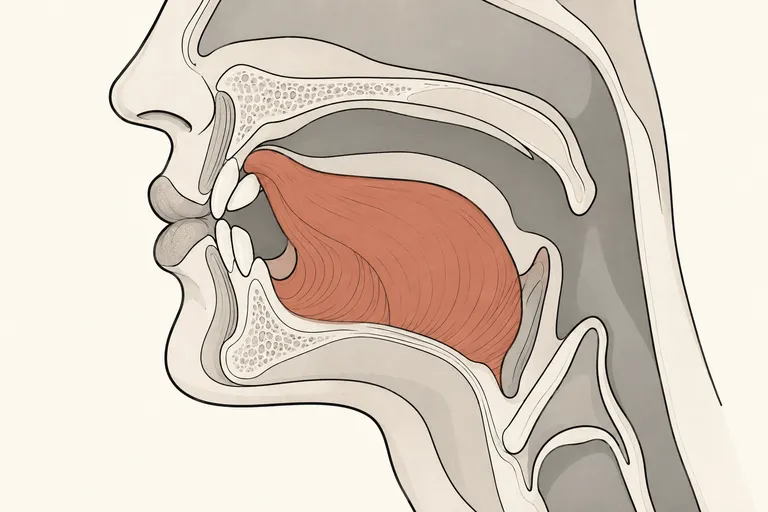
accepted
Tongue tip pressed firmly against the alveolar ridge just behind the top teeth, sealing off airflow completely; lips slightly rounded forward.
Plausible sagittal anatomy with tongue contacting the alveolar region and mildly rounded lips.
attempt 0 · 2026-10-03
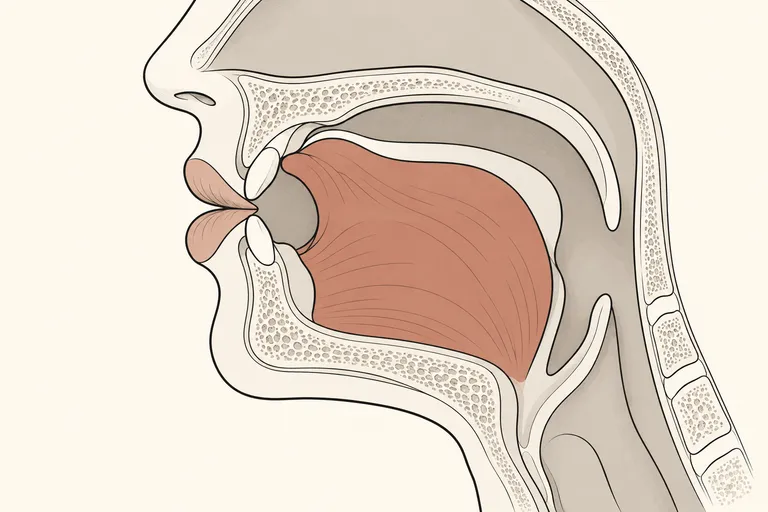
accepted
Tongue drops back slightly from the ridge, releasing air through a narrow channel between tongue and palate, creating a brief 'sh'-like hiss.
Tongue and oral structures appear anatomically coherent for a postalveolar release.
attempt 0 · 2026-10-03
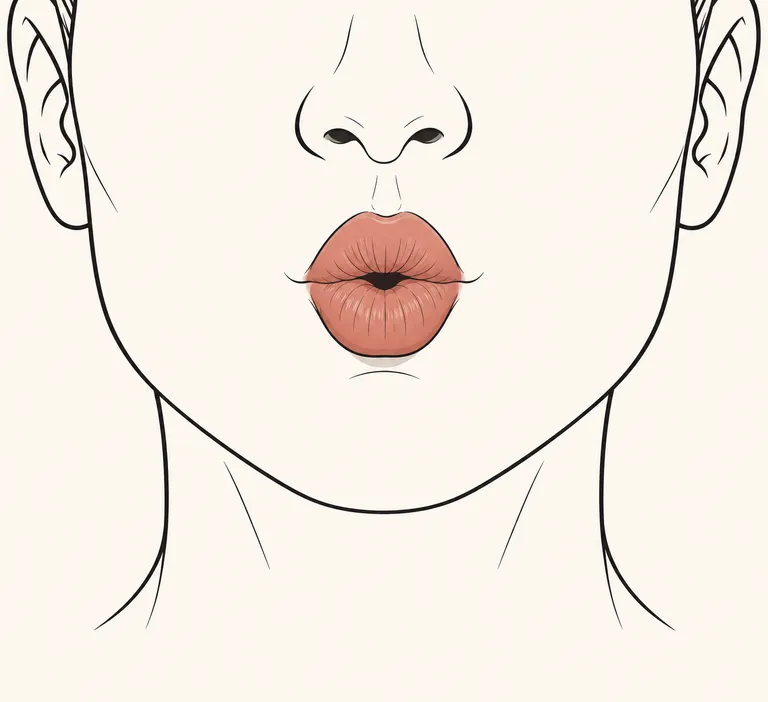
accepted
Lips strongly rounded and pushed forward, jaw nearly closed, tongue body raised high and back.
Rounded lips and facial anatomy are plausible.
attempt 1 · 2026-10-03
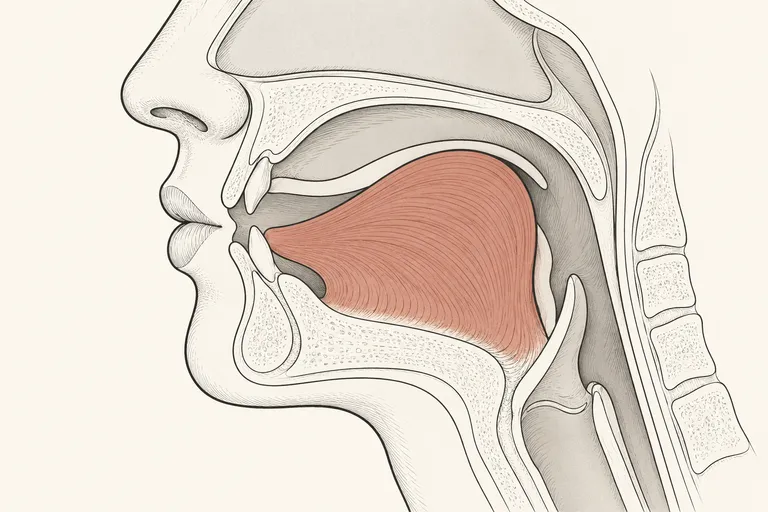
accepted
Tongue high-back, lips strongly rounded, jaw nearly closed.
High-back tongue and rounded lips are anatomically coherent.
attempt 0 · 2026-10-03
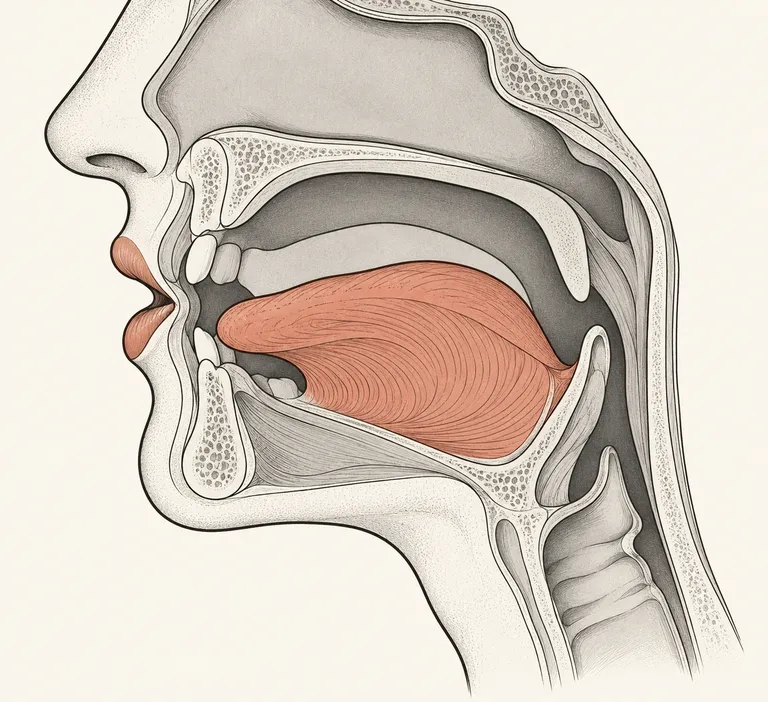
accepted
Tongue slightly lower and looser than for u, lips only lightly rounded, jaw a touch more open.
Lower, relaxed tongue and lightly rounded lips appear plausible.
attempt 0 · 2026-10-03
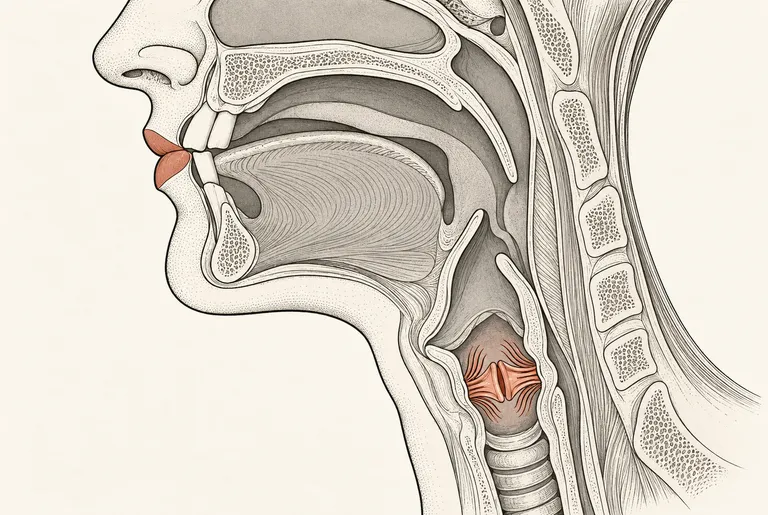
accepted
Lower lip lightly touching the upper front teeth, exactly as for f, but the vocal folds vibrate throughout, adding a buzzing quality.
Lower lip contacts upper incisors plausibly, with coherent vocal-tract anatomy.
attempt 0 · 2026-10-03
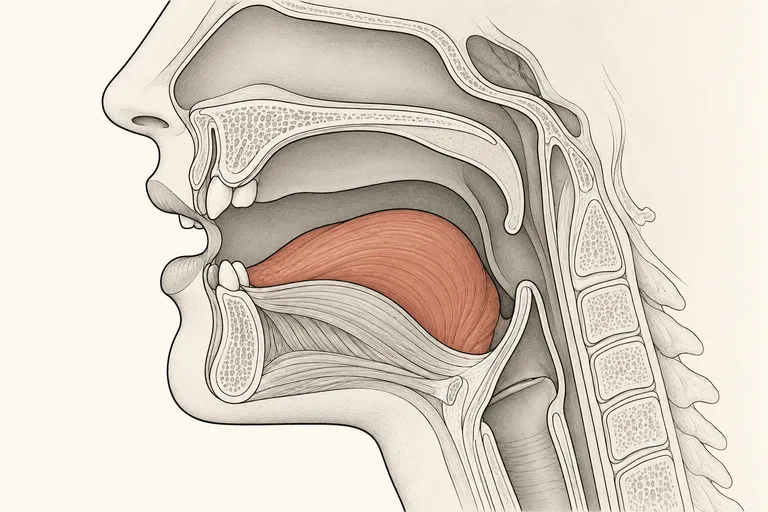
accepted
Jaw moderately open, tongue relaxed in a mid-low central-back position, lips left neutral and unrounded.
Mid-low central-back tongue posture and neutral lips look anatomically sound.
attempt 0 · 2026-10-03
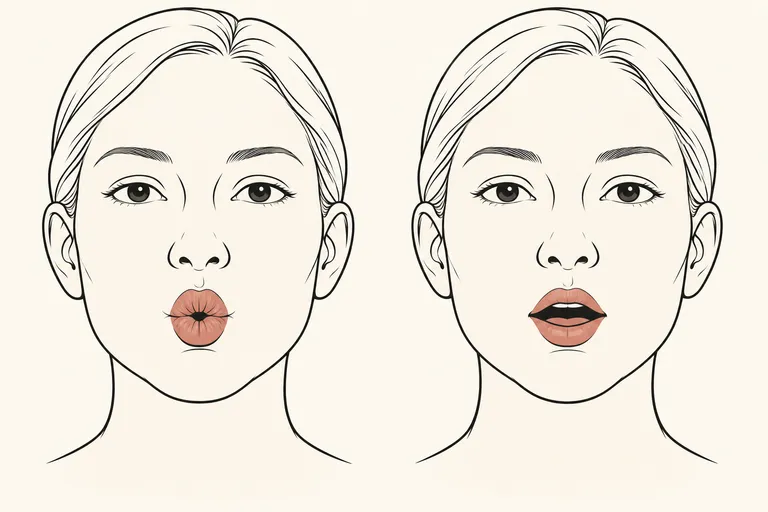
accepted
Lips pushed forward into a tight round shape like whistling; simultaneously the back of the tongue rises toward the soft palate without touching it; the shape then quickly opens into the following vowel.
Both faces are coherent, with plausible rounded and open lip positions.
attempt 1 · 2026-10-03
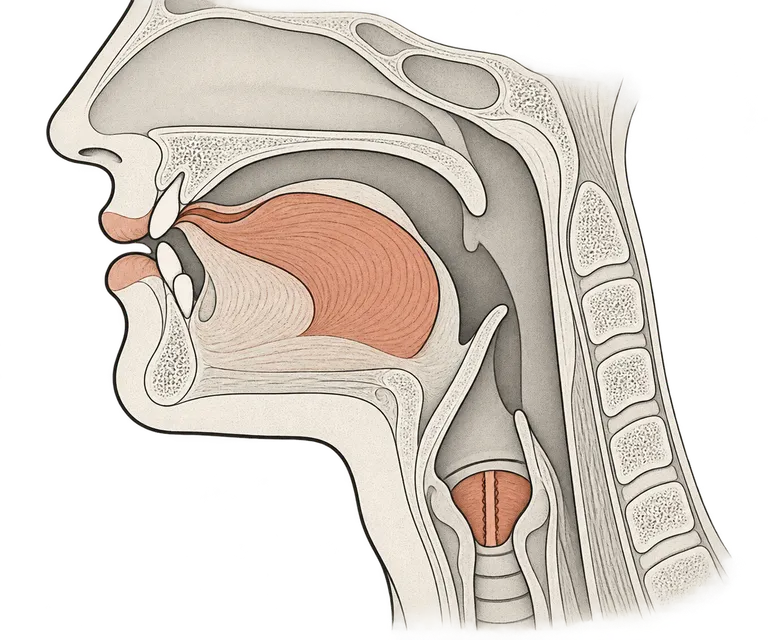
accepted
Tongue positioned exactly as for s, forming a narrow groove near the alveolar ridge, but the vocal folds vibrate throughout, adding a buzzing quality to the hiss.
Sagittal tongue, teeth, palate, and larynx are visually coherent and plausible.
attempt 0 · 2026-10-03
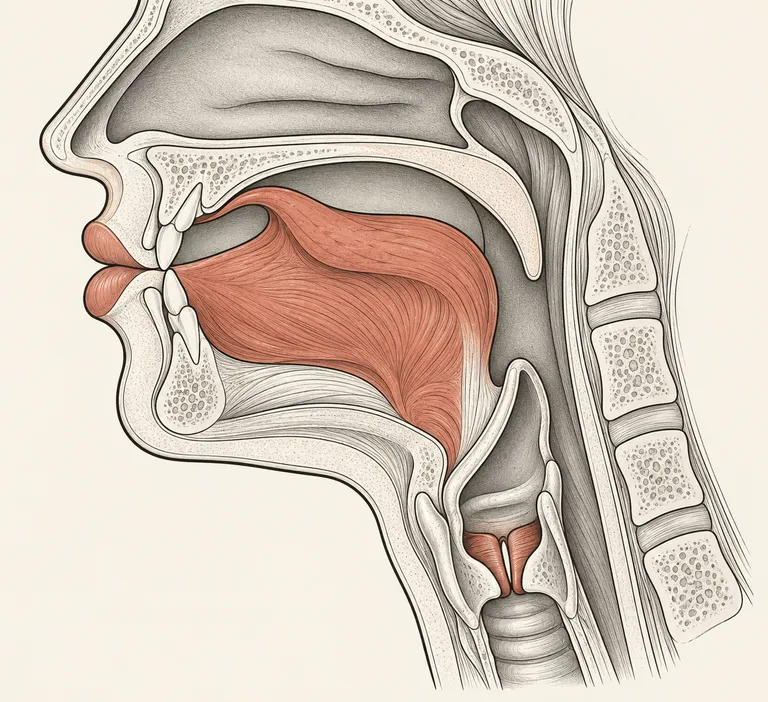
accepted
Tongue positioned exactly as for ʃ, rounded lips pushed forward, but the vocal folds vibrate throughout, giving a buzzing quality to the hush.
Tongue, rounded lips, and depicted vocal folds are visually coherent.
attempt 0 · 2026-10-03
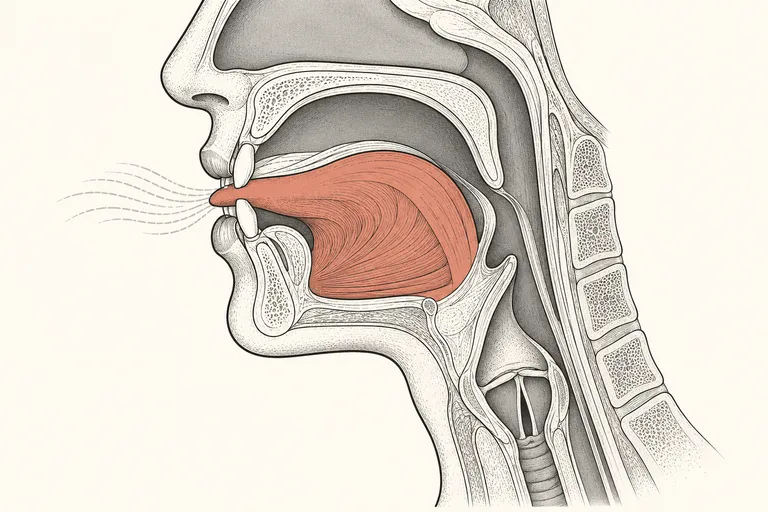
accepted
Tongue tip lightly protruding between the upper and lower front teeth, air hissing steadily over its surface, no vocal fold vibration.
Tongue tip protrudes slightly between the incisors as intended.
attempt 0 · 2026-10-03
Inventory es (30)
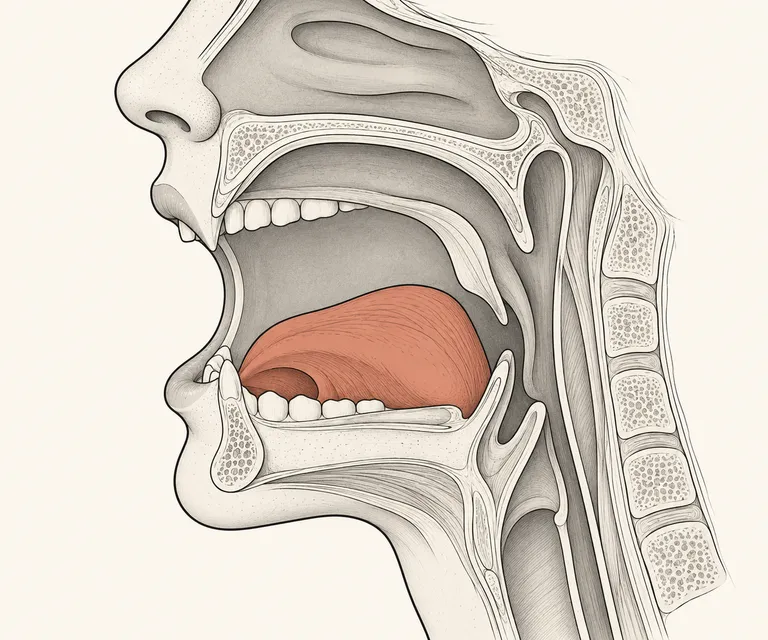
accepted
Jaw dropped fully open, tongue resting low and central, lips relaxed and neutral.
Open jaw and low central tongue are anatomically plausible.
attempt 0 · 2026-10-03
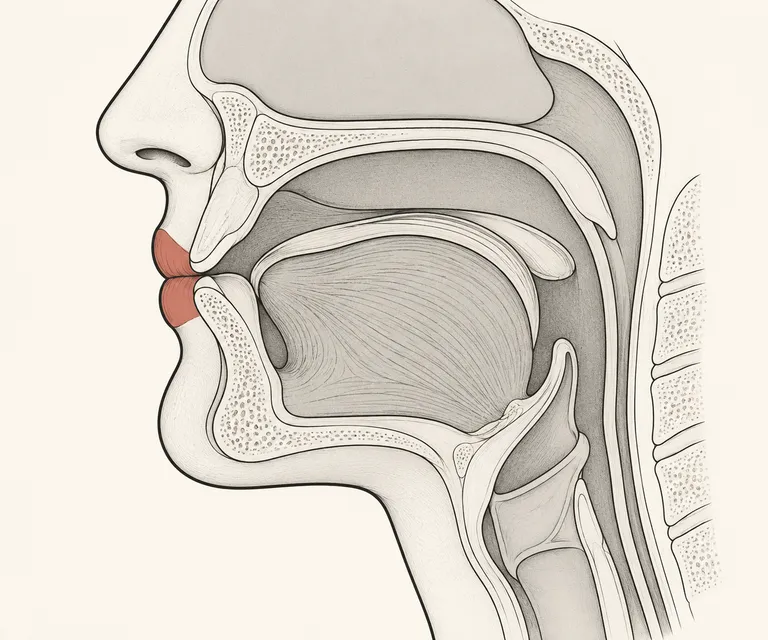
accepted
Lips pressed firmly together, brief full closure, then release with voicing.
Lips meet at the front and tongue remains anatomically coherent.
attempt 0 · 2026-10-03
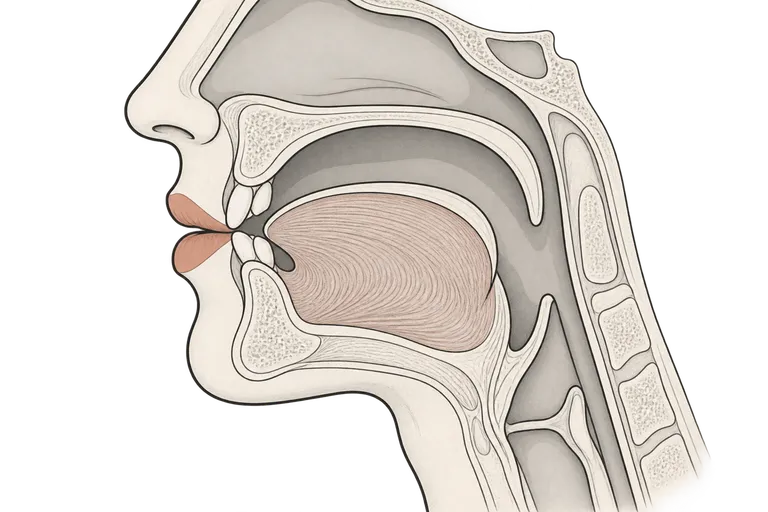
accepted
Lips barely touch or stay slightly apart, letting sound pass through in a smooth, continuous stream.
Slightly separated lips and a single normal-shaped tongue are plausible.
attempt 0 · 2026-10-03
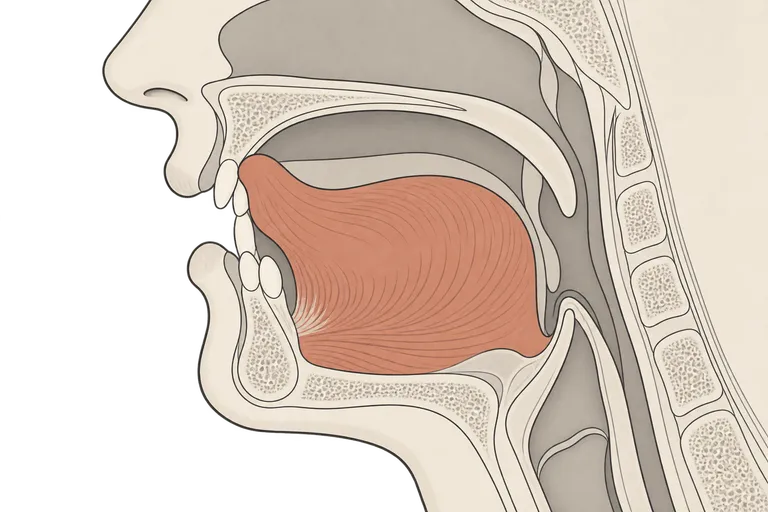
accepted
Tongue tip presses firmly against the upper teeth for a full stop.
Tongue tip contacts the upper teeth without twisting or looping.
attempt 0 · 2026-10-03
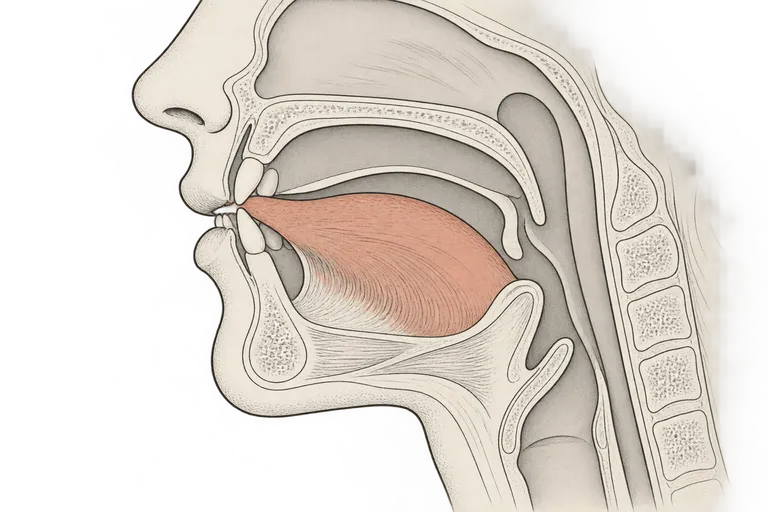
accepted
Tongue tip barely touches the teeth, letting a soft, breathy 'th'-like sound pass through instead.
Tongue lightly approaches the teeth with an anatomically plausible shape.
attempt 0 · 2026-10-03
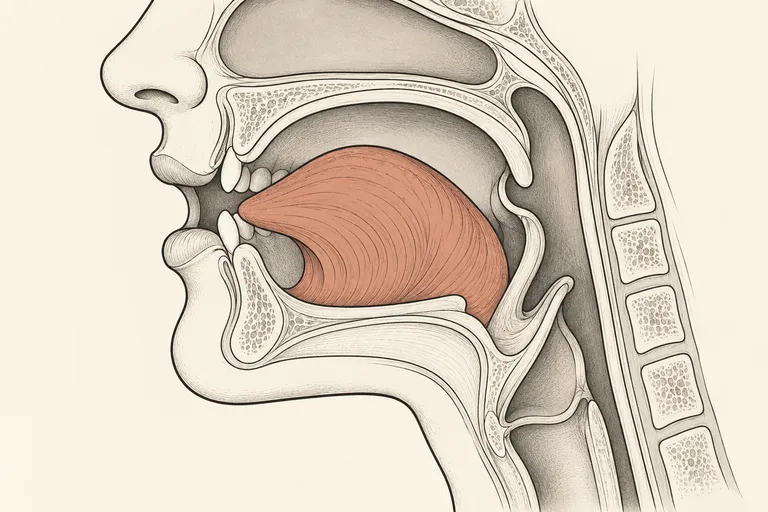
accepted
Jaw opens to a middle position, tongue body raised to a mid-front point, lips left neutral without spreading or rounding.
Mid-open jaw and raised tongue body appear anatomically coherent.
attempt 0 · 2026-10-03
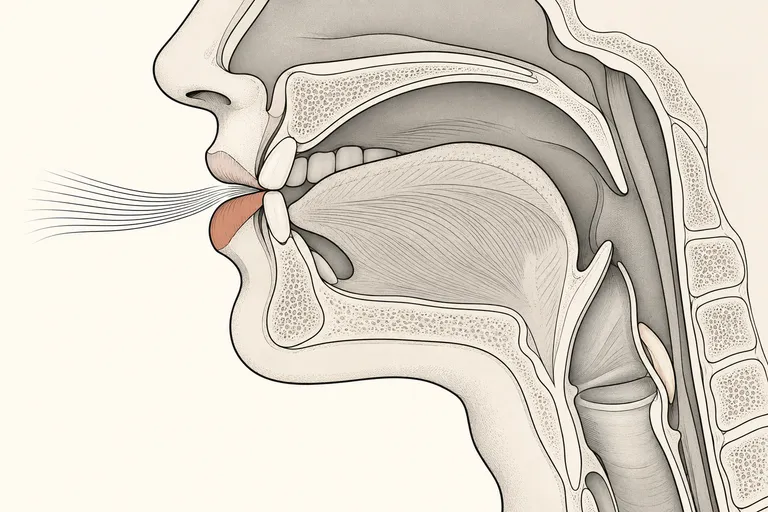
accepted
Lower lip lightly touches the upper front teeth, letting air hiss through steadily.
Lower lip contacts upper incisors while the tongue remains normally shaped.
attempt 0 · 2026-10-03
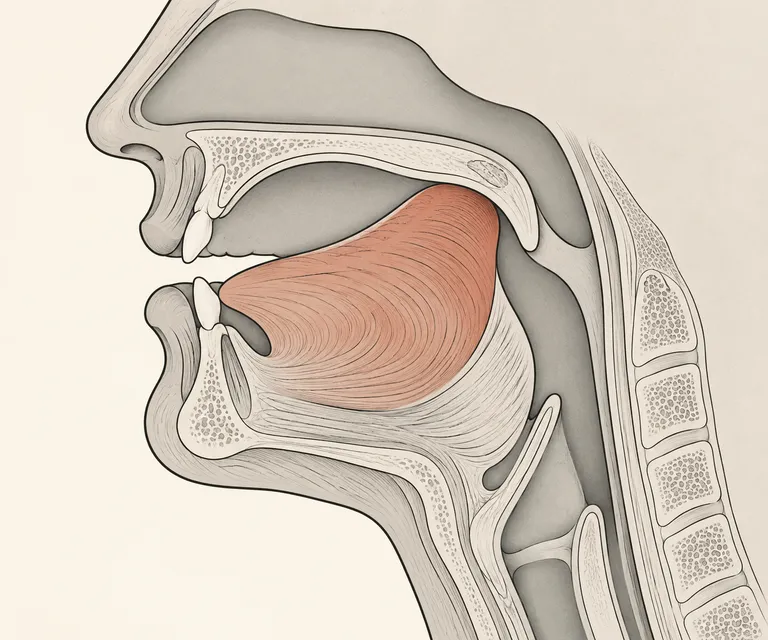
accepted
Back of the tongue presses firmly against the soft palate for a full stop.
Tongue dorsum contacts the palate with no obvious anatomical distortion.
attempt 0 · 2026-10-03
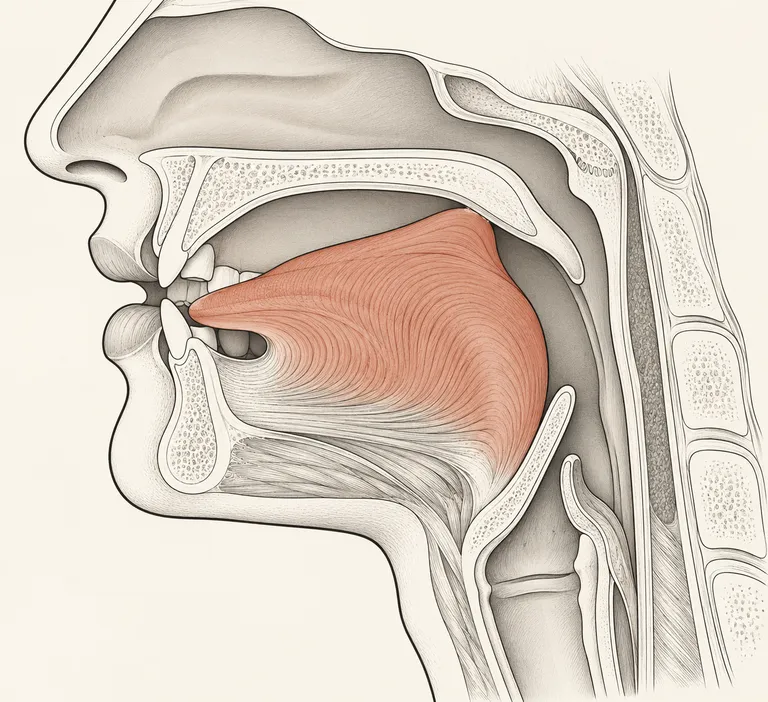
accepted
Tongue barely touches the soft palate, letting a soft, continuous sound pass through instead.
Sagittal anatomy and tongue shape are plausible, without twisting or looping.
attempt 0 · 2026-10-03
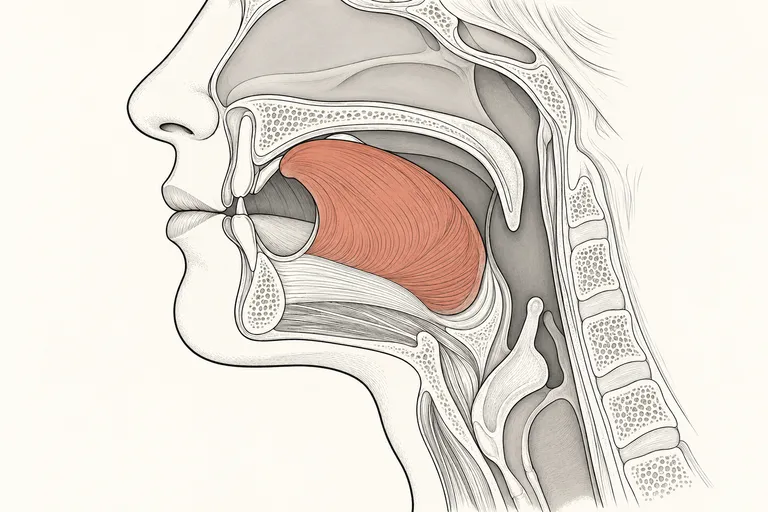
accepted
Jaw almost closed, tongue body pushed up and forward nearly touching the hard palate, lips relaxed and only slightly spread.
High forward tongue posture and nearly closed jaw appear anatomically plausible.
attempt 0 · 2026-10-03
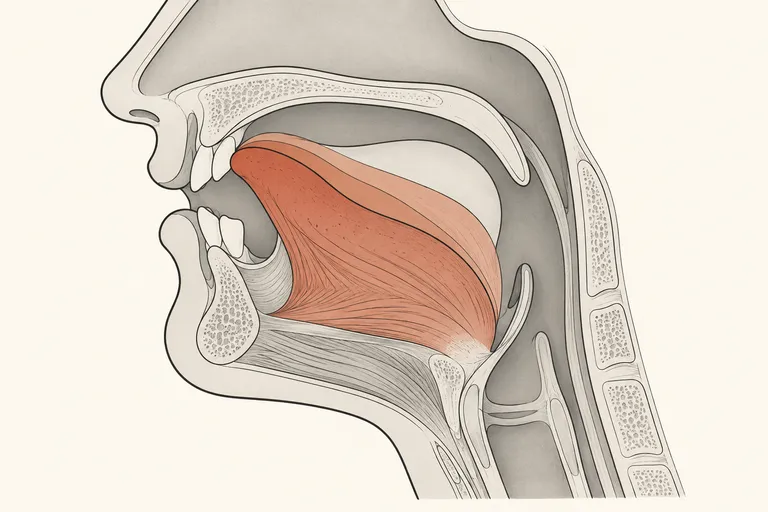
accepted
Tongue rises high and front like for i, then quickly moves into the following vowel.
Raised front tongue remains a single coherent anatomical structure.
attempt 0 · 2026-10-03
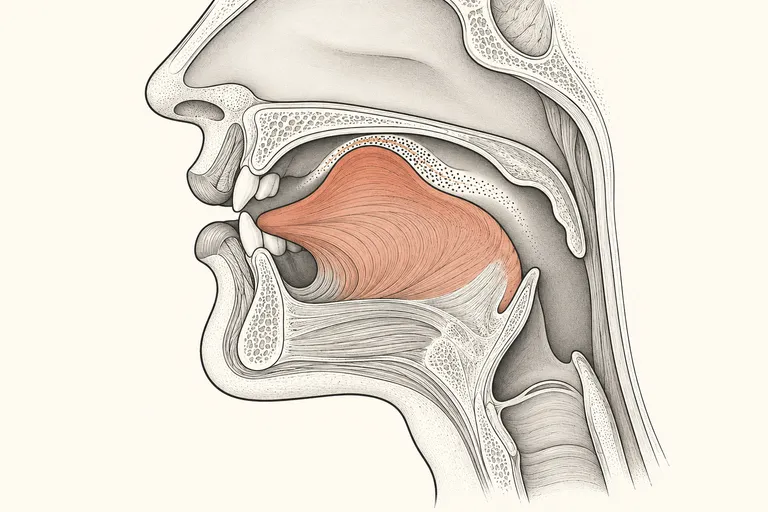
accepted
Middle of the tongue raised close to the hard palate, narrowing the passage for a light buzzing friction.
Tongue body rises toward the hard palate with a plausible narrow passage.
attempt 0 · 2026-10-03
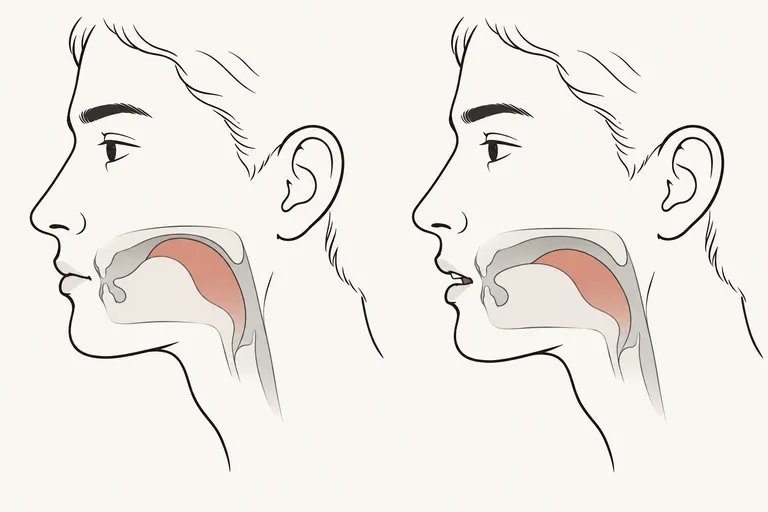
accepted
Back of the tongue rises to touch the soft palate, blocking air, then releases gently with no aspiration.
Schematic tongue positions and profile anatomy are plausible.
attempt 1 · 2026-10-03
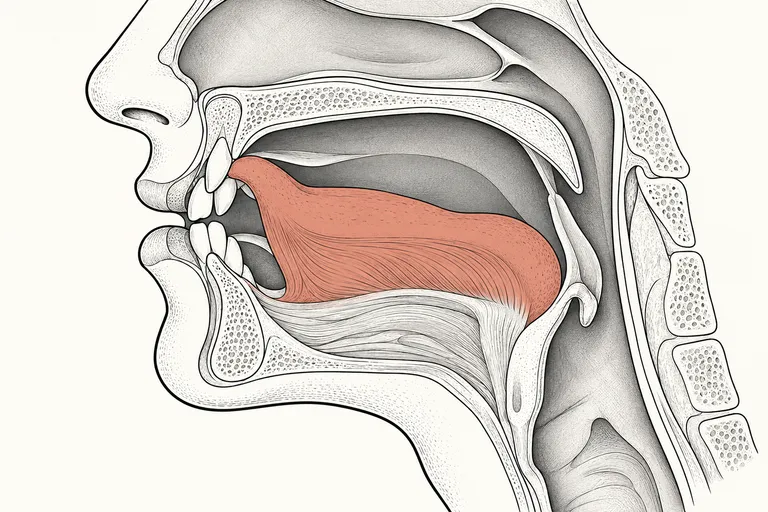
accepted
Tongue tip touches the gum ridge while air flows freely around both sides, with the back of the tongue staying low and relaxed.
Tongue tip contact and overall oral anatomy appear plausible.
attempt 0 · 2026-10-03
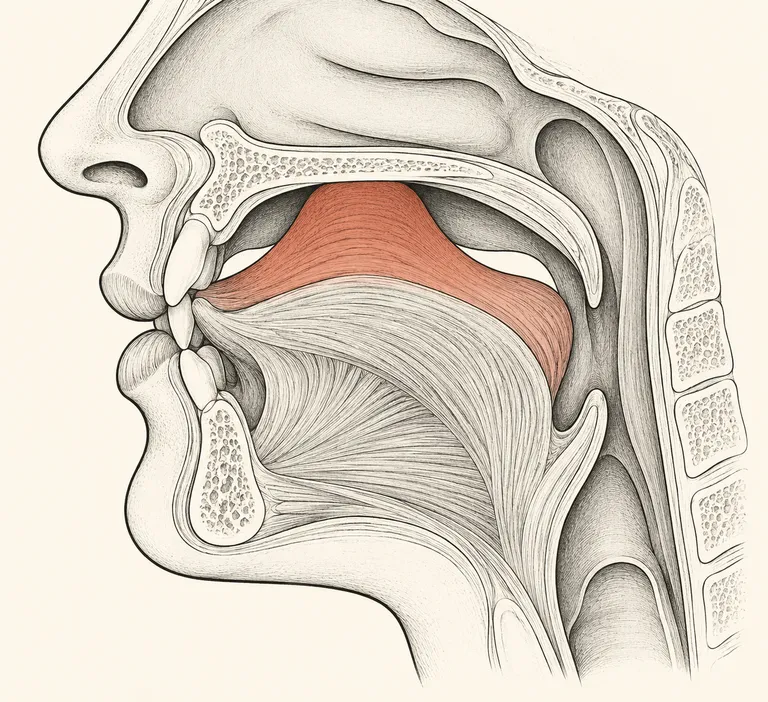
accepted
Middle of the tongue presses broadly against the hard palate while air escapes freely around the sides, similar to the 'lli' in 'million' but as one smooth unit.
Layered tongue musculature is stylized but anatomically coherent and not duplicated.
attempt 0 · 2026-10-03
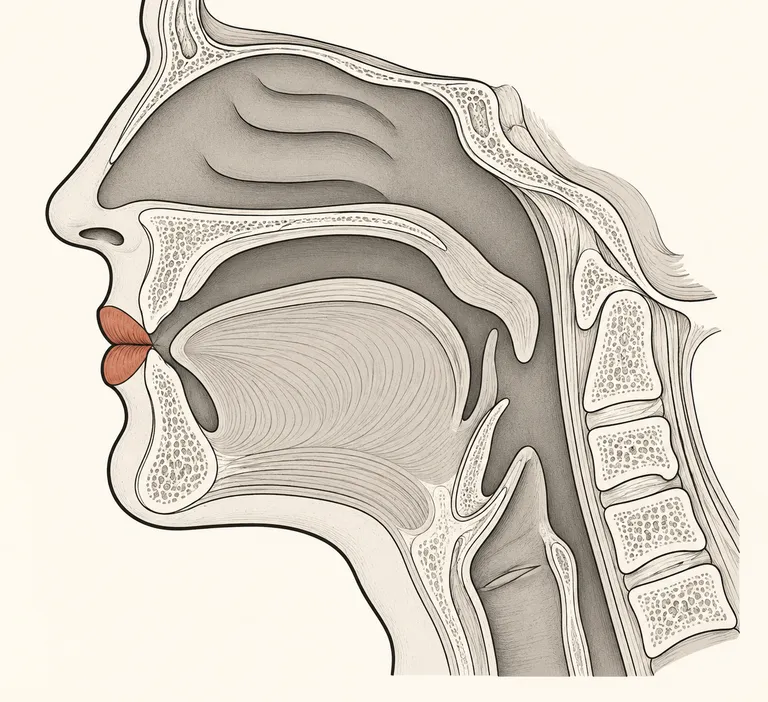
accepted
Lips pressed together while the velum lowers, letting sound resonate through the nose.
Closed lips, neutral tongue, and vocal-tract structures are visually coherent.
attempt 0 · 2026-10-03
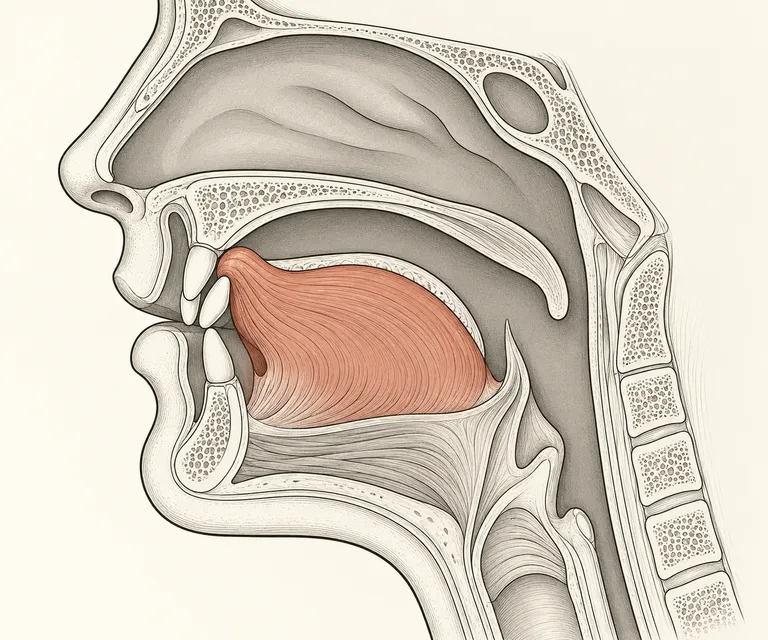
accepted
Tongue tip presses the gum ridge while the velum lowers, letting sound resonate through the nose.
Tongue placement and surrounding sagittal anatomy are plausible.
attempt 0 · 2026-10-03
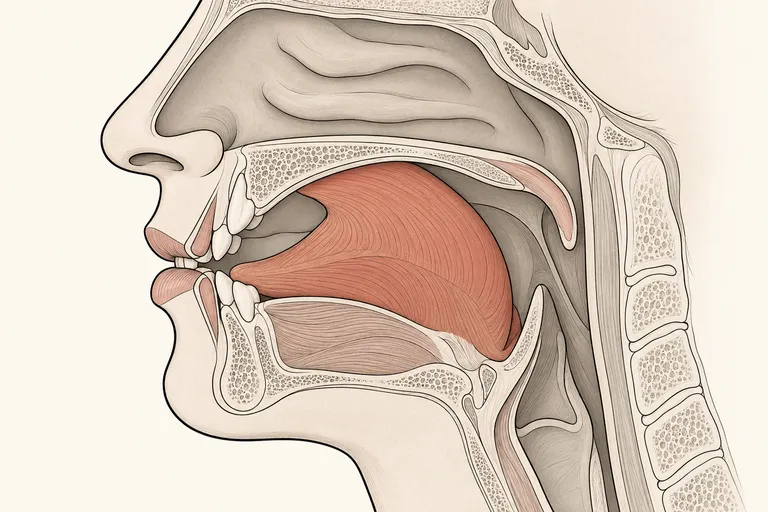
accepted
Middle of the tongue presses broadly against the hard palate while sound resonates through the nose.
Broad palatal tongue contact is plausible; no impossible curling, splitting, or duplication.
attempt 0 · 2026-10-03
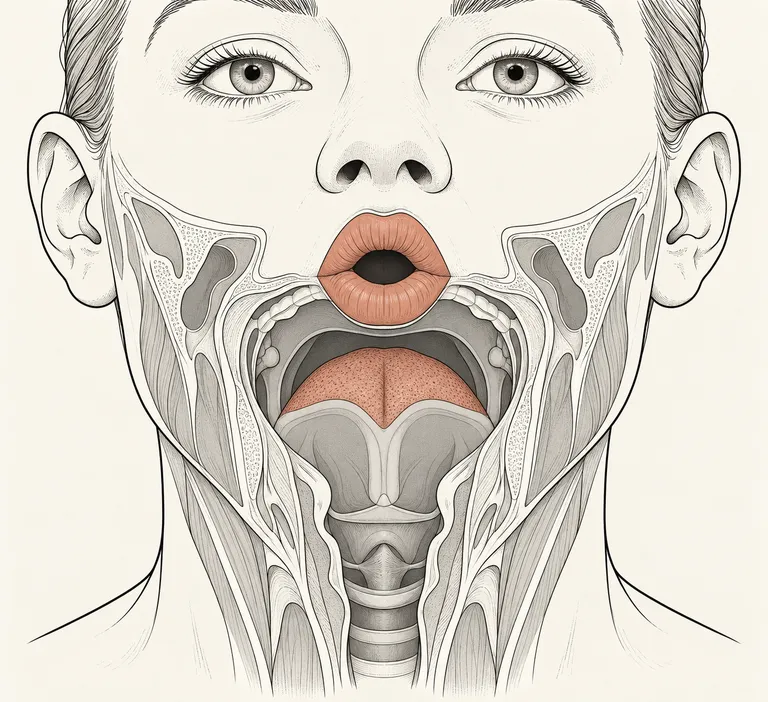
accepted
Lips rounded into a small circle, jaw at a middle opening, tongue body pulled back and raised to mid height.
Frontal cutaway is stylized but visually coherent and anatomically plausible.
attempt 0 · 2026-10-03
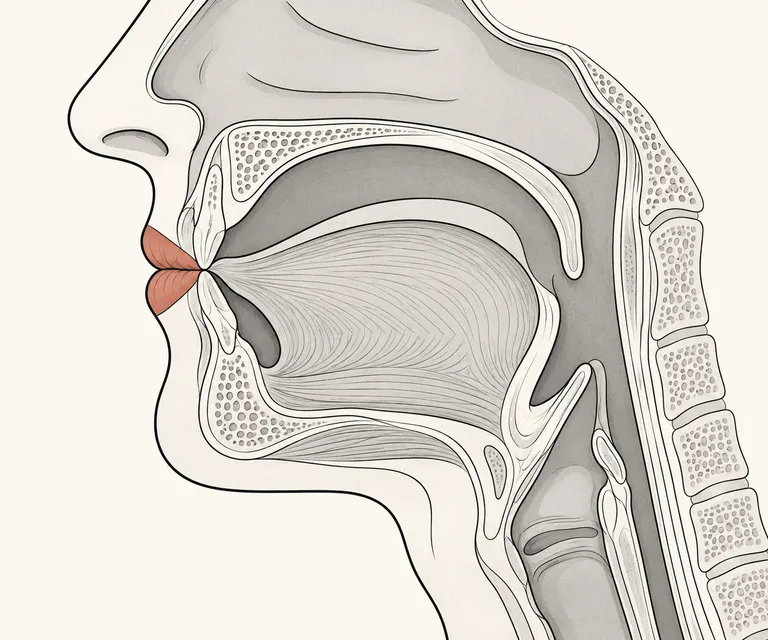
accepted
Lips pressed firmly together, blocking airflow completely.
Closed lips and internal tongue posture are anatomically plausible.
attempt 0 · 2026-10-03
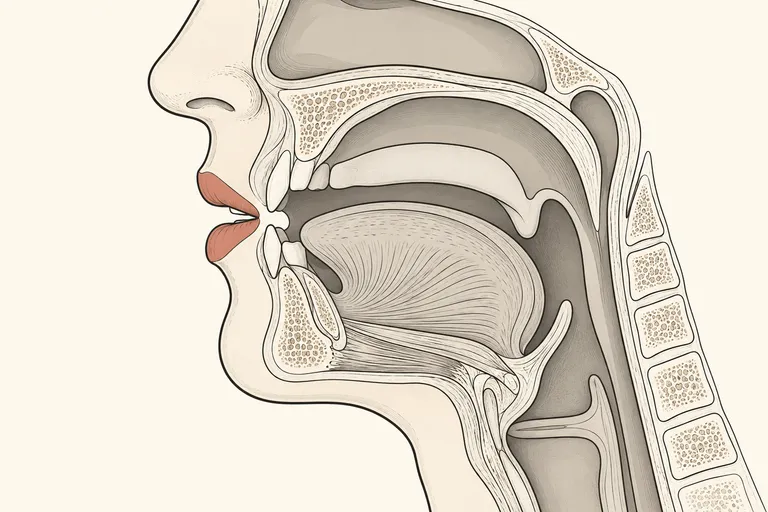
accepted
Lips part quickly and gently, releasing a soft, unaspirated burst of air.
Parted lips and relaxed tongue position appear anatomically coherent.
attempt 0 · 2026-10-03
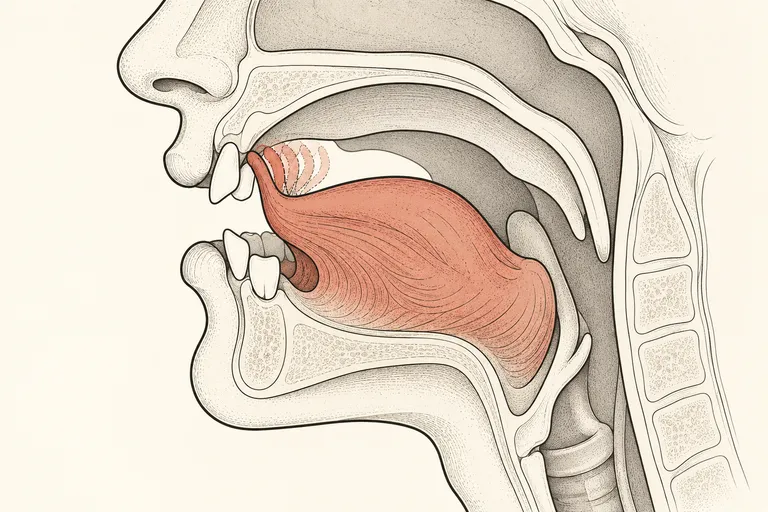
accepted
Tongue tip held loose near the gum ridge and allowed to vibrate freely as air passes, striking the ridge several times in rapid succession.
Overlapping tip positions schematically depict trill vibration without an impossible curl.
attempt 0 · 2026-10-03
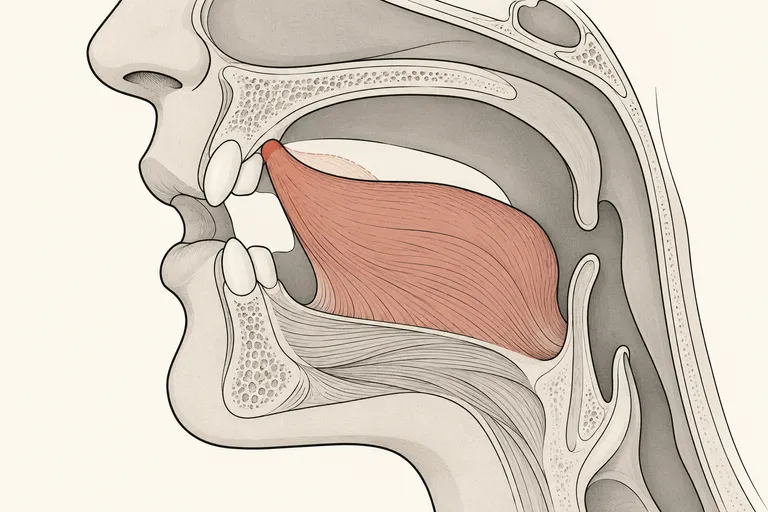
accepted
Tongue tip flicks up quickly to touch the gum ridge once, then returns immediately, like the American English tt in 'butter'.
Tongue tip makes a plausible brief alveolar contact without excessive curling.
attempt 0 · 2026-10-03
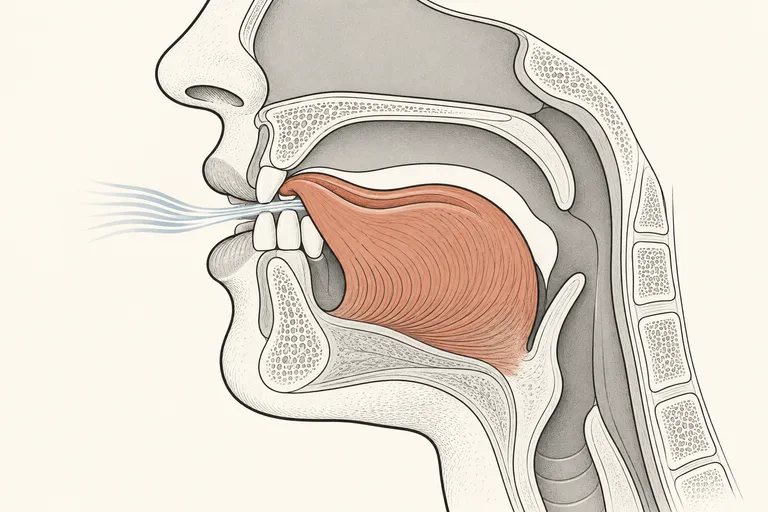
accepted
Tongue tip held close to the alveolar ridge or upper teeth, air channeled through a narrow groove for a steady hiss.
Tongue approaches the upper teeth with a plausible narrow airflow channel.
attempt 0 · 2026-10-03
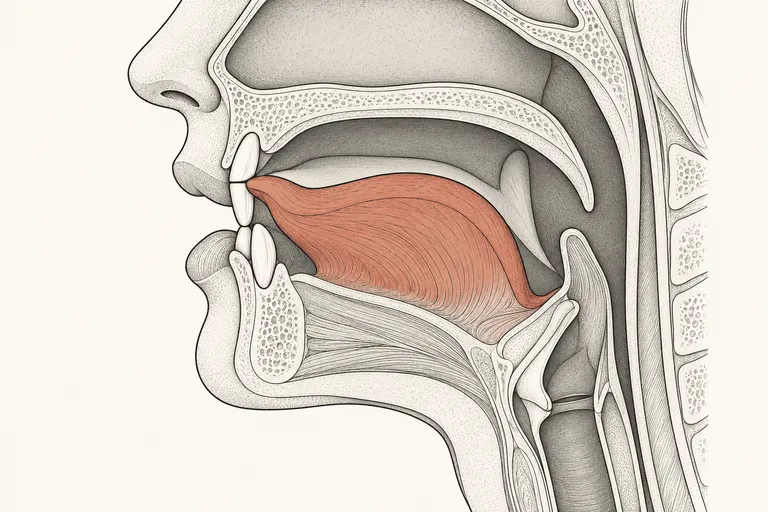
accepted
Tongue tip pressed against the back of the upper front teeth rather than the gum ridge, releasing with a soft, unaspirated burst.
Tongue tip contacts the upper front teeth in a plausible dental articulation.
attempt 0 · 2026-10-03
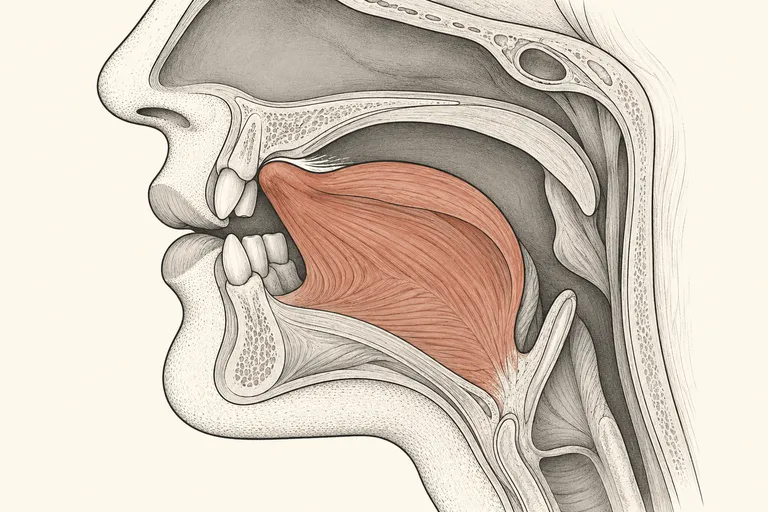
accepted
Tongue tip presses against the back of the gum ridge, then releases with a short burst of friction, like English ch.
Raised tongue posture and oral anatomy are visually plausible for an affricate.
attempt 0 · 2026-10-03
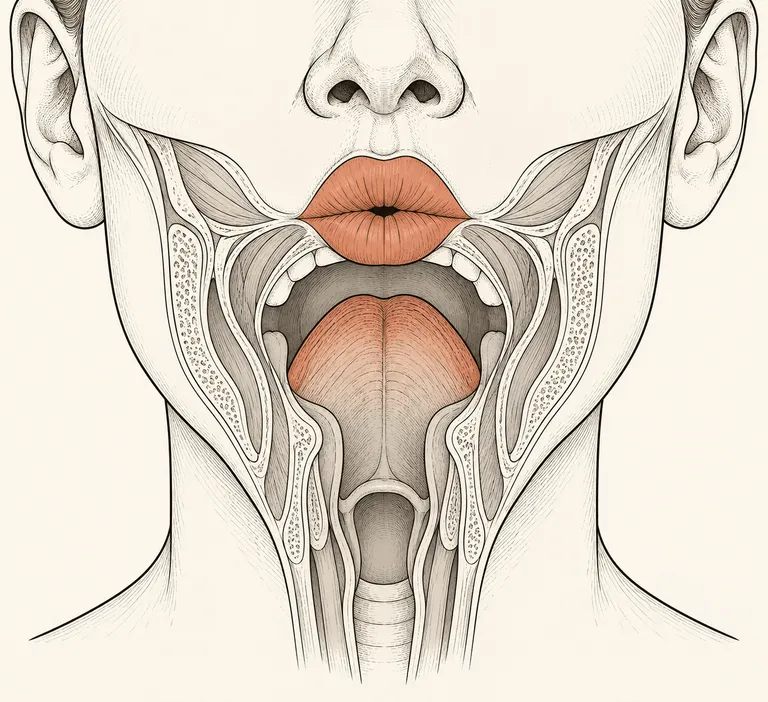
accepted
Lips tightly rounded and pushed slightly forward, jaw almost closed, tongue body raised high toward the back of the mouth.
Frontal cutaway plausibly shows rounded lips and a raised tongue body.
attempt 0 · 2026-10-03
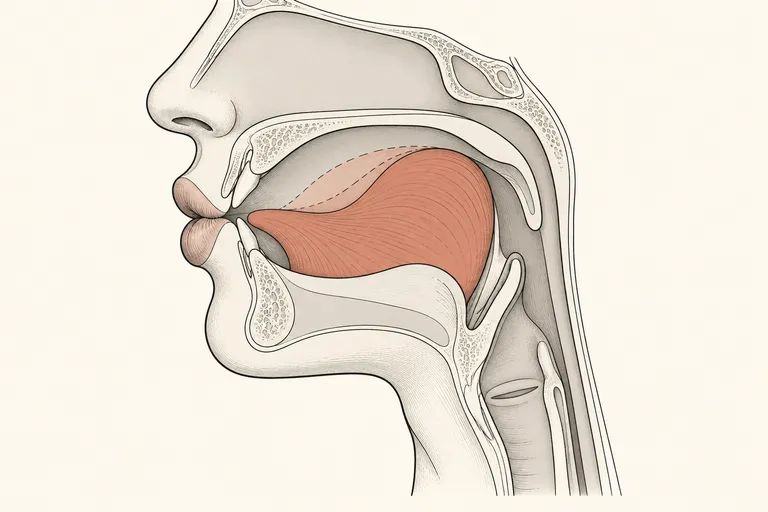
accepted
Lips round and tongue rises high and back like for u, then quickly moves into the following vowel.
Tongue is enlarged schematically but remains anatomically coherent without twisting or looping.
attempt 0 · 2026-10-03
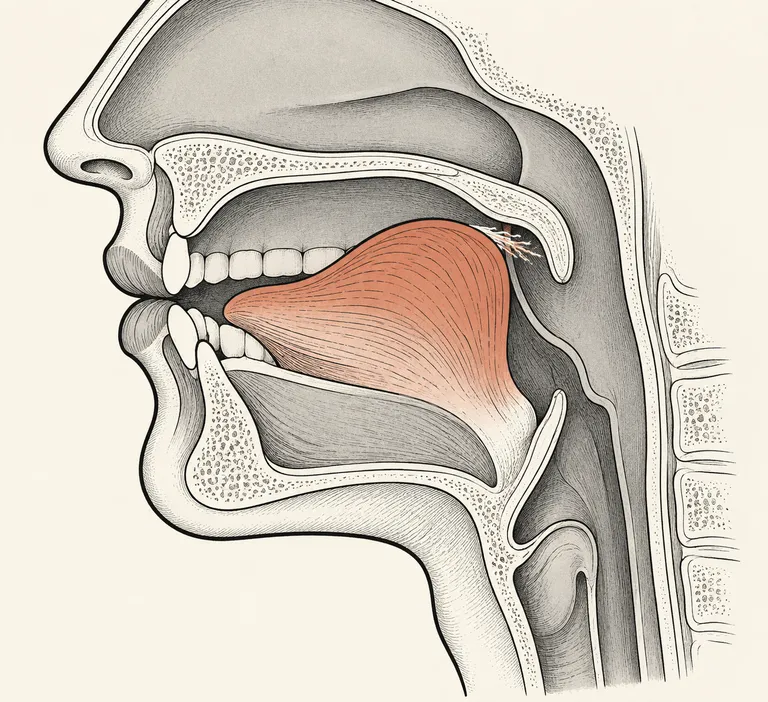
accepted
Back of the tongue raised close to the soft palate, leaving a narrow gap for a raspy, breathy friction sound.
Single anatomically plausible tongue with the dorsum raised toward the soft palate.
attempt 0 · 2026-10-03
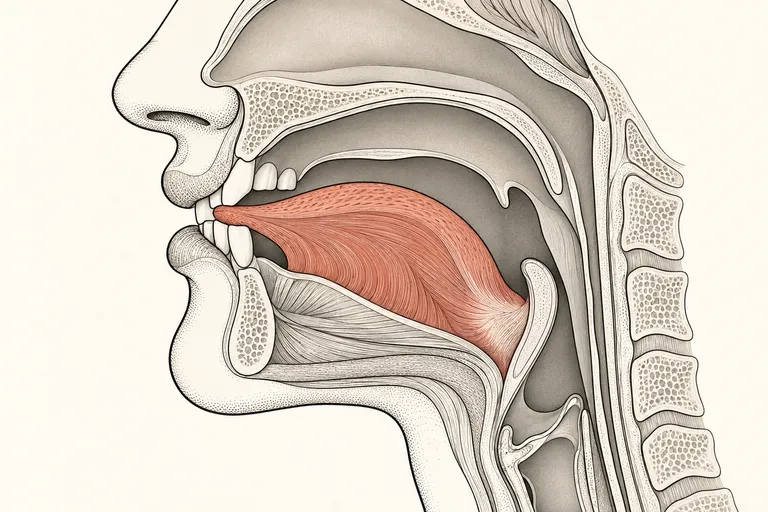
accepted
Tongue tip placed lightly between the upper and lower teeth, letting air hiss through gently.
Tongue tip is lightly positioned between the teeth as intended.
attempt 0 · 2026-10-03
Inventory hi (43)
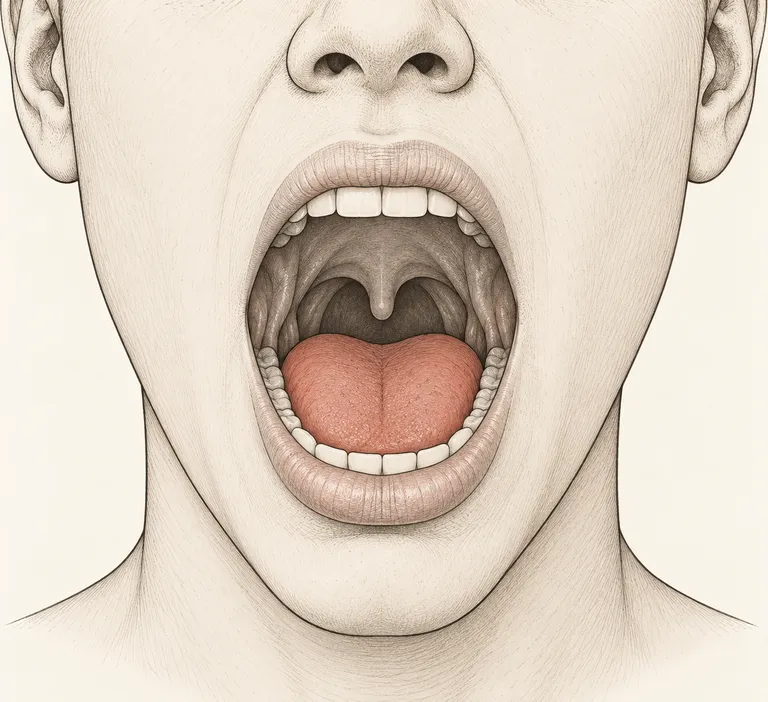
accepted
Jaw dropped low, mouth wide open, tongue resting low and central.
Open jaw and low central tongue position appear anatomically plausible.
attempt 0 · 2026-10-03
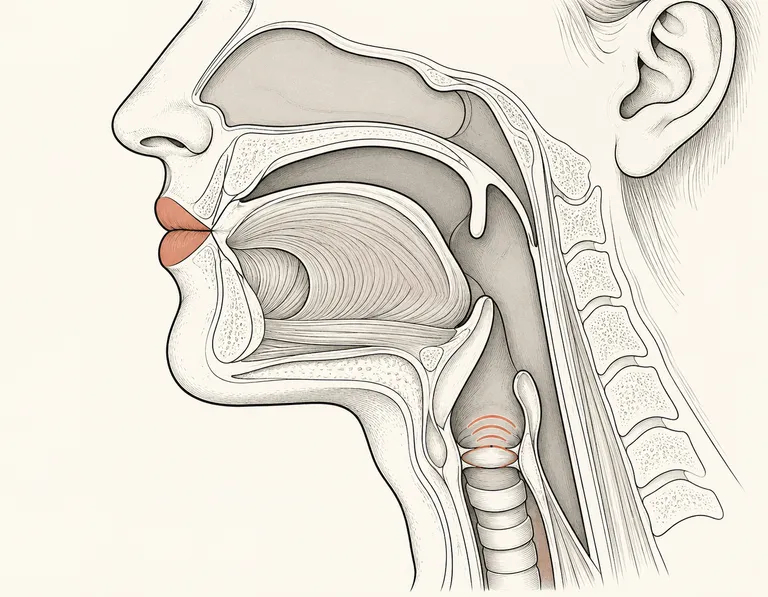
accepted
Lips together with a small throat vibration icon to show voicing during the hold.
Closed lips and vocal-tract anatomy are visually sane, with no tongue deformity.
attempt 0 · 2026-10-03
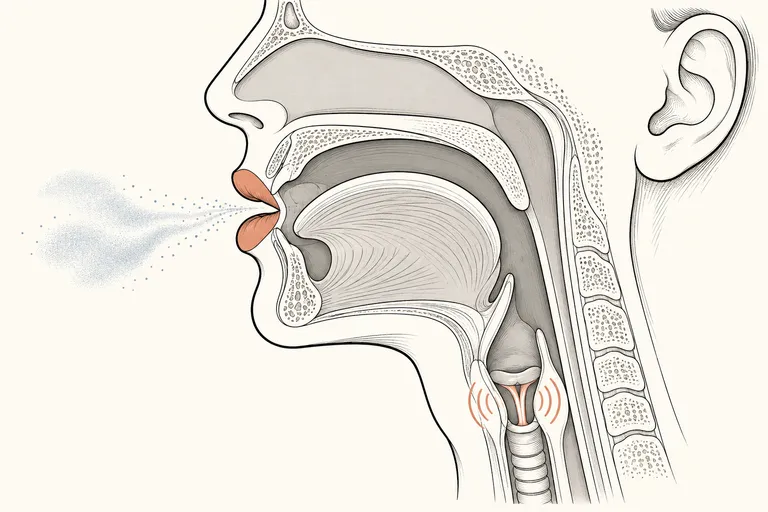
accepted
Lips opening with both a voicing icon and a soft airflow cloud to show murmured release.
Plausible sagittal anatomy, lip opening, airflow, and laryngeal voicing cue.
attempt 0 · 2026-10-03
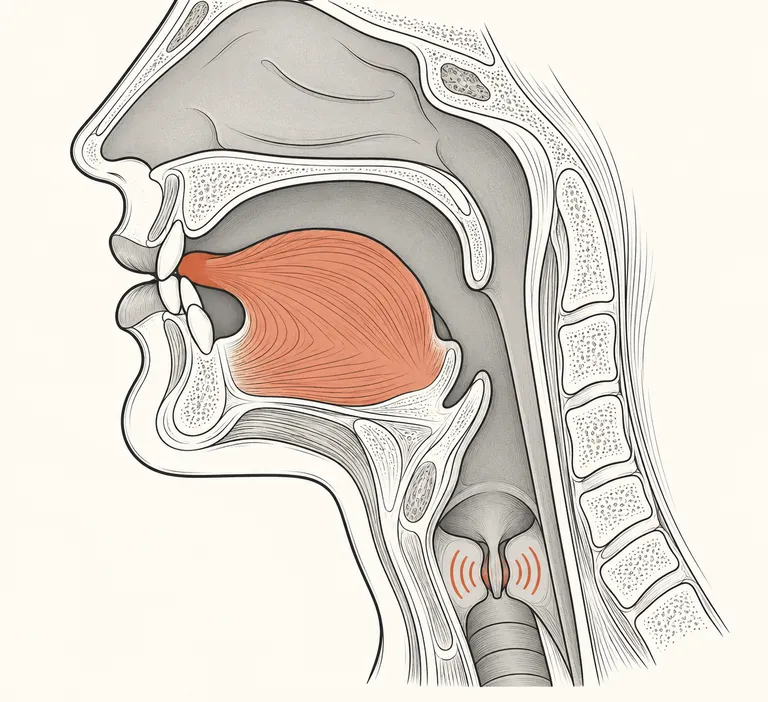
accepted
Tongue tip against the teeth with a small vibration icon showing continuous voicing.
Tongue tip reaches the teeth with otherwise coherent sagittal anatomy.
attempt 0 · 2026-10-03
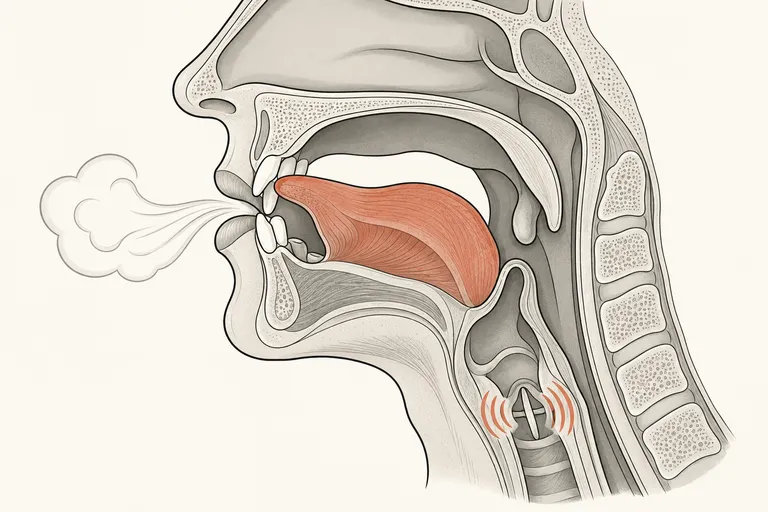
accepted
Tongue leaving the teeth with a soft airflow cloud layered over a voicing icon.
Tongue remains anatomically coherent while releasing from the teeth.
attempt 0 · 2026-10-03
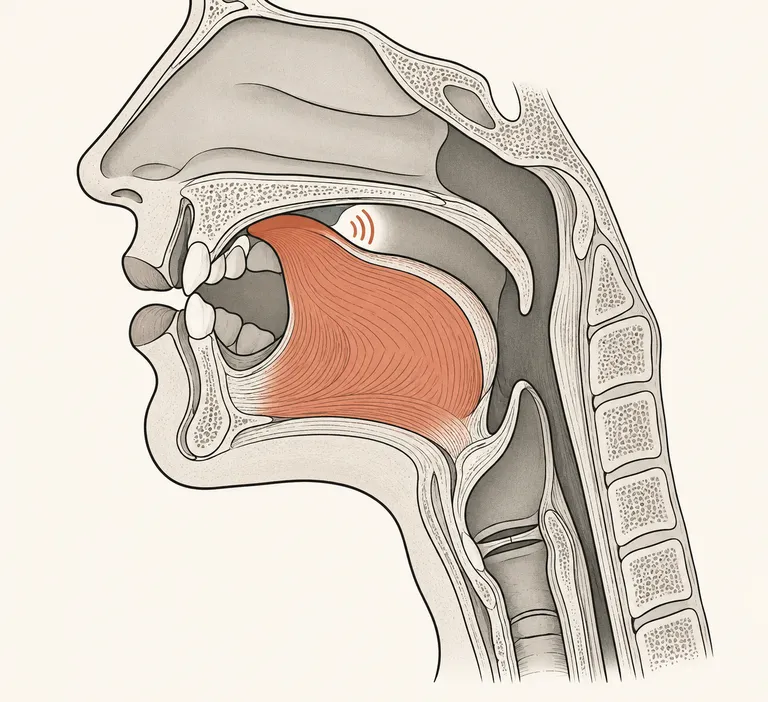
accepted
Tongue blade against the palate with a small vibration icon showing voicing through the release.
Tongue blade contacts the palate plausibly without twisting or duplication.
attempt 0 · 2026-10-03
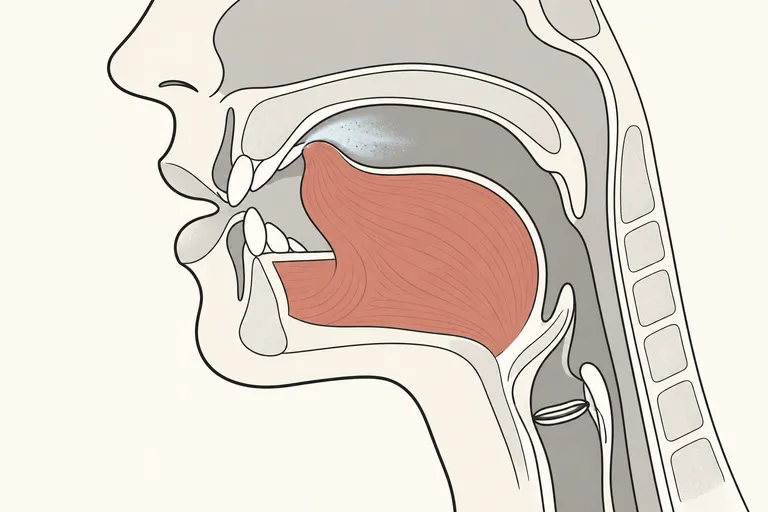
accepted
Tongue blade releasing from the palate with a soft airflow cloud plus a voicing icon.
Elevated tongue blade and continuous tongue body are plausible; airflow and voicing symbols are acceptable.
attempt 5 · 2026-10-04
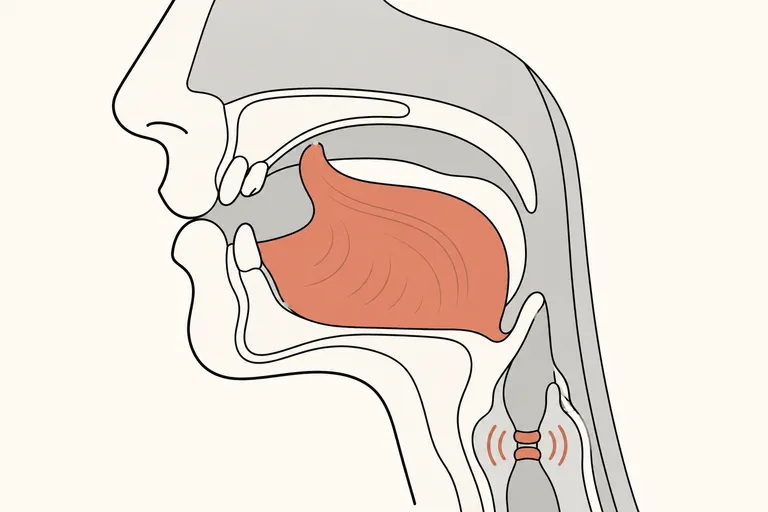
accepted
Tongue curled back against the palate with a small vibration icon for voicing.
Raised tongue tip bends modestly toward the palate without looping; surrounding anatomy is plausible.
attempt 2 · 2026-10-04
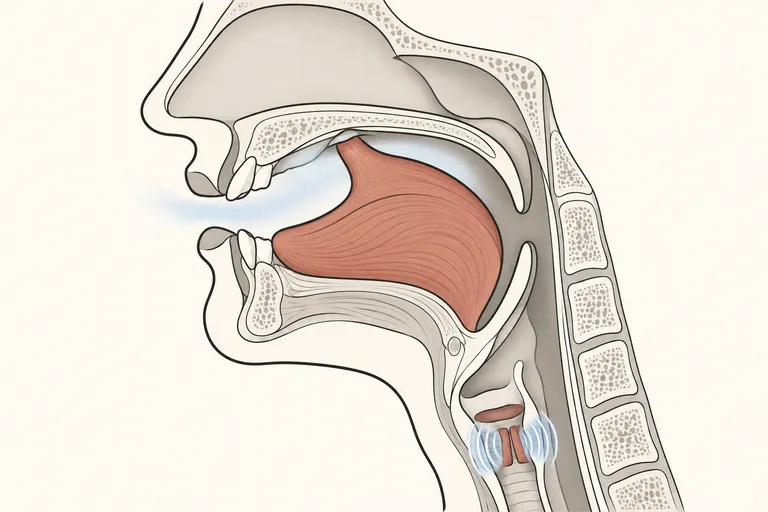
accepted
Tongue uncurling from the palate with a soft airflow cloud plus a voicing icon.
Raised tongue tip maintains a plausible continuous contour without looping or splitting.
attempt 5 · 2026-10-04
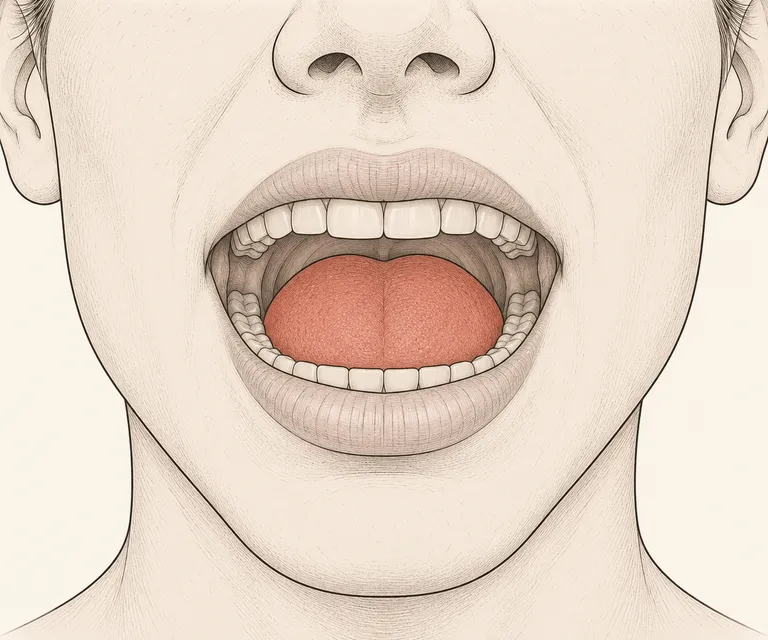
accepted
Tongue held steady in a mid-high front position, lips slightly spread, no diphthong glide.
Frontal mouth and broad raised tongue appear anatomically plausible.
attempt 0 · 2026-10-03
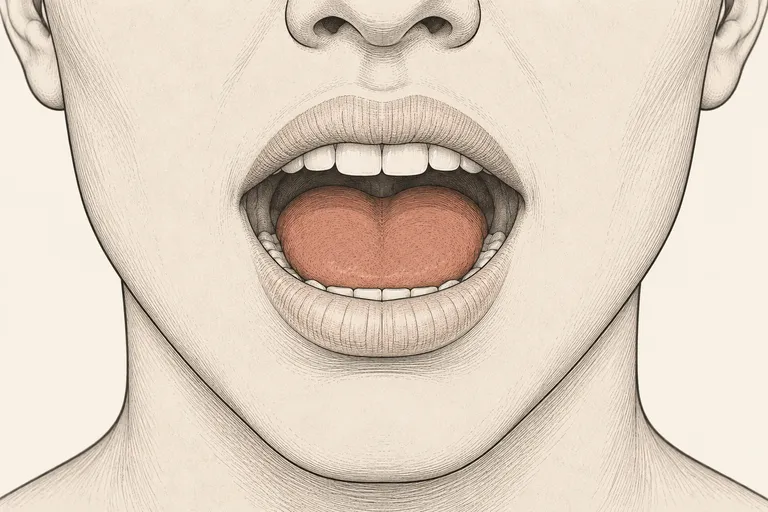
accepted
Relaxed, slightly open mouth with lips unrounded, tongue resting in the middle.
Open mouth and centrally resting tongue appear anatomically plausible.
attempt 0 · 2026-10-03
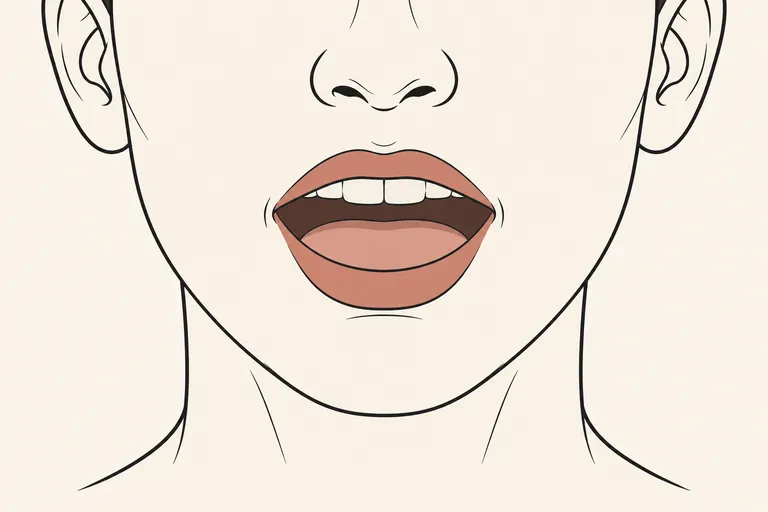
accepted
Jaw fairly open, tongue low-mid and forward, lips spread, held steady with little glide.
Teeth, lips, jaw, and visible tongue occupy plausible positions.
attempt 0 · 2026-10-03
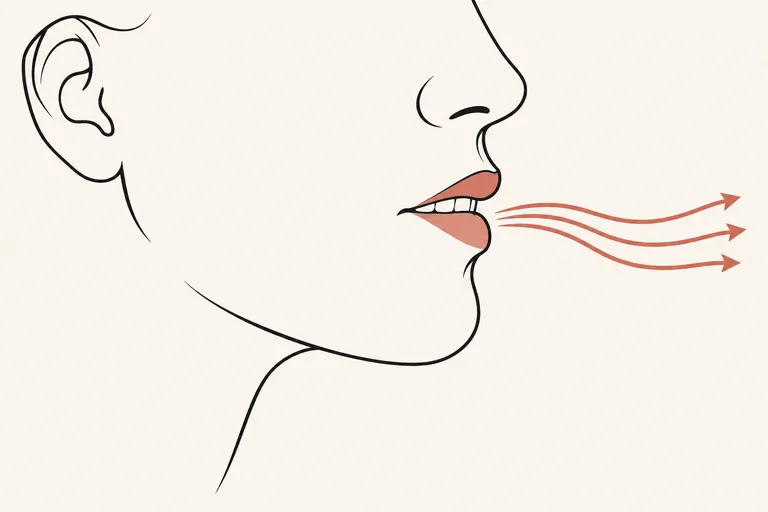
accepted
Lower lip resting against upper teeth with a hissing airflow arrow.
Lip, teeth, and facial placement are anatomically plausible; airflow arrows are acceptable.
attempt 0 · 2026-10-03
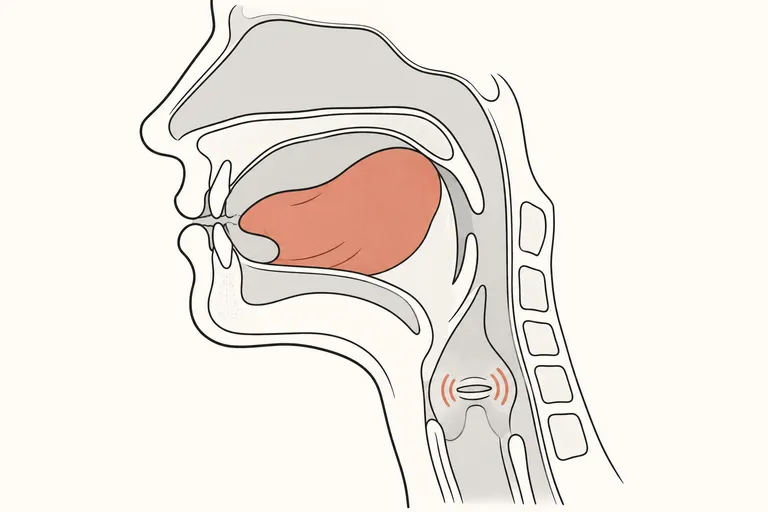
accepted
Tongue back against the soft palate with a small vibration icon for voicing.
Raised tongue back and surrounding vocal tract are plausible in a schematic cross-section.
attempt 0 · 2026-10-03
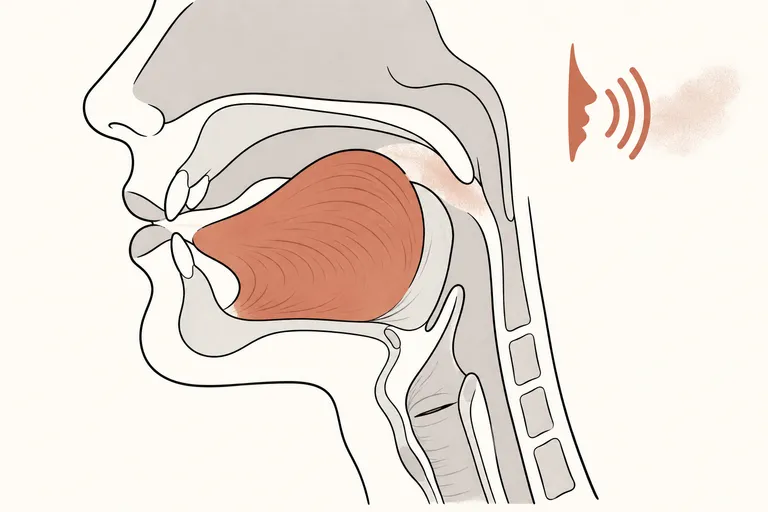
accepted
Tongue back leaving the soft palate with a soft airflow cloud plus a voicing icon.
Single, plausibly shaped tongue with raised back and coherent vocal tract anatomy.
attempt 0 · 2026-10-03
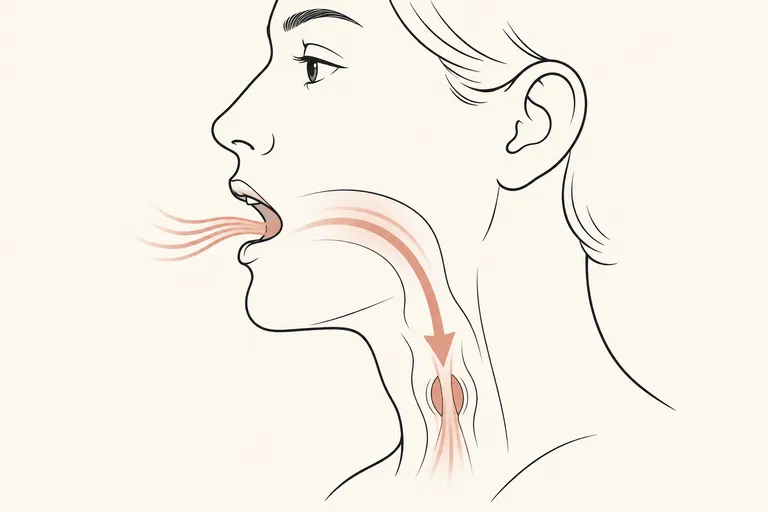
accepted
Open mouth position with an airflow arrow through the throat area, no specific tongue shape.
Plausible open-mouth profile with a schematic throat airflow arrow.
attempt 0 · 2026-10-03
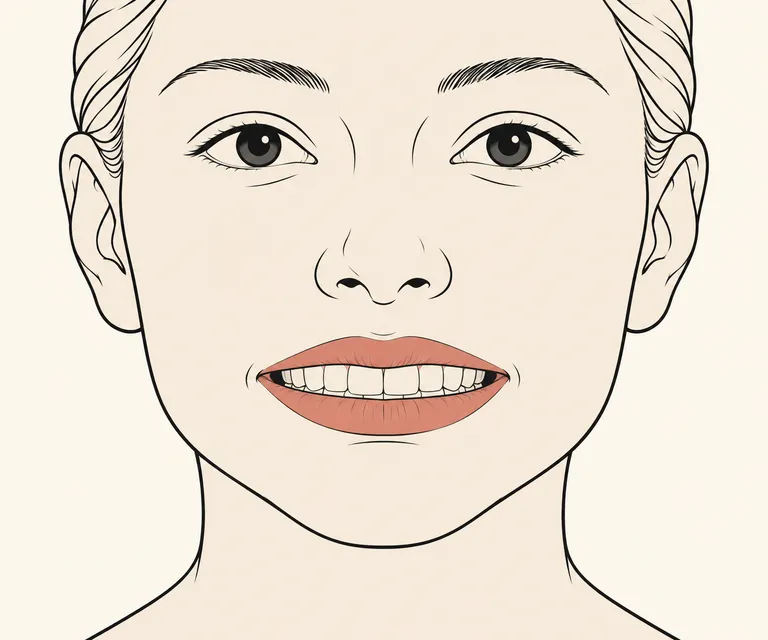
accepted
Jaw nearly closed, lips spread wide, tongue pushed high and forward, longer hold than the short 'i'.
Face, lips, teeth and nearly closed jaw appear anatomically plausible.
attempt 0 · 2026-10-03
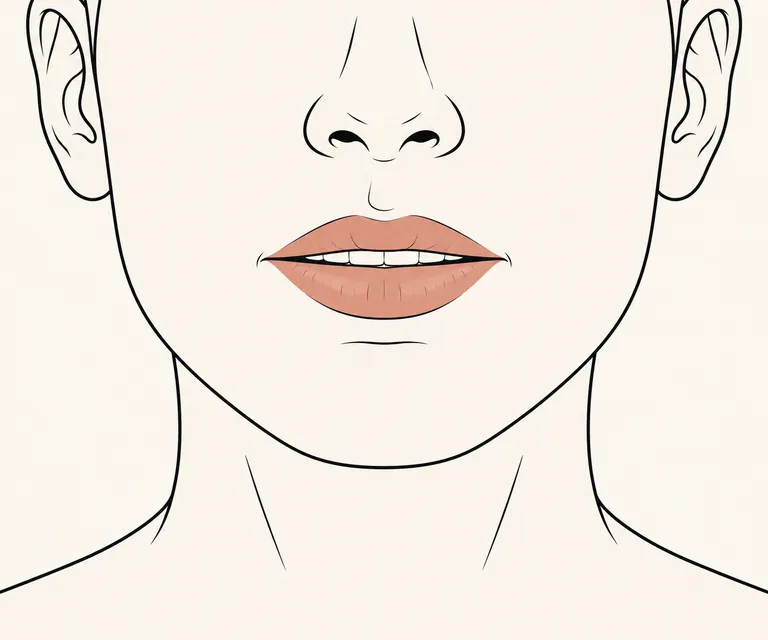
accepted
Jaw nearly closed, tongue raised high and forward, lips slightly spread.
Lips, teeth, jaw, and facial proportions are anatomically plausible.
attempt 0 · 2026-10-03
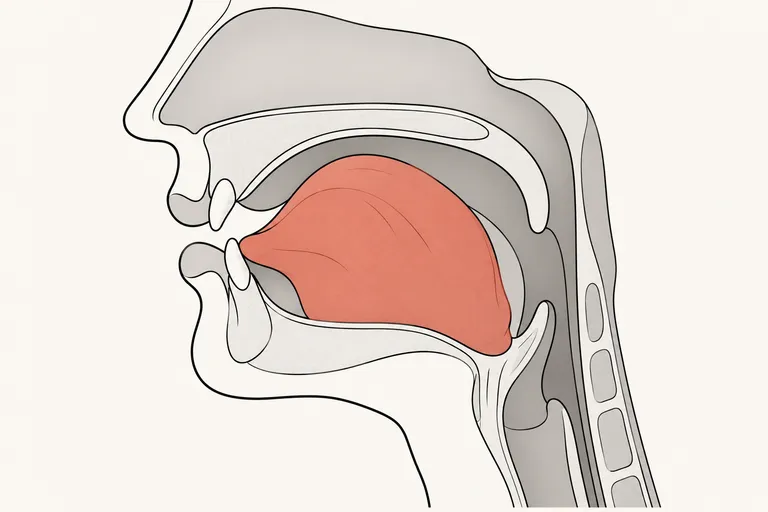
accepted
Tongue body raised close to the hard palate without touching, air flowing smoothly.
Single broad tongue raised toward the palate, with plausible surrounding anatomy.
attempt 1 · 2026-10-04
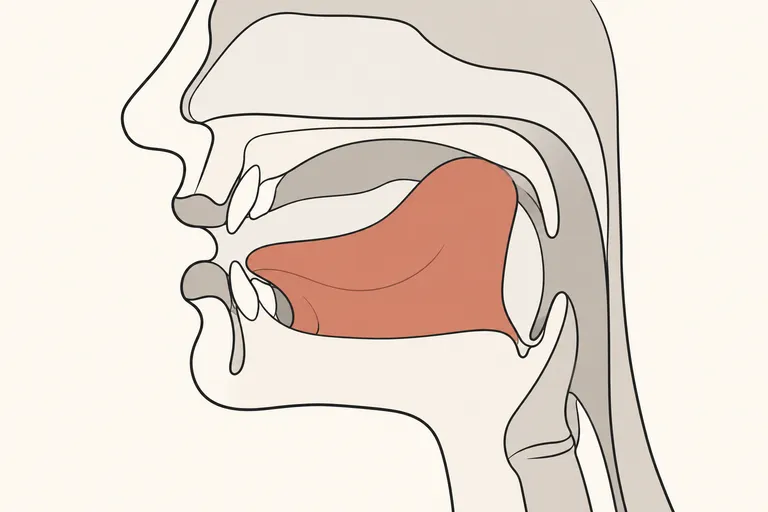
accepted
Back of the tongue pressed against the soft palate at the back of the mouth.
Tongue has a plausible continuous shape, with its back raised toward the soft palate.
attempt 0 · 2026-10-03
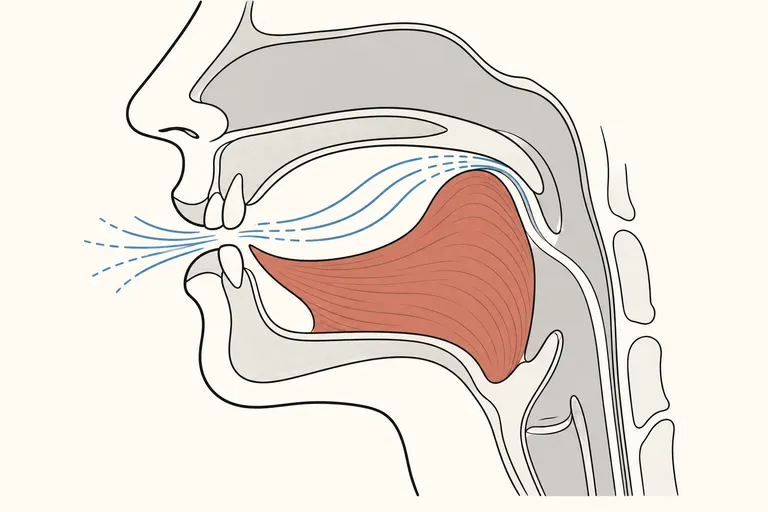
accepted
Tongue back leaving the soft palate with visible airflow lines.
Raised tongue back and lowered tip are plausible; airflow lines introduce no anatomical distortion.
attempt 0 · 2026-10-03
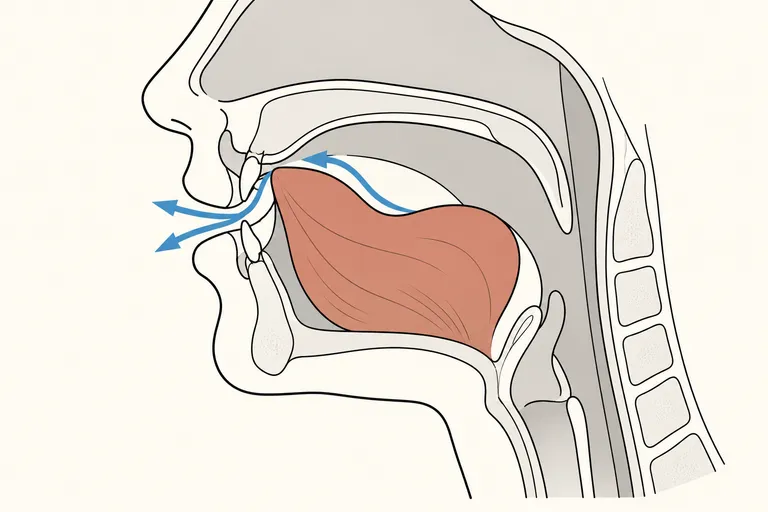
accepted
Tongue tip against the teeth/ridge with arrows showing air flowing around both sides.
Tongue tip rises plausibly toward the upper teeth ridge without looping or splitting.
attempt 0 · 2026-10-03
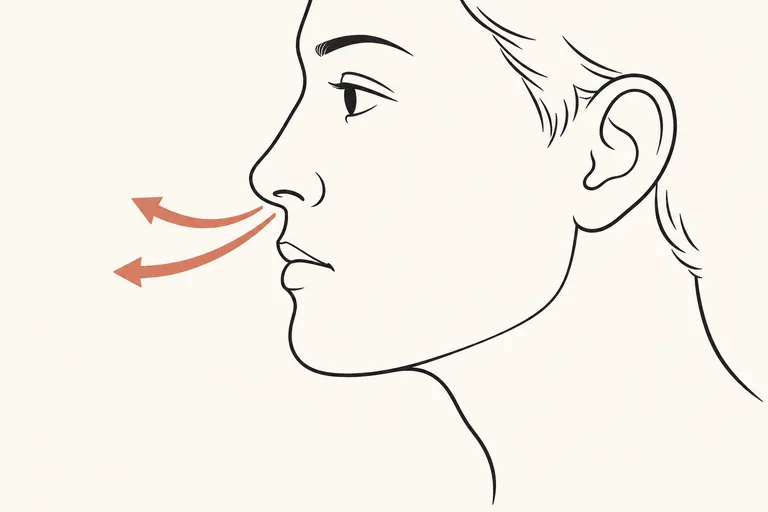
accepted
Lips closed with an arrow showing air flowing out through the nose.
Plausible facial profile with closed lips and schematic nasal airflow arrows.
attempt 0 · 2026-10-03
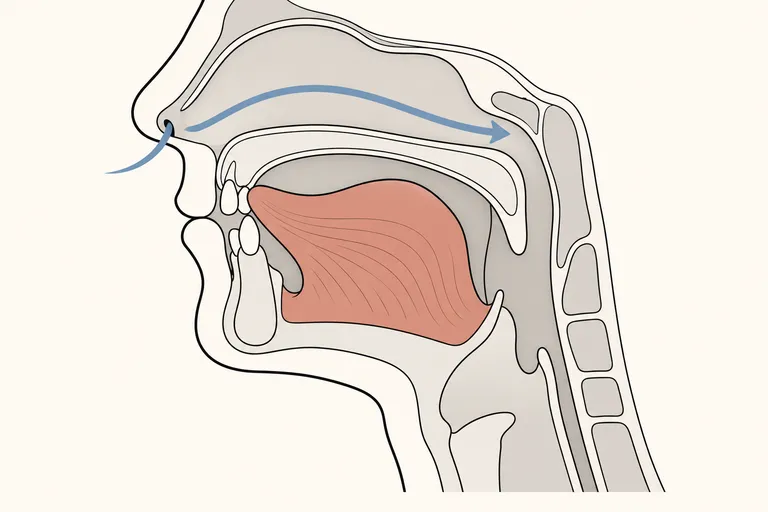
accepted
Tongue tip against the teeth with an arrow showing air escaping through the nose.
Plausible sagittal anatomy with a single tongue contacting the front teeth.
attempt 0 · 2026-10-03
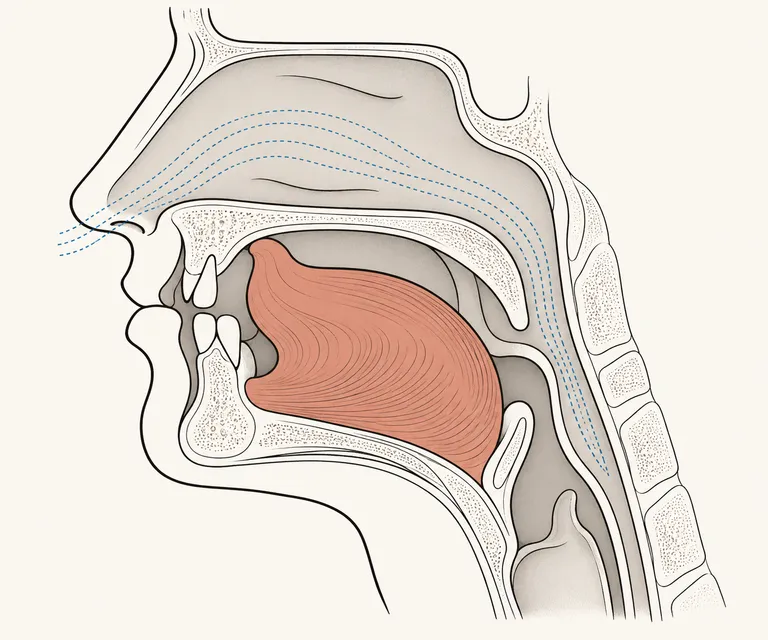
accepted
Tongue tip curled back against the palate with an arrow showing nasal airflow.
Tongue tip rises toward the palate without excessive curling; nasal passage and surrounding anatomy are plausible.
attempt 1 · 2026-10-04
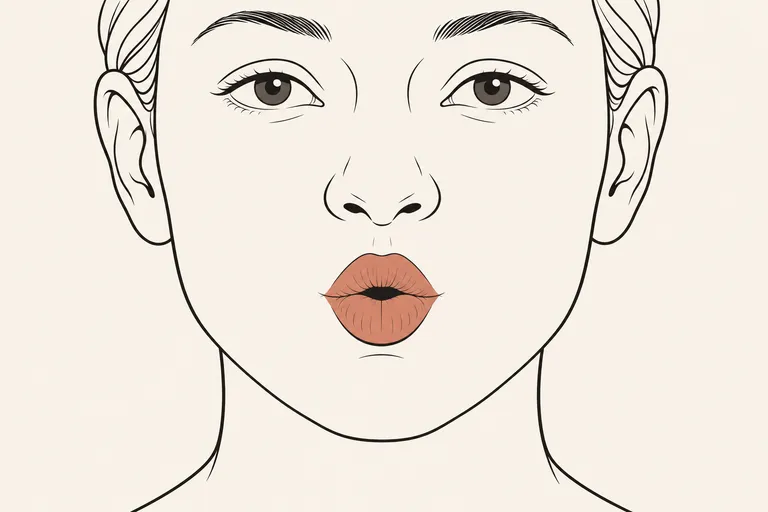
accepted
Tongue held steady in a mid-high back position, lips rounded, no diphthong glide.
Rounded lips and facial anatomy appear natural.
attempt 0 · 2026-10-03
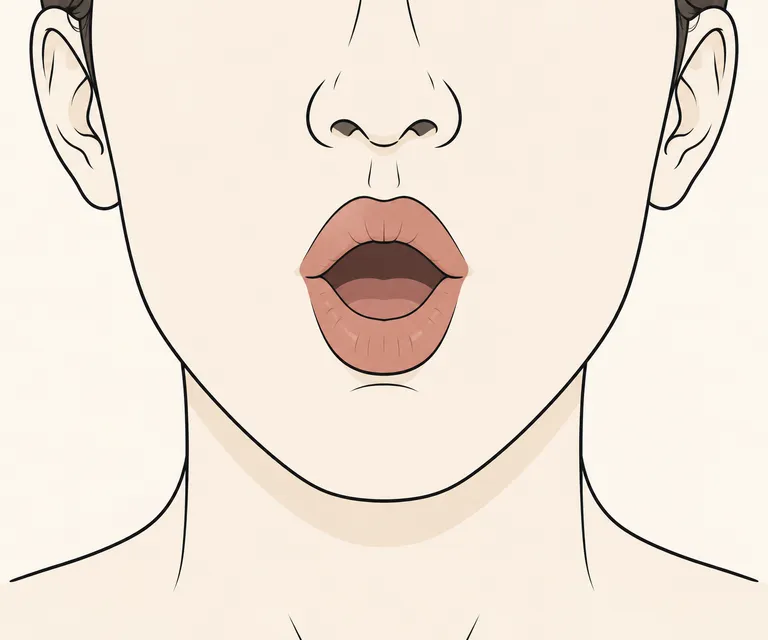
accepted
Jaw fairly open, lips rounded, tongue low-mid and pulled back, held steady with little glide.
Open jaw, rounded lips, and visible tongue appear anatomically plausible.
attempt 0 · 2026-10-03
accepted
Both lips pressed firmly together, no air escaping.
Closed lips and profile anatomy are plausible.
attempt 0 · 2026-10-03
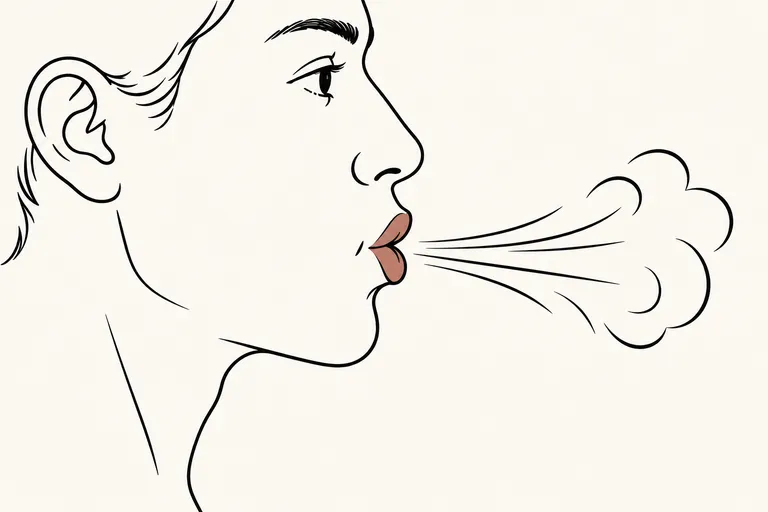
accepted
Lips releasing with a visible puff of air, shown as motion lines near the mouth.
Parted lips and schematic airflow show a plausible release.
attempt 0 · 2026-10-03
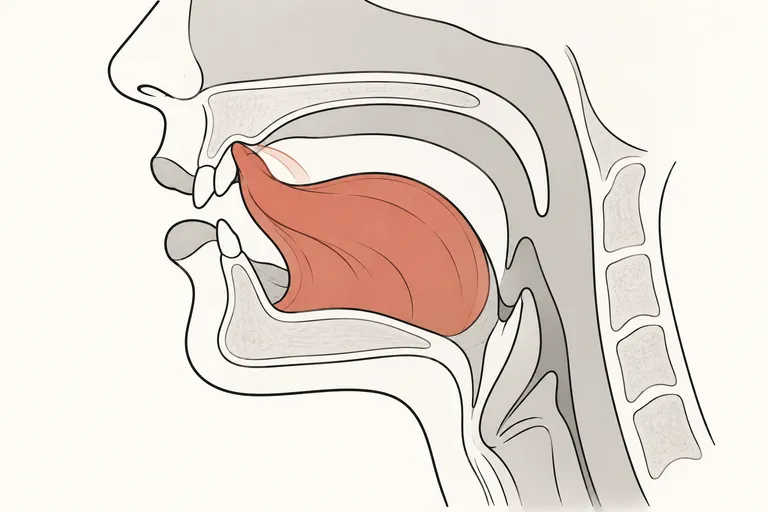
accepted
Tongue tip flicking quickly against the gum ridge, shown as a single quick motion arc.
Raised tongue tip approaches the gum ridge without excessive curling or distortion.
attempt 0 · 2026-10-03
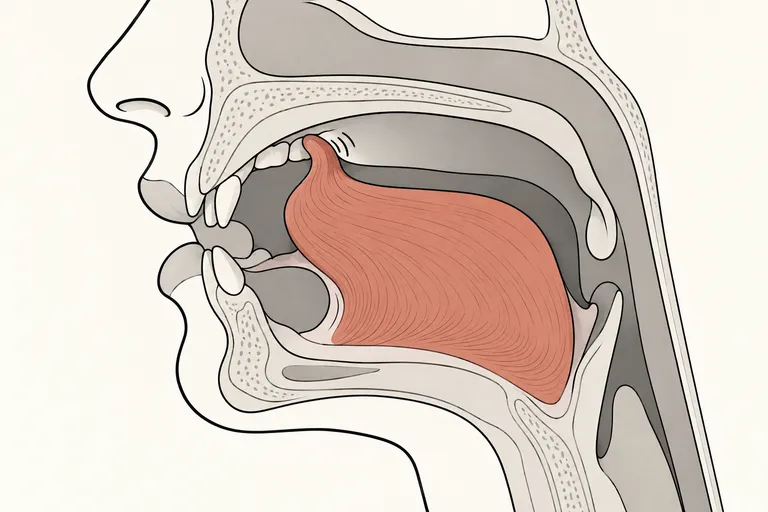
accepted
Tongue tip curled back then flicking forward against the palate in one quick motion.
Tongue remains continuous, with a plausible raised tip contacting the palate.
attempt 5 · 2026-10-04
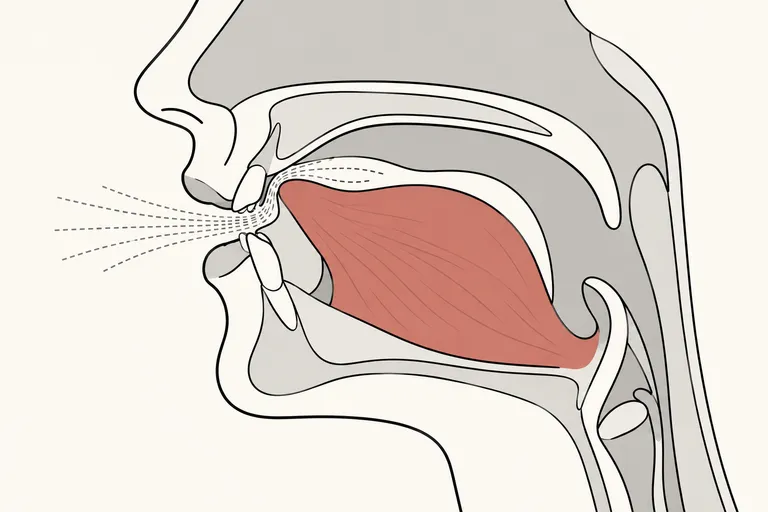
accepted
Tongue tip close to the gum ridge with a narrow air channel producing a hiss.
Single tongue forms a plausible narrow constriction near the gum ridge.
attempt 0 · 2026-10-03
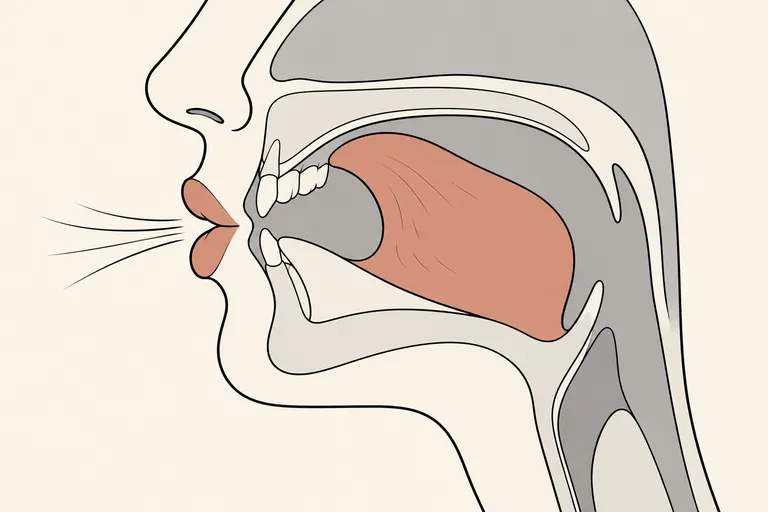
accepted
Tongue raised toward the back of the gum ridge with slightly rounded lips, producing a hushing sound.
Raised tongue, rounded lips, and surrounding vocal tract are anatomically plausible.
attempt 0 · 2026-10-03
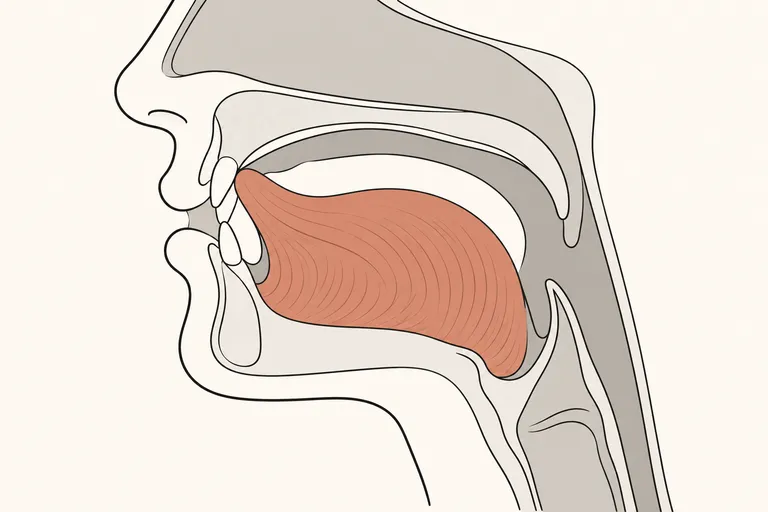
accepted
Tongue tip touching the back of the upper teeth, distinctly further forward than English alveolar 't'.
Single continuous tongue with plausible dental contact and normal surrounding anatomy.
attempt 0 · 2026-10-03
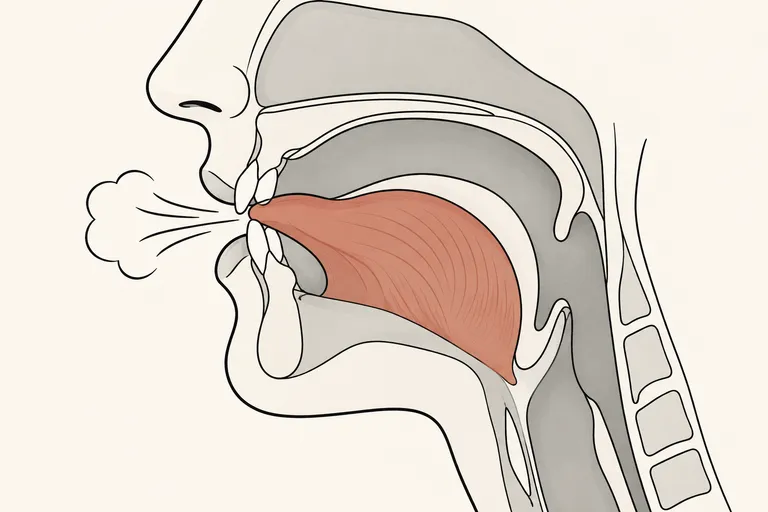
accepted
Tongue leaving the teeth with a visible puff of air marked by motion lines.
Tongue positioned near the teeth with plausible anatomy and schematic airflow puff.
attempt 0 · 2026-10-03
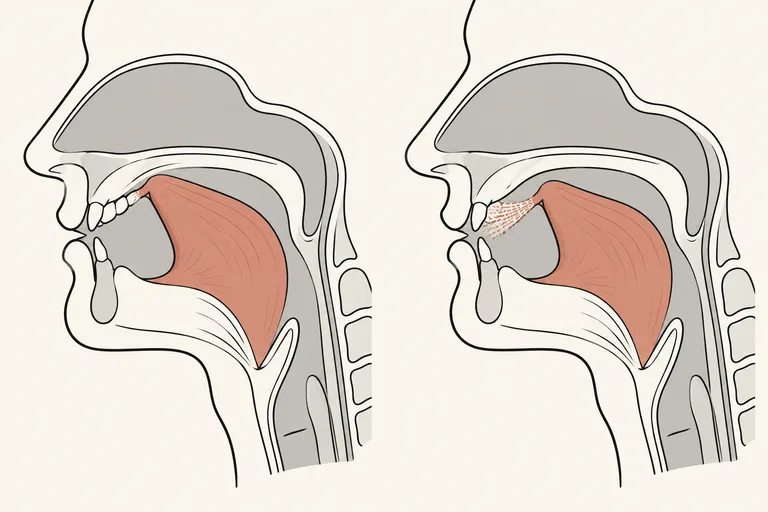
accepted
Tongue blade pressed against the palate, then releasing into a brief hissing friction.
Both cross-sections show plausible raised tongues without loops, splits, or abnormal tips.
attempt 0 · 2026-10-03
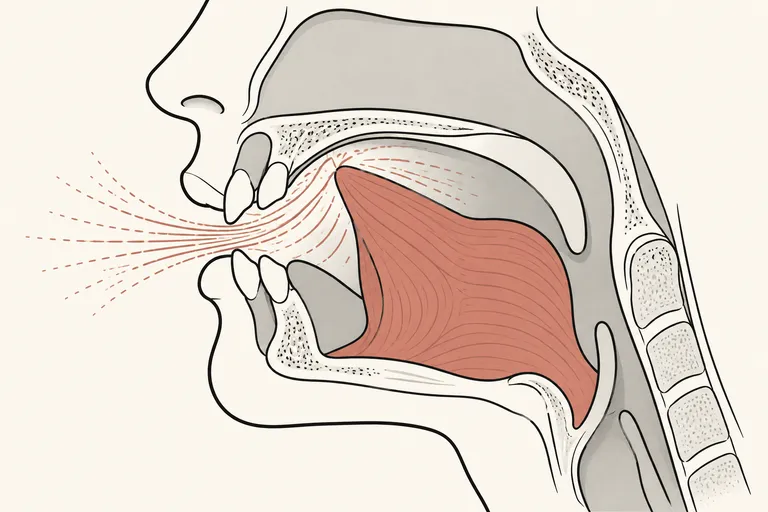
accepted
Tongue blade releasing from the palate with visible airflow lines following the friction.
Raised tongue blade and oral airflow are anatomically plausible.
attempt 0 · 2026-10-03
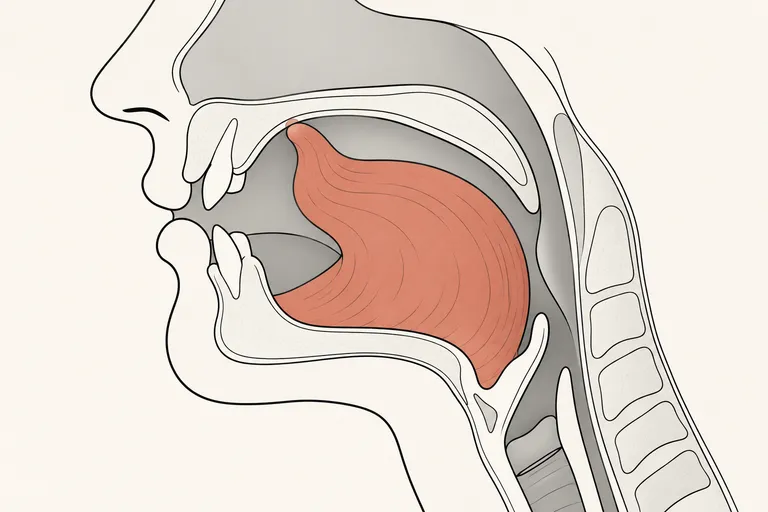
accepted
Tongue tip curled backward to touch the hard palate, well behind the position for English 't'.
Raised tongue tip contacts the hard palate without looping or excessive curling.
attempt 5 · 2026-10-04
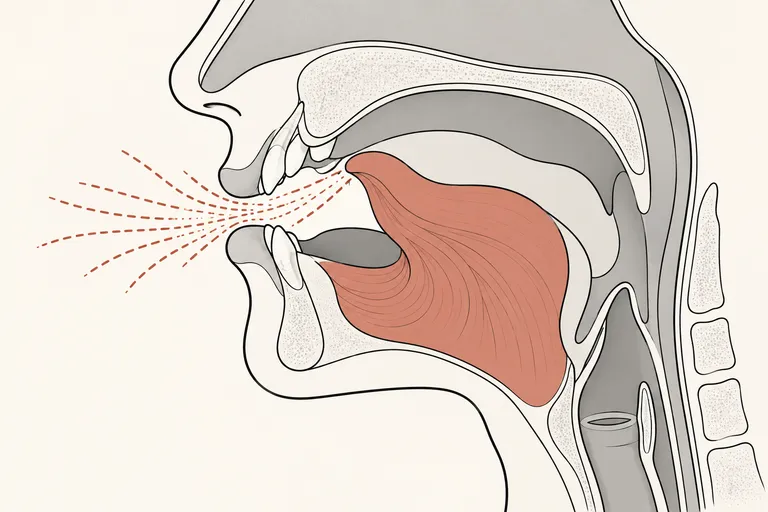
accepted
Tongue uncurling from the palate with visible airflow lines showing a strong puff.
Tongue remains continuous with a plausible raised tip; airflow lines introduce no anatomical distortion.
attempt 2 · 2026-10-04
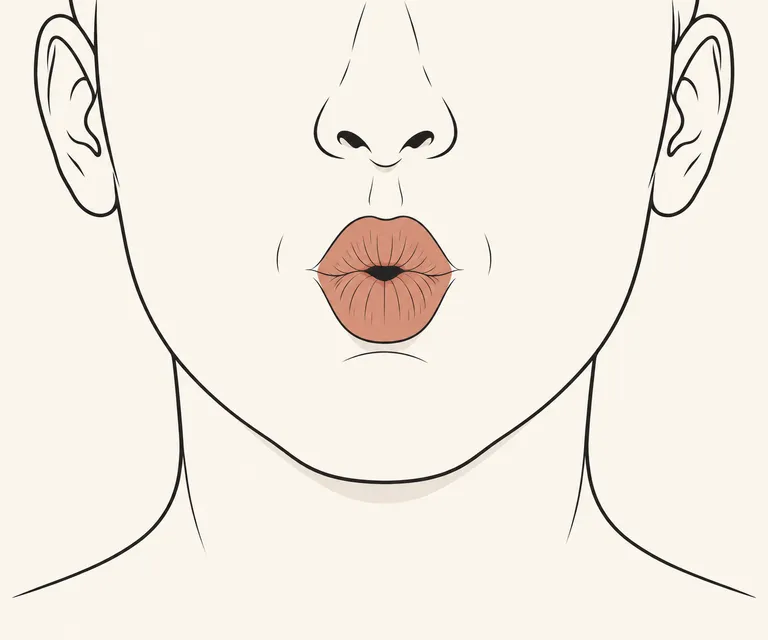
accepted
Lips tightly rounded and pushed slightly forward, tongue pulled high and back, held longer than the short 'u'.
Rounded, pursed lips and facial anatomy appear plausible.
attempt 0 · 2026-10-03
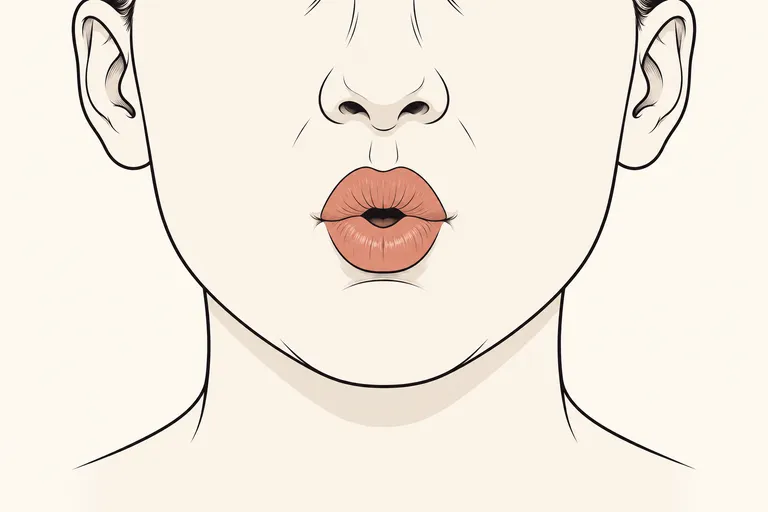
accepted
Lips rounded, jaw nearly closed, tongue raised high and pulled back.
Rounded lips and facial anatomy are visually coherent and plausible.
attempt 0 · 2026-10-03
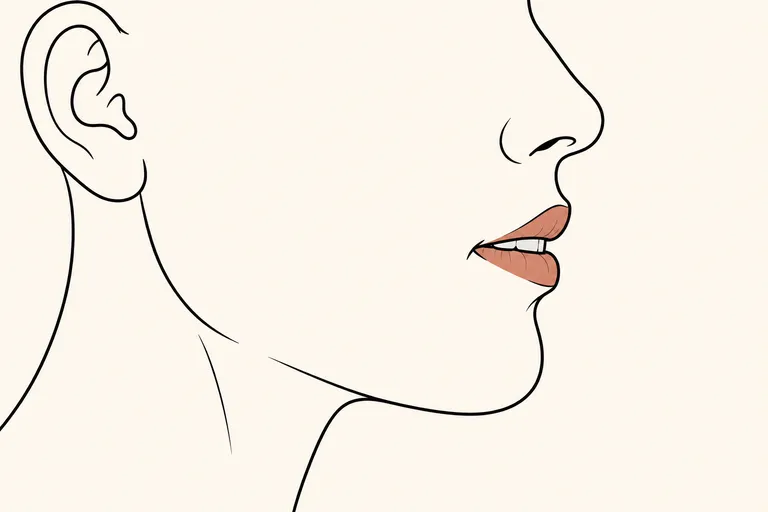
accepted
Lower lip lightly near the upper teeth, looser contact than English 'v', no friction.
Lip, tooth, and jaw positions are anatomically plausible.
attempt 0 · 2026-10-03
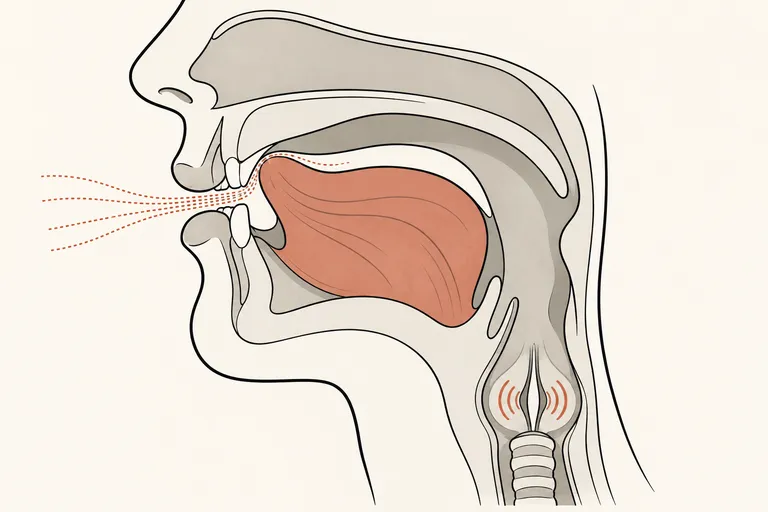
accepted
Tongue tip close to the gum ridge with a vibration icon layered over the hissing airflow.
Tongue elevation and surrounding oral structures are anatomically plausible; airflow and vibration symbols are acceptable.
attempt 0 · 2026-10-03
Inventory hu (39)
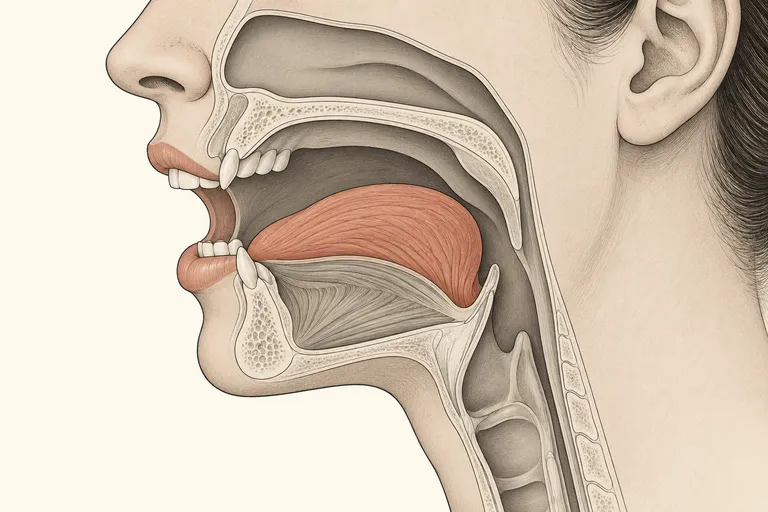
accepted
Same open jaw shape, but á has unrounded, slightly spread lips and is held noticeably longer.
Sagittal vocal tract and tongue have coherent, plausible anatomy.
attempt 0 · 2026-10-03
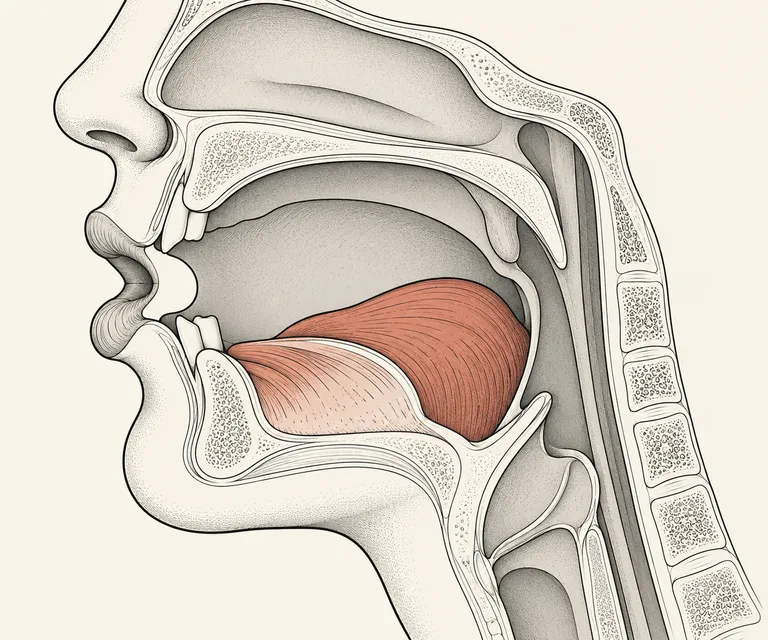
accepted
Jaw dropped, lips loosely puckered, tongue pulled low and back.
Tongue is plausibly low and retracted with an open jaw and loosely rounded lips.
attempt 0 · 2026-10-03
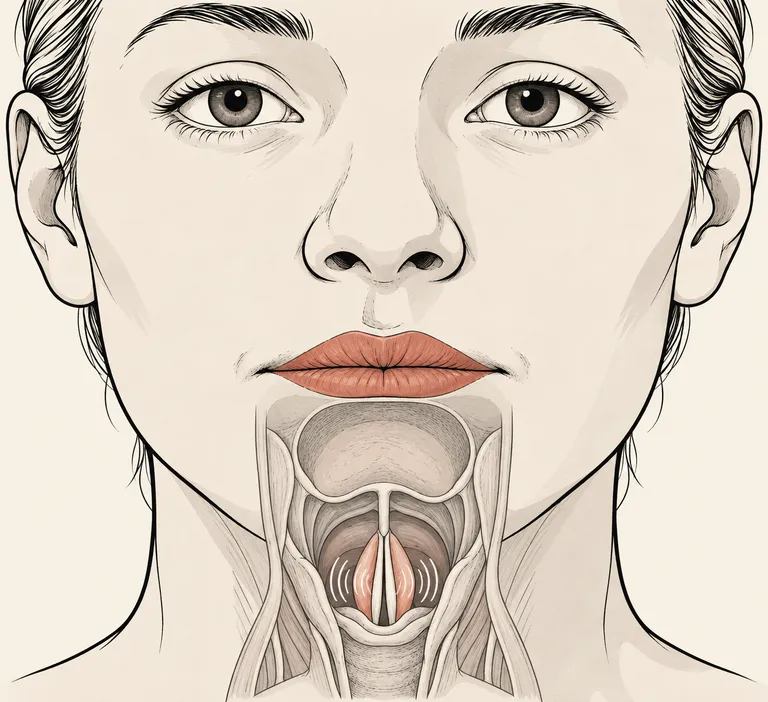
accepted
Lips pressed together with the vocal folds already buzzing during the closure.
Stylized frontal cutaway is coherent without duplicated or malformed anatomy.
attempt 0 · 2026-10-03
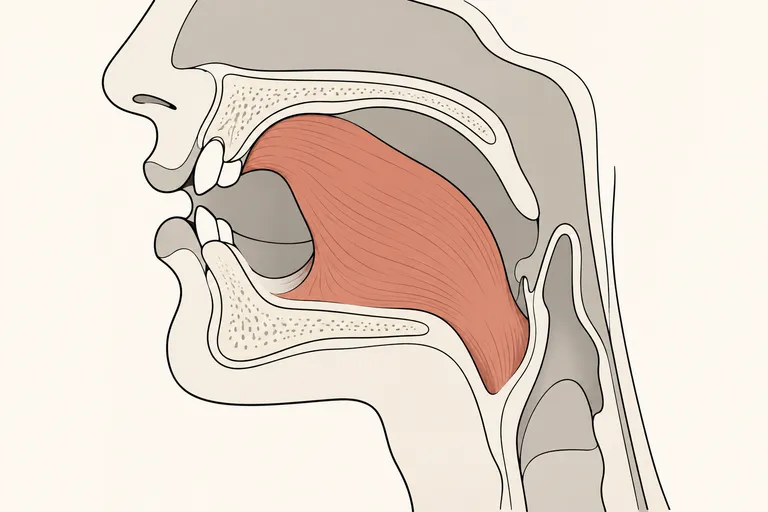
accepted
A broad area of the tongue's blade and front presses flat against the hard palate, rather than just the tip touching the alveolar ridge.
Broad tongue contacts the palate with a continuous, anatomically plausible contour.
attempt 1 · 2026-10-03
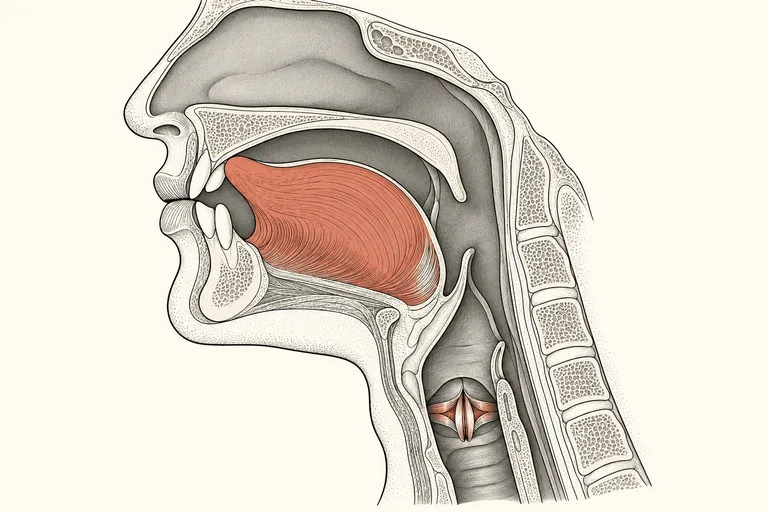
accepted
Tongue tip contacts near the teeth, vocal folds buzzing throughout the closure.
Tongue, oral cavity, and vocal folds are anatomically coherent.
attempt 0 · 2026-10-03
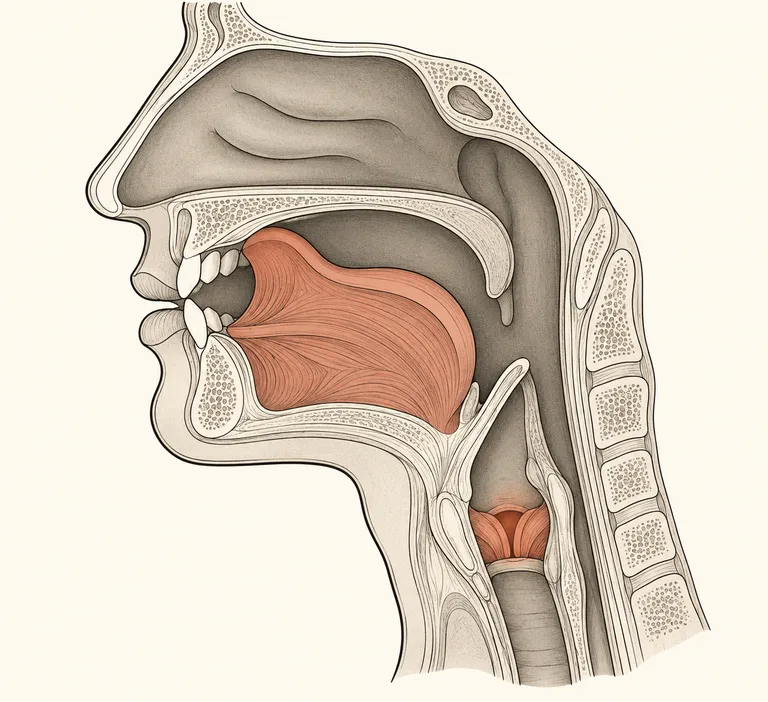
accepted
Same tongue motion as 'c' but voiced, producing a brief buzzing release like the 'ds' in English 'kids'.
Large tongue remains naturally shaped and contained within the oral cavity.
attempt 0 · 2026-10-03
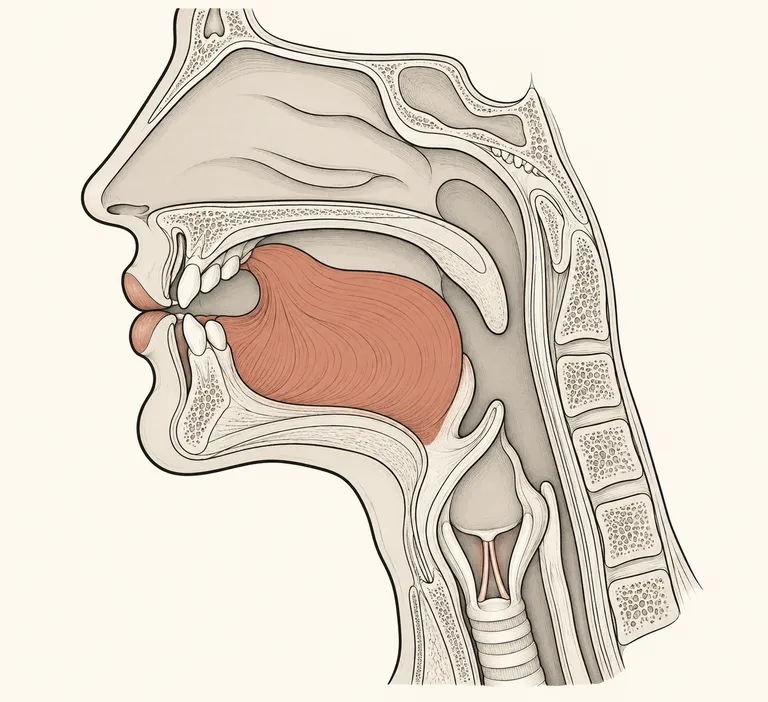
accepted
Same tongue and lip shape as 'cs' but voiced, releasing into a buzzing hush like the 'j' in English 'jungle'.
Sagittal anatomy and broad tongue shape are visually plausible.
attempt 0 · 2026-10-03
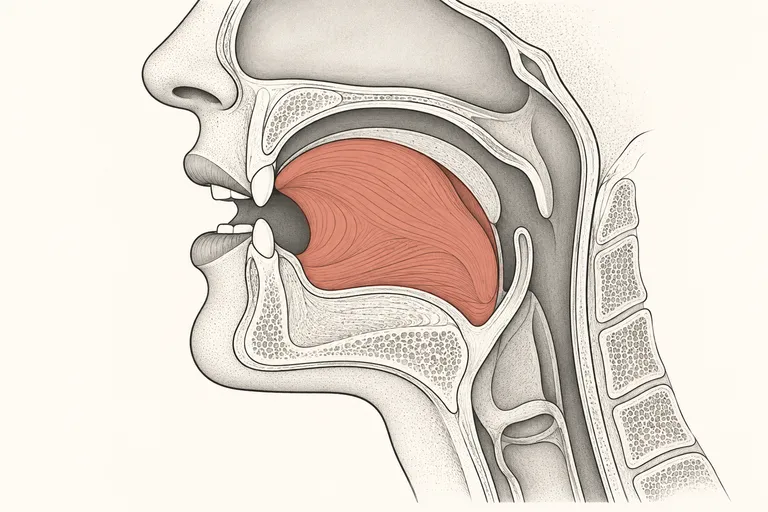
accepted
Lips spread, jaw nearly closed, tongue high and front, held long.
High front tongue posture is smoothly shaped without twisting or looping.
attempt 0 · 2026-10-03
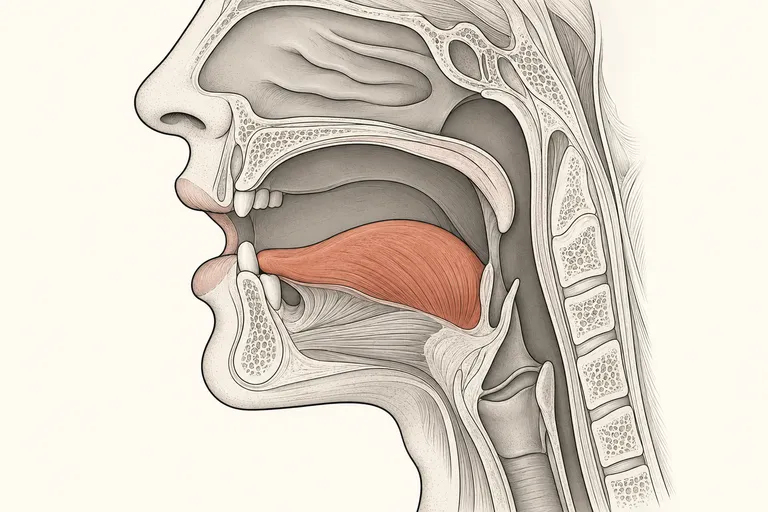
accepted
Jaw moderately open, lips relaxed and unrounded, tongue front and mid-low.
Anatomically coherent sagittal view with a moderately open jaw and unrounded lips.
attempt 0 · 2026-10-03
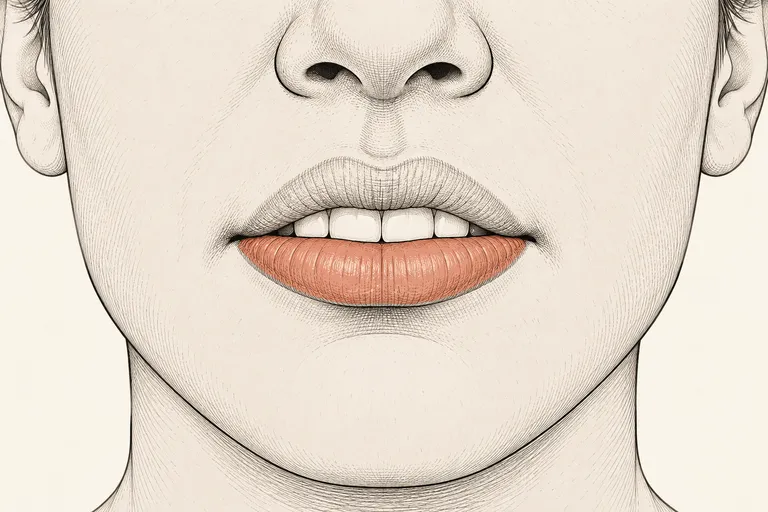
accepted
Lower lip lightly touches the upper front teeth, air hisses through continuously.
Anatomically coherent frontal mouth with plausible lip-to-teeth positioning.
attempt 0 · 2026-10-03
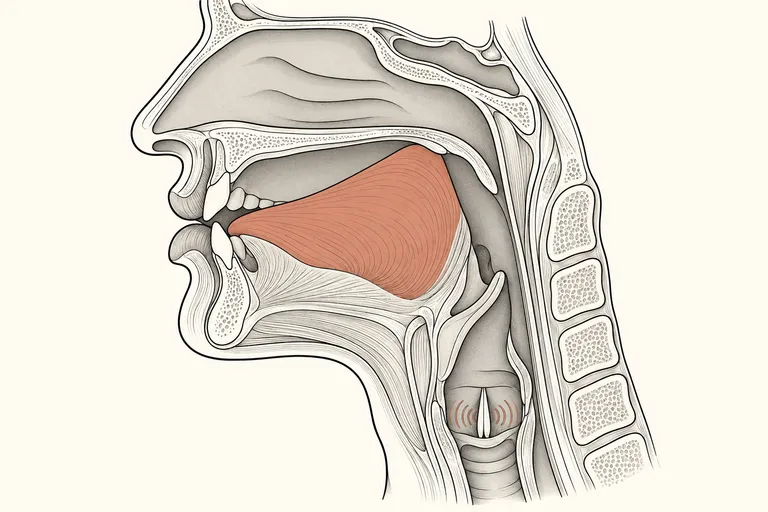
accepted
Back of tongue meets the soft palate with voicing buzzing throughout.
Plausible sagittal anatomy and broad tongue contact near the soft palate.
attempt 0 · 2026-10-03
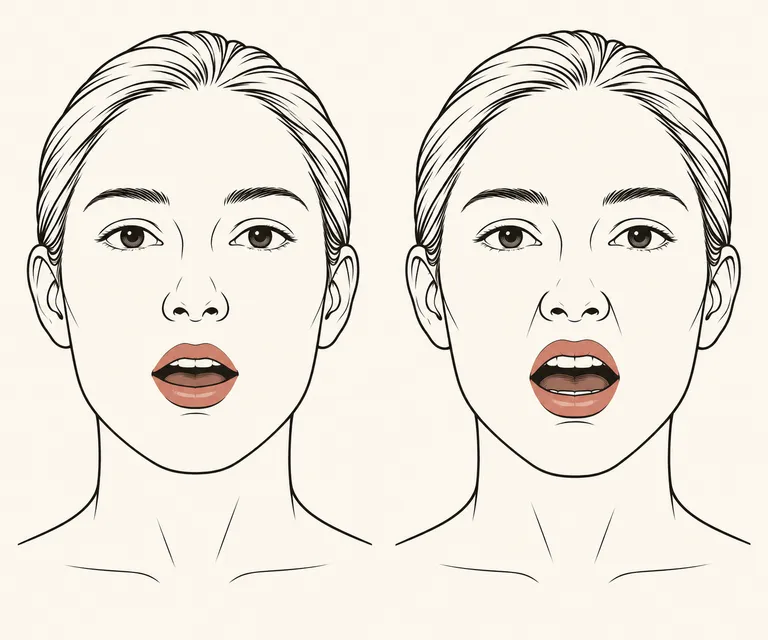
accepted
Open mouth shaped like the following vowel, with breathy turbulence at the throat; can strengthen to a rasp at the end of a word.
Both faces show plausible open mouths, lips, teeth, and jaws.
attempt 1 · 2026-10-03
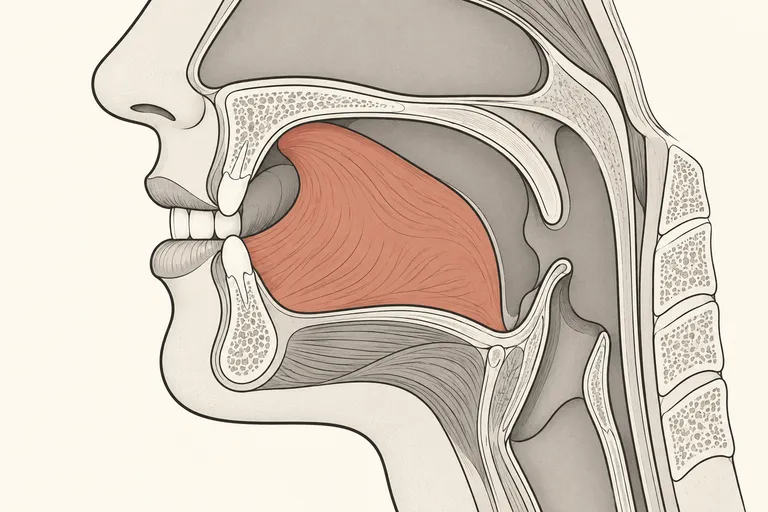
accepted
Lips spread, tongue high and forward, jaw nearly shut.
Plausible high, forward tongue posture and nearly closed jaw.
attempt 0 · 2026-10-03
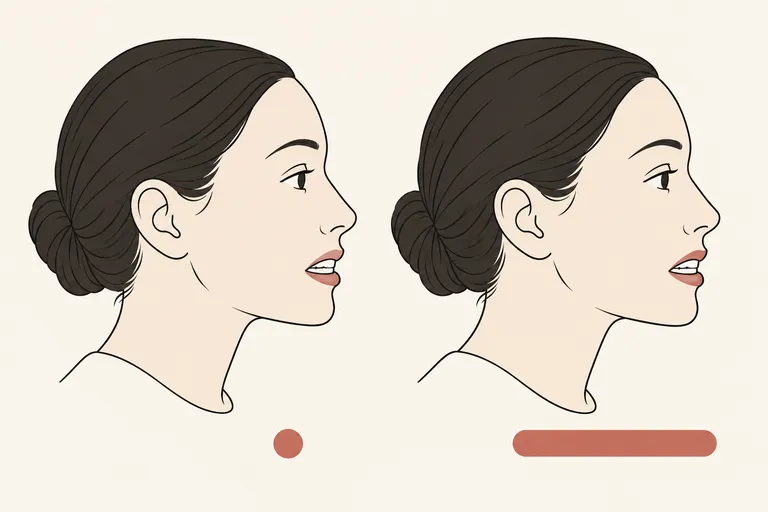
accepted
Identical mouth shape to short i, but held clearly longer, like doubling the duration.
Two coherent profile views with anatomically plausible mouths; duration symbols are acceptable.
attempt 1 · 2026-10-03
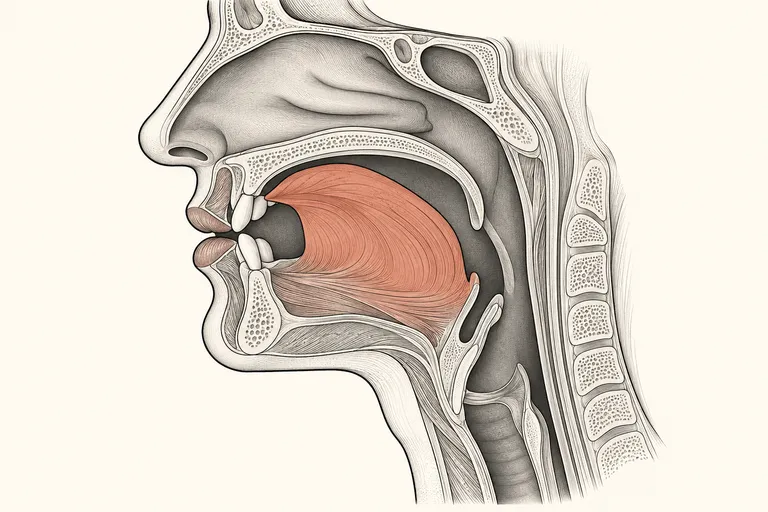
accepted
Tongue body raised close to the hard palate without touching it, producing a smooth glide identical to English 'y'.
Tongue body is plausibly raised toward the hard palate without distortion.
attempt 0 · 2026-10-03
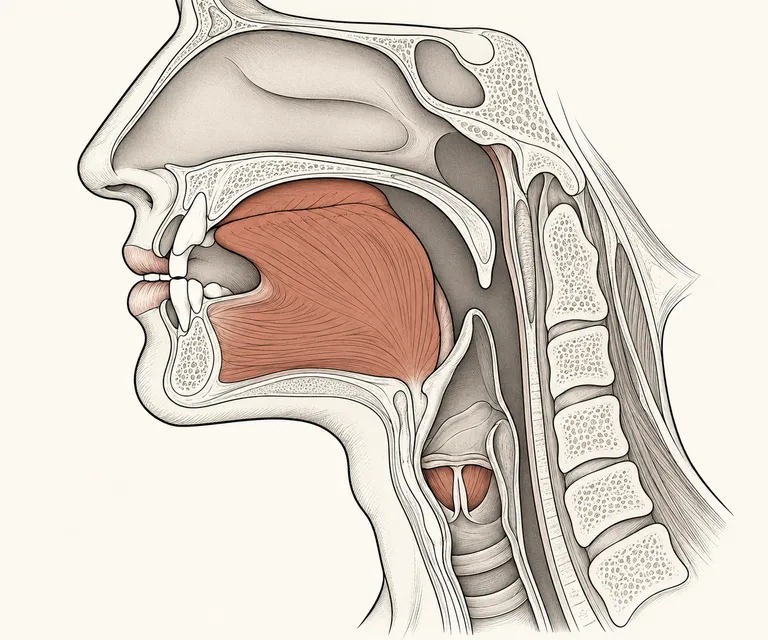
accepted
Broad tongue-blade contact flat against the hard palate, voiced throughout.
Broad tongue contact with the hard palate is exaggerated but anatomically plausible.
attempt 0 · 2026-10-03
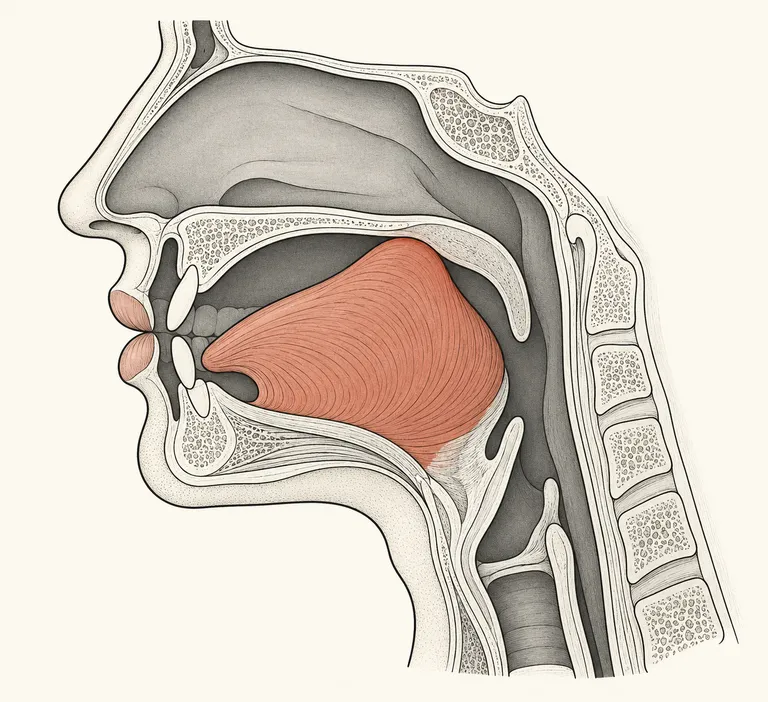
accepted
Back of the tongue rises to meet the soft palate; released with no aspiration burst.
Plausible sagittal tongue shape with raised back and intact anatomy.
attempt 0 · 2026-10-03
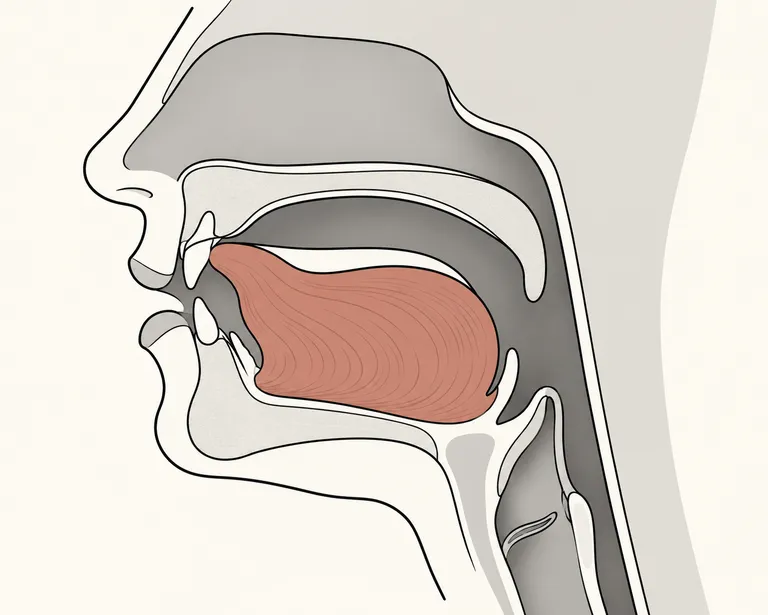
accepted
Tongue tip at the gum ridge, tongue body kept front and low — no raising at the back, unlike English 'dark l'.
Raised tongue tip and continuous tongue body are plausible, without looping or abnormal distortion.
attempt 1 · 2026-10-03
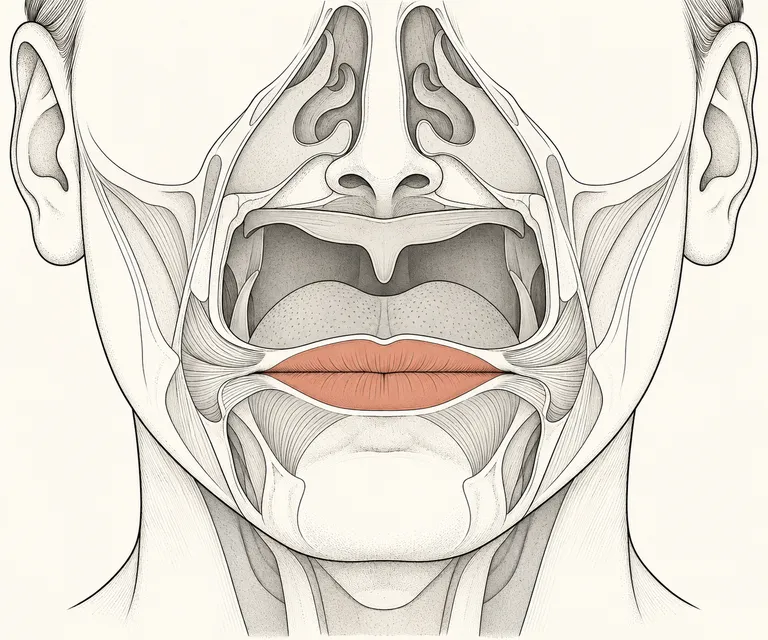
accepted
Lips pressed together, soft palate lowered so air flows through the nose.
Plausible frontal cutaway with closed lips and no obvious anatomical impossibilities.
attempt 0 · 2026-10-03
accepted
Tongue tip against the gum ridge, air resonating through the nose.
Closed lips and facial anatomy appear normal; the tongue is not visible.
attempt 1 · 2026-10-03
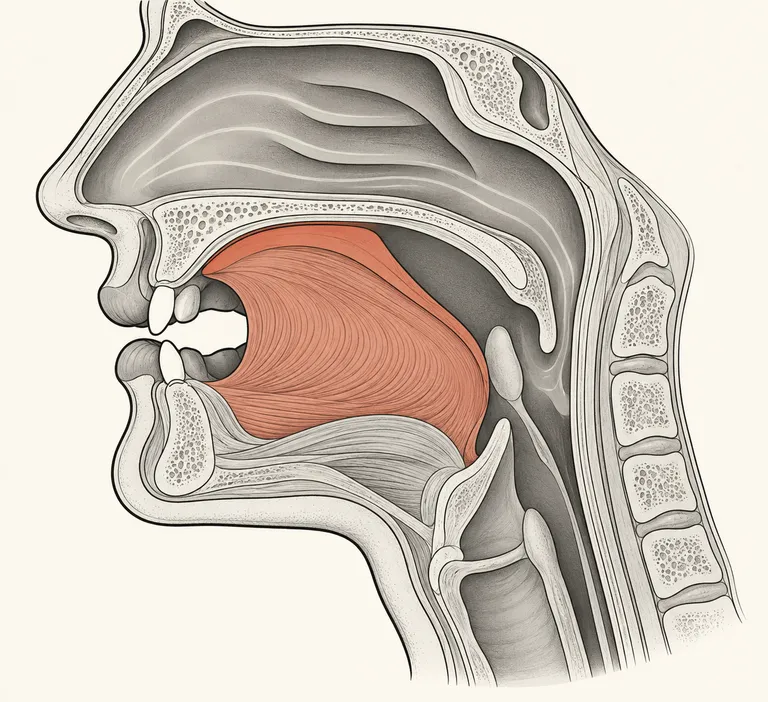
accepted
Broad tongue-blade contact flat against the hard palate, air resonating through the nose, similar to Spanish ñ.
Large tongue-palate contact and open nasal passage are anatomically coherent.
attempt 0 · 2026-10-03
accepted
Lips clearly rounded and pushed slightly forward, tongue mid-high and back.
Rounded, slightly protruding lips and profile anatomy are plausible.
attempt 1 · 2026-10-03
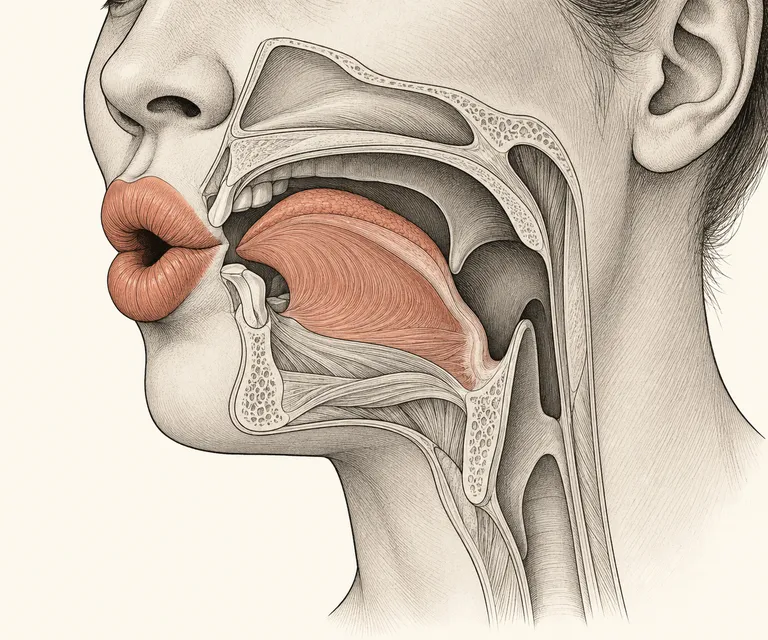
accepted
Lips rounded and pushed forward like for 'o', but the tongue body stays high and forward, near the front-vowel position.
Plausible sagittal anatomy with rounded lips and a high, forward tongue body.
attempt 0 · 2026-10-03
accepted
Same rounded shape as short o but held for a longer duration without gliding.
Rounded lips form a plausible small opening; facial proportions are coherent.
attempt 1 · 2026-10-03
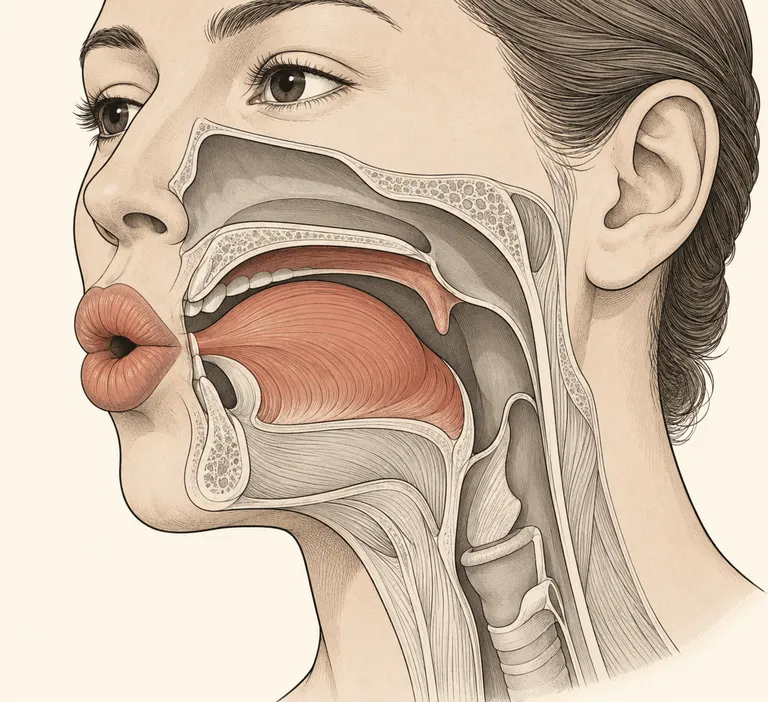
accepted
Identical front-rounded lip and tongue shape as ö, just sustained for a longer duration.
Plausible cutaway anatomy; tongue and rounded lips match the intended sustained vowel posture.
attempt 0 · 2026-10-03
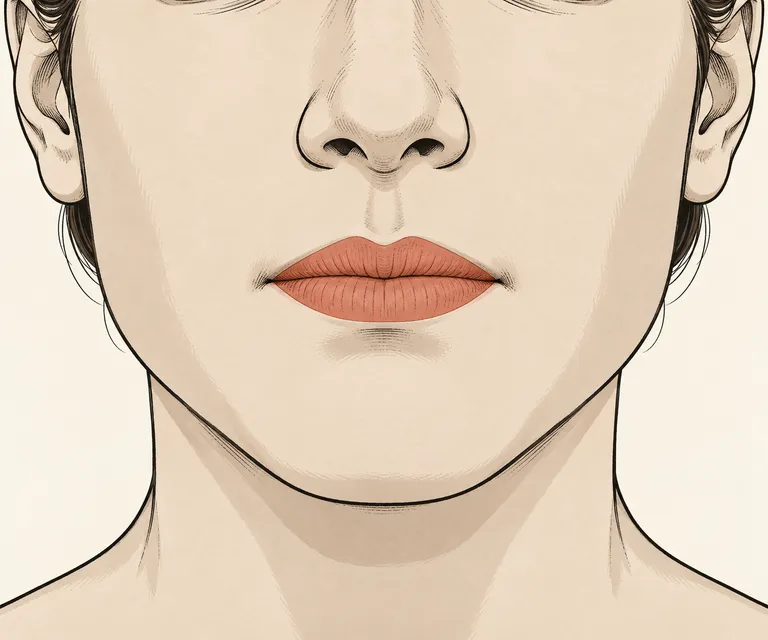
accepted
Lips pressed firmly together, cheeks relaxed, no puff of air on release.
Closed lips, jaw, and surrounding facial anatomy appear plausible.
attempt 0 · 2026-10-03
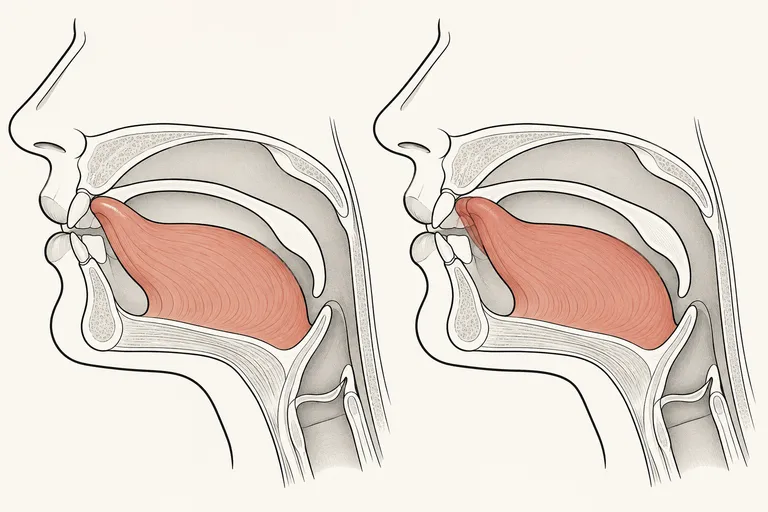
accepted
Tongue tip flicks against the gum ridge once for a light tap, or vibrates several times for an emphatic trill; the tongue root never pulls back.
Both cross-sections show continuous tongues with plausible raised tips and no excessive curling.
attempt 1 · 2026-10-03
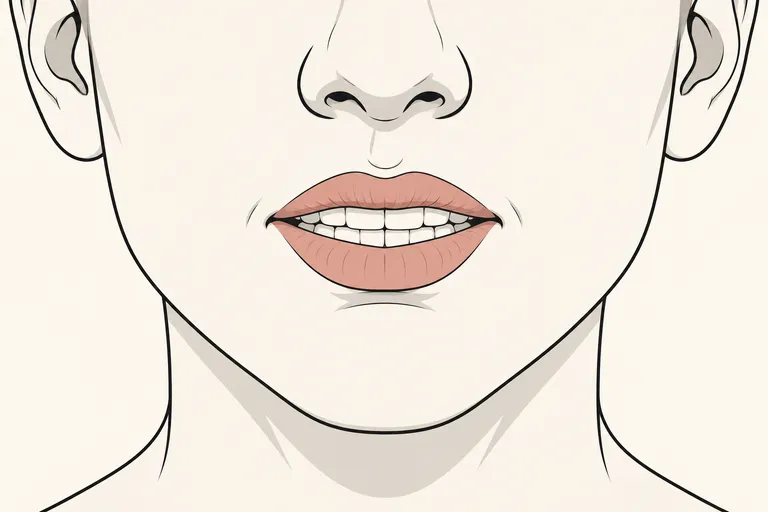
accepted
Tongue tip near the gum ridge forming a narrow hissing groove, identical to English 's'.
Plausible lips, teeth, and jaw; no visible tongue abnormality.
attempt 1 · 2026-10-03
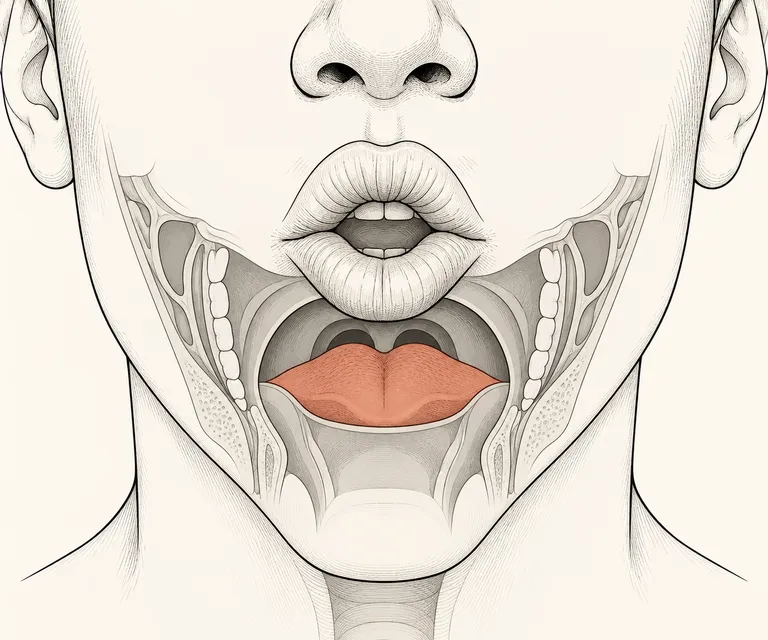
accepted
Tongue pulled back slightly from the sz position, lips rounded, producing a hushing sound like English 'sh'.
Frontal cutaway is unusual but shows one intact tongue without impossible deformation.
attempt 0 · 2026-10-03
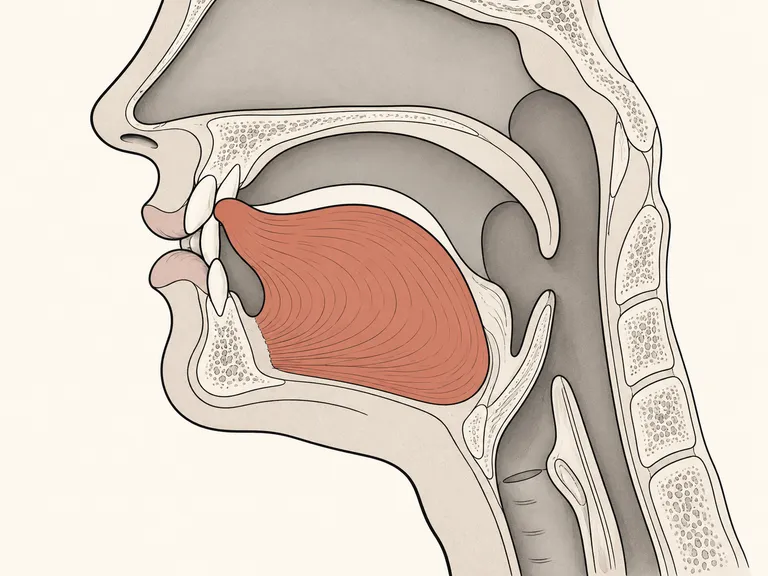
accepted
Tongue tip contacts further forward, closer to the upper teeth, than the English alveolar t.
Sagittal tongue shape and forward dental contact are anatomically plausible.
attempt 0 · 2026-10-03
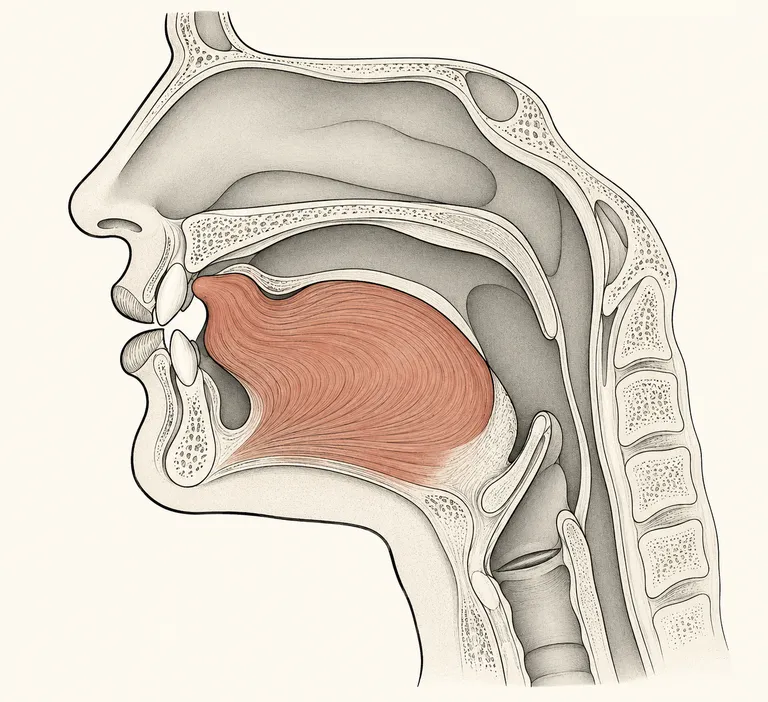
accepted
Tongue tip presses the gum ridge, then eases back slightly to release with a short 's'-like hiss, like the 'ts' in English 'cats'.
Sagittal anatomy is coherent; the tongue contacts the alveolar region without impossible curling.
attempt 0 · 2026-10-03
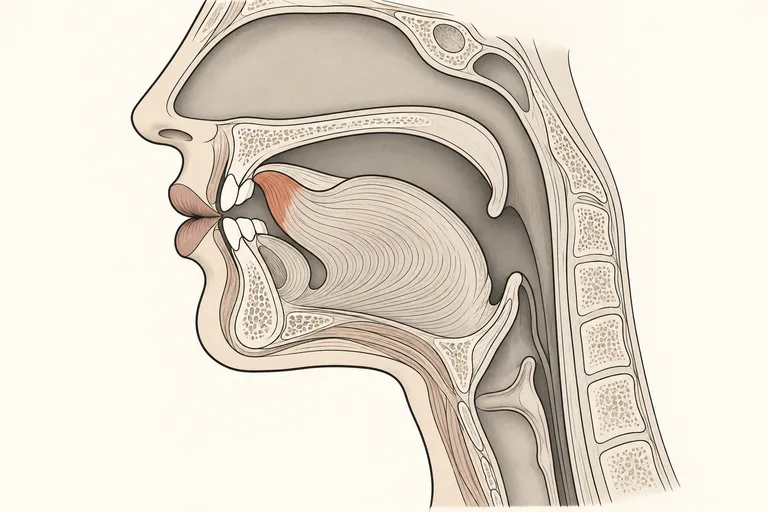
accepted
Tongue tip presses just behind the gum ridge, lips slightly rounded, releasing into a 'sh'-like hush, as in English 'church'.
Tongue, lips, teeth, and vocal tract form a visually plausible sagittal cutaway.
attempt 0 · 2026-10-03
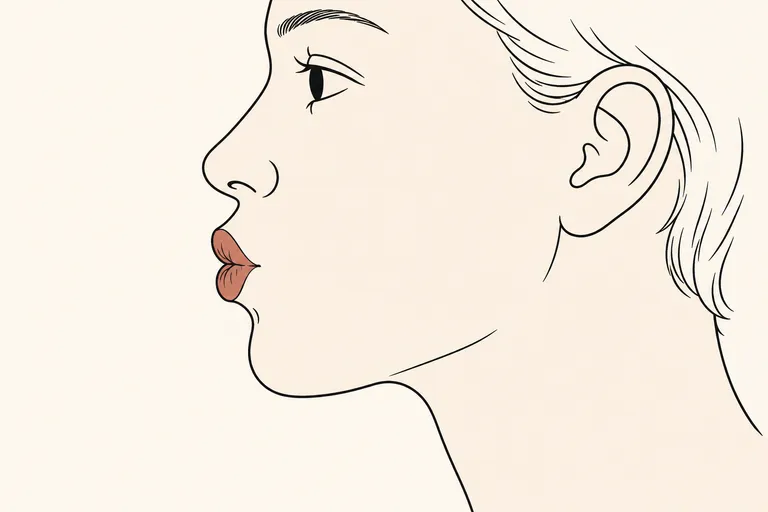
accepted
Lips tightly rounded and pushed forward, tongue high and back, held briefly.
Rounded, protruded lips and profile anatomy are plausible.
attempt 1 · 2026-10-03
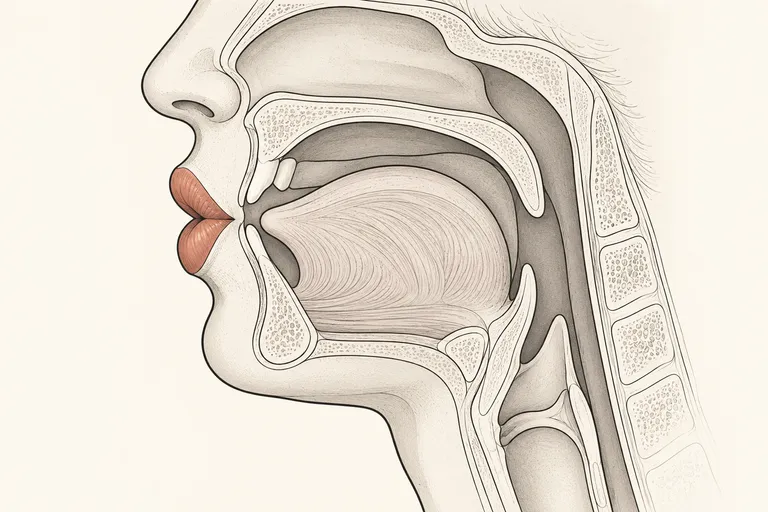
accepted
Same tight rounded shape as short u, but sustained for a clearly longer duration.
The tongue and surrounding oral structures are anatomically coherent without obvious deformation.
attempt 0 · 2026-10-03
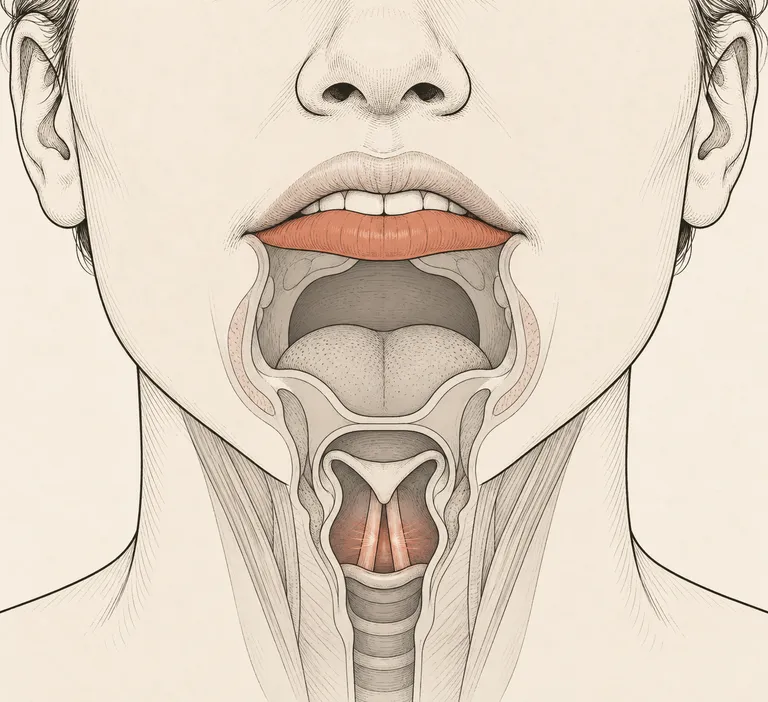
accepted
Lower lip touches upper teeth with voicing buzzing throughout.
Frontal cutaway is stylized but visually coherent, with plausible lips, tongue, and laryngeal structures.
attempt 0 · 2026-10-03
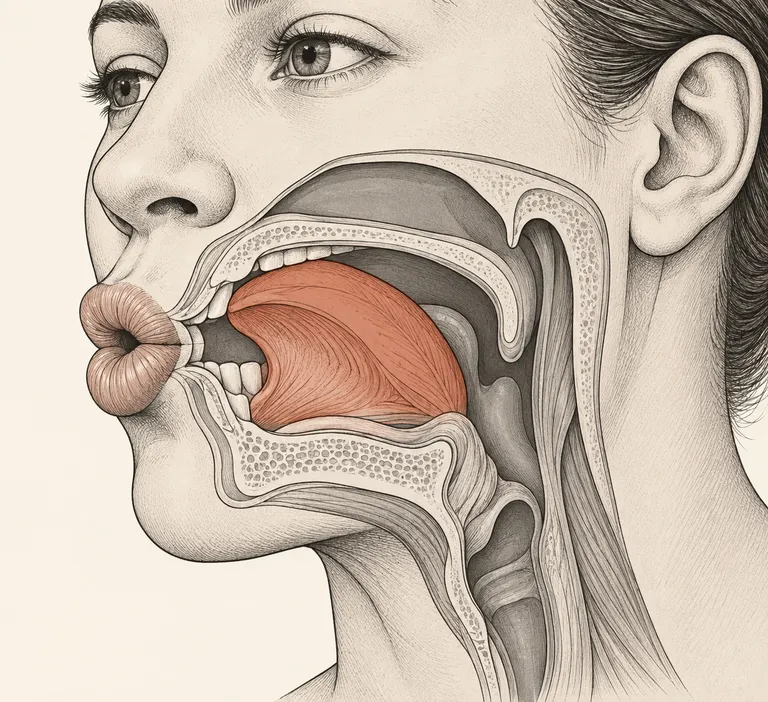
accepted
Lips tightly rounded and forward as for 'u', but the tongue stays high and front, in the position for 'i'.
The puckered lips and broad elevated tongue remain anatomically possible despite exaggeration.
attempt 0 · 2026-10-03
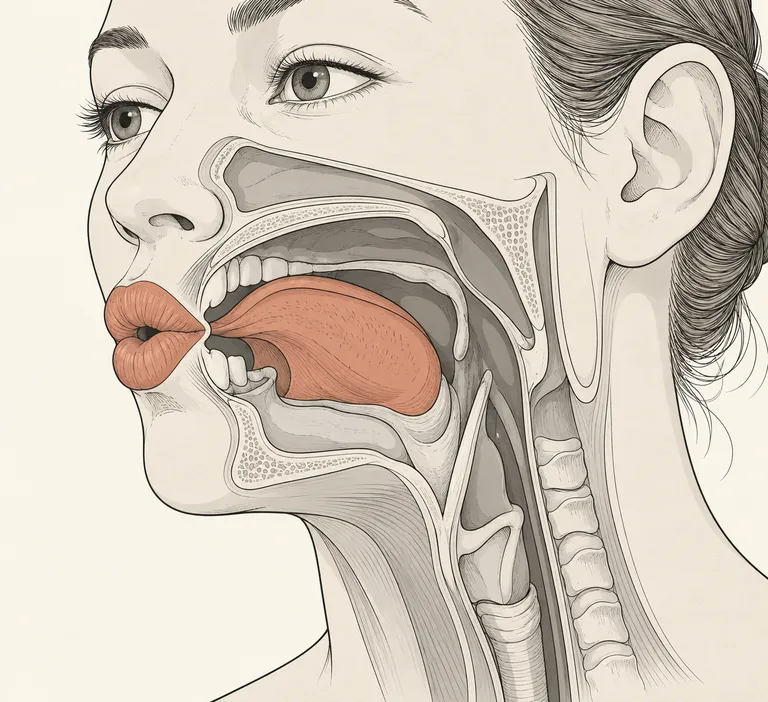
accepted
Same front-rounded lip and tongue shape as ü, held for a clearly longer duration.
The sagittal cutaway shows one coherent tongue and plausible rounded lips without impossible twisting.
attempt 0 · 2026-10-03
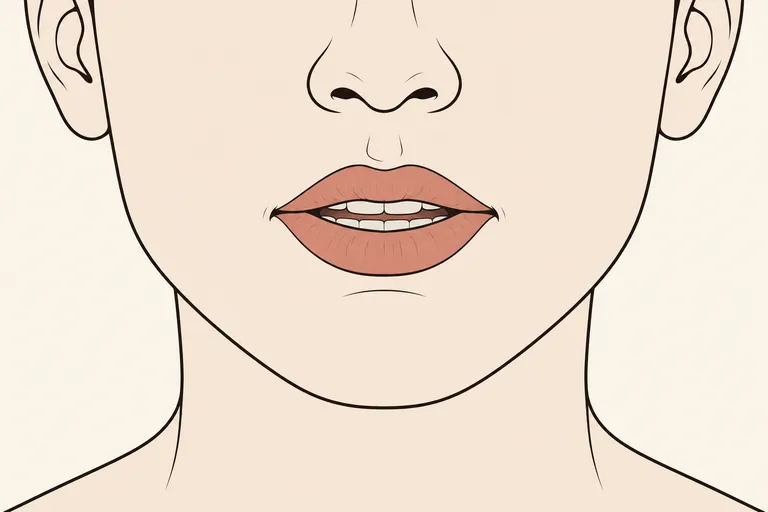
accepted
Same tongue shape as sz but voiced, producing a continuous buzz, identical to English 'z'.
Slightly parted lips and visible teeth are anatomically plausible.
attempt 1 · 2026-10-03
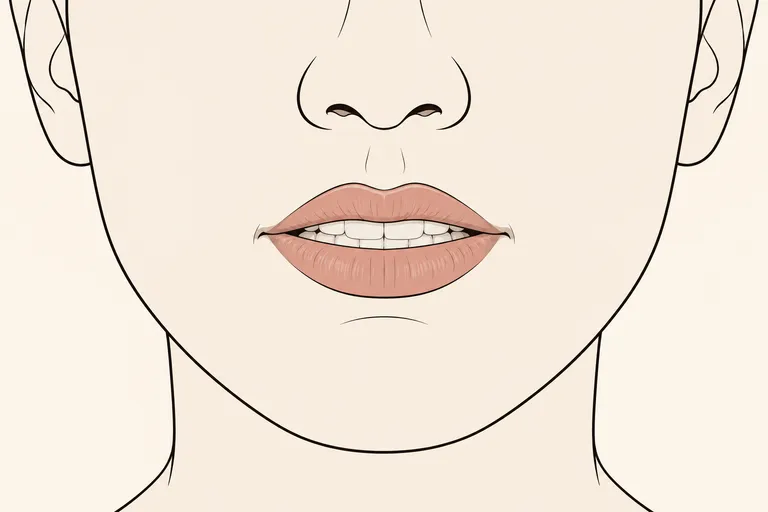
accepted
Same shape as Hungarian 's' but voiced, producing a buzzing sound like the 's' in English 'measure'.
Lips and teeth occupy plausible anatomical positions.
attempt 1 · 2026-10-03
Inventory pt-BR (55)
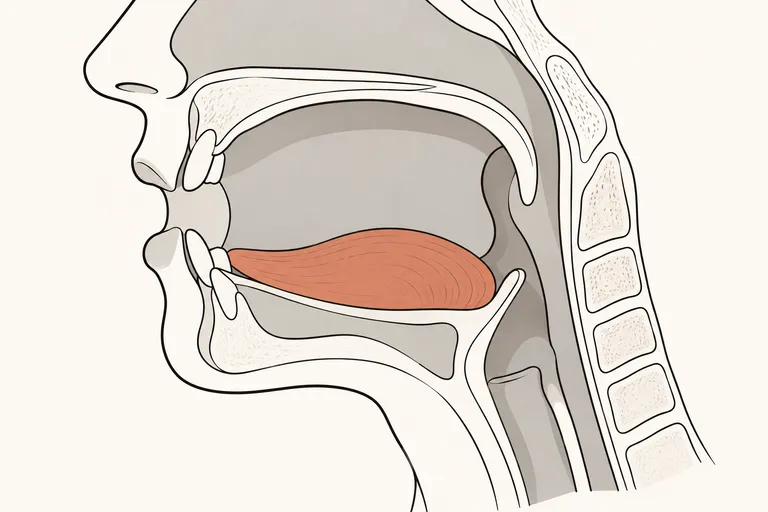
accepted
Jaw dropped low, tongue flat and low in the mouth, lips relaxed and neutral.
Single low, broad tongue and open jaw form a plausible sagittal mouth diagram.
attempt 0 · 2026-10-04
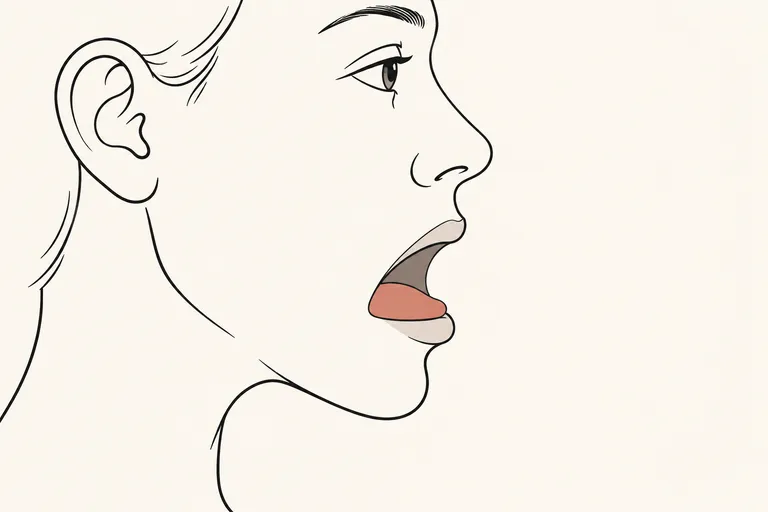
accepted
Jaw dropped, tongue low and central.
Open jaw and visible tongue have plausible shapes and proportions.
attempt 0 · 2026-10-04
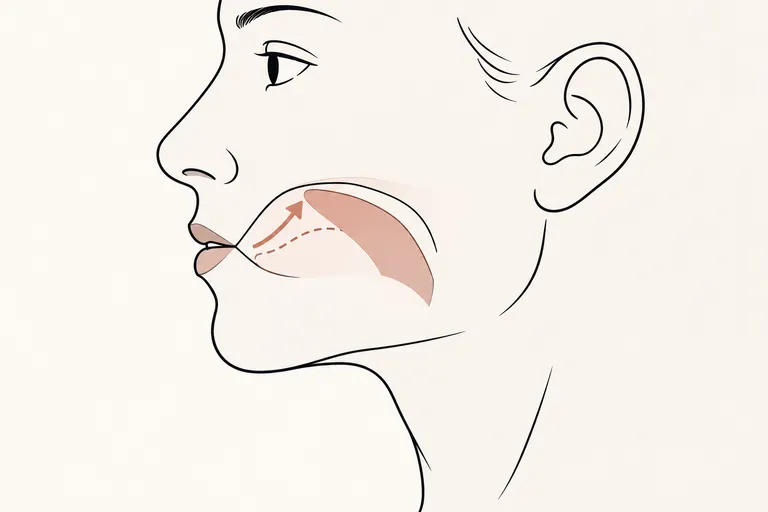
accepted
Jaw rises, tongue glides up and forward toward the palate.
Schematic tongue overlay and upward arrow plausibly depict the intended movement.
attempt 0 · 2026-10-04
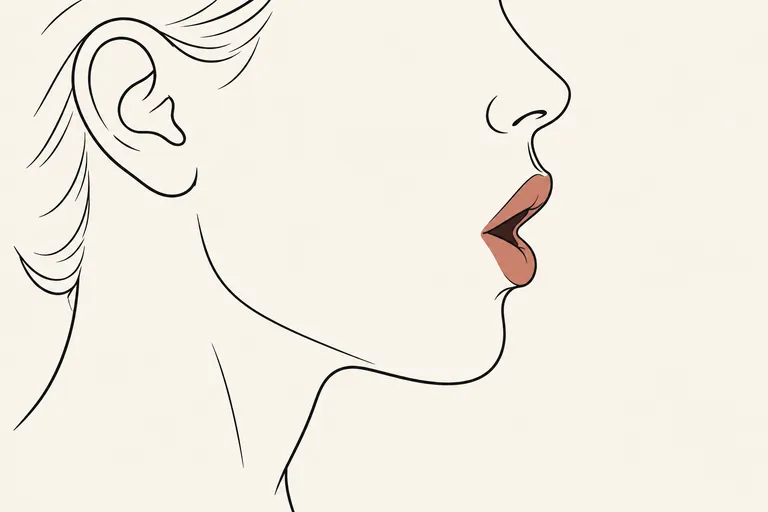
accepted
Jaw dropped, tongue low, lips neutral.
Profile, lips, and mouth opening are anatomically plausible.
attempt 0 · 2026-10-04
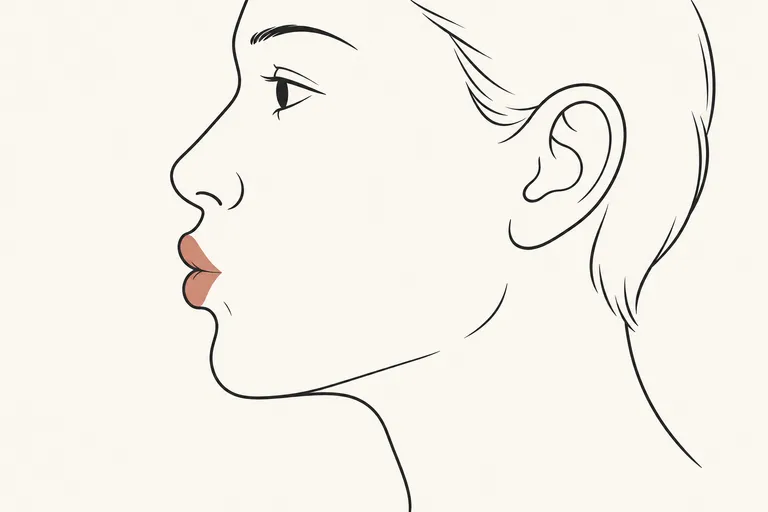
accepted
Lips round and tongue pulls back and up toward the velum.
Rounded lips and facial profile are anatomically plausible.
attempt 0 · 2026-10-04
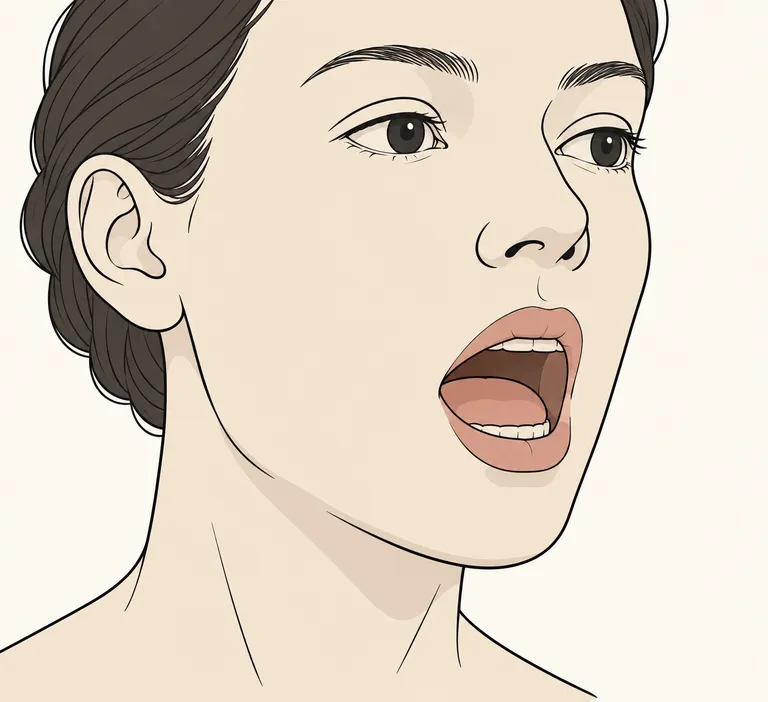
accepted
Velum raised, air escapes only through the mouth, jaw dropped low.
Open jaw, teeth, lips, and visible tongue appear anatomically plausible.
attempt 0 · 2026-10-04
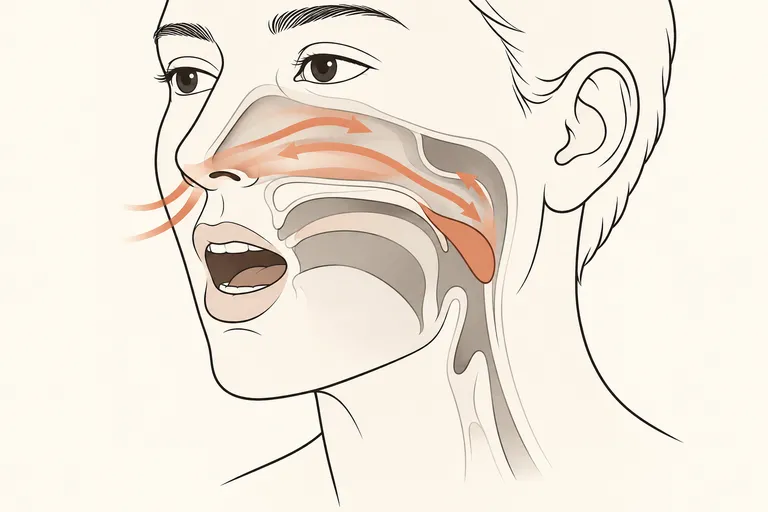
accepted
Same open jaw shape, but velum lowered so air resonates through the nose as well.
Schematic airway and lowered soft palate show no obvious anatomical impossibilities.
attempt 0 · 2026-10-04
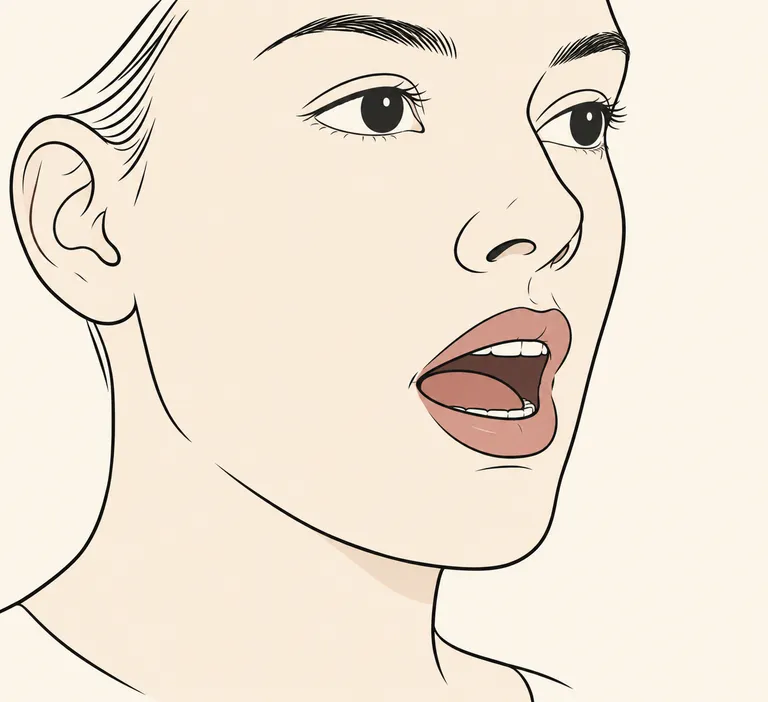
accepted
Jaw dropped, velum lowered for nasal airflow.
Face, open jaw, teeth, and visible tongue appear anatomically coherent.
attempt 1 · 2026-10-04
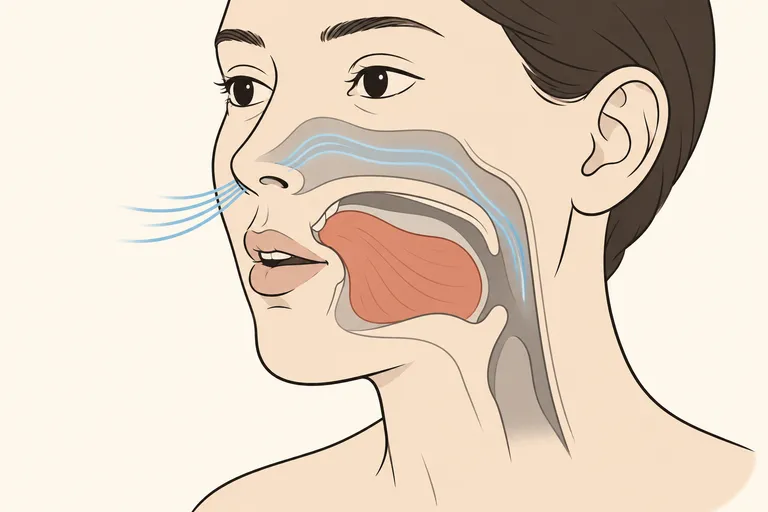
accepted
Tongue rises and moves forward, velum stays lowered throughout.
Raised tongue remains a plausible broad muscular structure inside the mouth.
attempt 0 · 2026-10-04
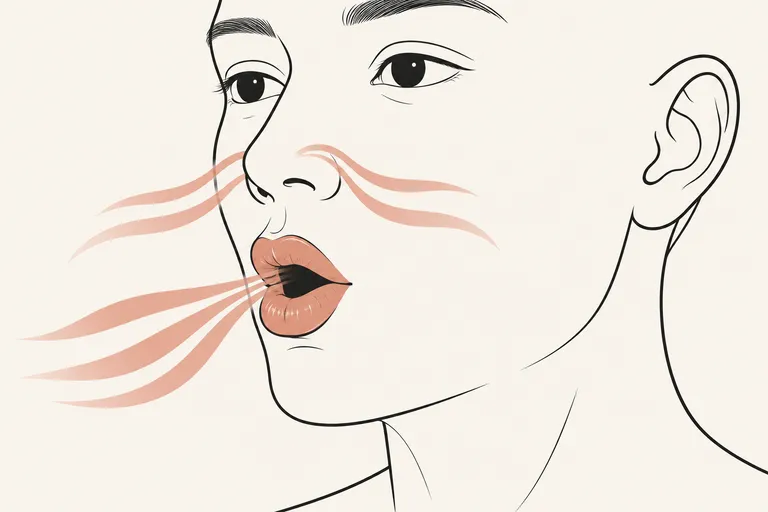
accepted
Jaw dropped, velum lowered, air flowing through nose and mouth.
Plausible facial anatomy and lip opening; airflow markings are schematic.
attempt 0 · 2026-10-04
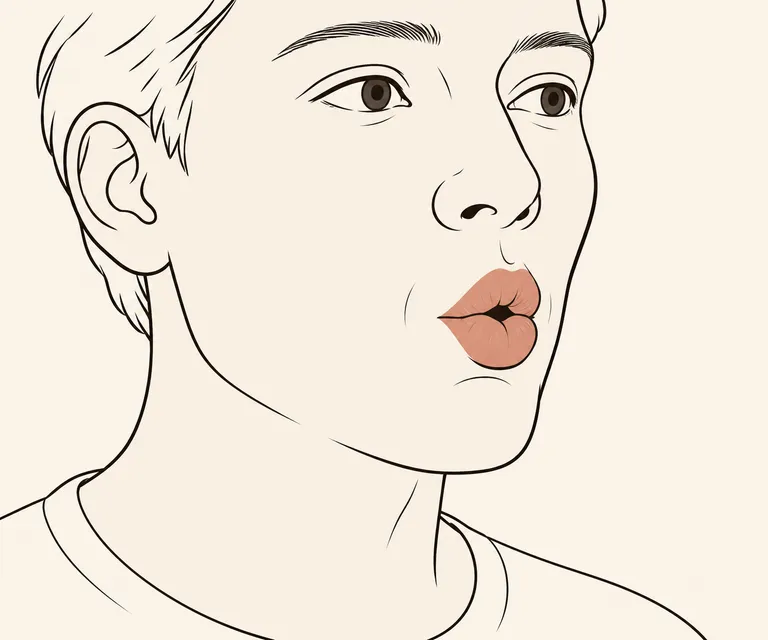
accepted
Lips round, tongue rises and retracts, velum stays lowered throughout.
Rounded lips and facial proportions are anatomically plausible.
attempt 0 · 2026-10-04
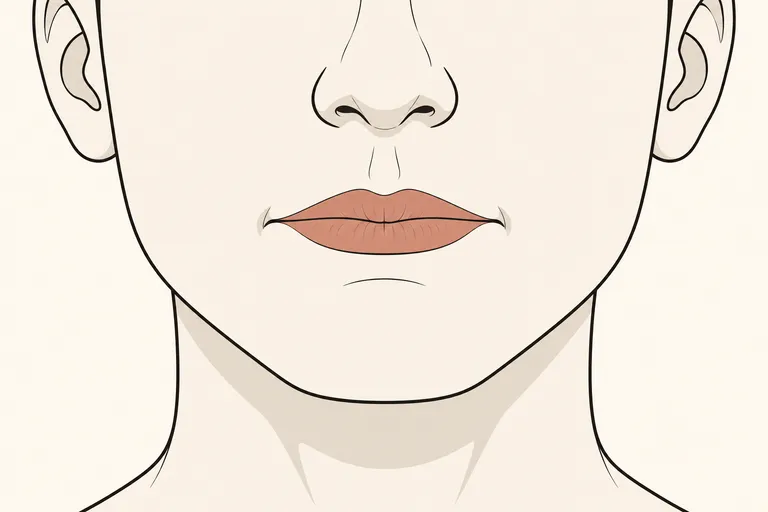
accepted
Lips pressed together with voicing (vocal cords vibrating) throughout the closure.
Closed lips and surrounding facial anatomy appear normal.
attempt 0 · 2026-10-04
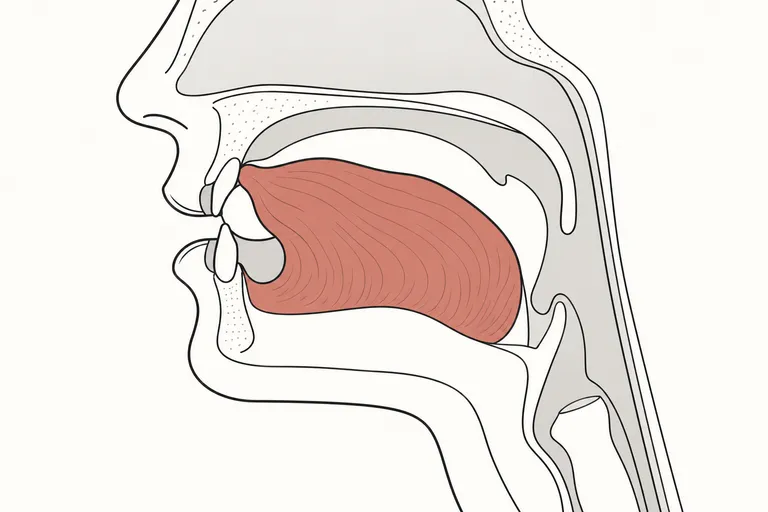
accepted
Tongue tip presses the alveolar ridge, releasing as a plain voiced 'd'.
Tongue has plausible bulk and raised anterior contact, without looping or an exaggerated tip.
attempt 0 · 2026-10-04
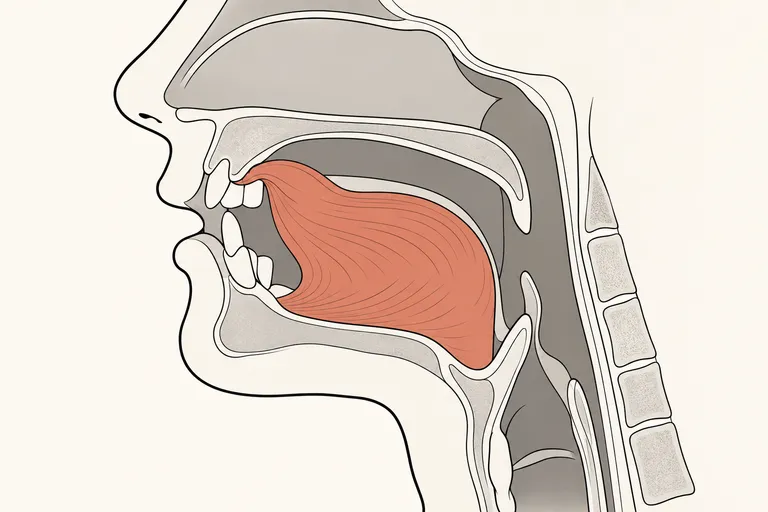
accepted
Tongue widens contact, releasing with a 'j'-like affricate (as in 'judge').
Raised tongue tip and broad tongue body are anatomically plausible, without looping or splitting.
attempt 1 · 2026-10-04
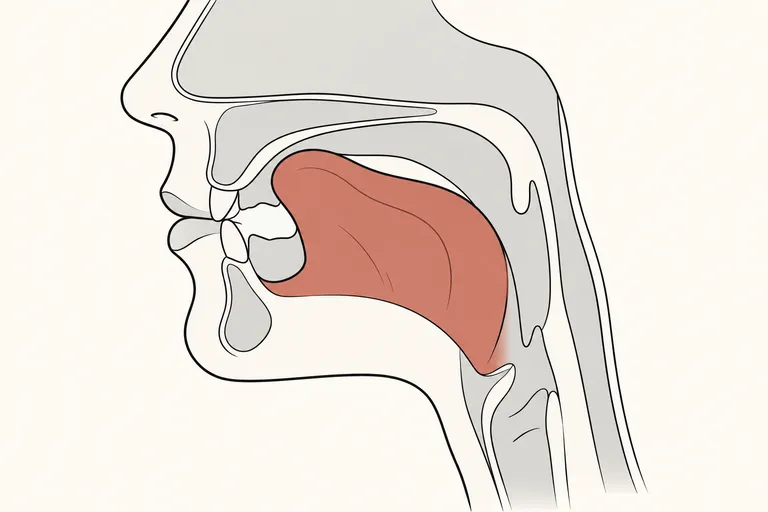
accepted
Tongue front and raised higher than for /ɛ/, jaw only slightly open, lips neutral.
Rounded, raised tongue front remains a plausible continuous tongue shape.
attempt 1 · 2026-10-04
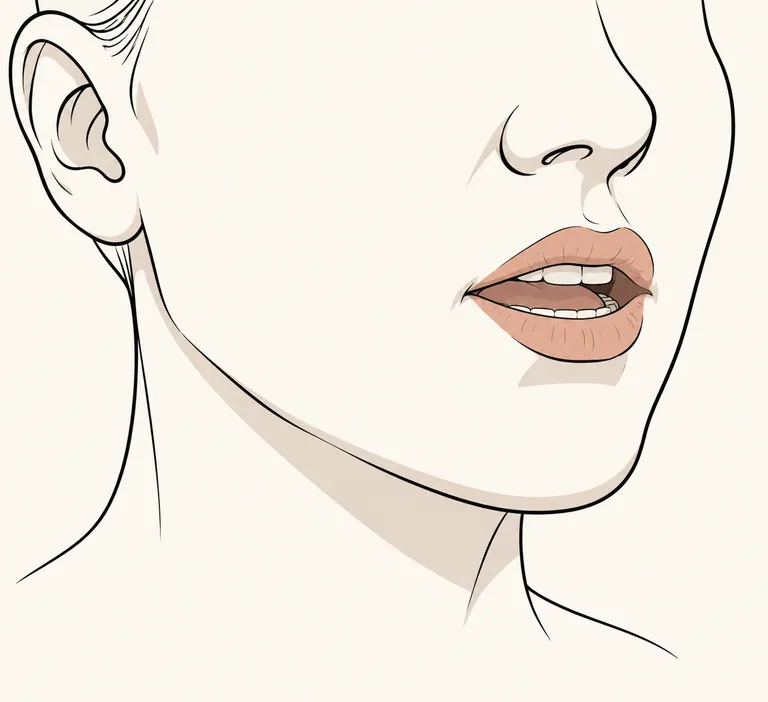
accepted
Velum raised, mouth-only airflow, tongue front and raised.
Lips, visible teeth, tongue, and jaw appear anatomically plausible.
attempt 0 · 2026-10-04
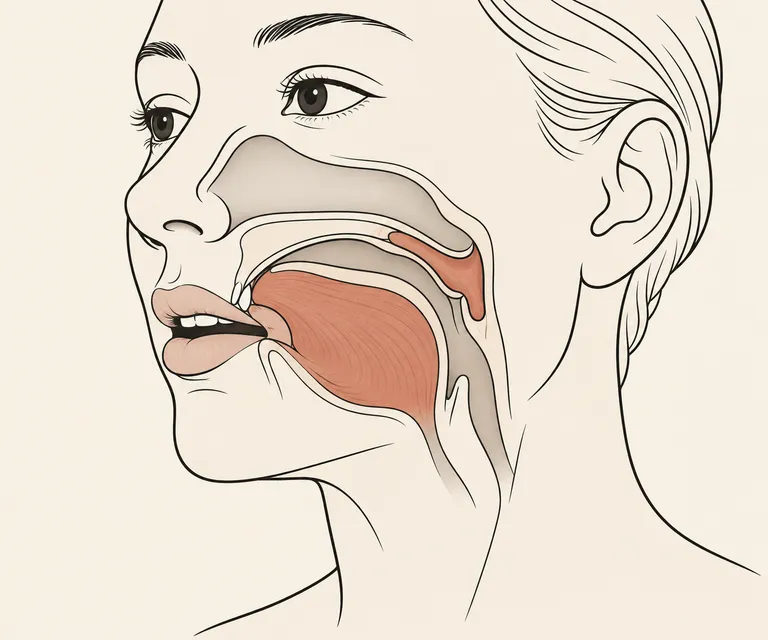
accepted
Same tongue position, velum lowered, nasal resonance added.
Stylized cutaway shows a single broad tongue and coherent mouth and throat structures.
attempt 0 · 2026-10-04
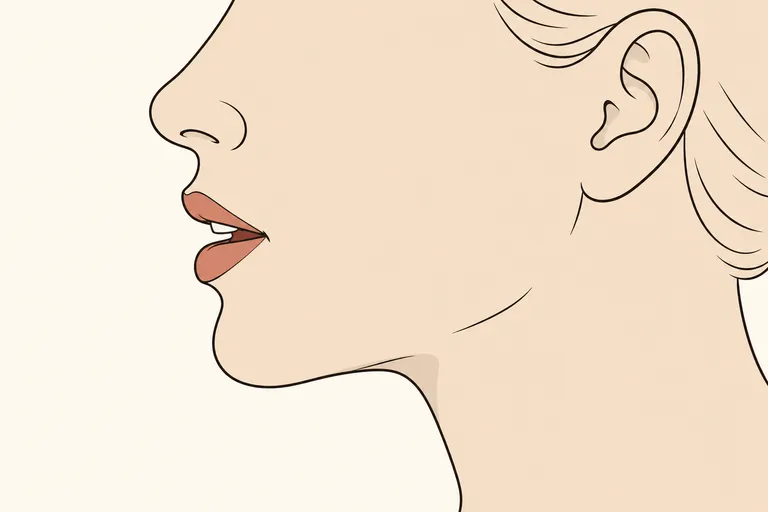
accepted
Tongue front, close-mid, jaw slightly open.
Plausible facial profile, lips, teeth, and jaw; tongue not visible.
attempt 0 · 2026-10-04
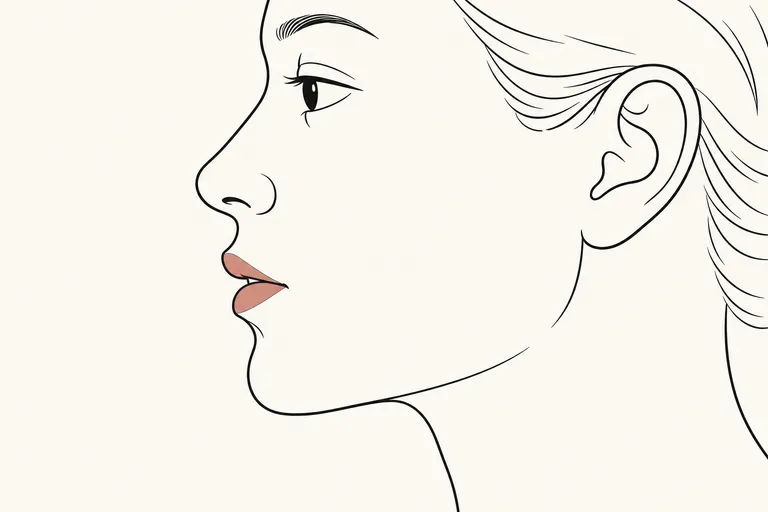
accepted
Tongue rises higher and further forward toward the palate.
Anatomically plausible stylized profile with slightly parted lips.
attempt 0 · 2026-10-04
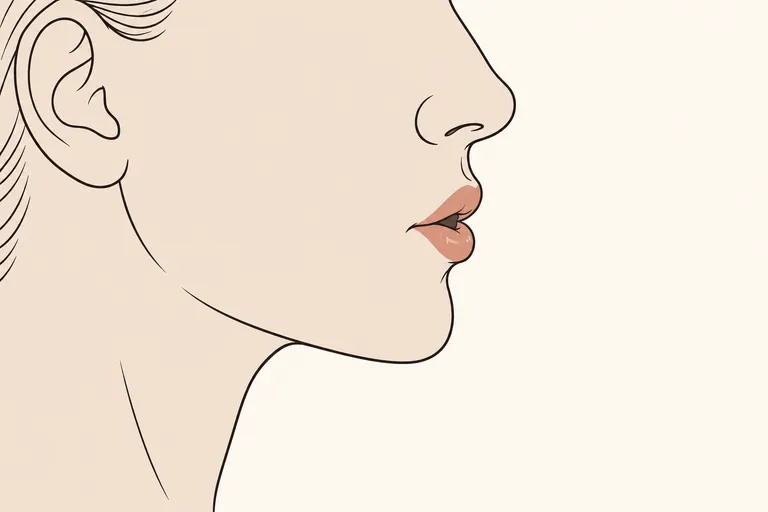
accepted
Tongue front, close-mid, lips neutral.
Rounded lips and facial anatomy are physically plausible; tongue not visible.
attempt 0 · 2026-10-04
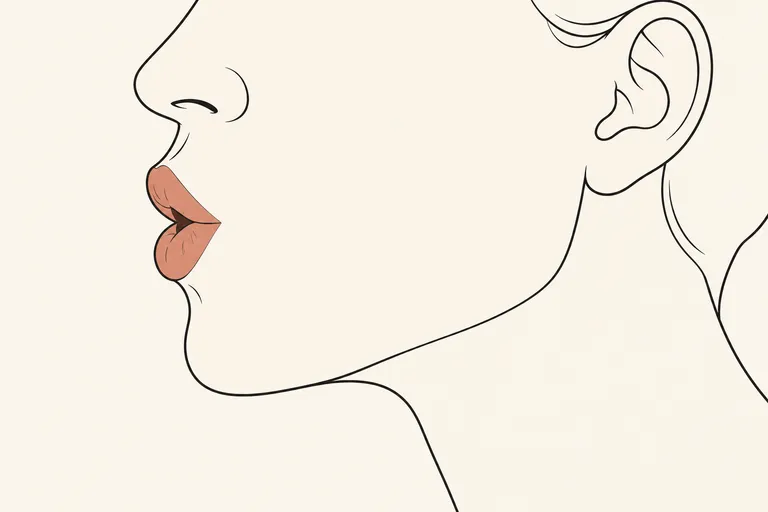
accepted
Lips round, tongue pulls back and rises toward the velum.
Pursed lips and jaw remain anatomically plausible.
attempt 0 · 2026-10-04
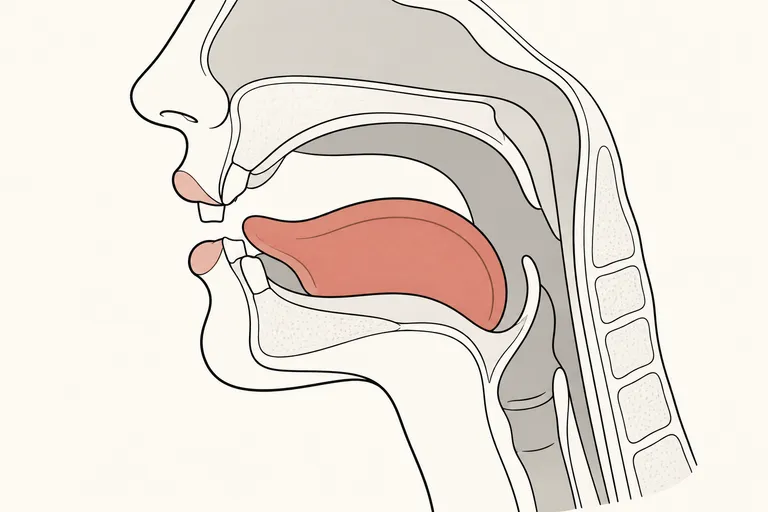
accepted
Tongue front and fairly low, jaw moderately open, lips relaxed.
Tongue remains broad and continuous, with plausible tip placement inside the mouth.
attempt 0 · 2026-10-04
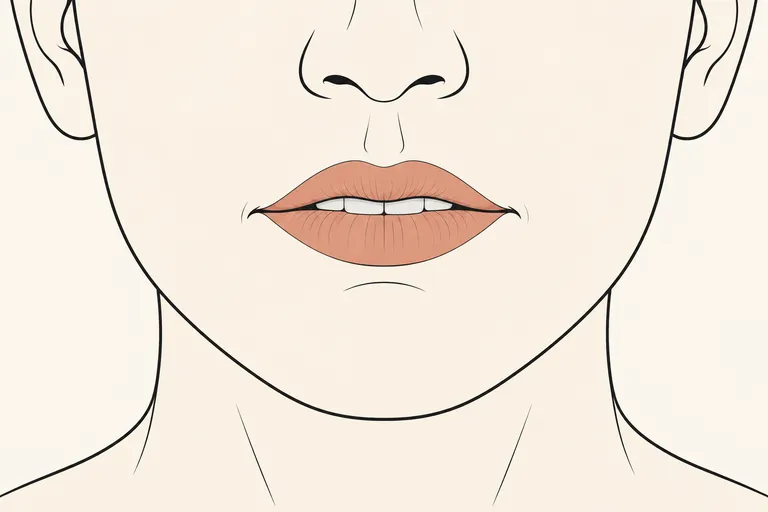
accepted
Lower lip lightly touching the upper front teeth, air forced through the narrow gap.
Lips, visible teeth, and jaw occupy plausible anatomical positions.
attempt 0 · 2026-10-04
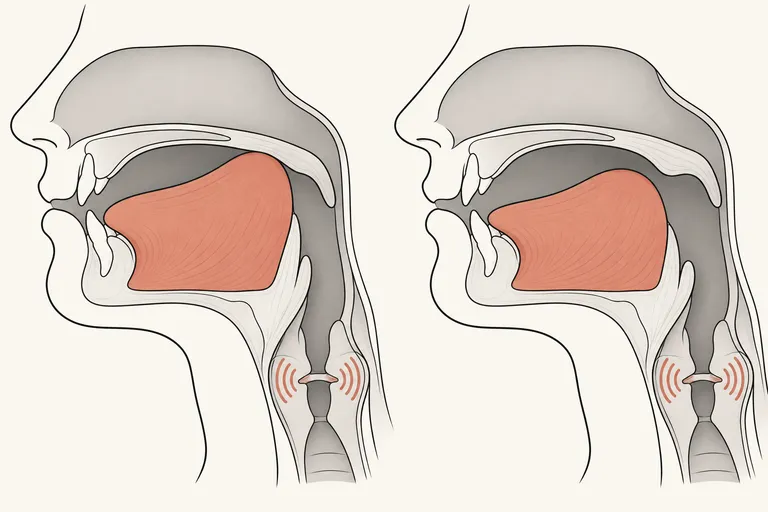
accepted
Back of the tongue against the soft palate with voicing throughout the hold, then released.
Both cross-sections show single, broad tongues with plausible contours and vocal tract placement.
attempt 0 · 2026-10-04
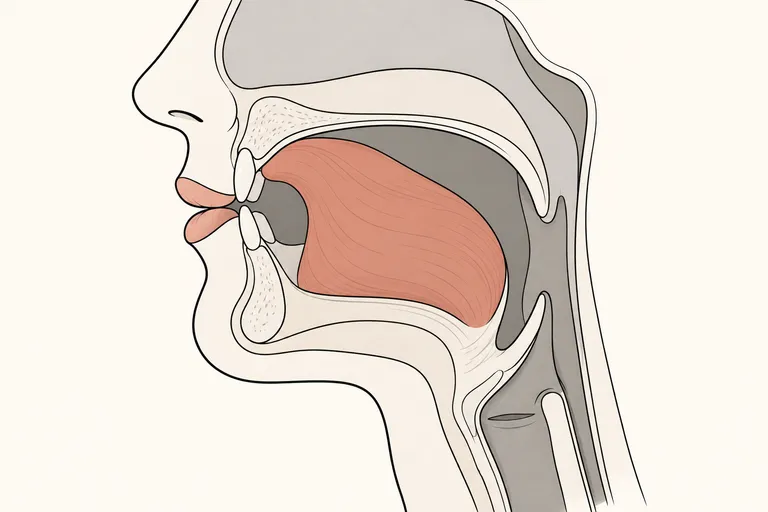
accepted
Tongue arched high and forward near the palate, jaw nearly closed, lips slightly spread.
High tongue arch, teeth, lips, and jaw have plausible anatomical relationships.
attempt 1 · 2026-10-04
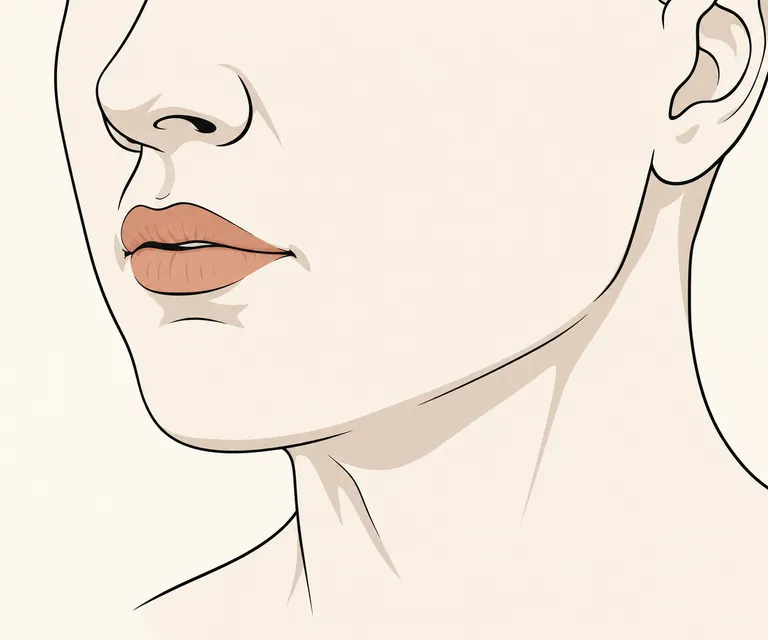
accepted
Tongue high and front, mouth-only airflow, jaw nearly closed.
Lips, jaw, and visible facial anatomy are plausible.
attempt 0 · 2026-10-04
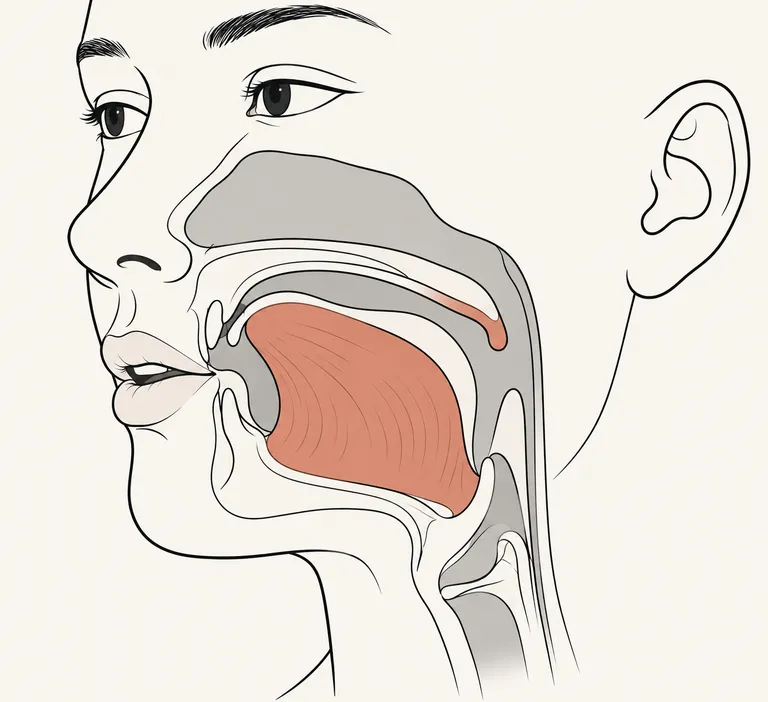
accepted
Same tongue shape, velum lowered to allow nasal resonance.
Tongue forms a plausible continuous muscular mass within the cutaway.
attempt 0 · 2026-10-04
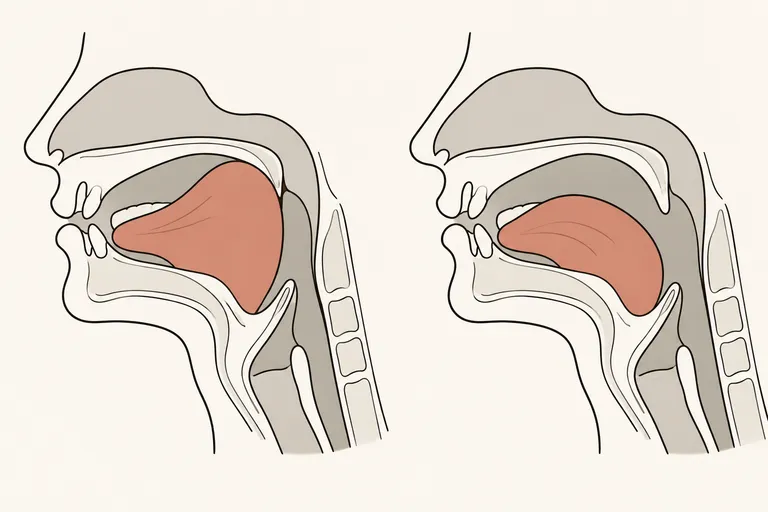
accepted
Back of the tongue pressed against the soft palate, blocking airflow, then released.
Both schematic tongues have plausible continuous contours without exaggerated curling or splitting.
attempt 0 · 2026-10-04
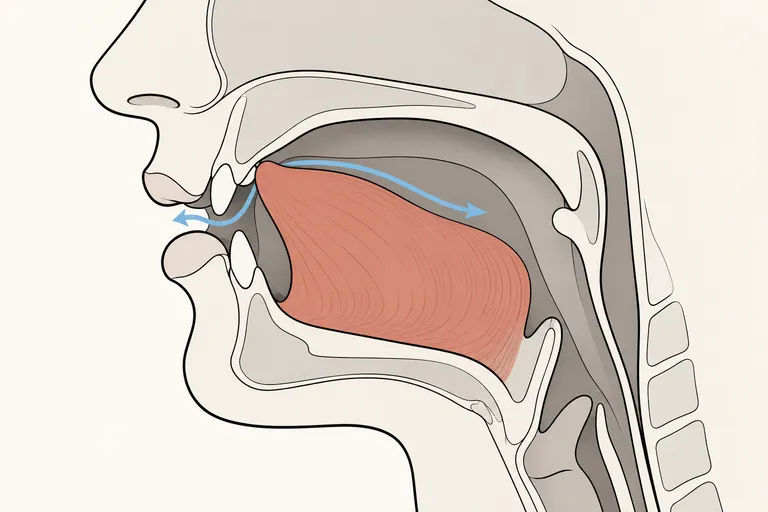
accepted
Tongue tip touches the alveolar ridge, air escapes around the sides of the tongue.
Single broad tongue with plausible raised tip; cutaway anatomy is visually coherent.
attempt 0 · 2026-10-04
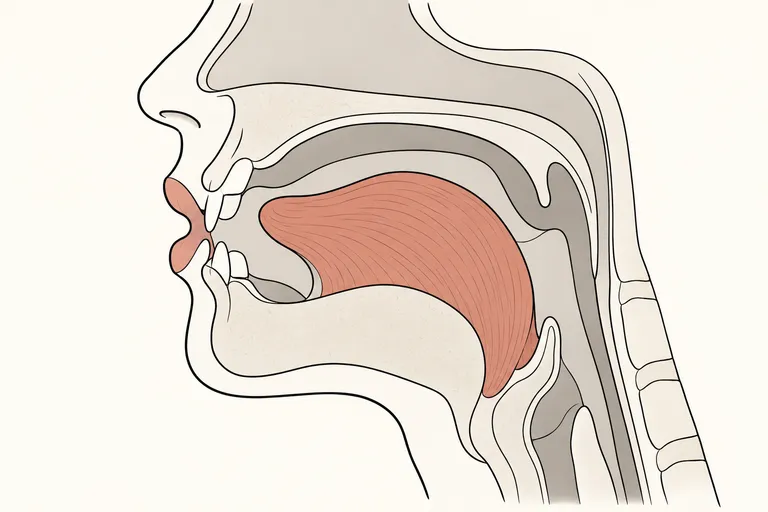
accepted
Tongue tip lifts away entirely; the sound becomes a rounded 'w'-like glide instead.
Tongue remains inside the mouth with a plausible rounded body and free tip.
attempt 0 · 2026-10-04
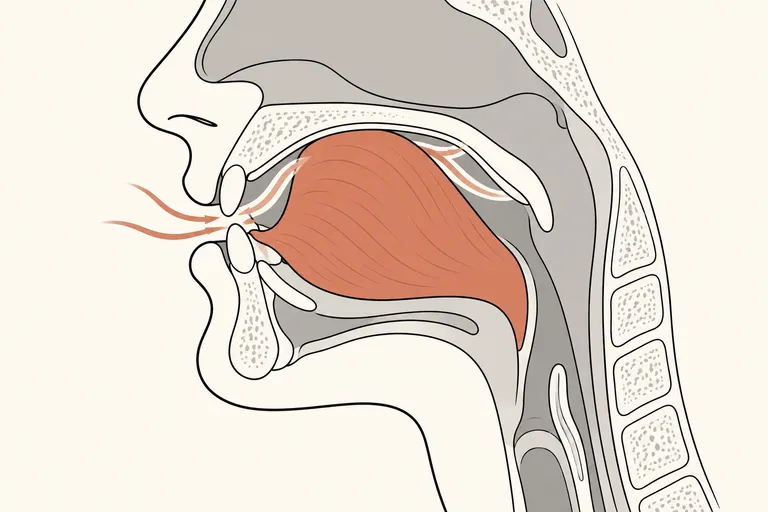
accepted
Tongue body pressed broadly against the hard palate (tip stays low), air escaping laterally around the sides.
Broad tongue contacts the palate with a low tip; airflow markings are acceptable schematic elements.
attempt 0 · 2026-10-04
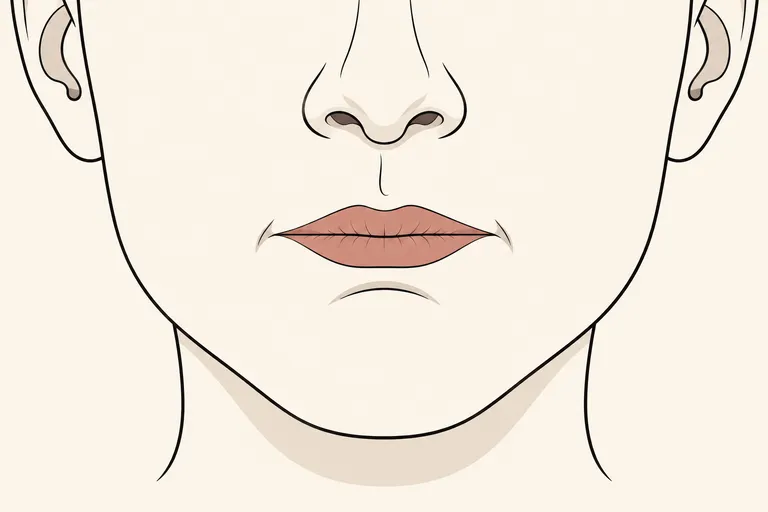
accepted
Lips pressed together, velum lowered so air resonates through the nose.
Closed lips and facial proportions are anatomically plausible.
attempt 0 · 2026-10-04
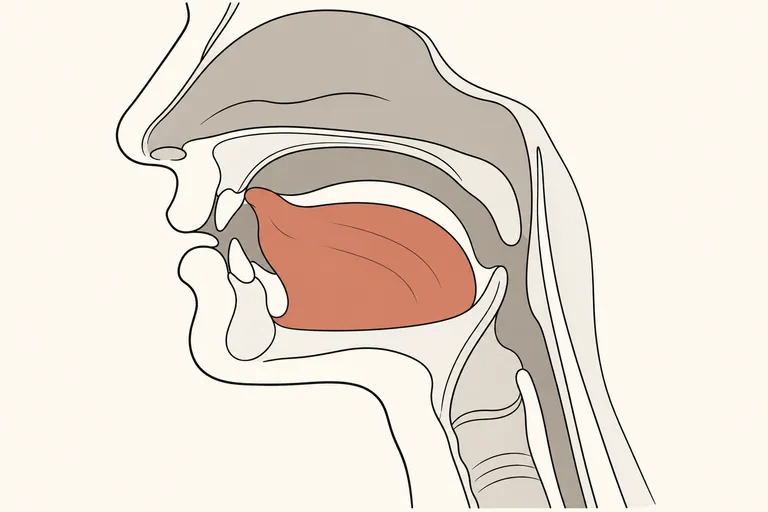
accepted
Tongue tip against the alveolar ridge, velum lowered so air escapes through the nose.
Tongue tip rises plausibly toward the alveolar ridge without curling or distortion.
attempt 0 · 2026-10-04
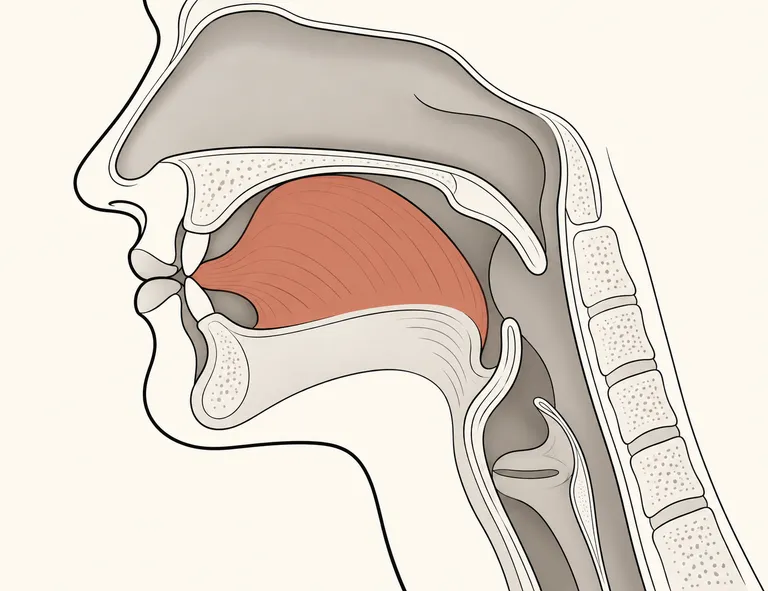
accepted
Tongue body pressed broadly against the hard palate (not just the tip), velum lowered for nasal airflow.
Broad tongue body rises against the palate without twisting, splitting, or looping.
attempt 0 · 2026-10-04
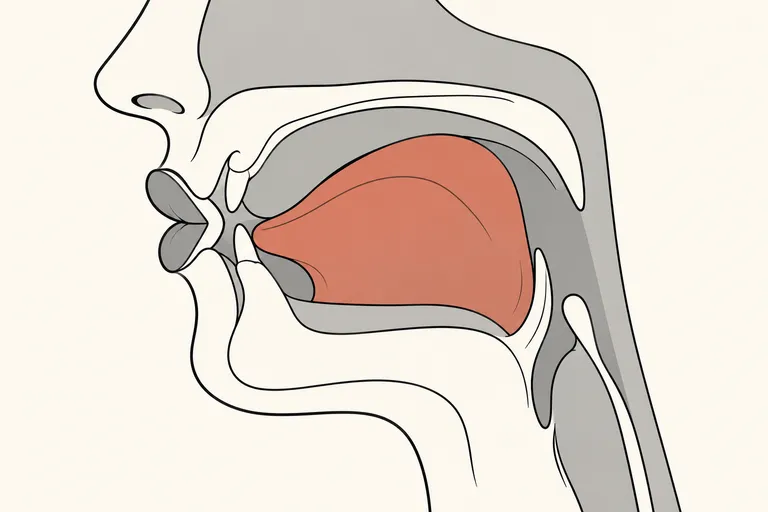
accepted
Tongue back and raised higher than for /ɔ/, lips firmly rounded, jaw only slightly open.
Raised tongue body and rounded lips are plausible, with no abnormal tongue shape.
attempt 0 · 2026-10-04
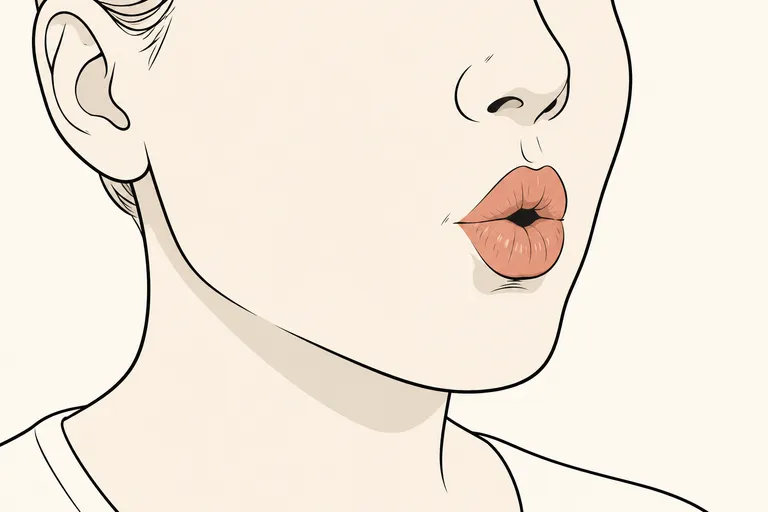
accepted
Lips rounded, velum raised, mouth-only airflow.
Rounded lips and surrounding facial anatomy are coherent and plausible.
attempt 0 · 2026-10-04
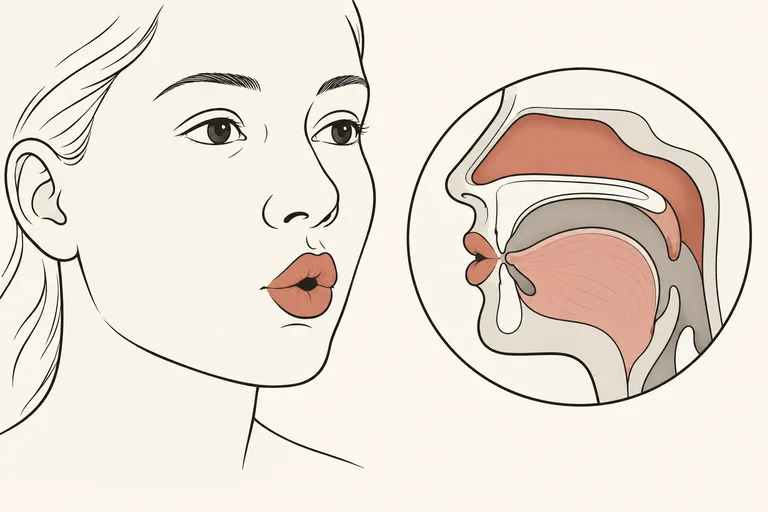
accepted
Same rounded lip shape, velum lowered for nasal resonance.
Face and separate cutaway are coherent, with a single plausible tongue and rounded lips.
attempt 0 · 2026-10-04
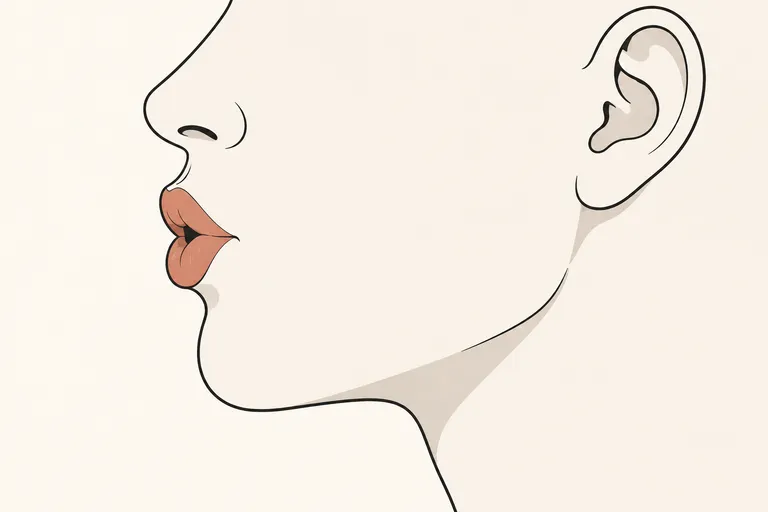
accepted
Lips rounded, tongue back and close-mid.
Rounded, slightly parted lips and profile anatomy appear plausible.
attempt 0 · 2026-10-04
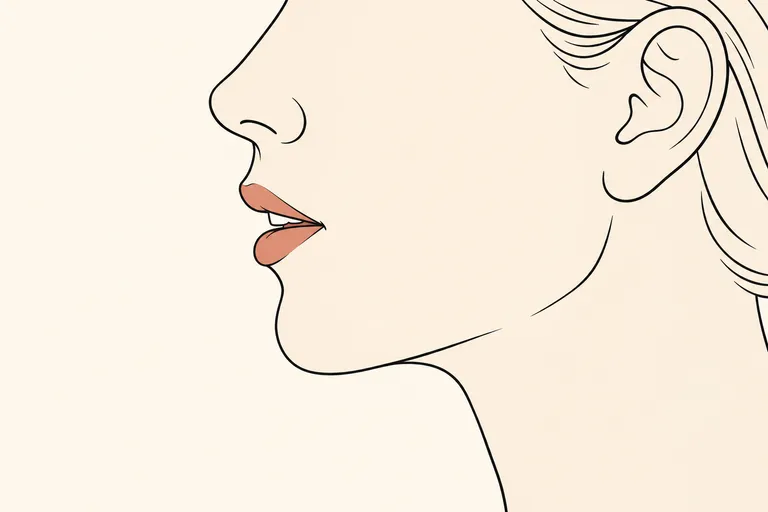
accepted
Tongue advances and rises, lips unround toward a spread shape.
Parted lips, visible teeth, and jaw have plausible placement and proportions.
attempt 0 · 2026-10-04
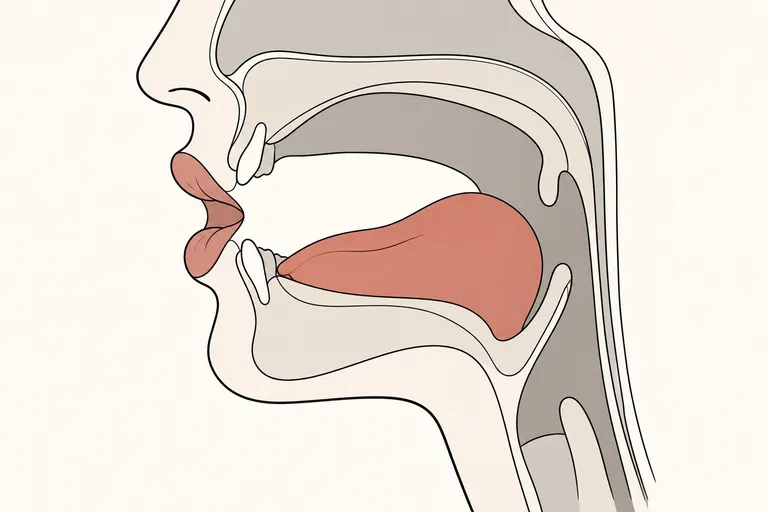
accepted
Tongue pulled back and low, lips moderately rounded, jaw moderately open.
Single broad tongue with plausible low placement and natural contours.
attempt 0 · 2026-10-04
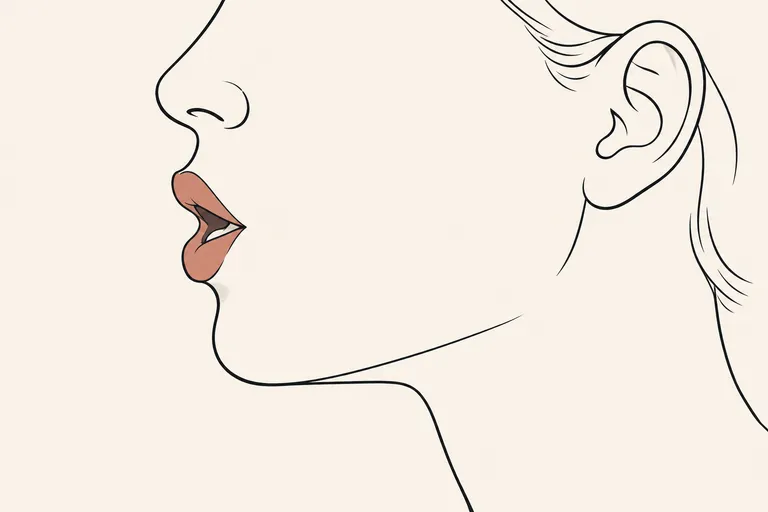
accepted
Lips rounded, tongue back and low-mid, jaw moderately open.
Profile, lips, and jaw opening appear anatomically plausible.
attempt 0 · 2026-10-04
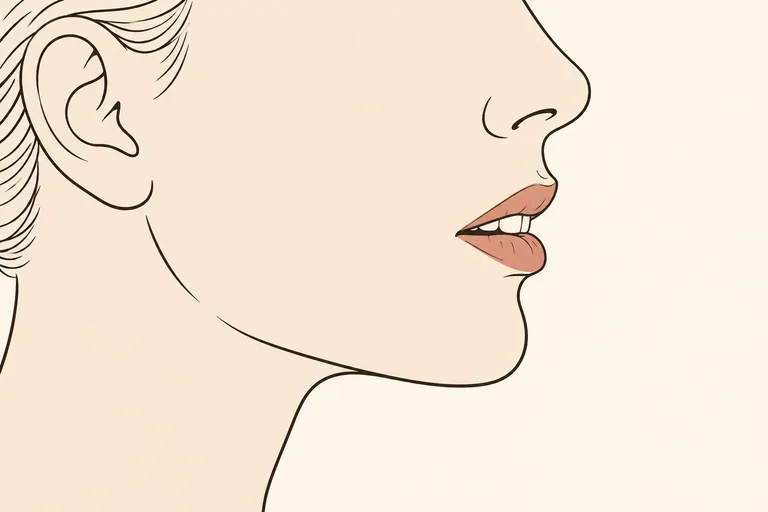
accepted
Tongue moves forward and up, lips unround toward a spread shape.
Lips, visible teeth, and jaw have plausible shapes and placement.
attempt 0 · 2026-10-04
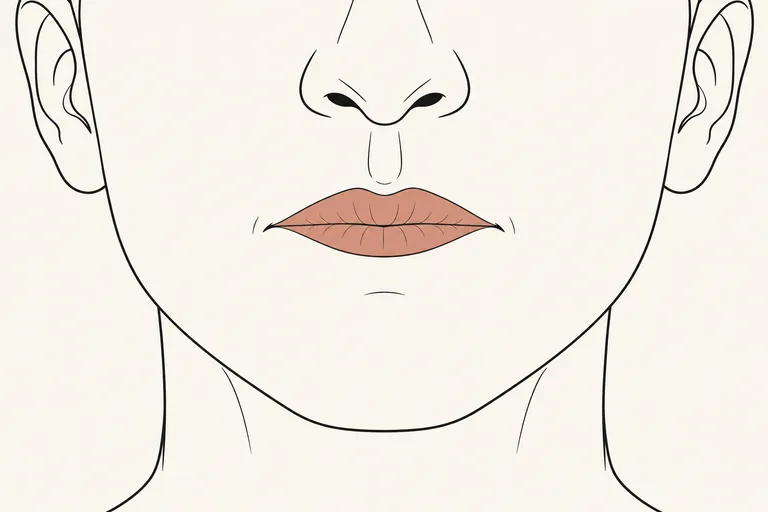
accepted
Lips pressed together, blocking all airflow.
Pressed lips and surrounding facial anatomy are coherent and plausible.
attempt 0 · 2026-10-04
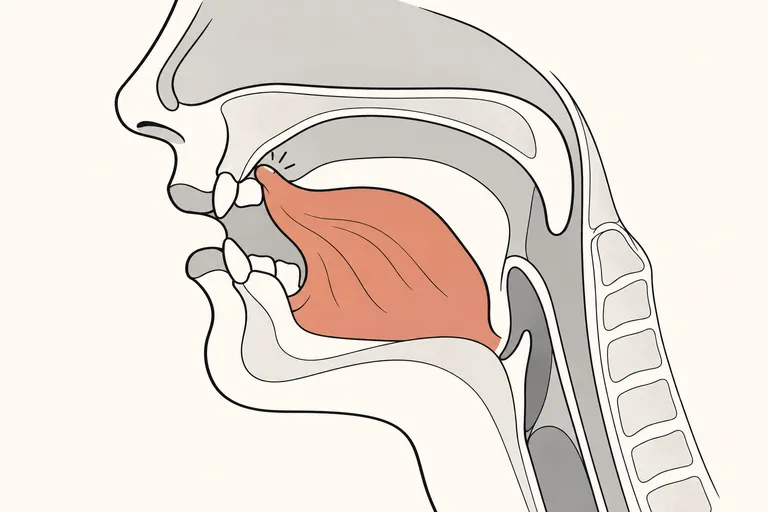
accepted
Tongue tip flicks quickly against the alveolar ridge once and releases immediately.
Tongue tip rises toward the alveolar ridge without excessive curling or an unnatural bulb.
attempt 0 · 2026-10-04
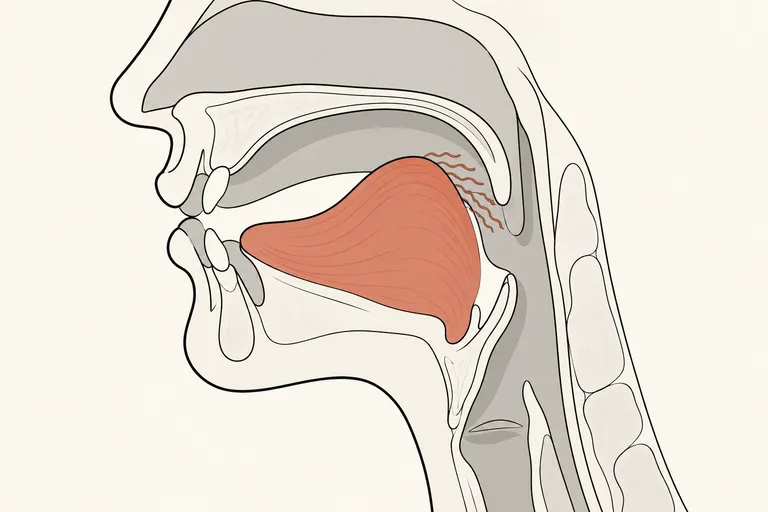
accepted
Back of the tongue raised toward the uvula or velum, producing a raspy, often voiceless friction sound, similar to a light throat-clearing.
Single broad tongue with plausibly raised dorsum; surrounding anatomy is visually coherent.
attempt 0 · 2026-10-04
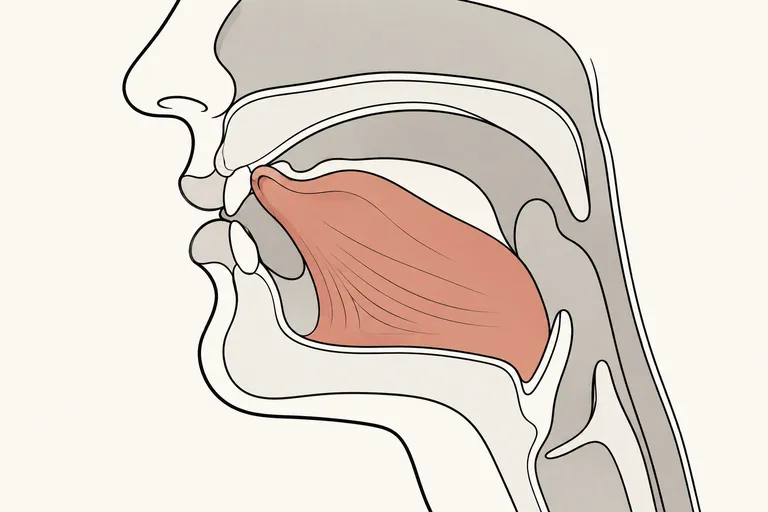
accepted
Tongue tip near the alveolar ridge, forming a narrow groove that channels a hissing airstream.
Single broad tongue with a plausible raised tip; surrounding anatomy is coherent.
attempt 0 · 2026-10-04
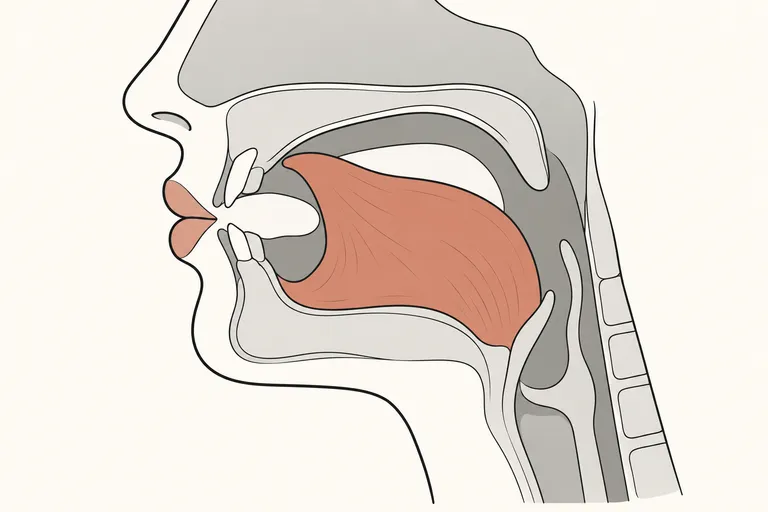
accepted
Tongue blade raised toward the back of the alveolar ridge, lips slightly rounded, air forced through a broader channel than /s/.
Raised tongue blade and rounded lips are plausible; tongue shows no abnormal looping or splitting.
attempt 1 · 2026-10-04
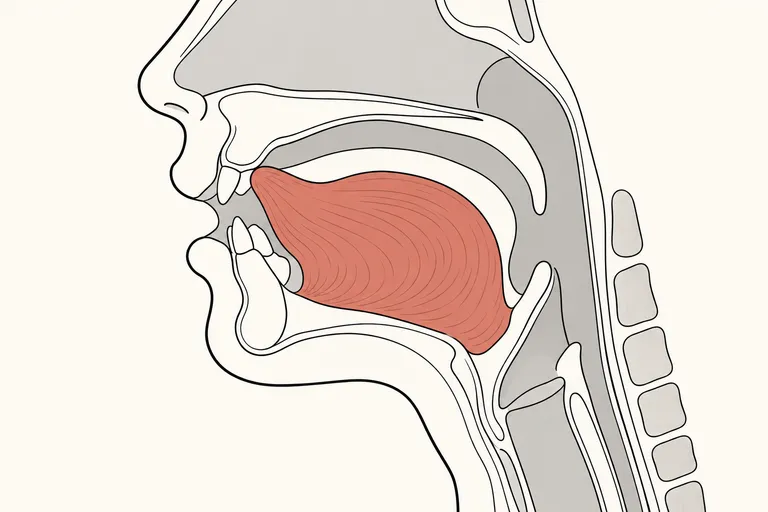
accepted
Tongue tip presses the alveolar ridge, released cleanly as a plain 't'.
Tongue contacts the alveolar region without excessive curling; vocal tract anatomy is plausible.
attempt 0 · 2026-10-04
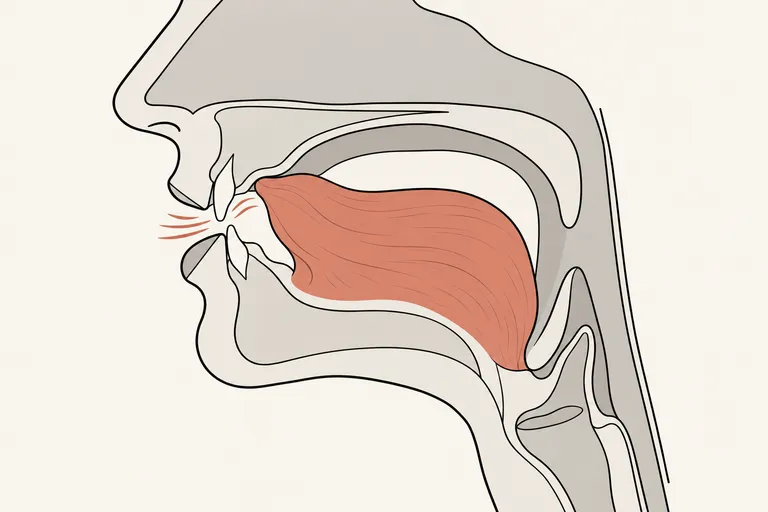
accepted
Tongue tip and blade widen contact, releasing with a soft 'ch'-like affricate.
Tongue tip rises naturally behind the upper teeth, with no excessive curling or elongation.
attempt 1 · 2026-10-04
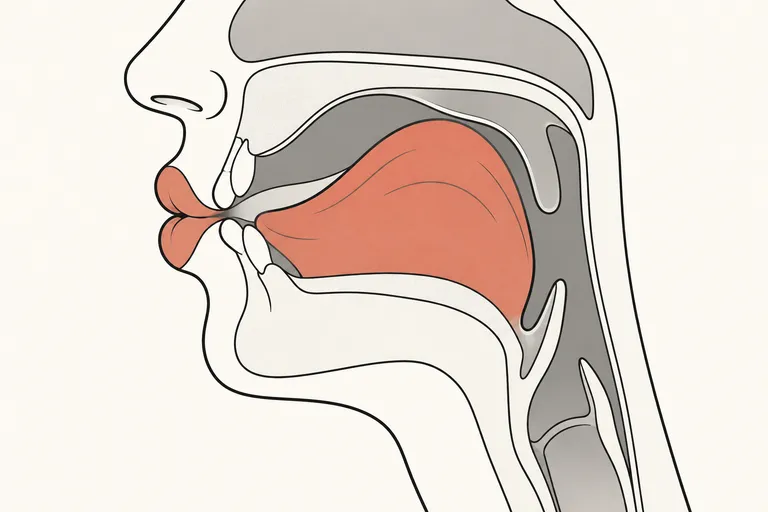
accepted
Tongue high and back, lips strongly rounded and pushed forward, jaw almost closed.
High posterior tongue and protruded rounded lips are anatomically plausible.
attempt 0 · 2026-10-04
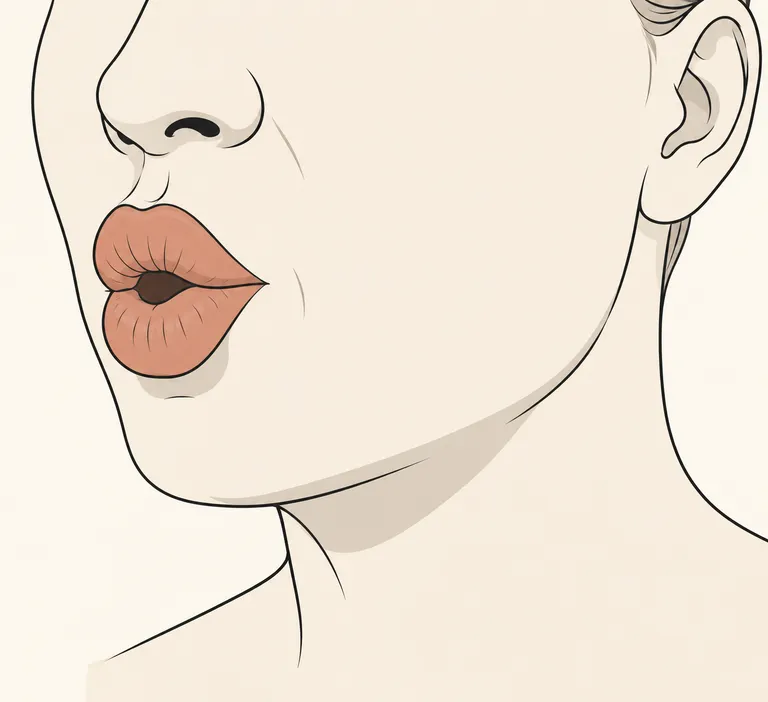
accepted
Lips strongly rounded and protruded, mouth-only airflow.
Rounded, protruded lips are anatomically plausible.
attempt 0 · 2026-10-04
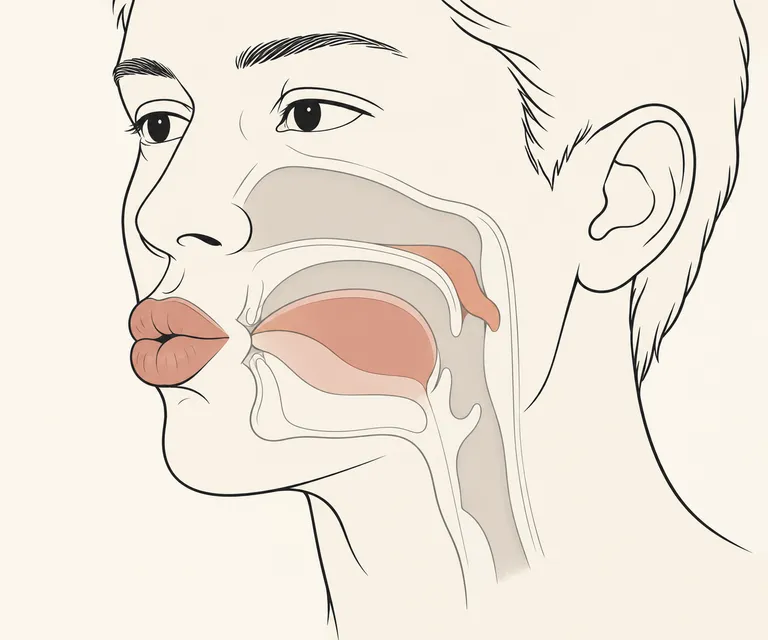
accepted
Same lip protrusion, velum lowered for nasal resonance.
Tongue contour and rounded lips are plausible within the schematic cutaway.
attempt 0 · 2026-10-04
accepted
Lower lip against upper front teeth, with vocal cord vibration added to the airflow.
Visible upper teeth and lower lip have plausible positions and proportions.
attempt 0 · 2026-10-04
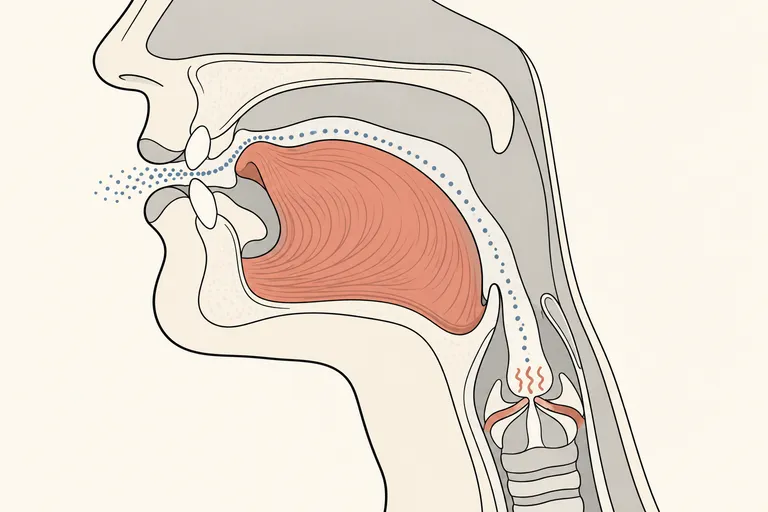
accepted
Tongue tip near the alveolar ridge with vocal cord vibration added to the hissing airstream.
Tongue remains broad and continuous, with only slight tip elevation and a plausible airflow passage.
attempt 0 · 2026-10-04
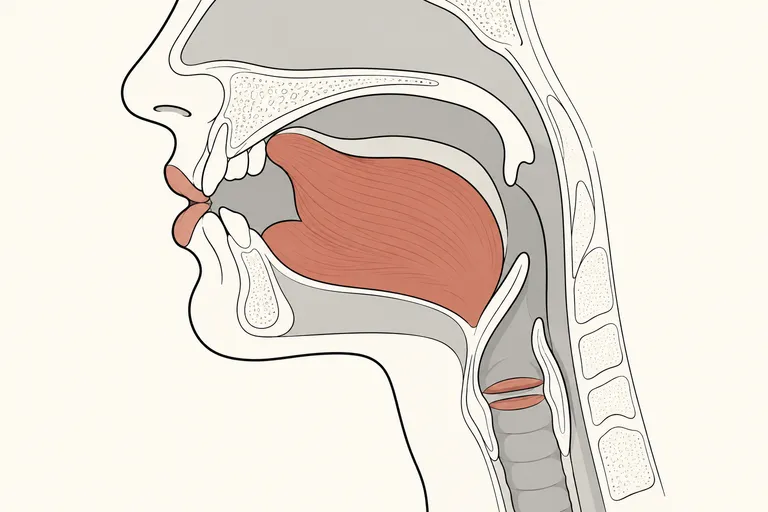
accepted
Tongue blade raised toward the back of the alveolar ridge, lips slightly rounded, with vocal cord vibration added.
Tongue, lips, teeth, and schematic vocal folds form an anatomically plausible cutaway.
attempt 1 · 2026-10-04
Inventory ru (42)
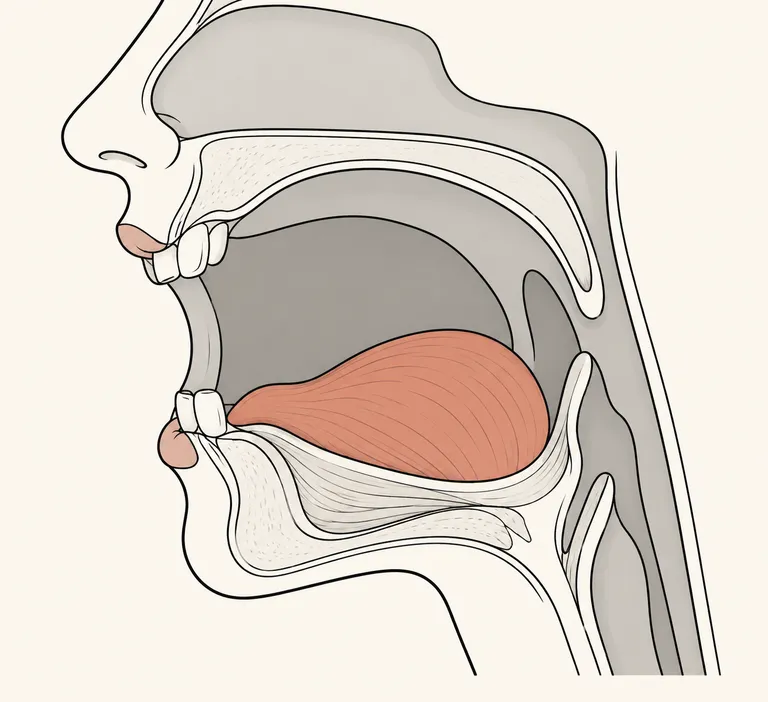
accepted
Jaw dropped wide, tongue body low and roughly central, lips relaxed and unrounded.
Open jaw and low, broad tongue are anatomically plausible.
attempt 0 · 2026-10-04
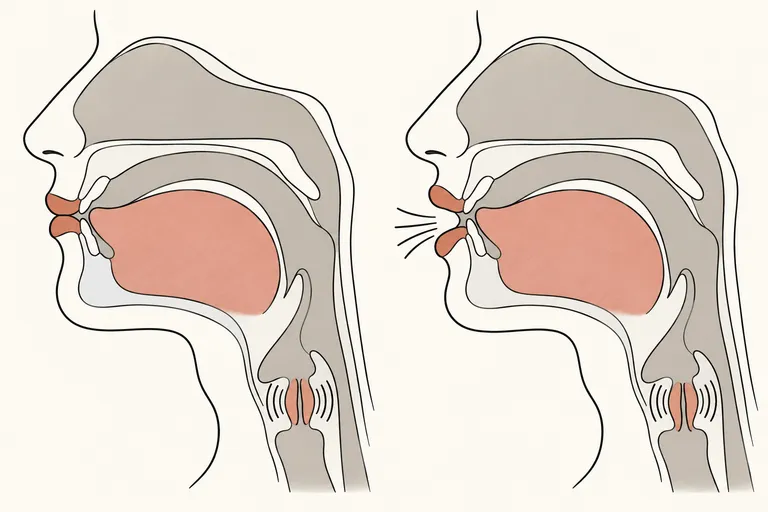
accepted
Lips sealed shut with the vocal folds vibrating throughout the closure, then released.
Both schematic profiles show plausible tongues, lips, and jaws; vibration markings are acceptable.
attempt 0 · 2026-10-04
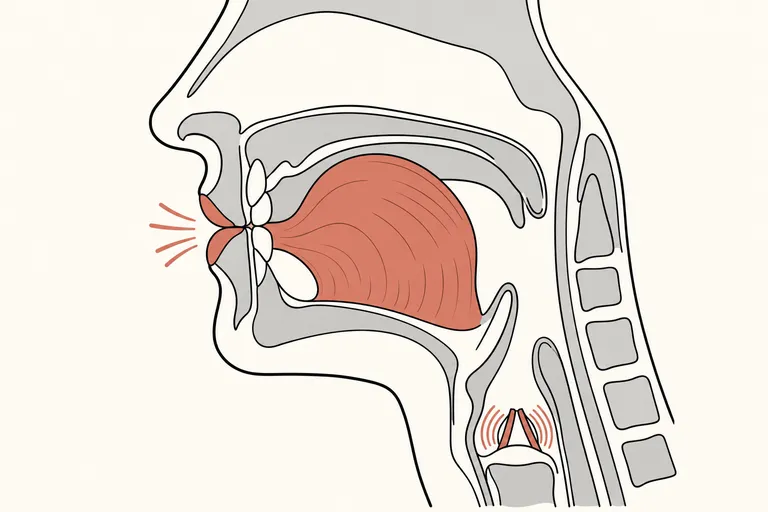
accepted
Voiced lip closure as for /b/, with the tongue body simultaneously arched toward the hard palate.
Single broadly arched tongue with plausible lips, teeth, and jaw placement.
attempt 0 · 2026-10-04
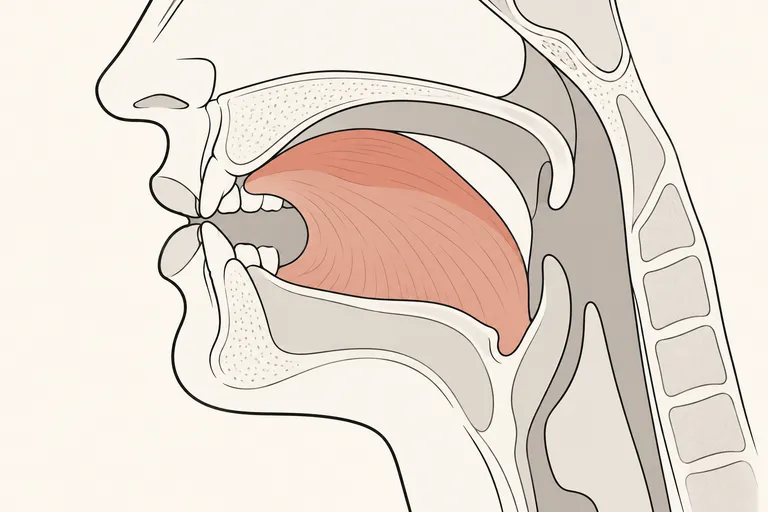
accepted
A broad area of the tongue body pressed up against the hard palate for a noticeably longer hiss than other fricatives; always soft.
Broad raised tongue maintains a plausible continuous shape within the mouth.
attempt 0 · 2026-10-04
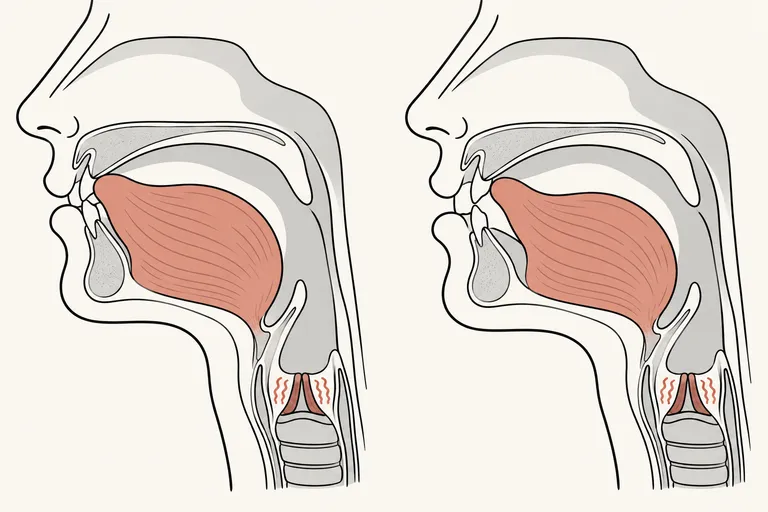
accepted
Tongue tip against the upper teeth with vocal folds vibrating through the closure, then released.
Both cross-sections show plausible tongue shapes and dental contact.
attempt 0 · 2026-10-04
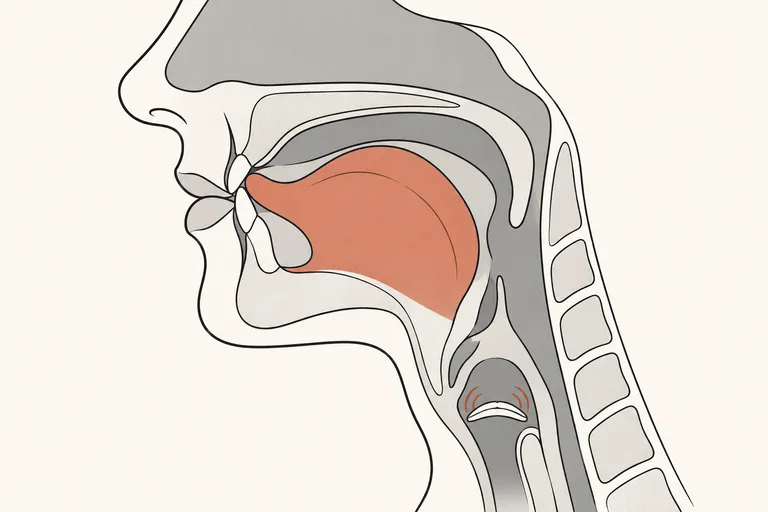
accepted
Voiced dental contact as for /d/, with the tongue body simultaneously arched toward the palate for a lighter, softened quality.
Raised tongue body and dental contact are anatomically plausible.
attempt 0 · 2026-10-04
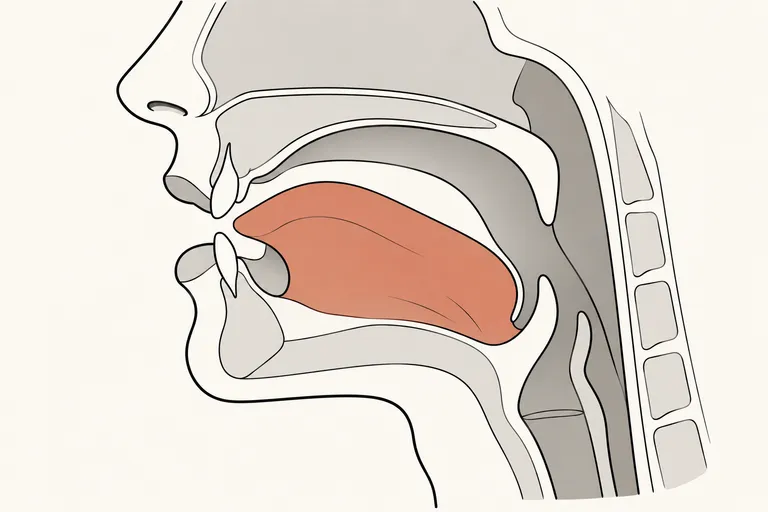
accepted
Tongue body held at mid height, fronted but not as high as for /i/; lips unrounded; jaw slightly open.
Single continuous tongue with plausible proportions and positioning; surrounding mouth anatomy is coherent.
attempt 1 · 2026-10-04
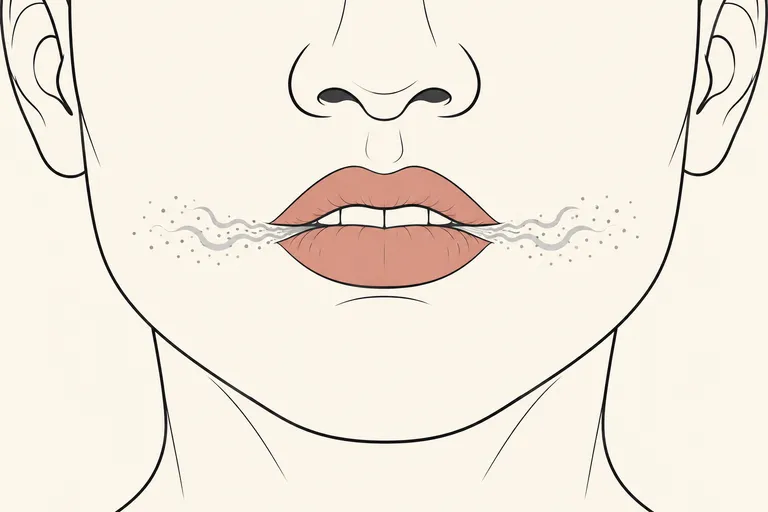
accepted
Lower lip raised to lightly touch the edges of the upper front teeth, air hissing through the narrow gap.
Lips, exposed upper teeth, and facial anatomy are visually plausible.
attempt 0 · 2026-10-04
accepted
Same lip-teeth contact as /f/, with the tongue body simultaneously raised toward the palate, giving a lighter hiss.
Lips, teeth, and jaw appear anatomically plausible, with no visible distortions.
attempt 0 · 2026-10-04
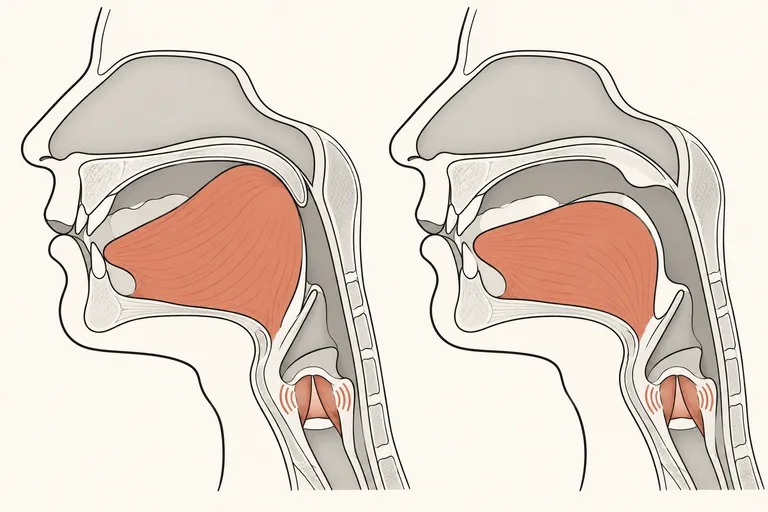
accepted
Back of tongue against the soft palate with vocal folds vibrating through the closure, then released.
Both cross-sections show plausible tongue elevation and release, with coherent vocal tract anatomy.
attempt 0 · 2026-10-04
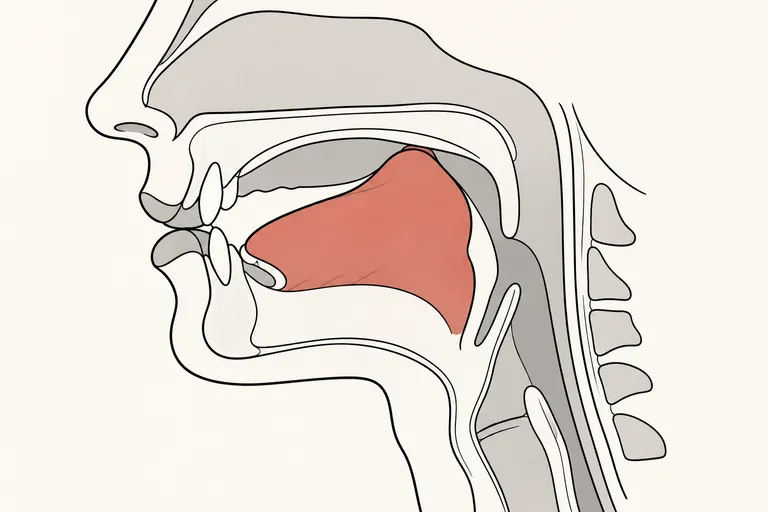
accepted
Voiced tongue-back contact shifted forward toward the hard palate, lighter than plain /g/.
Raised tongue dorsum forms plausible palatal contact without twisting, splitting, or curling.
attempt 0 · 2026-10-04
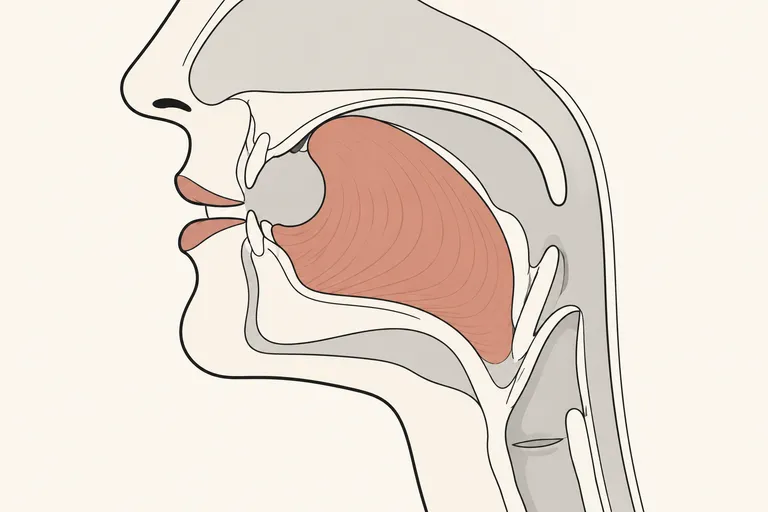
accepted
Tongue body raised high and pushed forward, nearly touching the hard palate; lips relaxed and slightly spread; jaw almost closed.
Elevated front tongue body and lowered tip remain continuous and anatomically plausible.
attempt 0 · 2026-10-04
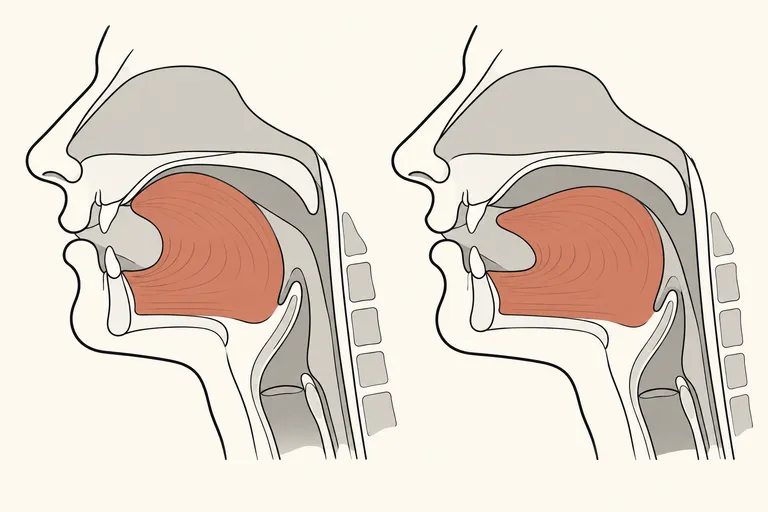
accepted
Tongue body held high but pulled back and flattened, clearly not approaching the hard palate the way /i/ does; lips unrounded.
Both tongue shapes remain continuous and anatomically plausible, without exaggerated curling.
attempt 0 · 2026-10-04
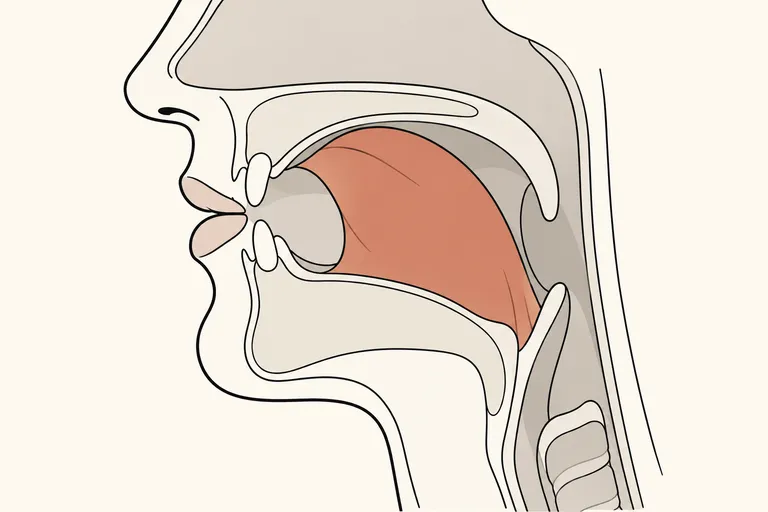
accepted
Tongue body raised high and close to the hard palate, similar to /i/ but gliding quickly into the next vowel, without full frication.
High tongue body with a lowered anterior tip is plausible; no loops or abnormal extensions.
attempt 0 · 2026-10-04
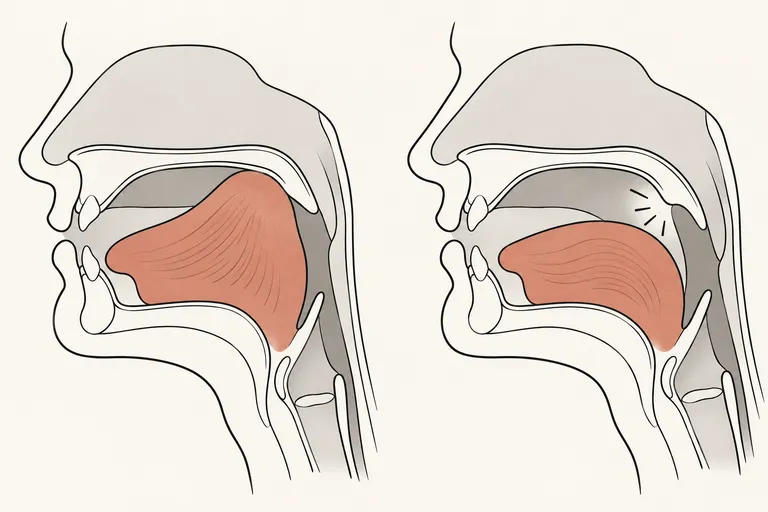
accepted
Back of the tongue raised to touch the soft palate, blocking air, then releasing crisply.
Both tongue positions are plausible, showing dorsal elevation and lowering within coherent mouth anatomy.
attempt 0 · 2026-10-04
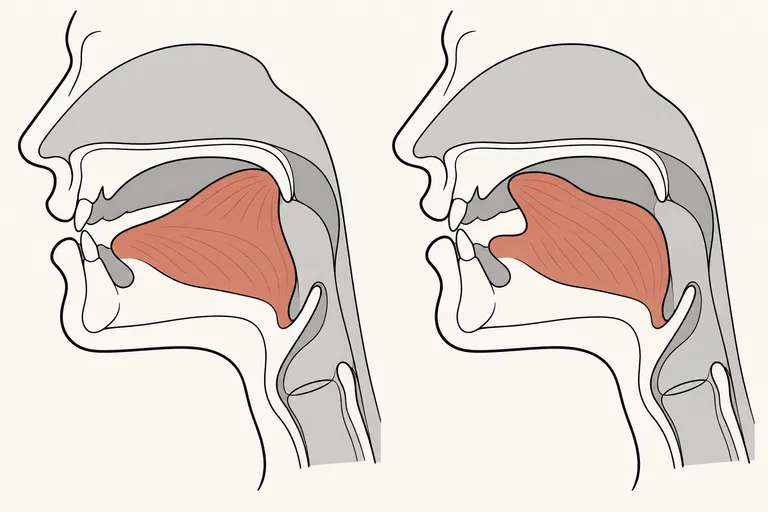
accepted
Tongue body contact shifts forward from the soft palate toward the hard palate, compared to plain /k/, giving a lighter release.
Tongue shapes show plausible changes in dorsal elevation, without a hooked tip or duplicated anatomy.
attempt 0 · 2026-10-04
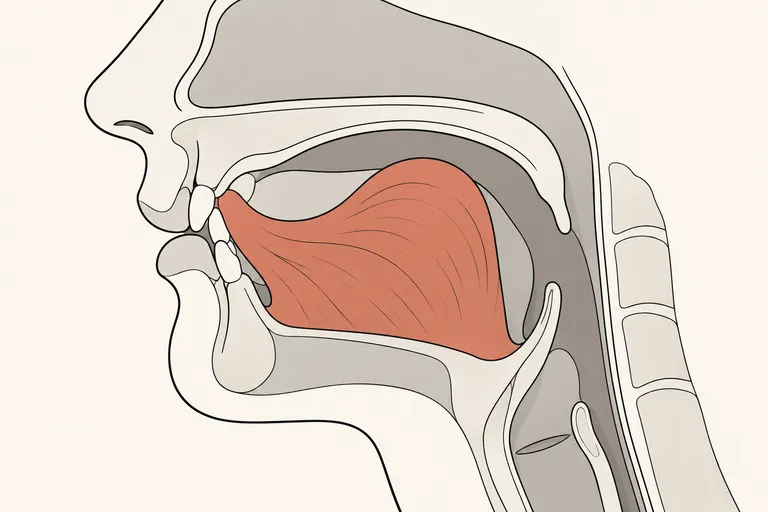
accepted
Tongue tip touches the teeth/ridge while the back of the tongue is pulled up and back toward the soft palate, giving a dark, hollow quality.
Single continuous tongue with plausible tip contact and raised posterior body.
attempt 0 · 2026-10-04
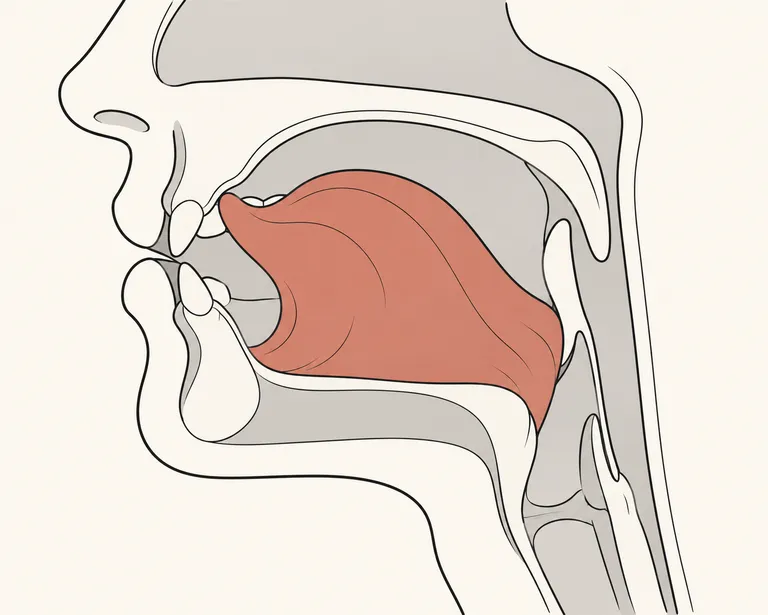
accepted
Same tip contact as /l/, but the back of the tongue is raised forward toward the hard palate instead of pulled back, giving a clear, bright quality.
Raised tongue body and dental tip contact are plausible; the tip does not loop or curl back.
attempt 0 · 2026-10-04
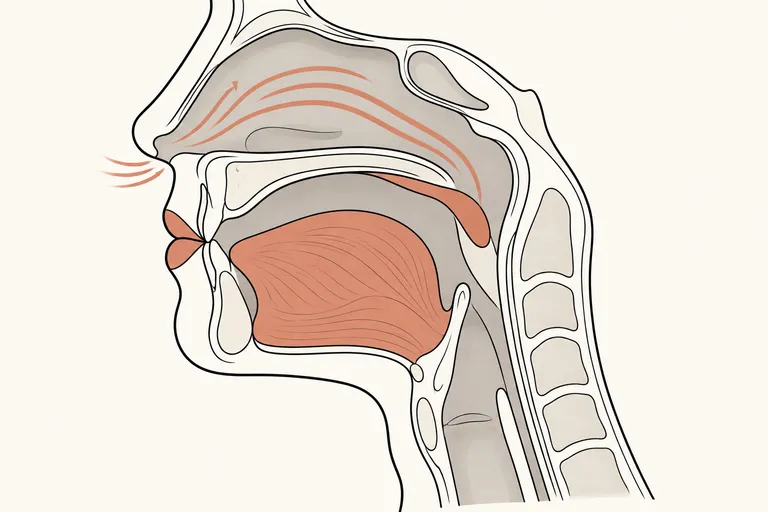
accepted
Lips sealed shut while the velum lowers, letting voiced air flow out through the nose.
Closed lips, lowered soft palate, and a normally shaped tongue form a plausible nasal articulation.
attempt 0 · 2026-10-04
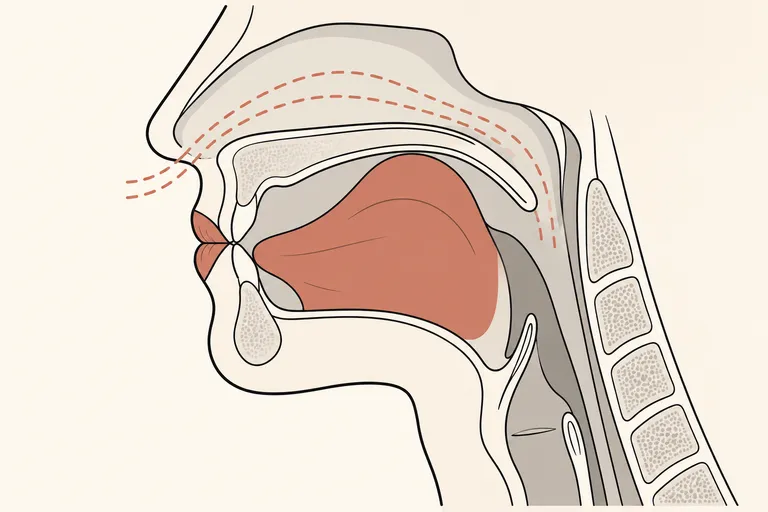
accepted
Lips sealed as for /m/, with the tongue body simultaneously raised toward the palate, giving a lighter nasal hum.
Closed lips and elevated tongue body are anatomically plausible, with no abnormal tongue folding.
attempt 0 · 2026-10-04
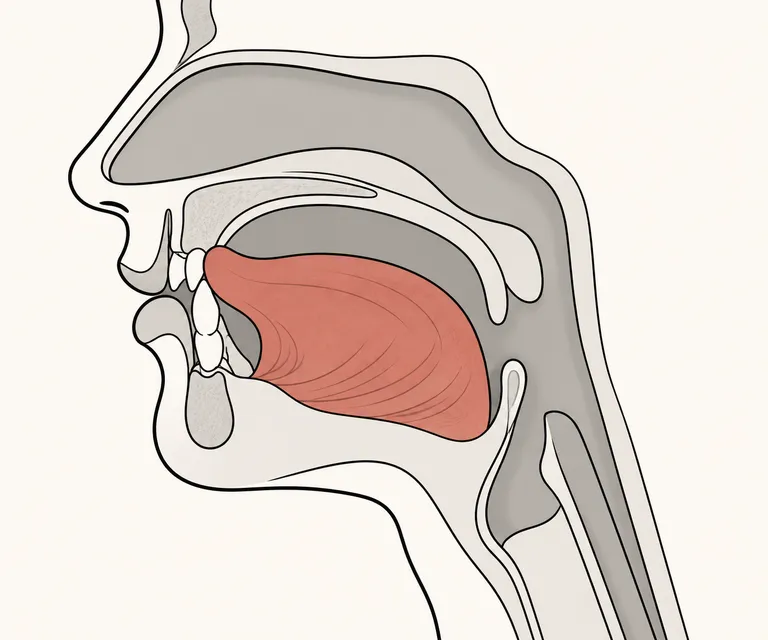
accepted
Tongue tip against the upper teeth (more forward than English), velum lowered to let air pass through the nose.
Tongue maintains a plausible continuous shape with dental contact and no excessive tip curling.
attempt 0 · 2026-10-04
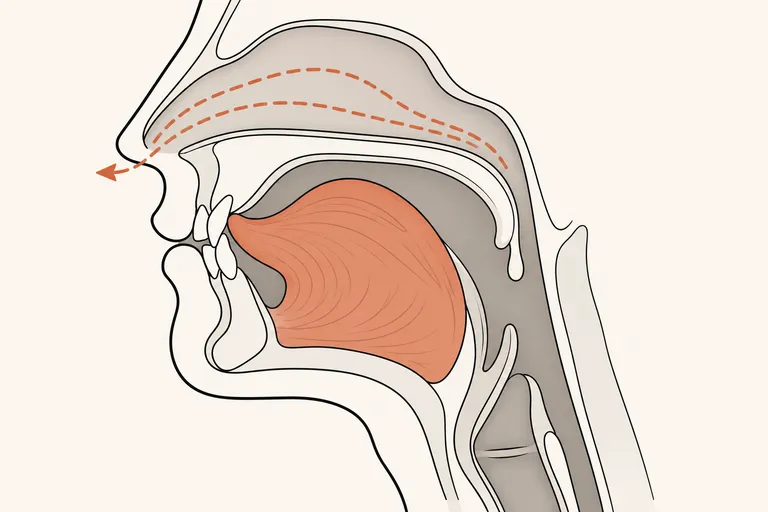
accepted
Dental tongue-tip contact as for /n/, with the tongue body simultaneously raised toward the palate for a lighter nasal quality.
Dental tongue contact and raised tongue body are plausible; nasal airflow markings introduce no visual anomalies.
attempt 0 · 2026-10-04
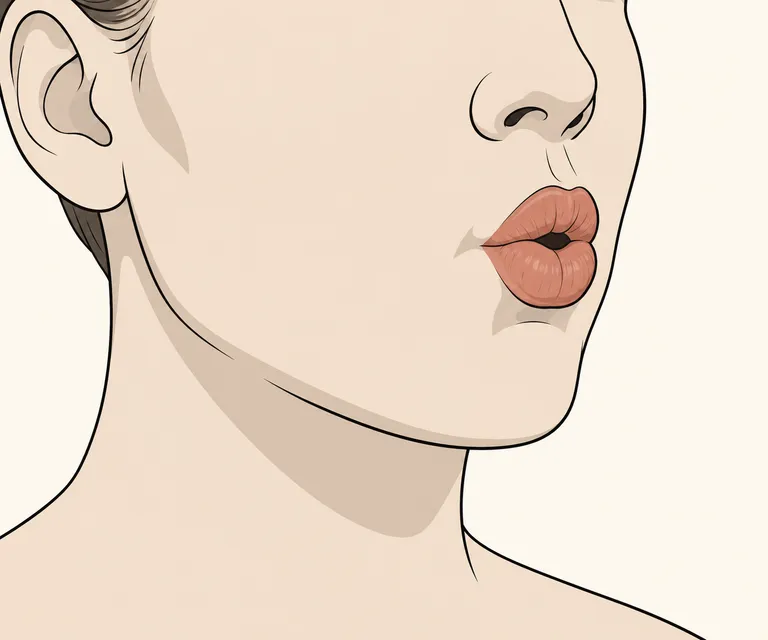
accepted
Lips rounded and pushed forward, tongue body pulled back and raised to mid height.
Rounded, protruded lips and surrounding facial anatomy appear natural and coherent.
attempt 0 · 2026-10-04
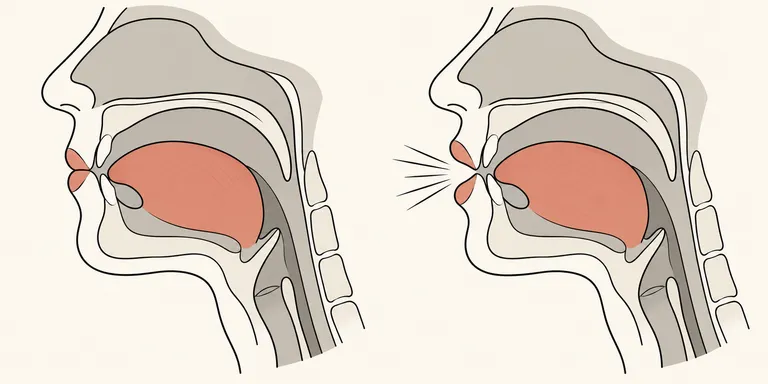
accepted
Both lips pressed firmly shut, blocking airflow, then released with a quick voiceless puff.
Both sagittal views show plausible anatomy, illustrating lip closure and release without malformed structures.
attempt 0 · 2026-10-04
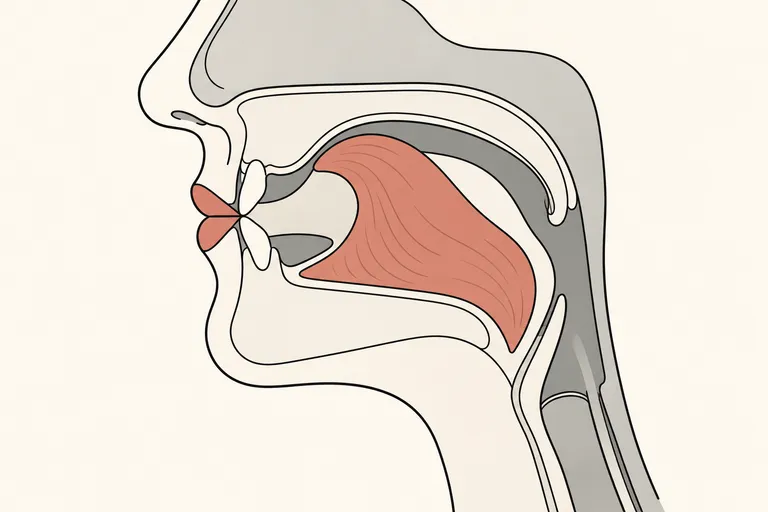
accepted
Lips press together as for plain /p/, but the tongue body simultaneously arches up toward the hard palate, giving a brighter 'softened' release.
Single continuous tongue with a plausible raised body; lips and jaw are coherently positioned.
attempt 0 · 2026-10-04
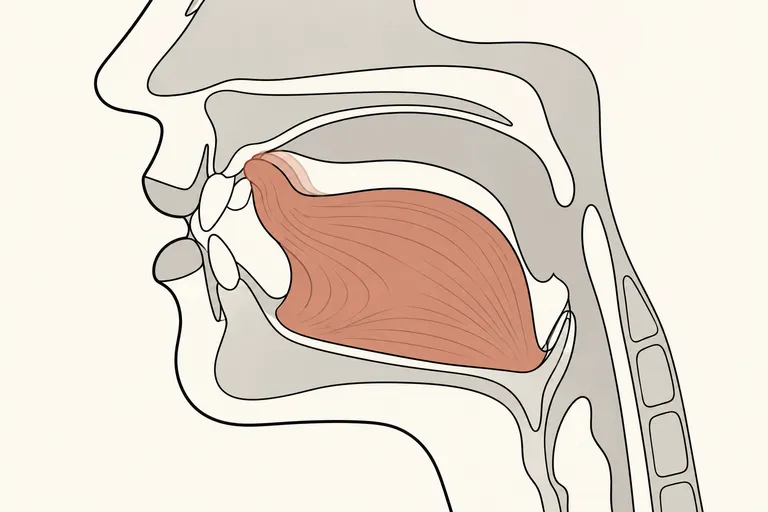
accepted
Tongue tip relaxed and loose, vibrating rapidly against the alveolar ridge as air passes, usually just one or two taps in conversational speech.
Raised tongue tip and broad tongue body remain anatomically plausible, without looping or splitting.
attempt 0 · 2026-10-04
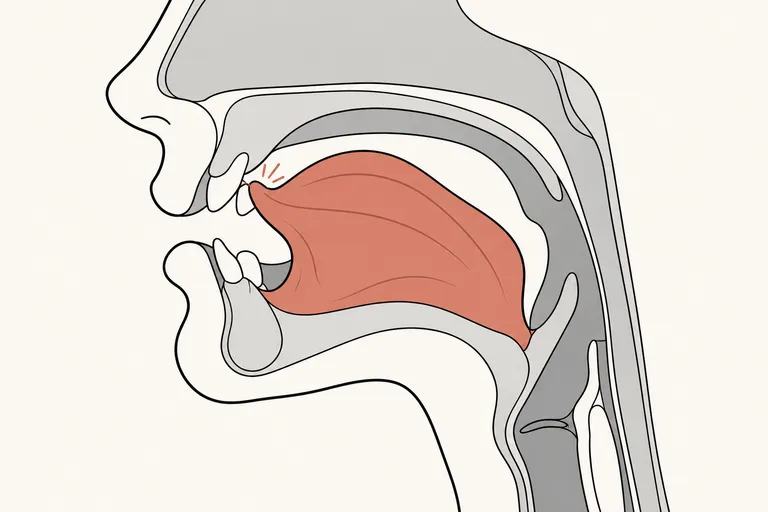
accepted
Same tongue-tip tap as /r/, with the tongue body simultaneously raised toward the palate for a lighter, brighter quality.
Single continuous tongue with plausible raised body and tongue-tip contact behind the upper teeth.
attempt 1 · 2026-10-04
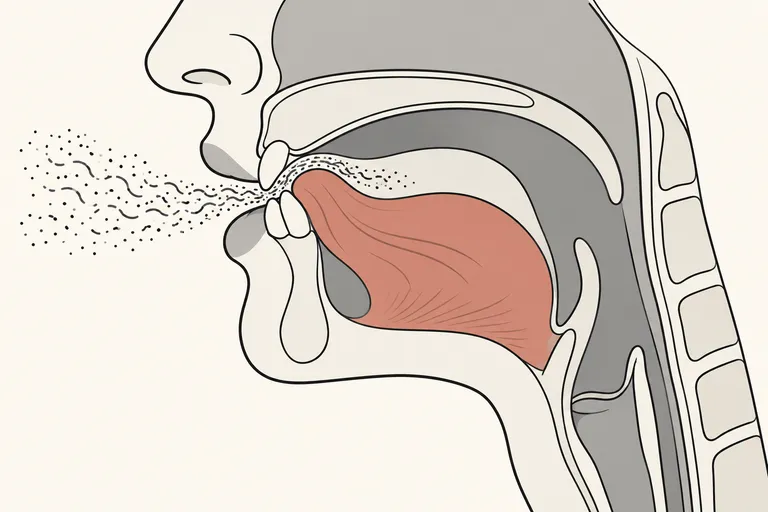
accepted
Tongue tip near the teeth/ridge forming a narrow channel, with a steady hiss of air.
Tongue forms a plausible narrow constriction near the teeth; airflow marks are schematic.
attempt 0 · 2026-10-04
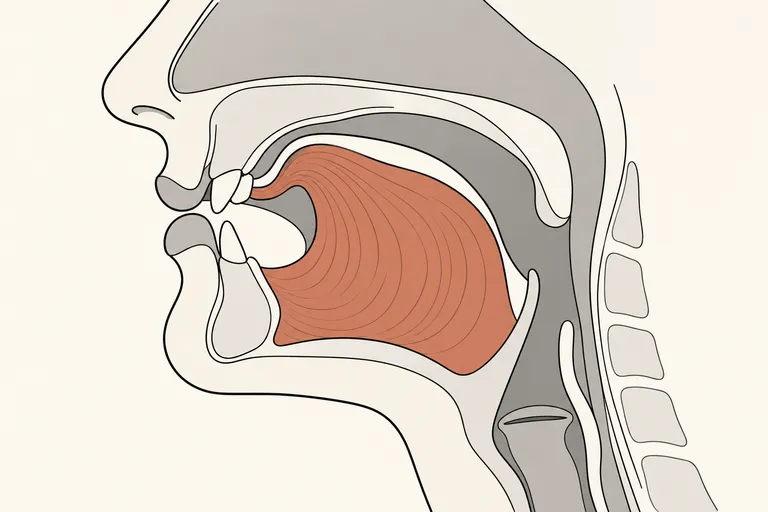
accepted
Same narrow channel as /s/, with the tongue body simultaneously raised toward the palate, giving a higher, lighter hiss.
Raised tongue body and forward tip form a plausible continuous tongue without exaggerated curling.
attempt 0 · 2026-10-04
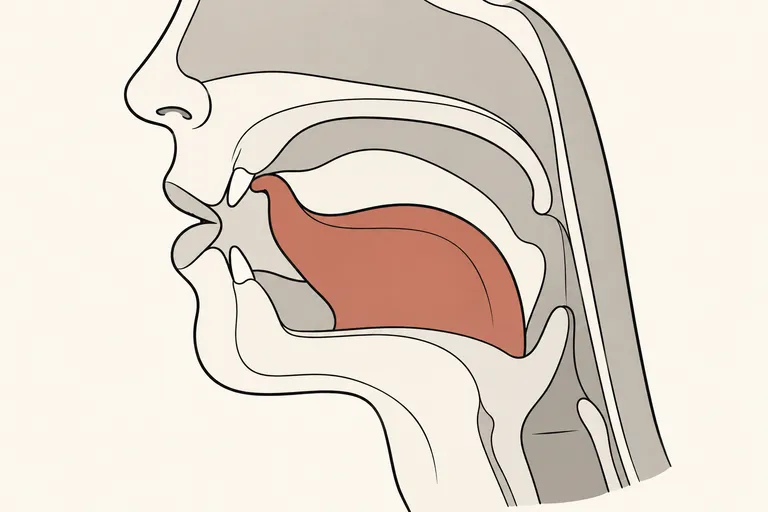
accepted
Tongue tip curled back slightly behind the alveolar ridge, tongue body low and retracted, lips slightly rounded.
Tongue has a modest upward tip bend and a continuous, plausible body.
attempt 3 · 2026-10-04
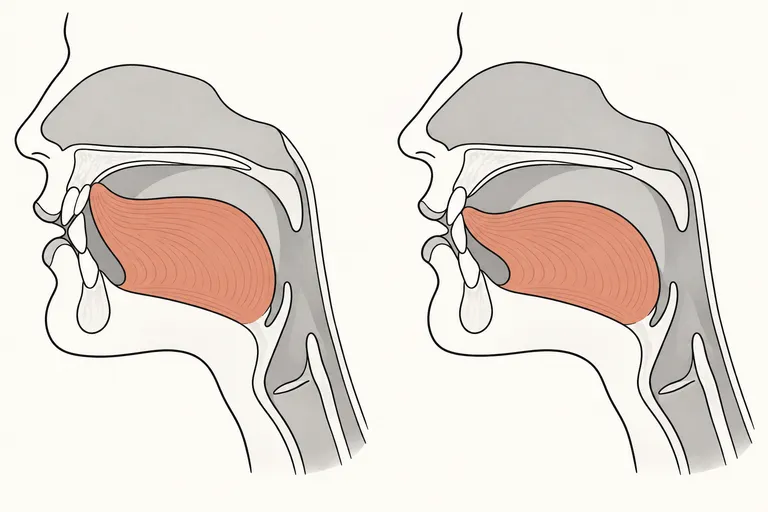
accepted
Tongue tip presses against the back of the upper teeth (further forward than English /t/), then releases crisply.
Both panels show plausible tongue contact and release behind the upper teeth.
attempt 0 · 2026-10-04
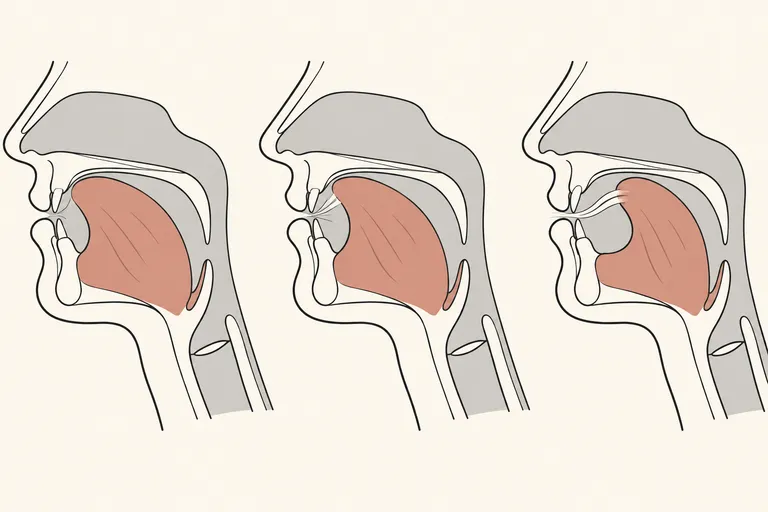
accepted
A soft stop-to-fricative release with the tongue body pressed up and forward against the hard palate, unlike the harder /ts/.
All three panels show plausible raised tongue positions; motion lines do not indicate additional tongues.
attempt 0 · 2026-10-04
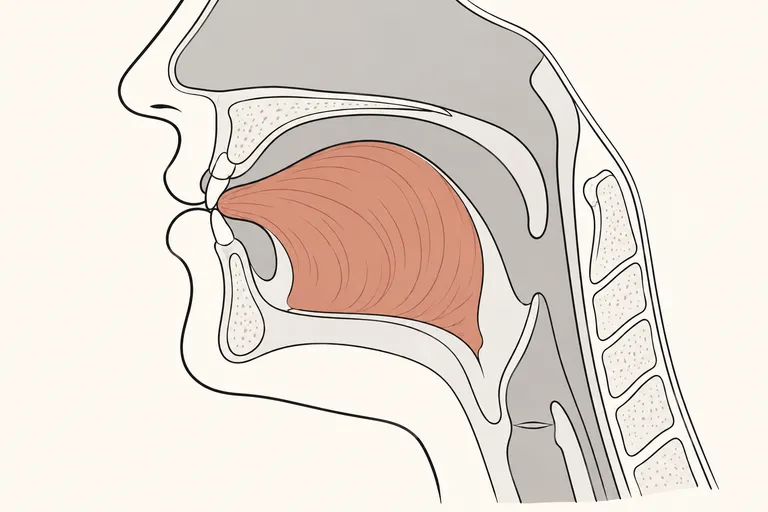
accepted
Dental tongue-tip contact as for /t/, with the tongue body simultaneously raised toward the palate, giving a light, slightly hissy release.
Single continuous tongue with plausible dental contact and raised tongue body.
attempt 0 · 2026-10-04
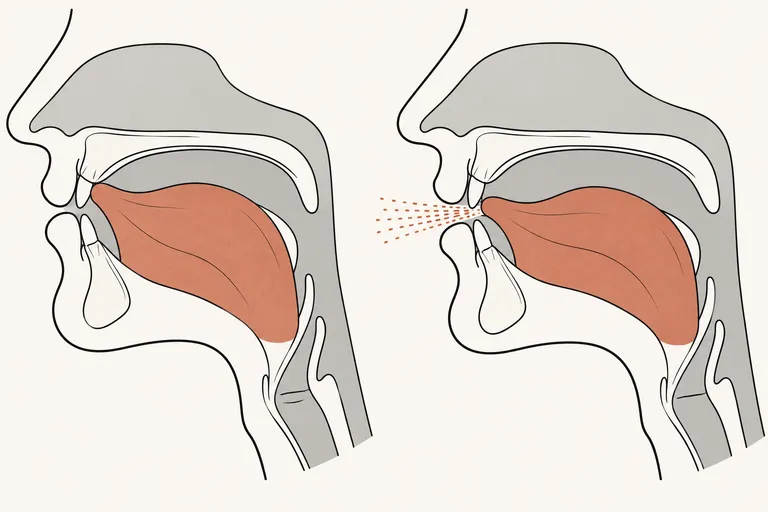
accepted
Tongue tip forms a brief stop against the teeth/ridge, then releases directly into a short 's'-like hiss, all in one unit.
Both tongue positions are anatomically plausible, with coherent teeth, lips, and jaw placement.
attempt 0 · 2026-10-04
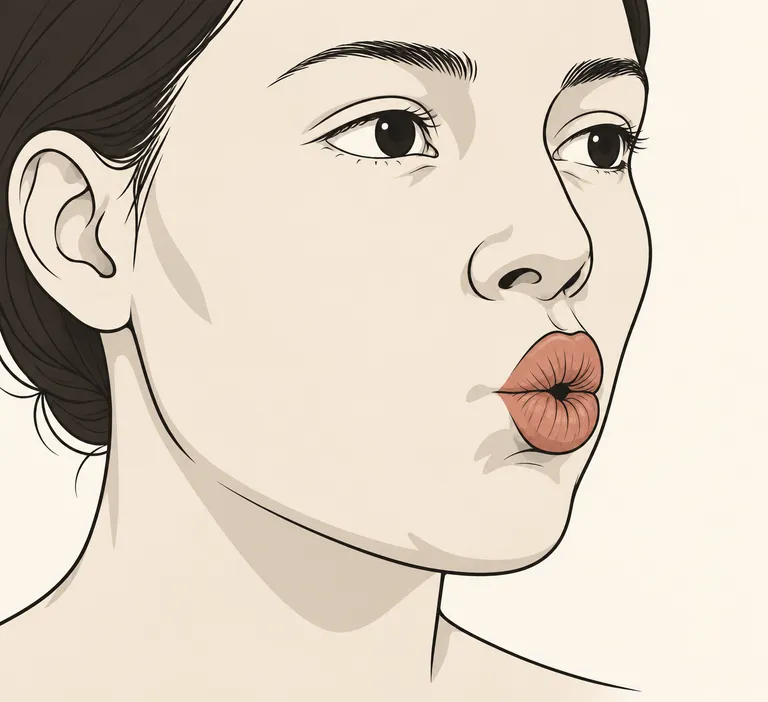
accepted
Lips tightly rounded and pushed far forward, tongue body raised high and pulled back toward the velum.
Rounded, protruded lips and facial anatomy are physically plausible.
attempt 0 · 2026-10-04
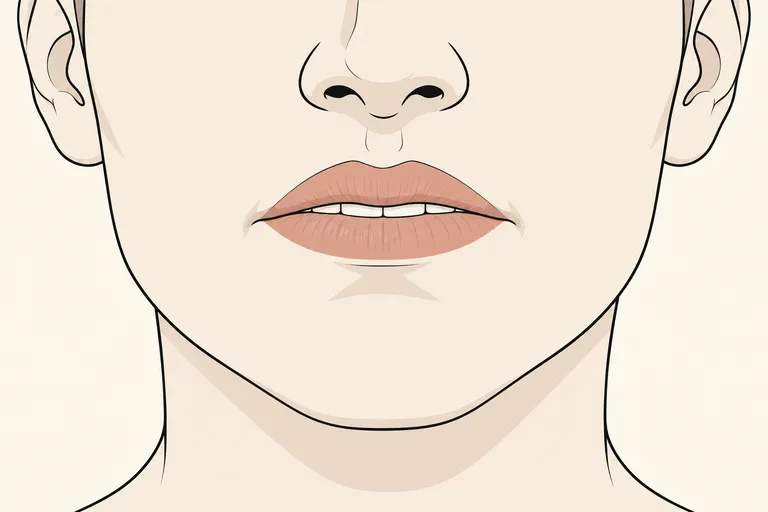
accepted
Lower lip touches upper teeth as for /f/, but vocal folds vibrate throughout.
Lips, visible teeth, and jaw appear anatomically plausible.
attempt 0 · 2026-10-04
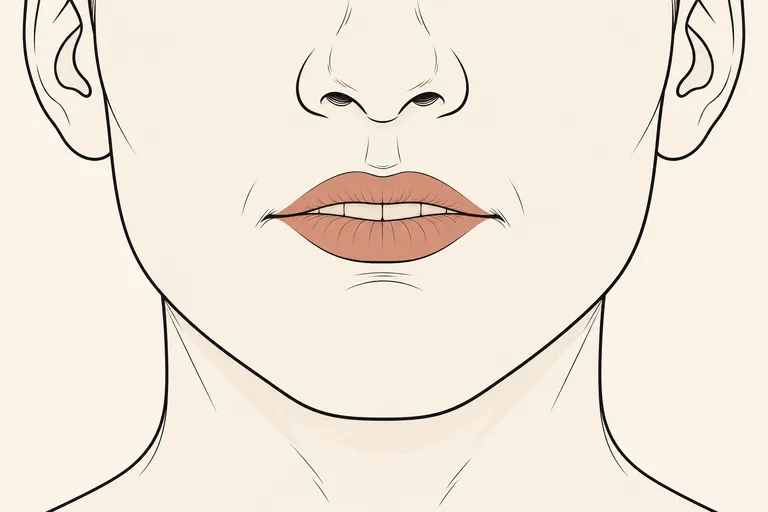
accepted
Voiced lip-teeth contact as for /v/, with the tongue body simultaneously raised toward the palate.
Mouth and facial structures show no impossible placement or deformation.
attempt 0 · 2026-10-04
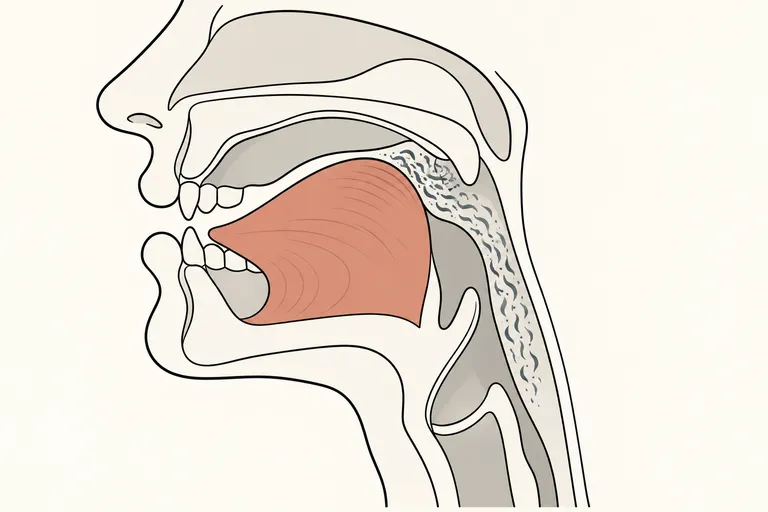
accepted
Back of the tongue raised close to, but not touching, the soft palate, letting air hiss through.
Raised tongue back is plausible, with no looping, splitting, or excessive extension.
attempt 0 · 2026-10-04
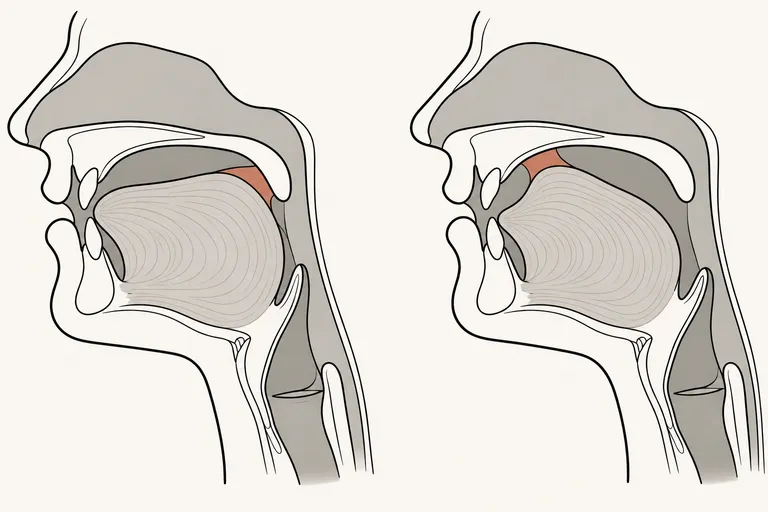
accepted
Narrowing shifts forward from the soft palate toward the hard palate compared to plain /x/, giving a lighter hiss.
Both cross-sections show single, plausibly shaped tongues with differing dorsal elevation.
attempt 0 · 2026-10-04
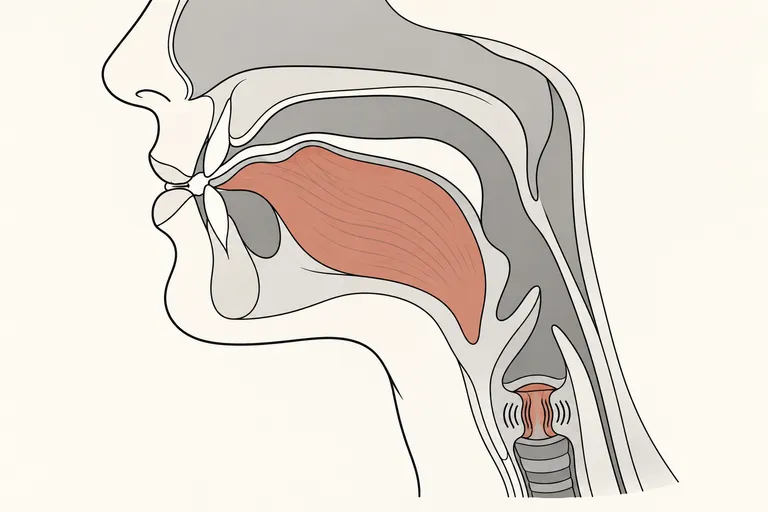
accepted
Same narrow tongue channel as /s/, but with the vocal folds vibrating throughout the hiss.
Tongue shape is plausible; simplified vocal-fold vibration depiction is visually coherent.
attempt 0 · 2026-10-04
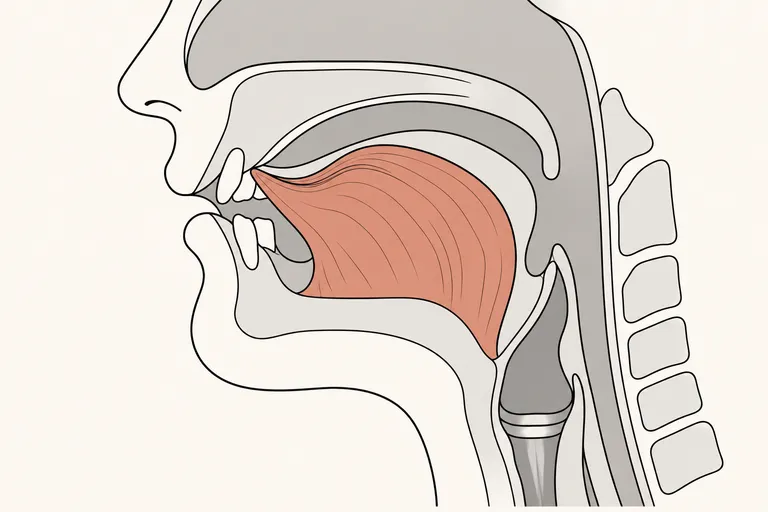
accepted
Voiced narrow-channel hiss as for /z/, with the tongue body simultaneously raised toward the palate.
Elevated tongue body and anterior constriction are plausible, without unnatural curling or distortion.
attempt 0 · 2026-10-04
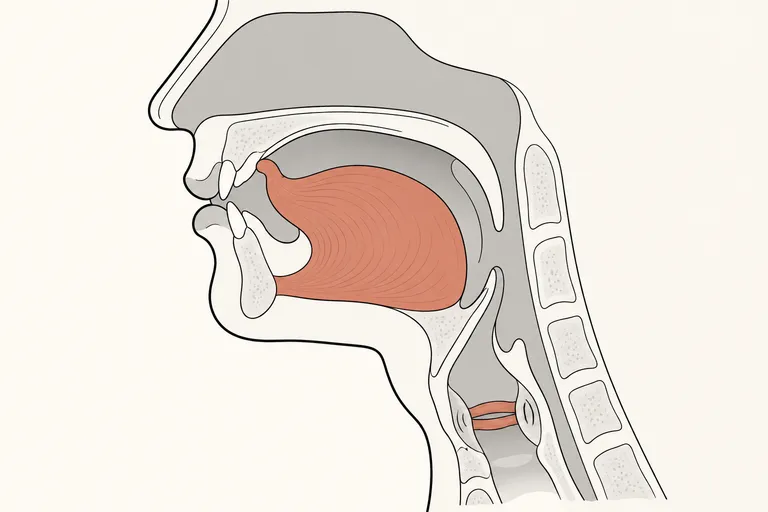
accepted
Same retroflex-like curl as /ʂ/, with vocal folds vibrating throughout.
Tongue remains continuous, with a modest upward tip bend and plausible surrounding anatomy.
attempt 1 · 2026-10-04
Inventory zh (51)
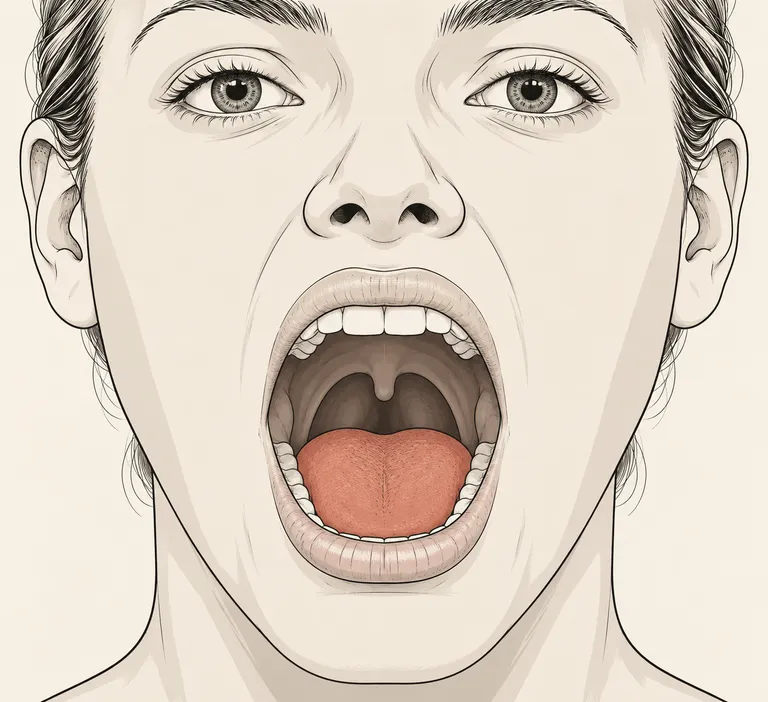
accepted
Jaw dropped wide, tongue low and central, similar to the 'a' in English 'father'.
Anatomically coherent open mouth with a single low, central tongue.
attempt 0 · 2026-10-03
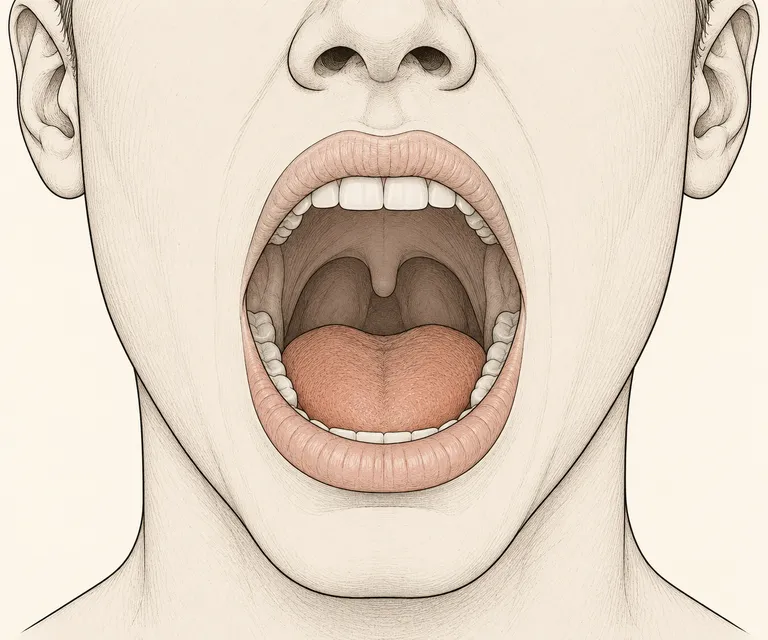
accepted
Jaw wide open, tongue low, similar to the vowel in 'father'.
Wide jaw and low tongue are visually and anatomically plausible.
attempt 0 · 2026-10-03
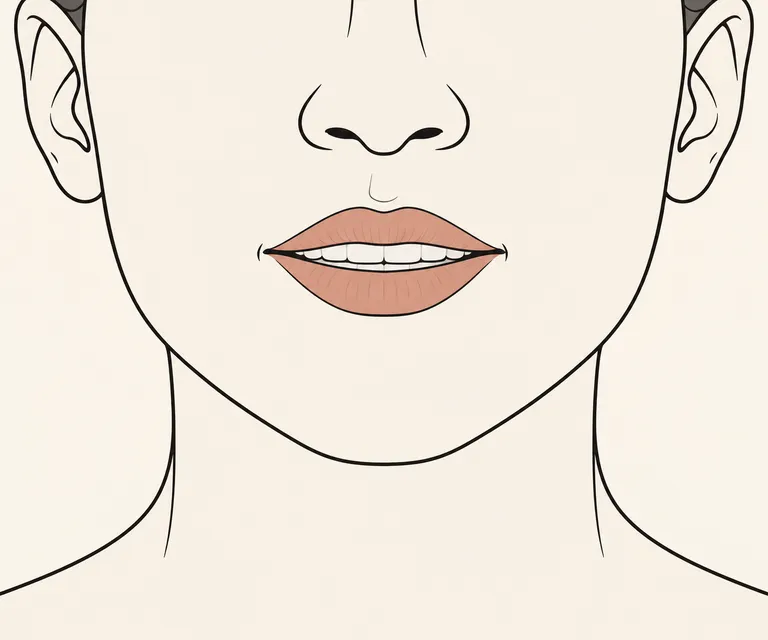
accepted
Jaw rises, tongue glides quickly up and forward toward an 'ee'-like position.
Plausible mouth opening, teeth, lips, and jaw.
attempt 1 · 2026-10-03
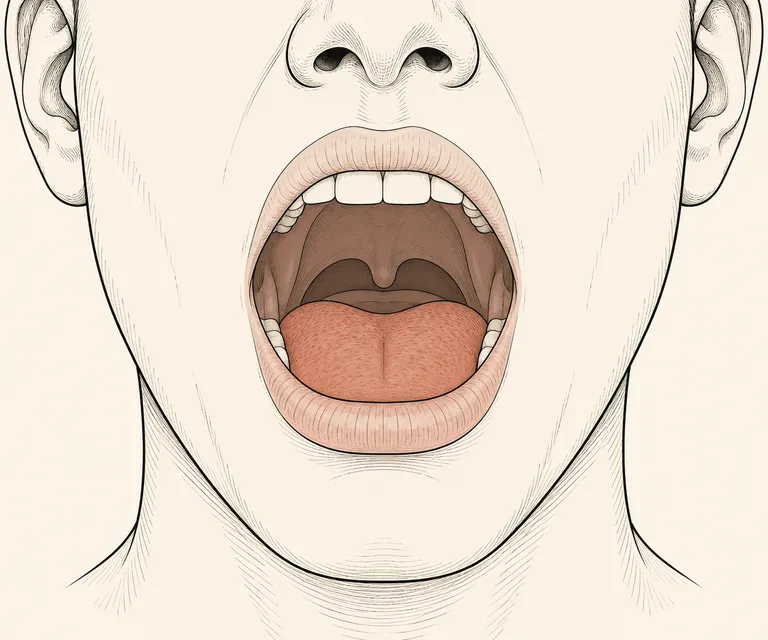
accepted
Jaw wide open, lips unrounded, tongue low and central, like 'father'.
Open unrounded mouth and low central tongue appear anatomically sane.
attempt 0 · 2026-10-03
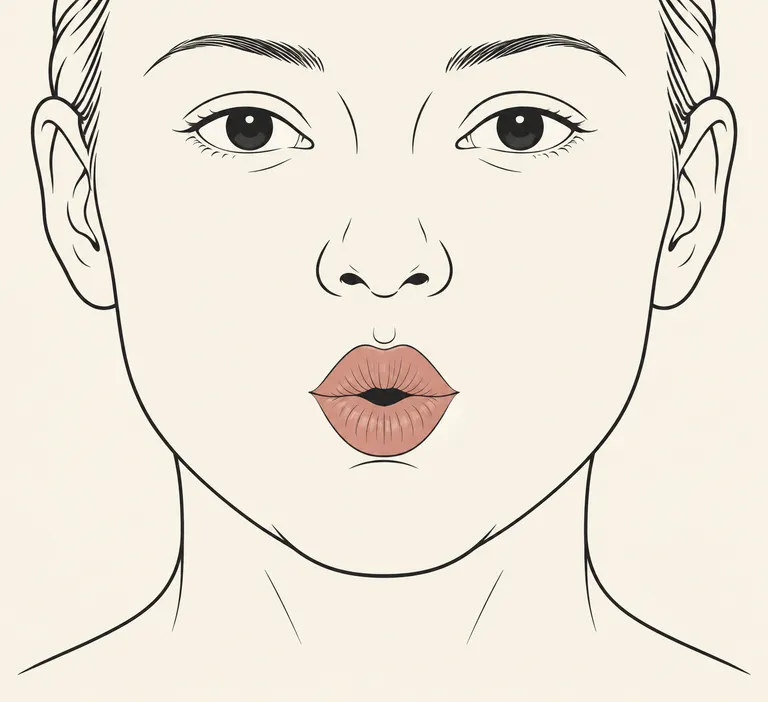
accepted
Tongue glides back and up, lips round toward an 'oo'-like finish.
Rounded lips and small mouth opening are anatomically plausible.
attempt 1 · 2026-10-03
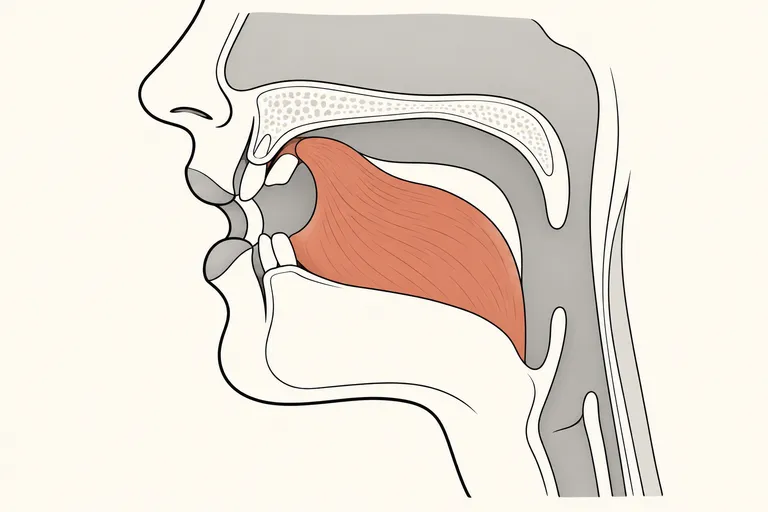
accepted
Front of the tongue arched close to the hard palate, producing a soft, high hiss.
Tongue forms a continuous, plausible arch toward the hard palate without excessive curling.
attempt 1 · 2026-10-03
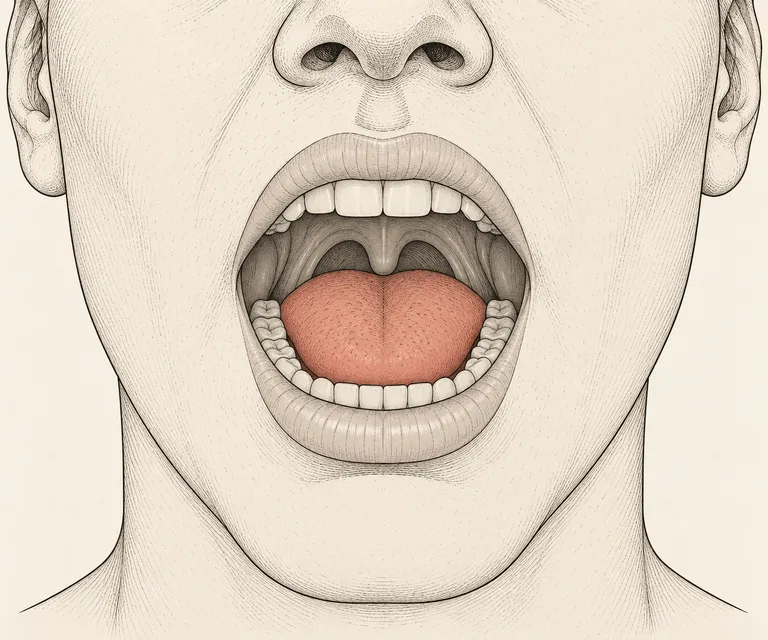
accepted
Jaw moderately open, tongue at mid height, similar to the vowel in 'bet'.
Single broad tongue and moderately open jaw are anatomically plausible.
attempt 0 · 2026-10-03
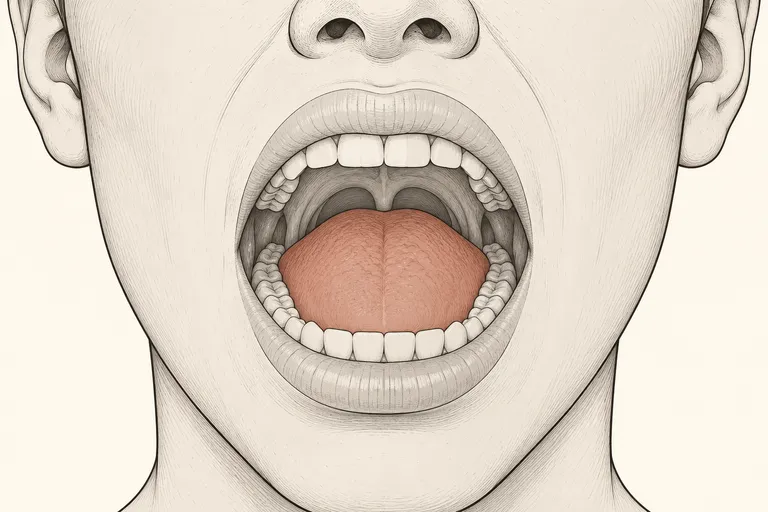
accepted
Tongue glides up slightly further toward an 'ee'-like finish.
Raised broad tongue remains anatomically coherent without twisting or duplication.
attempt 0 · 2026-10-03
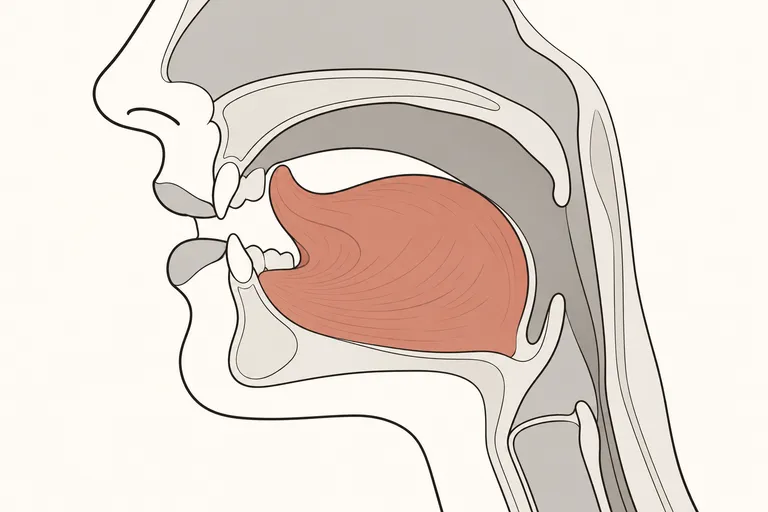
accepted
Tongue tip curled slightly backward and raised mid-mouth, similar to the vowel in American English 'bird', held throughout the whole vowel.
The tongue has a plausible broad body and gently raised tip without looping.
attempt 3 · 2026-10-04
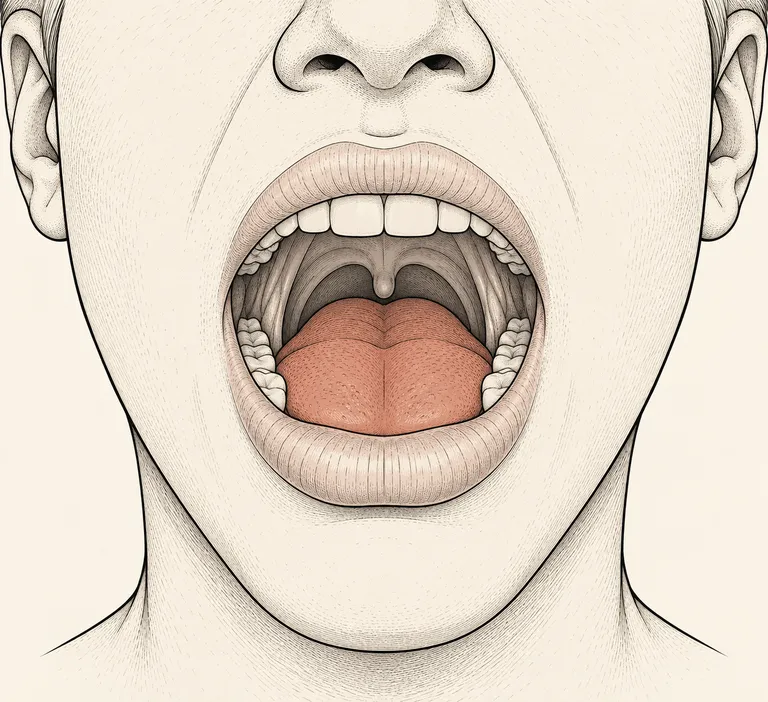
accepted
Tongue pulled back to mid-height, but lips stay relaxed and unrounded, unlike English 'o' sounds.
Frontal view shows one broad, intact tongue in a plausible retracted position.
attempt 0 · 2026-10-03
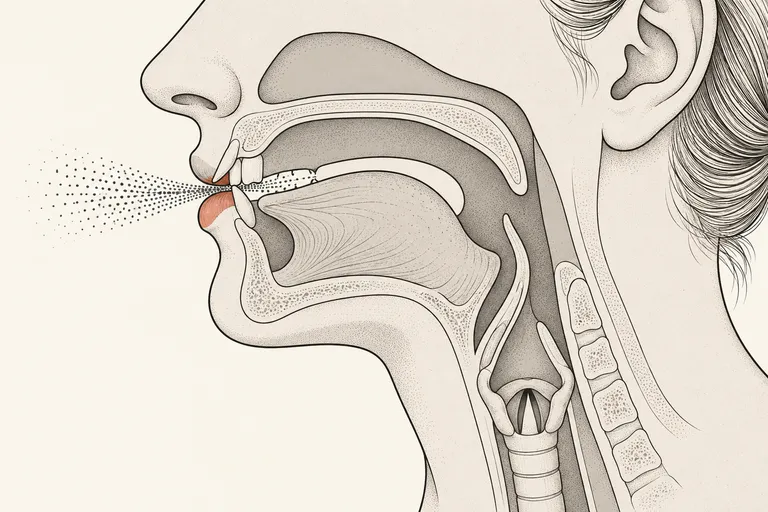
accepted
Lower lip lightly touching upper teeth, steady hissing airflow, no voicing.
Sagittal view plausibly shows lower-lip contact with upper teeth and outward airflow.
attempt 0 · 2026-10-03
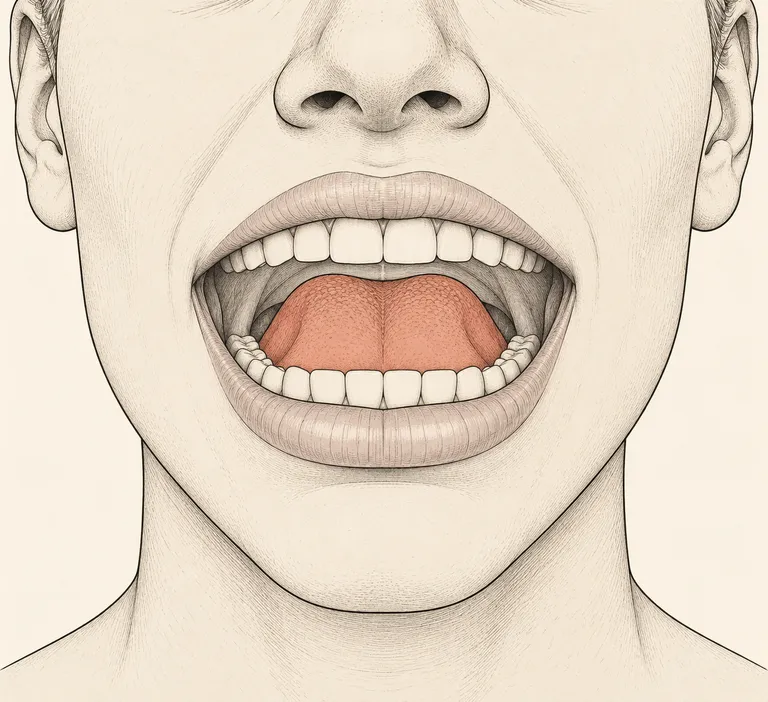
accepted
Lips spread wide, tongue raised high toward the front of the mouth, similar to English 'ee'.
Tongue, teeth, lips, and jaw appear anatomically coherent.
attempt 0 · 2026-10-03
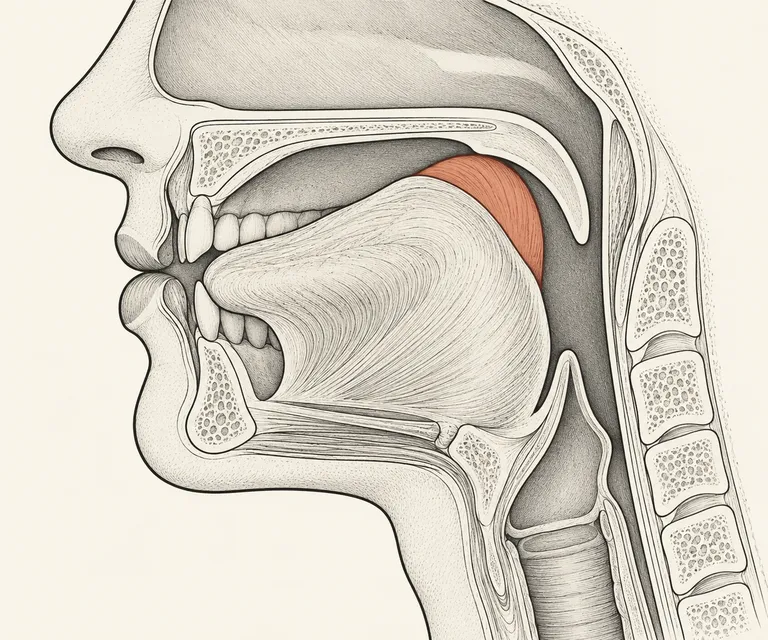
accepted
Back of tongue raised against the soft palate, sealing the airflow.
Sagittal anatomy is coherent; tongue back plausibly contacts the soft palate.
attempt 0 · 2026-10-03
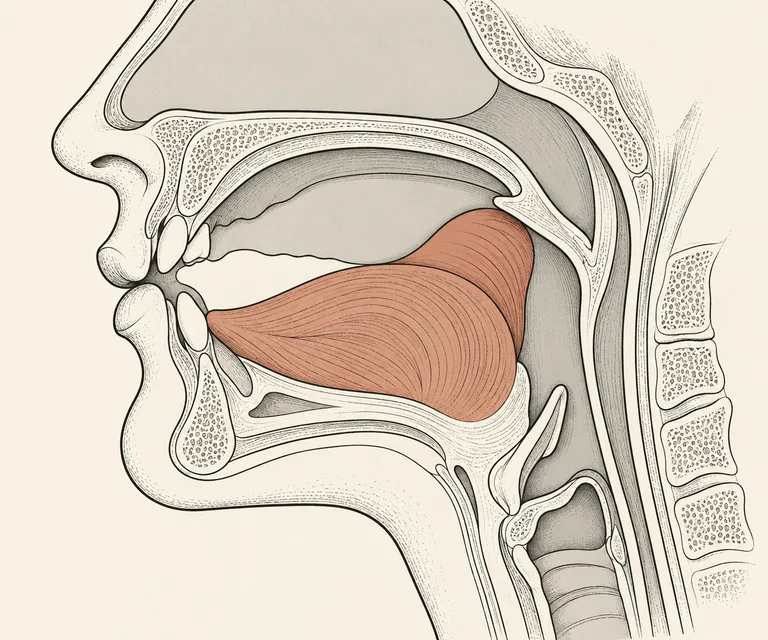
accepted
Tongue lowers with almost no puff of air.
Tongue shape is broad but anatomically plausible without twisting or splitting.
attempt 0 · 2026-10-03
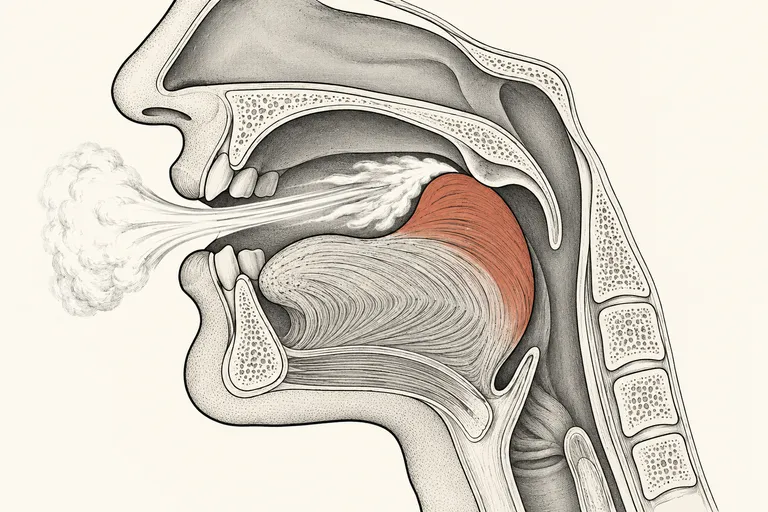
accepted
Back of tongue sealed against the soft palate.
Tongue and vocal tract are coherent; illustrated airflow is visually sane.
attempt 0 · 2026-10-03
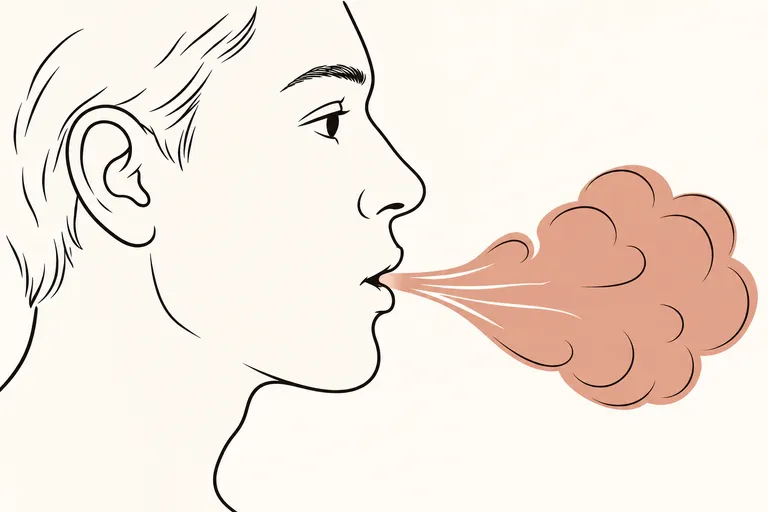
accepted
Tongue lowers with a strong visible puff of air.
Plausible profile and mouth; stylized air puff appropriately illustrates aspiration.
attempt 1 · 2026-10-03
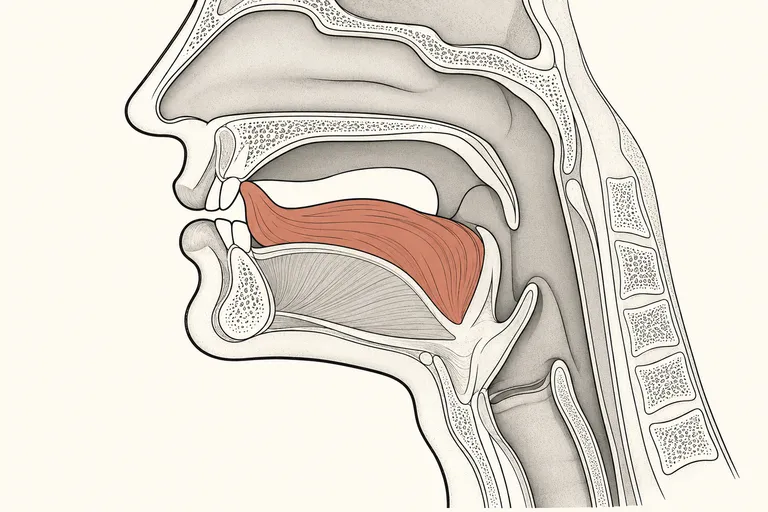
accepted
Tongue tip on the ridge, tongue body kept low and front, not pulled back like an English dark l.
Tongue tip contacts the alveolar ridge with a plausible low body.
attempt 0 · 2026-10-03
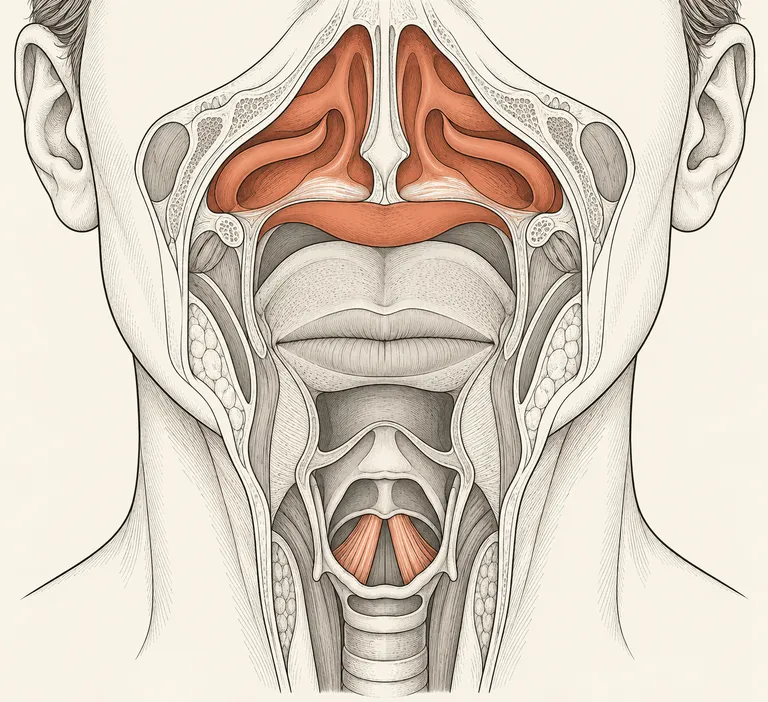
accepted
Lips sealed, soft palate lowered so air escapes through the nose, vocal cords vibrating.
Frontal cutaway anatomy is stylized but coherent, without obvious malformed structures.
attempt 0 · 2026-10-03
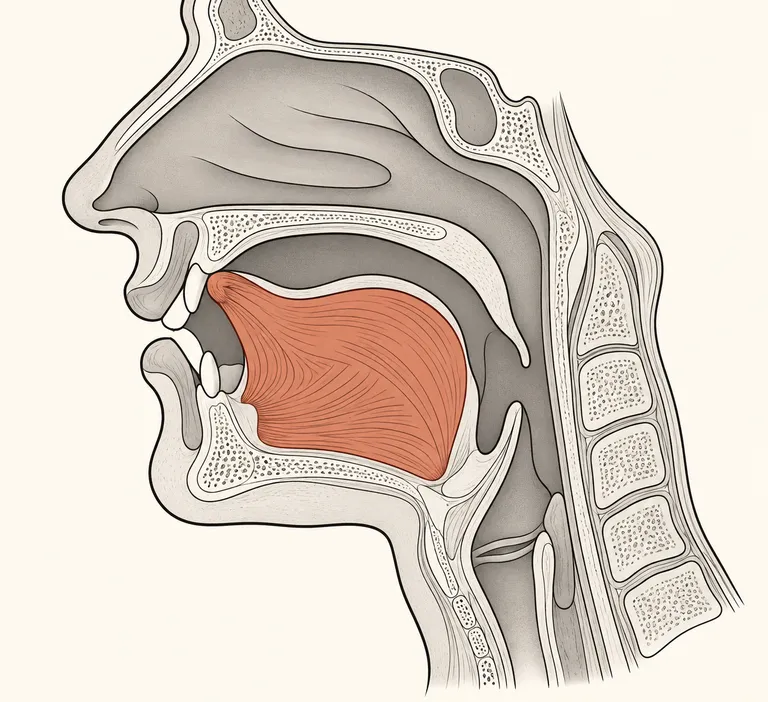
accepted
Tongue tip on the ridge at the start of a syllable, air escapes through the nose.
Tongue is oversized schematically but remains continuous and anatomically plausible.
attempt 0 · 2026-10-03
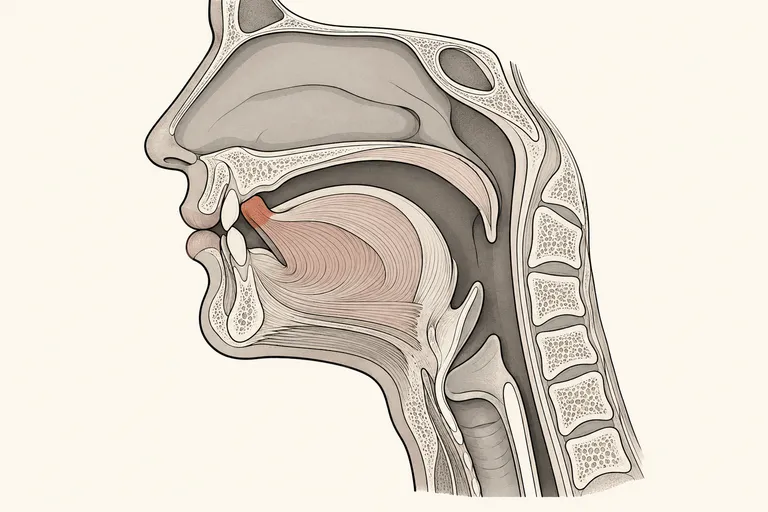
accepted
Same tongue-tip contact but at the end of a syllable, closing off the vowel.
Plausible sagittal anatomy with tongue tip contacting the alveolar region.
attempt 0 · 2026-10-03
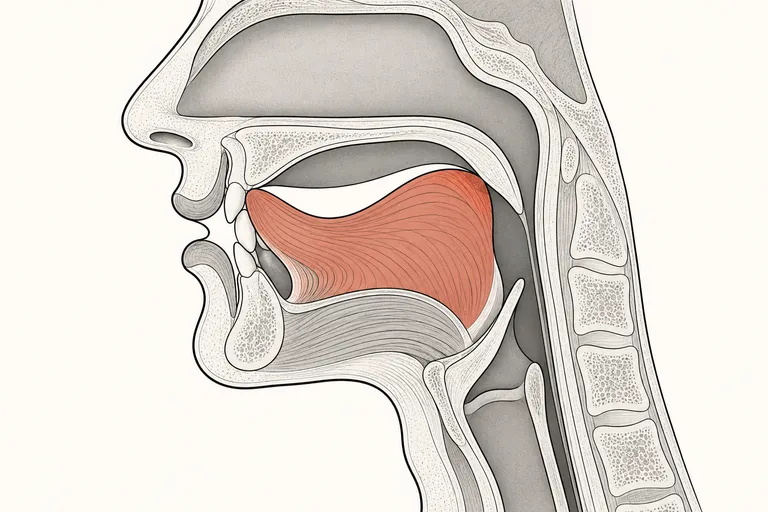
accepted
Tongue tip touches the ridge, mouth cavity short, sound stays forward.
Tongue is bulky but remains anatomically coherent and contacts the anterior ridge plausibly.
attempt 0 · 2026-10-03
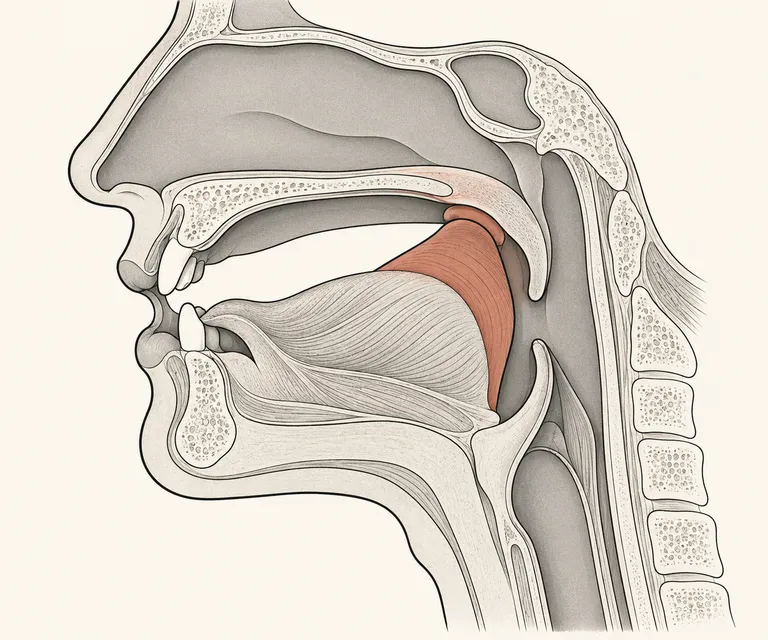
accepted
Back of tongue rises to seal against the soft palate, mouth cavity long, sound resonates further back.
Raised posterior tongue forms a plausible seal against the soft palate.
attempt 0 · 2026-10-03
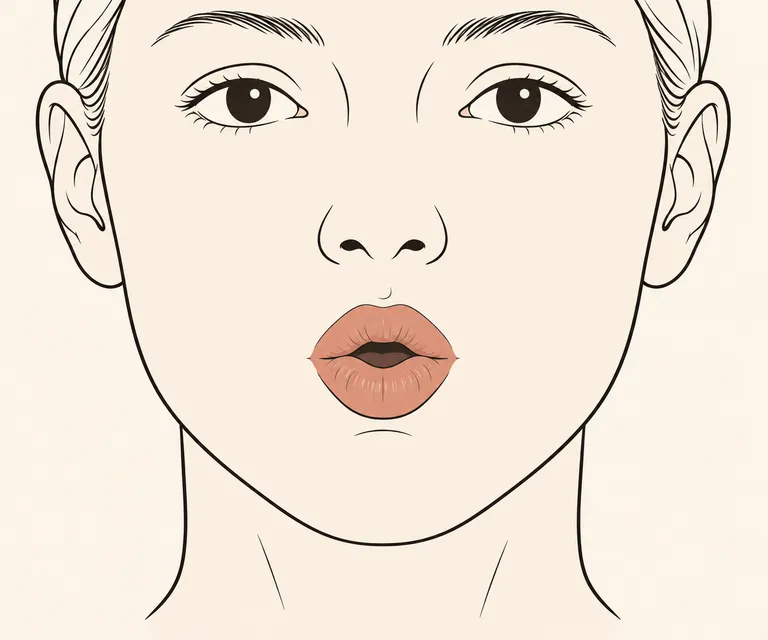
accepted
Lips moderately rounded, tongue at mid-height and pulled back, similar to English 'aw' but more rounded.
Rounded lips and visible mouth interior show no anatomical abnormalities.
attempt 1 · 2026-10-03
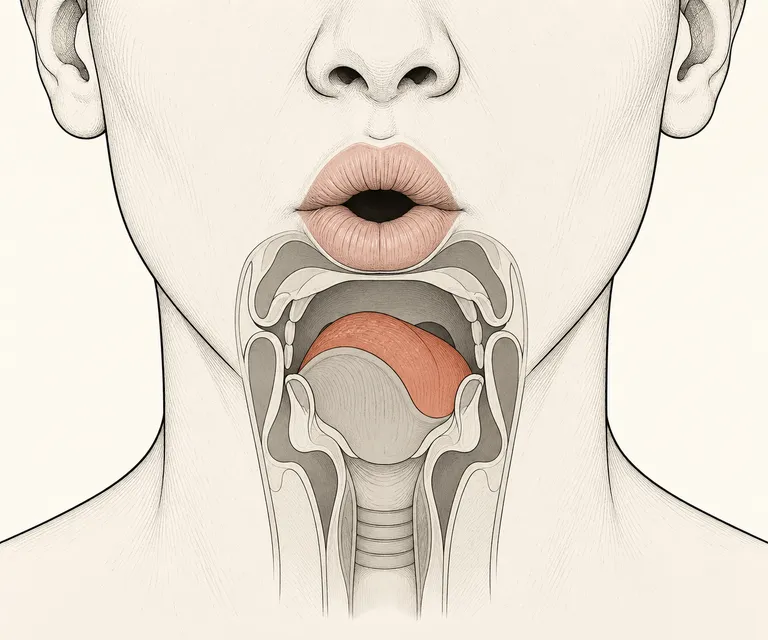
accepted
Lips rounded, tongue at mid-back height, similar to the vowel in 'go' (British-style, without diphthong drift).
Stylized frontal cutaway shows one normally shaped, moderately raised tongue.
attempt 0 · 2026-10-03
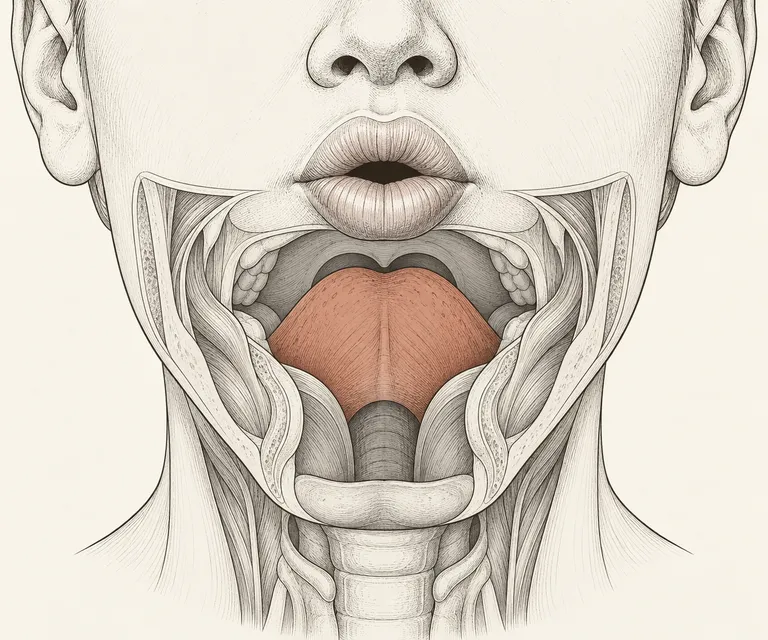
accepted
Tongue glides up slightly further, lips round a bit more toward an 'oo'-like finish.
Frontal anatomical view shows a single broad tongue without impossible deformation.
attempt 0 · 2026-10-03
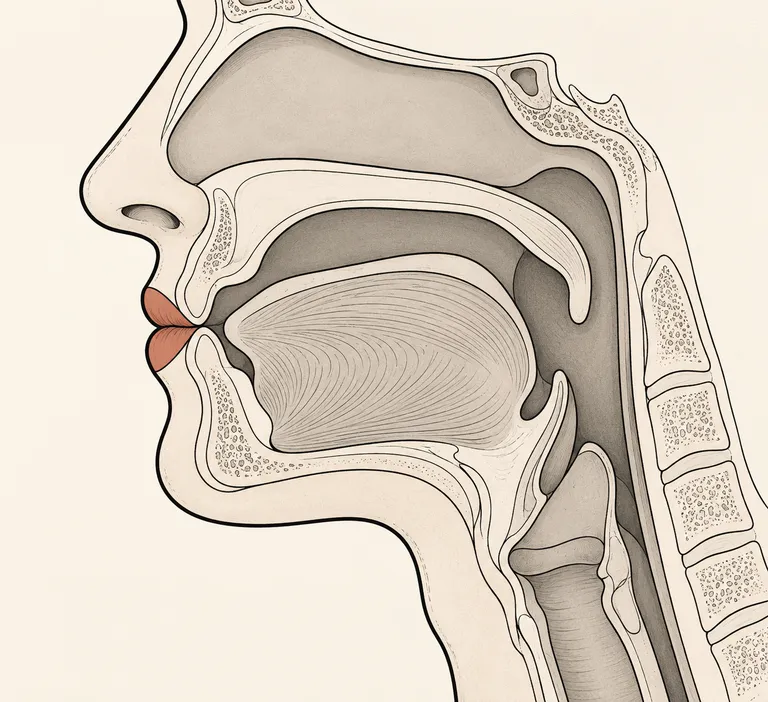
accepted
Lips pressed fully together, no airflow.
Sagittal anatomy is coherent, with closed lips and a normally shaped tongue.
attempt 0 · 2026-10-03
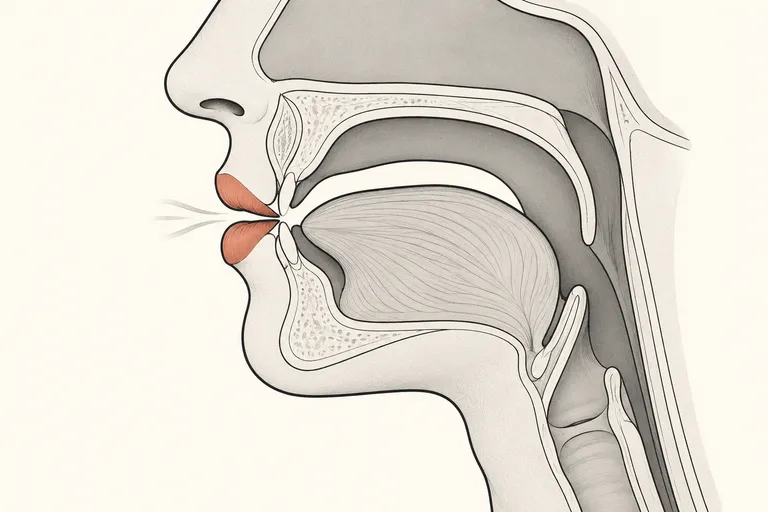
accepted
Lips part gently; only a soft puff of air, unlike an aspirated p.
Slightly parted lips, small puff, and tongue anatomy are visually plausible.
attempt 0 · 2026-10-03
accepted
Lips pressed together, air building behind them.
Plausible facial profile with closed lips and normal jaw anatomy.
attempt 1 · 2026-10-03
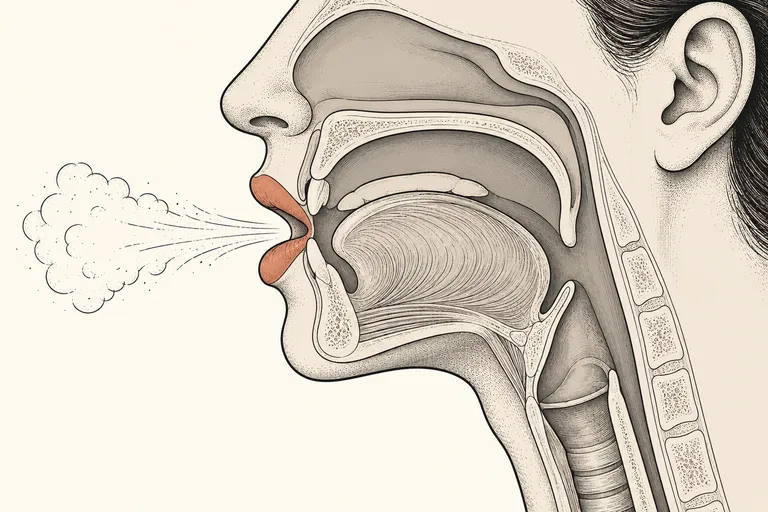
accepted
Lips open with a strong visible puff of air, like blowing out a candle.
Open lips and strong outward puff are coherent; tongue remains anatomically plausible.
attempt 0 · 2026-10-03
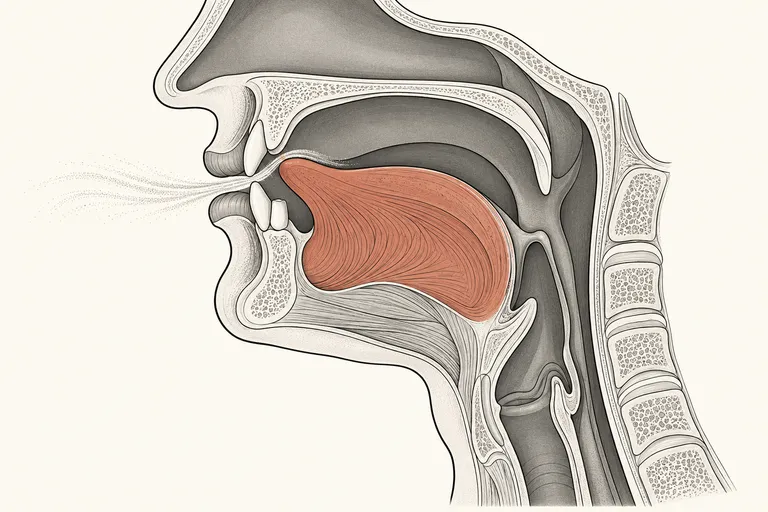
accepted
Tongue tip close to the alveolar ridge, a high-pitched hiss escaping through a narrow channel.
Plausible sagittal anatomy; tongue tip forms a narrow channel near the alveolar ridge.
attempt 0 · 2026-10-03
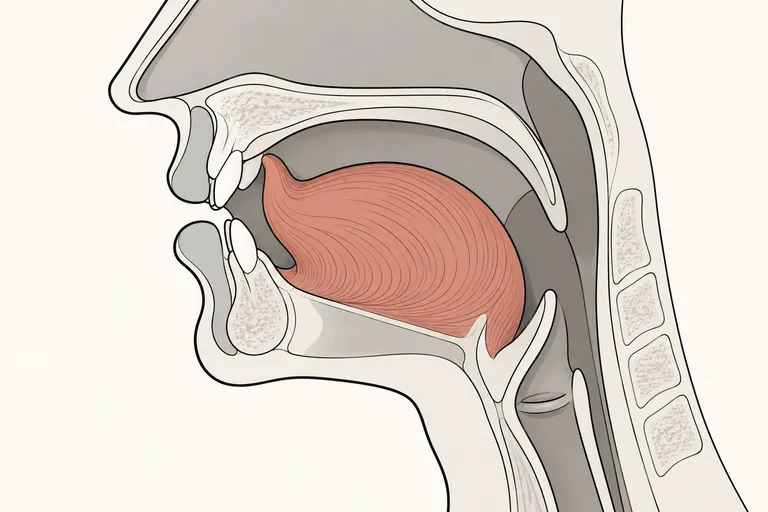
accepted
Tongue tip curled backward, close to the back of the alveolar ridge, producing a deep, dark hiss.
The raised tongue tip tapers naturally, with no exaggerated hook or roll.
attempt 3 · 2026-10-04
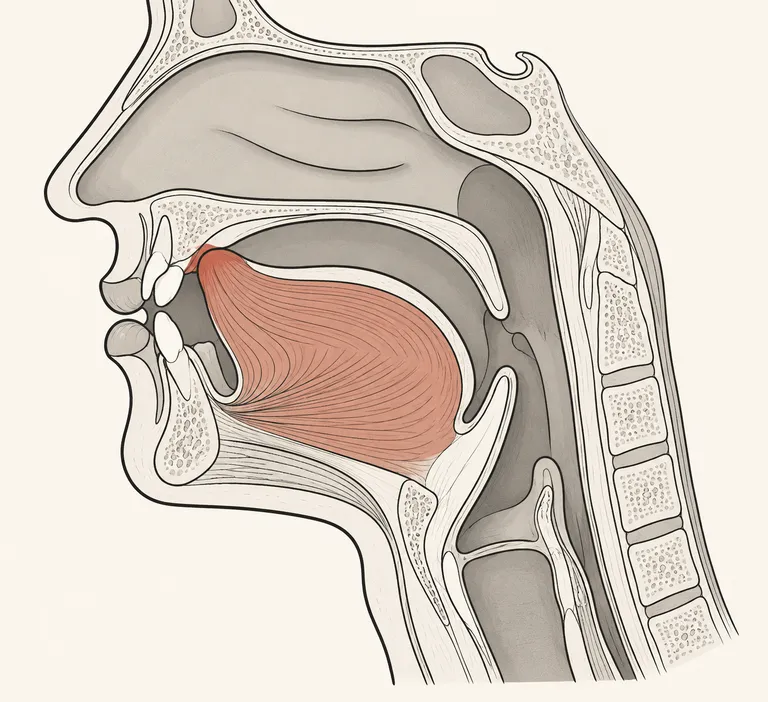
accepted
Tongue tip pressed against the alveolar ridge, sealing airflow.
Tongue shape and contact behind the upper teeth are anatomically plausible.
attempt 0 · 2026-10-03
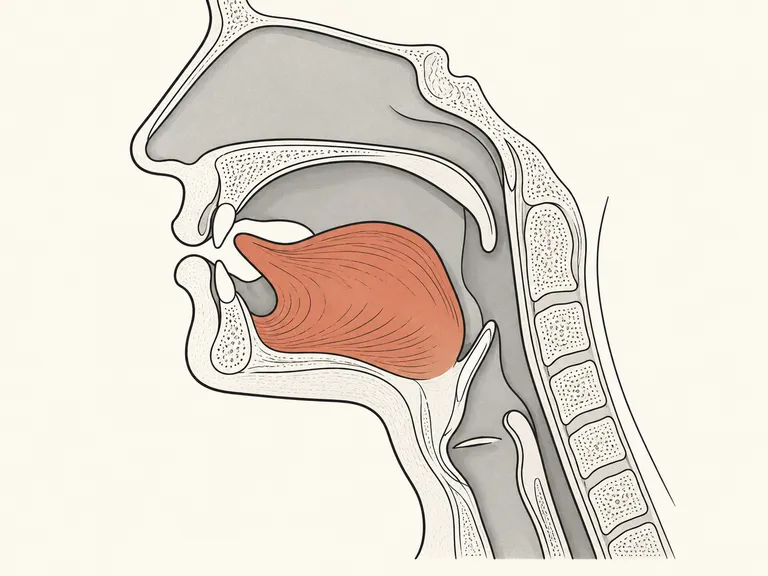
accepted
Tongue drops away with almost no puff of air.
Broad tongue has a plausible lowered release position without twisting or curling.
attempt 0 · 2026-10-03
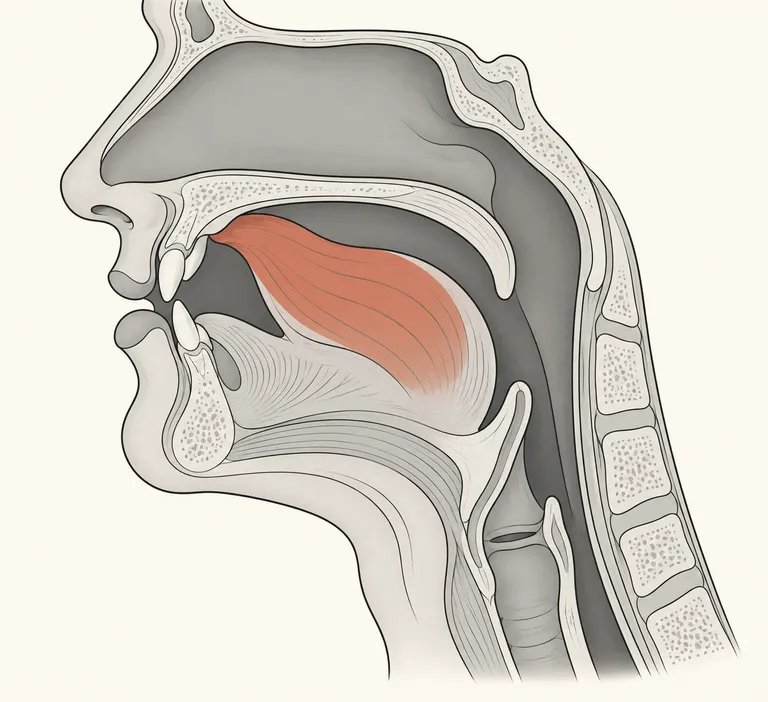
accepted
Front of tongue pressed broadly against the hard palate just behind the alveolar ridge.
Raised tongue front makes broad plausible contact with the hard palate.
attempt 0 · 2026-10-03
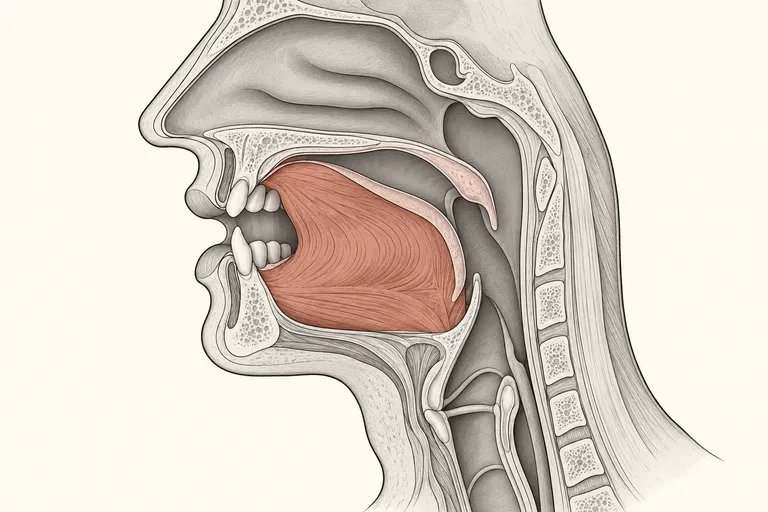
accepted
Tongue releases with a light hissing sound, no strong air puff.
Sagittal anatomy and broad tongue shape are plausible.
attempt 0 · 2026-10-03
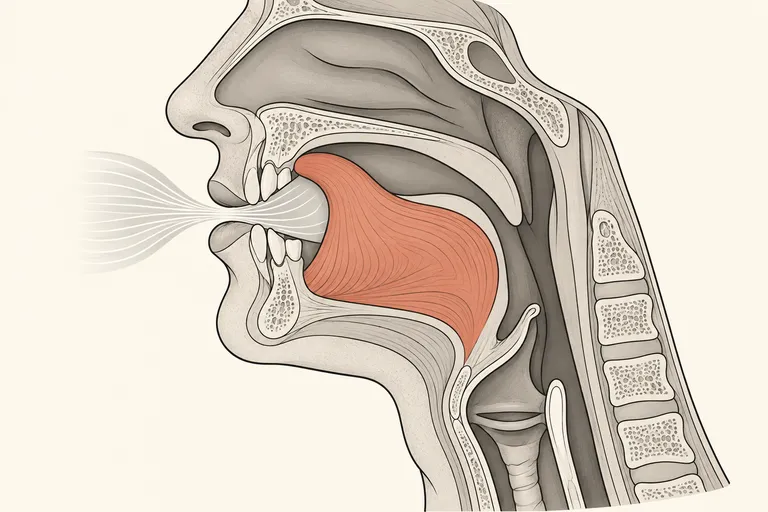
accepted
Front of tongue pressed against the hard palate.
Tongue-palate contact and oral structures appear anatomically coherent.
attempt 0 · 2026-10-03
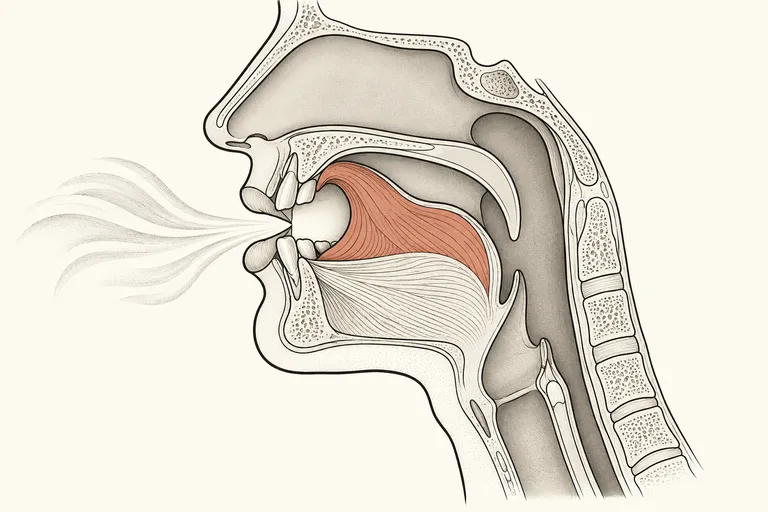
accepted
Strong puff of air right after the hissy release.
Tongue contour and aspiration airflow are visually plausible.
attempt 0 · 2026-10-03
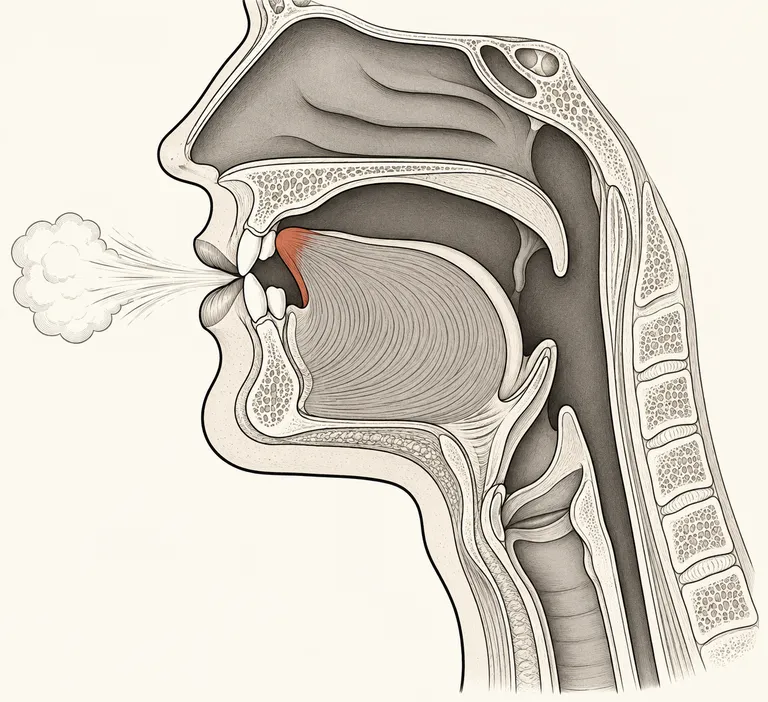
accepted
Tongue tip sealed against the alveolar ridge.
Tongue tip contacts the alveolar region without impossible deformation.
attempt 0 · 2026-10-03
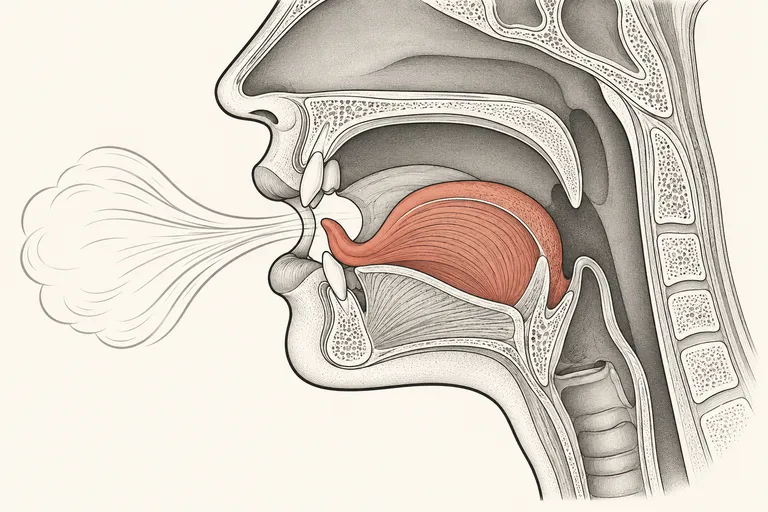
accepted
Tongue drops with a strong visible puff of air.
Slightly raised tongue tip and lowered tongue body remain plausible.
attempt 0 · 2026-10-03
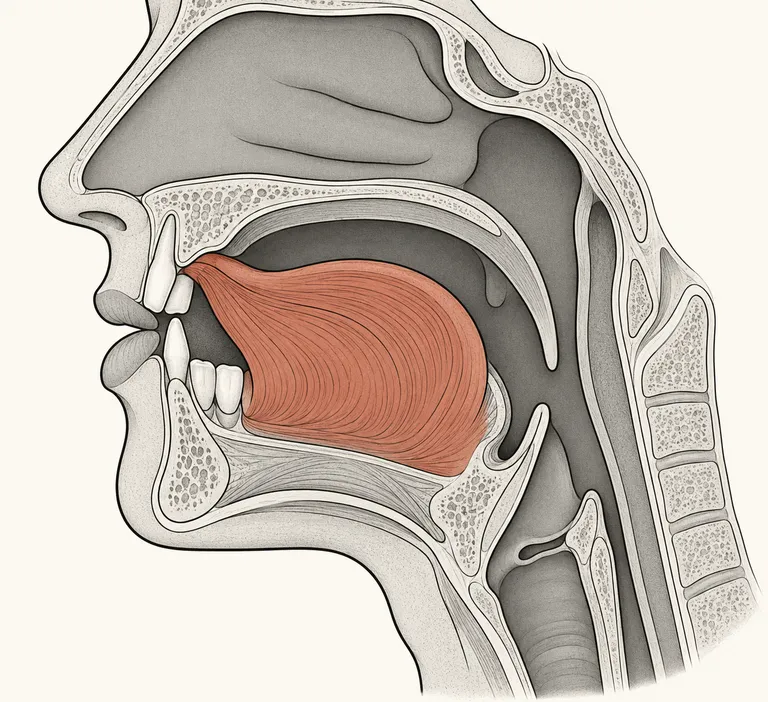
accepted
Tongue tip pressed against the alveolar ridge/teeth, similar to the 'ds' in 'kids' but voiceless.
Tongue contacts the upper dental-alveolar region with otherwise coherent anatomy.
attempt 0 · 2026-10-03
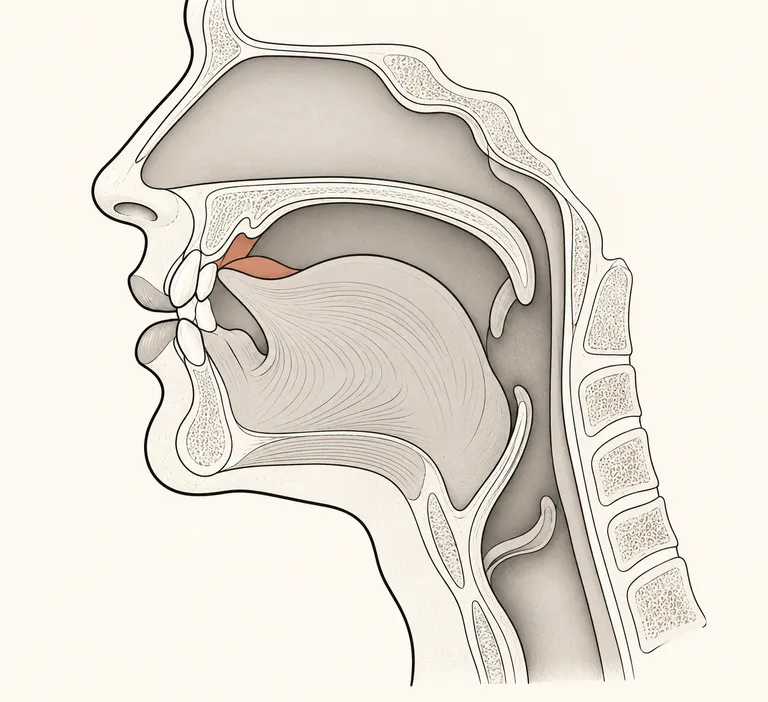
accepted
Light hiss with no strong puff of air.
Highlighted tongue tip and broader tongue body remain anatomically coherent.
attempt 0 · 2026-10-03
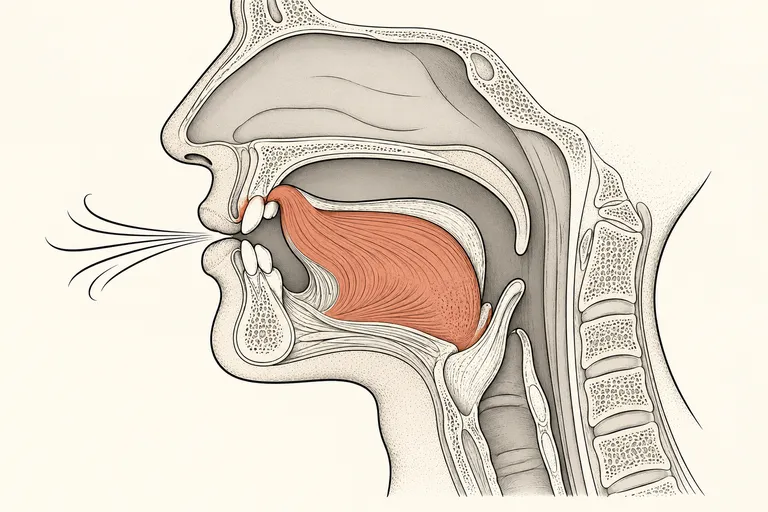
accepted
Tongue tip pressed against the alveolar ridge/teeth.
Tongue placement against the upper teeth and alveolar ridge appears plausible.
attempt 0 · 2026-10-03
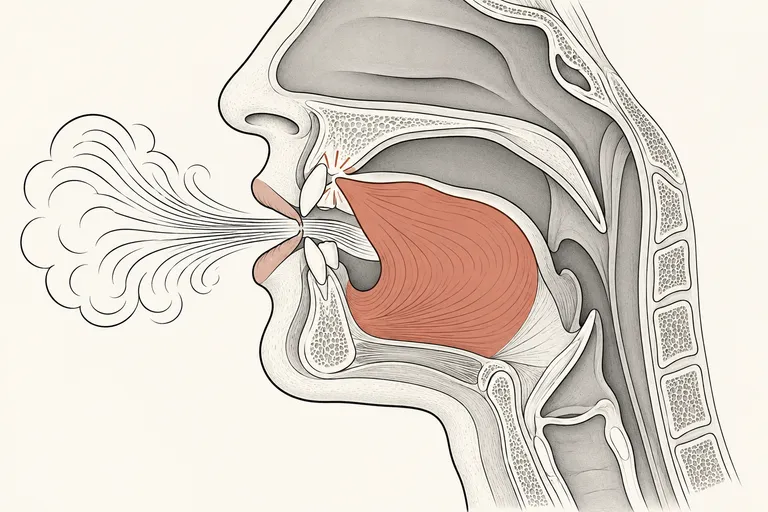
accepted
Strong puff of air right after the release.
Tongue and oral structures are coherent; airflow graphics do not create anatomical abnormalities.
attempt 0 · 2026-10-03
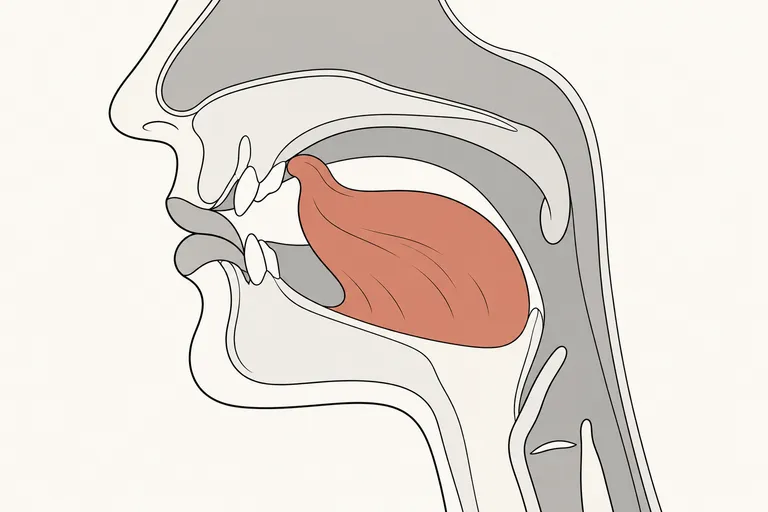
accepted
Tongue tip curled backward, touching the area just behind the alveolar ridge.
Raised tongue tip contacts the region behind the alveolar ridge without looping or splitting.
attempt 7 · 2026-10-04
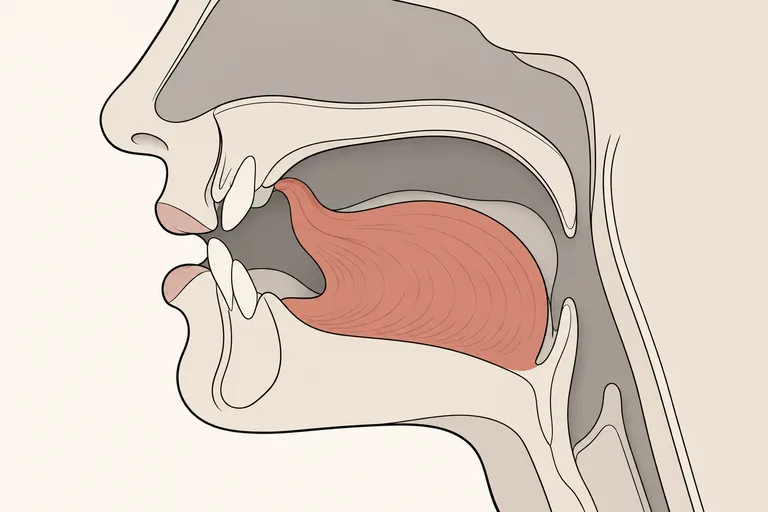
accepted
Tongue uncurls with a low hiss, no strong puff of air.
Single continuous tongue with a plausible raised tip and coherent mouth anatomy.
attempt 2 · 2026-10-04
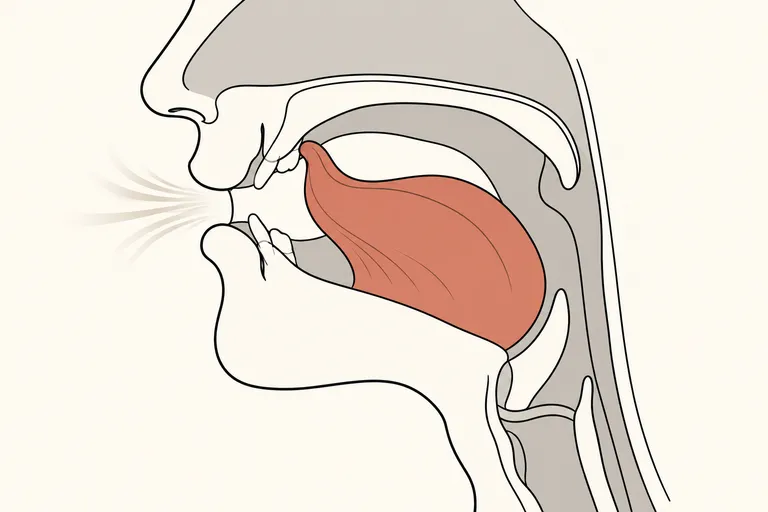
accepted
Tongue tip curled backward touching just behind the alveolar ridge.
Single tongue with a modest raised tip and anatomically plausible overall shape.
attempt 4 · 2026-10-04
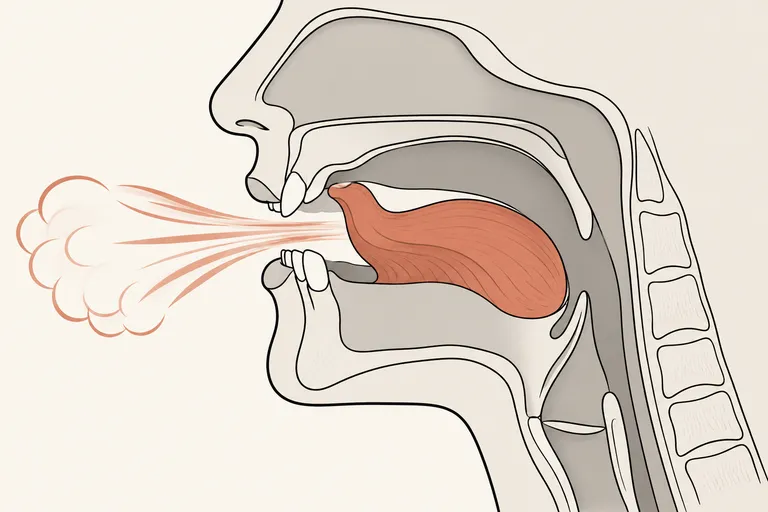
accepted
Tongue uncurls with a strong burst of air.
Raised tongue tip and surrounding anatomy are plausible; airflow burst matches the intended content.
attempt 2 · 2026-10-04
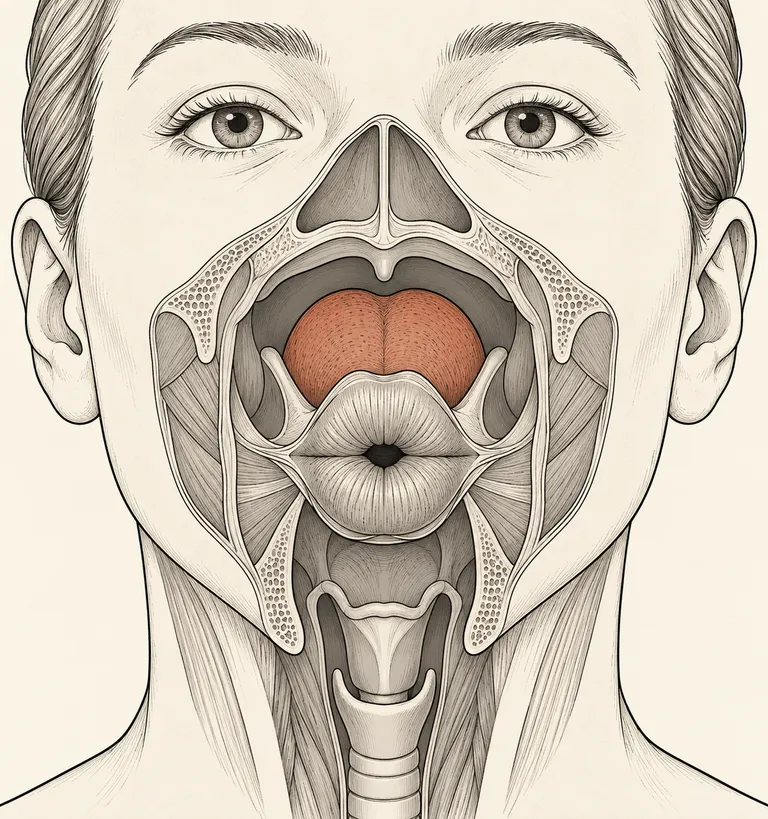
accepted
Lips strongly rounded and pushed forward, tongue raised high toward the back of the mouth.
Frontal cutaway is stylized but anatomically coherent.
attempt 0 · 2026-10-03
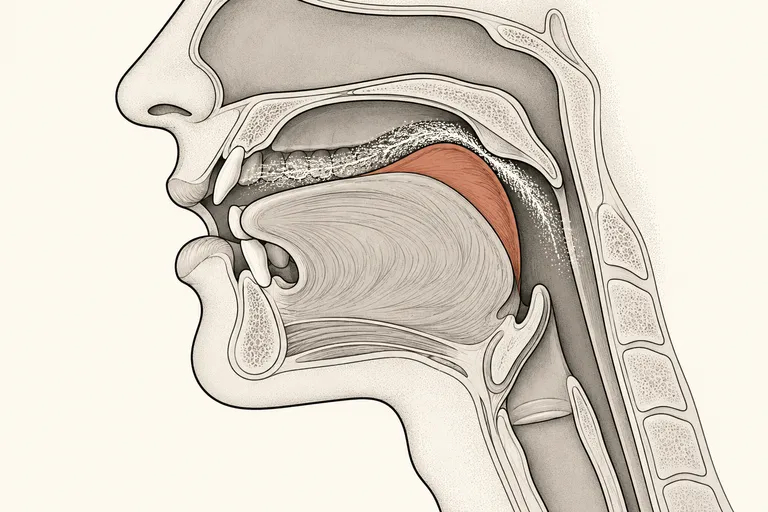
accepted
Back of tongue raised close to the soft palate, air hissing through with a rougher, more scraping quality than English h.
Raised posterior tongue approaches the soft palate plausibly.
attempt 0 · 2026-10-03
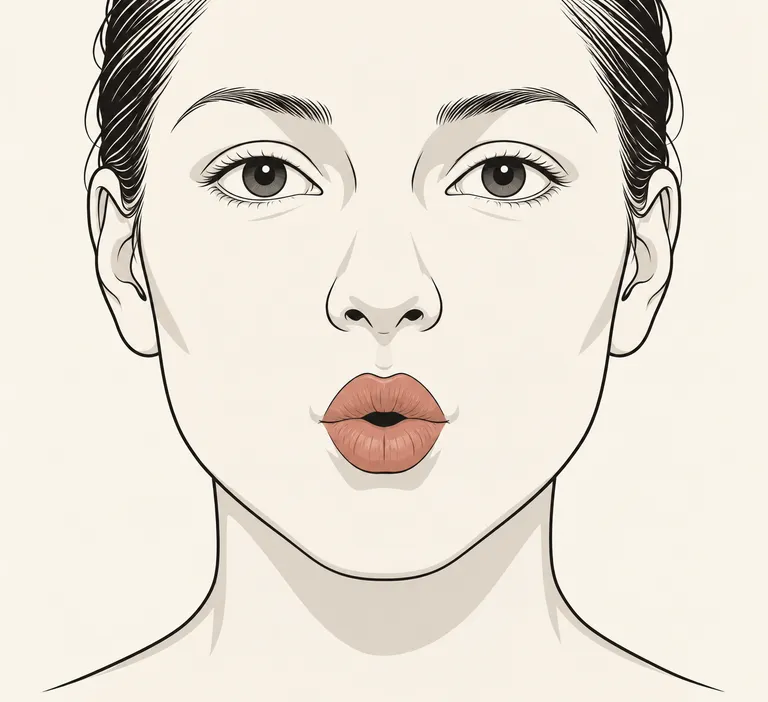
accepted
Tongue held high and forward as for 'i', while lips are rounded as for 'u' — a combination absent from English.
Rounded lips and facial anatomy appear plausible; tongue is not visible.
attempt 1 · 2026-10-03
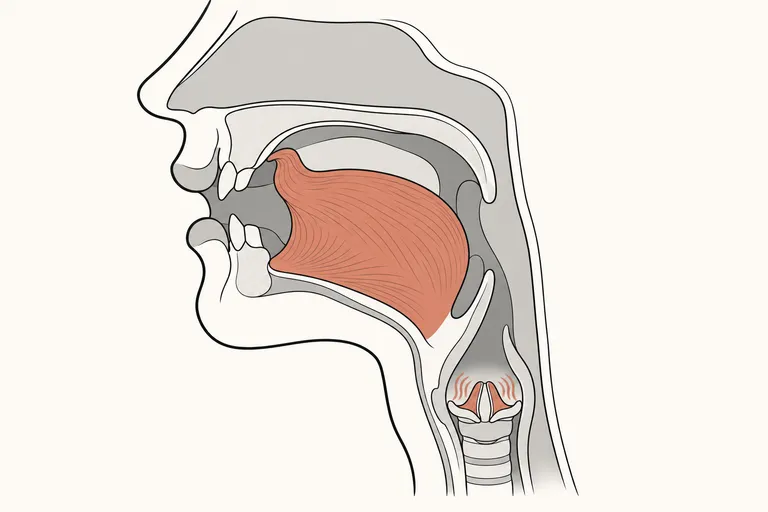
accepted
Tongue tip curled backward, close to the palate, vocal cords vibrating for a soft buzzing quality.
Single continuous tongue with a modestly raised retroflex tip; surrounding vocal tract anatomy is plausible.
attempt 13 · 2026-10-04