This is an AI-generated research project, still being refined. It may contain errors. Reader ratings and feedback are coming soon. How this is made
For Dutch speakers
Your English has a Dutch shape. Here is
where.
At rest, Dutch speakers tend to hold the jaw loosely but keep slightly more tension in the back of the mouth and throat than English speakers do. The tongue sits a touch higher and further forward, ready for Dutch's many front vowels and the throaty 'ch' and 'g' sounds, which are made by scraping air past a tensed tongue near the back of the mouth.
The Dutch comparison is being researched. Daily tips are available.
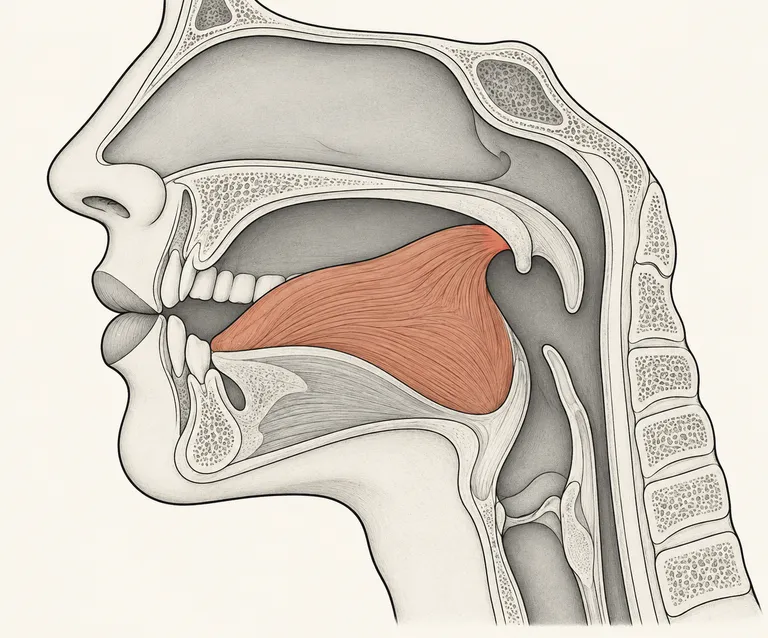
Resting positionJaw loosely closed, tongue tip low and tongue body slightly forward and raised, lips neutral, throat relaxed.
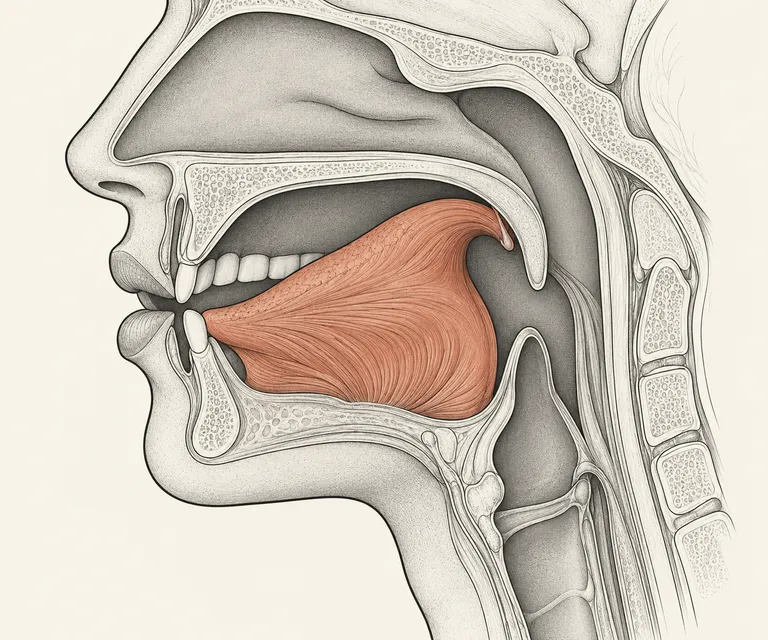
Producing the back fricative (as in 'ch'/'g')Tongue back arches up toward the uvula/soft palate creating a narrow channel, visible tension at the back of the tongue and upper throat, mouth slightly open.
Side cross-section comparing the relaxed Dutch resting posture with the tensed tongue-back position used for Dutch's signature guttural fricative.
How Dutch moves
sourced
Dutch is stress-timed, so stressed syllables arrive at roughly even intervals while unstressed syllables and vowels get compressed and often reduced toward a schwa-like sound. This creates a rhythmic push-pull similar to English, with clear peaks of prominence on stressed syllables and quick, lighter unstressed syllables filling the gaps between them.
Where Dutch rests
sourced
At rest, Dutch speakers tend to hold the jaw loosely but keep slightly more tension in the back of the mouth and throat than English speakers do. The tongue sits a touch higher and further forward, ready for Dutch's many front vowels and the throaty 'ch' and 'g' sounds, which are made by scraping air past a tensed tongue near the back of the mouth. Lips are usually neutral or gently rounded rather than widely spread, matching Dutch's rounded front vowels like those in 'deur' or 'uur'. Overall muscle tension is moderate to firm, especially around the throat, giving Dutch its characteristic guttural edge, while the rest of the vocal tract stays fairly relaxed and the voice stays clear.
Standard Dutch (Standaardnederlands), Netherlandic/Hollandic-based; notes apply broadly to Belgian Dutch (Flemish) with some differences in vowel quality and g-sound realization