This is an AI-generated research project, still being refined. It may contain errors. Reader ratings and feedback are coming soon. How this is made
For French speakers
Your English has a French shape. Here is
where.
French speech keeps the lips busy: they push forward and round far more often than in English, especially for vowels like those in 'tu' or 'peu'. The tongue sits a little further forward and higher in the mouth than its English resting spot, and the jaw doesn't drop very far.
The French comparison is being researched. Daily tips are available.
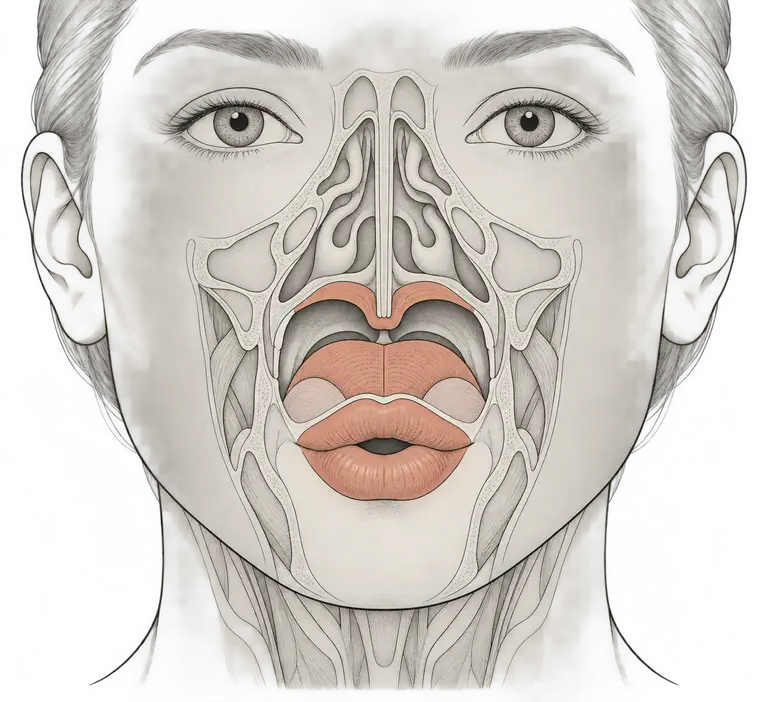
Rounded/protruded lip settingLips pushed forward into a rounded shape while the tongue body stays high and fronted, as for a front rounded vowel.
Nasal vowel settingMouth holds an oral vowel shape while the velum lowers so air passes through the nose as well as the mouth.
Front-view panels contrasting the forward, rounded lip posture used for French rounded vowels with the velum-lowering needed for French's distinctive nasal vowels.
How French moves
sourced
French doesn't hammer one syllable per word the way English or Russian does; instead, syllables stay fairly even in weight, and vowels keep their full quality whether or not they're prominent. What does the organizing work is the last syllable of each phrase group, which stretches out noticeably - that stretch, not stress, tells the listener where one chunk of speech ends and the next begins.
Where French rests
sourced
French speech keeps the lips busy: they push forward and round far more often than in English, especially for vowels like those in 'tu' or 'peu'. The tongue sits a little further forward and higher in the mouth than its English resting spot, and the jaw doesn't drop very far. A special extra habit is timing: for four French vowels, the soft palate has to drop right on cue so air flows through the nose while the mouth still holds a vowel shape - there's nothing quite like this in English. Overall muscle tension is moderate but focused - mostly in the lips and the front of the tongue - giving French its characteristically bright, forward resonance.
Metropolitan (Parisian-based) Standard French; general patterns also apply to most European French varieties, with Quebec and African French rhythm and vowel inventories not covered here.