This is an AI-generated research project, still being refined. It may contain errors. Reader ratings and feedback are coming soon. How this is made
For Bengali speakers
Your English has a Bengali shape. Here is
where.
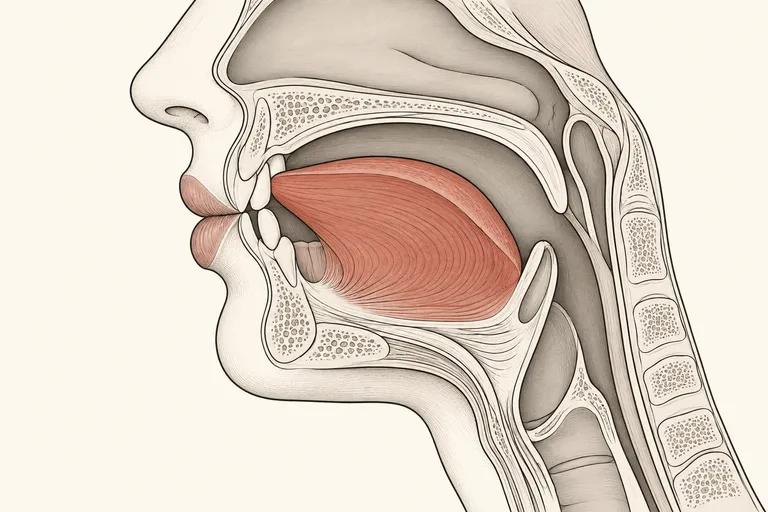
At rest, Bengali speakers tend to hold the jaw fairly closed and relaxed, without the wider drop common in American English. The tongue sits forward and a little high, poised to touch either the back of the upper teeth or curl slightly back on the roof of the mouth — these two spots create the dental and retroflex sounds that stand in for several English consonants.
The Bengali comparison is being researched. Daily tips are available.
Rest positionMouth gently closed, jaw only slightly dropped, tongue resting forward and mid-high with the tip near the upper teeth.
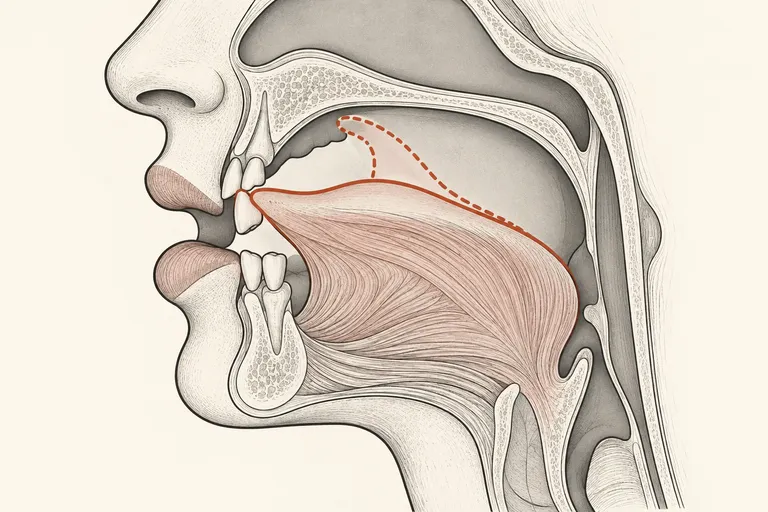
Dental/retroflex contrastTwo overlaid tongue outlines: one showing the tongue tip against the back of the upper teeth (dental stop), one showing the tongue tip curled back toward the hard palate (retroflex stop).
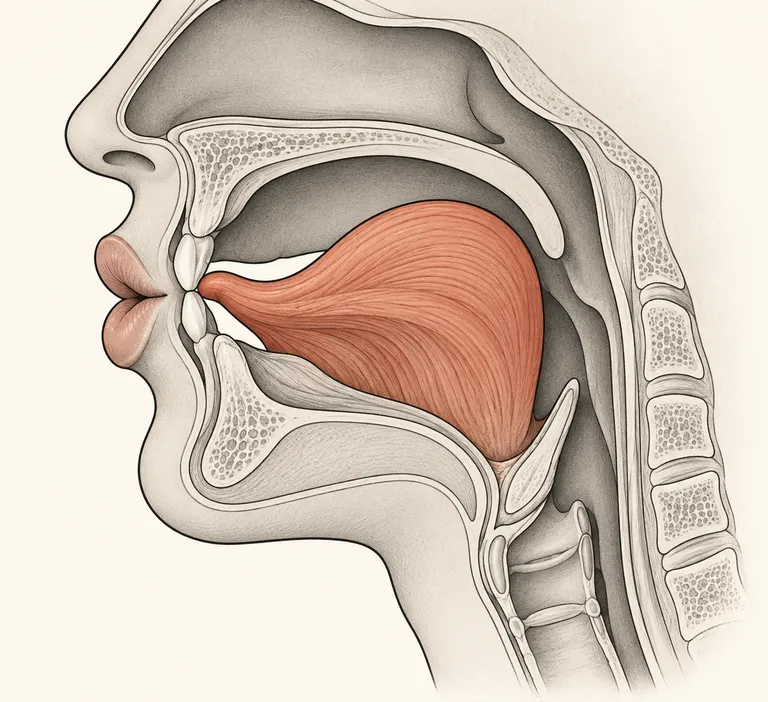
Back vowel roundingLips rounded and slightly protruded for a back vowel, with tongue body raised toward the back of the mouth.
Side-view sequence showing Bengali's compact jaw opening and the dental-versus-retroflex tongue contrast that replaces several English consonant sounds.
How Bengali moves
sourced
Bengali gives each syllable roughly equal weight and time, rather than stretching stressed syllables and shrinking unstressed ones the way English does. Because of this, English words spoken with Bengali rhythm can sound evenly paced, almost staccato, with vowels keeping their full quality even when American English would reduce them to a quick 'uh' sound.
Where Bengali rests
sourced
At rest, Bengali speakers tend to hold the jaw fairly closed and relaxed, without the wider drop common in American English. The tongue sits forward and a little high, poised to touch either the back of the upper teeth or curl slightly back on the roof of the mouth — these two spots create the dental and retroflex sounds that stand in for several English consonants. Lips stay neutral most of the time, rounding only when needed for back vowels. Overall muscle tension is moderate but contact points for the tongue are crisp and deliberate, giving Bengali-influenced English a slightly more precise, less 'mushy' consonant feel than relaxed American speech.
Standard Colloquial Bengali as spoken in Bangladesh (Dhaka standard) and West Bengal, India (Kolkata standard); phonetic notes apply broadly across both national varieties